Lifestyle & desk essentials
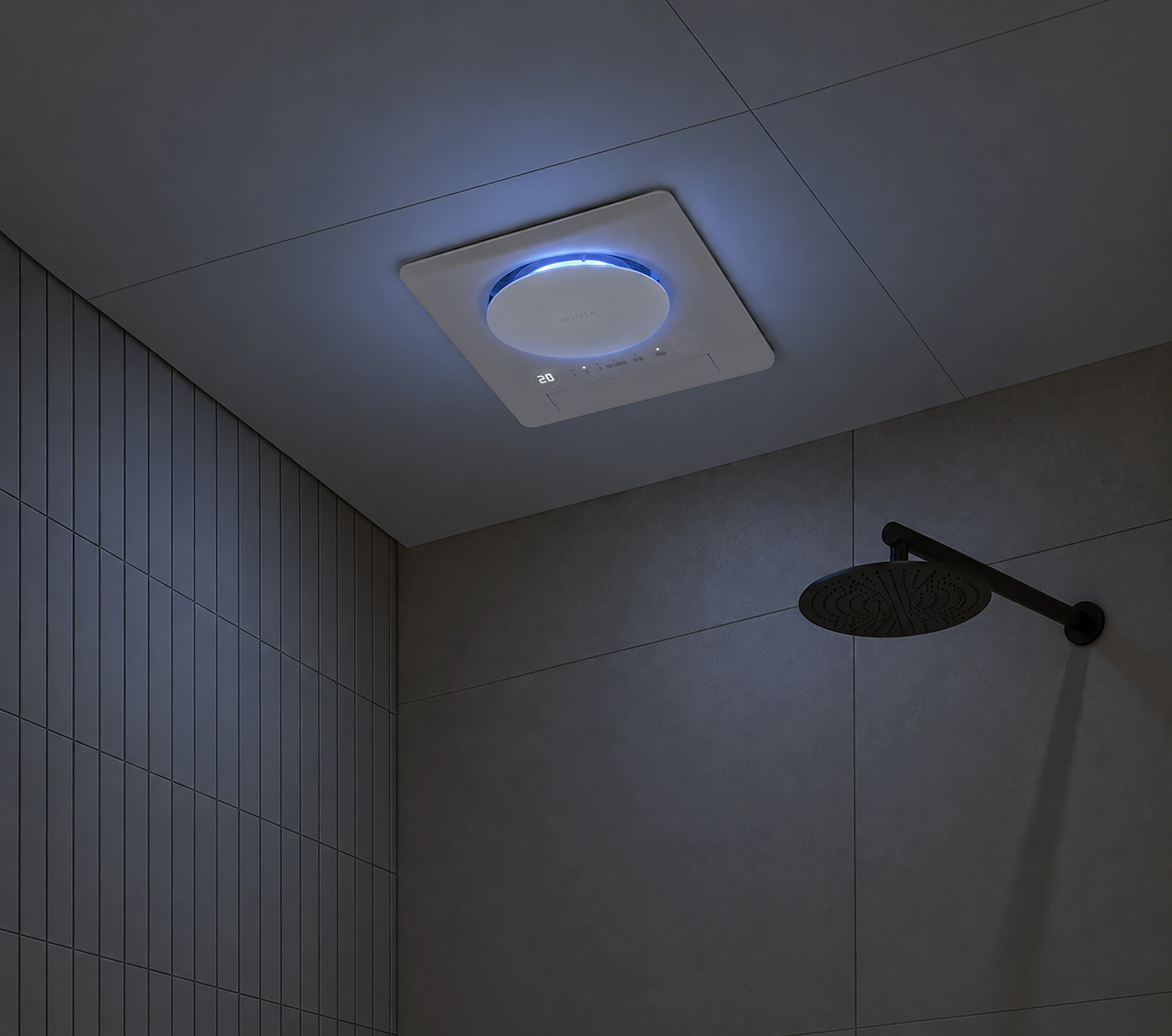
WINIX VBVE160-PWK bathroom ventilation heater
Story & products
1. WINIX combined bathroom ventilation fan and warm-air heater.
2. Korean-market model VBVE160-PWK; the official manual covers the VBV*160-PWK series.
3. 390 × 315 × 185 mm (W × D × H); rated AC 220 V, 60 Hz, 1,250 W. Ceiling cut-out: 335 × 275 mm.
4. The official manual lists three-speed exhaust, body-care airflow/warm air and a dehumidification mode, with a remote control. Dehumidification runs exhaust and airflow together. Warm air stops automatically after one hour, followed by about 30 seconds of cooling airflow.
5. Before purchase, an installer must check the cut-out, inspection access, ceiling flatness and material, power outlet and wall switch for compatibility. Body care requires the wall switch and exhaust fan to be on. The retailer states that visit and return-shipping charges fall to the buyer if installation conditions are unsuitable.
6. Official information and the actual Korean purchase entry: https://www.winix.com/product/2143 . The exact model, normal price and an active purchase button were visible at query time; member pricing has membership conditions.
7. Checked 2026-11-18: Korean normal one-time unit reference KRW 499,000, approximately CNY 2,493.75, excluding member, coupon and payment benefits. Basic installation of one unit is an additional KRW 70,000 (visit 20,000 + installation 50,000); site work may cost extra. Converted at the 2026-11-17 CFETS central parity, CNY 1 = KRW 200.10. This is a reference, not this site’s selling price. https://www.chinamoney.com.cn/r/cms/www/chinamoney/data/fx/ccpr.json
8. Specifications, features and restrictions come from WINIX’s official product page, manual pages 12–16 and installation guide. Mainland China distribution, import costs and local installation/warranty applicability remain unconfirmed. Official manual: https://kr.object.ncloudstorage.com/w2r-commerce-winix/USEMANUAL/202611/261113160819942-357f317464b7460d99523619c0978022.pdf
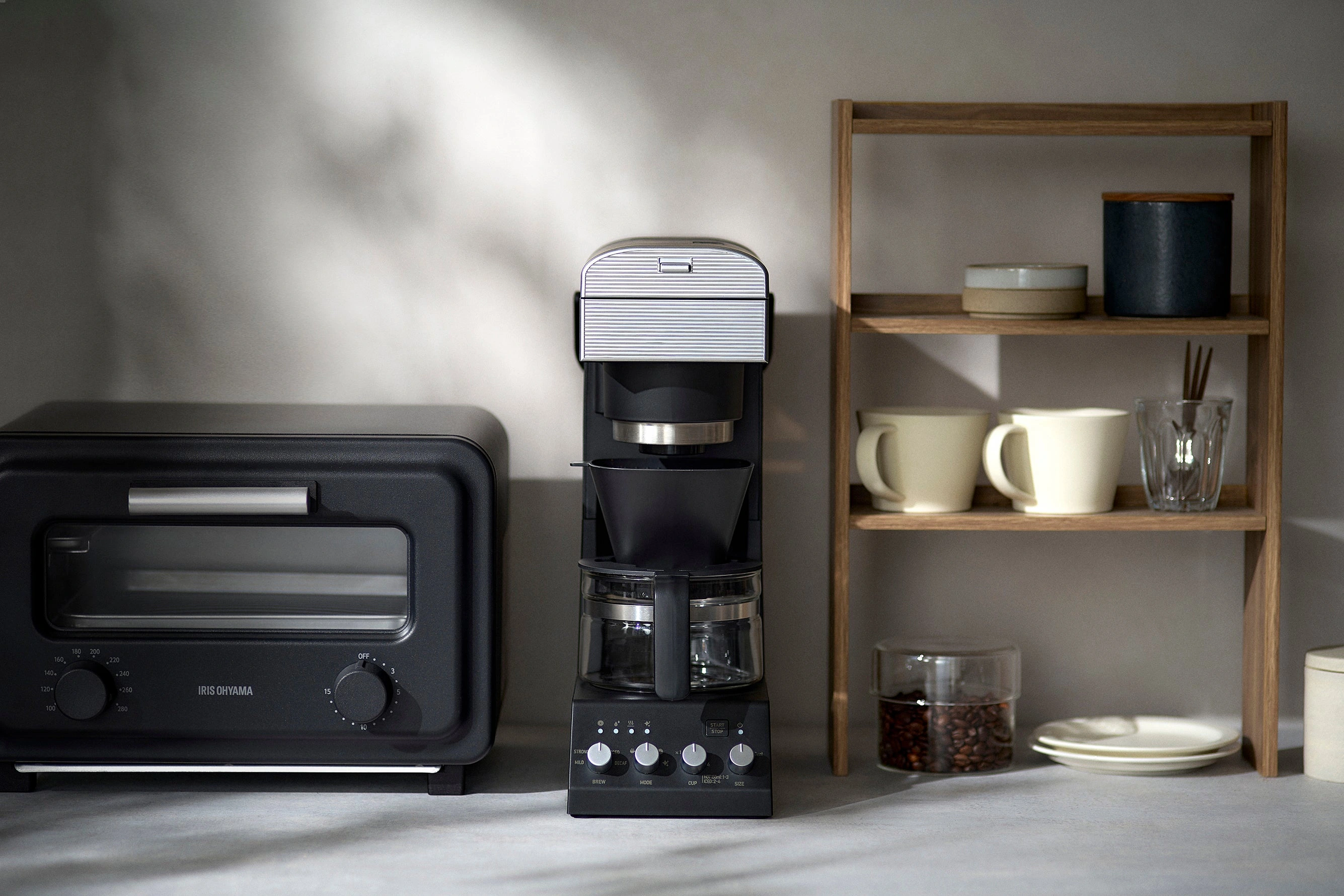
IRIS OHYAMA CMC-A60-B automatic coffee maker
Story & products
1. IRIS OHYAMA automatic coffee maker with a conical burr grinder.
2. Black Japanese-market model CMC-A60-B; JAN 4967576847476 is listed by the brand’s direct store.
3. Approximately 131 × 297 × 366 mm (W × D × H), excluding the handles and water-tank handle; about 3.6 kg including the glass server. AC 100 V, 50/60 Hz; main unit rated 800 W and grinder 70 W. Maximum water input 620 mL; rated grinder capacity 40 g.
4. The manufacturer lists five grind settings, selectable one-hole/three-hole flow control and RICH, MILD, STRONG, ICED and DECAF brewing programmes. It supports brewing from beans or grounds, grinding alone and internal cleaning; the grinder assembly is removable.
5. The announced release date is 2026-11-24. DECAF is a programme for decaffeinated beans, not a process for removing caffeine from ordinary beans. The 620 mL figure is maximum water input. Requires a matching 100 V supply; a mainland China channel for this exact model is unconfirmed.
6. Manufacturer release: https://prtimes.jp/main/html/rd/p/000000949.000019955.html . Japanese purchase entry: IRIS PLAZA’s exact-model listing on au PAY Market, https://wowma.jp/item/793585243 . At query time it showed a purchase control and late-November to early-December dispatch; the retailer confirms fulfilment.
7. Checked 2026-11-18: Japanese tax-inclusive one-time purchase reference JPY 32,780, approximately CNY 1,376.17, excluding conditional points and coupons. Converted at the CFETS central parity dated 2026-11-17, JPY 100 = CNY 4.1982. This is a reference, not this site’s selling price. https://www.chinamoney.com.cn/r/cms/www/chinamoney/data/fx/ccpr.json
8. Model, JAN, specifications and features are based on the manufacturer release and brand direct-store description. Mainland China distribution, import costs and local warranty applicability remain unconfirmed.
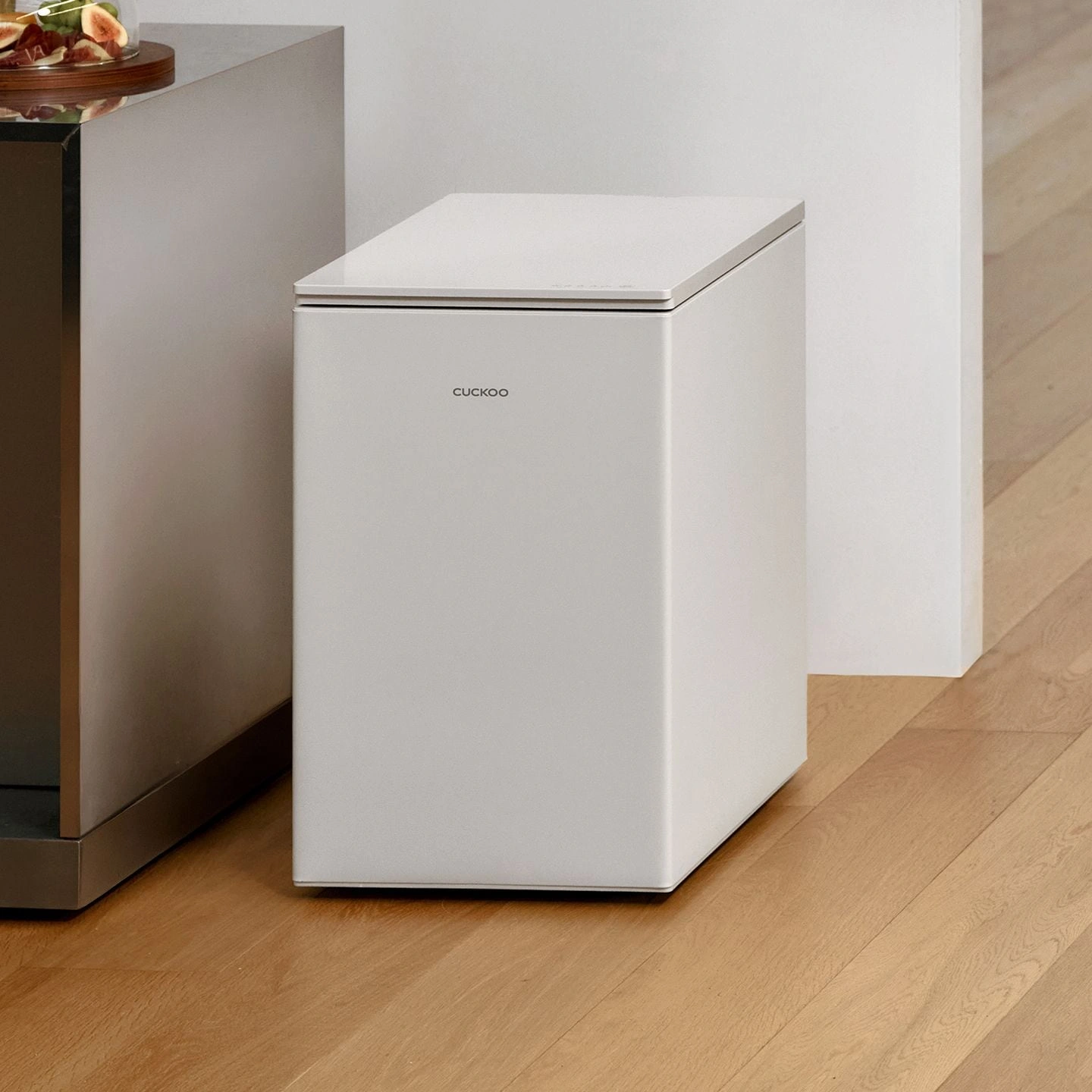
CUCKOO Gourmet Collection Gourmet Cube Mini kimchi refrigerator.
Story & products
1. CUCKOO Gourmet Collection Gourmet Cube Mini kimchi refrigerator.
2. Korean-market 41 L model CKR-CNLL520NW in Noble White.
3. 370 × 513 × 585 mm (W × D × H), about 16 kg, rated AC 220 V at 60 Hz, listed power draw 72 W.
4. CUCKOO lists dedicated storage modes for kimchi, alcoholic drinks and meal kits, inverter direct cooling, a deodorising filter, a soft-close lid and wheels.
5. Allow room for the top lid to open. CUCKOO specifies a rated frequency of 60 Hz. A mainland China purchase channel for this exact model is unconfirmed. The retailer’s desktop purchase area has a Kakao sign-in gate.
6. Official product page for the 41 L model at CUCKOO Mall https://www.cuckoo.co.kr/mall/productView?productNo=11312. The Korean purchase page is CUCKOO’s listing for this model on Kakao https://store.kakao.com/cuckooel/products/792162131.
7. Reference checked 2026-11-17: CUCKOO’s Kakao listing in Korea shows KRW 379,900 for a one-time purchase of this model, excluding conditional coupons, payment benefits and points. At the 2026-11-17 CFETS rate of CNY 1 = KRW 200.10, this is about CNY 1,898.55. This is a reference; the retailer determines the transaction price. https://www.chinamoney.com.cn/r/cms/www/chinamoney/data/fx/ccpr.json
8. Model, specifications and feature sources are the CUCKOO specification sheet and manufacturer release. https://gi.esmplus.com/cuckooel1/spec/CKR/CKR-CNLL520NW/41.jpg https://newsletter.cuckoo.co.kr/24/?bmode=view&idx=175293069
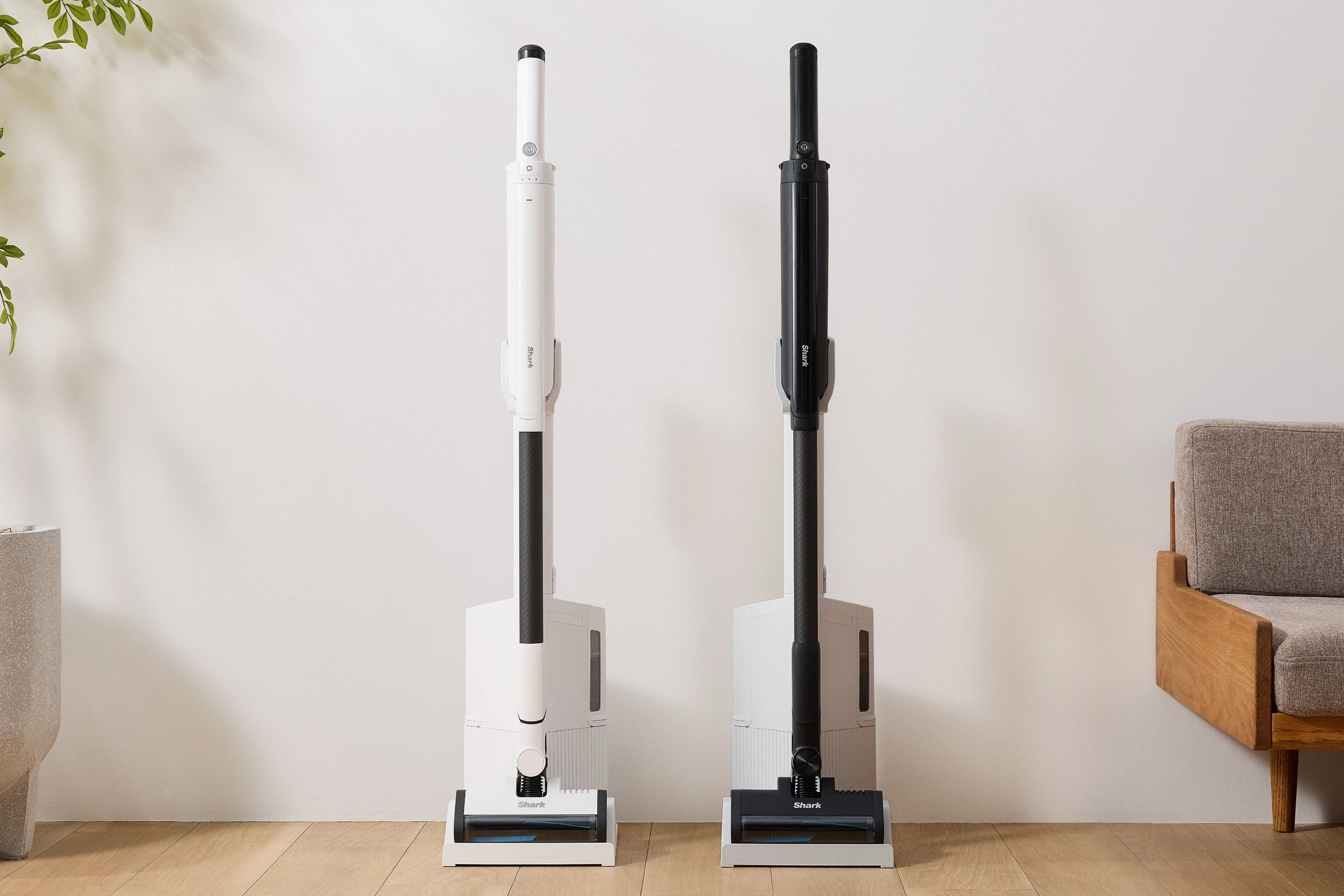
Shark GlideClean cordless stick vacuum with a self-emptying charging dock.
Story & products
1. Shark GlideClean cordless stick vacuum with a self-emptying charging dock.
2. Japan white version LC050JWH, JAN 0622356438308.
3. Stick 1041 × 203 × 152 mm and about 1.28 kg, handheld 513 × 91 × 71 mm and about 0.8 kg, docked 1110 × 315 × 230 mm, all H × W × D. Dust cup 130 mL, dock 1.3 L. One lithium-ion battery included, about 3.5 hours to charge. Stick boost draws 190 W and the dock draws 650 W while operating.
4. The vacuum converts to handheld mode. The dock empties and charges the vacuum when it is returned. The dust cup, filter and brush roll are removable and washable.
5. Shark quotes about 32 minutes in standard and 7 minutes 30 seconds in boost as a stick, or 35 and 8 minutes as a handheld. The two-year manufacturer warranty excludes consumables including the battery. The Japanese official store lists one additional year of store coverage.
6. SharkNinja Japan official product page https://www.sharkninja.jp/products/lc050j. Exact white LC050JWH purchase page https://www.sharkninja.jp/products/lc050j?variant=68090311770297.
7. Reference checked 2026-11-17: the Japan official store lists the white version at JPY 69,850 including tax for a one-time purchase. At the 2026-11-17 CFETS rate of CNY 4.1982 per JPY 100, this is about CNY 2,932.44. This is a reference; the retailer determines the transaction price. https://www.chinamoney.com.cn/r/cms/www/chinamoney/data/fx/ccpr.json
8. Shark Japan supplies the model and specifications, and Yamada Denki lists the JAN codes. Dock input voltage and frequency and mainland China purchase channels are unconfirmed. https://www.sharkninja.jp/pages/shark-stickcleaner-glideclean-spec https://www.yamada-denkiweb.com/1387283017/ https://www.yamada-denkiweb.com/1387282010/
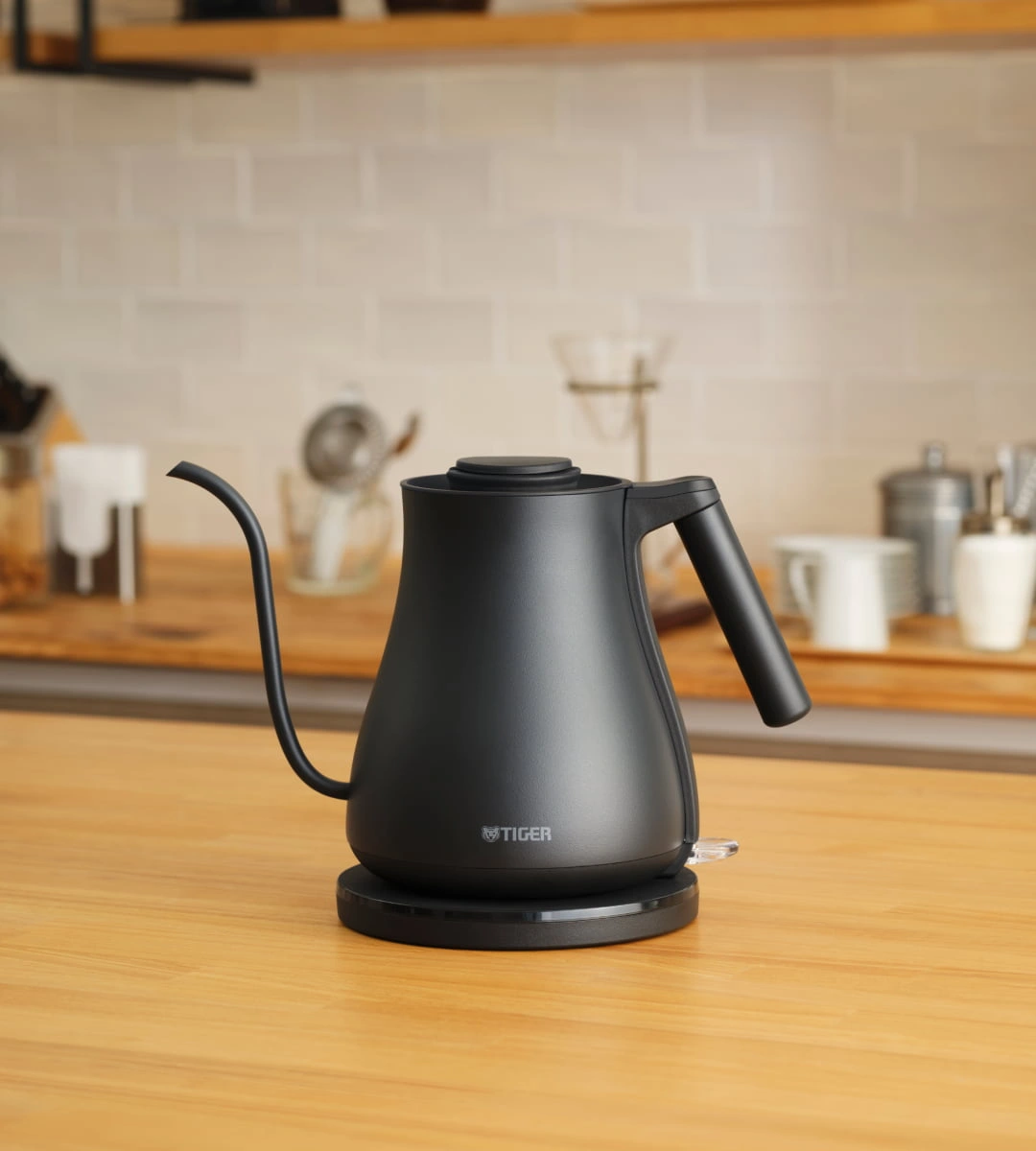
TIGER PCZ-A080
Story & products
1. TIGER PCZ-A080 steam-suppressing gooseneck electric kettle from Tiger Japan.
2. Japan black version, model family PCZ-A080, exact SKU PCZ-A080KP. Variant-specific JAN unconfirmed.
3. 0.8 L capacity, 100 V, 50–60 Hz and 1300 W. Approx. 16.9 × 30.5 × 21.7 cm (W × D × H) and 1.1 kg with base. Approx. 1.30 m cord.
4. Gooseneck spout for controlled pouring, removable lid, automatic shutoff on boiling and boil-dry detection. In Tiger’s testing at a water and room temperature of 23 °C, 140 mL took about 45 seconds and a full kettle about 4 minutes.
5. The body and spout become hot. Reboiling while the kettle is warm may release steam near the base or switch. There is no pour lock and hot water may escape when tipped.
6. Official specifications https://www.tiger-corporation.com/ja/jpn/product/kettle-pot/pcz-a/. Tiger Japan official Yahoo! Shopping store https://store.shopping.yahoo.co.jp/tiger-official-store/pcz-a080.html; select black PCZ-A080KP.
7. Reference checked 2026-11-17: Tiger Japan official store lists the black version at JPY 16,800 including tax. At the 2026-11-17 CFETS rate of CNY 4.1982 per JPY 100, this is about CNY 705.30. This is a reference; the retailer determines the transaction price. Mainland China sales for this version are unconfirmed. https://www.chinamoney.com.cn/r/cms/www/chinamoney/data/fx/ccpr.json
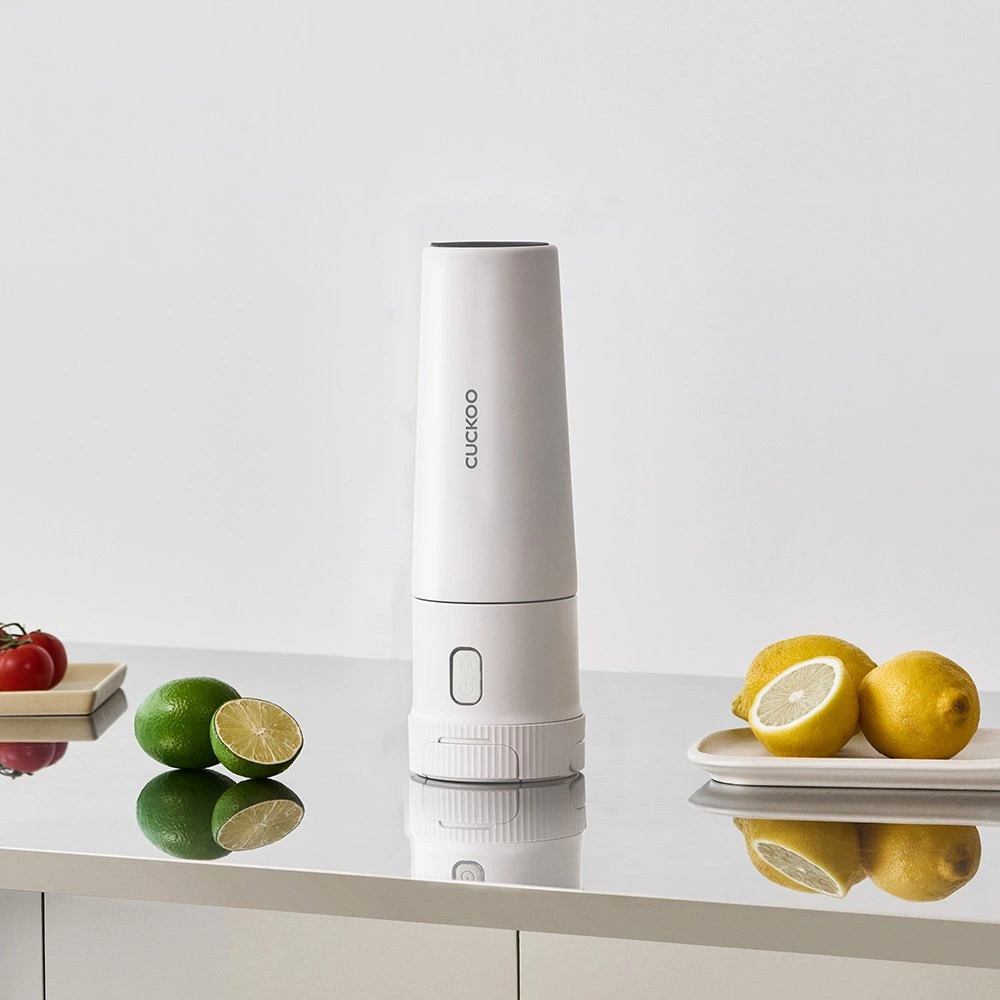
CUCKOO MiniMon cordless portable blender.
Story & products
1. CUCKOO MiniMon cordless portable blender.
2. CFM-RC0410W, white South Korean version. JAN/GTIN unconfirmed.
3. 450 mL, approx. 90 × 90 × 270 mm and 750 g, 7.4 V DC. CUCKOO specifies wireless charging.
4. CUCKOO lists up to 20,000 rpm, a ten-layer stainless-steel blade assembly, a lid interlock, automatic stop after 30 seconds and IPX5 water resistance.
5. The vessel takes a travel lid. Rinse the body as directed. Immersion conditions and exact charging accessories remain unconfirmed.
6. Official source https://newsletter.cuckoo.co.kr/29/?bmode=view&idx=173640827. Exact South Korean Compuzone purchase page https://www.compuzone.co.kr/product/product_detail.htm?ProductNo=1392486.
7. Reference checked 2026-11-17: Compuzone South Korea lists the white version at KRW 94,800. At the 2026-11-17 CFETS rate of KRW 200.10 per CNY 1, this is about CNY 473.76. This is a reference; the retailer determines the actual transaction price. Mainland China sales for this version are unconfirmed. https://www.chinamoney.com.cn/r/cms/www/chinamoney/data/fx/ccpr.json
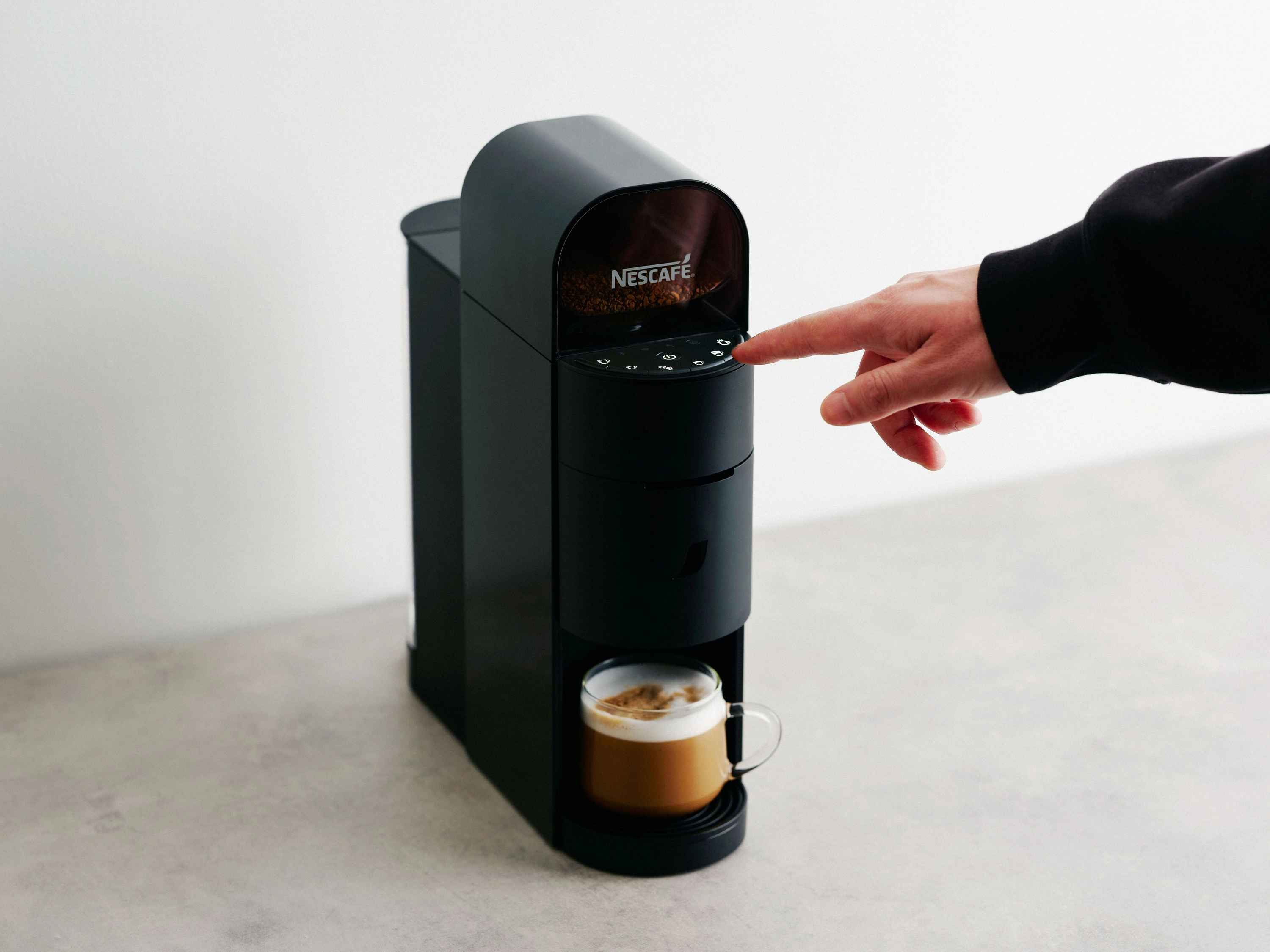
NESCAFÉ Gold Blend Barista kotone · HPM9643PB
Story & products
1. Brand and name: NESCAFÉ Gold Blend Barista kotone coffee maker from Nestlé Japan.
2. Model and market: HPM9643PB, JAN 4902201446372, Japan version in Premium Black.
3. Specifications and power: approx. 108 × 350 × 307 mm (W×H×D), 2.9 kg, 660 mL water tank, 100 V 50/60 Hz, rated 1460 W and up to 15 atm pump pressure.
4. Functions: buttons for black coffee, latte and iced menus, a separate hot-water function and a removable coffee tank. An extra tank is sold separately.
5. Use conditions: compatible NESCAFÉ Eco & System Pack soluble coffee refills. Latte and iced menus call for creamer or ice as applicable. Manufacturer operating temperature is 5–35 °C.
6. Official specifications and announced manufacturer price https://www.nestle.co.jp/sites/g/files/pydnoa331/files/2026-08/20260825_nescafe.pdf. Exact Japan YouPlan purchase page https://store.shopping.yahoo.co.jp/youplan/100001129317.html.
7. Reference prices checked 2026-11-17: the exact YouPlan Japan listing is JPY 34,870; Nestlé Japan announced JPY 22,000 including tax on 2026-08-25. At the 2026-11-13 CFETS rate of CNY 4.1952 per JPY 100, these are about CNY 1,462.87 and CNY 922.94 respectively. These are references; the retailer determines the actual transaction price. Mainland China sales for this version are unconfirmed. https://app.xinhuanet.com/news/article.html?articleId=20261113731eaea19d4e47e09ebd30212eca29c0
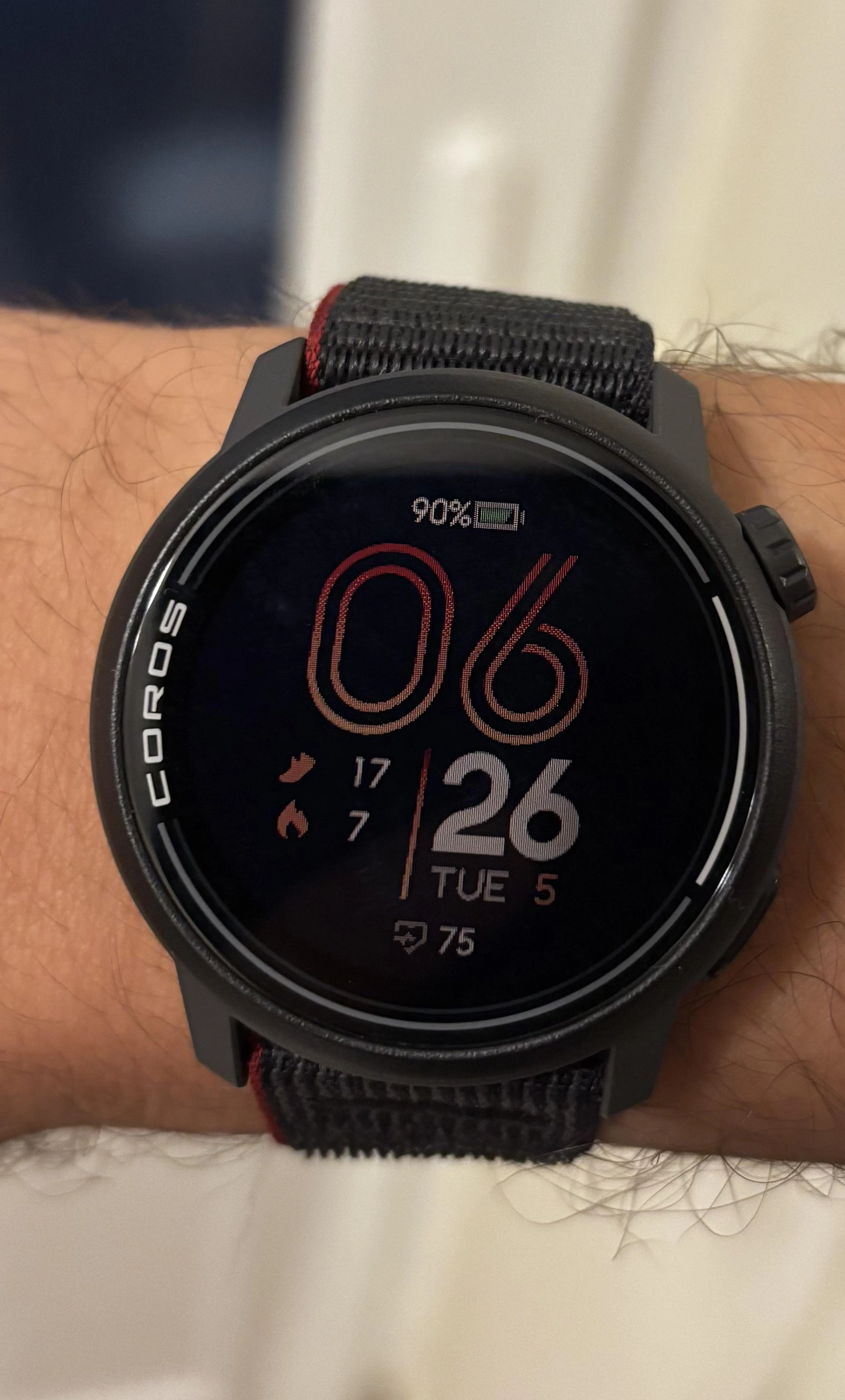
COROS PACE 3 Ink GPS sport watch
Story & products
1. COROS PACE 3 Ink GPS sport watch
2. UK retail version with the Ink black nylon band. SKU WPACE3-INK, UPC 810005783156.
3. The case measures 41.9 × 41.9 × 11.7 mm, excluding the optical sensor from the thickness. About 30 g with the 22 mm nylon band. The 1.2-inch always-on touchscreen has a 240 × 240 resolution. A charging cable is included for the 236 mAh rechargeable battery.
4. Supports dual-frequency satellite positioning, breadcrumb route navigation, a barometric altimeter, optical wrist heart-rate tracking and workout sync with the COROS app.
5. Rated 5 ATM for surface-water activities. Avoid diving. COROS rates the watch for up to 38 hours in standard Full GPS mode, up to 15 hours in dual-frequency mode and up to 15 days of daily use with sleep and daily stress recording enabled.
6. COROS UK showed a UK reference price of GBP 199 for Ink on 2026-11-17, approximately CNY 1,763.96 at the CFETS central parity rate of CNY 8.8641 per GBP on 2026-11-13. Mainland China retail is unconfirmed.
7. Manufacturer specifications https://www.coros.com/pace3/specs. Official UK purchase page https://coros.com/uk/product/coros-pace-3-gps-sport-watch?variant=49451031888191. https://app.xinhuanet.com/news/article.html?articleId=20261113731eaea19d4e47e09ebd30212eca29c0
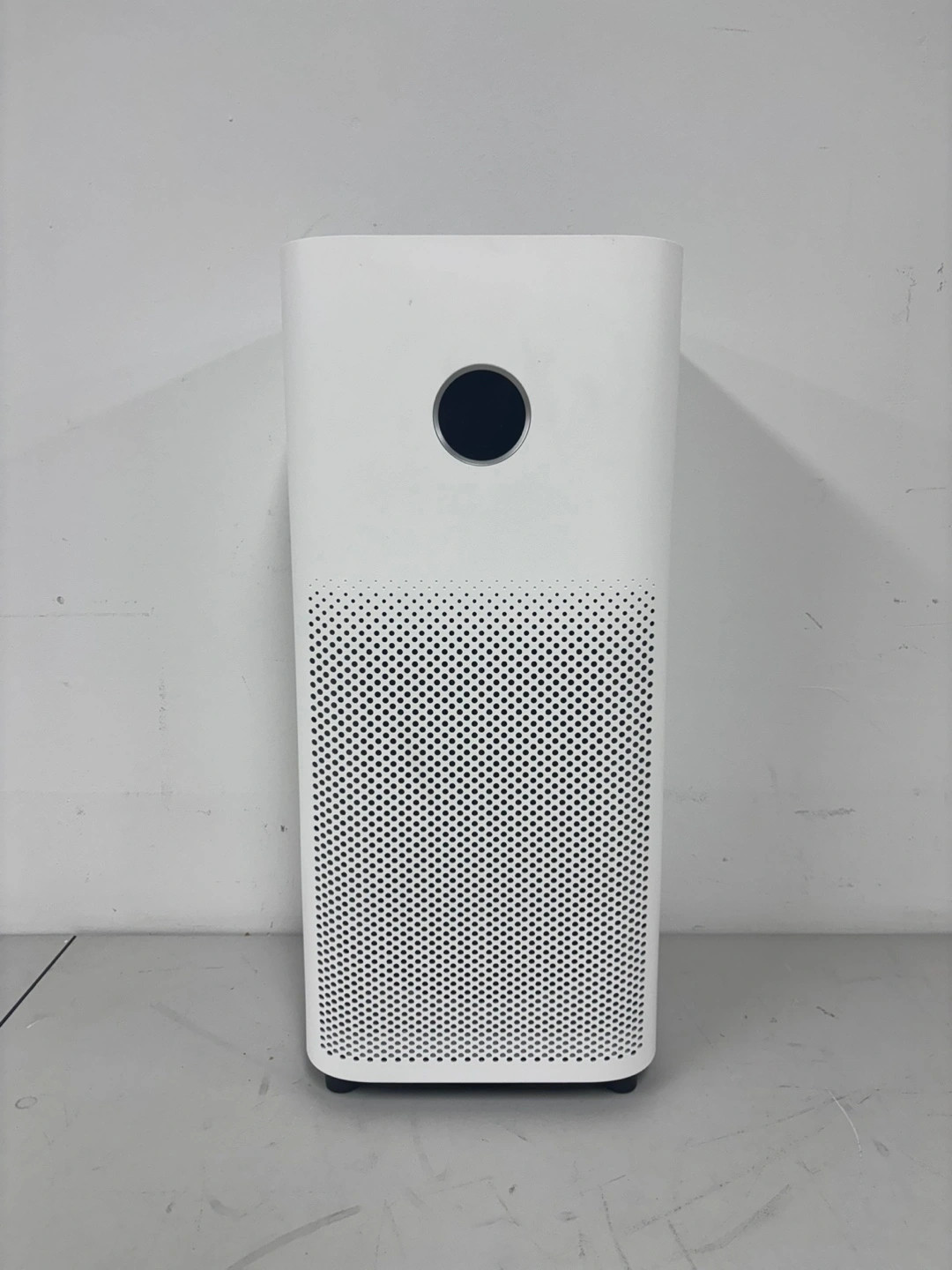
Xiaomi Mijia Smart Air Purifier 6 · AC-M25-SC
Story & products
1. Brand and product — Xiaomi Mijia Smart Air Purifier 6.
2. Model and market — AC-M25-SC, white, South Korean version.
3. Specifications and power — 250 × 250 × 555 mm, about 5.2 kg, 200–240 V at 50/60 Hz, rated 40 W, and 32 dB(A) in sleep mode.
4. Features — Colour LCD, PM1, PM2.5, dust, temperature and humidity sensors, and remote control through the Xiaomi Home app.
5. Use conditions — Xiaomi calculates an effective area of 29–50 m² from the particle CADR. Performance varies with conditions.
6. Official specifications https://www.mi.com/kr/product/mijia-smart-air-purifier-6/specs/. Official South Korean purchase page https://www.mi.com/kr/product/mijia-smart-air-purifier-6/buy/.
7. Reference price — KRW 239,000 on Xiaomi Korea on 2026-11-17. About CNY 1,195.42 using the CFETS central parity rate of KRW 199.93 per CNY on 2026-11-13. Mainland China purchase channel for this version unconfirmed. https://app.xinhuanet.com/news/article.html?articleId=20261113731eaea19d4e47e09ebd30212eca29c0
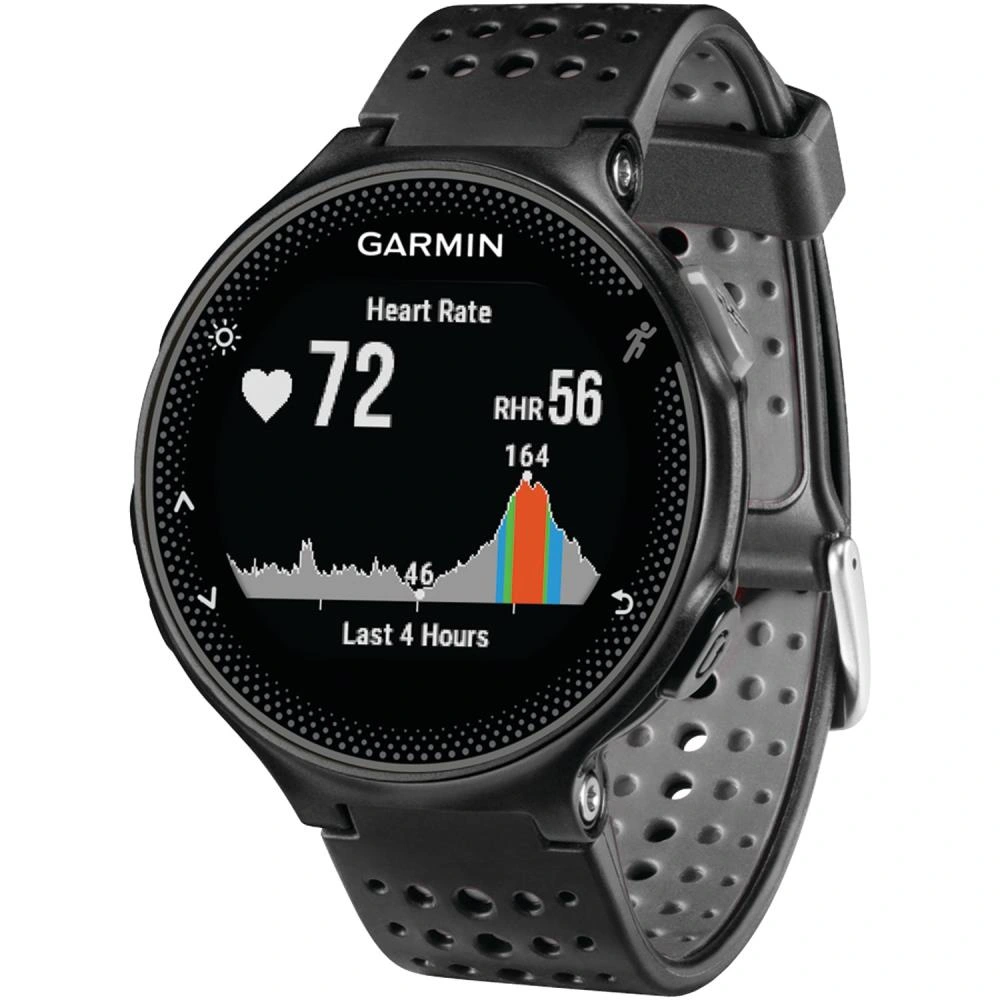
Garmin Forerunner 235 GPS running watch
Story & products
1. Garmin Forerunner 235 GPS running watch
2. US version with black and gray silicone band. Model 010-03717-54, UPC 753759148829.
3. 45 × 45 × 11.7 mm case, 42 g, 31.1 mm color display, 215 × 180 pixels. Built-in rechargeable lithium-ion battery with an included charging and data cable.
4. GPS and GLONASS positioning record running distance, pace and time. The Garmin Elevate optical sensor measures wrist heart rate. Sync to Garmin Connect through a compatible phone.
5. Water rating 5 ATM. With wrist heart rate enabled, the manual specifies up to 11 hours in GPS mode or 9 hours in GPS + GLONASS mode. Smart notifications require a paired compatible phone.
6. Checked 2026-11-14. Garmin marks this model discontinued in the US and no verified new-unit retail listing was found. Mainland China channel unconfirmed.
7. Specifications and operating conditions come from Garmin US and the Forerunner 230/235 owner’s manual. Lowe’s exact-model US catalog supplies the product photograph.
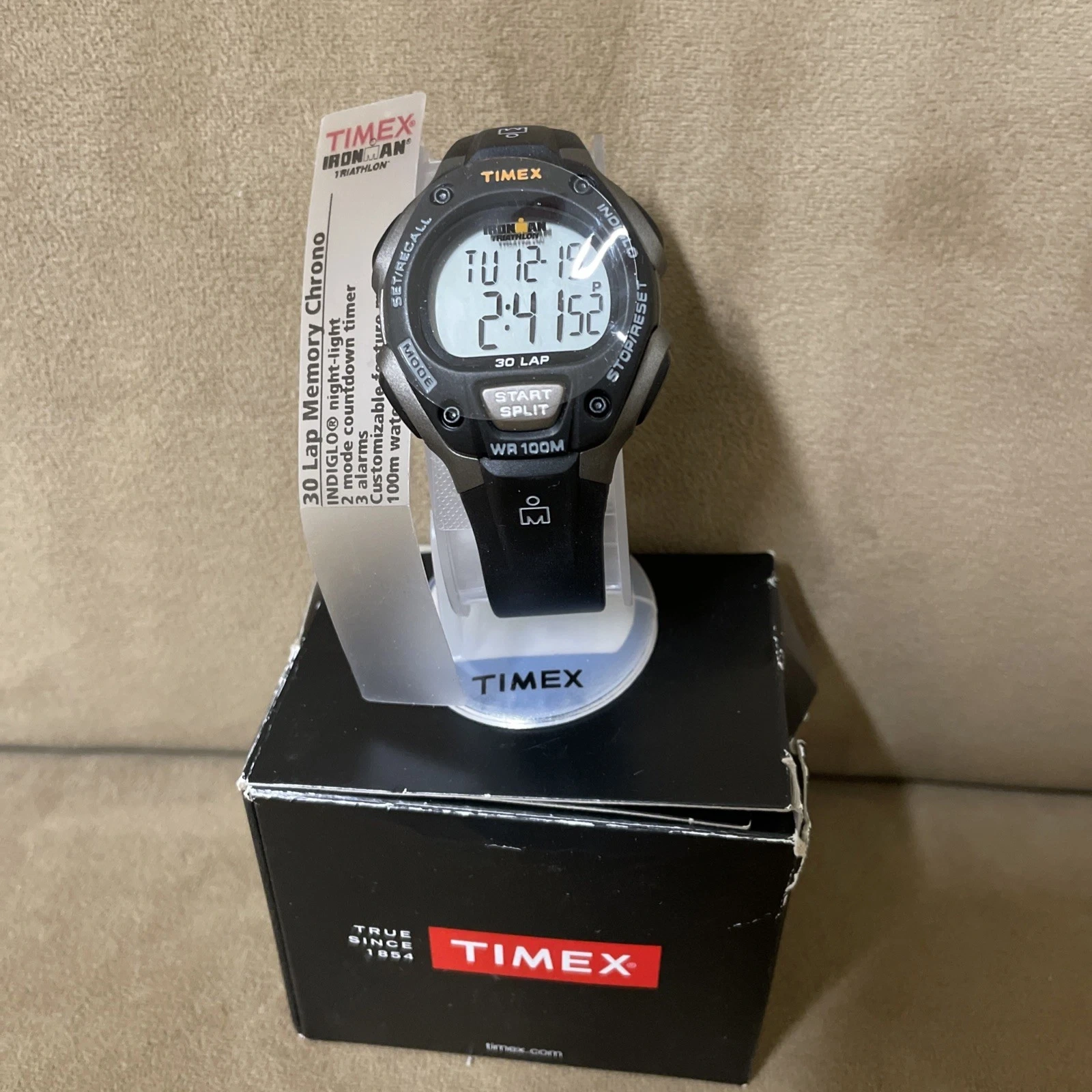
Timex T5E901 digital sports watch
Story & products
1. Timex IRONMAN Classic 30 full-size digital sports watch, US version. Model T5E901, SKU T5E9019J, UPC 753048171682.
2. Gray resin case, 38 mm in diameter. Black resin strap, 16 mm wide. Weight 39 g. Digital quartz movement powered by a CR2025 battery.
3. Includes a stopwatch with 30-lap memory, a countdown timer, an adjustable alarm and INDIGLO backlighting.
4. Rated water resistant to 100 m. The Timex manual instructs users to avoid diving and operating the buttons underwater.
5. See Timex US for official specifications (https://timex.com/products/ironman-classic-30-full-size-resin-strap-watch-t5e901). For purchase in the US, select T5E9019J at Kittery Trading Post (https://www.kitterytradingpost.com/timex-ironman-classic-30-full-size-resin-strap-watch/). Mainland China purchase and delivery are unconfirmed.
6. Kittery Trading Post US one-time purchase reference on 2026-11-14 was USD 77.00, about CNY 517.07 at the CFETS central parity rate of 1 USD = 6.7152 CNY on 2026-11-13 (https://www.chinamoney.com.cn/english/bmkcpr/?tab=2).
7. Sources are the Timex U.S. listing and its variant data, Kittery Trading Post's retail quote, the official manual (https://timex.com/cdn/shop/files/170-095004-03.pdf?v=1770255249213096688), and CFETS. Product photograph from vanguard_watch_co (https://www.ebay.com/itm/317876329975).
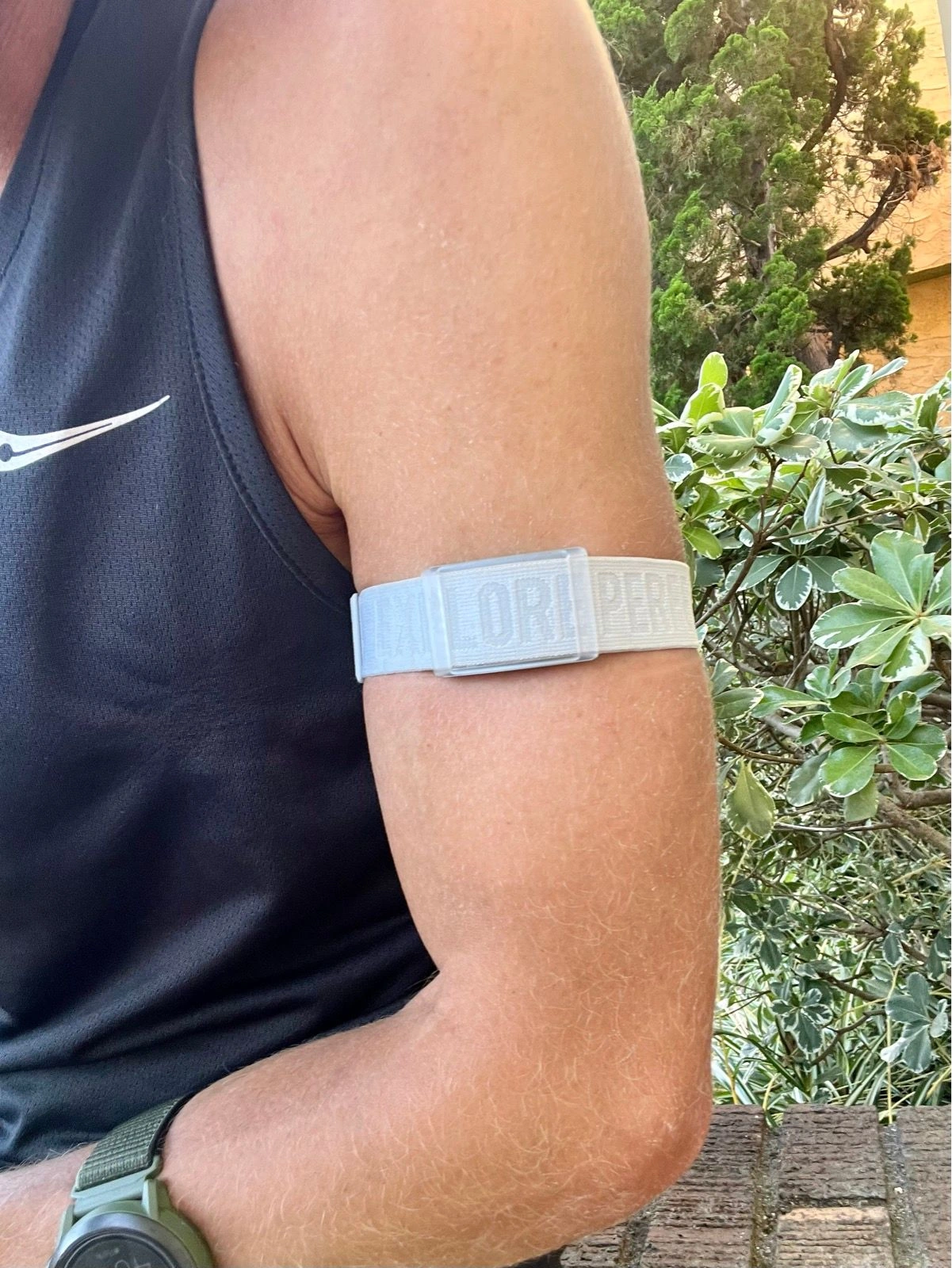
COROS HRM-GRY upper-arm heart rate monitor
Story & products
1. COROS Heart Rate Monitor for the upper arm, standard grey version sold in the US. SKU HRM-GRY, UPC 810005782548.
2. Fits upper-arm circumferences of 18–32 cm. Charges with a magnetic USB cable. COROS rates it for up to 38 hours of continuous use or 80 days on standby.
3. An optical sensor measures heart rate. Wear detection wakes the sensor automatically. Up to three compatible Bluetooth devices can connect at once.
4. Wear the sensor snugly against the skin on the upper arm. A compatible Bluetooth heart-rate device or app is required to record workouts. The sensor does not support ANT+ or direct workout recording in the COROS app. Rated 3 ATM. COROS excludes swimming and water sports.
5. Official product page https://coros.com/heart-rate-monitor . US purchase page for this SKU https://prrunandwalk.com/products/coros-heart-rate-monitor-grey-hrm-gry . Mainland China retailers and delivery are unconfirmed.
6. US one-time retail reference on 2026-11-14 Hong Kong time was USD 79.00, about CNY 530.50 before tax and shipping. Conversion uses the CFETS central parity rate for 2026-11-13 of CNY 6.7152 per USD 1. https://www.chinamoney.com.cn/english/bmkcpr/?tab=2 .
7. Specifications and limits from the COROS FAQ https://support.coros.com/hc/en-us/articles/17458038294292-COROS-Heart-Rate-Monitor-FAQs and compatibility guide https://support.coros.com/hc/en-us/articles/33876835729172-COROS-Heart-Rate-Monitor-Compatibility . The US retailer supplies the SKU, barcode and reference price.
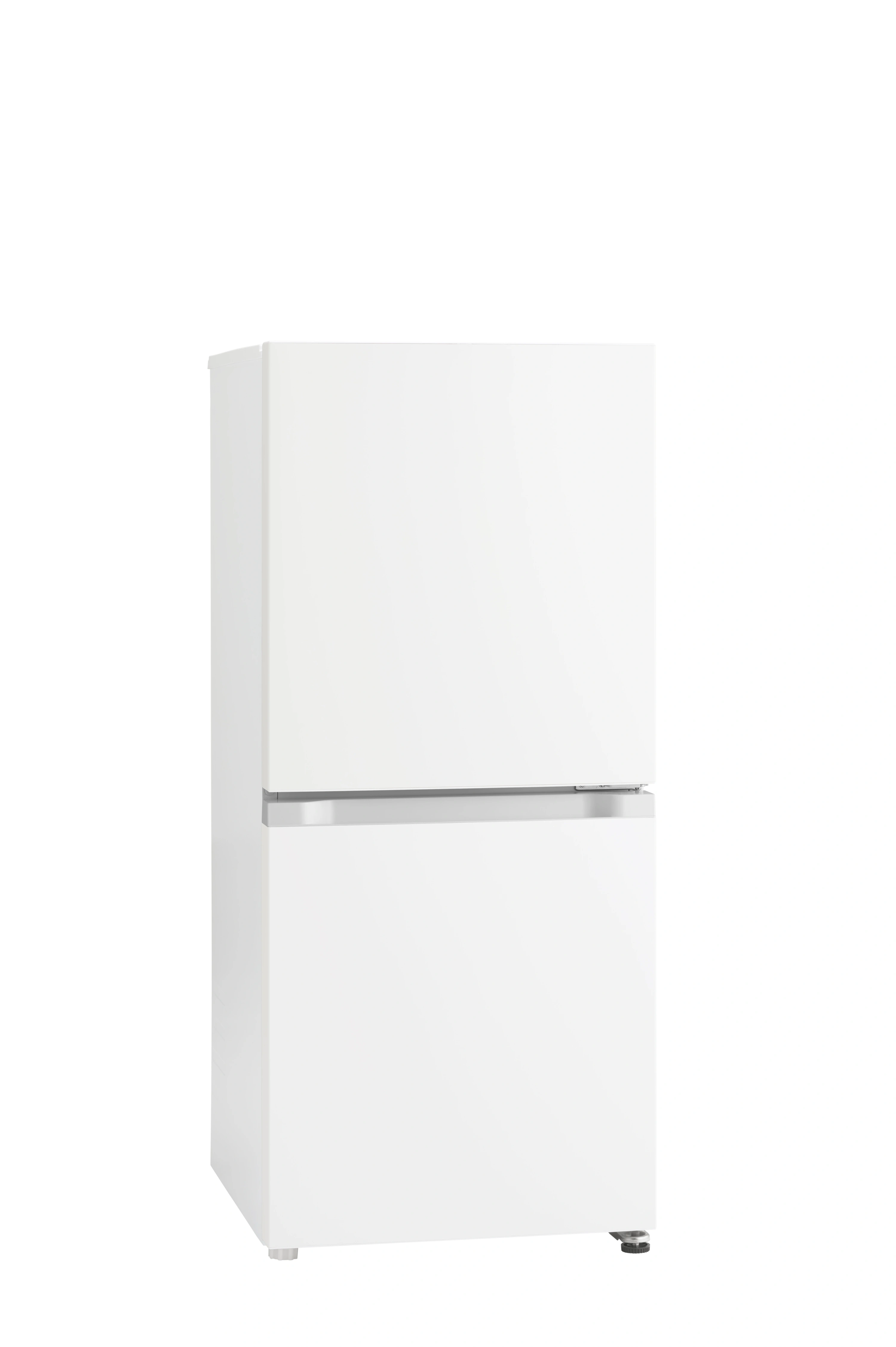
Mitsubishi Electric MR-PX17N-W 170 L two-door refrigerator
Story & products
1. Mitsubishi Electric PX Series two-door refrigerator for Japan, matte off-white MR-PX17N-W, JAN 4573637038570, right-hinged.
2. Rated capacity 170 L, with 102 L for refrigeration and 68 L for freezing. 530 mm wide × 603 mm deep × 1,225 mm high. Weight 41 kg.
3. Supports 50 or 60 Hz. Mitsubishi lists 70 W for the motor, 120 W for the heater and 247 kWh of annual energy use at either frequency.
4. Features include an inverter compressor, three freezer levels, a sliding fridge case and automatic fan-assisted defrost. The top withstands about 100 °C. Microwave placement depends on the appliance type and size.
5. Mitsubishi lists an installation depth of 603 mm. Allow ventilation clearance as shown in its installation diagram. Mainland China retailers and delivery are unconfirmed.
6. Official specifications https://www.mitsubishielectric.co.jp/home/reizouko/product/mr-px17n/spec/. Japanese retailer Dejikura on Yahoo! Shopping https://store.shopping.yahoo.co.jp/dejikura/4573637038570.html.
7. Japanese retail reference checked 2026-11-14: JPY 66,000, about CNY 2,768.83 at the 2026-11-13 central parity rate of JPY 100 per CNY 4.1952. Rate source https://www.safe.gov.cn/AppStructured/hlw/RMBQuery.do?COLLCC=546877760.

Re・De Kettle 1 L temperature-controlled kettle, black
Story & products
1. A-Stage Re・De Kettle 1 L temperature-controlled electric kettle. Japanese black model RD-K002BK, JAN 4573110727250.
2. Rated capacity 1.0 L. The kettle is 260 mm wide × 135 mm deep × 207 mm high and about 0.6 kg. With the base, it measures 260 × 168 × 236 mm and weighs about 0.9 kg. 100 V AC, 50/60 Hz, 1200 W, with an approximately 0.75 m cord.
3. Temperature settings are 50, 60, 70, 80, 85, 90, 95 and 100 °C. Keep-warm lasts up to 30 minutes. The kettle has boil-dry protection.
4. The manual specifies use in Japan only. Mainland China retail channels and delivery to mainland China are unconfirmed.
5. Brand specifications https://re-de.jp/kettle/spec.html. The Japanese purchase page is Penguin’s Garage on BASE https://penguinsone.base.shop/items/94456141.
6. The Japanese retailer reference price on 2026-11-14 was JPY 14,500. At the 2026-11-13 central parity rate of CNY 4.1952 per JPY 100, this is approximately CNY 608.30. Rate source https://www.safe.gov.cn/AppStructured/hlw/RMBQuery.do?COLLCC=546877760.
7. Specifications and operating restrictions come from the A-Stage RD-K002 manual https://www.re-de.jp/support/kettle/rd-k002_manual.pdf.
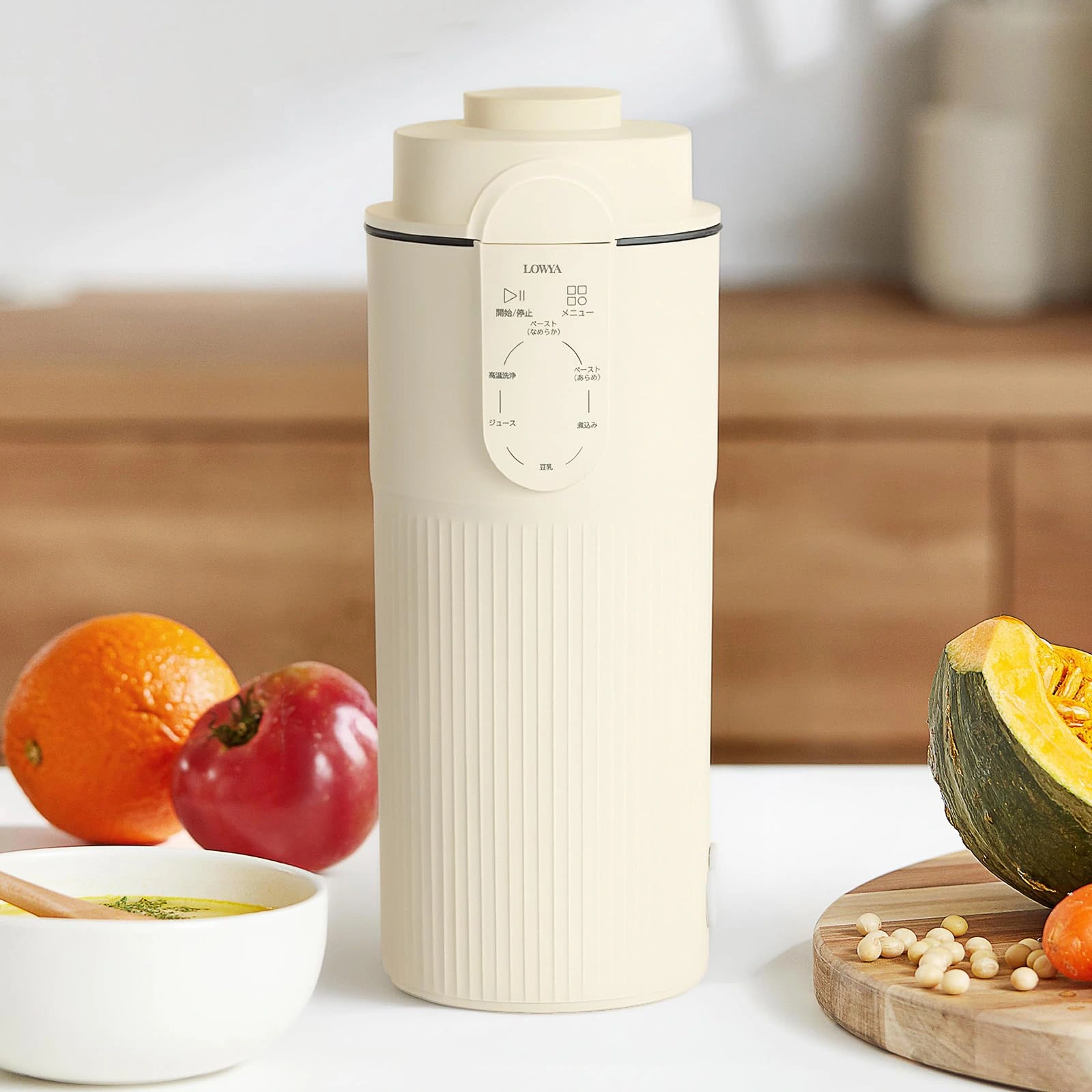
LOWYA Mini Coco 550 mL soup maker
Story & products
1. LOWYA Mini Coco 550 mL soup maker, Japanese version, off-white. Brand item code T7FQW, JAN 4570170486608.
2. Rated capacity 550 mL, 9.5 cm wide × 11.2 cm deep × 24.5 cm high, approximately 0.8 kg. Rated for 100 V AC at 50/60 Hz, with a 300 W heater, an 80 W motor and an approximately 1 m power cord.
3. LOWYA describes the capacity as suitable for one to two servings. Modes include smooth blending, coarse blending, simmering, soy milk, juice and high-temperature cleaning. The interior has a ceramic coating.
4. Brand information https://www.low-ya.com/goods/T7FQW. Japanese purchase page at LOWYA’s Yahoo! Shopping store https://store.shopping.yahoo.co.jp/low-ya/rsjzj.html. Mainland China purchasing and cross-border shipping are unconfirmed.
5. Japan reference price checked on 2026-11-14 was JPY 7,990 including tax. At the CFETS central parity rate of CNY 4.1952 per JPY 100 on 2026-11-13, this is approximately CNY 335.20. Rate source https://www.chinamoney.com.cn/english/bmkcpr/?tab=2.
6. Specifications and functions come from Vega Corporation’s announcement https://prtimes.jp/main/html/rd/p/000000177.000026707.html and the LOWYA Japanese storefront listing.
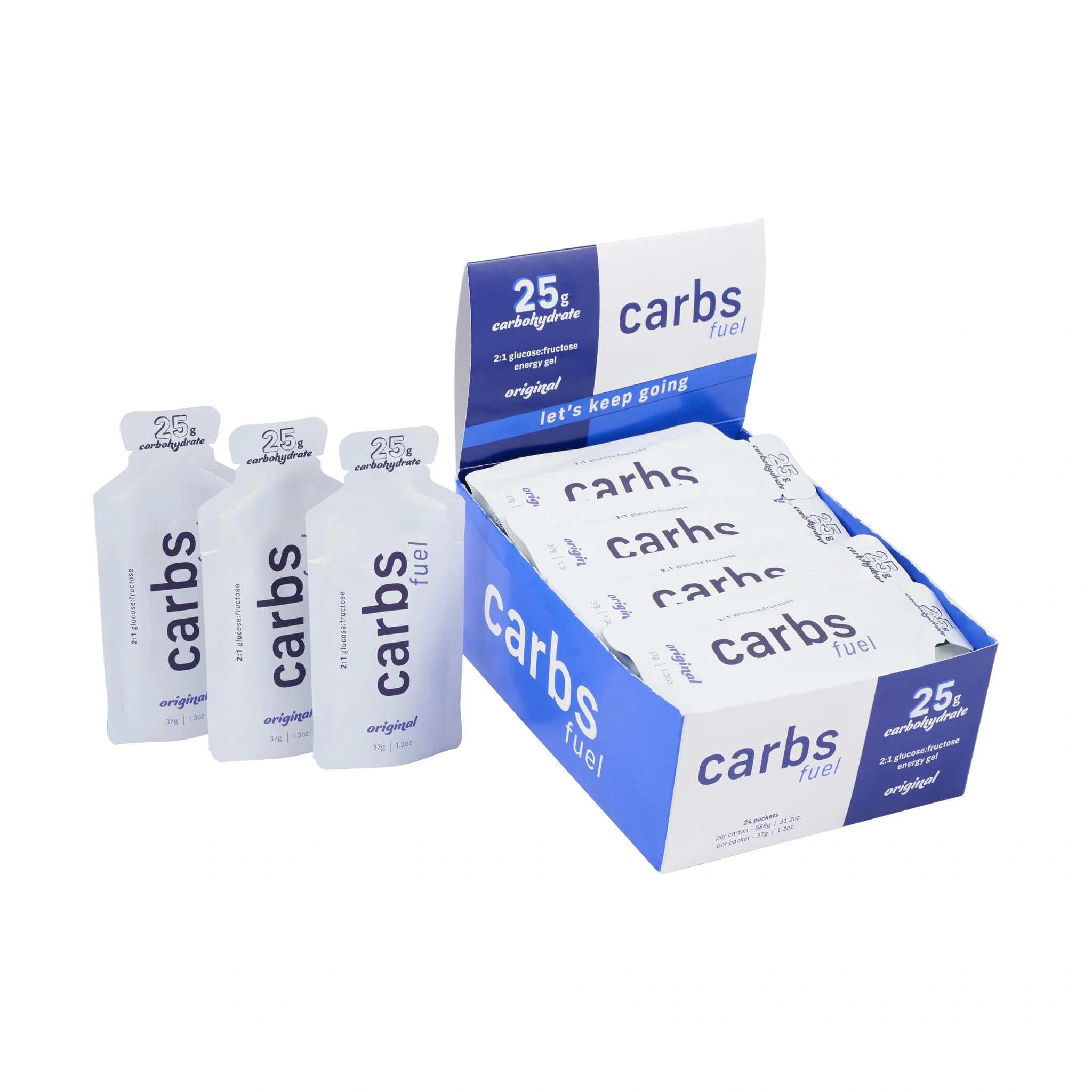
Carbs Fuel Original 25g Energy Gel, 24-pack
Story & products
1. U.S. Carbs Fuel Original Energy Gel, 24-pack. Manufacturer SKU CF-25-G-24, UPC 850071714012.
2. Each 37 g packet contains 25 g carbohydrate and 65 mg sodium, and provides 100 kcal.
3. The 25 g denotes carbohydrate per packet. The brand lists a 2:1 glucose-to-fructose ratio. Mainland China purchase channels are unconfirmed.
4. U.S. brand-store reference price for 24 packets, checked 2026-11-13, USD 36.00 or approximately CNY 241.75. SAFE central parity on 2026-11-13 was CNY 671.52 per USD 100. Taxes and shipping are unconfirmed.
5. The brand product page supplies the nutrition data and photograph. The U.S. purchase link opens the brand’s 24-pack. SAFE supplies the exchange rate. https://carbsfuel.com/products/carbs-fuel-original-25g-energy-gel https://carbsfuel.com/products/carbs-fuel-original-25g-energy-gel?variant=50105175638299 https://www.safe.gov.cn/AppStructured/hlw/RMBQuery.do?COLLCC=546877760
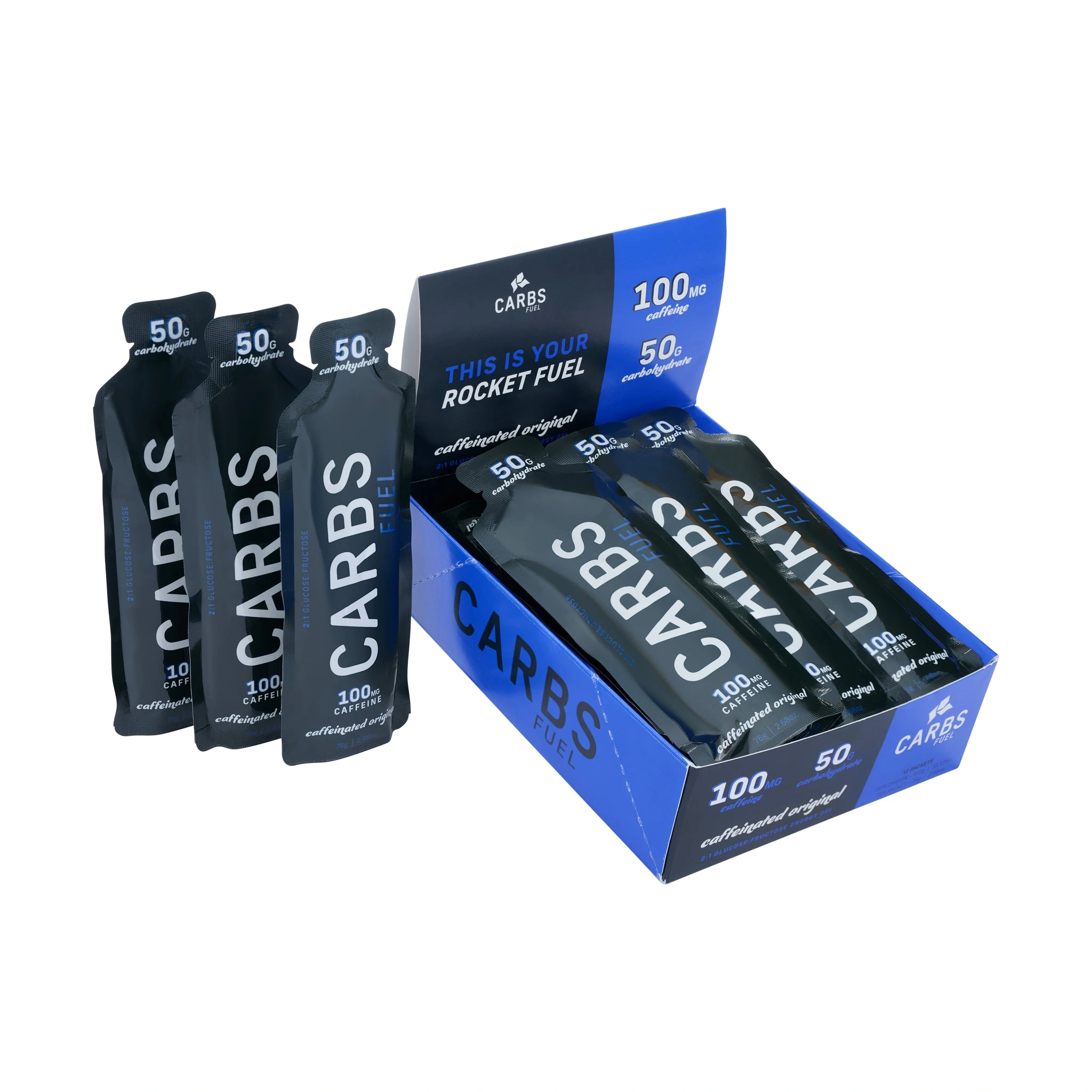
Carbs Fuel Caffeinated Original 50g Energy Gel, 12-pack
Story & products
1. U.S. Carbs Fuel Caffeinated Original Energy Gel, 12-pack. Manufacturer SKU CF-CAF-50-G-12, UPC 860010908174.
2. Each 76 g packet contains 50 g carbohydrate, 100 mg caffeine and 150 mg sodium, and provides 200 kcal.
3. The 50 g denotes carbohydrate per packet. Mainland China purchase channels are unconfirmed.
4. U.S. brand-store reference price for 12 packets, checked 2026-11-13, USD 30.00 or approximately CNY 201.46. SAFE central parity on 2026-11-13 was CNY 671.52 per USD 100. Taxes and shipping are unconfirmed.
5. The brand product page supplies the nutrition data and photograph. The U.S. purchase link opens the brand’s 12-pack. SAFE supplies the exchange rate. https://carbsfuel.com/products/carbs-fuel-caffeinated-original-50g-energy-gel https://carbsfuel.com/products/carbs-fuel-caffeinated-original-50g-energy-gel?variant=50105171738907 https://www.safe.gov.cn/AppStructured/hlw/RMBQuery.do?COLLCC=546877760
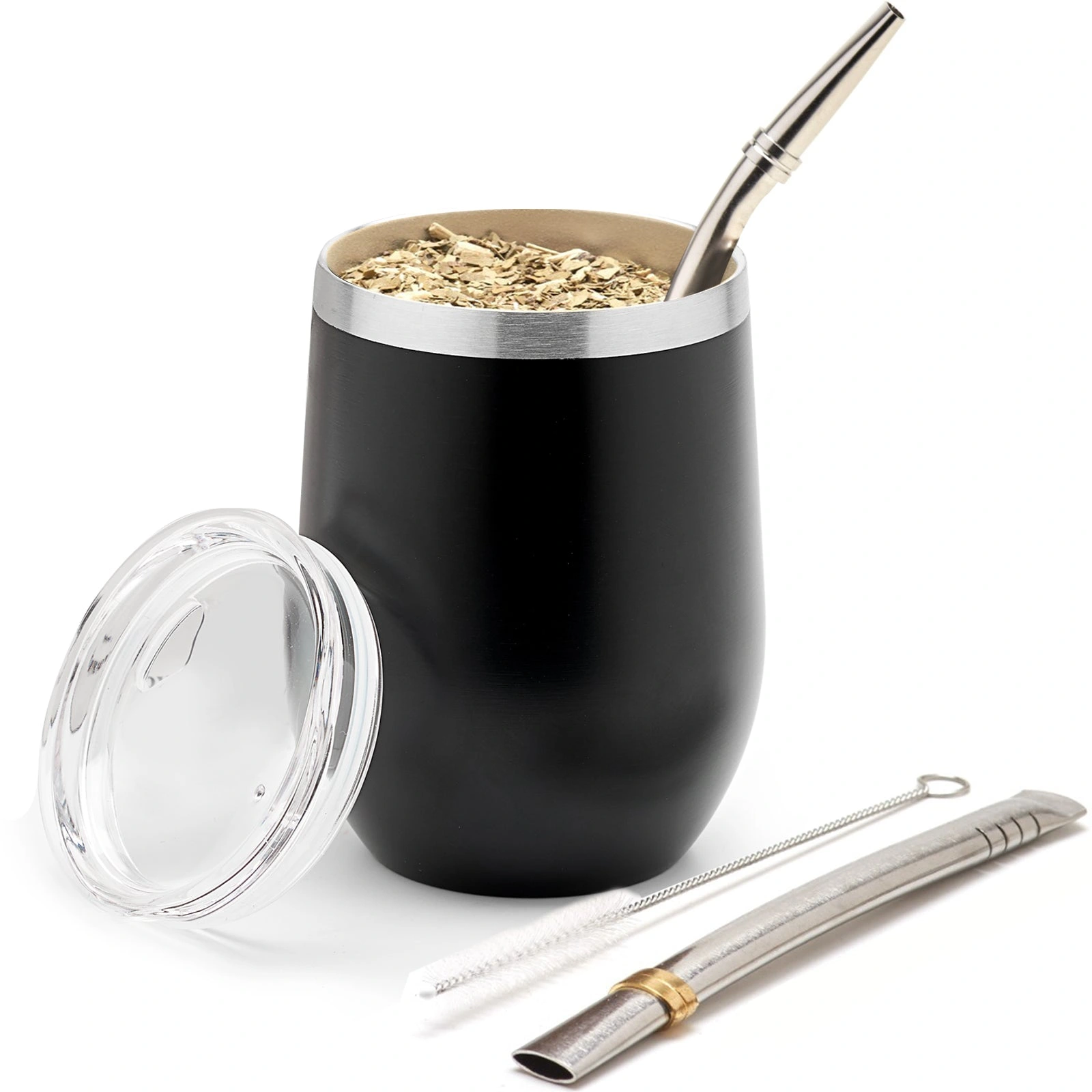
Balibetov black 8 fl oz stainless steel yerba mate set
Story & products
1. Balibetov stainless steel yerba mate set, black, 8 US fl oz. U.S. retail listing, brand SKU W4-7YYV-UOHW, UPC 643934338155.
2. The cup has a double-wall vacuum construction in 304 (18/8) stainless steel. The brand lists an approximate capacity of 235 mL.
3. The set includes one cup with a lid, two mate filter straws (bombillas) and one cleaning brush. Mainland China purchase channels are unconfirmed.
4. U.S. retail reference price USD 41.94, checked 2026-11-13, approximately CNY 279.67. ECB cross rate for 2026-11-12, 1 EUR = 1.1081 USD = 7.3891 CNY.
5. U.S. purchase link at Warehousesoverstock, retailer SKU ZDT632774. Taxes and shipping are unconfirmed. https://warehousesoverstock.com/balibetov-modern-mate-cup-and-bombilla-set-yerba-mate-cup-yerba-mate-set-includes-double-walled-18-8-stainless-steel-mate-tea-cup-two-bombilla-mate-straw-and-a-cleaning-brush-black-8-00/
6. Specifications and photograph from Balibetov, exchange rates from the European Central Bank. https://balibetov.com/products/balibetov-modern-mate-cup-and-bombilla-set-yerba-mate-cup-yerba-mate-set-includes-double-walled-18-8-stainless-steel-mate-tea-cup-two-bombilla-mate-straw-and-a-cleaning-brush-black-12 https://www.ecb.europa.eu/stats/eurofxref/eurofxref-hist-90d.xml
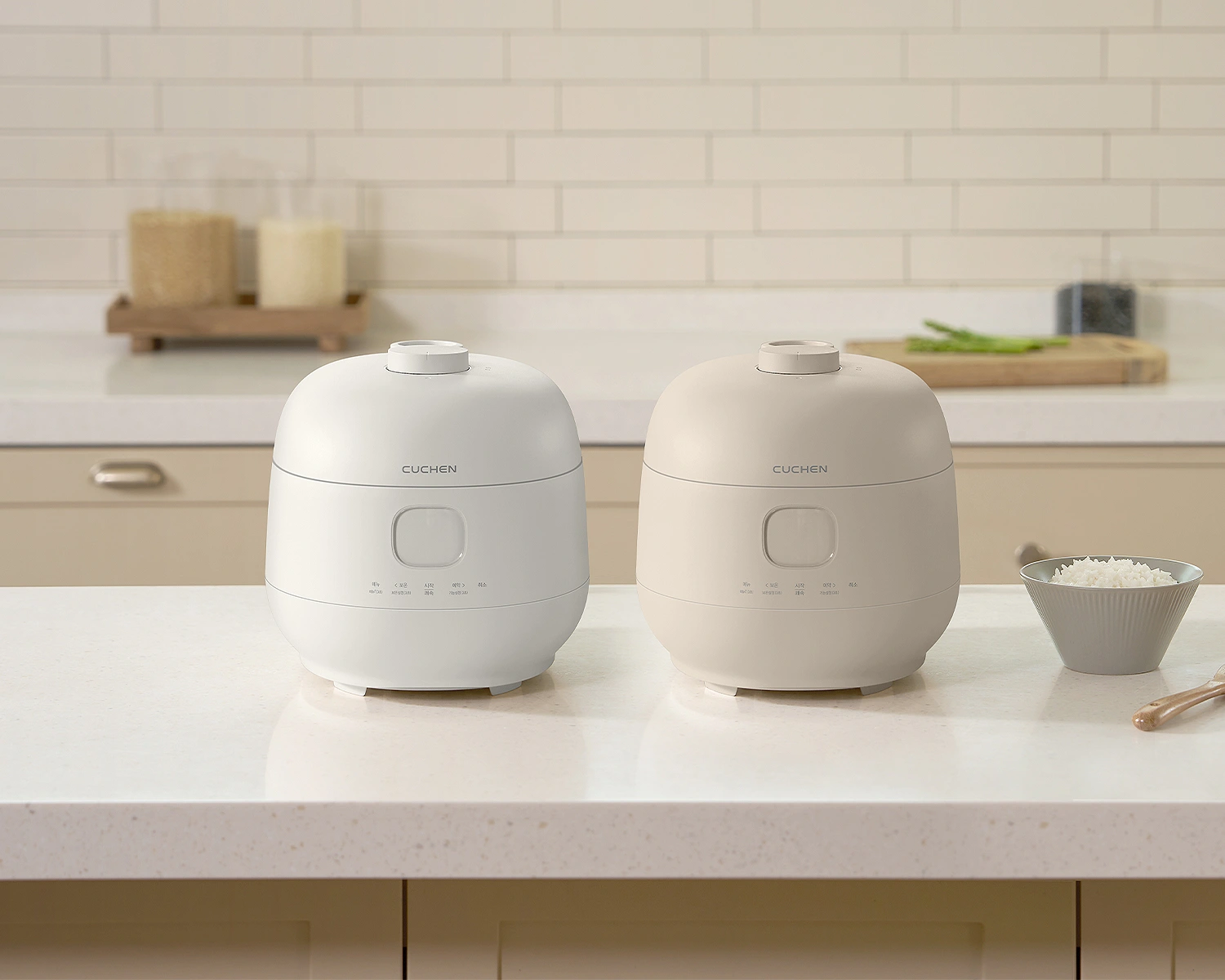
CUCHEN CRT-TWS0310W product data
Story & products
1. CUCHEN Brain Mini dual-pressure IH rice cooker, Korean model CRT-TWS0310W in Milk Shake White, barcode 8809908652883.
2. Rated for three servings. Measures 239 W × 342 D × 245 H mm and weighs 4.4 kg.
3. Uses induction heating and dual pressure settings. It includes an STS 304 stainless-steel inner pot and programs for white rice, mixed grains, steaming and rice intended for freezer storage.
4. Rated AC 220 V, 60 Hz and 870 W while cooking. Check local power compatibility before use. Mainland China purchase channels are unconfirmed.
5. The CUCHEN Korea store reference price on 2026-11-13 was KRW 209,000, about CNY 1,044.65 at the 2026-11-12 ECB cross-rate.
6. Official product and Korean purchase page https://www.cuchenmall.co.kr/shop/detail.php?pno=BC4E356FEE1972242C8F7EABF4DFF517.
7. Manufacturer information https://www.cuchen.com/cuchen-new-view.html?idx=837. Exchange rates https://www.ecb.europa.eu/stats/eurofxref/eurofxref-hist-90d.xml. Barcode source https://m.gsshop.com/prd/prd.gs?prdid=1063045745.
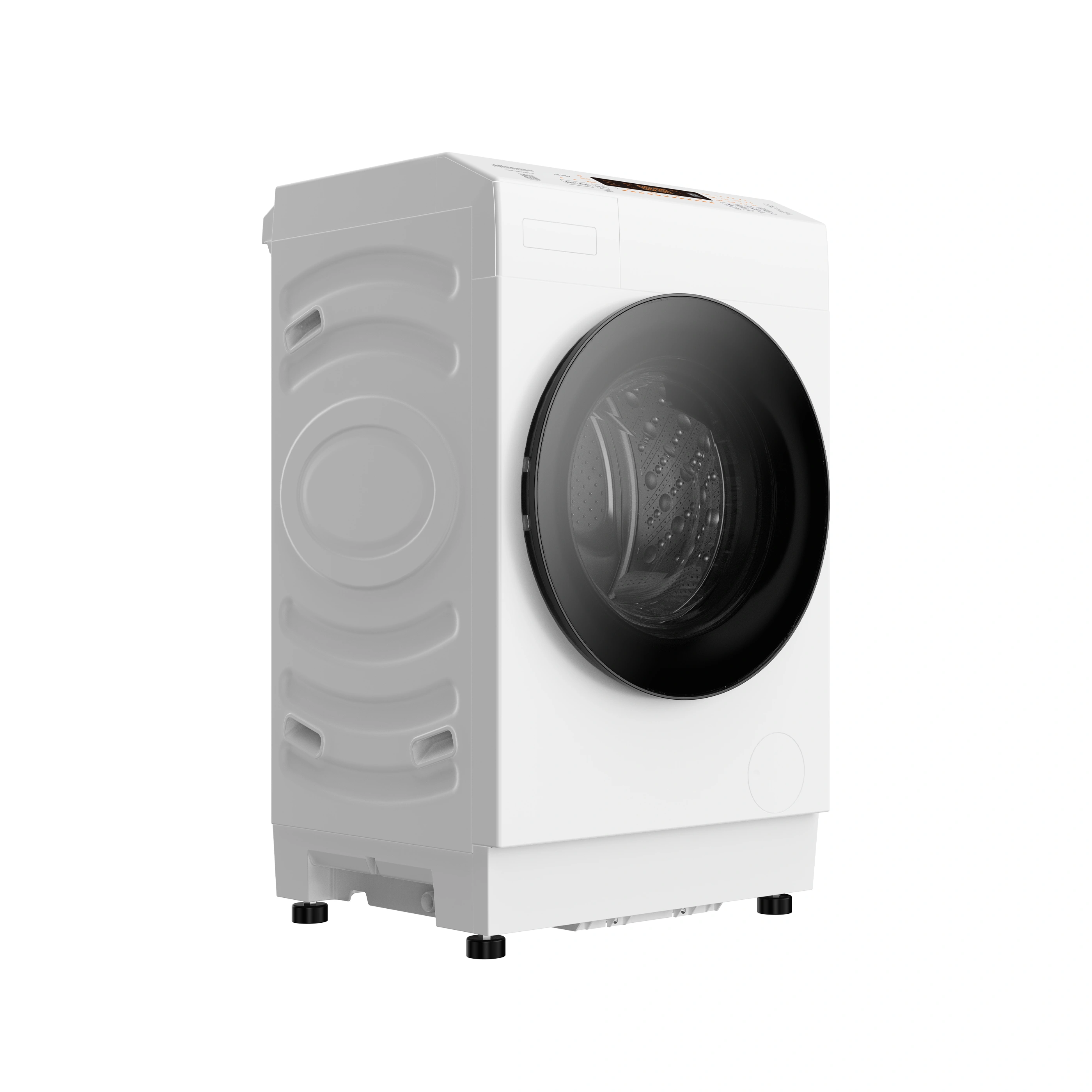
Hisense HWF-B90SS-W product data
Story & products
1. Hisense HWF-B90SS-W white front-load washer-dryer, Japanese model, JAN 4571637984170.
2. Rated capacity is 9 kg for washing and spinning and 5 kg for drying. Dimensions including the drain hose are 635 W × 576 D × 1,007 H mm. The cabinet is 598 mm wide and weighs about 82 kg.
3. Rated at 50/60 Hz, 140 W for washing and 1,200 W for drying. The standard cycle uses 65 L for washing or 88 L for washing and drying.
4. Features foam washing, warm-water washing and ventless PTC heater drying. Automatic dosing tanks hold 650 mL of liquid detergent and 400 mL of fabric softener.
5. The drain pan needs an internal width of at least 590 mm and depth of at least 470 mm. The drying load limit is 5 kg. Mainland China purchase channels are unconfirmed.
6. Sofmap Japan reference price on 2026-11-13 was JPY 110,000 including Japanese consumption tax, about CNY 4,593.13 at the 2026-11-12 ECB cross-rate.
7. Manufacturer specifications https://www.hisense.co.jp/washer/hwf-b90ss/d1.php. Japanese purchase page https://www.sofmap.com/product_detail.aspx?sku=102381862. Exchange rates https://www.ecb.europa.eu/stats/eurofxref/eurofxref-hist-90d.xml.
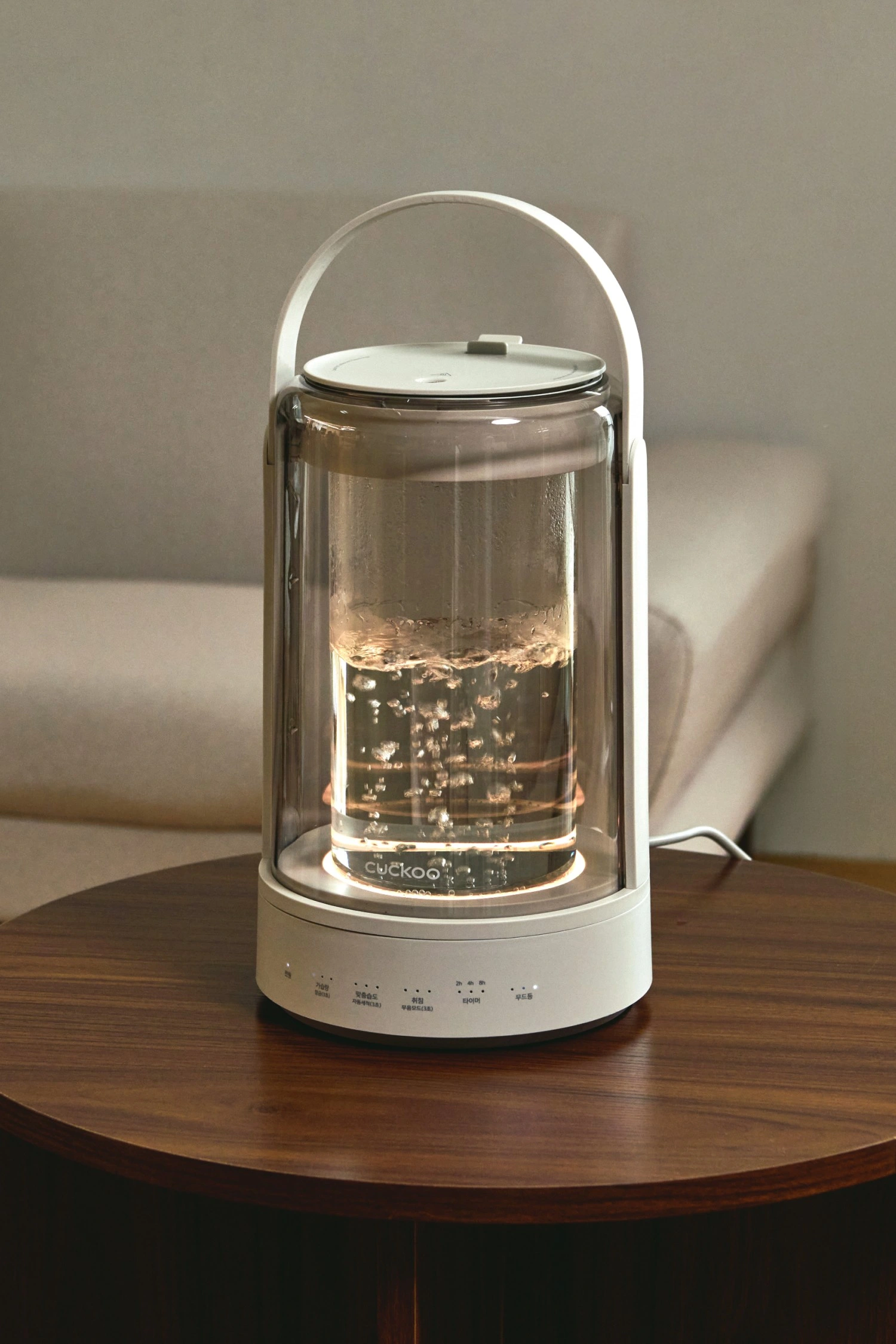
CUCKOO CH-J301FW product data
Story & products
1. CUCKOO CH-J301FW heated humidifier, South Korean Noble White version.
2. 213 W × 213 D × 347 H mm and 3.3 kg. Nominal tank capacity 3 L, maximum fill 2.2 L.
3. Rated 220 V, 60 Hz and 600 W. Check local voltage and frequency before connecting.
4. Uses heated water to humidify, with a borosilicate glass tank, stainless-steel heating plate, mood light and child lock.
5. South Korean Kolon Mall reference price KRW 263,000 (2026-11-12), about CNY 1,312.29 at the ECB cross-rate for 2026-11-11.
6. Brand product page https://www.cuckoo.co.kr/mall/productView?productNo=11473. South Korean purchase listing https://www.kolonmall.com/Brands/cuckoo/Product/K1792565811793074WH01. Mainland China channels are unconfirmed.
7. Electrical and capacity specifications https://store.ohou.se/goods/4232880. Exchange rates https://www.ecb.europa.eu/stats/eurofxref/eurofxref-hist-90d.xml.
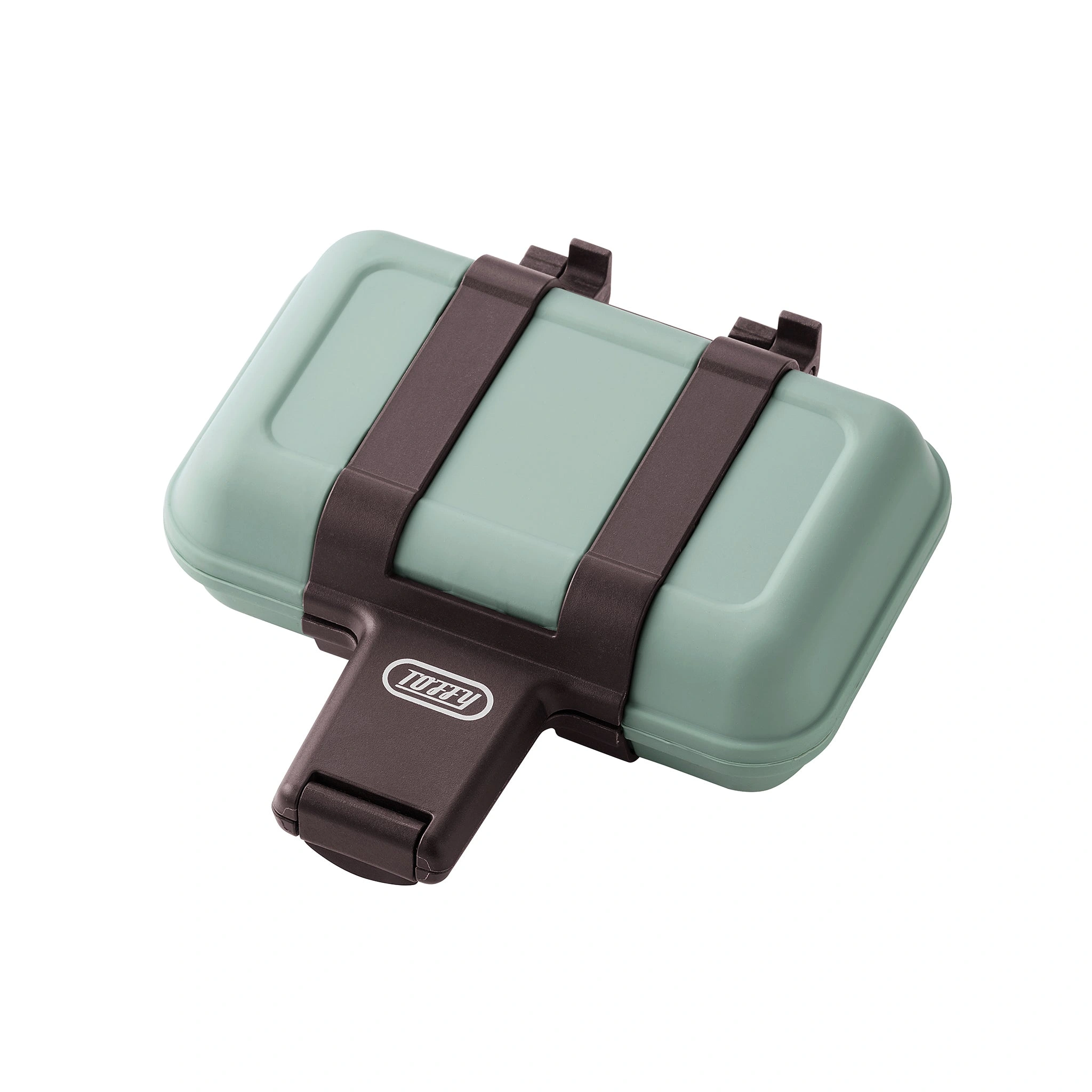
Toffy RANGE WELL K-MW7-PA product data
Story & products
1. Toffy RANGE WELL microwave half sandwich maker, Japan Pale Aqua K-MW7-PA, JAN 4934122100330.
2. Approx. 160 W × 55 H × 165 D mm and 430 g. Aluminized steel plates with a fluoropolymer coating on the cooking surface.
3. Folds one slice of bread to make a half sandwich. The unit can lie flat or stand upright. Use it flat in a turntable microwave.
4. For microwave use only. Keep away from open flames, induction hobs, ovens and black oven trays.
5. Japan brand-store reference price JPY 3,850 (2026-11-12), about CNY 161.29 at the ECB cross-rate for 2026-11-11.
6. Brand specifications https://ladonna-co.net/products/item/k-mw7/. Japan brand-store purchase listing https://toffy.jp/products/k-mw7?variant=67664087417106. Mainland China channels are unconfirmed.
7. Manufacturer manual https://ladonna-co.net/manual/Web_K-MW7.pdf. Exchange rates https://www.ecb.europa.eu/stats/eurofxref/eurofxref-hist-90d.xml.
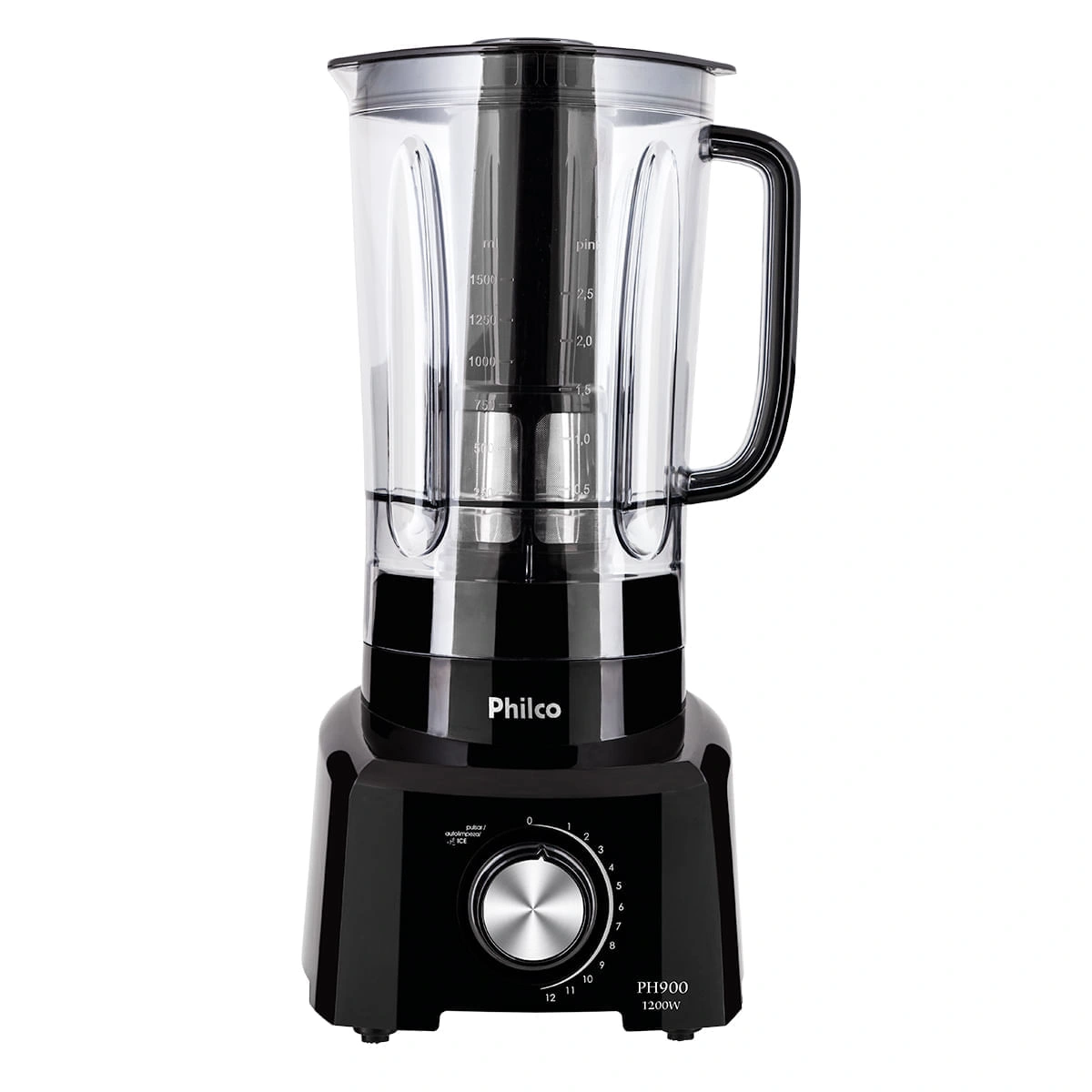
Philco PH900 103101017 product data
Story & products
1. Philco PH900 black countertop blender, Brazilian 127 V version.
2. Brazilian 127 V product code 103101017, EAN 7899466417056.
3. Rated at 1200 W. Overall height 422 mm, width 225 mm and depth 225 mm. Maximum jar capacity 3 L.
4. Twelve speed settings, pulse and ice modes, and a six-blade assembly. Use only the selected version’s rated 127 V supply.
5. Brand information https://www.philco.com.br/liquidificador-ph900-preto-1200w/p. Brazilian brand-store link for the 127 V variant https://www.philco.com.br/liquidificador-ph900-preto-1200w/p?skuId=944. Mainland China channels are unconfirmed.
6. Brazil reference price BRL 119.90 (2026-11-12), about CNY 143.94 at the ECB EUR/BRL and EUR/CNY cross rate for 2026-11-11.
7. Technical specifications https://suporte.philco.com.br/sfsites/c/sfc/servlet.shepherd/document/download/069V200000AElULIA1. Exchange rates https://www.ecb.europa.eu/stats/eurofxref/eurofxref-daily.xml.
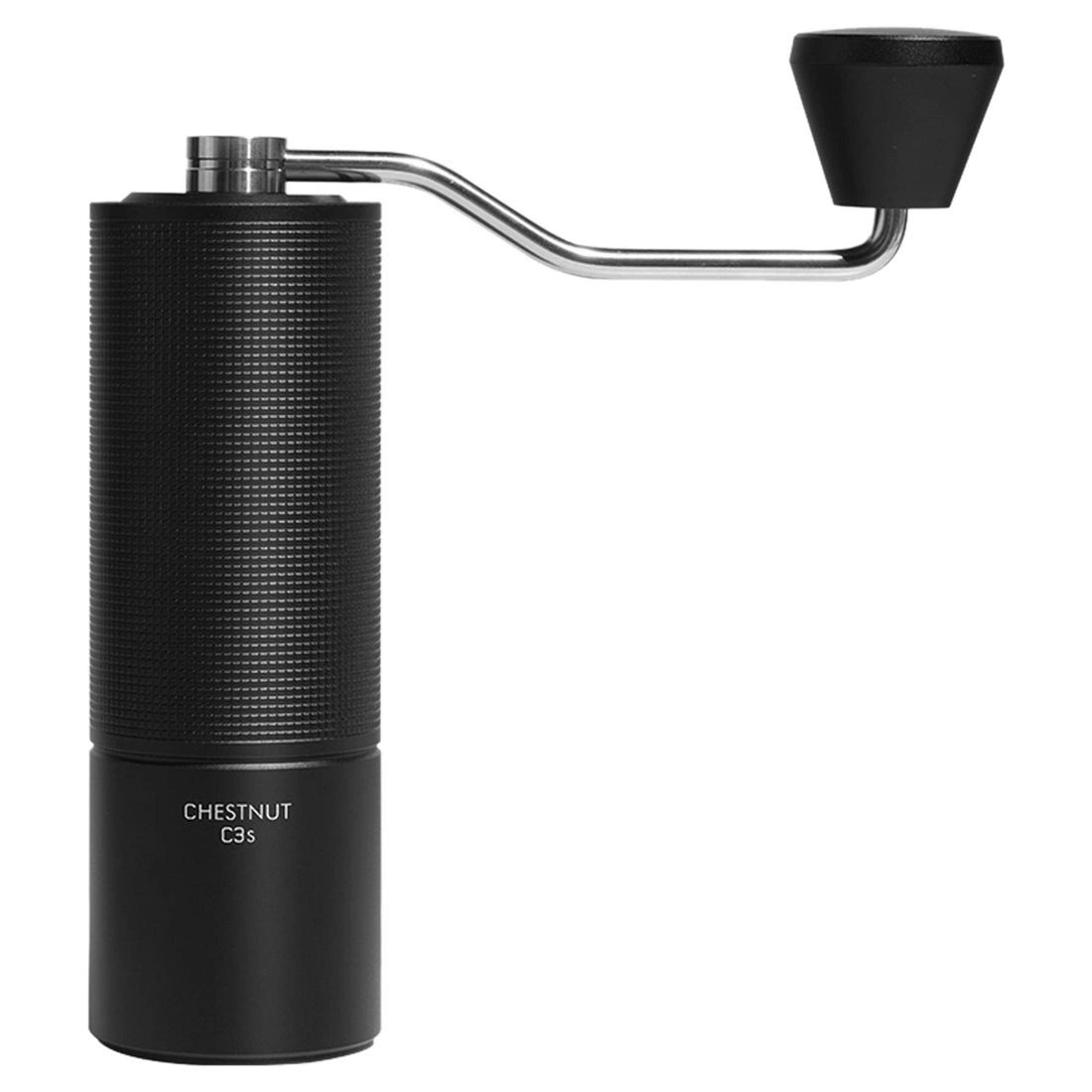
TIMEMORE Chestnut C3S MLB231BK product data
Story & products
1. TIMEMORE Chestnut C3S manual coffee grinder, black.
2. Japanese import model MLB231BK, JAN 6959493505674.
3. Body width 52 mm, height 147 mm, handle 159 mm, about 540 g. Capacity about 20 g, hand-operated.
4. Aluminium-alloy body, S2C660 stainless steel conical burrs and adjustable grind size. Capacity is for roasted coffee beans. The Japanese import includes Japanese instructions.
5. Official specifications https://www.timemore.com/products/c3-series. Purchase from the Japanese importer at https://timemore.co.jp/?pid=177101720. Mainland China channels for this SKU are unconfirmed.
6. Checked 2026-11-12. Japanese reference price JPY 13,090 including Japanese consumption tax, about CNY 548.37. ECB cross-rate dated 2026-11-11, 1 JPY ≈ CNY 0.041892.
7. Sources are TIMEMORE specifications, the Japanese importer, same-model photos from d fashion and ECB rates https://www.ecb.europa.eu/stats/eurofxref/eurofxref-daily.xml.
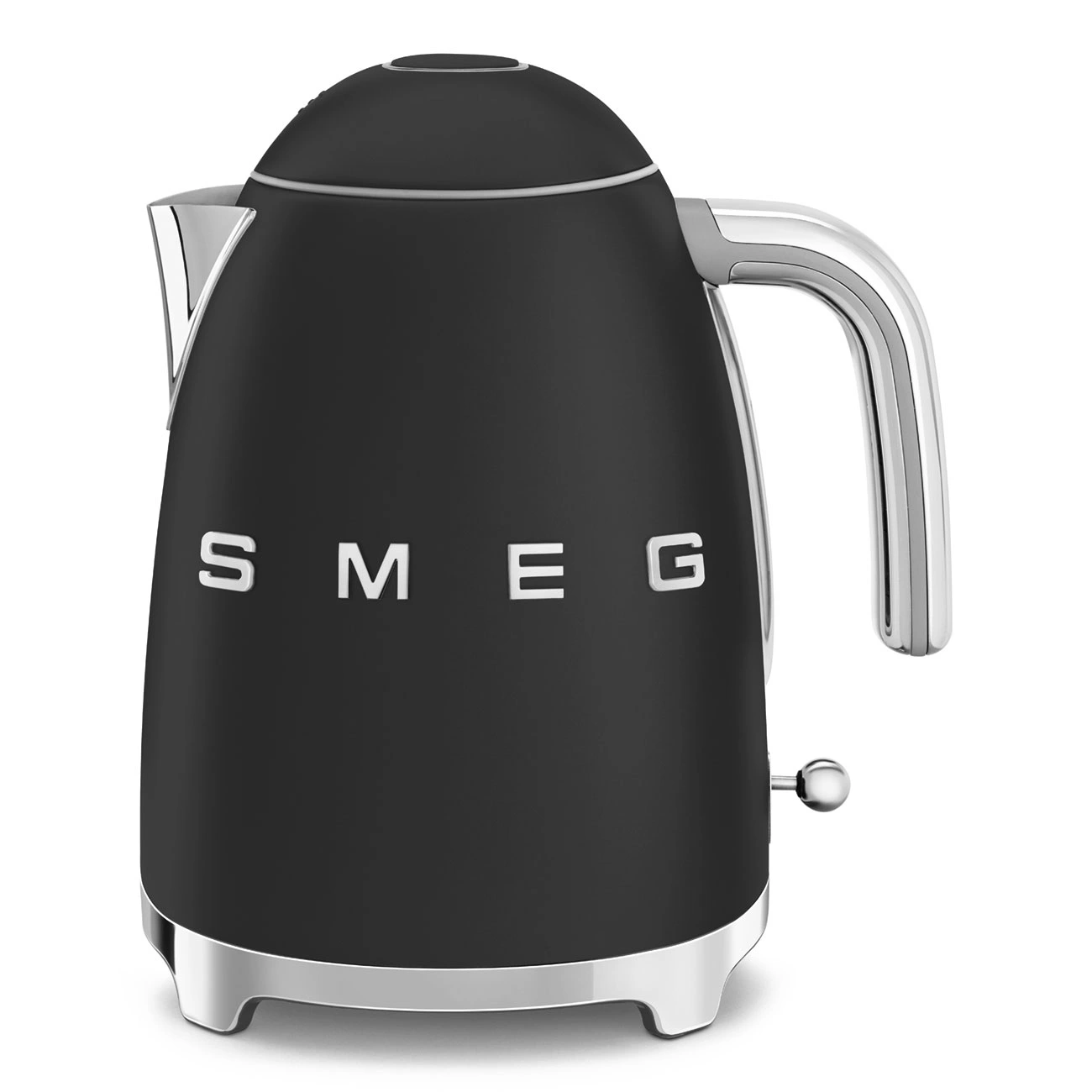
SMEG KLF03BLMEU product data
Story & products
1. SMEG 50’s Style KLF03 electric kettle in matte black.
2. Model KLF03BLMEU, European version, EAN 8017709290795.
3. Maximum capacity 1.7 L, H × W × D 248 × 226 × 171 mm, net weight 1.6 kg. Rated power 2,400 W, 220–240 V, 50/60 Hz.
4. SMEG specifies automatic shut-off at 100°C, a soft-opening lid, a removable stainless-steel filter and a 360° base. European Schuko (E/F) plug. Check the power supply and socket before use.
5. Official specifications https://www.smeg.com/products/KLF03BLMEU. German purchase page at Future-X https://www.future-x.de/SMEG-1-7-l-2400-W-Schwarz-Chrom-Kunststoff-Edelstahl-Wasserstandsanzeige-Filterung-electric-kettle-Mat-Black/999971554. Mainland China channels are unconfirmed.
6. Checked 2026-11-12. German reference price EUR 223.99 including German VAT, about CNY 1662.57, using the ECB rate dated 2026-11-11 of CNY 7.4225 per EUR.
7. Sources are SMEG specifications and product photography, the exact product page at Future-X, and ECB rates https://www.ecb.europa.eu/stats/eurofxref/eurofxref-daily.xml.
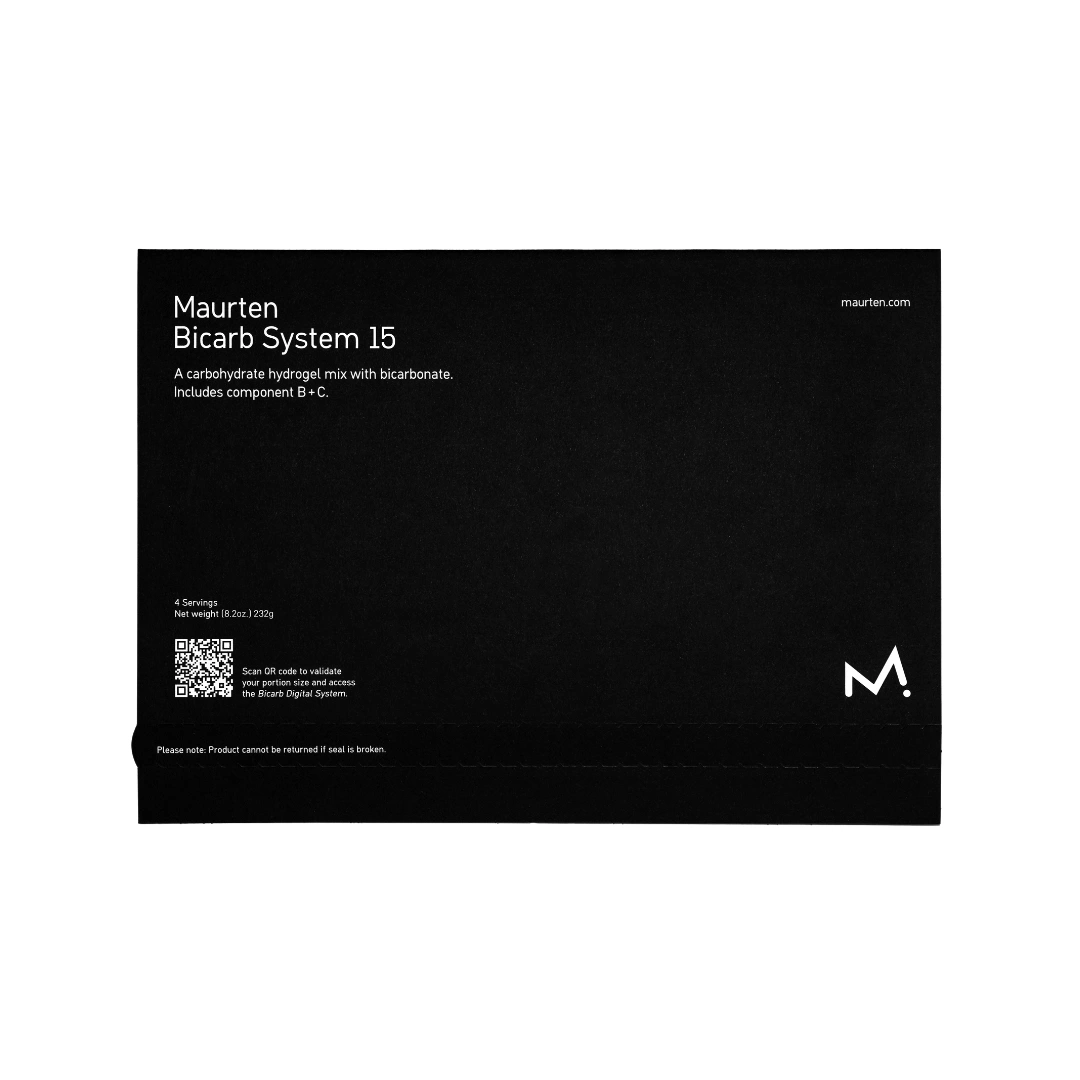
Maurten Bicarb System 15 product data
Story & products
1. Maurten Bicarb System 15, a carbohydrate hydrogel mix with sodium bicarbonate.
2. Version 15, four servings. Cam2 item MAURTEN-15001, EAN 7350008411944, verified retail variant 46444078170326.
3. The pictured box lists components B and C and a net weight of 232 g. The manufacturer lists 15 g of sodium bicarbonate and 4,100 mg of sodium per serving. Inclusion of a mixing bowl with this retail option is unconfirmed.
4. The brand markets this for high-intensity exercise. It is high in sodium, and Maurten advises against use by people under 18. Check the applicable packaging for usage limits.
5. Manufacturer information https://www.maurten.com/faq/general-product. Purchase entry for the exact variant at Hong Kong retailer Cam2 https://cam2.com.hk/zh-hans/products/maurten-bicarb-system-15-body-weight-56kg-to-69kg?variant=46444078170326. Mainland China channel unconfirmed.
6. Checked 2026-11-12. The Cam2 USD page displayed a regular reference of USD 90.00, about CNY 600.36, and a separate member price of USD 81.00, about CNY 540.33. ECB euro cross-rate on 2026-11-11, 1 USD ≈ CNY 6.670711.
7. Sources are Maurten product information and packaging, the exact Cam2 variant page and the ECB exchange rate https://www.ecb.europa.eu/stats/eurofxref/eurofxref-daily.xml.
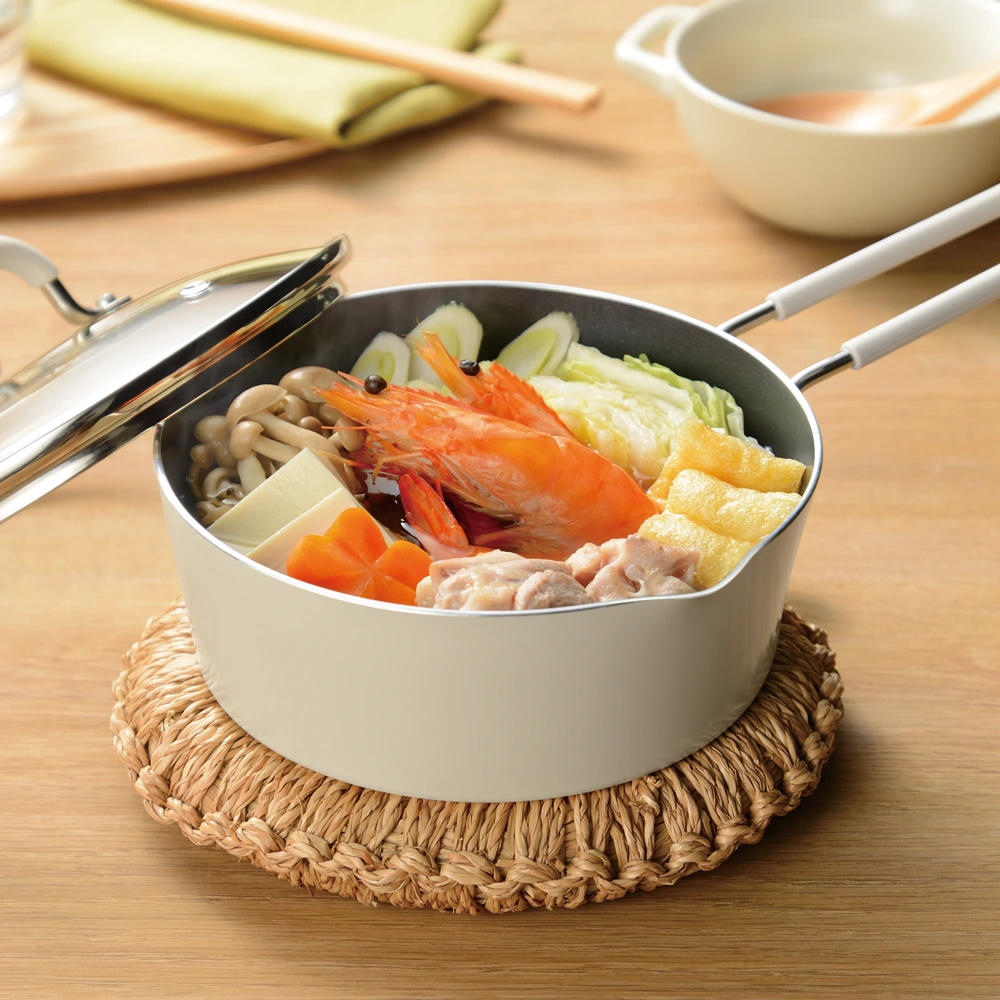
ToMay IH対応シェラパン 16 cm RB-4047 / RB-4048 | Product data card
Story & products
1. Wahei Freiz ToMay IH-compatible Sierra Pan, a 16 cm lidded pan for the Japanese market.
2. Ivory RB-4047, JAN 4903779140471. Charcoal RB-4048, JAN 4903779140488.
3. Both variants measure about 290 × 170 × 120 mm, weigh about 580 g and hold about 1.1 L when filled to the brim.
4. Aluminium-alloy body, fluoropolymer interior coating, bonded stainless-steel base and physically toughened glass lid.
5. Compatible with gas and induction. Only the pan body is dishwasher-safe.
6. Manufacturer specifications https://www.wahei.co.jp/products/tomay/42393.html . On the official DAYWEAR Japan shop https://shop.daywear.jp/view/item/000000001403 , select アイボリー or チャコール. Mainland China channel unconfirmed.
7. Reference price checked 2026-11-12: JPY 3,300 including tax per variant, about CNY 138.25 at ECB rates of JPY 177.18 and CNY 7.4225 per EUR on 2026-11-11. Shipping follows checkout. Exchange source https://www.ecb.europa.eu/stats/eurofxref/eurofxref-daily.xml .
ToMay IH対応シェラパン 16 cm RB-4047 · ToMay IH対応シェラパン 16 cm RB-4048
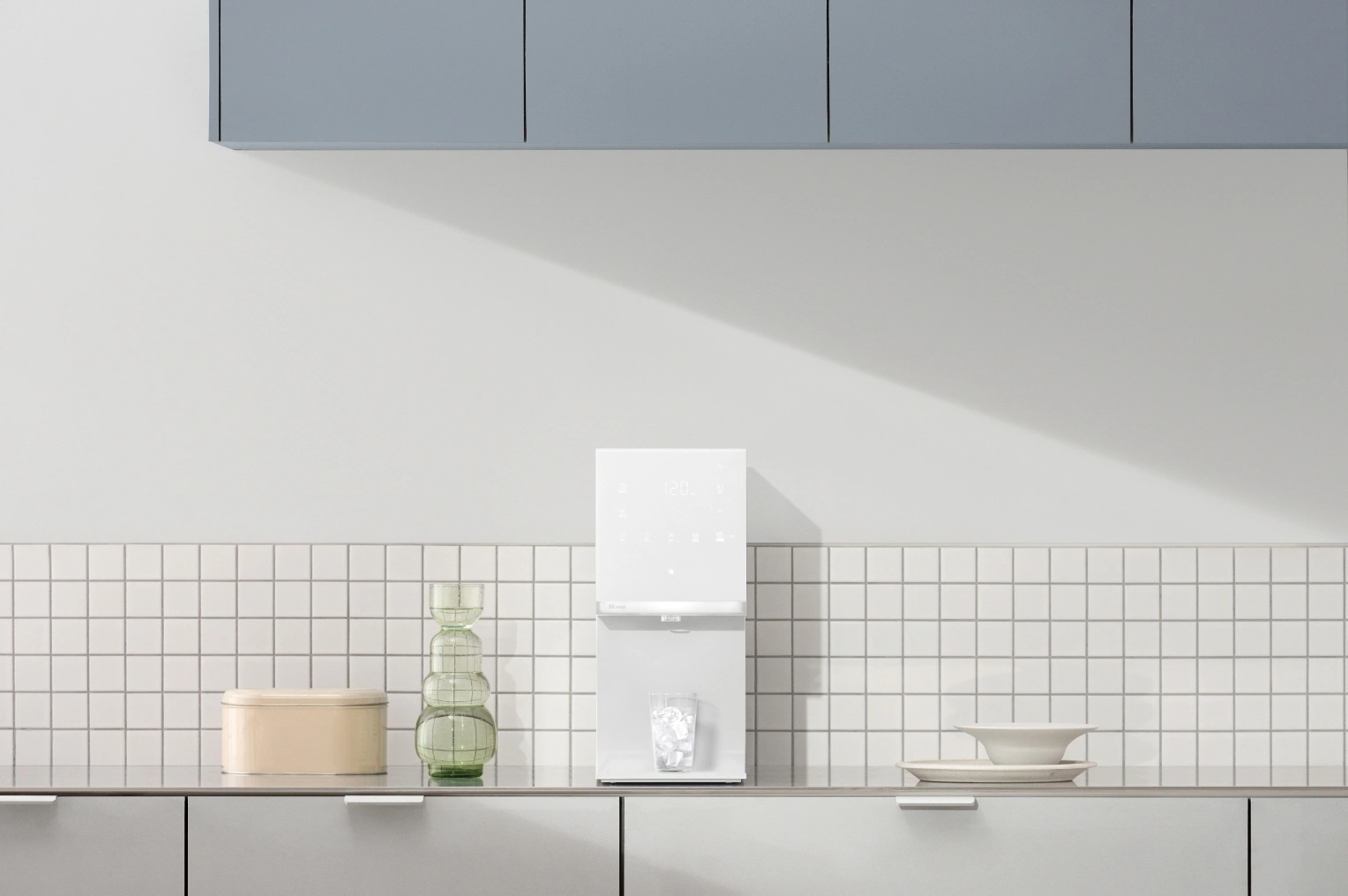
SK Magic MEGA ICE mini WPUIAC606SNW · Product data
Story & products
1. Product: SK Magic MEGA ICE mini, ice-making water purifier.
2. Model: WPU-IAC606S; Natural White variant WPUIAC606SNW, Korean market.
3. Dimensions and weight: W195 × D435 × H435 mm; 14.4 kg.
4. Power: 220 V,60 Hz. Made in Korea.
5. Ice specification: manufacturer-rated maximum4.1 kg/day; Large about11 g and Regular about9 g.
6. Functions: ice,cold water,hot water and direct purified water; stainless-steel water piping and UV outlet care.
7. Subscription reference,2026-11-10: official default84-month plan,KRW21,450/month for months1–12 and KRW42,900/month for months13–84; total KRW3,346,200. These are subscription fees,not a purchase price.
8. CNY reference: CNY100=KRW20,107 that day; the two monthly tiers are approximately CNY106.68 and CNY213.36. Indicative conversion only.
9. Channel: SK Magic Korea subscription,installation required. Mainland China channel unverified; contract-page terms apply.
10. https://www.skmagic.com/goods/indexGoodsDetail?goodsId=G000069932 | https://www.sknetworks.co.kr/pr/news-room/VCaPYSnHjQjETBy3 | https://www.safe.gov.cn/AppStructured/hlw/RMBQuery.do?COLLCC=546877760
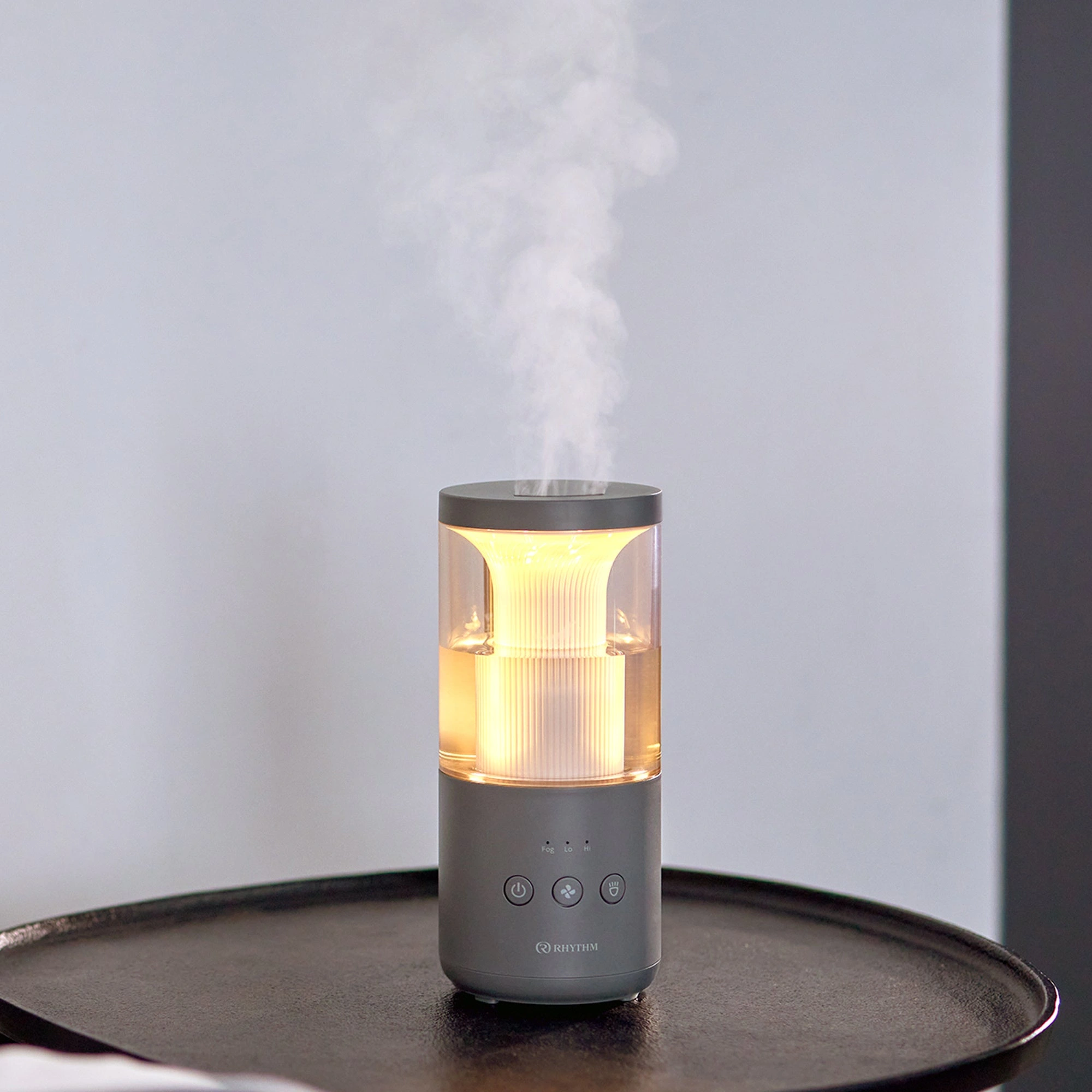
RHYTHM MIST Mini 2 9YY030RH82 — Product data
Story & products
1. Brand and product: RHYTHM MIST Mini 2, an ultrasonic desktop humidifier.
2. Model and version: 9YY030RH82, dark gray, Japanese market; JAN 4903456218912.
3. Dimensions and capacity: W90 × D99 × H207 mm; approximately 410 g excluding the adapter; approximately 350 mL tank.
4. Power: dedicated adapter input AC100 V, 50/60 Hz; output DC12 V. Hi mode uses approximately 14 W.
5. Mist modes: Hi/Low/Fog approximately100/40/6 mL/h, with approximately3.2/8/53 hours of continuous operation respectively under manufacturer specification conditions.
6. Features: pool-less design with a floating humidification component; four removable cleaning parts: body, top cover, inner cover and floating component; three-level LED light with off setting; aroma-pad compartment.
7. Reference quote: Sofmap JPY6,980 including Japanese tax, checked2026-11-10. At CNY4.2355 per JPY100 that day, approximately CNY295.64, excluding shipping and other charges. The CNY amount is an indicative conversion.
8. Purchase channel: Sofmap Japan. Mainland China availability of this exact model is unverified.
9. Data sources: manufacturer product and specification pages, the exact-SKU Sofmap listing and the daily SAFE exchange-rate table.
10. https://rhythm.jp/lp/mistmini2 | https://rhythm.jp/lp/mistmini2/spec | https://www.sofmap.com/product_detail.aspx?sku=102220079 | https://www.safe.gov.cn/AppStructured/hlw/RMBQuery.do?COLLCC=546877760
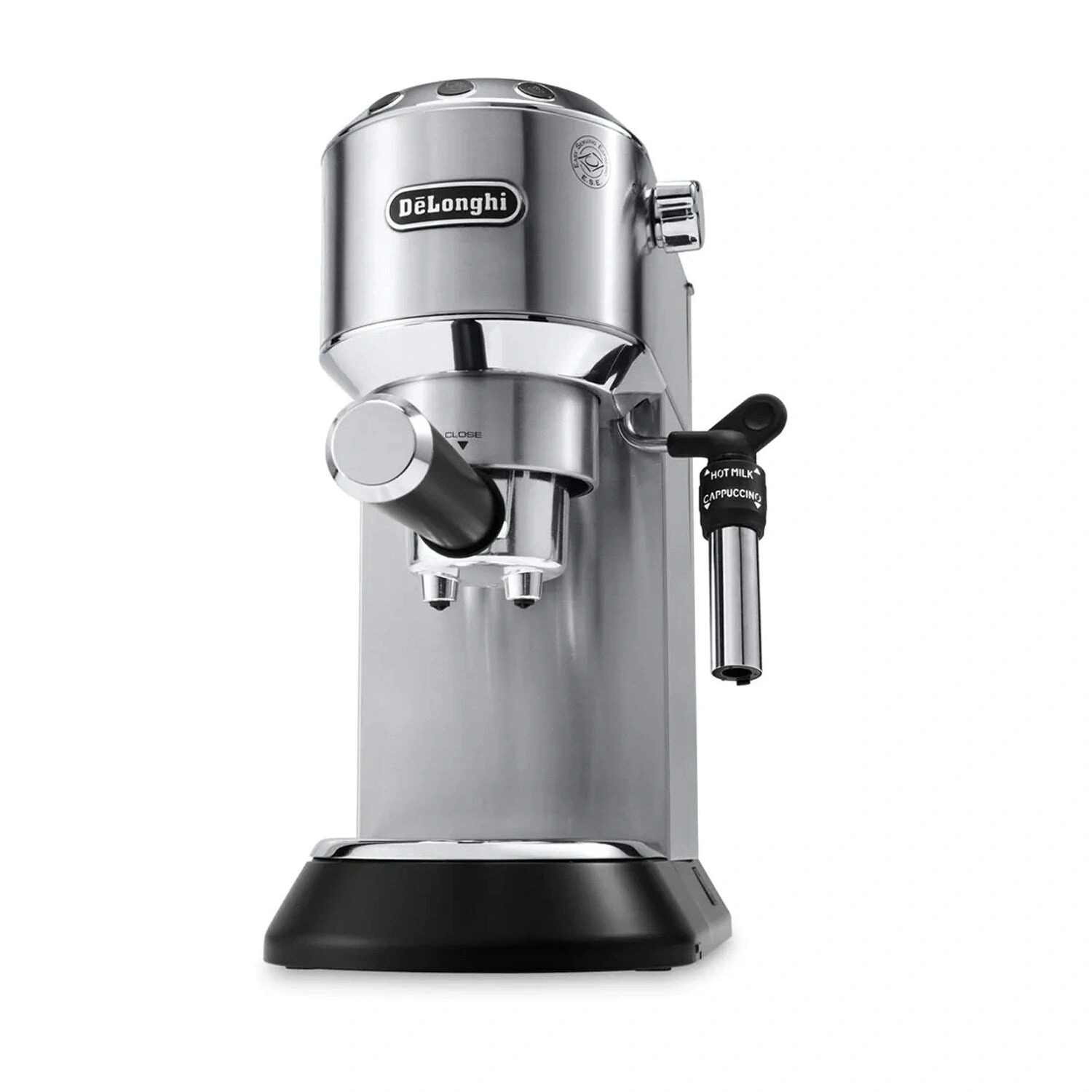
The 15-Centimeter Discipline: De'Longhi Dedica EC685.M Manual Espresso Maker
Story & products
The morning of an elite athlete never begins with lazy sunlight and a lavish breakfast. In a sterile, solitary apartment in Munich or Milan, stripped of the stadium's roar, what remains is a borderline pathological, obsessive-compulsive routine. At precisely 5:30 AM, the ingestion of exactly thirty milliliters of pure, black liquid is a mechanical ritual designed to spike the central nervous system and trigger adrenaline. For individuals who ruthlessly police their body fat percentages, the kitchen counter does not require a bloated, sprawling fully automatic coffee machine—that is a senseless waste of space. The De'Longhi Dedica EC685.M exists solely to occupy that remaining 15-centimeter gap on the counter. It acts as a cold scalpel, slicing through the morning fog.
**Pathological Spatial Economy**: Measuring a mere 15 cm in width, this stainless steel machine slots mercilessly into the narrowest of crevices. It rejects the sacrifice of a single inch for meaningless luxury. This extreme compression of physical volume mirrors an elite athlete's brutal elimination of excess adipose tissue, presenting a cold, geometric elegance.
**Thermodynamic Efficiency**: Armed with 1300W of power, Thermoblock fast-heating technology, and a standard 15-bar pump, it obliterates unnecessary waiting times. The moment the button is pressed, high temperature and pressure precisely extract the crema, physically awakening the nervous system in the shortest possible timeframe. This caters flawlessly to a professional's obsessive need for temporal control.
**Unforgiving Manual Control**: Equipped with a 1.1 L water tank, a double drip tray accommodating cups up to 120 mm in height, and an uncompromising adjustable manual steam wand. There are no flashy smart touchscreens or idiot-proof automated programs here. Every tamp and every steaming session relies purely on muscle memory. It is a miniature focus test before lacing up the training boots.
The L2M store respects and recommends this instrument because it embodies the austere reality of professional dedication. Greatness is not built on lavish, sprawling countertops, but in the relentless, solitary repetition of a 15-centimeter morning ritual. This suppression of excess desire and paranoia for efficiency is exactly what makes the athletic mindset so undeniably captivating.
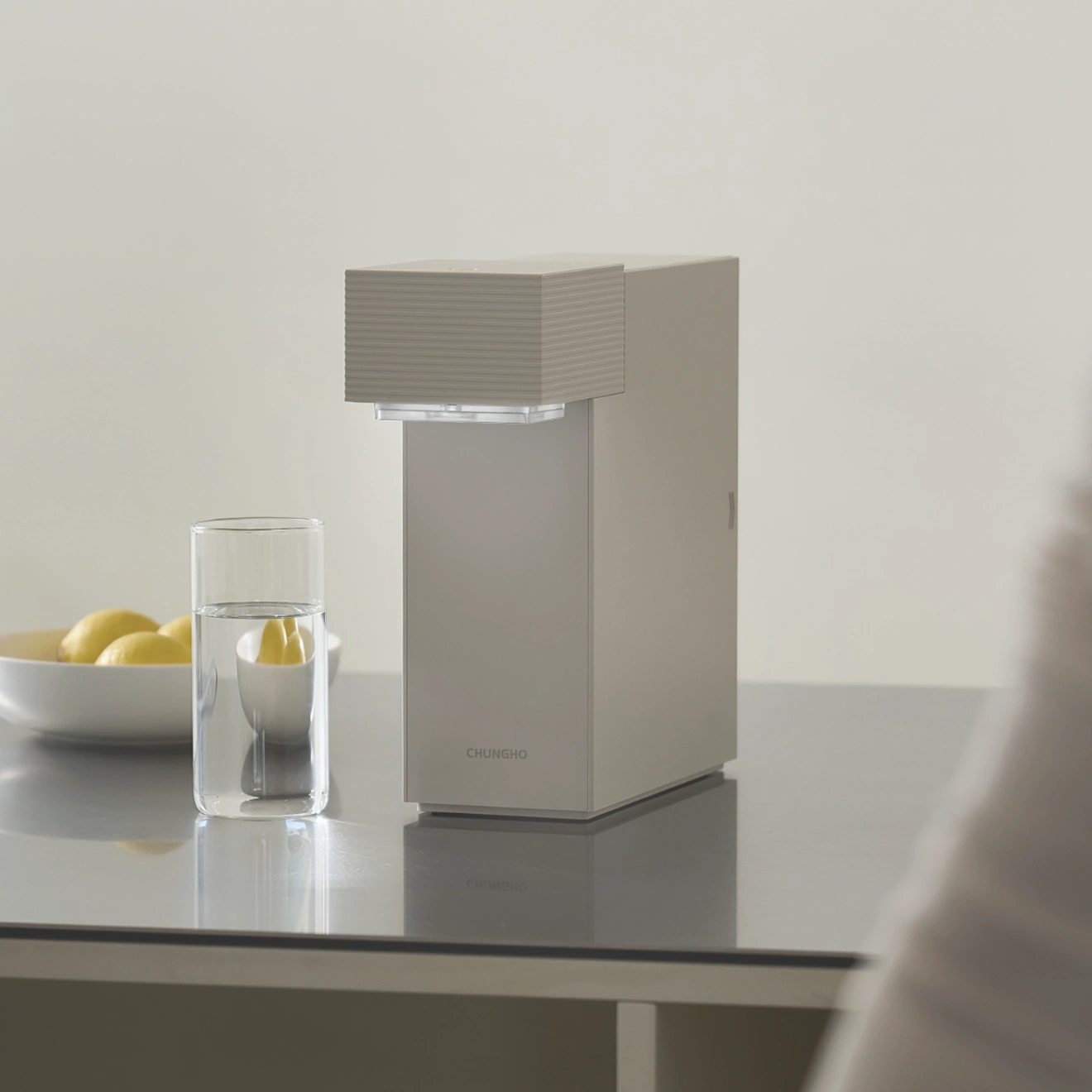
Only 10.5 cm left on the counter: no ice, just a slim column of filtered water
Story & products
A rice cooker, a frying pan and a dish rack can take up most of a studio kitchen’s counter. If you live alone and want a water purifier, start by measuring the space that’s left.
The Chungho Nais Water Purifier Mini, model WP-42C60600N, connects directly to the water supply and dispenses filtered water only. It comes in Cloud Beige and Dark Gray. In Korea it is mainly offered on rental plans, with a monthly fee that depends on the contract.
Measure the gap first
Chungho says the Mini takes up about 71 percent less volume than its previous model in the same class. It is 105 mm wide, 300 mm deep and 283 mm high. That narrow strip beside the dish rack might be wide enough, but measure the depth and overhead clearance too. A rental technician will normally handle installation, including the water connection.
A measured pour and a cover you can wash
The Mini dispenses 120, 250 or 500 ml at a time, with a continuous setting for filling a jug. A light comes on during dispensing to help you see the cup. The front panel also has a separate mood light with three settings.
The published specifications list a stainless steel water tube and electrolytic sanitizing for the water path and spout. You can take the spout cover off to wash it, a practical detail on a machine you use every day.
Choose the service plan before comparing the fee
You can choose technician visits or change the filters yourself. A Korean dealer lists the six-year self-service plan at KRW 16,900 a month. Contract length, service intervals and card discounts vary, so check the plan you are actually signing up for.
The launch announcement offered eligible customers six months of half-price rental through December 31, 2026. It also announced a heated humidifier for the first 50 qualifying official-site customers through November 30. Check whether either offer applies to your contract.
If that strip of counter is still free and you regularly reach for a glass of filtered water, the Mini is worth a look. For chilled water or ice, look for a model that dispenses it.
The Banquet in a Paper Cup
Story & products
The party the runner had heard about
The usual picture of an ultramarathon aid station leaves little room for surprise. Water, salts and gels all have a place on the table. So a runner who had signed up for a local trail race in western Japan went to an ultrarunning forum with a question. People had told him the whole event felt like a party. Had anyone else run a race that served alcohol, and had they ever taken a drink and carried on?
He had yet to run the race. From what he had been told, outsiders would run the aid stations and offer refreshments without a fixed price, though runners were expected to tip. The entry fee was low by the standards he knew, so he was comfortable with that. Some commenters had never heard of tipping at a checkpoint and wondered how they would carry cash or a card. He said it would be his first tip of the year in Japan and later added that he understood runners could decide how much to give based on what they took.
At first he also wrote that people were expected to drink if offered alcohol. He planned to decline for as long as he could. He was facing about 135 kilometres, while most runners, by his account, were taking on about 45. A drink sounded easier to imagine over the shorter distance. Then someone asked if turning one down would actually offend anybody. The poster replied that “expected” might have been too strong. Other runners had told him drinking was part of the spirit of the event, and he doubted anyone would be offended or angry if he declined.
What people remember from the table
The poster had seen beer offered late at other local races in Japan. He had always passed, although he had watched others drink and keep running because they found it more fun. The replies gave him several different versions of that moment.
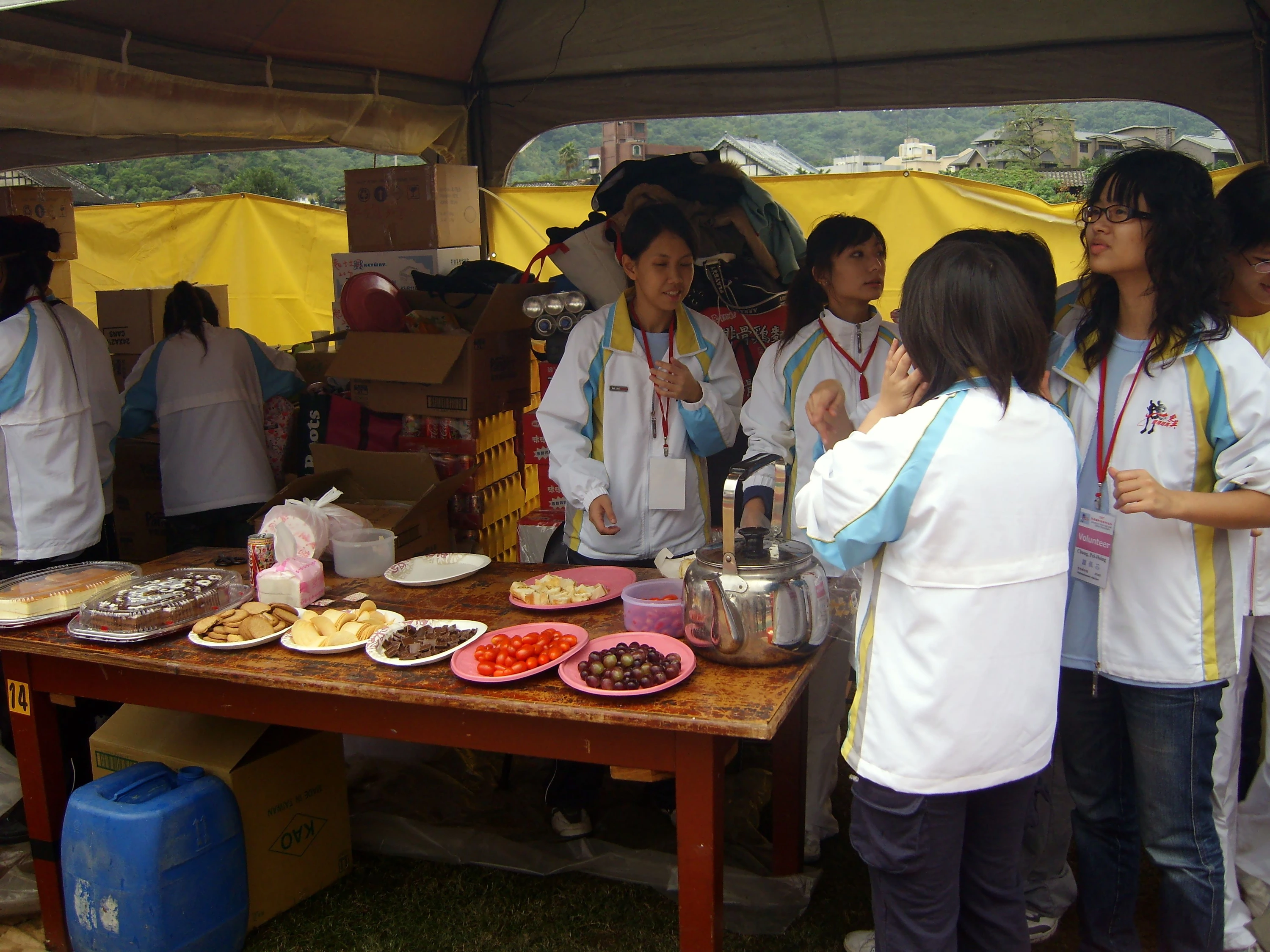
One runner had stopped for Guinness near the end of several 100-milers and joked about being a back-of-the-pack runner. Another remembered taking a small plastic cup of lager at every aid station that offered it during a 100K. He too was near the back and said he was having a fine time. A commenter who had drunk small amounts in 100-milers pointed out that a whole beer takes time. On the occasions he stopped for one, he already meant to spend a while at the station. Someone else remembered a big swig of whiskey on the second day of a 110-miler, when he was feeling rough, and a brief connection with another runner.
At Cocodona 250, one runner said a small cup of Crown Royal at Crown King made little physical difference to him but felt like an early milestone. Another commenter recalled seeing beer at a world championships broadcast and said the bottles he saw were alcohol-free. Each is an account of a particular stop. The distance, the runner’s condition and the reason for staying all change what the cup means.
A place at the table either way
Some commenters had seen spirits at aid stations in the American Southwest, or little bottles of Fireball in the Northeast. They described those offers as optional. Others said they would keep their own boundary regardless of the atmosphere. A commenter who described having a problem with alcohol said it would be a firm refusal for him.
Several runners preferred to leave a drink until after the finish. Others recalled feeling worse after drinking, or simply enjoying a little beer. The thread records those experiences and opinions without settling what would happen to another runner.
A tip, a drink and a distance of 135 kilometres raise different questions. The poster’s clarification leaves room for the party he had heard about and for the person who takes what they came for, thanks the station and leaves the cup on the table.
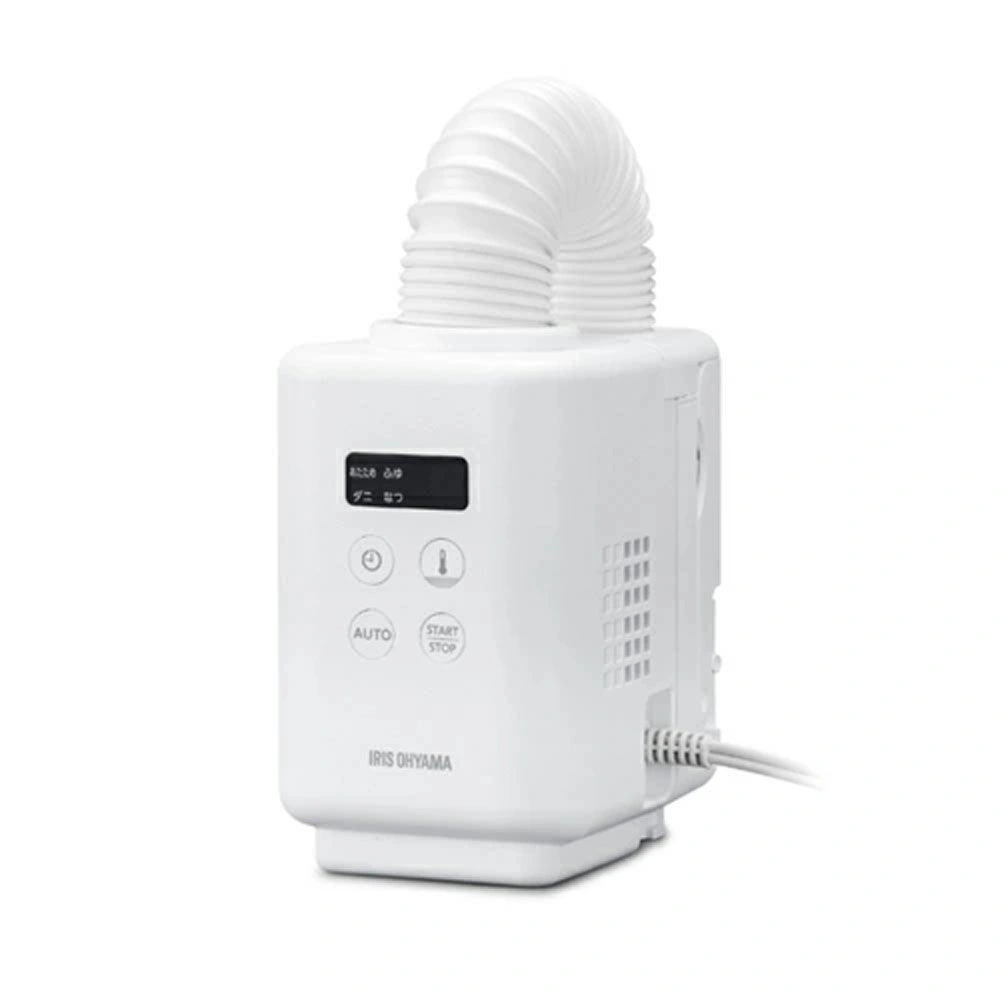
About 88 mm wide and 0.7 kg. An IRIS futon dryer for a room without a drying rail
Story & products
In a small rental, the hard part of looking after bedding can be finding somewhere to hang it and somewhere to put the appliance afterwards. After a wet day the sheets can feel damp, and on a cold night the duvet can take a while to warm. IRIS OHYAMA’s single-hose Kararie mini TURBO JSK-S10 gives those two jobs different settings. The quick warm-up takes about eight minutes. The winter drying programme takes about 35.
Measure the bedside space first
The single-hose JSK-S10 measures about 88 × 141 × 210 mm (width × depth × height) and weighs about 0.7 kg. It runs on Japanese AC 100 V, draws up to 1,100 W, and has a roughly two-metre cord. The line comes in four colours, including white. It’s light enough to lift off a shelf with one hand, but the space you measure needs to allow for the hose, the cord and ventilation. Keep clothing clear of the air intake and follow the clearance instructions in the manual.
Place the unit next to the bedding, extend the hose into the futon and lift the flap on the nozzle. That leaves a gap for the air to travel through. The five automatic programmes are quick warming, thorough warming, winter drying, summer drying and mite care. The manual mode lets you choose hot air, low heat or fan and set the timer to about 10, 30, 60, 90, 120 or 180 minutes.
Eight minutes of warmth or a longer drying cycle
Quick warming runs for about eight minutes, thorough warming for about 15 and winter drying for about 35. Summer drying adds roughly 20 minutes of fan after about 35 minutes of warm air. The hot-air mite-care programme takes about 80 minutes. Follow the manual for that cycle and for the temperature and timer when using the shoe attachment.
The little jobs matter if the dryer comes out every week. Clear dust from the intake filter and wipe the casing according to the care instructions. Check where the two-metre cord will reach before settling on a place to put it.
The 1.4 kg twin-hose JSK-W10
The twin-hose JSK-W10 measures about 130 × 158 × 260 mm and weighs about 1.4 kg. It draws up to 1,360 W, has a roughly two-metre cord and comes with two shoe attachments. Its two nozzles can be used with two sets of bedding, or with two pairs of shoes when set up as directed.
The single-hose model is lighter and leaves another 42 mm of width free. The twin-hose model earns that space if you regularly want to warm two sets of bedding at once. Before choosing, measure the bedside and think about which job you do most often. Eight minutes of warmth and a full drying cycle answer different needs.
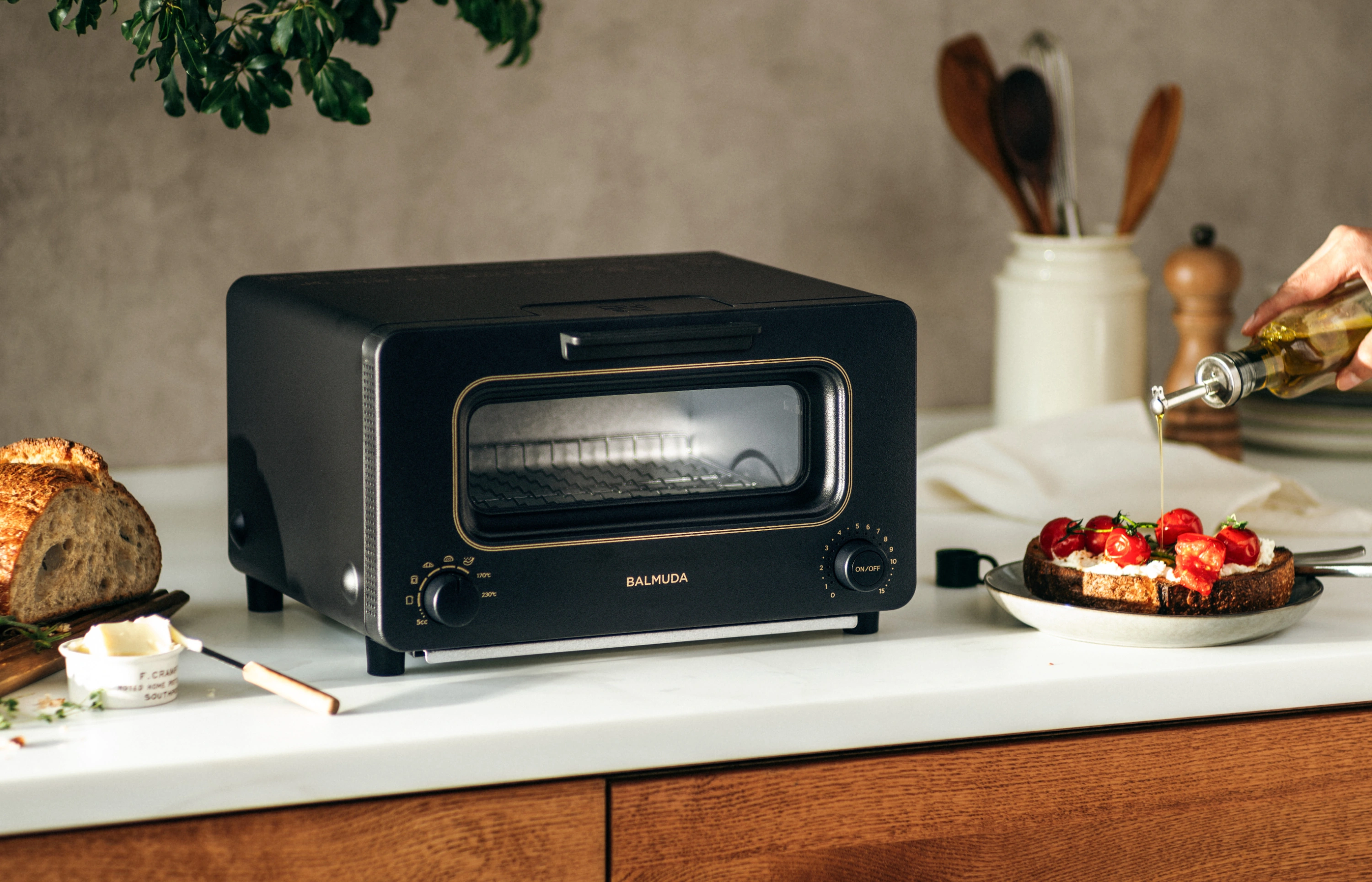
About 357 mm Wide and 4.1 kg. Six Ways to Toast with BALMUDA
Story & products
When you live alone, breakfast often comes down to whether two slices of bread are ready before you leave. A full oven takes up precious room in a rental kitchen. A pop-up toaster may be enough for sliced bread, but it gives you less room for a thick piece of bakery bread or a slice with cheese on top.
BALMUDA renewed The Toaster on 29 September 2026. The KTT02JP series is about 357 × 321 × 209 mm (width × depth × height), with a cavity of about 275 × 224 × 178 mm. It weighs about 4.1 kg, draws 1,300 W on AC 100 V (50/60 Hz) and has a cord about 1 m long. The three colours are black, white and grey.
Measure the counter before filling the steam cup
Allow for the ventilation clearances in the manual as well as the toaster’s 32.1 cm depth. At 4.1 kg it can stay on the counter, but you probably won’t want to move it every morning. With a cord about a metre long, check where the outlet sits before picking a spot. The cavity is 27.5 cm wide, enough for two standard slices side by side. Check that a thick piece of baguette sits flat and clears the heaters.
In the steam modes, add 5 mL of water with the supplied cup before starting. That small step is the appeal if yesterday’s bread is what you have for breakfast. The steam helps the inside stay soft as the surface crisps. Leave the cup by the toaster if you’re likely to forget it.
Six modes, from toast to leftovers
The six settings are Toast, Cheese Toast, Bakery, Sourdough, Steam Deli and Classic. Bakery groups breads such as croissants and baguettes. Steam Deli can reheat fried food or last night’s wings. Classic runs without water and offers settings of 170°C and 230°C.
The timer offers settings from 1 to 10 minutes, plus 15 minutes. Two slices of toast fit one batch. Thick scones may need a second. Empty the crumb tray after use and follow the manual when cleaning the rack, boiler cover and cup once they have cooled.
A narrower option with a slide-out rack
The récolte Slide Rack Oven Delicat RSR-1 is about 27.0 × 31.0 × 24.4 cm with its rack fitted. It weighs about 2.6 kg and draws 1,000 W on AC 100 V. Four heaters, including an upper far-infrared heater, toast two slices side by side. The rack comes all the way out. The oven came in red, white and black, and récolte has ended production.
The Delicat saves 8.7 cm in width compared with the BALMUDA, though its depth is close. It gives you a rack you can pull out and no water to add. The BALMUDA makes more sense if you regularly warm up sourdough or bakery bread and want to give them different settings. When the kitchen is small and the morning is short, it helps to picture what you’ll actually take out of the bread bag.
This model is intended for use in Japan.
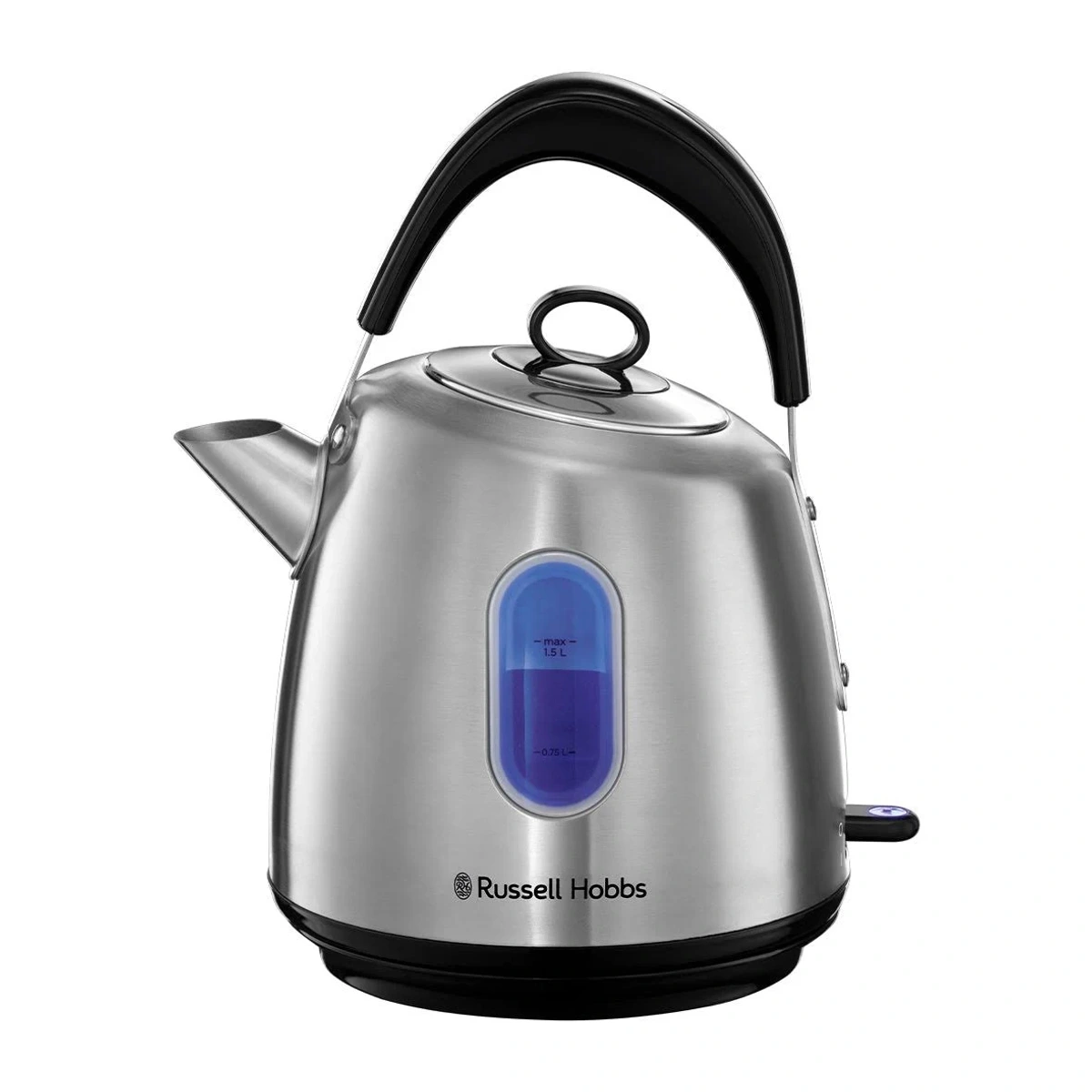
The Cold Mechanics of Habit: Russell Hobbs Stylevia 28130-70
Story & products
The greatness of elite athletes is frequently anchored in peculiar, almost obsessive micro-habits. Consider the rigid sleep hygiene of Erling Haaland or the uncompromising post-match recovery protocols of top-tier Premier League players. When a fiercely disciplined individual opens the door to a minimalist one-bedroom flat in London or Berlin at dusk, they do not seek the warm, chaotic embrace of domestic life. They require a precise physical trigger to instantly shift their brain from the noise of the streets to a cold, calculated state of bodily recovery. The Russell Hobbs Stylevia 28130-70 kettle serves as this exact mechanical valve, severing ties with daily trivialities and initiating strict physical management.
**2.2kW Thermal Trigger**: Time is the ultimate currency for the professional athlete. Operating at approximately 2200W, this kettle rejects the concept of waiting. Upon returning home, you align the water window precisely to the two-cup mark and depress the switch. The roughly 120 seconds it takes to reach a rolling boil is the exact duration required to strip off heavy outerwear and step into high-compression training gear. There is zero wasted motion; the moment the water boils, the muscles are already prepped for evening stretching or activation.
**1.5L Stoic Capacity**: This is a volume that actively discourages excess and chaotic gatherings. The 1.5-liter limit is mathematically calibrated for a solitary dweller’s evening recovery herbal tea or a precise drip-bag coffee, leaving just enough for the mandatory empty-stomach hydration the following morning. It physically restricts overindulgence, enforcing a highly regulated, almost ascetic rhythm of fluid intake upon its user.
**Illuminated Armor of Brushed Steel**: The exterior is forged from brushed stainless steel, a material that inherently repels fingerprints and vain kitchen aesthetics. It projects a purely industrial texture that perfectly complements a sharp, highly efficient sports image. Yet, when the switch is engaged and the internal illuminated water window lights up, that cold glow acts as a Pavlovian psychological cue. As the light turns on, unnecessary desires are extinguished, and absolute focus is summoned.
The L2M store respects and recommends the Russell Hobbs Stylevia 28130-70 because it systematically strips away the sentimental "lifestyle" fluff typically associated with kitchen appliances. It is a ruthless, highly efficient instrument for physiological hydration. We revere this level of obsession—transforming the mundane act of boiling water into a precise tactical ritual—because true athletic dominance is born from the absolute, unyielding control over every single drop and every single minute.
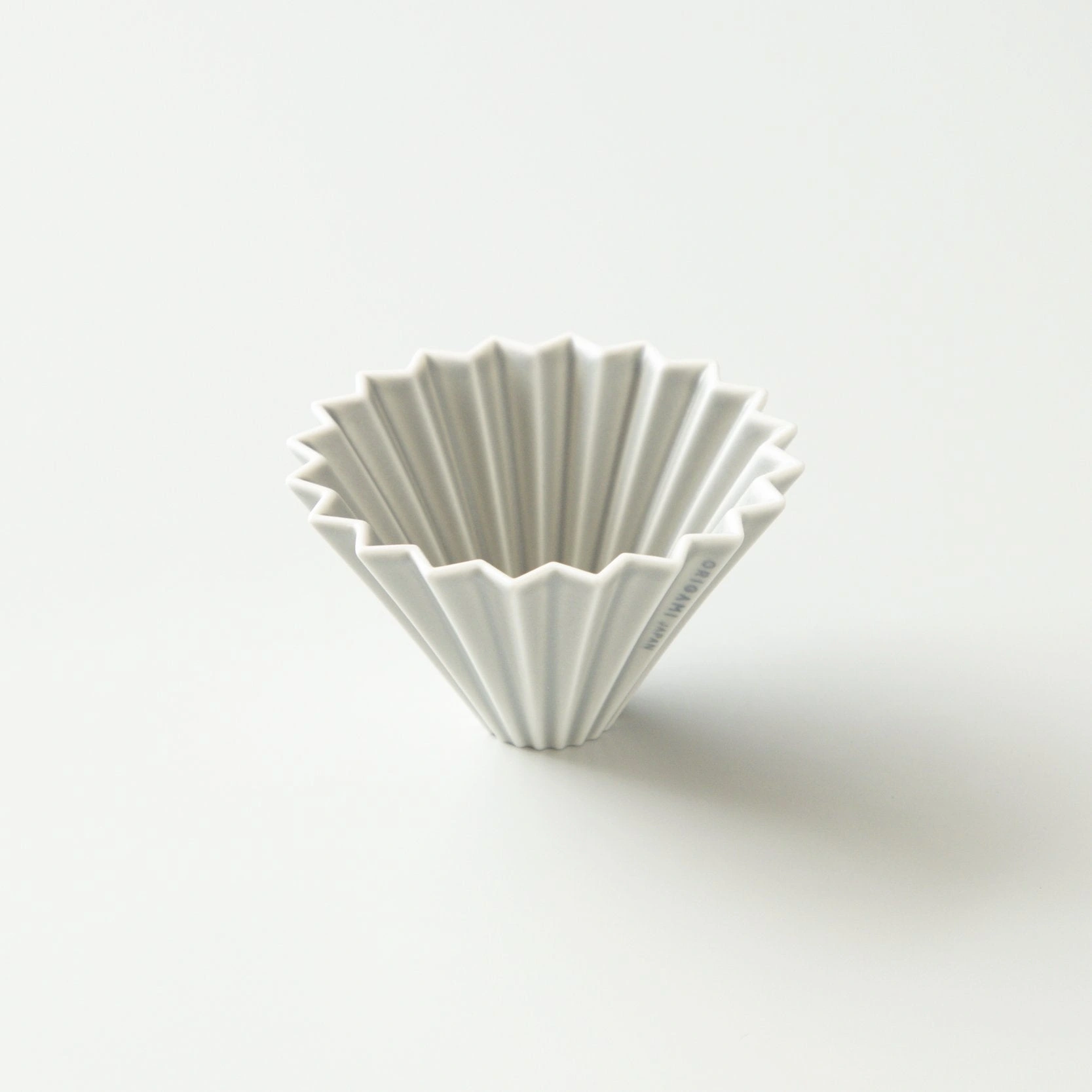
The Paranoia of Pacing: ORIGAMI Matte Gray Dripper and the Post-Match Morning
Story & products
Elite athletes are creatures of obsessive, almost paranoid habits. Whether it is a strictly measured breakfast routine or a meticulously timed morning protocol, absolute control is the foundation of greatness. When you wake up in a solitary apartment after analyzing a grueling 120-minute extra-time match replay late into the night, your biological rhythm demands a reset. The ORIGAMI Dripper S Matte Gray (78004272) is not a mere lifestyle accessory; it is a precision instrument designed to establish a psychological anchor. It translates the cold, calculated discipline of sports science directly to your kitchen counter.
**Fluid Dynamics Weaponized**:The 20 vertical ribs lining the interior are not aesthetic flourishes, but engineered air channels. They ensure the filter paper never suffocates the extraction, granting you absolute authority over the water's flow rate. There is no choking, no unpredictability—only the precise tempo dictation reminiscent of a veteran playmaker controlling a chaotic midfield.
**The Aesthetics of Restraint**:Finished in a low-saturation Matte Gray and weighing a highly efficient 135g, this porcelain dripper rejects the loud, performative culture of cafe check-ins. It sits quietly on a desk, offering a visually cold, deeply handsome presence. This stoic design aligns perfectly with the strict image management of a disciplined professional who values pure function over fleeting trends.
**Tactical Specifications**:Crafted from Japanese Mino ware porcelain, it boasts a thermal shock resistance of 120℃ and is fully microwave and dishwasher safe, retailing at ¥2,750. With compact dimensions of Φ115×H70mm and a wide Φ25mm bottom hole, it seamlessly accepts both cone and Wave filters, providing unmatched tactical versatility for your morning 1-2 cup routine.
The L2M Store holds immense respect for this hardcore dedication to routine. We recommend the ORIGAMI Dripper because it bridges the gap between the intensity of the stadium and the quiet discipline of solo living. It does not sell a cozy illusion; it delivers a scientifically sound, ruthlessly consistent, and undeniably sharp tool for those who demand total control over their physical and mental state.
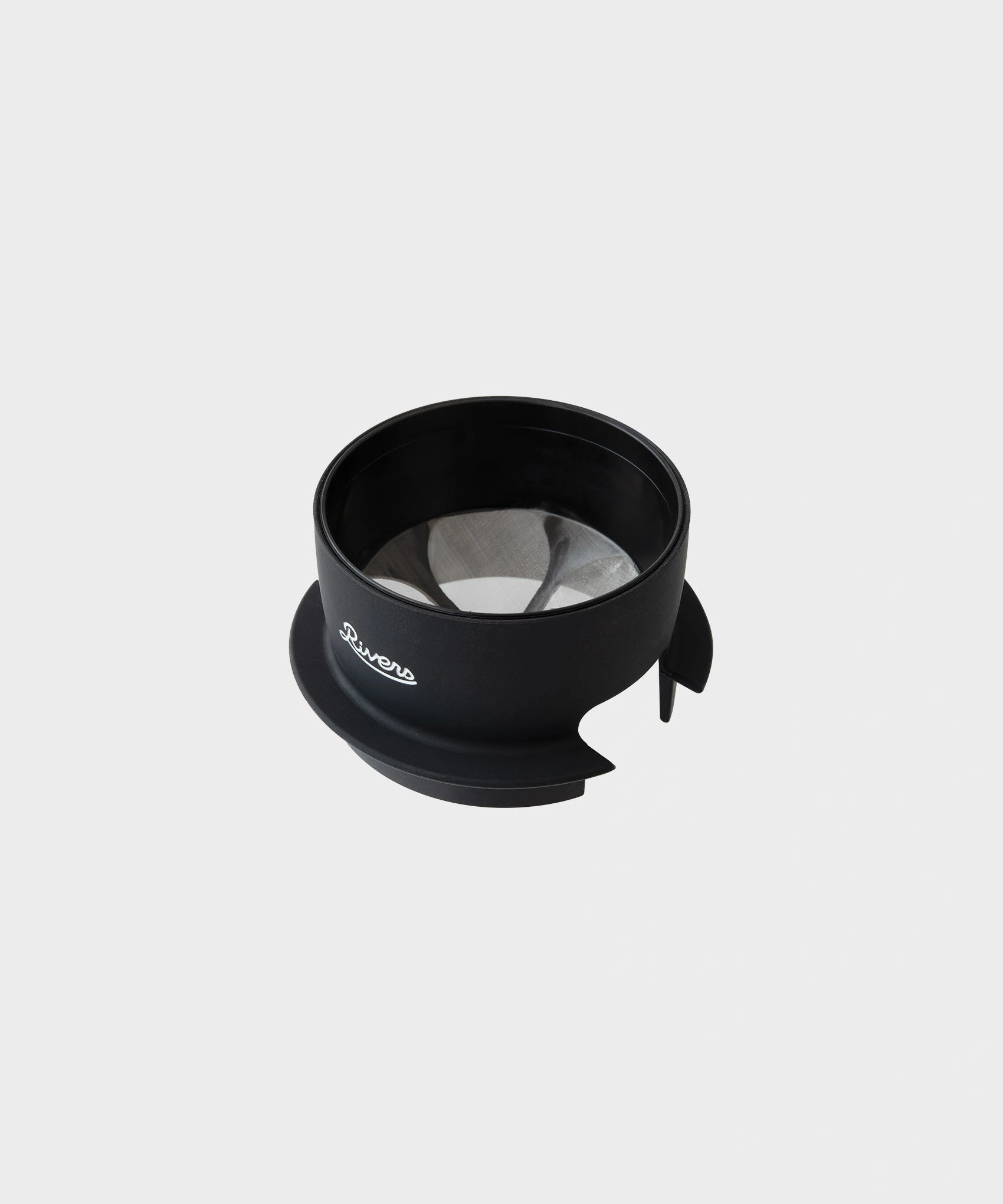
37 Grams of Absolute Restraint: RIVERS MCD2 Micro Coffee Dripper
Story & products
The morning routine of an elite athlete is often defined by a borderline obsessive rigidity. Confined to a sterile, compact 1K apartment in Tokyo or a transient hotel room, they refuse to surrender their spatial autonomy to a bulky drip machine or a stockpile of paper filters. The RIVERS Micro Coffee Dripper 2 (CF007BK) is engineered precisely for this breed of extreme discipline. It is not a theatrical prop for a leisurely café performance; it is a tactical caffeine extraction instrument. By compressing desire and eliminating friction, it transforms a solitary morning into a clinical exercise in efficiency and control.
**Paperless Extraction System**: The stainless steel micro-mesh completely severs the dependency on consumable paper filters. It permits the passage of natural coffee oils, delivering a raw, unadulterated sensory strike designed to instantly jolt the central nervous system into a state of combat readiness.
**Collapsible Architecture**: Constructed with a pliable black silicone holder, the entire apparatus folds inward, disappearing entirely into a standard mug. It reduces its spatial footprint to zero. Engineered to mount seamlessly onto cups with an inner diameter of 7 to 8 centimeters, its deployment is as crisp and mechanical as chambering a round.
**Extreme Lightweight Metrics**: The total weight is ruthlessly restricted to approximately 37 grams. The filter withstands temperatures up to 140℃, while the silicone holder endures up to 200℃. With a recommended dose of 16 grams of coffee grounds, it dictates the exact golden ratio for a single serving, all at an accessible price point of roughly 990 JPY.
L2M Endorsement: We hold a profound respect for those who maintain draconian discipline within confined environments. The L2M store recommends this micro dripper because it strips away the bourgeois romanticism of coffee brewing, distilling it into a highly efficient, pragmatic, and visually sharp utility tool. It is a minimalist weapon for the relentlessly disciplined.
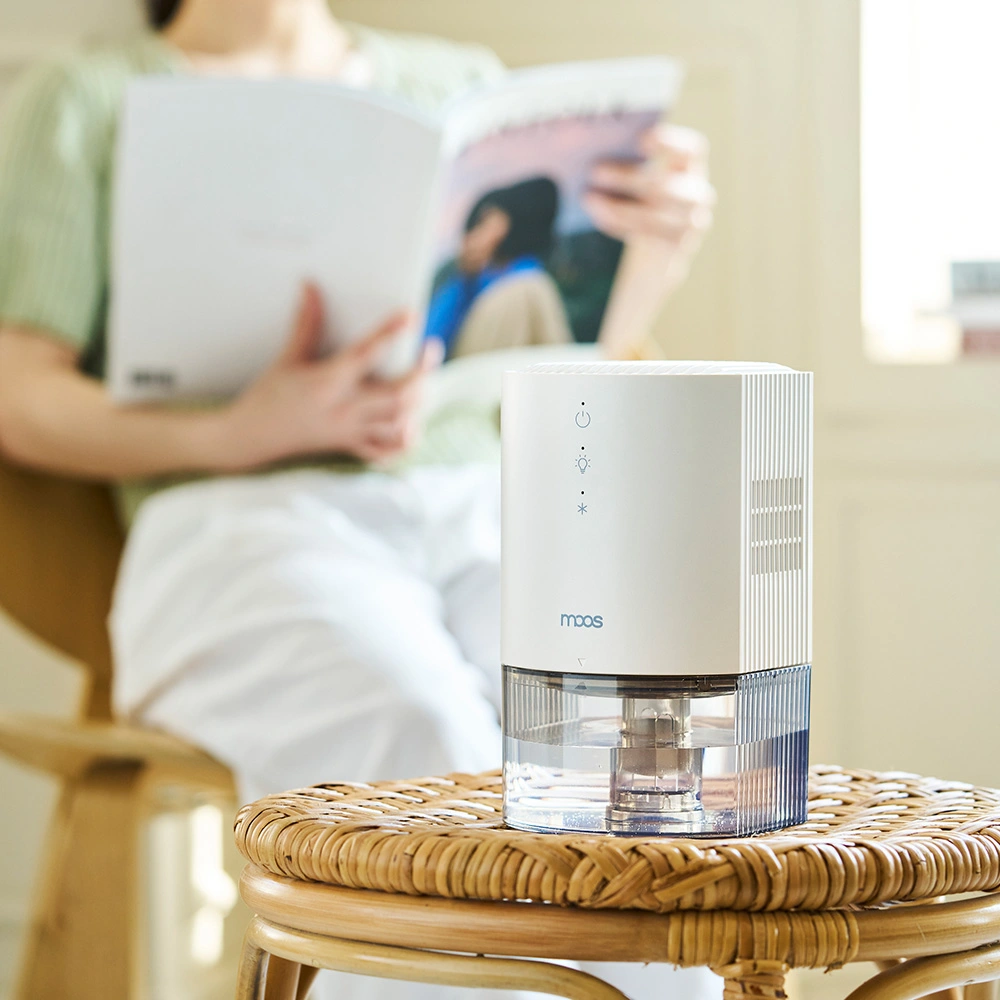
Only a Cup’s Width on the Nightstand, the Winix MOOS Mini Dehumidifier
Story & products
After a shower, the bathroom wall is still damp. The closet smells musty, and the shoe rack has its own patch of damp. In a studio, a small dehumidifier is easier to find room for if one of those spots is the problem.
The Winix MOOS MSDNG30-OWK is 145 mm wide, 126 mm deep and 213.5 mm high. It weighs about 0.9 kg. The manual lists a rated extraction of 300 mL per day and a 900 mL tank. The first figure describes how much moisture it is rated to collect, and the second describes how much the tank can hold.
Measure the corner and leave room for air
A shelf near the closet or the shoe rack may have room. Keep the intake and outlet clear and set the unit on a level surface. In the bathroom, choose a spot away from splashes where the unit cannot fall into a tub or sink.
The manual recommends operating at 8 to 40°C. Extraction falls at low temperatures or humidity, and actual collection depends on the room. At a rated 300 mL per day, the MOOS is sized for local damp. A whole room that stays humid calls for a separate assessment.
Watch the water level
The tank holds 900 mL. Check the water level a few times at first to see how quickly it fills in your room. To empty it, turn the unit off, twist the tank away from the body, lift its lid and pour out the water. The machine gives a warning and stops when the tank is full. It also defrosts automatically.
Winix lists 23 W and 32 dB. The dehumidifier runs from its supplied power adapter, with a roughly 1.5 m cord. It has no battery. The seven-colour light can stay on one colour or be switched off, which matters if that spare patch of furniture is beside the bed.
For one troublesome corner, start with the shelf, ventilation and outlet. Then decide whether a unit rated at 300 mL a day suits the damp you are trying to handle.
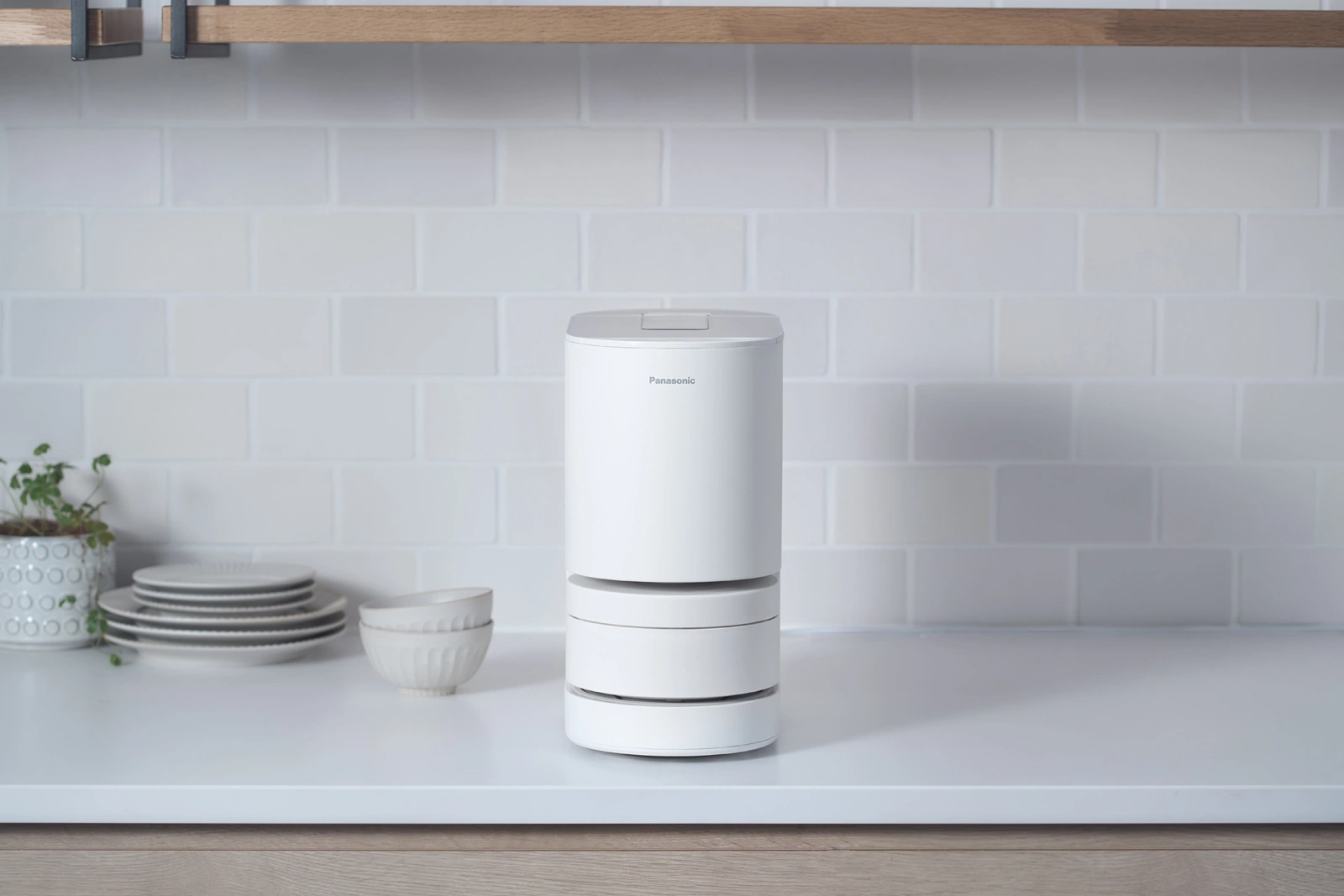
Half a Bag Still in the Bin, and the Panasonic SR-AX1 Does the Measuring
Story & products
Some nights you come home late, find half a side dish in the fridge and want one hot bowl of rice. Measuring, rinsing and lining the water up with a mark are easy enough on a good evening. No-rinse rice saves the washing. You still have to get the scoop out.
The Panasonic SR-AX1 automatic-measuring induction rice cooker is made for no-rinse rice. It portions the rice and water from two separate tanks and cooks the amount you select, from half a gō to two gō. Panasonic lists the white model as SR-AX1-W.
Measure the counter first
In a kitchen for one, the kettle may already have the nearest outlet. The SR-AX1 is about 17.6 cm wide and 33.6 cm deep and tall. It weighs about 4.8 kg. The serving pot slides out at the front. Check the depth of the worktop and the space under the cupboard before giving it a permanent spot.
The rice tank takes up to about 2 kg, and the water tank holds about 600 mL at the maximum line. Push the serving pot all the way in and choose a portion. A weight sensor checks what goes into the inner pan. You can select half-gō steps on the cooker, or quarter-gō steps in the Kitchen Pocket app. Half a gō makes roughly one bowl, depending on how you serve it.
Once the cooker and app are connected over Wi-Fi, you can start cooking, set a timer, or change or cancel a reservation while you are out. Load the no-rinse rice, seat the serving pot and put in fresh water before leaving. Remote controls depend on a compatible phone, the app and a working network.
Bring the pot to the table
The removable ohitsu, a Japanese-style serving pot, can go straight to the table with the inner pan inside. Panasonic says it holds the rice warm for about an hour after cooking. The appliance has no powered keep-warm mode. If you have rice left after the meal, Panasonic recommends transferring it to another container and freezing it if you will not eat it within the hour.
For everyday cleaning, wash the inner pan and the lid. Rinse the water tank after use, change the water and wipe the outside dry. The cooker itself offers regular and quick white rice. The app also lets you select firmer or softer rice, a curry-rice setting or porridge. Regular white rice takes about 52 to 60 minutes. The quick program takes about 40 to 45.
At up to two gō, the SR-AX1 fits an evening when you want enough rice for the meal in front of you. If the tanks are ready, you can decide later when to start, with one less step at the counter.
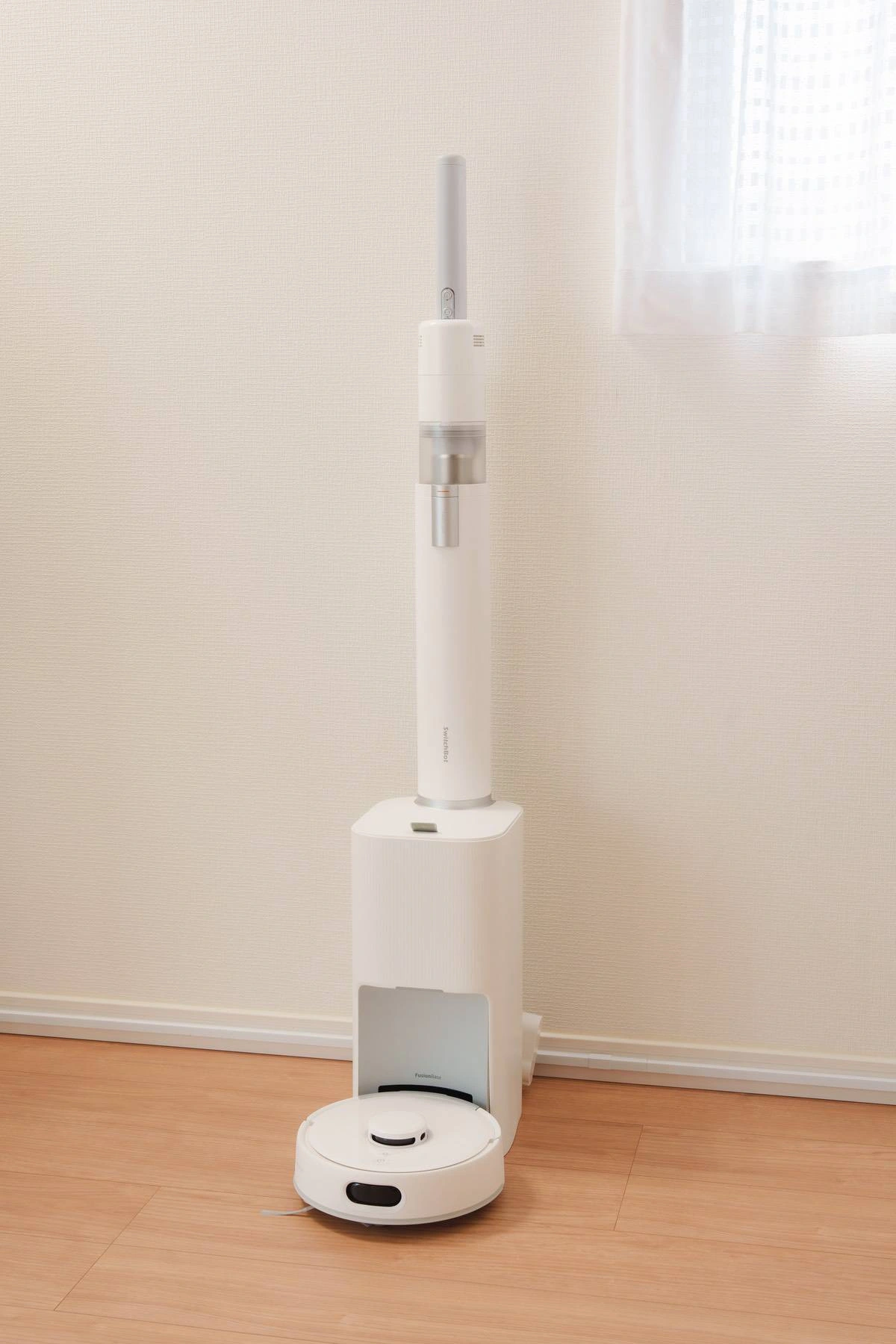
The robot can’t reach the top of the sofa. SwitchBot puts both vacuums on one dock
Story & products
In a flat for one, there might be only a strip of floor beside the shoe cabinet. A robot needs somewhere to park, and a stick vacuum still comes out for the sofa, windows and stairs. Each has to charge somewhere, and each bin has to be emptied.
SwitchBot’s K10+ Pro Combo gives the robot and cordless stick one FusionBase for charging and emptying. SwitchBot likens the base’s footprint to a sheet of A4 paper.
Measure the entryway first
The robot is 24.8 cm across and 9.2 cm high, and weighs about 2.3 kg. Measure under the sofa and between table legs before counting on it fitting. Near the dock, leave room for the plug, the shoe-cabinet door and your hand when you lift the stick off. The stick’s body and battery weigh 1.17 kg before you attach a head.
The robot takes the floor, the stick takes the high spots
SwitchBot rates the robot at 3,000 Pa. It can finish the floor with a disposable cleaning sheet. The cordless stick reaches the window frame, sofa seams and stairs, with four supplied heads for different surfaces and gaps. The maximum rated suction is 20,000 Pa, and the green LED makes dust on the floor easier to see. SwitchBot quotes up to 41 minutes of runtime, depending on the mode and attachment.
Both machines empty into the same FusionBase. After using the stick, you can put it back without finding another charger.
Choose when the dock empties
The dock takes a 3 L bag. SwitchBot gives roughly 70 days between changes as a reference, and the interval will vary with how often you clean and how much the bag collects. Filters, brushes and cleaning sheets still need attention.
Sleep mode lets you set hours when the dock should skip automatic emptying. Before giving it a spot beside the shoe cabinet, measure the space and think about how often you would actually reach for the stick.
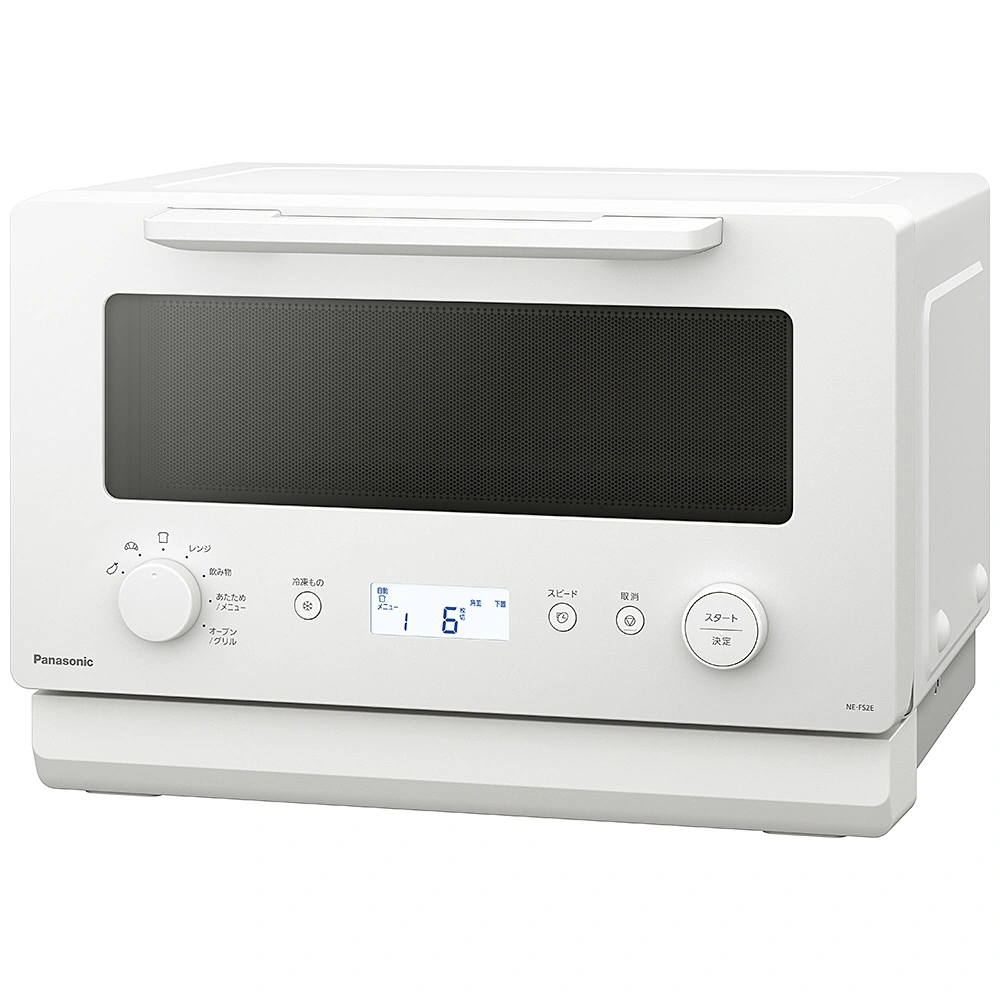
A palm’s width of counter left, and a 15-litre Panasonic for toast and leftovers
Story & products
The cutting board, kettle and dish rack have already claimed the counter. On a weekday morning, there may be little room left for a toaster. Frozen bread still needs to be toasted and yesterday’s food still needs to be warmed.
The Panasonic NE-FS2E-W is a white 15 L combination microwave oven. It measures about 464 mm wide, 359 mm deep and 302 mm high. Depth increases to 406 mm with the handle and 558 mm with the door open. It weighs about 11.5 kg and offers microwave, oven, grill and toast settings.
Measure the counter before you think about toast
Panasonic permits the back to sit flush with the wall. Leave at least 2 cm at each side and 10 cm above. Measure the space needed for the open door as well. The power cord extends about 1.45 m from the back of the base. This Japanese model is rated 100 V at 50/60 Hz and must not be connected directly to 220 V.
The toast setting browns both sides in one pass. The top heater supplies heat from above and the bottom heater warms the aluminium tray. The tray goes in the lower position for toast.
Choose the thickness that corresponds to a loaf cut into four, five, six or eight slices, and one of five browning levels. For frozen bread, use the frozen button. Panasonic gives about five minutes and fifty seconds as one example for room-temperature bread cut into six slices per loaf. Time varies with the bread and how the oven is used.
Bread and fried food have their own reheating settings
There are four bread reheating programmes and two for fried food. The heater warms the outside and the microwave helps warm the inside. Use the supplied rack in the lower position as directed.
For ordinary microwave reheating, certain automatic programmes reach a maximum of 1,000 W for up to about three minutes, then drop to 600 W. Manual settings list 1,000, 600 and 500 W, plus settings equivalent to 200 and 100 W. The speed function applies to manual 500 or 600 W operation set for 30 seconds to ten minutes and may be unavailable during consecutive runs.
Inside, the flat cavity measures about 353 × 293 × 135 mm. The one-sided grill can cook fish or meat, and the 100–200°C oven can handle pizza or sweet potatoes. The one-bowl programme uses a heat-resistant glass bowl. Panasonic lists 48 automatic programmes and 33 recipes, including entries in the online manual.
The left dial selects a mode, the right dial sets the time and starts it, and a white-backlit screen sits between them. The tray, rack and manual with recipes come with the oven.
One fewer machine on a small counter
If the same appliance gets used for morning toast and evening leftovers, it may earn its 46 cm of counter width. Once the tray is put away and the door is closed, there is still only one appliance there. It makes most sense in a kitchen that will use those modes regularly.
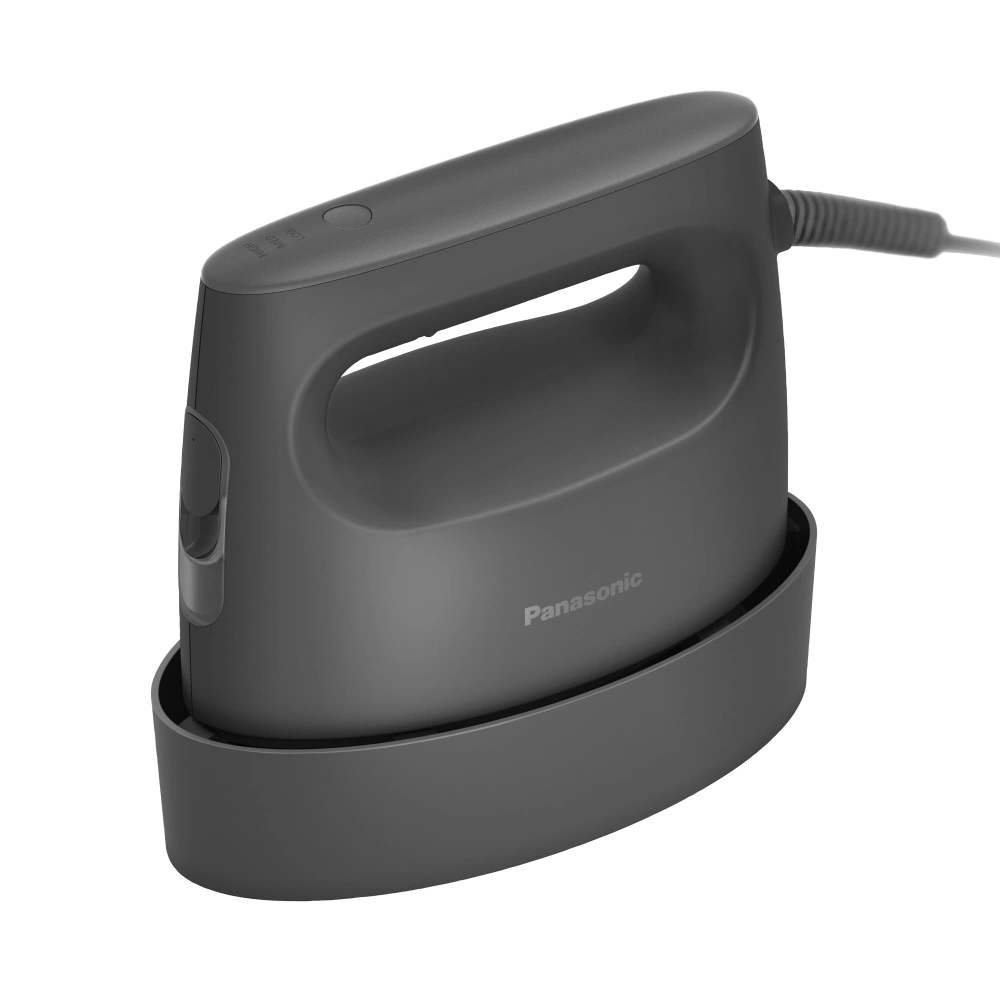
Creases by the door, and fifteen seconds to get Panasonic’s NI-FS70C ready
Story & products
The shirt behind the door still curls at the cuffs and collar. A T-shirt from the dryer has a hard fold across the chest. Getting out the ironing board, waiting for the iron and trying to avoid leaving a shiny patch can take up the last few minutes before you leave.
Panasonic’s NI-FS70C steams clothes on a hanger and doubles as a dry iron. Panasonic lists a warm-up time of about 15 seconds. The 130 mL tank supplies about eight minutes of continuous steam on HIGH, averaging about 15 g per minute. On MED it runs for about 13 minutes at about 9 g per minute. The steamer weighs about 630 g without its stand.
Check the outlet before you steam on the hanger
In a small entryway or behind the bedroom door, a hanger is usually closer to hand than an ironing board. The steamer measures about 8 cm wide, 13 cm high and 16 cm long. Panasonic places the centre of gravity near the handle and gives it a cord about 2.5 m long. Check where it can reach before you choose a place to use it.
Fill the tank, switch it on and give it about 15 seconds to warm up. Steam flows while your finger rests on the touch control. Panasonic’s 360-degree claim applies with the soleplate held parallel to a hanging garment. That leaves room to angle it as you work down a coat or dress. Panasonic says it warms up about two seconds faster and weighs about 30 g less than the NI-FS70A.
The manufacturer’s videos cover shirts, T-shirts, ruffles, knits, trousers and coats. Work slowly and follow the garment label. Thicker cloth may take more than one pass. Steam results vary with the fabric, the room and the time you spend on each crease.
Odours, pressing and somewhere to put it down
Panasonic also describes tests on specific odours, bacteria and allergens. Its roughly 99% reduction in bacteria was measured on two types of bacteria under specified conditions. The deodorising test used wool cloth with particular odours and about ten seconds of powerful steam. Results on everyday clothing vary. Regular washing still has its place.
The flat soleplate has six steam holes. Dry ironing offers HIGH, MED and LOW at about 160°C, 140°C and 110°C respectively. Steaming uses HIGH or MED. Use a pressing cloth where the instructions call for one, and check the care label. The heater can shut itself off automatically.
It comes in Calm Black and Clay Beige, with a stand and a measuring cup. On its stand it weighs about 715 g and takes up roughly 9 cm in width, 15.5 cm in height and 17.5 cm in depth. This Japanese model is rated 100 V, 50/60 Hz and 950 W. It must not be plugged directly into a 220 V outlet.
One fewer thing to set up before leaving
If the clothes are already hanging, the steamer can stay within reach. On a weekday morning, having it close may save you from unfolding the board for a sleeve or a hem. The time you need still depends on the garment.
Close the tank and put the steamer back on its stand. The shirt behind the door is still the one you planned to wear. If that happens often enough, the steamer earns its space. If it seldom comes out, even a light one ends up taking up shelf room.
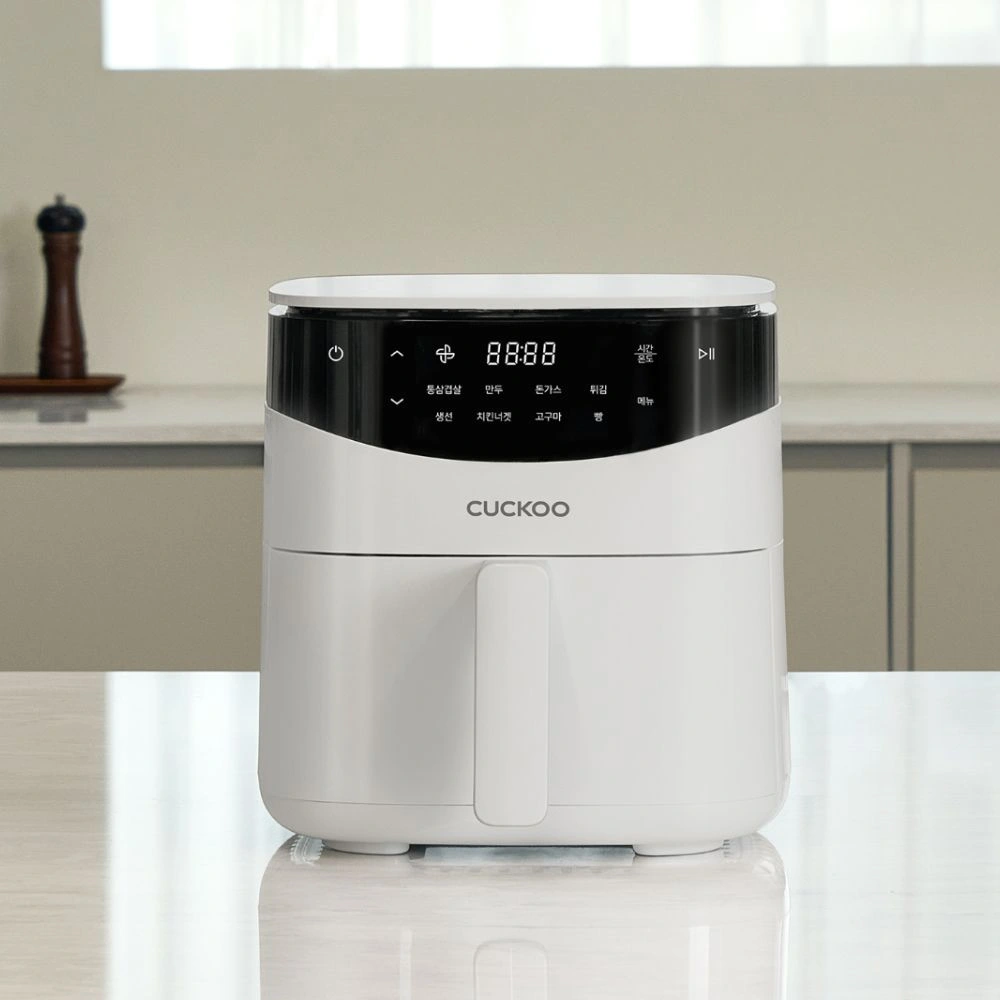
Counter Space the Width of a Cutting Board · A 3-Liter White Box Finishes Dinner First
Story & products
On a night when you’re cooking for one, there might be half a bag of fries, two strips of pork belly and a few sweet potatoes in the freezer. You want something hot without clearing room for a large oven. In a studio kitchen, every inch of counter counts.
Cuckoo introduced the white Misik Collection Mini Air Fryer CAF-N0310EW in July 2025, alongside the black CAF-N0310EB. The white model has a 3 L basket and eight automatic programs. Cuckoo lists hot-air circulation and a noise level of about 34 dB.
Twenty-four by thirty-three · Measure the counter first
The unit measures about 24.6 cm wide, 33.35 cm deep and 25.5 cm high. The black touch panel sits above a pull-out basket with a vertical handle. It takes roughly a cutting board’s worth of counter, plus room in front for the drawer and space for ventilation.
The square basket uses the corners well. Cuckoo’s photo with a whole chicken illustrates capacity. What fits will depend on the size and arrangement of the food. A helping of fries, nuggets or sweet potatoes gives a better sense of how you might use the space on an ordinary night.
Eight menus · Press first, then see what’s for dinner
The touch panel displays time and temperature. Its eight presets cover pork belly, dumplings, breaded pork cutlets, fried foods, fish, chicken nuggets, sweet potatoes and bread. After a late shift, having a preset saves looking up a starting temperature. Check the food and adjust if it needs more time.
Rated power is 1,350 W and the hot air reaches about 200°C. Cooking time and doneness depend on the size, amount and arrangement of the food. The removable basket is easier to reach when it’s time to wash up. Cuckoo says the basket and grill insert can go in the dishwasher. The fan runs for about 20 seconds after cooking to cool the inside. Follow the manual and account for residual heat before handling either part.
Thirty-four decibels · You can still hear yourself talk
Cuckoo lists about 34 dB. In a studio with the living area next to the kitchen, sound matters. What you hear will also depend on the room and where the appliance sits.
Three litres suits the evening when you want to heat one or two portions. It will feel smaller if you cook a full family batch at weekends. The Korean model is rated for 220–240 V AC at 50/60 Hz. Check the product label and manual for power and placement requirements.
There’s a cutting board’s width of counter left and something in the freezer that can go in the basket tonight. If you’d open the drawer a few times a week, the white box earns its spot. Otherwise it is another appliance taking up that little stretch of counter.
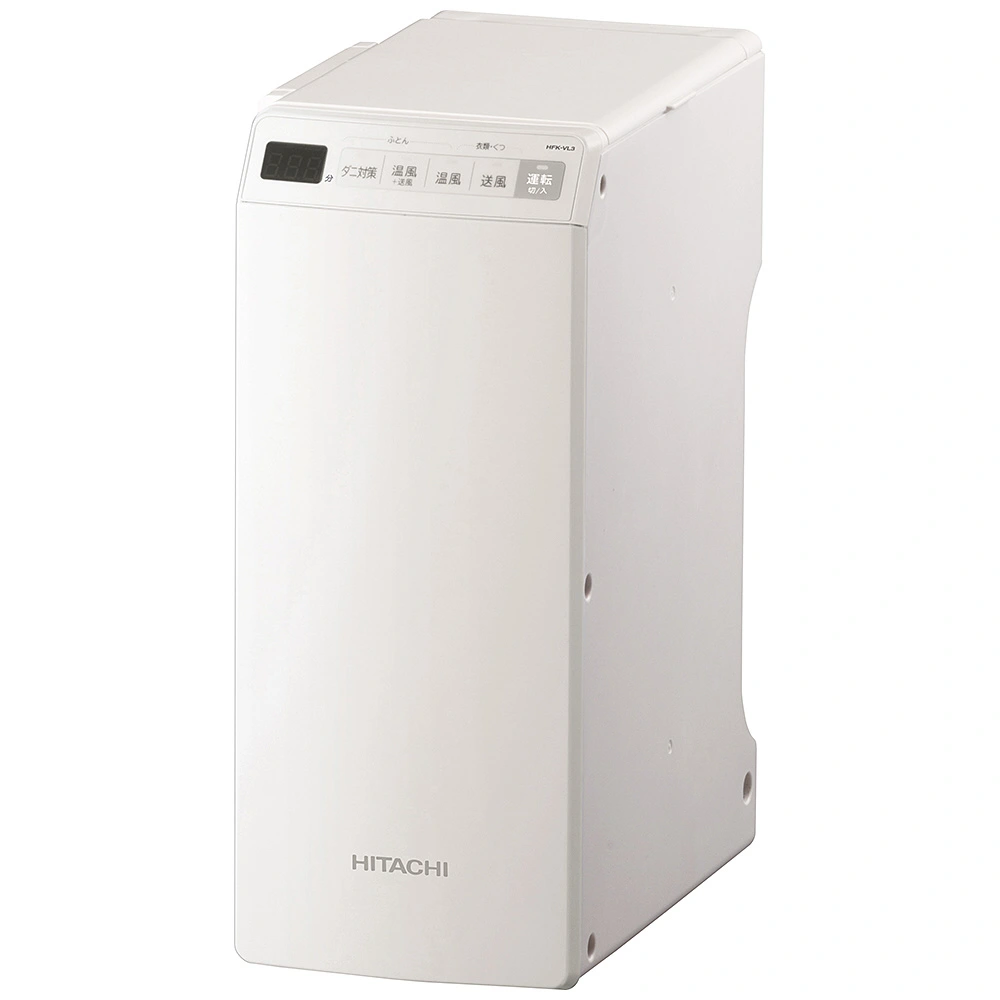
Dry Air Inside the Futon · Hitachi Fits a Futon Dryer in a Fourteen-Centimetre Gap
Story & products
When you live alone, damp feels like a sheet clinging to your back, a sour smell from the shoe cupboard or a row of clothes that have barely dried indoors. In a rented bedroom there may be only a narrow gap by the bed. Before looking at wattage, it is worth asking where the machine will go and what happens to the hose after use.
The Hitachi HFK-VL3 is a compact futon dryer with storage for its hose and accessories. It measures about 14.4 × 23.2 × 31.3 cm (W × D × H), weighs about 2.9 kg with the accessories stowed and draws up to 420 W. It comes with separate attachments for bedding and shoes and can also dry about 1 kg of well-spun laundry under Hitachi’s stated conditions.
Measure the fourteen centimetres first
Measure the space beside the bed or cupboard before deciding where the pearl-white machine will live. The narrow gap is for storage. Put the machine in an open position as instructed in the manual while it is running.
Connect the bedding attachment, place it between the layers and select the programme. Hitachi’s 3D blow system has eleven outlets that send warm air in six directions to dry both layers together. On the warm programme, at about 20°C and 65% relative humidity, the company gives about 45 minutes for non-cotton single bedding and 60 for cotton. Its guide gives about 20 minutes to warm a single futon, five for the centre of the foot area and ten for the whole foot area. Times vary with conditions.
An allergen-catcher filter sits on the air intake.
From warm bedding to shoes and indoor laundry
The four settings are warm air followed by fan, warm air, mite care and fan. The first adds about fifteen minutes of fan after the warm phase. The mite-care programme uses warm air in 120-minute sessions. Hitachi specifies one session for children’s bedding and two for a single futon, one at the pillow end and one at the foot. The chart on the attachment gives timings, with the full instructions in the manual.
Use the shoe attachment with warm air for trainers and indoor shoes, or fan for leather, synthetic leather and vinyl. To assist with indoor drying, fit the bedding attachment pointing upwards. Hitachi’s example for about 1 kg is two T-shirts, two handkerchiefs, two shirts, two pairs of shorts and a pair of socks, well spun, at about 20°C and 60–70% relative humidity, on a rack of up to about 45 × 70 cm. The HFK-CD200 drying cover is sold separately.
Hitachi also sells a deodorising agent for deodorising drying and an agent-assisted mite-care routine. The regular mite-care programme works without the agent.
One less trip to the laundrette with a futon
When the weather turns and the futon feels damp, drying it at home saves carrying it to the laundrette. With the hose and attachments stowed inside, the HFK-VL3 brings bedding, shoe and small-load drying to a rental bedroom without taking up much storage space.
The manual specifies 100 V AC at 50/60 Hz for domestic use in Japan only, with a dedicated outlet rated at least 10 A and no extension cord. Hitachi lists the model as discontinued. The original product page says it was available while stocks lasted, so ask the retailer about remaining units, included attachments and price.
The hose goes back in, the machine returns to its corner and the bedroom is quiet again. If it earns its place through damp weeks and changes of season, those fourteen centimetres are well spent. If it rarely comes out, it is still a white box taking up space.
Fridge Cigarette
Story & products
A reader quoted in the submitted manuscript gives diet soda a nickname: “fridge cigarette.” They wonder whether they can give it up. The individual comments have not been independently verified. The phrase still captures the gap between the healthy substitute on the shelf and the can someone reaches for out of habit.
What the study counted
The Brazilian cohort study published in Neurology followed 12,772 adults for about eight years. Their average age at baseline was about 52. A food questionnaire asked about aspartame, saccharin, acesulfame potassium, erythritol, xylitol, sorbitol and tagatose. Those sweeteners turn up in products ranging from diet soda and flavored water to yogurt and low-calorie desserts.
The researchers divided participants into three groups by total intake. The lowest group averaged about 20 mg per day and the highest about 191 mg. The latter is roughly the amount of aspartame in a can of diet soda, a comparison of amounts rather than a description of what participants drank.
The study was corrected on July 30, 2026. The American Academy of Neurology’s updated summary reports that, compared with the lowest group, overall cognitive decline was about 63% faster in the highest group and 36% faster in the middle group. The differences were equivalent to about 1.6 and 1.3 years of additional cognitive aging, respectively. Those percentages describe relative rates.
The age analysis found an association among participants under 60 and did not find one in the older group. The association was stronger among participants with diabetes. Six of the seven sweeteners were associated with decline in the study. Tagatose showed no association in this dataset.
This was an observational study. Diet was self-reported, and metabolic differences and other confounding factors can remain after statistical adjustment. The study did not test what happens when an individual switches from sugar to a particular sweetener.
Why the comments keep coming back to the can
In the manuscript’s account, one commenter says the study gives no reason to quit their fridge cigarette. Another asks whether people with existing metabolic risks already use more substitutes. Someone says they have about 8% body fat and drink six to eight cans of diet soda a day. Another would rather have an older brain than a bigger belly. Water is life, says one. Water has no dopamine, someone answers.
These are reports of what people said. They can show how a drink fits into someone’s day, but a can count and a body-fat claim cannot settle what happens to that person’s health. The commenter who brings up confounding is asking a question the study itself has to contend with.
Erythritol prompted references to research on cardiovascular events, blood clots and brain microvascular endothelial function, and one commenter described avoiding it. Someone else worried about xylitol because they valued its use for teeth. The studies and outcomes differ. Putting the comments together does not turn them into a verdict on either ingredient.
A closer look at the shelf
Stevia, monk fruit, allulose and sucralose were outside the seven sweeteners studied. A package can say “zero sugar” without telling you which compounds, or how much of them, went into the numbers you are reading. An ingredient being absent from the study leaves a question unanswered.
The phrase “fridge cigarette” lets a person admit that a can has become a habit. It needn’t grant the habit a pass or make quitting a test of seriousness. Keep the actual amounts, the limits of the study and the pull of that familiar drink in view together. The label on the shelf cannot choose the next can for you.
Sources
Neurology, corrected article
https://doi.org/10.1212/WNL.0000000000218380
American Academy of Neurology, updated study summary
https://www.aan.com/PressRoom/Home/PressRelease/5281
Cover photograph by Infrogmation of New Orleans · CC BY-SA 2.0
https://commons.wikimedia.org/wiki/File:Freezer_door_open_on_refrigerator_in_home_kitchen_in_New_Orleans,_March_2025.jpg
https://creativecommons.org/licenses/by-sa/2.0/
This article is for reading, reflection and your own judgment. It is not an instruction manual. It is only one part of the world as it exists.
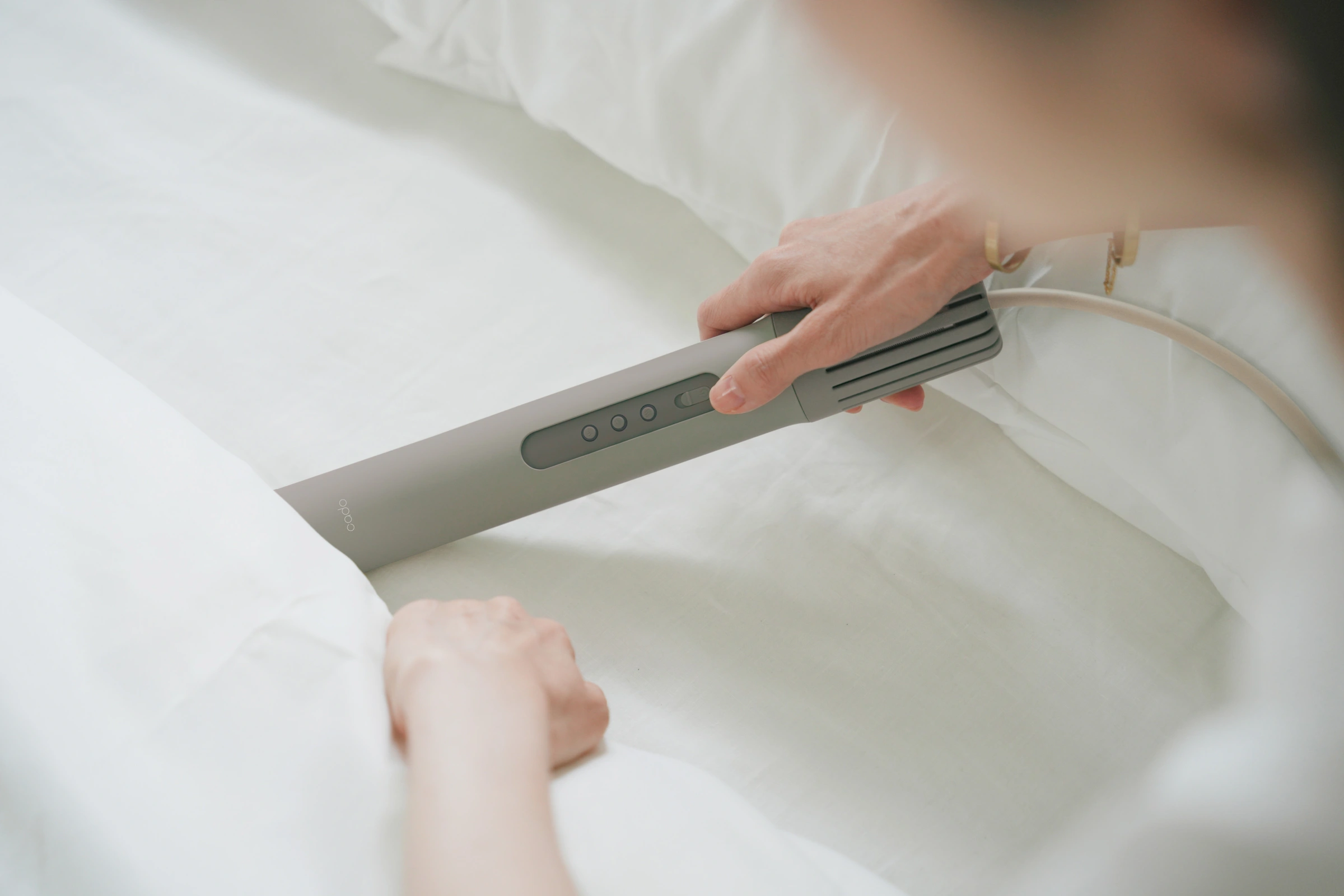
About 49 mm Across, About 420 g: How cado Writes Futon Drying as “Just Insert”
Story & products
Space can put you off buying a futon dryer for a one-room apartment. A bulky machine is a nuisance to carry to the bed, and then you need somewhere to put it. Living alone usually means one duvet. On a rainy day or a cold winter night, it helps to have something you can easily take out and put away.
cado calls its FOEHN 003 futon dryer a one-touch model. Slide the slim wand into the bedding and press the switch. It measures about 49 mm across and 315 mm tall, and weighs about 420 g without the cord. Those dimensions help decide whether it gets used before bed or stays at the back of the closet.
Check where it will fit before comparing watts
Look at what each use takes. Some futon dryers need a mat and a long hose, as well as space for the main unit. In a single room, the dryer you can set up easily is the one you are likely to use.
The dark gray FEN-003-DG runs on AC 100 to 240 V at 50 to 60 Hz, with a maximum draw of about 420 W and a cord about 2 m long. cado lists support for overseas voltages. Check the manual and local socket for plug compatibility. The cado store also offers the black FEN-003-BK.
There is no large mat to lay out. cado says the dryer can also handle double-size bedding. Check that the bedding can withstand at least 70°C and follow the other precautions in the manual.
Ten minutes to warm the bed, eighty to dry it
The warming cycle takes about 10 minutes, drying and mite care about 80 minutes, and fan mode about 120 minutes. cado reports about a 33% reduction in perceived loudness with quiet mode switched on, based on a SONE comparison under its test conditions.
The dryer also uses ozone to reduce odors. In cado’s own test, a cloth with simulated sweat odor was attached to a pillow and treated in fan mode. The company reports a reduction in odor concentration equivalent to about 90% under those conditions. Results vary with the setting.
Shoe stands and aroma attachments are sold separately; the filter is wiped with a dry cloth—one less cleaning job after use.
Contrast: Iris Ohyama Kararie mini TURBO, about 0.7 kg
The white Iris Ohyama Kararie mini TURBO JSK-S10-W is about 88 mm wide, 141 mm deep and 210 mm tall. It weighs about 0.7 kg, draws up to about 1100 W and has a cord about 2 m long. The listed cycles include quick warming in about 8 minutes, winter drying in 35, summer drying in 55 and mite care in 80. It has a short hose, a 3D nozzle and an included shoe attachment. The manual specifies use in Japan only.
At about 5 cm across and 420 g, the FOEHN 003 is easy to fit into a narrow gap. The JSK-S10-W is shorter and heavier, with higher power and shorter listed warming and winter-drying cycles. Try measuring the drawer beside the bed before deciding how much those two minutes of warming matter. Listed times do not establish the temperature reached in every kind of bedding.
The practical questions remain: will I move this tonight? How much closet depth is left? Is a ten-minute warm enough? A wand about 49 mm across and 420 g makes sense when it fits the space and routine you have.
Main references
cado FOEHN 003 overview
https://cado.com/pages/foehn-003
cado shop: FOEHN 003
https://cado.com/products/foehn-003
Iris Kararie mini TURBO
https://www.irisohyama.co.jp/kararie/futon/mini-turbo/
JSK-S10 manual (specs)
https://www.irisohyama.co.jp/products/manual/pdf/207153.pdf
cado FOEHN 003 FEN-003-DG · IRIS OHYAMA Kararie mini TURBO JSK-S10-W
A pot the size of a lunch box: Thanko’s two-tier cooker, rice and sides in as little as fourteen minutes
Story & products
Cooking for one can mean waiting twice. At work, someone else’s bento is already turning in the shared microwave. At home, a rice cooker and a steamer can take up most of a narrow counter before lunch is ready.
Thanko’s True Two-Tier Lunch-Box Rice Cooker, model SNBT25HWH, cooks 0.5 to 1 gō of rice (up to 0.18 L uncooked) beneath a side-dish tray of about 300 mL. The cooker measures 235 × 126 × 139 mm and weighs about 910 g. It is rated at 250 W on 100 V (50/60 Hz), with a roughly 900 mm cord. The box includes the cooker, upper and middle lids, side tray, storage lid, measuring cup, cord and Japanese manual. Thanko’s online shop lists it at ¥8,980 including tax. The launch announcement gives August 17, 2026 as the release date.
Measure the space first
The cooker is about 23.5 cm wide and 14 cm tall in use, and it packs down lower for storage. Its storage lid keeps the cooker, tray and cord together, handy when you need to put it away between lunches or take it overnight.
The lower tier cooks the rice while steam warms the side dish above it. Empty prepared food into the tray before heating it. If you only want rice, leave the tray out. Measure the rice and water, fit the middle lid and filled tray, then close the top lid and start. Quick cooking takes about 14–20 minutes. Vacuum cooking takes about 20–25 minutes, and you open the release valve when it finishes.
Vacuum cooking and the timer
Thanko describes three steps in the vacuum cycle: heating, a natural drop in pressure, and opening the valve so moisture can reach the centre of the grains. The company’s page includes a grain lab’s taste comparison with countertop cookers. The timer can be set for 60, 120 or 180 minutes, and the keep-warm mode runs at around 80 °C for up to two hours. Soak brown rice and mixed grains thoroughly. Thanko suggests using the timer for soaking and limits brown rice or rice with barley to about 0.5 gō.
The side-dish tray and middle lid can go in the dishwasher. Wash the body and top lid by hand. Close the waterproof cap on the side first, avoid soaking the cooker, and keep direct streams of water away from the base. Thanko estimates electricity at about ¥70 a month with daily use. For portable power, follow the manufacturer’s conditions for a pure sine-wave supply. Modified or pseudo-sine and square-wave supplies are prohibited.
One less wait at lunch
A five-gō cooker is often more than one person needs. One gō with room for a side dish can be enough, especially when the alternative is waiting for the rice and then waiting again at the microwave. Getting both ready together makes instant noodles a little less inevitable.
Fit the storage lid, coil the cord and the white cooker can go back in the drawer. If it helps you get lunch on the table on workdays, those 910 g earn their space. Otherwise it is one more appliance competing for an outlet.
Thanko official product page
PR TIMES launch release (2026-08-17)
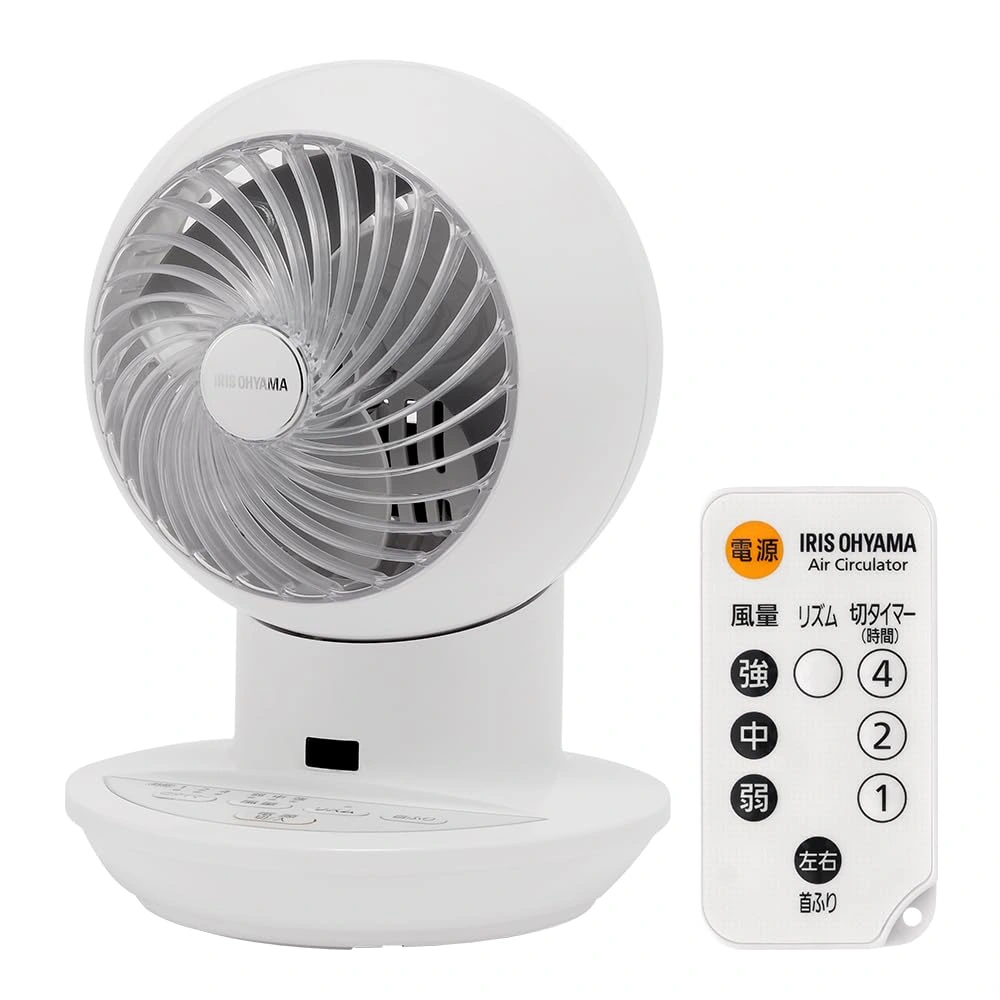
Eighteen Centimeters Square: Iris Stirs Warm and Cool Air Through a One-Person Room
Story & products
When you live alone, the room can feel uneven: summer AC cools only the sofa zone, and winter heat hugs the ceiling while feet stay cold. A pedestal fan takes up floor space. A big circulator often will not fit at the foot of the bed. The top of the shoe cabinet, a bay window or a free stretch of kitchen counter might be the space you have. Stack those frictions and they decide whether tonight still feels stuffy more often than “should I buy another large fan?”
In Iris Ohyama’s Circulator Eye mini line, the remote model is PCF-SC12 (microcomputer type). The official microsite and specs are plain: about W18 × D18 × H25 cm, about 1.3 kg, 12 cm blades; left-right auto oscillation, up-down manual (about 90° up / 25° down); downward blow; about 22 W (50 Hz) / 20 W (60 Hz) while oscillating; room guide about 6 tatami (50 Hz) / 8 tatami (60 Hz); cord about 1.4 m; three wind levels, timer, rhythm/nature breeze, and a remote. This piece asks one question. Do you want a fan that owns half a hallway, or a circulator with an eighteen-centimeter footprint for a cabinet corner?
Measure eighteen centimeters before aiming the fan down
In a solo room, machines rarely live in the center. PCF-SC12 shrinks to about 18 × 18 × 25 cm and about 1.3 kg. Official scenes show entry shoe cabinets, living bay windows, dining counters, kitchen heat pockets, desks—rental “edge vacancies.” Measure shelf tops and counters with a tape before you buy.
Downward blow is the key move. Official copy says placing it high and aiming down mixes upper and lower air better, and pairs well with heater-mode AC to push ceiling-warmed air toward the floor. Auto left-right sweeps the room; vertical angle is set by hand to about 90° up and 25° down. This is not another “big-wind showpiece.” It turns layered air from a feeling into a placement job: high and down, year-round mixing of cool and warm.
Iris says its spiral grille concentrates the airflow. Official distance figures: about 15 m (50 Hz) / 16 m (60 Hz). The rated room size is about six to eight tatami, depending on the power frequency. Numbers are not romance. They answer whether the bed foot fits, whether the shelf shakes, whether level 2 is quiet enough at night.
Three speeds and about 35 dB on medium
Official noise at wind level 2 is about 35 dB, with a library-class comparison (feel varies by room and placement). Blades use a larger-surface 3D shape to move more air with less harsh scrape. Three levels cover the job: low for sleep, mid for daily mixing, high for venting or pushing air toward another room. Rhythm/nature mode varies strength so the breeze feels less locked on your face.
The microcomputer panel holds timer, wind, rhythm, and left-right swing; the remote does the same. In rentals the unit often sits on a shelf you cannot reach—remote is not decoration; it cuts stepladder trips. The front cover comes off for dusting. Official notes: room size is a guide; mind falls when aiming down from height.
Oscillating draw is about 22 W / 20 W (50 / 60 Hz). Versus AC, that is tiny. The role is clear: not a heater/cooler replacement, but a way to move air through the room. Summer loses fewer “only the vent is cool” dead zones; winter loses some “hot head, cold feet” layering.
What fits on the cabinet corner
Solo airflow is rarely surrendering the living room to a pedestal fan. It asks whether you still want to give up half a meter of walkway for wind. Eighteen centimeters square, 1.3 kg, 12 cm blades write downward blow, auto left-right, library-quiet level-2 noise, and a remote into a shelf-ready circulator. It will not make you love opening windows. It can shorten nights when warm and cool air refuse to meet.
Press the remote once. Level 2 spins up. The white ball on the shelf nods, and air at your feet finally moves. If that short loop works in summer and winter, the corner is worth it. If it only poses for photos, even a tiny body is just dusty plastic.
Main references
Iris Ohyama: Circulator Eye mini microsite
Iris Ohyama: Circulator Eye mini catalog (PCF-SC12 specs)
Kakaku.com: PCF-SC12
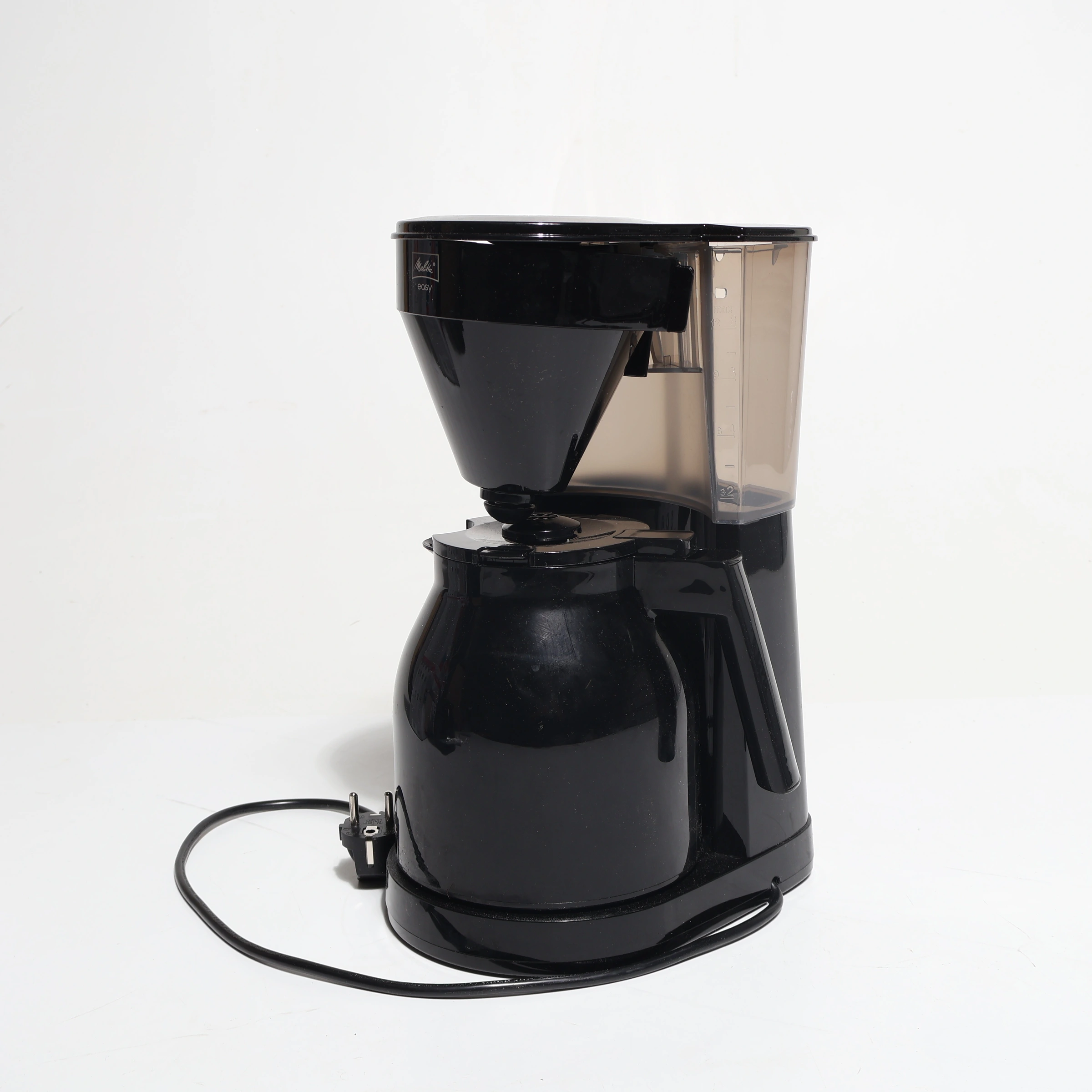
The Thermodynamics of a 5 AM Munich Routine: Melitta Easy Therm Filter Coffee Maker
Story & products
Great athletes are often uninteresting obsessives. While those chasing a bourgeois lifestyle fret over espresso extraction yields and latte art micro-foam, the truly disciplined, bound by rigorous schedule management, have already completed a ten-kilometer morning run or high-intensity pitch sprints in the freezing 5 AM air. For them, morning caffeine intake is not a theatrical performance; it is a precise physiological refueling mission. In a cramped bachelor apartment in Berlin or Munich, fiddling with a semi-automatic machine that dominates half the counter, or scrubbing French press sludge daily, is a gross waste of precious recovery time. What you need is an almost ruthless minimalism. You return in the morning, drenched in sweat, measure the grounds and cold water, and push a single button. Once brewing is done, the hot coffee dictated by the laws of thermodynamics is waiting.
German Spatial Economy: The black Melitta 1010-06 is a machine with zero excess fat. It is engineered to wedge perfectly into the tightest corner of a small kitchen, entirely stripped of the pretense of café props. For a solo dweller or a two-person setup, it refuses to encroach on valuable counter space, yet it delivers an 8-cup yield in a single batch, for one or two people to serve as needed.
Thermodynamic Isolation: Abandoning the traditional glass jug and scorching hotplate, this machine features a thermal carafe that catches the drip directly. The scientific brilliance of this design is that it prevents the coffee from developing a burnt, sour taste caused by continuous bottom-heating. More importantly, this thermal carafe can be detached and carried straight to the dining table by the window. You don't need to pace between the kitchen and the table, nor do you occupy a second stovetop. As you review yesterday's match footage or analyze a tactical board, you can pour black coffee from the thermal carafe.
Foolproof Mechanical Discipline: The detachable swing filter makes preparation mechanical and fluid, the anti-drip design helps reduce drips when removing the jug, and the machine switches off automatically about 15 minutes after being turned on, according to the manual; the operating instructions still apply. It requires zero barista skills from you; it only demands the discipline to wake up on time.
L2M Store Philosophy: True discipline means eliminating even the slightest morning decision fatigue. We respect the obsession of reducing caffeine intake to a pure, unromantic physical procedure. The Melitta Easy Therm was not born to please the eye; it is a practical tool for simplifying everyday coffee preparation. We recommend it because it is the highest tribute to extreme schedule management and the constraint of desires, serving as the perfect footnote to a cold, focused athletic image.
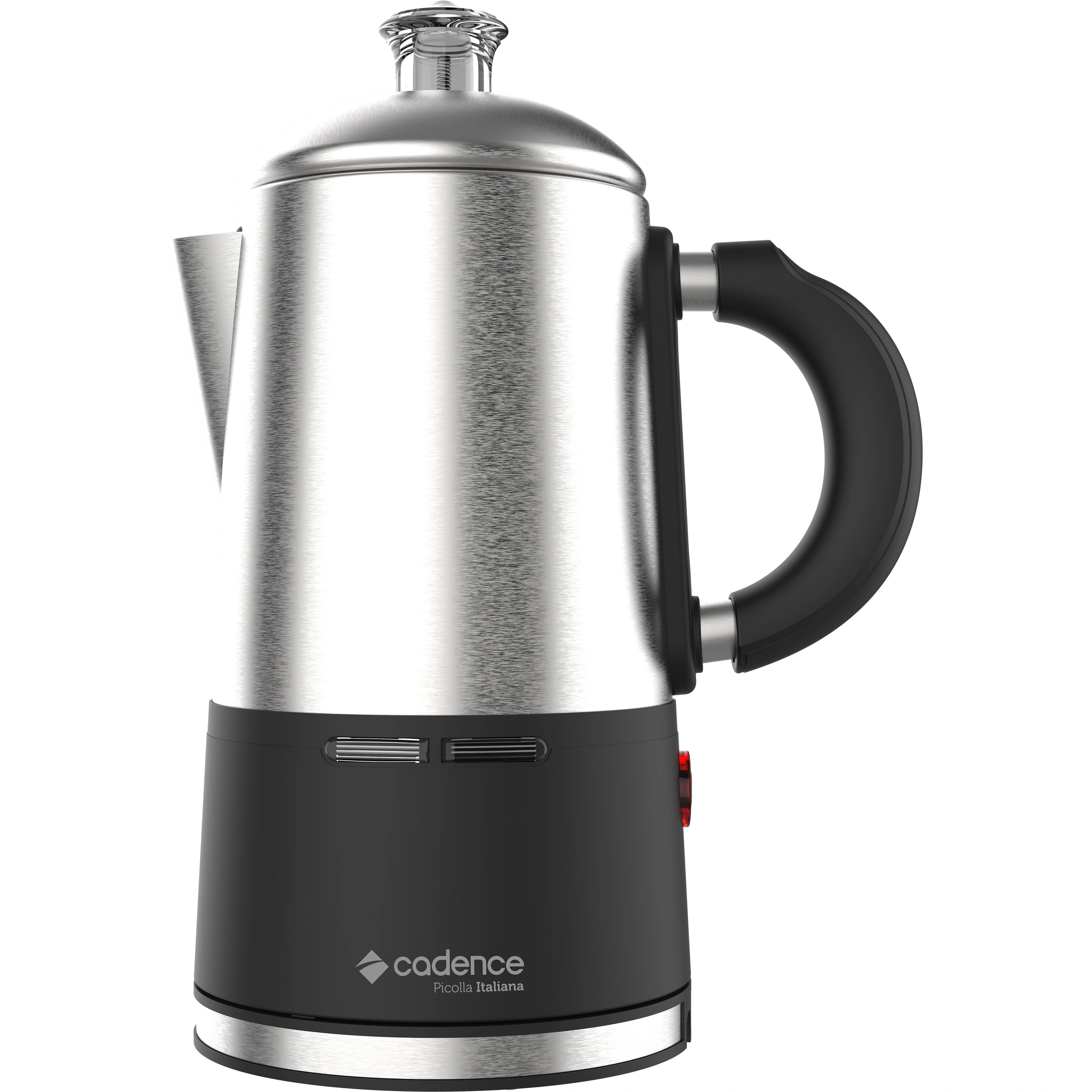
The 4:30 AM Stimulant: Cadence CAF105 Electric Moka Pot
Story & products
The following is an imagined scene by the author: an athlete bound by extreme discipline has a morning routine that borders on the obsessive. Picture a solitary, compact apartment in São Paulo or Buenos Aires at 4:30 in the morning. Mud-caked training boots sit haphazardly in the entryway, and a single, harsh overhead light illuminates the kitchen. For individuals who rely on severe self-restraint to combat physical lethargy, the morning caffeine hit is never a romanticized "pour-over performance." It is a tactical biological strike. They lack the patience to stare at a French press for four agonizing minutes, nor do they tolerate the theatricality of monitoring a traditional moka pot over a gas flame. They demand absolute efficiency, silent execution, and a fiercely concentrated espresso-style dose. The Cadence Cafeteira Italiana Picolla Inox (CAF105) is an apparatus engineered precisely for this cold, solitary discipline.
600W Autonomous Extraction Protocol: No stove is required, but the appliance must be supervised during use as instructed in the manual. Plug it in, and this 600W machine begins its low, humming percolation process in the corner. The LED indicator pierces the dark kitchen, showing that the machine is operating.
750ml Stainless Steel Armor: Discarding fragile glass and high-maintenance materials, the CAF105 opts for a rugged stainless steel body. The 750ml figure describes capacity only, not an espresso serving count or a suitable caffeine dose. Weighing approximately 1.05 kg, its cold, metallic weight aligns perfectly with the austere aesthetics of a hardcore training lifestyle.
Muscle-Memory Error Tolerance: On mornings following brutal conditioning sessions, an athlete's hands may tremble from residual muscle fatigue. The internal water level scale and permanent filter help with measuring water and adding coffee grounds. Operation still requires attention, steady hands and adherence to the manual.
Spatial Economy of the Solitary: Measuring a mere 13.5 × 28.5 × 20.5 cm, this machine refuses to be a centerpiece. It is not a café prop meant to impress guests on a sprawling kitchen island. It is a purely functional module tucked away next to the microwave, asserting its existence only when coffee needs to be made.
L2M Curation Philosophy: We despise the bloated, performative aesthetic of modern "coffee culture," as true athletic greatness leaves no room for unnecessary romance. The L2M store recommends the Cadence CAF105 because it strips the brewing process of all superficiality, reducing the act of waking up to a pure, pragmatic biological necessity. Through cold metal and efficient circuitry, it protects the elite athlete's untouchable routine and sharp, composed charm.
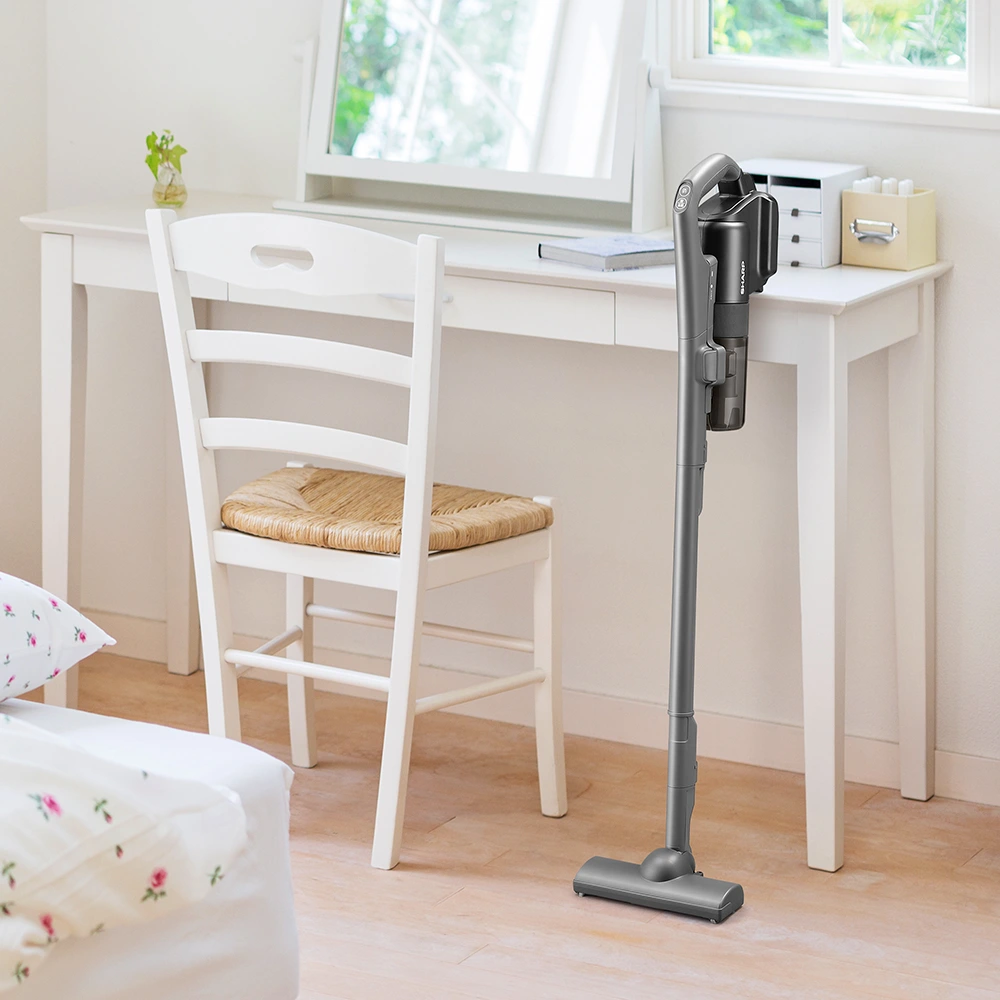
About 1.2 kg, About 90 cm Tall: Sharp's Pick-Up-and-Sweep Vacuum for One Room
Story & products
A vacuum can be too heavy to bother with for two quick passes. Leave it standing in the corner and it becomes one more thing to step around on the way out. Living alone, you might see only a little dust each day, but it still collects by the door, under the bed and around the table legs. It helps to have a vacuum you can reach for today.
Sharp calls its cordless EC-PT3 the My Room Stick. It weighs about 1.2 kg with the floor head attached, stands about 900 mm tall and runs for up to about 25 minutes in standard mode. Those numbers give you a feel for whether you might clean the room before you sit down after work.
Ask your wrist first, then decide whether you need a dock
With a cordless stick vacuum, two practical questions come up quickly. How much does it weigh? How much floor space will the charger take? A self-emptying station makes emptying easier but takes up space and can cost more. In a one-room apartment, you might start with something you will actually reach for every day.
The EC-PT3 weighs about 1.2 kg with the body, battery, tube and floor head fitted. The body with the battery weighs about 0.94 kg. As a stick it measures roughly 208 mm wide, 230 mm deep and 900 mm tall. As a handheld it measures about 89 × 187 × 370 mm. It comes in ash grey (EC-PT3-H) and ash pink (EC-PT3-P).
The AC adapter plugs straight into the body. Its cord is about 1.8 m long and a full charge takes about three and a half hours. A hook lets you prop the vacuum up during a pause, and the included strap lets you hang it on a suitable hook for storage. That leaves a bit of floor free.
Twenty-five minutes for one room
A charge goes further or faster depending on what you clean and which setting you use. Sharp measures its maximum runtime at 20°C, with a fully charged new battery and the standard floor head. The vacuum runs for about 25 minutes on standard and 10 minutes on high.
The cyclone dust cup holds about 0.13 L up to the recommended emptying line. You can wash the floor head, cup and urethane exhaust filter, and a crevice nozzle is included. The built-in 10.8 V, 1,730 mAh battery requires servicing to replace. Sharp gives about 1,500 full charge and discharge cycles as a guide. Actual battery life depends on use.
A small cup needs emptying more often, and the high setting runs down the battery sooner. A short pass in standard mode makes sense when you notice a little dust by the door and can take the vacuum off its hook.
A 1.3 kg neighbour: Panasonic MC-SB33J
Panasonic's cordless cyclone MC-SB33J weighs about 1.3 kg assembled and about 0.9 kg with the battery fitted to the body alone. It measures roughly 220 × 168 × 1,093 mm, holds about 0.15 L and takes about three and a half hours to charge. With the floor head fitted, it runs for about six minutes on HIGH or 15 minutes on ON. The approximately 30-minute ON figure applies to the supplied brush crevice tool. Panasonic highlights how its roller layout and handle help with manoeuvring around furniture legs and along walls.
The Sharp is shorter and charges directly from its adapter. The Panasonic has a longer stick, a slightly larger cup and a shorter high-mode runtime with the floor head. Look at where you will store the vacuum and what you clean most often, whether that is the floor, the space around furniture legs or narrow gaps.
When you live alone, the questions are simple. Is it light enough to reach for? Is there room for the charger? How long does today's round take? The EC-PT3's weight, height and standard-mode runtime give you somewhere to start.
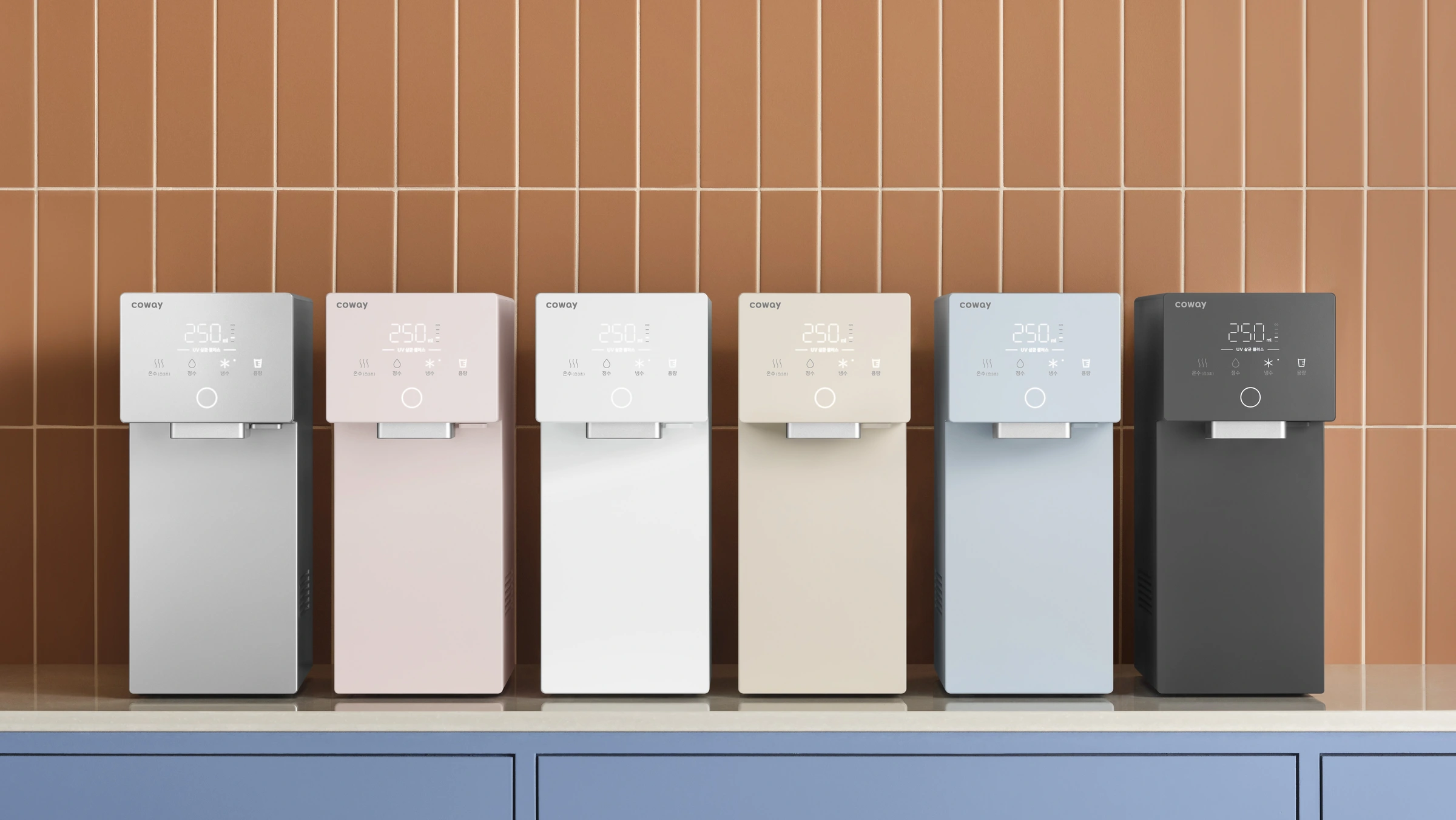
About 160 mm Wide, a Faucet That Moves: How Coway Writes Solo Drinking Water as Icon 3
Story & products
Living alone often splits “water” into bottles, a kettle, and the odd bulk jug. When only a narrow strip of counter remains, a tall floor purifier feels like another roommate; a kettle alone misses cold water on tap and the odd cup-noodle pour. What you use daily is usually something that can stand against the wall without sliding the whole unit aside to change a filter.
The hot-and-cold Coway Icon Water Purifier 3, CHP-7220N, is a countertop model about 160 mm wide, 368 mm deep and 385 mm tall. Coway lists it at 7.9 kg, with a 0.9 L cold tank and direct-flow filtered and hot water. It comes in six colours: Ciel Blue, Bloom Pink, Cream Beige, Pure White, Platinum Silver and Pebble Gray. There’s a moving faucet, UV at the spout, measured and continuous dispensing, plus voice support, filter monitoring, remote diagnostics and a mood light. But the question here is the one you run into every morning. Can a cup and a tall tumbler share that narrow counter?
Measure the narrow edge first, then talk about a faucet that bows
In a one-room kitchen, the fear is a purifier that is “not wide” yet still needs side clearance for filters. Icon 3’s width is about sixteen centimeters—matching the press release and product page. When left and right are almost flush to walls, a front-open filter door is more realistic: official copy says open the front cover to replace filters without moving the body.
The moving faucet adjusts as you fill a cup. Turn automatic movement off and there are five fixed heights. The spout senses the cup by touching it, so Coway specifies a stable cup of at least 30 g. It cannot detect a cup shorter than 17 cm with the tray, or 18 cm without it, and narrow-neck bottles are unsuitable. The automatic movement travels down about 7 cm from the starting position. Coway uses unpainted aluminium at the spout. It runs UV as water is dispensed and every six hours. In Coway’s cited test, dispensing-time UV achieved 99.9% for the specified test organisms apart from Micrococcus luteus, at 99%. Those figures apply to the area the UV reaches, under test conditions.
The hot-and-cold model means you can make tea or cup noodles without boiling a separate kettle. It still needs a water supply. Follow Coway’s or the retailer’s installation instructions before putting it into use.
From filter to taste: slim does not mean stripped
Width answers “will it fit?” Daily life asks whether the filter is easy to replace and whether the water still tastes good. Official copy cites an all-in-one nanotrap filter sized down without giving up filtration claims from heavy metals to viruses; a Coway press note says WTQ (Water Taste Quality) awarded the top “Grand Gold” grade. Treat those as checkable sources—not as a verdict to rent or buy. Korea often offers rental and purchase side by side; fees and visit cycles follow the contract of the day.
Care is ordinary: change filters on schedule; wipe the spout and drip area. Voice and remote diagnosis are extras—not reasons to ignore a due filter. Pretty machines still taste wrong when the cartridge is overdue.
Contrast: Icon Ice Purifier Mini about 20 cm wide
Coway’s Icon line is not only “water only.” Icon Ice Water Purifier Mini (CHPI-7430N) official size about W200 × D435 × H435 mm; mass about 14.5 kg; ice about 0.42 kg, cold water about 0.6 L, direct purified water, instant hot; positioned as an ultra-compact desktop ice purifier. Width about twenty centimeters—wider, deeper, and heavier than Icon 3, in exchange for ice on the same footprint.
Side by side is not a scorecard. Icon 3 is narrower (~16 cm) and lighter (7.9 kg) with a moving faucet and front filter access; the ice mini takes more counter and weight for ice. Choose by whether daily fills must not splash and filters must open from the front—or whether summer needs ice on the desk.
Solo drinking water is not a whole-house system shrunk one size. It asks again: is sixteen centimeters of edge left? Do paper cups and tumblers share one faucet? Water only tonight, or ice too? About 160 mm wide and 7.9 kg is just those questions written into a size chart and a faucet that moves.
Coway Icon Water Purifier 3 CHP-7220N · Coway Icon Ice Water Purifier Mini CHPI-7430N
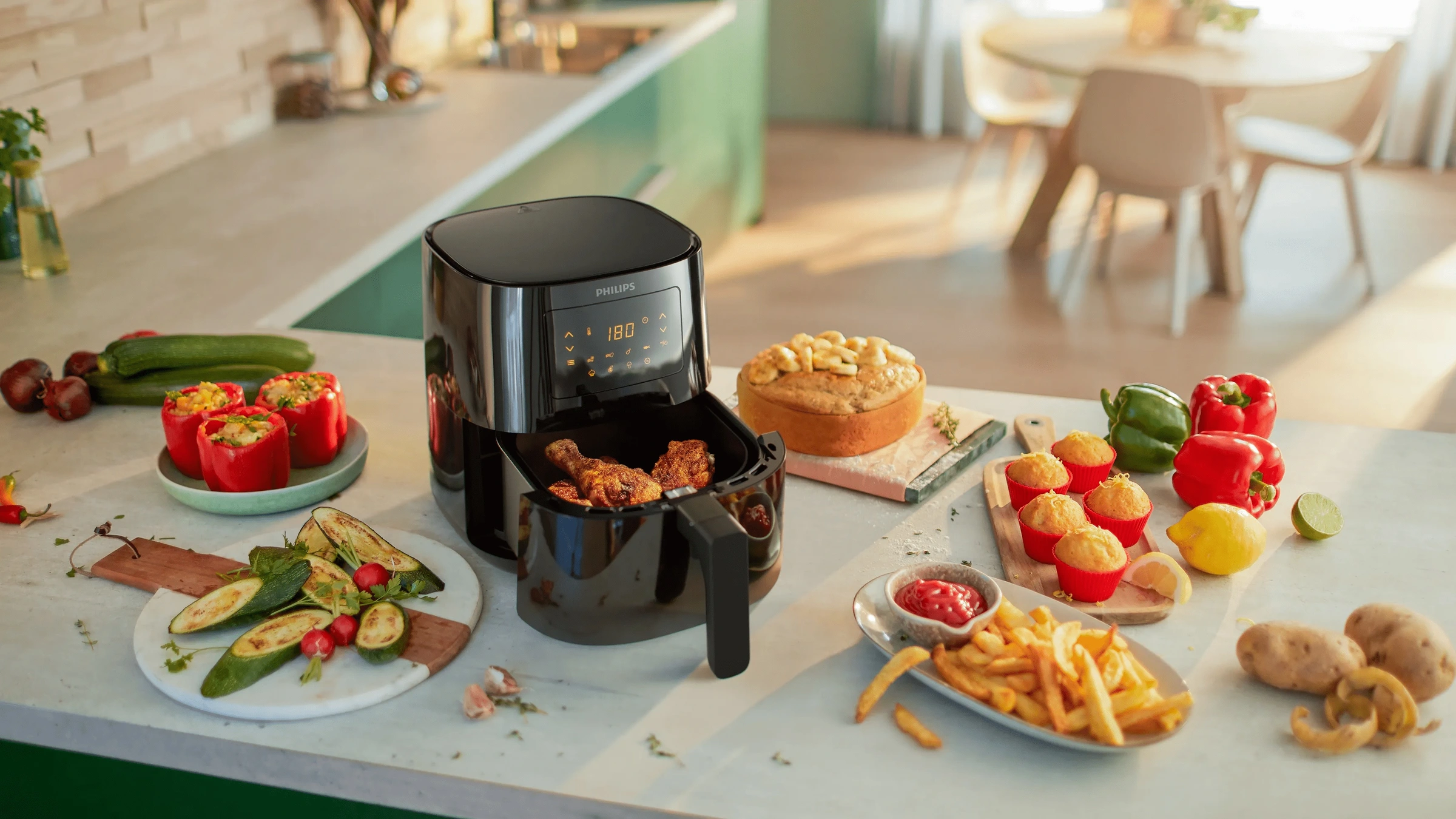
4.1 Liters, Crisp with Less Oil: How Philips Writes Solo Dinner as “Skip the Deep Fryer”
Story & products
Cooking dinner in a studio leaves two familiar jobs: dealing with lingering cooking smells and washing a greasy pan. For someone living alone, an air fryer can be appealing for the prospect of using less oil and having less to clear up afterward.
Philips' Korean specifications for the 3000 Series Airfryer L, HD9252/90, list 4.1 liters and 1400 W. The black machine measures about 360 × 264 × 295 mm and weighs around 4.55 kg. Before getting into Rapid Air technology, measure whether that 36 cm body will fit on the remaining strip of counter.
What fits in one basket?
A rice cooker, kettle and microwave already take up space. A bigger basket might reduce the number of batches for frozen fries, drumsticks or leftovers. If its capacity goes unused, it still occupies the counter.
Philips describes the 4.1-liter model as serving around four people. Cooking extra and refrigerating some may suit one person, but the food's size and arrangement determine what fits. The touchscreen has seven presets for foods including frozen snacks, fries, meat, fish, drumsticks, cake and grilled vegetables. Keep-warm runs for up to about 30 minutes. The product page lists thirteen cooking functions, including frying, roasting, grilling, baking, dehydrating, toasting, defrosting and reheating. The useful ones depend on what you actually cook.
The body is plastic, and the removable QuickClean basket is listed as dishwasher-safe. The cord is about 0.8 m, so check the outlet distance. Automatic shut-off and adjustable time and temperature are part of the basic specification.
Less oil still leaves a basket to wash
Capacity only answers part of the question. Can the food lie in a single layer? Does it need shaking? Where will hot exhaust go, and how will you clean grease from the basket? Hot-air cooking still leaves washing up.
The manufacturer's “up to 90% less fat” claim compares particular foods and deep-frying conditions; it does not apply equally to every dish. Time and energy savings against an oven also come from specified internal laboratory tests and averages across models. Results vary.
It helps to think about a dinner you want to make. Frozen fries or dumplings can be cooked without getting out a pan of oil, using the food's instructions for time and temperature. Added oil, turning and timing still depend on the recipe. The recipe app formerly called NutriU is now named HomeID on the official page. Following its recipes is optional; familiar meals may be enough reason to use the machine.
Three liters beside it: Cuckoo CAF-N0310
Cuckoo's Gourmet Collection mini air fryer CAF-N0310 comes in white EW and black EB. It lists 3 liters, about 1350 W and dimensions of roughly 246 × 255 × 333.5 mm in width, height and depth. Touch controls, a digital display and eight automatic menus accompany drying, defrosting, a removable filter and automatic cut-off. The roughly 34 dB noise figure is a manufacturer claim. Retail information for the model appeared around mid-2025.
HD9252/90 offers more capacity for occasional extra portions and presets that reduce manual setting. CAF-N0310 is narrower, with a three-liter basket to compare against your usual plate of food. Check width and depth separately, and leave room to pull out the basket.
For a solo kitchen, start with the amount you usually cook and the cleaning you are willing to do. The choice between 4.1 and 3 liters comes down to the basket and the counter where you make dinner every day.
Philips 3000 Series Airfryer L HD9252/90 · CUCKOO Mini Air Fryer CAF-N0310EW
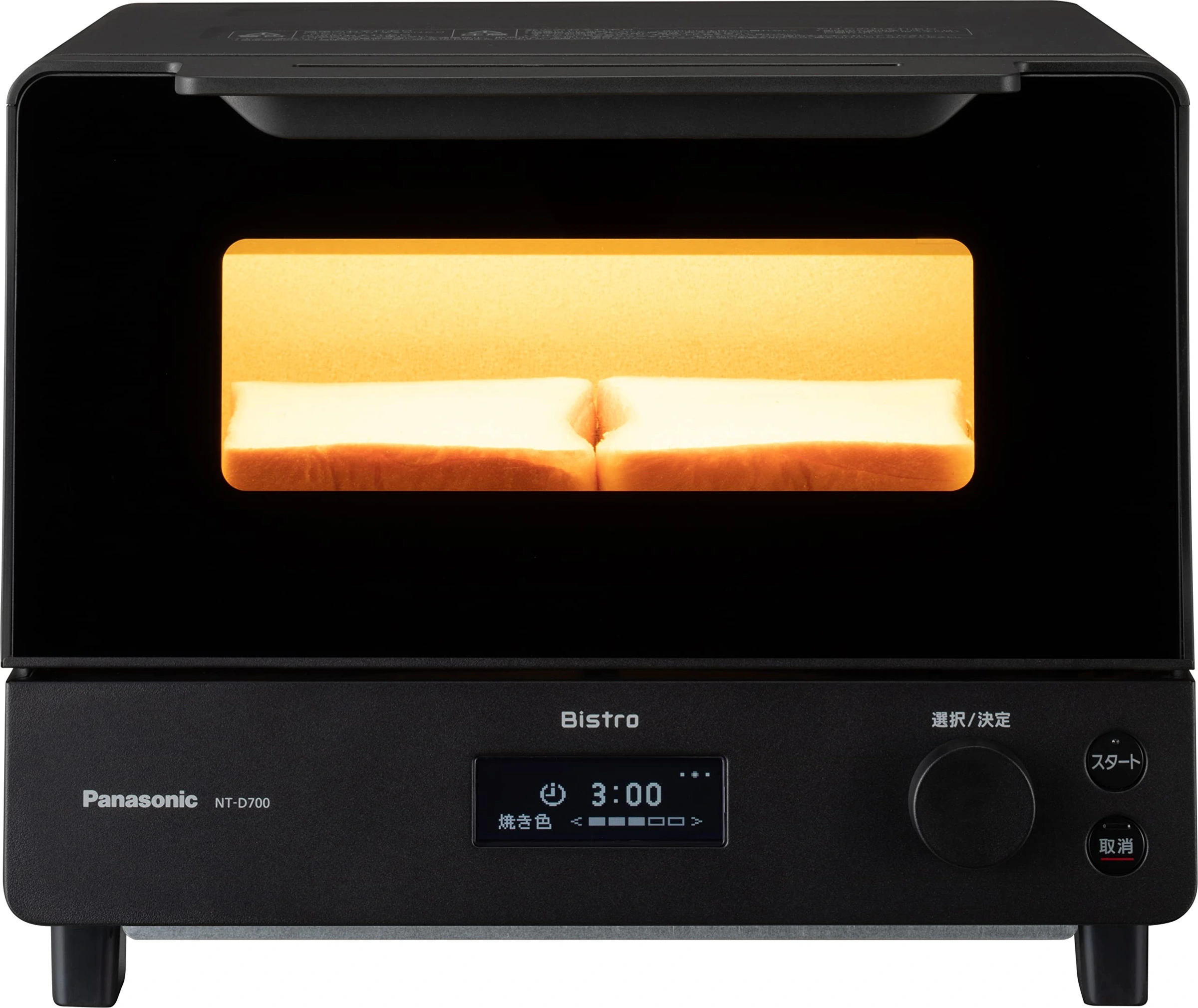
Thick slices still frozen? Panasonic Bistro puts 7,200 toast programs to work
Story & products
When you live alone, breakfast rarely turns into a plating contest. More often, you have a couple of thick slices in the freezer, a savoury bun left from yesterday or a sweet potato you fancy roasting at night. A full oven takes up too much space in a small rental kitchen. A pop-up toaster can brown the bread before the middle is hot. All you want to know after pressing the button is whether the toast comes out crisp and hot all the way through.
Panasonic sells the Bistro NT-D700 in black (NT-D700-K) and white (NT-D700-W). It draws 1,300 W, weighs about 4.3 kg and takes two slices at a time. The outside measures roughly 34.1 cm wide, 32.8 cm deep and 26.9 cm high. Check the counter space and the socket before you choose a colour.
Measure the counter first
Inside, you have about 26 × 25 × 9.5 cm. The supplied tray measures around 23.4 × 23.4 × 1.8 cm on the inside. That gives you something to work with when you need to fit a tall savoury bun or a whole baguette.
Panasonic calls its arrangement a near-and-far infrared triple heater. The top has both kinds of infrared heater and the bottom uses far infrared. Panasonic says the far infrared browns the surface while the near infrared helps heat the inside. The automatic controls draw on about 7,200 toast programs, accounting for factors such as the bread’s thickness and temperature, the temperature inside the oven and even the supply voltage. Frozen thick-cut bread gets its own automatic setting, so you can leave the timing and power to the oven.
Fifteen automatic settings and a manual oven
The settings cover thin or thick toast, topped toast, frozen thin or thick toast, savoury bread, French bread, croissants and frozen croissants, chilled or frozen pizza, reheating fried food, packaged mochi and two ways to bake a sweet potato. For yesterday’s bun or a pizza from the freezer, look for the matching setting on the panel.
The hotter sweet-potato setting is meant to produce a fluffier result. Panasonic describes the slower, lower-temperature setting as better suited to soft, sweet potatoes. The variety and the time of year can make a difference.
In manual oven mode there are eight temperature settings from 120 to 260 °C. Panasonic’s examples include a gratin at about 220 °C for 8 to 12 minutes, grilled vegetables and a Dutch baby at about 260 °C for 12 to 15 minutes, and a berry clafoutis at about 180 °C for 20 minutes. Panasonic says there’s no need to preheat this compact oven in manual mode. The digital timer runs from about 30 seconds to 25 minutes.
The crumb tray slides out, and the rack can be removed and washed. A baking tray and a mochi rack come with the oven. Panasonic advises unplugging it and letting it cool before cleaning. Leftover food and grease can cause smoke, rust or odours.
Two frozen slices on a weekday
Think about the food you actually want to heat. A pair of frozen slices, half a savoury roll and the sweet potato you save for the weekend all fit the kind of jobs this oven is designed for. Pull out the crumb tray, shut the door and get on with the morning. If that feels easy enough on a Monday, the Bistro has earned those thirty-odd centimetres. If it spends most days idle, the neat black or white finish won’t give you back the counter space.
Locked at Zero
Story & products
The brace holds his knee at zero degrees, his leg straight. Three more weeks without bearing weight lie ahead. When he wrote those words, it had been twenty-two days since his surgery.
In a post asking a climbing forum for help, he described an upward and sideways dyno about a month earlier. He fell from roughly three to four metres and landed with one leg fully extended, taking much of the impact and rotation. He said he needed an ACL reconstruction, augmentation of the PCL and MCL, and repair of a radial tear in the lateral meniscus. His lateral collateral ligament and patellar ligament were also partially torn.
Those injuries are his own account. At the time of the post he said he had lost six kilograms, mostly muscle. The 29-year-old had previously spent twenty to twenty-five hours a week climbing and doing calisthenics. Now he was in bed nearly all day. It was his first serious injury.
He listed some things he could do before the accident: a pistol squat with forty kilograms added, a single-leg Nordic curl, and bouldering around 7B+ or V8. He also regularly carried heavy packs on approaches to alpine trad climbs. The numbers give a sense of his training and of the interruption he was facing.
The future was harder to describe. He said most of the medical professionals he had spoken to made it sound as though he might never regain his previous fitness and performance. He wanted to recover as much as possible, but had struggled to find people with similar injuries involving the PCL. At the end of the post he said he felt completely lost.
One commenter described returning to their previous sport-climbing level about nine to ten months after ACL and meniscus surgery. Long descents remained difficult, and they kept bouldering controlled and low. They also made clear that they had not injured their PCL or patellar ligament and could not judge whether the original poster would recover to his former level.
Another commenter had sustained an injury while practising parkour and spent six weeks with a brace locked at zero. They did not return to parkour and took up climbing instead. Someone else said it had taken a year after surgery to feel ready to boulder again, and that fear of falling and hurting the knee again could linger on the wall.
These accounts end in different places and offer no prediction for the person who asked. Some commenters encouraged him to find a doctor and physiotherapist who understood his sporting goals. Others suggested focusing on what he could do in the meantime. His own rehabilitation plan remains a matter for the medical team familiar with his injuries.
For now, he can name the angle of the brace and the three weeks without weight-bearing ahead. He posted because he wanted to hear from people who had been through something similar.
Waking Before Dawn
Story & products
A poster says they have long woken at three or four in the morning and struggled to get proper sleep afterwards.
I read the post and the replies. The poster has tried medication but does not see it as a long-term answer. Rhodiola, ashwagandha, magnesium glycinate and lemon balm seemed to help little. Now they are asking whether anyone has found phosphatidylserine useful.
The poster has wondered about cortisol and stress. The timing, together with chronic anxiety and burnout, made them suspect something was wrong. They acknowledged that they could not be sure of the cause. A commenter cautioned against judging from the hour alone; they replied that they had not yet discussed it with a doctor and intended to raise it with their GP.
The answers about phosphatidylserine differed. One person found no benefit; another felt good after changing products. These are individual experiences. They cannot tell us whether it would help the poster or explain why they wake early.
Some suggested a sleep study or noticing whether waking continues during less stressful periods. For a persistent problem, talking with a doctor can help clarify the next step. The poster ultimately said they would bring it up with their GP.
Building the Pace
Story & products
In one forty-kilometre long run, the first ten kilometres were at 3:26 per kilometre and the last ten at 2:51. Andreas Almgren ran a session like this while preparing for the New York City Marathon. After reading a post about it, what stayed with me was how the harder work came in the second half.
A running blogger examined public material and rebuilt several of Almgren's long runs as workouts with adjustable paces. The sources included a Maurten case study and splits reported by the media. These are the blogger's reconstructions, not the athlete's complete training plan.
The forty-kilometre run was divided into four ten-kilometre blocks. The pace rose from 3:26 to 3:08, then 2:58 and finally 2:51 per kilometre. Using Almgren's race pace of about 2:59 as a reference, the blogger noted that the last two blocks reached or exceeded it.
An amateur may take much longer to cover the same distance. The blogger estimated that a sub-three-hour runner might need about two hours and fifty minutes for forty kilometres, compared with roughly two hours and five minutes for Almgren. The blogger’s versions therefore cover about 28–32 kilometres, aiming for two hours and ten minutes to two hours and twenty minutes.
A shorter distance does not make the workout suitable for everyone. The blogger wrote that Almgren was running around 200–240 kilometres a week and doing this kind of session every nine to twelve days. One commenter asked whether, beyond pace and duration, the workout should also be scaled to a runner's usual weekly mileage. That matters: what a runner can handle depends on the training they have built up.
The blogger also discussed fuel. Maurten reports a target of 36 grams of carbohydrate every fifteen minutes in the long runs on 27 August and 5 September, and emphasises starting early. This describes one athlete's training, not a prescription for everyone. The post closes with a reminder that the public record is incomplete and that runners should consider their own base before copying a workout.

Shivering
Story & products
At the Jackass aid station, the poster began shivering uncontrollably. They ate, tried to dry their clothes and waited inside for about an hour and a half. Within seconds of stepping outside, they began shaking again. Finally, they decided to stop racing.
This account comes from a source package summarising an ultrarunning forum post. The poster, as quoted there, said this was their first 100-kilometre race and they had hoped to finish in about twenty-four hours. Their first two loops left them feeling they had more to give, but on the third they encountered slippery clay and worsening rain.
The rain intensified between Coyote and Rattlesnake. They wore a breathable waterproof jacket but were soaked quickly. In a later reply they estimated the temperature at around fifty degrees Fahrenheit, or ten Celsius. They said the wind and wet clothes made them miserable. They normally ran in snow, but had not prepared for these conditions.
After stopping, they still questioned their decision. The package quotes them wondering whether a bag of dry clothes left ahead or a few hours' rest in a thermal blanket might have allowed them to finish. They said they could still walk most of the time and wondered whether they had tried hard enough. The 53 miles they covered remained their longest distance.
One commenter urged them not to be too hard on themselves. Another participant in the same 100-mile event said they too stopped, at about 72 miles, because they could not stop shivering. Another discussed clothing layers for rain, believing that changing into dry clothes alone would help little in heavy rain.
These are participants' individual experiences and judgments. Looking back, the poster saw gaps in their preparation and had a 53-mile run to their name. The material cannot establish the exact cause or severity of their shivering in place of a medical assessment.

Silver Vessels
Story & products
In the post photograph described by the source package, upright silver vessels stand in blue light. The poster says in the title that they contain 263 legally deceased “patients” awaiting future revival. That number comes from the post and has not been independently verified.
I read a source package summarising this biohacking forum post. It says the vessels bear the Alcor mark and that the post contains a single image and no body text. Commenters noted that the image had been reposted, so it cannot be treated as an exclusive report.
The discussion soon turned to preservation. The package quotes one commenter saying that ice crystals formed during freezing can damage cells before thawing begins. Another worried that avoiding damage during any future rewarming would remain a problem. These are commenters' understandings of technical difficulties; they do not establish the condition of each body in the photograph.
Others considered how long an organisation could continue operating. One commenter satirically imagined a company's collapse and its aftermath; another questioned the reliability of long-term storage. The package also says someone cited the historical case of Robert Nelson, raising the practical risk that a cryonics organisation might not endure.
An optimistic commenter placed hope in a longer timescale. They thought that if preservation continued for decades or centuries, damage might someday be repaired. They also imagined growing a body from DNA. The package offers no evidence that these ideas can be realised; they are the commenter's hopes for the future.
Alcor states in its own materials that currently available technology cannot revive a person preserved through cryonics. Future revival remains unproven.
The vessels bring these questions together in one photograph. Freezing technology, long-term preservation and the possibility of future revival each require evidence. The post's number and comments cannot guarantee any of them.
The content of this article is meant only to be viewed, considered and judged for yourself. It is not an instruction manual; it is simply one part of the world.
Hanging Edge
Story & products
A climber wanted a portable finger-training edge that would stay stable while lifting a load. In a post excerpted in the source pack, the poster said they had used the Captain Fingerfood 360 for about six months and liked its versatility, especially for pinch training.
The problem was the 25-millimetre edge. The poster said the recommended rope attachment made it tilt inward, placing more force on their knuckles than distributing it across their finger pads. With the rope around both sides, the edge tilted forward under load and felt inconsistent.
The poster used the 25-millimetre edge in about two out of every three strength sessions. They wanted a device with 25-, 20- and 15-millimetre edges that would not move around while pulling. With no local shop where they could try one, they did not want another blind purchase.
Among comments excerpted in the source pack, one person said the Tension Block was less prone to the same forward tilt when attached on both sides, but became more incut with the rope on one side. Another noted that it lacked some of the sizes requested. A different commenter described using a 3D-printed edge for about a year and said its 20-millimetre edge stayed level.
Reports on another product, the Mini Crux, differed. One person said it slipped in flat mode; another said they had not encountered that problem when loading carefully. These are individual experiences, and the excerpts cannot guarantee identical behaviour with different attachments and loads.

Night Descent
Story & products
After finishing a first 100-kilometre ultramarathon, the poster wrote about the fallen leaves beside the trail. Darkness came in the second half of the race. So sleepy, the runner looked at the leaves and thought it might be comfortable to lie down and sleep on the ground.
I read the account on an ultrarunning forum. The autumn mountain course had about 4,300 metres of climbing, and the poster said the first 80 kilometres went smoothly. After dark, sleepiness made it hard to stay alert and keep going. The runner wanted to know how to make late-night running in a race a little easier.
A commenter asked whether the poster had practised running at night. There had been plenty of practice, came the reply, but fatigue and sleepiness after most of the race made it difficult. Familiarity with darkness cannot guarantee alertness after a whole day of exertion.
The terrain helped the runner concentrate for a while. The poster said that fear of tripping on a steep, wet technical descent brought attention back to the ground. Another commenter described a 130-kilometre race. Torrential rain arrived on the second night, and they thought they might have spent more time sliding down a mountain than running. Mud even stopped the release mechanism on their pole gloves from working.
Others enjoy running at night, noticing different sounds and, in remote places, stars. Another runner admitted they still had not found a way to enjoy that part, so they accepted that it was different from daytime and tried not to fall.
The replies did not solve the poster's sleepiness, but they showed several different experiences of night running. Heading out in the dark during training is one thing; negotiating a slippery descent is another.

The Cutoff
Story & products
In a post, a high-school runner said this year's varsity track tryout required a mile under five minutes. His time a week earlier was 5:33. He worried that missing the standard would mean being cut.
He started running in his sophomore year and now runs about 20 to 28 miles a week. Last year the younger group's tryout required 2:30 for 800 metres. He ran 2:33 but was admitted because of his consistent work ethic. This year his coach told him about 15 runners had already broken five minutes and there would be no exceptions.
His long-term goal is to break five before graduating, but he wants to know how to structure a week to improve now. He feels his progress has stalled. His track mile best last year was 5:32, and he estimates he might run 5:27 in ideal conditions now.
In the comments, some suggested increasing mileage, while others cautioned against jumping from the low twenties to 50 miles a week. Another suggested discussing training with the varsity coach. The poster replied that many teammates under five minutes did not run 50 miles a week, and that his legs hurt when he reached 35 in the summer.
These are commenters' views; the post cannot establish which plan suits him. Five minutes is the immediate selection standard, while his current mileage and physical response remain necessary context for discussing training.
Time on Feet
Story & products
Is a 70-mile peak week enough for a first 50-mile race? A runner asked the question on an ultrarunning forum. He planned 70 miles in his heaviest week, including a 25-mile long run followed by 15 miles the next day. He worried he had not trained enough.
I read his post and the replies. One of the first questions concerned his average mileage over the previous ten weeks. About 50 miles a week, he answered. That commenter valued consistent training over that period, believing it said more about preparation than one heroic long run or a peak-week number.
Another runner said his peak week for a 100-mile race had been 55 miles the previous week. He checked his records for a 50-mile race the year before. His highest week had been 54 miles, and he finished in 10:30:18. Some of his training included walking, he added, and he paid more attention to how long he was on his feet. Distance could be a different kind of reference on a flat course where someone runs the whole way.
That offered the poster another measure. On an uphill trail, a runner may walk slowly and add little distance while still spending sustained time on their feet. Distance alone misses some of that preparation. Another commenter, who often races courses with substantial climbing, said their training included plenty of hiking and that they also watched time on feet.
Individual records in a comment section cannot become a training plan for everyone. A 54-mile peak week helped one runner finish; it does not guarantee the same approach will suit another. The climbing on the poster's course, his recent training, race goals and recovery all matter when planning the final weeks.
The proposed 70 miles now had a reference point. His previous ten weeks had averaged 50 miles, making the planned peak 20 miles above that average. The discussion offered no number that fits everyone, but it brought those ten preceding weeks into view.
Silent Powder
Story & products
In a post excerpted in the source pack, a poster said they had tried creatine in three separate periods of about a month each, taking 15 to 20 grams daily. They noticed changes in strength at the gym but felt no improvement in cognition.
That led them to question online claims about creatine's cognitive benefits. When people said they felt better, the poster asked what specific cognitive ability had changed and often received no clear answer. Their self-experiment describes a definite experience, but it had no control and cannot by itself establish whether creatine works for anyone else.
Comments excerpted in the source pack described different experiences. One commenter said they noticed a change when tired or sleep-deprived, but did not feel smarter when rested. Another mentioned that relevant research might involve sleep deprivation.
These comments are personal experiences and interpretations of research, not research conclusions. The daily dose the poster described was also their own practice, not a recommendation derived from the post. Which people might benefit, and under what conditions, requires examining specific studies and their limitations.
The content of this article is meant only to be viewed, considered and judged for yourself. It is not an instruction manual; it is simply one part of the world.
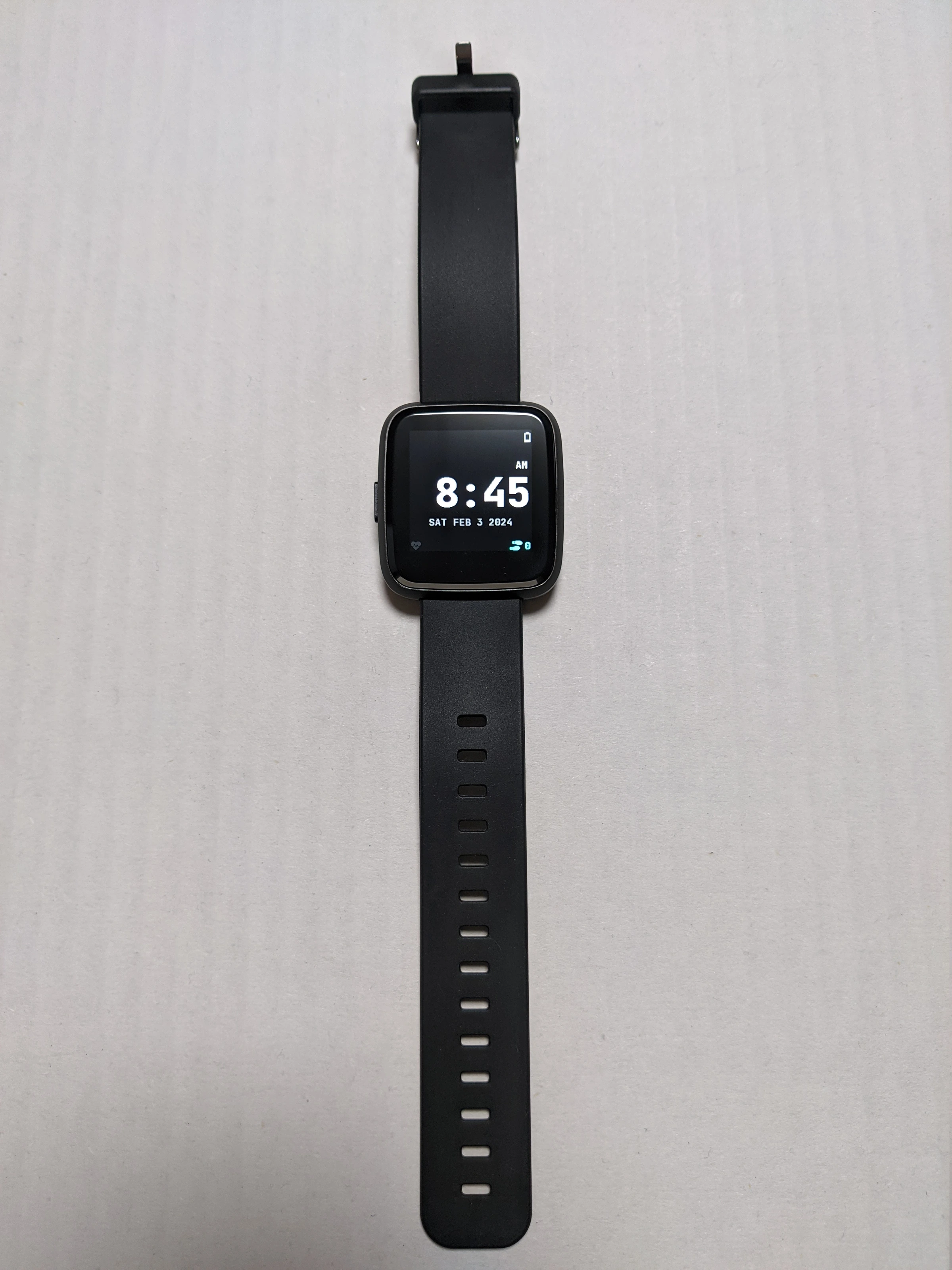
Machine Diagnosis
Story & products
A runner preparing to return to marathon racing connected his training records to a large language model. In his post, he said he suffered a minor calf strain during an interval workout. Without being told which repetition, the model identified it from a sudden drop in stride length and power.
The poster said he had competed in running for over twenty years and had also done triathlons and ultramarathons. Now living in Denver, he was preparing for the California International Marathon. Running over 70 miles a week, he wanted help with strength training, minor injuries, and adjusting from altitude training to a sea-level race.
He had paid coaches $70 to $80 a month but felt their plans mostly made small changes to a common template. He then built a workflow with Gemini, entering his running background and injury history and connecting data from his watch, bike computer and Zwift through a self-hosted service.
He also described a 20-mile long run. It was hot, a water refill point had closed and he became dehydrated. The model considered his heart-rate changes and midweek workout and said the poor run was unsurprising, suggesting more calories. He said this helped his next two long runs.
For his calf, he said the model adjusted mileage and training, asked about it after each run and used gait data to suggest he might still be compensating. This is his account of personal use; it does not establish that the model can diagnose injuries reliably.
Among the comments, one person thought a good coach would do better but that coaches available to adults might lack time to study individual data. Another questioned whether a model was needed to know that heat makes long runs harder or a strained calf needs rehabilitation. Someone else cautioned that a model might forget or overlook old information over time.
Calendar Squares
Story & products
One mile on October 1, two on October 2, and 31 on October 31. When Jordan first tried Calendar Club, the rule was simple: run the number of miles corresponding to the date.
In his ultrarunning forum reflection, he says he has been exploring ultrarunning for about four years and increased his training just over a year ago. He normally combines running and strength work. During this month, running gradually displaced lifting: he did several heavier sessions in the first week and a half, reduced them in the second week and stopped lifting entirely by the third.
Jordan is a stay-at-home father of three children under five. He allowed himself to split the day's distance into two or occasionally three runs. He did not have time to rise at two or three in the morning every day for two weeks to run the longer distances in one go.
He says he ran mostly in heart-rate zone 2, occasionally entering zone 3, and gave up speed work because he felt it did not fit the month's structure. Consistent sleep was difficult: the children woke at night, while the calendar's distance could not be moved to another day as it might in an ordinary training plan.
The final week brought family commitments, little sleep and long distances. Most days he did not want to go out, he says, although he was glad afterwards that he had finished. In the comments he said he ran about 200 miles that week, more than usual; his legs felt heavy but still strong.
He regards the challenge as mental training that showed him he could go out as planned when tired. For long-term performance, he doubts that repeating it every month would make him stronger at his present stage of life, particularly when it takes time from strength training. In the comments he also said he would not generally recommend it except to professional runners or people whose families organise their lives around running.
Salt Haze
Story & products
The 25-year-old poster listed a full day's routine, trying to understand why he was always tired and had so little energy left outside work.
He says he is a hands-on construction foreman and lives with persistent back discomfort. After work he wants to draw, play instruments, do carpentry and socialise, but is often too drained. Work stress and a tight budget weigh on him.
He drinks roughly a gallon of reverse-osmosis water a day with one or two packets of electrolyte drink. He associates headaches near his right temple with what he calls low blood volume, and believes they are triggered by long gaps between meals, stress, or drinking too much purified water without electrolytes. This is his understanding of his condition; the post cannot establish the cause or tell anyone else how much sodium they need.
His routine also includes prescription medication, nicotine and cannabis. He says that when he stops cannabis his mind feels clearer, but he struggles to sleep, relax or eat. When he stops nicotine he feels irritable and has experienced panic. He wants to adjust his medication, but says his psychiatrist wants him to continue observing the current treatment first.
Commenters offered different views, some focusing on sleep and others suggesting medication changes. Comments cannot replace a plan from a clinician who knows his history. His own goal is concrete: to have energy left after work for the things he has put aside.
The content of this article is meant only to be viewed, considered and judged for yourself. It is not an instruction manual; it is simply one part of the world.
Steady Pulse
Story & products
At 25.7 kilometres of the Hague Marathon, the runner stopped. The muscles on the outside of both thighs had tightened, he wrote. From ten to twenty kilometres, his heart rate had barely changed and his breathing had felt comfortable.
In his race report, the 33-year-old said he had aimed to finish under three hours. About five weeks earlier, he had run a half marathon in 1:23:22. His watch showed roughly 1:29 at halfway in the marathon.
The final month of training had been difficult. On October 3 he completed a roughly 27-kilometre marathon-pace workout; the next day the inside of his right ankle became irritated. From then until race day his longest run was 19.5 kilometres, and he missed a planned progressive long run.
Around eight kilometres into the race, tightness returned to his right outer thigh. Between kilometres 21 and 24, he noticed his cadence rise and his pace slip. Both legs eventually cramped, and he withdrew at approximately 1:51:51.
He considers the lack of long runs after injury the most likely cause, while also listing pre-race tightness, stopping and restarting at water stations, and the road surface as possibilities. Commenters discussed his mileage and training. The precise cause cannot be determined from the report, and a steady heart rate alone cannot describe the state of the rest of the body.
The Knee
Story & products
After five months without running, a 52-year-old runner asked an ultrarunning forum whether anyone had experienced a similar knee injury.
In her post, she says she has run at least 35 marathons, fifteen 50-kilometre races and, a year earlier, one 50-mile race. She now fears her distance-running life may be over.
She describes a partial root tear of the medial meniscus and grade 3–4 cartilage loss in the knee's trochlea. Her orthopaedic team, she says, considers the situation unsuitable for surgery now and thinks she may become a candidate for total knee replacement in around ten years. The team considers the meniscus currently stable and thinks osteoarthritis is the more likely source of pain.
She has had a platelet-rich plasma injection, plans viscosupplementation in about a week and may get a patellar tracking brace. These are her account of her own treatment and cannot be applied to other injuries.
She says she trusts her orthopaedic team and is seeking other runners' experiences. One commenter described returning to ultrarunning after meniscus surgery on both knees, while acknowledging that their problem may have been easier to treat. The injuries differ, and that reply cannot predict when she might run again or whether she will return to her previous distances.
House Dust
Story & products
The poster says that house dust and animal dander did not previously cause allergies, but exposure now repeatedly brings on rhinitis symptoms. About a month before posting, they stopped all peptides and planned to see an allergist.
In the post, they describe warmth and itching at the injection site early on, which they initially thought normal. Months later, their whole body itched, including their tongue and hands. An antihistamine brought temporary relief.
They added that they had used Ipamorelin and CJC without DAC for about three months before the severe reaction. They suspect a connection between the peptides and their subsequent symptoms, and urge anyone considering them to research carefully.
Some commenters questioned why the injection-site reaction had been overlooked; others offered different possible explanations. The post contains no allergist's test results, and the sequence of symptoms alone cannot establish a cause. The poster described an itchy tongue; the original did not say it was swollen.
They are now waiting for a specialist assessment to determine what is associated with the recurring symptoms.

Ear Pressure
Story & products
Around 25 kilometres into the race, the runner felt as though he were equalising his ears on a plane or after a dive, except the sensation would not go away. He recognised it from an earlier long run when he had overheated.
In his Kuala Lumpur Marathon report, he wrote that he had hoped to finish under three hours and thirty minutes, with simply finishing as his second goal. He ultimately withdrew at 31 kilometres.
His plan was to keep his heart rate in the 160s for the first half. His watch was set to beep above 172 beats per minute. Over the first ten kilometres his average was already 172, with peaks of 177 to 183, yet he held his target pace. Looking back, he called ignoring the heart-rate warnings and trying to maintain that pace his biggest mistake.
He described the race as hot and humid. He slowed during the second ten kilometres. At 29 kilometres he stopped at an aid station, drank water and cooled himself with ice, then vomited. After trying to run a few hundred metres more, he cramped, walked to 31 kilometres and withdrew after vomiting again.
At the medical tent, he said, staff tried to feel his pulse and found it very weak. While waiting for the shuttle, he shared bread with another runner who had withdrawn. Only then did he feel able to drink some water.
Commenters differed over the causes. Some thought the weather had a major effect; another questioned his training intensity after reviewing his records. The report alone cannot establish how much each factor contributed. What the runner remembered on reflection was the warning sounding on his watch.
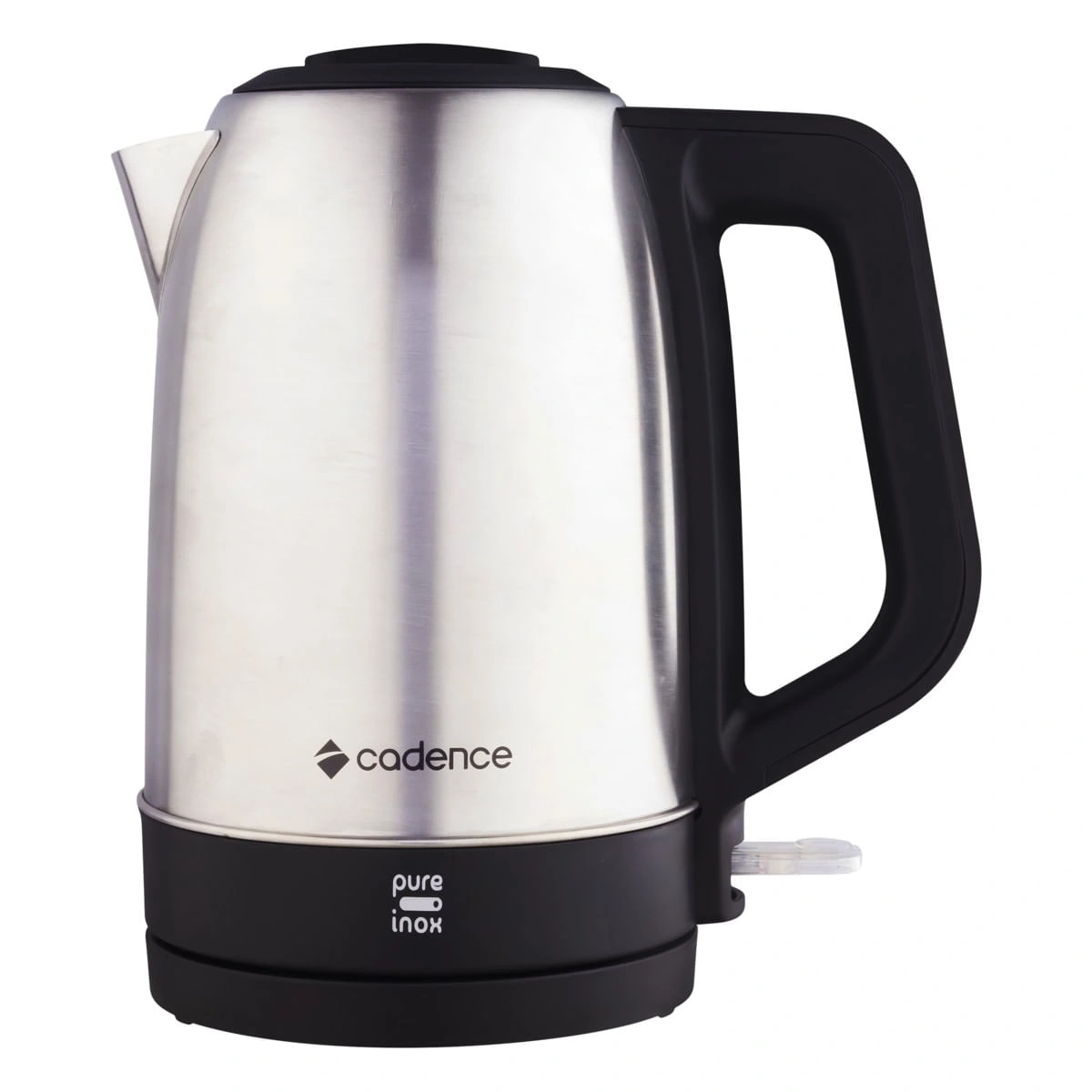
The Control Freak's Cooling Drill: Cadence CEL810 and South American Solitude
Story & products
In a sparse one-bedroom apartment in Curitiba or Buenos Aires, an elite athlete's post-training ritual is aggressively mundane. There is no theatrical pour-over coffee performance here, only the most direct hydration protocol for an exhausted physique. The Cadence Pure Inox CEL810 Electric Kettle perfectly aligns with this stripped-down pragmatism. It deliberately lacks a complex digital temperature control panel. What ordinary consumers view as a functional deficit, the deeply disciplined, slightly obsessive athlete sees as a psychological cooldown drill. You boil the water to an absolute 100°C, listen for the sharp click of the switch, and then wait. Using either a cold thermometer or sheer sensory experience, you calculate the exact moment the temperature drops to the perfect degree for chimarrão or mate. This refusal to rely on preset algorithms is the ultimate metaphor for restraining desire and mastering your own internal rhythm.
1.7L Brutalist Capacity and High-Output Boiling: The 1200W (127V) or 1850W (220V) power output rejects any hesitation. The 1.7-liter capacity precisely matches the nocturnal hydration and metabolic requirements following a high-intensity training day—nothing more, nothing less.
Pure Stainless Steel Armor and 0.72kg Lightweight Build: Devoid of superfluous coatings or aesthetic compromises, the brushed stainless steel body demands only a quick wipe to restore its cold, clinical gleam. Weighing a mere 0.72kg, it allows an arm devastated by muscle failure to execute the pour effortlessly, while the Easy Fill lid compresses the operational sequence to its absolute minimum.
Physical Boil-Dry Protection and Auto Shut-Off: The Anti-dry protection and automatic shut-off mechanism serve as the solitary athlete's most reliable fail-safes. Flip the lid, fill the water, press the switch, and immediately walk into the shower to wash away the fatigue of an ice bath. There is no need to guard the stove like a defender holding the penalty box.
The L2M store respects and recommends this item because it vividly embodies the philosophy that "constraint is power." True professional dedication does not require flashy digital displays for validation. It is found in the ability to endure a raw, physical boil, followed by the absolute patience required to wait for that perfect 80°C moment. This borderline neurotic self-discipline is the hidden mechanism behind sustaining peak athletic performance.
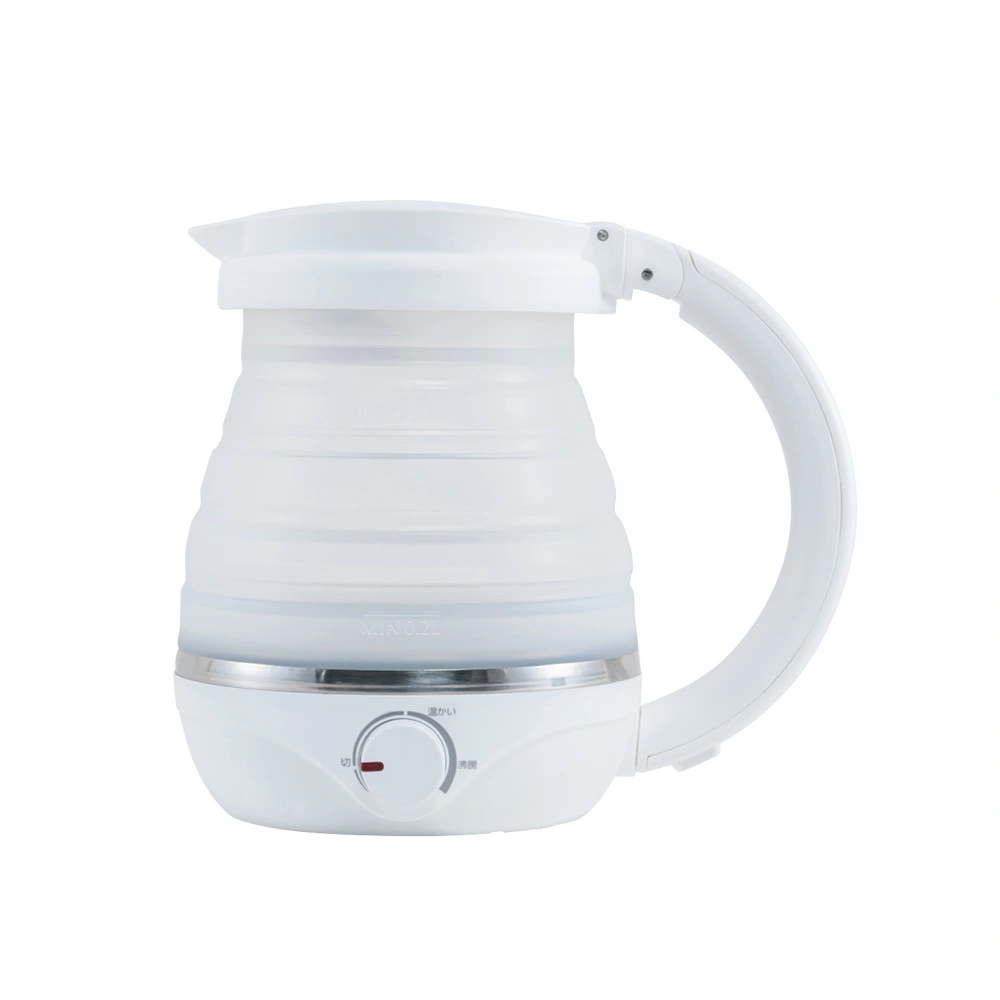
Collapsible Paranoia: Nakabayashi MBE-TK07 Temperature-Control Kettle
Story & products
hauling a full-sized electric kettle into a solitary minimalist apartment or a cramped travel duffel is an unacceptable waste of spatial economy. The Nakabayashi (MCO × Digio2) MBE-TK07 is engineered precisely for this intersection of spatial constraint and obsessive self-reliance. It is a pragmatic, deployable tool for compact storage.
Silicone Collapsible Architecture
Weighing a mere 548g, the kettle's high-grade silicone body compresses from a functional W188×D137×H170mm down to a brutalist 10cm-tall block (W145×D137×H100mm). It disappears into the corner of a kitchen cabinet when not in use, refusing to clutter your weekend desk space. More importantly, it slides effortlessly into a travel bag, acting as a mandatory piece of away-game tactical gear for the self-sufficient professional.
Precision Temperature Dial
Blind boiling is inefficient. The integrated dial lets you adjust the water temperature for your drink.
Dual Voltage and Spill Defense Mechanism
The AC100–120V / 220–240V switch on the base eradicates international electrical borders, while the 600ml maximum capacity provides the exact dosage required for morning hydration. The manufacturer says the design reduces spills if tipped; it does not guarantee a leak-proof seal. Keep it away from electronics.
L2M respects and recommends this item because it represents the physical manifestation of ruthless self-discipline. It solves the psychological pain point of unpredictable travel environments and the physical pain point of spatial clutter. It is not about domestic aesthetics; it is about maintaining a cold, calculated grip on your personal standards when the rest of the world is chaotic.
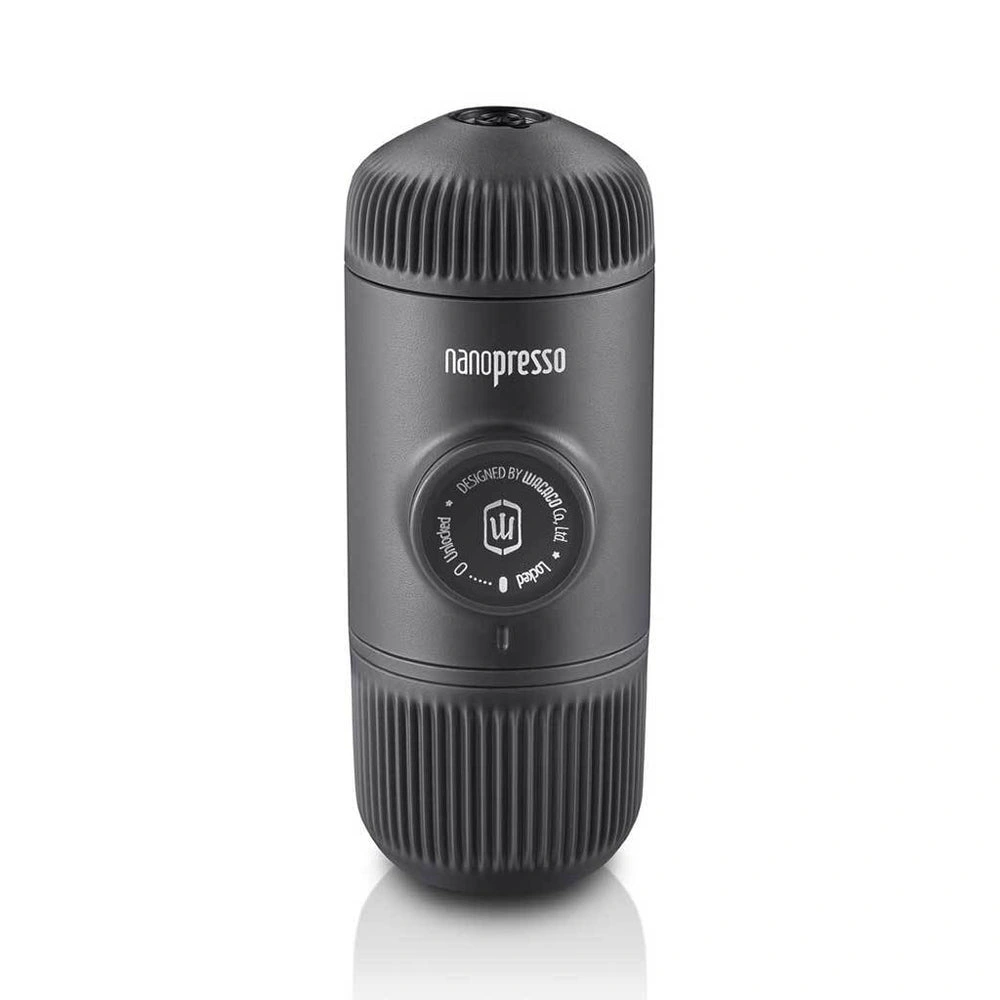
The Architecture of Morning Discipline: Wacaco Nanopresso
Story & products
The Wacaco Nanopresso Charcoal Black is a manual portable espresso maker. It requires no electricity, and does not heat your water. It simply rests in the side pocket of a gym bag or a dark drawer, waiting for physical intervention to extract a shot of espresso. It doesn't just shorten the decision of "going out for coffee"—it strips morning consumption down to its brutal, mechanical core.
18-Bar Mechanical Force
The core of this device relies entirely on manual pumping. Without a single volt of electricity, the internal valve system amplifies the force of your hands to a peak pressure of approximately 18 bars. This scientific application of physical labor forces water through a 8-gram basket of lightly tamped coffee (16 grams with an optional accessory), extracting espresso with crema.
336-Gram Tactical Footprint
Measuring a mere 62×71×156 mm and weighing exactly 336 grams, this is not a luxury appliance meant for kitchen display. It is tactical gear designed to be shoved into a travel bag or a cramped drawer. The finish is Charcoal Black.
Zero Thermal Dependency
By deliberately omitting a heating element, the machine forces you to source your own hot water. The 80 ml water tank provides exactly enough volume for a single shot, and the construction uses BPA-free plastic.
Self-Contained Ecosystem
The package includes the main body, an integrated espresso cup, filter basket, scoop, cleaning brush, and a fabric pouch. No external scales or heavy tampers are needed; the bottom of the scoop functions as your tamper. It is a closed-loop system designed for rapid deployment, immediate consumption, and disassembly for cleaning before returning to your bag.
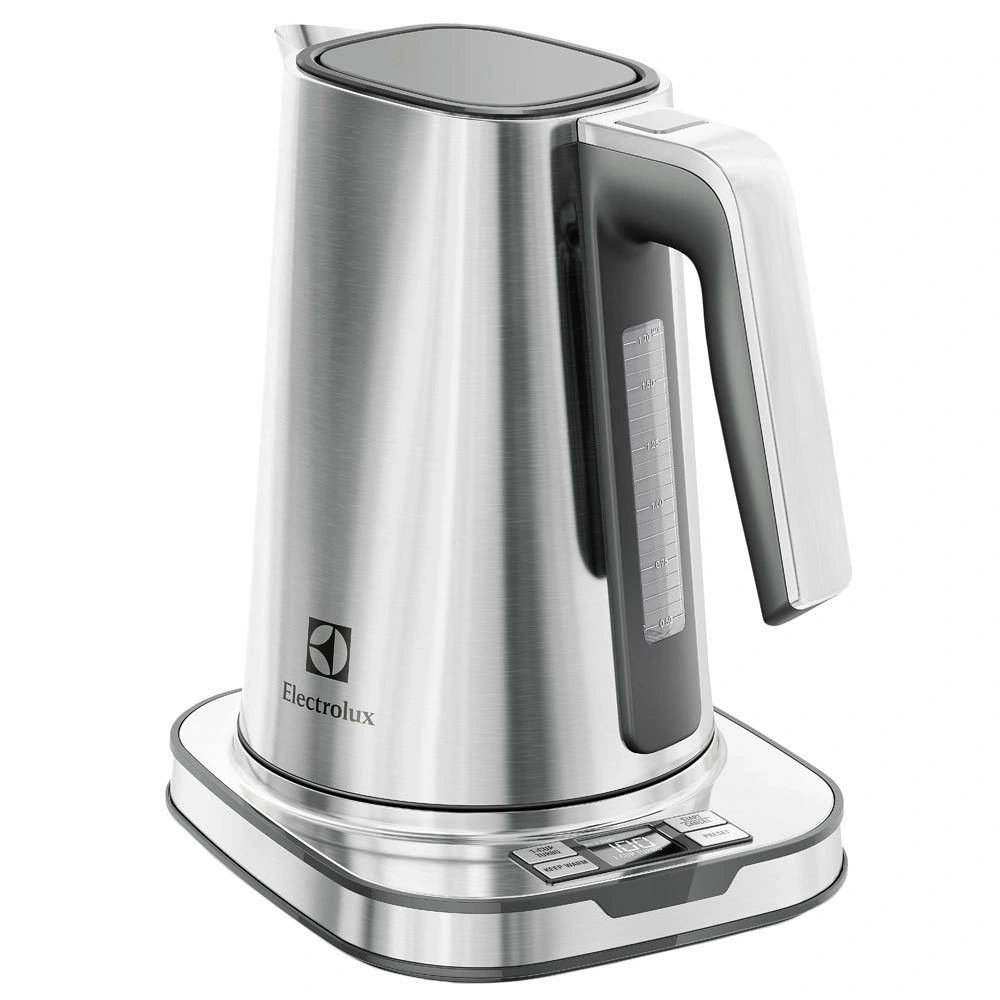
Precise Restraint: An 80°C South American Morning and Neural Awakening
Story & products
Thermostatic Neural Hub
The eight preset temperatures are not mere arbitrary numbers; they are precise extraction codes for specific alkaloids. The dedicated 80°C Chimarrão (Mate) program is a direct nod to the obsessive, rigid morning rituals of elite South American athletes. The Electrolux EKP50 offers preset temperatures that reduce the need for manual temperature checks.
Efficiency Topology for the Solitary
The 1.7L stainless steel body occupies minimal countertop real estate in a cramped São Paulo or Montevideo apartment. The OneCup Turbo function is engineered for brutally compressed morning schedules. There is no time for the performative redundancy of artisanal pour-over coffee. The HighContrast LCD displays the temperature. Keep-warm must be activated separately, lasts up to 40 minutes and is unavailable at the 100°C setting. OneCup Turbo heats up to 200 ml to 100°C and cancels the previous temperature setting. You utilize this exact window for static core activation. The machine waits for you; you do not waste time guarding a stove.
Cold Industrial Aesthetics
The stainless steel body gives the kettle a clean metallic appearance. Sitting in a solitary kitchen, it resembles a piece of precision medical equipment, maintaining the user's absolute sovereignty over bodily intake. This borderline paranoid discipline and constraint of desires is the ultimate expression of athletic charisma and handsomeness.
The L2M store recommends this item because we understand that peak athletic performance is built on seemingly neurotic micro-habits. The EKP50 uses cold engineering parameters to transform the basic physiological need for hydration into precise tactical preparation. It offers zero emotional coddling; it provides preset temperature control.

Blue Returns
Story & products
A rental wall is splashed with methylene blue, with a faint heart shape in the middle. The poster asks how to remove it. A nootropics discussion quickly turns into talk of primer, bleach and vitamin C.
The wall in the photograph
The blogger posted an image. A large vivid blue stain sits on a white wall, a heart contour faintly left in the middle, almost no body text, a title that only asks how to get methylene blue off the wall. One of the more upvoted commenters asks how it happened, then gives a blunt answer. You don’t. That part of the wall is blue now. Best case, buy a can of cornflower blue acrylic and hope the landlord does not mind the new look.
Someone asks whether the bottle was thrown; someone else says they need to know how this happened. The post itself does not answer. White wall, heart, blue drips already pull talk from mitochondrial slogans back to the outlet by the door and the sliding-door frame. In nootropics discussions, the blue bottle is often presented as something to take for self-improvement. Here, its contents have become a mess on the wall.
Suggestions from the comments
One commenter writes one or two coats of Kilz then a topcoat; that stuff is not coming out. Another commenter reports having spilled it on wood, fake wood and granite; bleach worked every time; they are unsure about drywall, but suggest using the back of a sponge with a little bleach, waiting five minutes and repeating. Another suggests dabbing diluted bleach from a spray bottle, letting it dry and repeating, which they describe as slower but gentler than scrubbing. Someone else says paint the rest of the wall with methylene blue; someone laughs that Blue Man Group parties can get wild; someone stares at the heart and writes that it ties the scene together like a crime of passion and a craft project, maybe lean in and add shapes into a blue mosaic before the landlord notices.
When the blue returns
One commenter writes that vitamin C apparently turns methylene blue not-blue. Another confirms pure ascorbic acid powder works. Someone mentions Thailand protesters reportedly clearing methylene dye with vitamin C, and says they tried pure powder and it worked. Another immediately qualifies that claim: atmospheric oxygen could turn it blue again; they speculate that crystals left after the solution dries might hold the reduced, clear state for a while, joking about another wipe before a date. Someone else writes from experience that it only works temporarily and eventually turns blue again.
The reported results differ. Some commenters describe a stain fading; others say the blue eventually returns. A visible change and a completed repair are different things.
The thread does not establish a dependable wall-repair method, or settle claims about methylene blue and health. Its useful point is closer to home. An interest in optimization still has to make room for the stain in front of you, differences between materials and questions that remain open. A result that looks promising need not end the inquiry.
The cleaning suggestions above are separate commenters’ accounts, not successive instructions. In particular, do not mix bleach with acidic substances.
The content of this article is only for viewing, reflection and independent judgment. It is not an instruction manual. It is simply a part of the world that exists.

Empty Rations
Story & products
A climber with more than seven years of experience came down from a Freerider attempt without a send. Their explanation was blunt: they had run out of food. During the last two days, they could no longer free even 5.10 pitches. That is a much more uncomfortable account of preparation than a list of grades.
This article draws on the supplied digest of a climbing-community discussion. The original thread link was not supplied. Route grades and equipment choices below remain the poster’s reported experience, rather than a route guide or an individual training plan.
When the food bag emptied
In the supplied account, the poster had just returned from a semi-ground-up Freerider attempt without a send. They had pre-hauled supplies to Heart Ledges. The main reason, they say, was running out of food, a stupid mistake. By the last two days they could no longer free 5.10 pitches. They had climbed for over seven years, starting with bouldering and competitions as a teenager, and had about two years of trad experience. Self-rated roughly V9 boulder, not in the style of Freerider’s boulder problem, more board-proficient; sport 5.12+ in a couple of goes; generally onsight 5.11 trad in most styles. Their partner had a similar background, with a little more ability in trad and a little less in bouldering.
The poster also writes that people interested in Freerider roughly split into two camps. One has more trad experience; the other more sport and bouldering. They have more advice for the second camp, and guess most readers fall there. Jacob and Bronwyn’s Freerider guide is useful and still missing pieces.
The cost of sustained climbing
The poster emphasizes Freerider’s sustained workload. Past Heart Ledges there are essentially no pitches easier than 5.10, apart from the last pitch and a short scramble with one fifth-class move to Hollow Flake. Among the hardest pitches, the second enduro corner is about 12b, the boulder about 13a or V7-ish, a techy granite sequence; they used the exact Free Solo beta. About nine pitches include some wide climbing, hardest being Monster Offwidth (downclimb about 11d, offwidth about 11a) and Scotty Burke (about 10d, harder moves but less sustained).
Even some 5.9 wide, especially the second-to-last pitch, felt sandbagged. Several 5.10+ sections run out: the pitch before the Boulder, The Sewer, the pitch after the block; the first fifteen feet of the second enduro also take poor gear. In fall the sun hits around 9am; working the boulder and enduro corner in sun is very hard.
Systems that still needed work
The poster’s recommendations focus on preparation. Dial your systems, then dial them more than you think. Go do smaller walls. The poster had done two multi-day walls, both aid, and was nowhere near as logistically dialed as they thought. Go climb in Yosemite; glacier-polished granite is hard to replace, and even El Cap feels different from other valley granite. Do big multis to dial logistics, practice hauling, belay transitions, fuel and hydrate.
Practice multiple days on, get comfortable with high volume of burly climbing. Do a lot of burly blue-collar crack, climb something like Astroman again; consistent onsight of Yosemite 5.11 in any style means fewer repeats. Get good at wide, especially tipped #6 to tight #7; Scotty Burke’s crux sits around that size, Monster is that size almost the whole pitch. Bring a #7; Hollow Flake will thank you, and it helps on Monster.
The rack runs from tiny Totems and regular cams to #7, RPs, offset nuts, sport and alpine draws; bring it again, or trim by habit. The poster places a bit more gear than most; Totems could swap for offsets.
What to change before returning
The discussion then turns to returning. One commenter asks when they will get back on and how busy it was. The poster answers spring, partner dependent; before the alcove they saw three other parties, some Kiwis on a 3–4 day ascent, a rope soloist on the Salathé, a party on Golden Gate at the alcove where FR and GG split, a French couple on the Salathé, a German duo who rapped in to work the Salathé headwall.
Another commenter writes the dream of being the first Indian national to free-climb El Capitan, currently gym 5.11, almost no crack or multi-pitch. Someone asks boulder, sport, and trad grades for calibration. The poster answers roughly V9, 5.12+ in a couple goes, onsight 5.11 trad in most styles, enough to attempt freeing Freerider but on the lower end of margin. Others ask about granite experience and preparation for Freeblast; someone in the PNW with Index, Squamish, and two to four weeks a year in Yosemite still feels short on wide and plans a shed with wide cracks.
Someone asks whether Bronwyn’s ebook is online yet.
Grades still help estimate the margin available on hard pitches. Food, hydration and the demands of consecutive days on the wall also need a place in the plan. Discussing them leaves the ambition to climb Freerider intact.
The useful admission here is that the systems were not ready. Blaming everything on insufficient grades would overlook the empty food bag; using the empty bag to dismiss technical preparation would overlook the wide climbing and sustained workload. Independent judgment means working from the conditions you actually have. The goal can remain, with a more specific understanding of what the next attempt needs.

Forest Edge
Story & products
What is THE MOST effective way of lowering cortisol and stress? In the supplied account, that title was the entire post. It had about 145 upvotes and roughly 98 comments after cleanup, with no personal measurements or lab screenshot. The most popular answer was a walk in nature, even in a neighborhood with plenty of trees.
In a conversation often drawn toward stronger supplements and more elaborate protocols, that answer brought ordinary conditions back into view. Mindful walking, boundaries, sleep, and the question of whether cortisol had actually been measured all mattered. Forest Edge names the everyday details that the search for “the most effective” can push aside.
These are community accounts and opinions preserved from the supplied manuscript. Vote counts describe the discussion, not a ranking of treatments. Supplement names, breathing practices and relationship advice do not amount to instructions to diagnose yourself, stop prescribed medication, or leave a relationship.
A neighborhood with trees
The leading comment, with about 146 votes, suggested walking in nature, including a tree-lined neighborhood. A reply with about 45 votes added mindfulness: no podcasts and no running through the to-do list while walking.
That gives the question a practical setting. A walk spent mentally working through tasks differs from one in which you notice your surroundings. But popularity does not establish a universal 20,000-step target, and mentioning walks does not settle every question about supplements. It asks whether the search for the next intervention has overlooked ordinary life.
Boundaries and testing answer different questions
A comment with about 111 votes urged changes in lifestyle and firmer boundaries. It argued that sacrificing health for someone or something consistently harmful was not noble. “‘No’ is a full sentence.” Another, with about 42 votes, suggested leaving a consistently stressful partner, friend or family member, or at least establishing strong boundaries. A roughly 33-vote reply put the cost plainly: if it costs you your peace, it is too expensive.
A comment with about 25 votes combined reducing contact with the source of stress, daily meditation and time in nature. The much sharper “Divorce” reply, at about seven votes, belonged to the same conversation. It cannot decide another reader’s relationship, circumstances or safety.
A roughly 58-vote commenter then asked whether high cortisol had actually been tested. Had the person simply heard “stress hormone,” felt stressed, and assumed their level was high? The commenter discussed cortisol’s normal role and circadian rhythm, arguing against trying to lower it indiscriminately, especially first thing in the morning.
That comment mentioned Lithium Orotate in relation to stress itself and PS100, or phosphatidylserine, in relation to cortisol. Those names remain part of the account, not supplement endorsements. Another commenter, at about 25 votes, described poor sleep, waking too early and weight gain as clearer signals, and disputed the equation of stress or anxiety with high cortisol. This remains the commenter’s interpretation; symptoms are not a lab result.
A five-vote reply asked whether the person knew their levels or understood cortisol’s functions, and advised speaking with an endocrinologist before intervening. That distinction leaves room to take felt stress seriously while also asking a separate medical question. Whether walking feels helpful and whether someone has an endocrine problem need different kinds of assessment.
Breath, coffee and eating enough
The account also includes short-term coping ideas. A roughly 39-vote comment mentioned ice packs on the back of the neck or top of the head, and slow inhalations of vetiver, hyssop or tuberose oils. Recording these personal practices does not establish their effectiveness.
A comment with about 25 votes called breathing the quickest way to engage the parasympathetic system. It listed diaphragmatic breathing, box breathing, 4-7-8, humming and longer exhales, with an inhale-three, exhale-seven example. A roughly 20-vote reply connected longer exhalation with heart rate and nighttime heart-rate variability, or HRV. Another, with about six votes, reported finding at least five minutes of box breathing a day helpful. These are separate claims and experiences, not a combined routine prescribed to readers.
Before adding another supplement, an 18-vote commenter suggested looking at coffee. They described caffeine as adding to stress-related cortisol changes and said that cutting back to one cup before noon had helped them more than any capsule. The useful detail is the specific change and its personal scope.
A roughly 32-vote comment suggested eating enough and not severely restricting carbohydrates. A six-vote aside mentioned a fasting friend with high cortisol. Read together, they raise a question about existing eating patterns; they do not establish that fasting caused that friend’s result.
Another comment, at about 27 votes, listed 15,000–20,000 steps a day or exercise, daily saffron, passion flower or lemon balm as needed, tai chi, yoga or similar moving meditation, even dance, Wim Hof breathing, and avoiding processed foods. A seven-vote reply described nearly passing out on a first attempt at Wim Hof breathing. Keeping that response alongside the enthusiasm preserves the discomfort and limits present in the discussion.
Bring daily life back into the question
The discussion matters because its answers operate at different levels. Walking and mindfulness concern daily experience. Boundaries address sources of strain. Testing and medical conversations concern bodily conditions. Coffee, food and breathing are things individuals tried or proposed. They do not have to compete for a single title that applies to everyone.
Independence can mean leaving room for all of those distinctions. Someone may want to start with walks and boundaries while still taking medical advice, tests and practical relationships seriously. Other people’s experiences can be heard without becoming the next compulsory slogan. Forest Edge leaves a pause before changing a habit, long enough to ask what kind of stress you are facing and which conditions you have yet to notice.
The content of this article is only for viewing, reflection and independent judgment. It is not an instruction manual; it is simply one part of the world that exists.
Wrist Fog
Story & products
The watch says 85 or higher. The morning still feels tired and foggy. That mismatch opens the Biohackers discussion described in the supplied account: a Garmin wearer wonders whether the tracker is missing something important. Has anyone found the cause, changed something that helped, or simply stopped trusting the score?
A good number does not make the fatigue disappear. A tired morning does not, by itself, make the watch useless either. The useful question lies between those reactions. This account brings together community self-reports and published research; the comments do not establish a diagnosis.
A good score can leave a question unanswered
One commenter points out that sleeping well is only part of waking refreshed. Wrist trackers can show broad trends, but their sleep-stage estimates have limits. The discussion mentions low iron, depression, burnout and low vitamin D as possible considerations around fatigue. Those suggestions do not establish that any of them explains the original poster’s experience.
Another commenter offers an explicitly personal, n=1 account: with extremely low ferritin, the sleep scores still looked good, sometimes even better, while mornings remained unrefreshing and daytime fatigue persisted. The experience illustrates a possible mismatch; it does not identify the cause of anyone else’s fatigue. Someone else calls 85 a passing score rather than an excellent one and asks which parameters are falling short. Another estimates roughly 60 percent correlation between their feelings and their watch. That is a personal estimate, not a measured accuracy figure from a study.
Even the time of falling asleep can be wrong
Some disagreements concern the clock before they concern sleep stages. One person reports being asleep at 10 p.m. while the watch records 11:30, with a similar problem on another tracker. Someone else remembers checking the time while awake until 1 a.m., yet the device records sleep from 11 p.m.; lying still appears to have confused the estimate. Other accounts describe several hours missing from sleep duration, or quiet phone use being logged as a nap.
Research offers a separate way to examine those limits. Compared with polysomnography, consumer wrist devices often detect sleep more readily than wakefulness, while agreement on sleep stages is limited. In a 2022 comparison of six devices, the Garmin Forerunner 245 Music had a multi-state classification kappa of about 0.25. That result belongs to a particular device and study setting. It is not a verdict on every Garmin watch, or on the poster’s night. The supplied account also cites reports of the Vivosmart 4 overestimating total sleep and some sleep stages. Models, algorithms and study conditions still need to be distinguished.
These discrepancies make both duration and sleep quality matters of interpretation. Recording how the morning felt alongside the watch data keeps the difference between 10 p.m. and 11:30 visible instead of allowing the total score to erase it.
Keeping a tool without giving it the final word
The discussion does not settle on throwing the watch away. One commenter argues that scores remain useful: in their understanding, four hours can still produce a high score with a deduction for duration, and heart rate, breathing and skin temperature add context. That is a commenter’s interpretation, not a verified description of every model’s scoring system.
Another reports feeling worse after more than seven hours. Nine p.m. to 4 a.m. feels good to them; 10 p.m. to 5 a.m. or 8 p.m. to 3 a.m. does not. They prefer changing one thing at a time and trying it several times, and mention better sleep after nighttime flossing. These are specific observations from one life. They do not establish what caused the change, or a schedule or habit that should work for everyone.
Other experiences pull in the opposite direction: a “good sleep” assessment after fewer than six hours, random naps assigned during phone use, even a suggestion to go to bed at 5 a.m. Comments also raise micronutrient and hormone bloodwork, or a sleep study if needed. Those are suggestions in a discussion, not a testing checklist that follows from a sleep score.
Wrist fog names the part that remains unexplained between the number and the morning. Independent judgment need not be demonstrated by rejecting all devices or by producing a green screenshot. It can mean continuing to watch the trends while noting whether waking felt restorative, whether sleep onset was recorded correctly, and which explanations still lack evidence. Those untidy notes may get closer to the original question than another high score does.
Nothing in this discussion guarantees a clear head tomorrow. A score captures part of the night, and the person’s experience deserves attention too. Keeping both in the record is more useful than rushing to declare either one the winner.
The content of this article is only for viewing, reflection and independent judgment. It is not an instruction manual. It is simply a part of what exists in the world.
Fluorine Ledger
Story & products
Biohacking conversations can turn quickly into a list of things to add to the body. Another supplement, another addition to the stack, another sign that the person taking it is serious. The PFAS discussion in this account makes room for an ordinary activity instead. Could donating blood or plasma reduce some substances already circulating in us? The question deserves attention, along with the conditions attached to the answer.
PFAS, or per- and polyfluoroalkyl substances, are often called forever chemicals. They have been used in firefighting foam, nonstick cookware, carpets, clothing and water-resistant coatings. They persist, and have been detected in drinking water and human blood. Some bind to serum proteins, particularly albumin, which gives researchers a reason to investigate blood and plasma donation.
The supplied account brings together a Biohackers discussion, a research summary in The Conversation and a firefighter trial published in JAMA Network Open. The trial and the comments have different jobs here. One measures changes in concentration; the others show how occupational exposure, donation requirements and personal experience shape people's response.
What the thirty-percent figure includes
Funded by Fire Rescue Victoria and conducted with Macquarie University, the trial involved 285 firefighters and contractors with elevated serum PFOS. Participants were randomly assigned to donate plasma every six weeks, whole blood every twelve weeks, or make no donations during twelve months of observation.
Both donation groups reduced serum PFOS, with a larger reduction in the plasma group. The research summary described an average reduction in serum PFAS of about 30% for plasma donors, still observable three months after donations ended. That figure belongs to the trial's participants, measured compounds and follow-up period. It cannot stand for a universal reduction in every person's chemical burden.
The plasma group could donate up to about 800 milliliters at a time, compared with about 470 milliliters of whole blood, and donated more frequently. PFAS concentrations in plasma were roughly twice those in whole blood. Protein binding, volume and frequency all matter when interpreting why the plasma arm did better. Removing them from the comparison leaves an appealing claim with too little explanation.
Plasma donation also involved a more complicated, less comfortable procedure and lower adherence to the donation schedule. The study continued through the Black Summer bushfires and Melbourne lockdowns; 94% of participants completed the baseline and week-52 data collection. The fire service had replaced fluorinated foam and cleaned its trucks, but past exposure still mattered.
One question remained open. Would lower serum concentrations improve long-term clinical outcomes? That requires further research. A measurable reduction is a result to investigate, not a guarantee of better health.
Firefighters, recipients and a sauna claim
In the supplied discussion, one commenter said their fire department encouraged quarterly donations to reduce PFAS and carcinogen burden. Another, described in the account as having been retired for 25 years, had never heard of the approach and thought it was time to start. The blogger also mentioned coatings on protective gear, foam, drinking water, packaging, protein binding and paid plasma donation in the United States. These are accounts from the discussion, rather than statements on behalf of every department or donation service.
Someone asked whether donated blood would contain PFAS too. The explanation accompanying the research said Australian Red Cross Lifeblood allowed people with such exposure to donate, and that no PFAS threshold had been established as increasing recipient risk. The trial did not assess that risk. A commenter who had received a transfusion expressed a personal choice plainly: when blood was needed, blood containing PFAS was preferable to none.
The same discussion included a claim that sauna use could reduce PFAS by about 90%. Another commenter brought in a sweat study indexed in PMC and argued that it did not support that number. Others warned against putting a fitness influencer's experience of one above medical research. Rejecting an unsupported percentage does not require turning donation into an all-purpose solution.
The requirements belong in the account
The comments became more practical as they went on. One person argued that plasma eligibility was underestimated, mentioning tattoos, medication, residence distance and checks of temperature, blood pressure, hematocrit and protein at each visit. Others challenged the claim that only 10% of Americans qualified, saying many adults could donate blood. Those are competing comments; they cannot establish the rules of a particular donation service.
There were questions about microplastics from tubing, too. Some favored considering plasma mainly for people with high exposure, while seeing whole-blood donation as a positive option for others. Another commenter raised albumin, total protein and iron in connection with frequent donation. These concerns broaden the discussion beyond a PFAS reading, but do not amount to an individual donation plan.
Keeping the complications visible prevents a familiar substitution: a demand for a fuller supplement stack becomes a demand for more donations. Blood donation can have a place in biohacking conversations without excluding supplements or clinical advice. Each choice still needs evidence and an honest account of what remains unknown.
That is what the fluorine ledger is for. Six weeks and twelve weeks are different schedules; 800 and 470 milliliters are different volumes. The measured reduction belongs alongside the unanswered question about long-term benefit. Independent judgment has to accommodate those details. One more supplement, or one more detox slogan, cannot settle them.
The content of this article is only for viewing, reflection and independent judgment. It is not an instruction manual. It is simply a part of what exists in the world.
In Reserve
Story & products
A twenty-week strength-program review puts progress and missed targets in the same account. The lifter ran the five-day Stronger by Science RiR program, gained about two pounds of bodyweight and made substantial squat and deadlift gains. His bench improved too. He also kept the labrum problem, pec strain and near absence of cardio in the story.
That makes the review worth reading closely. Strength discussions can reduce seriousness to taking every set to failure, as though leaving reps means holding back on effort. This program needs an estimate of the reps left on the last set to adjust the following week's load. Reserve has a practical job.
The material comes from one lifter's public review and the discussion around it. It describes his choices and adjustments, without settling every argument about RiR or RtF. It gives nobody an obligation to copy twenty weeks of training or immediately switch to deadstop sumo pulls.
What is left on the last set
The five-day plan is built around primary and secondary lifts, with at least one back movement each day and additional accessories. The default is about five working sets. On the last, the lifter records perceived reps in reserve. Primary lifts use higher percentages, fewer reps and lower reserve targets. Reps trend down through the block, with some upward undulations: about five at the start, three around week twelve, then two and one near the end.
The spreadsheet adjusts working weights from the previous week's reserve input, increasing the load when reserve exceeds the target and reducing it when it falls short. Weeks seven and fourteen are deloads. An honest last-set reading matters because it helps determine what comes next.
Recording reserve does not remove the load, and automatic adjustments do not promise progress. They give the lifter an arrangement he can review. Actual work and recovery remain part of the discussion; effort need not be proved solely by exhausting every set.
Gains alongside the misses
The before-and-after figures are specific. All weights here are in pounds. Bodyweight went from about 192 to 194, squat from 545 to 605, bench from 375 to 405 and paused bench from 365 to 405. Deadlift rose from 610 to 675; without straps, from 585 to 605. Overhead press went from a single at 225 to five reps at that weight.
The goal table was far from a clean sweep. He hit the squat targets for one, five and ten reps, missed several bench targets, and made the deadlift single while missing the five- and ten-rep goals. Bodyweight stayed around or below the 195-pound ceiling. Progress and unfinished goals belong in the same review. Leaving either out distorts the block.
He also changed the plan. Good squat recovery and a desire for more work within the sets led him to switch the primary squat to RtF, cutting working sets from five to three while keeping the secondary squat on RiR. Before the day-four secondary squat, he added a progressively loaded single for meet preparation.
Every bench day included a competition bench single. Every deadlift day included static holds because he regarded grip as his weakest link. The primary deadlift this time used sumo stance and a dead stop between reps. A partial labrum tear and pec strain affected bench progress; the labrum issue also kept overhead work conventional rather than behind the neck. These changes were tied to his own recovery and injuries.
Bilbo bench replaced one secondary bench movement with a single AMRAP, adding about ten pounds each session until reps fell below fifteen, then restarting. The author replied that he enjoyed a heavy competition single followed by that measurable AMRAP: two satisfying sets. Another liked using Bilbo as a secondary on a different day, getting lighter volume with visible progression.
Commenters were impressed by roughly sixty pounds added to the squat and the large deadlift gain. They also took the labrum problem seriously and supported caution on bench. Grip limiting strapless pulls received attention too. Those responses offer perspectives, rather than a medical verdict or a universal prescription.
Keeping the omissions in view
The lifter called doing almost no cardio a mistake and warned others against copying that part. He still felt RtF suited him better, while remaining willing to run another block. Those admissions leave room for further adjustments. Improvement during a block does not validate every decision within it.
Reserve can become another badge of superiority, with people who leave reps treating anyone who discusses failure as uninformed. That would narrow the conversation again. Its useful role is to connect a last-set reading to the next week's load, then examine missed goals and physical feedback. Choices become easier to assess without turning them into allegiance to a program.
Independent judgment shows up in small acts: acknowledging gains while admitting the cardio was missing, and recording reserve without editing out injuries or missed targets. None of this makes the next block run smoothly by itself. It does mean starting with a clearer account of what needs to change.
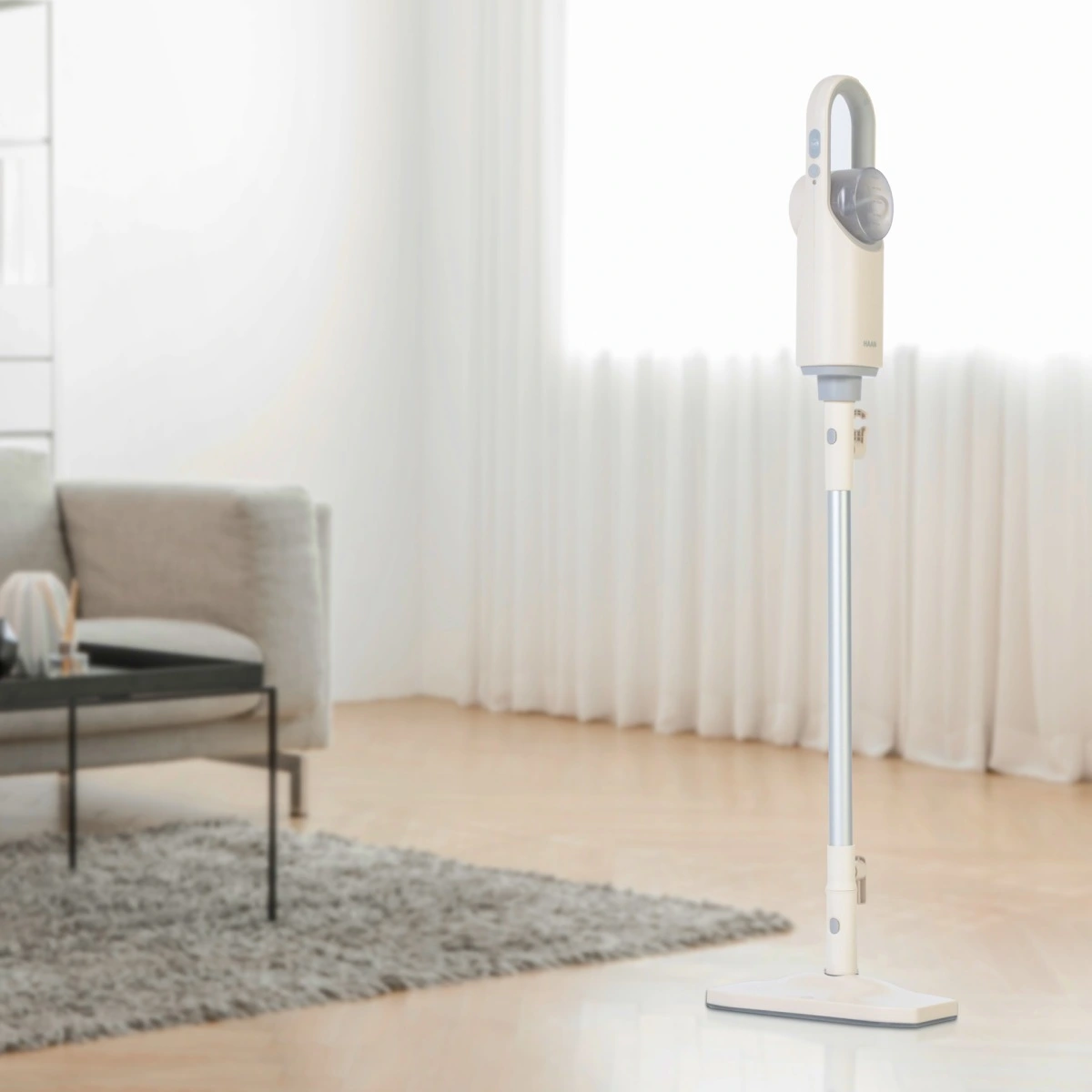
A 1.9 kg Steam Wand: Hangyeonghee Puts Floors and Stove Gaps on One Pole
Story & products
Living alone, the obstacles to cleaning can be small and persistent. A mop stays damp overnight; a window track remains awkward to reach. In a one-room flat, the only spare storage space may be the strip behind the door. That makes size and usefulness worth settling before buying another machine.
HAAN's HSM-1010TI is a corded, two-in-one steam cleaner sold in Korea. The white unit measures about W300 × D135 × H1150 mm. Its stated 1.9 kg weight is for the complete unit, excluding the cord. The specifications include 1500 W, a detachable 370 ml tank, a 5 m cord, scraper, crevice and brush nozzles, and a spare pad. The supplied article places typical shop prices around ₩80,000–100,000; prices vary.
Measure Thirteen Centimetres of Depth First, Then “Floor Plus Gaps”
Use the mop head for floors, then detach the handheld unit and change attachments for stove gaps, window frames or toilet edges. First check whether a roughly 115 cm-tall pole, 13.5 cm deep, fits behind the door or beside the basin.
The stated heat-up time is about 20 seconds, with around 15 minutes of continuous steam. That gives a small-flat cleaning session a useful time frame, though the area and dirt determine whether one pass is enough. The 5 m cord reduces outlet changes. The self-standing design lets you free a hand to move a chair.
The three nozzles help reach edges and channels that a pad alone cannot easily enter. Swap in the spare pad while washing the dirty one. Check the flooring instructions before using steam, and do not hold it over one spot.
From Fifteen Hundred Watts to Fifteen Minutes: Finish the Floor Without Fighting the Machine
A corded cleaner removes charging from the routine, but still needs a conveniently placed outlet. The detachable tank also makes filling and emptying easier than handling the whole machine.
The weight needs a clear distinction. The published 1.9 kg figure describes the complete unit without its cord, not the detached handheld section. There is no substantiated comparison here with older steamers. Anyone planning to hold it up for long stretches should still consider the strain on their wrist.
After use, empty the tank and wash and dry the pads. Keep hot steam away from children and pets, and choose another tool for surfaces that cannot take it.
Living Alone Well Sometimes Means the Floor Dries Faster
A solo cleaning routine need not surrender half the balcony to a large floor washer. This machine brings floor and handheld cleaning, a five-metre cord and three nozzles into a compact storage footprint.
If it makes weekend floors and stove gaps easier to tackle, it earns that strip behind the door. If it is only there for a photograph, even a light pole becomes something else to dust.
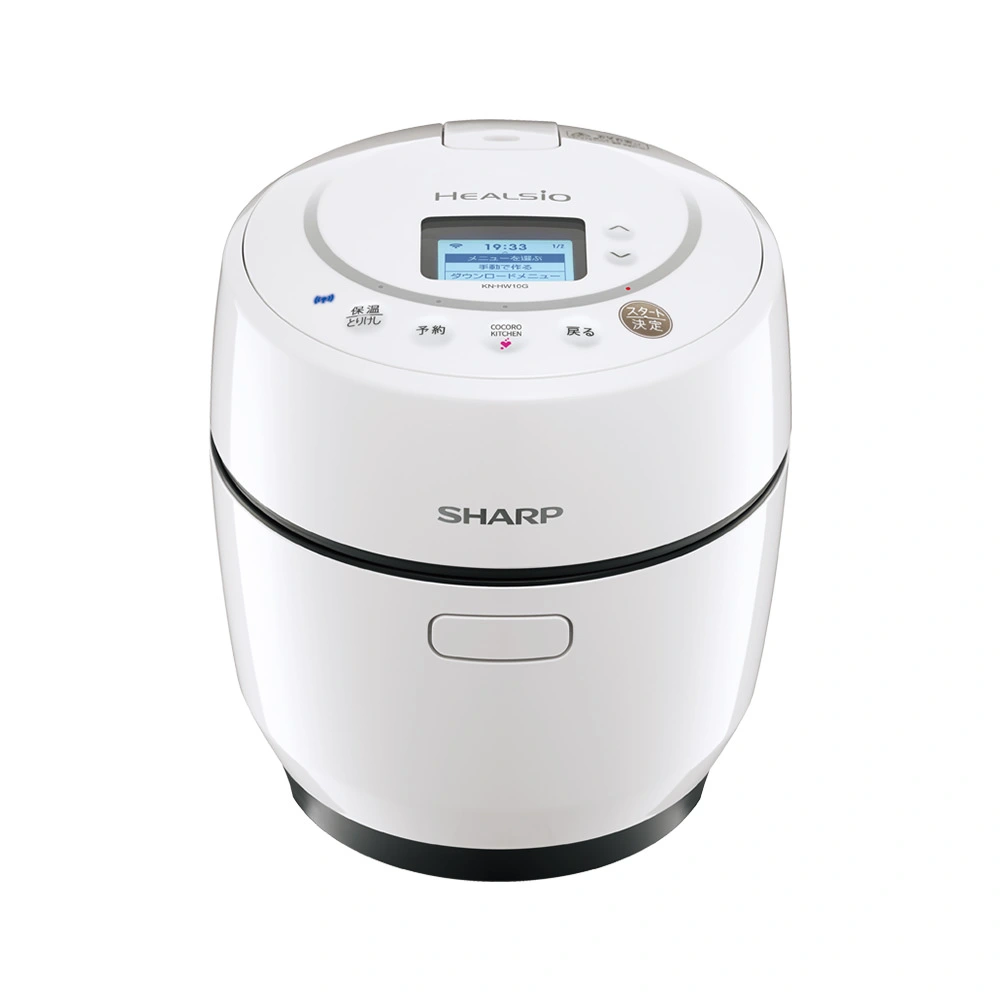
A One-Litre Pot and the Door Chime: Sharp Puts Unattended Heat in a Rental Kitchen Corner
Story & products
Dinner for one can mean standing over the stove after work, then finding space in the fridge for three days of leftovers. A rental kitchen often has little counter space and few outlets. Those small inconveniences can decide whether you cook or order in.
Sharp positions the Healsio Hotcook KN-HW 10 G for one or two people. It has about 1.0 L of cooking capacity and 2.0 L when full, measures approximately W 220 × D 305 × H 240 mm and weighs about 3.7 kg. It comes in black or white, with no manufacturer-set retail price.
Measure the space first
The body is about 22 cm wide, 30.5 cm deep and 24 cm high. Allow the clearance required by the manual, including around walls and cabinets. This Japanese model uses 100 V power and is rated at 350 W; check the electrical requirements before use.
Hotcook makes the routine of chopping, loading and selecting a menu practical for unattended automatic cooking. Sharp lists waterless curry menus and recipes that accept frozen meat or fish without thawing. The fluorine-coated inner pot is easier to clean. Removable parts can go in the dishwasher where specified, but the inner pot cannot.
A steam tray is included. For a small curry, stew, soup or steamed dish, the appeal is spending less time watching the pot. Follow the manual and the relevant recipe for ingredients, quantities and operation.
A timer that can accommodate a late return
The official maximums are about 15 hours for reservation and 12 hours for keeping food warm. Set a finish time in the morning; if plans change, it can be adjusted from a phone, except within approximately 30 minutes of completion, as described in the manual.
Wi-Fi connects the cooker to COCORO HOME / COCORO KITCHEN for sending menus from a phone. Cloud offerings depend on the service. Voice guidance reads ingredients and steps alongside a full-dot LCD, reducing the need to keep opening the booklet.
The cord is about 1.4 m long and uses a magnetic plug. The supplied menu collection has about 86 entries, including roughly 70 automatic and 16 manual menus.
Less time watching one person's stew
Standing around for forty minutes can be enough to put you off cooking after work. A small cooking capacity, reservation and keep-warm functions offer a practical alternative. They will not make anyone cook every night, but they may make a weeknight dinner easier to fit in.
If it earns regular use for dinners and weekend stews, the cooker has earned its corner. If it is only there for photographs, even a one-litre pot takes up an outlet.
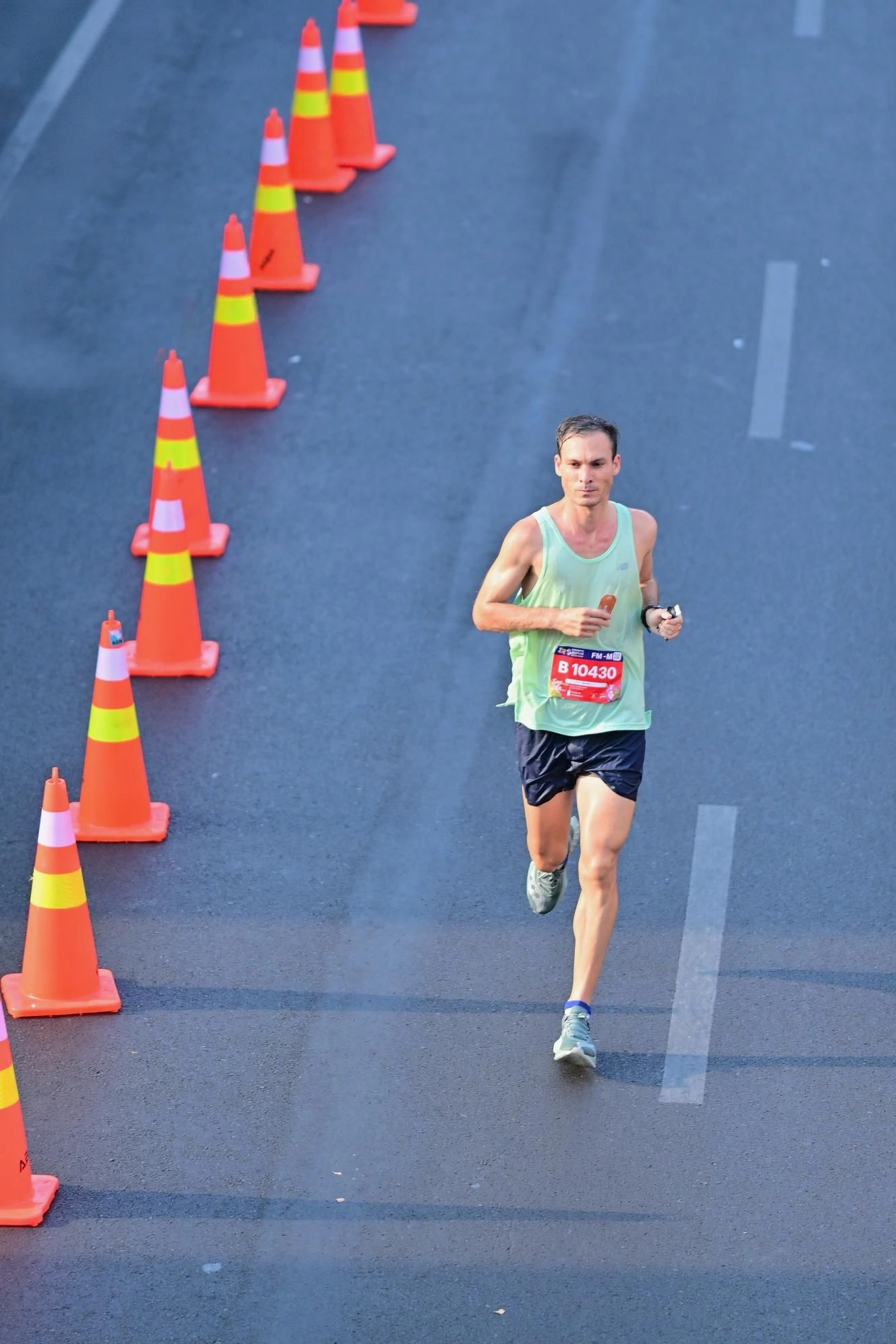
Quiet Zone
Story & products
A marathon improvement from 3:37 to 3:17 in four months, with almost no real speed work, makes an appealing headline. The AdvancedRunning report behind it is more interesting when the comparison table and race day stay in view. This runner's hips could not yet tolerate the intensity he wanted, so he worked with the training they allowed.
On 4 October 2026, he finished the Surabaya Isoplus Marathon in 3:17:18. His public report and the discussion below it describe one return after hip surgery. They cannot prescribe mileage or speed sessions for everyone recovering from an operation, or settle how every runner should use Zone 2.
The hip set the terms
He had been a hobby runner since 2017. In his account, an injury during a half-marathon deload week in 2021 kept him from running for about four and a half years. Surgery for hip impingement and a labral tear followed in April 2025. By October that year, monthly mileage was back around 200 km; at roughly fourteen months after surgery, he ran 3:37.
Faster running remained difficult. Speed and lactate-threshold sessions brought stiffness and sharp pain, particularly eight to twelve months after the operation. From about April 2026, he ran almost entirely in Zone 2. His original plan for one marathon and a sub-3:10 changed to B and A races, separated by about sixteen weeks.
His comparison is unusually specific. The B race came fourteen months after surgery, the A race eighteen. Race carbohydrate intake rose from 70 to 90 g/h. B included two painful early threshold sessions; A had none. B had no marathon-pace runs; A had two. Peak four-week average mileage increased from 81.6 to 95.2 km, and the eight-week average from 80.6 to 90.4. B involved four consecutive weeks of hip trouble; A had no comparable stretch. In B, he lost about five minutes over the final 4 km. In A, he felt he executed the race strongly.
The A block originally called for 13, 16 and 19 km at marathon pace inside roughly 31 km Zone 2 long runs, in weeks 6, 10 and 12. A little stiffness after the second, 16 km effort changed that plan. The third became an easy 36 km run, in a peak week of 105 km.
Several things changed together, including time since surgery, mileage and fueling. Credit the whole improvement to the absence of speed work and those variables disappear. Insist on speed sessions as proof of commitment and the hip's response disappears instead.
A four o'clock start
He stopped caffeine for about ten days before the race, hoping to get more from caffeinated gels. That was his intention, rather than a demonstrated result of this report. His Friday and Saturday carbohydrate loads were about 12 and 10 g/kg respectively, with a sodium target of roughly 4500 mg on each day. A one-hour flight took him from Bali to Surabaya; his hotel was about 500 m from the start.
The gun was at 4 am. He went to bed at 10 pm, woke at 12:30 and could not get back to sleep. The original plan was to wake at 3, skip breakfast and take one gel. With unexpected time available, he ate two plain GU gels at 2. From 2:30 to 3, he watched Modern Family in bed, then got ready to warm up.
He recorded 26°C and 82% humidity at the start, describing the humidity as relatively low for his Southeast Asian race experience. There were about 400 marathon finishers; he described himself as the only foreigner. The initial target was around 3:18. Depending on his hips at 20 to 30 km, he might push toward low 3:15 or fall back toward 3:22.
The plan gave his hips time to settle: 6 km near 4:50/km, another 6 near 4:45, then marathon pace around 4:40 from kilometre 12. His chest strap kept slipping. At 12 km it fell completely out of place, and he threw it away.
Between 20 and 30 km came gentle gradients and a stretch of wordless running alongside another racer. From 30 to 36, he pushed toward the low 4:30s. At 39 km, fatigue jumped to a self-rated 9/10. The last 3 km averaged just under 5:00/km. He finished in the top ten, without an age-group award because those awards were limited to Indonesian nationals.
His race plan targeted 90 g of carbohydrate an hour. He carried about eleven gels, took three sodium capsules of 215 mg each, and recorded roughly 440 mg of caffeine in total. Those figures belong to his own race and the fueling he had repeatedly practiced.
One commenter called twenty minutes in four months with almost no real speed work a Zone 2 “cheat code.” Another calculated a dew point near 73°F and wanted no part of that start line. The improvement is striking. So are the conditions and the fatigue in the closing kilometres.
Speed work was still a future hope
Asked about returning after surgery, he described an exercise-science background and following research protocols for return to sport after hip operations. In his reply, he stressed a twelve-to-twenty-month process that could not be hurried. If he could go back, he would skip the attempts at faster paces: he felt they had brought pain without benefit and might have delayed his recovery. That was his reading of his own experience.
By the time of the post, he had run about 2938 km that year. Excluding the marathons, he put speed work, including marathon-pace running, below about 100 km. His estimate was roughly 80% Zone 2, 17% Zone 1 and 3% higher intensity. Zone 2 commonly meant a heart rate of 130 to 135, about 5:40 to 5:50/km, with 600 to 700 m of climbing a week.
He felt physiologically capable of sub-3:10, but still limited by the mechanical support his hips could provide. The comments also touched on caffeine-metabolism genes. Neither that discussion nor his recovery account turns one race into a universal training plan.
After the race, life obligations meant about two months away from structured training, with a return around January. He might skip marathons in 2027 and concentrate on half-marathons and gym work. He still hoped to introduce speed sessions.
Quiet Zone can relieve the pressure to prove commitment through a crowded interval schedule. It can also become another badge of superiority, as if avoiding speed work were proof of better judgment. The useful part of this report is how the runner adjusted to his hip's response and considered goals, fueling and execution together. What belongs in the next training block still depends on the body doing it.
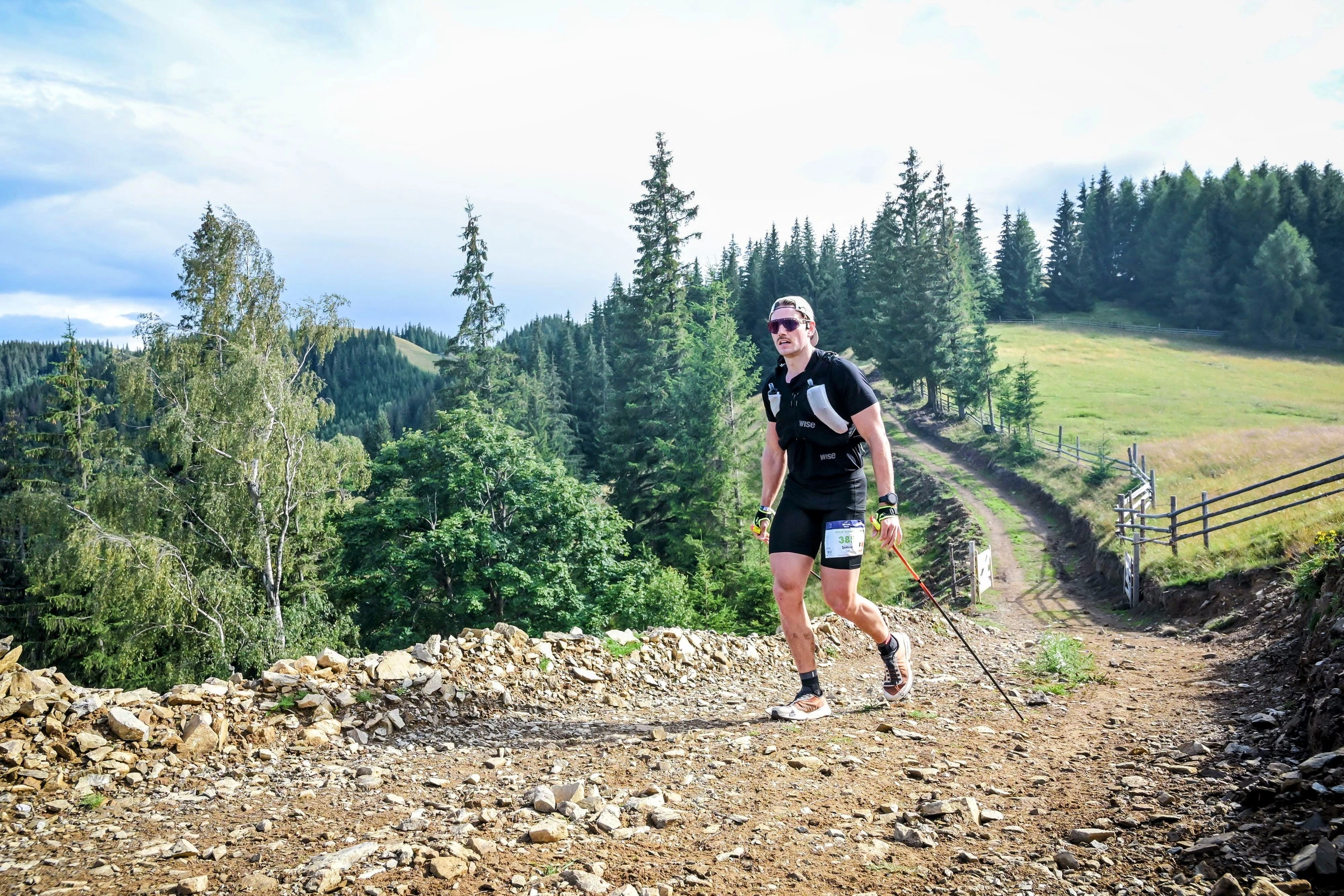
Second Sunrise
Story & products
He left Corte at 23:00 on Thursday and returned at 08:52 on Saturday. The result was 112 km, 7,128 metres of climbing, 33 hours 52 minutes, and 173rd place. There was a medal and a finisher shirt, but no finish-line video. His timing chip had stopped working; the organisers recorded his result by hand.
The public ultrarunning race report stays with you for its less polished details: two blankets that did not stop the shivering, a borrowed jacket, and a final descent after a second sunrise. Those details explain what “just finish” had come to mean. This account draws on the report and its comments. It describes one runner’s preparation and decisions, not a training prescription for everyone else.
From Mont Blanc to Corsica
The blogger had long enjoyed trail running and fast-packing, including GR20 and GR54. In 2024 he circled Mont Blanc in four days and caught the atmosphere just after UTMB. He writes that the connection drew him in: he wanted to work towards longer ultras. About a month later, on the UTMB website, he found Ultra-Trail di Corsica, part of Restonica Trail: roughly 110 km and 7,000 metres of climbing, with Running Stones to collect.
Preparation took eight or nine months. His half-marathon personal best had recently improved to 1:45. He began with about four months of Runna marathon training, running five times a week, then followed its 100 km Elite Plus plan from March to July. Peak weeks reached about 120 km. He also did CrossFit three to five times a week throughout the year. That is a record of his preparation, not a weekly mileage target to lift out of context.
At 23:00 on Thursday, Corte’s streets were full of flares and red light, with something of a stadium atmosphere. About 450 runners set off. He wore bib 464, allocated by UTMB Index. It was his first night start, and the headlamps formed a line climbing into the dark.
Padule, around 7 km in, already meant more than 1,300 metres of climbing. He reached it after about two hours in 218th place. At Boniacce, around 15 km, he was 186th; at Calacuccia, around 33 km, he was 167th after 6:14. Near 40 km and seven hours, he briefly imagined finishing in twenty-one hours. His ideal target had been twenty-four, the Index estimate about 26:30, and his main goal simply to finish.
His previous highest-climbing race had involved about 3,000 metres of ascent. Halfway through this one, he had already passed 4,000.
When the target times fell away
The climbs became harder, his legs heavier on the descents. Bunions made his shoes pinch. At Ballone, a volunteer reminded him that his bib had to be displayed on his chest or he could face a penalty. He admits that, at the time, he just wanted to be left to keep moving.
He had hoped to reach the Ciattarinu life base, around 60 km, near noon. He arrived after about fifteen and a half hours of racing. The target times were slipping away. He changed shoes, showered, ate pasta and waited out the storm. People discussed whether to sleep. He had been awake for about thirty hours and chose to continue. Afterwards, pain developed on the inside of his right knee; he later thought it was closer to the pes anserinus than the outer IT band. That was his interpretation of the pain, not a diagnosis.
Inzecche came at roughly 74 km and twenty and a half hours. Fuel had shifted to Coke, solid food and Naak waffles. The second night began. His earbuds had broken after the storm, so on empty stretches he played his phone at the lowest volume from his chest pocket, switching it off near other people. A commenter criticised the speaker. He replied that he had used earbuds for most of the race and resorted to the phone only after they failed. The criticism and the explanation both belong in the account; a difficult finish does not settle questions of trail etiquette.
He met Spanish runner Xavi and later descended with Austrian runner Dominik. Bocca a Soglia, around 85 km, came at 25:06. Some of the descent involved sliding on his backside, and one carbon pole snapped. At Grotelle, around 89 km, he was 176th after 26:30. One last climb of about 750 metres remained.
He reached Alzu, around 99 km, after 30:03 in 167th place. Even wrapped in two blankets, he was shivering. The organisers sent Picard a WhatsApp asking whether he had withdrawn: his chip had not registered since Inzecche. A volunteer confirmed by radio that bib 464 was there. Someone joked that water from the soft flasks might have killed the chip. Xavi’s friends lent him a warm jacket.
The twenty-one-hour thought was a long way behind him. Blankets, a jacket and people who could confirm where he was mattered much more now.
The descent after dawn
After the second sunrise, he headed down from Alzu towards Corte: about 10 km and 1,300 metres of descent. Tree shadows looked like animals, rocks like cabins. He had to stare at the details to recognise the illusions. Local morning runners called out that only two or three kilometres remained; he found that reassurance a little too cheerful. Only after reaching town did he start running again.
At 08:52 on Saturday, he finished in 33:52, 173rd, with 112 km and 7,128 metres of climbing behind him. He received the medal and shirt. With the chip broken, the result was entered manually and the usual finish video was missing.
Days later, at the airport, he met Lars, a Belgian runner with twenty 100 km races and a UTMB finish behind him. Lars described this course as exceptionally hard and technical, especially for a first long ultra. That gave the experience some perspective without turning every difficult moment into a heroic necessity.
The comments also raised a useful distinction. When the blogger wrote “100M”, he meant the UTMB Index category, not a course measuring one hundred miles. He explained that the grouping takes distance and climbing into account and includes some races around 100 km and above. One reader was struck by his choice of such a demanding first race; another planned to fly from Australia precisely to find more technical trail. The same route can answer very different ambitions.
Time goals still matter, and preparation deserves scrutiny. But twenty-four hours alone cannot explain this race. “Just finish” cannot excuse every decision either. The blankets and the failed chip do not diminish the finish; the medal does not make everything that preceded it a model to follow.
The useful kind of independence here is being able to describe both the original ambition and the limits encountered along the way. Keep the medal, and remember the borrowed jacket. Both belong in deciding what to attempt next.
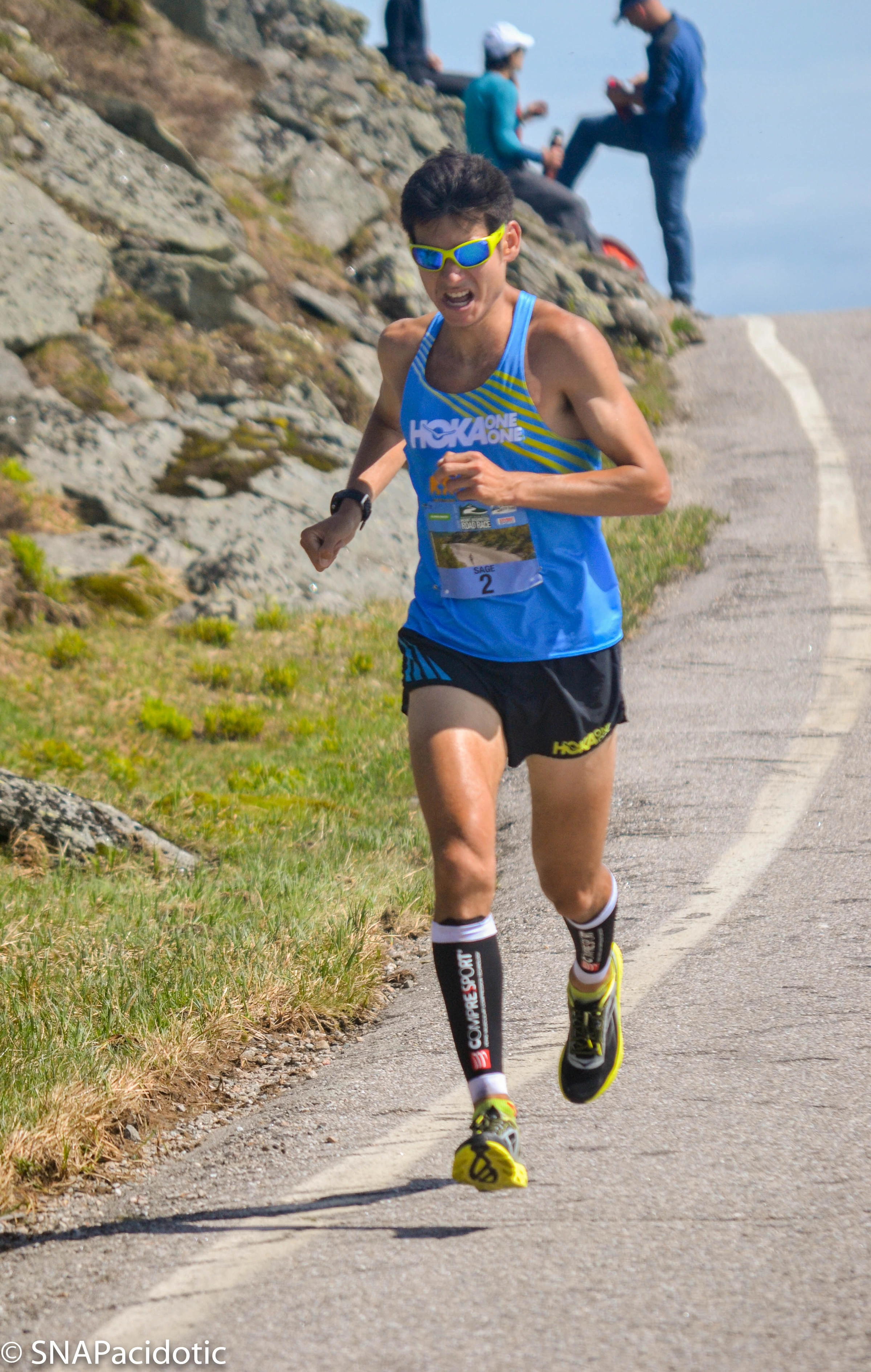
Gray Vial
Story & products
Sage Canaday brought a disillusioned question to AdvancedRunning. How common is doping with banned peptides in marathons and ultras? Faster recovery, pain management and blood flow were the possible gains he named. He wondered how many people were pursuing them.
The top-voted reply teased him for being too fast and too famous to post on the forum. Beyond the joke, the comments turned to uncertain evidence, testing and the people who lose places to competitors who break the rules.
Read together, the thread and its replies offer a discussion, not a measure of how many endurance athletes dope. They cannot speak for every entrant, peptide product or testing system. Nor do they provide a dosing guide. Their value lies in keeping the different questions visible instead of letting disillusionment settle them all.
What is in the vial?
One commenter pointed to a handful of small studies on BPC-157 and linked the public literature. In their view, evidence for many popular peptides remained thin. Anecdotes were unreliable, while people were injecting substances of uncertain strength and efficacy from questionable overseas vendors.
Another commenter, who described a biochemistry background in drug discovery, doubted that most of these peptides did much at all. Purity worried them too, with implications for both efficacy and safety. These are the commenters’ judgments. They do not establish that every peptide works, or that none can work.
A further reply questioned whether unofficial purchases even matched their labels. Someone might think they had bought a peptide and actually receive a more conventional doping agent. When the contents are uncertain, an account of how someone felt afterward leaves a great deal unresolved.
“Everyone is on it” travels easily. Asking which studies support a claim, what samples they used and whether a supplier can account for the contents takes more work. That is the discomfort of the gray vial. Thin evidence cannot excuse a real violation, and it cannot prove that an entire sport is cheating.
The regional field
One commenter could imagine doping among elites but was unconvinced that the average regional runner chasing a local 5K placing was using EPO, exogenous hormones or peptides. That was the level they cared about, and they would not let some share of elite doping make them give up on their own sport.
Others pointed to weak enforcement at regional events and the seriousness with which weekend warriors took their results. Amateur cycling came up as a comparison: why assume running would be exempt? Both positions appeared in the discussion. Neither amounted to reliable prevalence data for all amateur runners.
Shelby Houlihan prompted a separate argument about testing and consequences. Some commenters thought sanctions were too light and argued that steroid-related muscle-building advantages could last. Others stressed how much a four-year ban takes from a short athletic career, particularly around an Olympic year. Reporting that disagreement does not reopen the judgment in an individual case.
The discussion became more concrete around Boston qualification and age-group podiums. One commenter thought doping could nudge the BQ cutoff faster. Another had friends who won age groups at Chicago and would be furious if dopers displaced them. They also worried about access to Boston, New York and Berlin.
Being far from a podium yourself does not make those stakes disappear for the runner beside you. Masters competitors and serious amateurs can care deeply about places and qualifying opportunities without being elites.
Racing under the same rules
One commenter set out a firm position on events governed by USATF, USADA and WADA rules. Entering meant agreeing to the applicable rules. Using banned substances and then racing against people who observed them displaced clean athletes. They applied that concern from elites and Olympic Trials hopefuls to the top of a regional field.
Other commenters said they did not care what fellow age-groupers took because they were nowhere near the podium. The pushback was that indifference lowered the potential cost of doping. Age-group placings, masters competition and opportunities at Boston or UTMB still mattered to someone.
Health risks and permitted aids brought another distinction into the thread. A commenter contrasted the health risks of banned substances with legal aids such as caffeine, bicarbonate, protein and iron. That remains a position expressed in the discussion, not a safety guarantee for a particular product.
A European trail runner described a different competitive setting. They did not believe they had shared a podium with someone using banned substances, but considered NSAID use a major problem in trail running, only partly overlapping with doping. Their mostly sub-ultra races did not necessarily resemble the field Sage had in mind.
Those differences deserve to survive the retelling. Recovery, health and competition rules are connected, but they are not interchangeable questions. Reducing them all to “everyone is on it” makes it harder to say what is known and what, exactly, is being challenged.
Sage’s disillusionment and the commenters’ insistence on evidence can coexist. Independent judgment leaves room for both. It resists condemning an entire field on suspicion, while refusing to dismiss clean competitors because one’s own placing seems unimportant. The next conversation about the gray vial can still ask what evidence supports it, what it contains and which rules its user agreed to follow.
The content of this article is for reading, reflection and personal judgment only. It is not an instruction manual. It is simply one part of the world that exists.
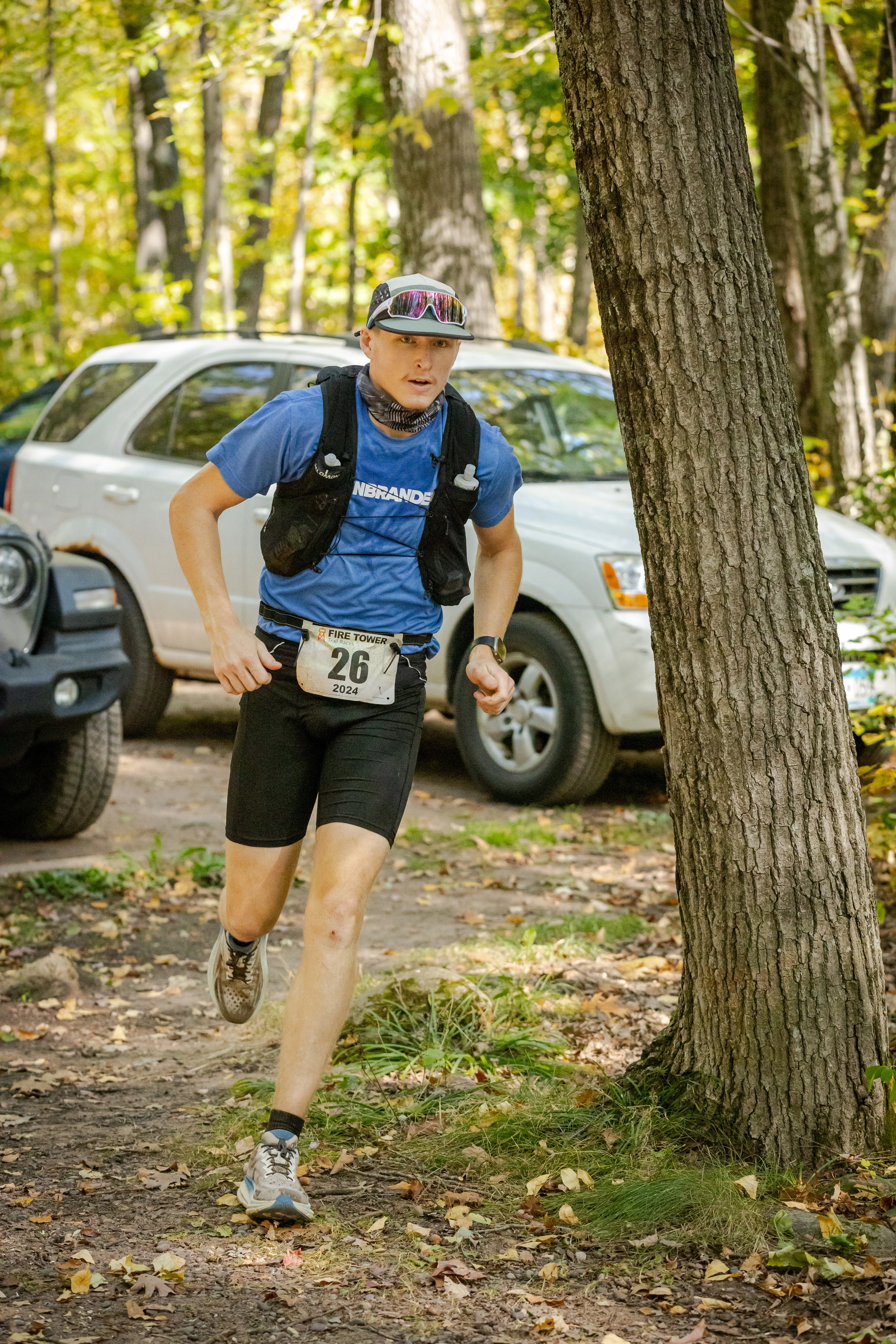
Echo Cleared
Story & products
An ultrarunner described being diagnosed with left ventricular hypertrophy, which the doctor attributed to their running volume. A follow-up echocardiogram, they said, ruled it out. They had been fully assessed and cleared to keep running.
Their background was substantial: more than thirty ultras, including a couple of hundred-milers, and roughly two thousand miles a year for seven or eight years. After the follow-up, they wanted to hear whether other runners had experienced maladaptations from running. How serious had those been? Could they still run ultras, and what volume had they been doing? The post ended by wishing everyone good health.
This article retells the community discussion and comments as described in the supplied account. It concerns individual experiences, not every endurance athlete or every cardiac assessment. The poster repeatedly said they were asking about other runners' experiences, not seeking medical advice.
What the follow-up changed
The initial diagnosis and the subsequent echo belonged to the same account. Keeping only the race count and annual mileage would leave out the very finding that changed the situation.
Equally, one person's reported clearance cannot settle another person's case. Symptoms, findings and follow-up need to be understood in their own context. A discussion of athlete's heart has to leave room for those differences.
How commenters read the findings
A highly rated commenter began by saying they were not a doctor. They had a medical background and had seen a similar pattern on their own EKG. Their explanation was that a pattern suggesting LVH does not necessarily establish hypertrophy, whereas an echo looks at the heart itself. They were reassured by the poster's reported follow-up and suggested looking up Runners Heart or Athletes Heart. That remained a comment on this account, not an interpretation of anyone else's test.
Another person recommended an episode of Andy Galpin's Perform Podcast, Intense Exercise & Potential Heart Damage. They found it informative and felt less worried afterward about possible maladaptations from “excessive” cardio. The podcast was something they had found useful, not a substitute for the poster's assessment.
A commenter with a kinesiology background who also ran ultras was more critical of medicine's treatment of endurance athletes. They argued that medicine, including psychiatry, had a history of pathologizing endurance sport. Their first question was whether symptoms had prompted the original appointment. They also described themselves and running friends being told about LVH after doctors noticed a low resting heart rate at routine checkups and learned about their endurance training.
They stressed the distinction between physiological adaptation and pathological hypertrophy associated with conditions such as high blood pressure. They mentioned echo and other assessments, including a detraining trial where appropriate to the evaluation. They did not read the original account as a reason for alarm, but explicitly said that symptoms should be discussed with a cardiologist. Both their criticism of medicine and their interpretation of these experiences were their own views.
A running coach added that familiarity with athlete's heart varies, even among cardiologists. In the coach's view, training-related enlargement or thickening can be difficult to distinguish from pathological changes. They suggested consulting a sports cardiologist familiar with endurance athletes when findings are unclear or conflicting.
One runner was still being followed
Another commenter described an ongoing situation. Their latest echo had shown a moderately dilated left atrium and concentric remodeling of the left ventricle, possibly related to the extra pressure from congenital subaortic stenosis. They reported no symptoms, and said the resting gradient did not yet warrant intervention. The plan was observation and annual checks.
They were seeking a second opinion from a sports cardiologist, although they expected it might be similar. For now, they were training as usual. They had completed a hundred-miler in May, after six to nine weeks at roughly one hundred to one hundred ten kilometers a week. Before that, the account gave monthly volume of sixty to ninety kilometers. Over the summer they reduced volume to forty to sixty kilometers and focused on speed.
Those figures help explain their training background; they do not turn their experience into permission for somebody else to train. Their follow-up was continuing. That was a different situation from the original poster's reported exclusion of LVH.
Asking a doctor and talking to runners
Some of the disagreement was about whether the discussion should happen at all. One person said these were questions for the doctor treating the poster. The poster replied that they wanted to know what other runners had encountered. They would also like to find a doctor who ran ultras, though they had not found one.
Another commenter argued that running ultras was no more necessary for a doctor than having had a heart attack was for a cardiologist. They also claimed that every cardiologist had experience with endurance athletes. The poster agreed with the point about expertise and said they had only meant it would be nice.
Someone else insisted that the education and experience of the professionals handling the diagnosis outweighed anecdotes from strangers online. The poster repeated that they had already been fully assessed and cleared to run. They were not seeking medical advice; they were curious about other experiences and apologized if the original post had left that unclear.
Others defended the exchange. They felt that social platforms should allow people to discuss their health, and that first-hand accounts and more information could be useful. They still supported professional checkups, while acknowledging how much individual experiences and genetics can vary. Another commenter challenged the assumption that medical professionals are always competent and are the only people with whom health can be discussed.
The distinction worth keeping is the poster's actual request. They had undergone medical assessment and still wanted to hear from other runners. Clinical judgments need appropriate evidence; conversations about experience serve a different purpose. Treating both as the same request left people answering a question the poster had not asked.
“Echo cleared” can sound more final than the account warrants. Here it describes one runner's reported follow-up, not a guarantee about future tests. Taking symptoms and professional assessment seriously can coexist with listening to other runners. This discussion cannot promise what the next examination will show.
The content of this article is intended only for reading, reflection and personal judgment. It is not an instruction manual. It is simply one part of the world.
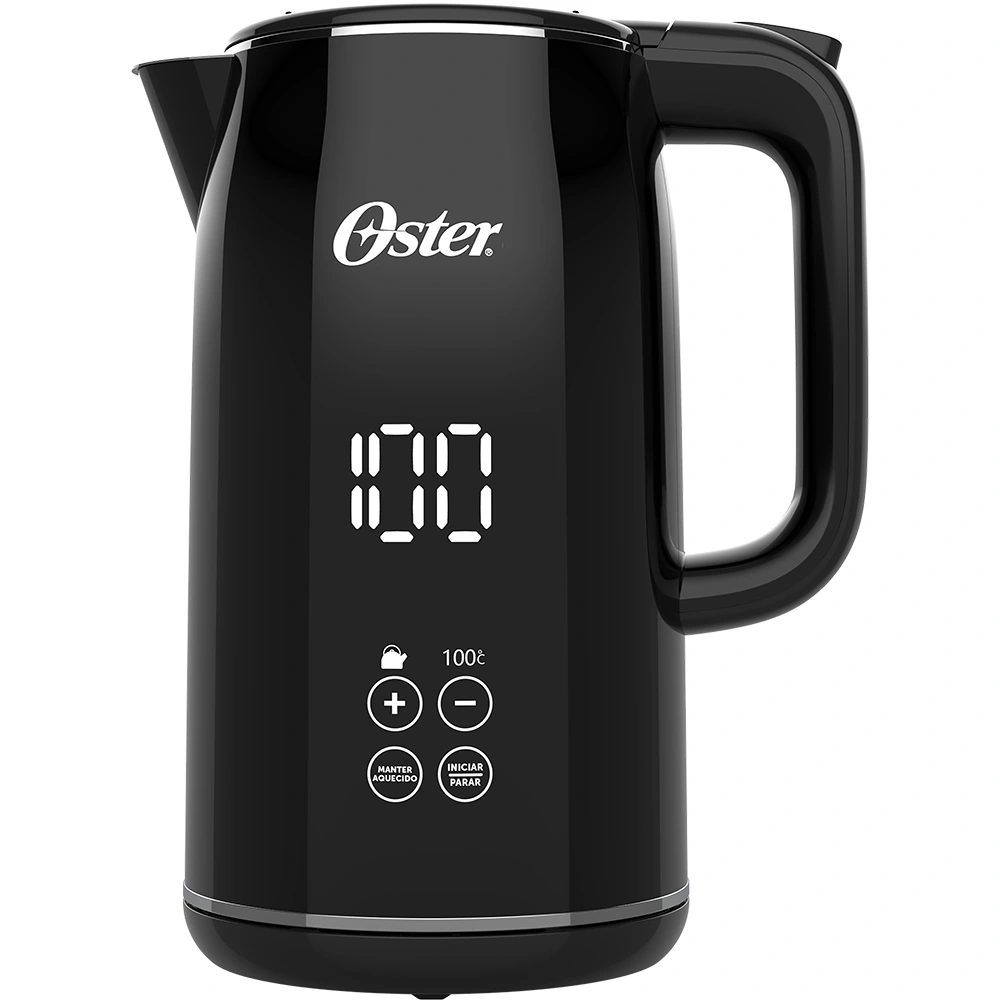
The Isolation of Precision: Oster OCEL920 Digital Temperature Kettle
Story & products
Imagine a high-rise apartment in São Paulo or Buenos Aires, its kitchen at 5:00 AM. This is a scene imagined around solitary order, not a report of an athlete's routine: before the day begins, settle the small matter of water temperature. The Oster OCEL920 is more than a tool that brings water to the boil; it gives that routine a few defined options. Preparing coffee or tea can begin with choosing a temperature, but neither drink has one mandatory setting for everyone, and a kettle cannot determine physical conditioning or performance on the pitch.
Tactile Thermal Matrix
The device offers four presets—40°C, 60°C, 90°C, and 100°C—selected through an LED touch panel. It replaces the broad instruction to boil with repeatable choices. Precision has a boundary here: the manual permits a ±5°C difference between the selected temperature and the water inside the kettle. It does not promise accuracy to a single degree.
Double-Wall Insulation
The stainless-steel interior and double-wall construction help limit heat transfer to the exterior, around a 1.7-liter capacity. This is not a claim of surgical-grade material, nor does it eliminate burns from hot water or steam. The manual instructs users to pour with the lid closed and not to open it immediately after boiling.
Four-Hour Keep-Warm Function
With keep-warm selected, the kettle can maintain the chosen setting for up to four hours. Ordinary heating stops automatically when finished; it does not enter keep-warm mode by itself. Anti-Dry interrupts operation when no water is detected. These features offer more room in a routine, but do not replace supervision: the manual says not to leave the appliance running unattended. The 127V and 220V versions are separate models, not a universal-voltage appliance.
The L2M store recommends this item out of respect for discipline maintained even when no one is watching. This kettle heats plain water; it is not for brewing coffee or tea inside the vessel. Four temperature presets and a keep-warm function make a repeated daily task more deliberate. An orderly life can begin with something this small.
Between-Group Blank
Story & products
NAD+ went up. Did symptoms improve too? A community discussion about NR and long COVID separates questions that supplement marketing often joins together. In the supplied account, the poster says Niagen funded the research, then emphasized dramatic within-group changes and presented the study as a success. The poster wants to compare the intervention with placebo.
This article follows that supplied discussion and its reported comments, alongside figures from the eClinicalMedicine trial. Its scope is one study and a set of personal decisions, not every long-COVID study or every NAD precursor. Stopping, continuing, or finishing a bottle are the commenters’ choices, not prescriptions for everyone else.
A rise needs a comparison beside it
In the NR-NR group, NAD+ increased roughly 2.6- to 3.1-fold after five to ten weeks and remained elevated at about twenty weeks. That is an easy result to put in a headline. Cognition, fatigue, sleep, and mood still need their own examination.
Between-group p-values for ECog, RBANS, and TMT-B were approximately 0.47–0.74. Fatigue severity was about 0.59, sleep quality 0.69, anxiety 0.84, and depression 0.20. These comparisons found no significant between-group differences. The NAD+ increase and those findings belong on the same page.
That is the poster’s objection to the company’s emphasis. Changes from baseline can be worth investigating, but they cannot stand in for the intervention-versus-placebo comparison or become a promise of benefit for everyone. “Between-group blank” names the difference this material did not establish. It does not settle the usefulness of every NAD precursor for all time.
Stopping, or finishing this bottle first
One reported commenter brings up NOPARK, saying NR left Parkinson’s patients worse off than placebo in that trial. Another finds most human NR trials underwhelming. Someone has stopped all NAD+ supplements; someone else sees expensive products as seller hype and placebo feeling, and thinks niacin can offer similar effects. These remain commenters’ positions, not a basis for treating different supplements as interchangeable treatments.
Another comment focuses on presentation. The company, it says, still sounded as though it had cracked an ancient longevity code, offering a masterclass in selective reporting. The NAD+ bump had become almost a “curse”: enough of a mechanistic hook to advertise benefit while leaving null outcomes six paragraphs down. The commenter compares it with the old resveratrol story. Another adds that Sinclair led the charge in both narratives.
The objection concerns the jump from a biomarker to a benefit someone can experience. A changed number can deserve research without answering what it actually did for the person taking the supplement.
One commenter plans to retire NMN after finishing the current bottle. They watched a video about this study the previous night and had only refilled their supply the week before. The question that stayed with them was whether raising NAD is needed for meaningful outcomes, beyond whether NR or NMN can raise it at all. What NAD contributes to longevity also needs an answer beyond the rise itself.
They mention material on age and NAD stability, high-dose NMN increasing NAD without improving hearing or physical performance, and the NOPARK comparison. About every three months, they say, another supplement leaves their list. Grape-seed extract went because they considered the relevant ingredient dose insufficient. Once positive fisetin data were discarded, they felt only the negative “it does nothing” evidence remained. They wanted stronger public data rather than hope, anecdotes, animal experiments, and manufacturer material.
That account shows someone reconsidering a supplement cupboard. It can be read as a change of mind without becoming an instruction that everybody must stop.
Diagnostic arguments leave another question open
A reported commenter questions the diagnostic boundaries of long COVID and thinks they undermine the whole study. Another replies that, whatever the label, the participants were suffering, and in their reading NR did not improve that suffering. Defining a condition and showing an intervention’s benefit are questions that each need an answer.
There is room here to remain interested in NAD mechanisms and still reconsider the next bottle. A nonsignificant between-group result need not become a verdict on every future study. A higher NAD+ reading need not become a symptom improvement before the comparison establishes one.
Independent judgment comes down to practical questions. Who was compared with whom? Which outcome was measured? Did the presentation give both their due? Those questions are more useful beside a supplement cupboard than another spreadsheet devoted only to rising numbers.
The contents of this article are offered only for observation, reflection and personal judgment. It is not an instruction manual. It is simply one part of the world that exists.
Still Unspent
Story & products
About one hundred dollars a month, accumulating to roughly twelve hundred by the end of the year. Spend it or lose it. A company health stipend sounds like an easy benefit until someone asks what they should actually buy.
The supplied article recounts an amateur runners’ discussion. The poster does not want a coach. Shoes are an option, as is replacing a watch that is about six years old and struggles with GPS in the city. They want something they can keep using, rather than spending the allowance on one-off massages.
Those preferences give the discussion something useful to work with. A good watch, a few pairs of shoes, or reimbursement for races already entered could each make sense. Price alone cannot settle the choice. Nor can this one discussion settle anyone else’s budget or their employer’s reimbursement rules.
What would the shoes or watch actually do?
One highly placed reply suggests a good watch and several pairs of running shoes, covering daily runs, workouts, and racing. That would easily use the budget. Another commenter divides shoes by foam firmness, suggesting softer cushioning for long runs, medium for faster work, and firmer shoes for races. Someone promptly objects that recent carbon race shoes often use very soft foam, and that racing shoes have not been uniformly firm since the original Vaporfly.
The disagreement makes the shopping question more useful. Several pairs only make sense if each has a job in the runner’s training. Spending twelve hundred dollars is easy enough. Getting repeated use from what arrives is a different matter.
The watch question also gets more specific. One commenter describes GPS reception as passive and points out that paying more for a watch cannot strengthen the signal transmitted by a satellite. They say ordinary running watches do not use differential GPS or RTK, and suggest looking at multi-band GNSS to reduce multipath error in cities. They also speculate that the six-year-old watch might already have multi-band reception, so the model should be checked first.
Another runner reports a substantial improvement in city pace tracking after moving from single-band to multi-band. Someone else thinks expensive watches offer little extra value and would rather buy shoes and clothes, with less laundry as a practical benefit. Without the old watch’s model, the comment about its capabilities remains speculation. Checking it is a better starting point than assuming a higher price will solve the problem.
Durable only helps if you will use it
Someone proposes a hex bar, barbell, and plates. The poster replies that leaving the military also left them with very little interest in heavy lifting. These days they mostly do maintenance and core work. The commenter adds that, being over forty, they regard strength work as essential for their own running.
Both responses belong in the decision. Equipment can last for years while still being something its owner does not want to use. Durability needs to be considered alongside interest.
Treadmills produce a similar split. One runner does not particularly enjoy them but values having the option at home. The poster says their apartment building already has treadmills; with harsh Midwest winters in mind, the suggestion appeals. Another reply says they would rather die than run on one. Others describe winter Zwift sessions in a basement “pain cave” and feeling stronger in the legs by spring.
Recovery suggestions include foam rollers, slant boards, and bands, along with flasks for homemade gels and massage guns. A commenter puts Costco compression boots at about one-tenth the price of Normatec. That is a comparison reported in the discussion, not a current quote for verified matching models.
A high-mileage runner says they get five hundred to six hundred miles out of a pair of shoes and use about five pairs a year. They also mention good socks, reflective gear and headlamps for night running, plus armband or chest-strap heart-rate monitors. Small purchases used frequently can account for a meaningful share of the budget. Their list reflects their own mileage and habits, rather than a compulsory shopping list for everyone else.
The races are already on the calendar
Eventually someone asks whether the allowance could cover race registration or travel. The poster has already entered an 8k, a half marathon, and a marathon for next year. If they cannot settle on equipment, they might seek reimbursement for those fees. Another commenter jokes that this sounds like the Chicago distance series.
Someone likes the idea of using a company allowance for a destination race each year. Another would put a new experience ahead of a new object, with a lactate meter as a fallback suggestion if the experience is not an option.
Race fees are an ordinary answer, and that is part of their appeal. The money has already gone toward something the runner wants to do. If the employer’s rules allow it, reimbursement has a clear purpose without creating another purchase merely to use up a balance.
An expiring allowance can make being still unspent feel urgent. Talking about value does not diminish a runner’s commitment, and choosing a flagship watch need not be treated as a failure either. There is room to make an independent choice by asking what the old watch cannot do, which sessions need another pair of shoes, and whether an existing race entry is eligible.
Answer those questions before choosing the next purchase. The things worth keeping on the list are the ones you genuinely expect to use.
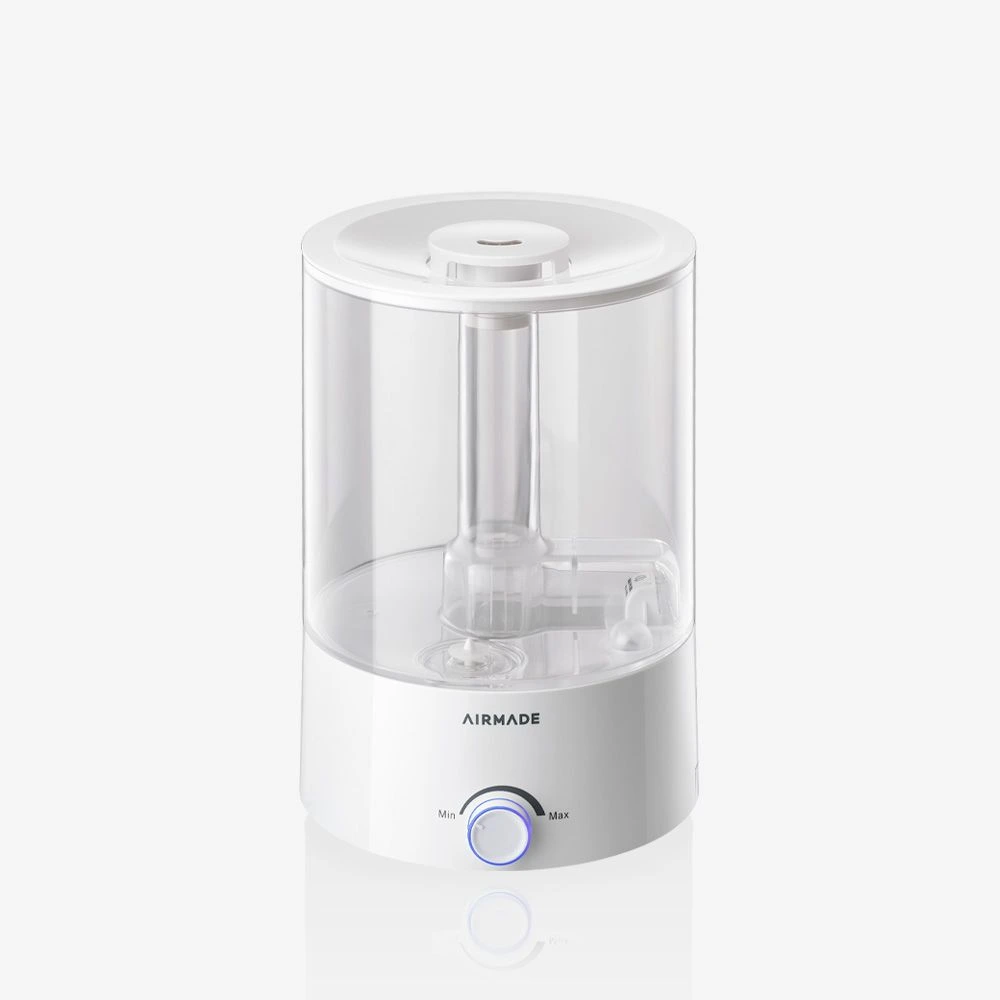
Four liters of bedside mist: Airmade AMH-4000 for a small room
Story & products
Living alone, two things can make a dry room harder to manage: heat runs all night and you wake with a dry throat, and a bulky humidifier tank that makes carrying water back and forth a chore. In a one-room or officetel, the free spot is often the nightstand corner. Those practical limits matter more than the appeal of another living-room tower.
Airmade’s 4 L ultrasonic mini humidifier AMH-4000 has listings in the official store and other retail channels. Published specifications list about 4.0 L tank; body about 194 × 194 × 284 mm; about 1.98 kg; max mist about 180 cc/h; advertised continuous use up to about 38 hours; about 25 W; 220–240 V; ultrasonic; top fill; mist level and rotatable nozzle; auto power cut; mood light; clear water window and tank handle. The official store lists a reference price around ₩44,000, subject to promotions. The question is whether its size and filling arrangement fit the space you actually have.
Measure about nineteen centimeters square first, then talk “fill from the top”
AMH-4000’s main job is local mist by bed or desk, not fogging the whole flat. Size about 19 × 19 × 28 cm, weight about 1.98 kg. Decide which shelf—nightstand, bookcase tier, desk corner—holds it steady before you order.
Top filling means opening the lid and adding water without carrying the entire unit to the sink. Advertised continuous use is up to about 38 hours, while maximum mist output is about 180 mL/h. These are separate figures: 4 L divided by the maximum rate is about 22 hours, not 38. Refill intervals depend on the setting and operating conditions. The nozzle rotates; follow the manual for direction and clearance from nearby objects.
Mood light is a side feature. Too bright at night, turn it off; want a little glow, leave it on. It does not promise “healing.” It only saves one lamp switch.
Power use, water level and cleaning
25 W is the published power figure. Actual electricity use depends on running time. Mist level adjusts—strong denser, weak less night condensation. A tank handle helps pouring without slips. A clear window means you stop guessing the remaining water.
The brand promotes easy cleaning. Top filling saves carrying the whole unit, but the tank still needs regular cleaning. Follow the manual for the automatic shutoff; it does not replace proper use and maintenance.
The practical questions are does the nightstand take it, is refilling convenient, and is 25 W overnight cheap enough.
Does it deserve a place beside the bed?
The 4 L tank, roughly 194 mm square footprint, top filling and rotating nozzle are the parts relevant to a small room. They do not guarantee softer skin or a comfortable throat. They make adding water and checking its level more straightforward.
If that makes you willing to use and clean the machine when needed, it earns its place. If it is only for photos, even a compact humidifier becomes another plastic bucket gathering dust.
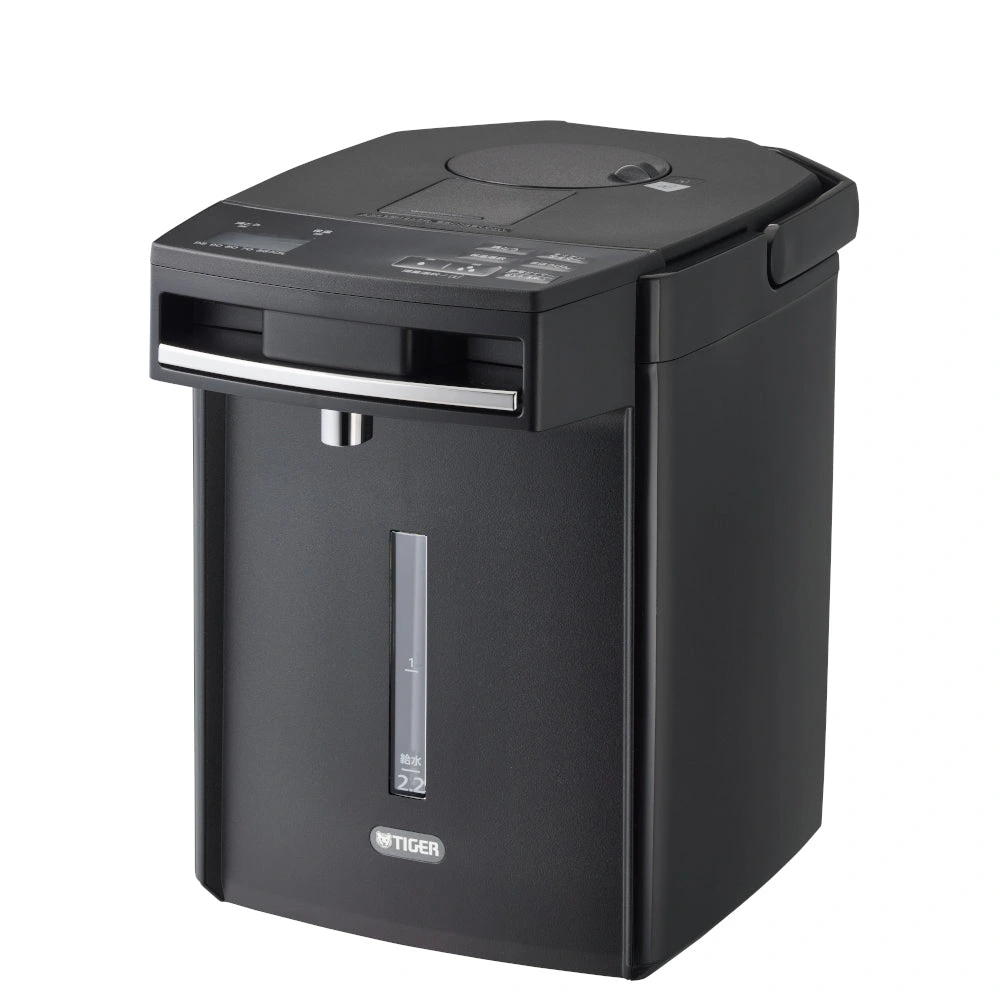
No steam plume: making room for Tiger PIM-H in a small kitchen
Story & products
In a small kitchen, a hot-water pot can cause two familiar problems: steam from the spout softens the underside of a wall cabinet, and a bulky pot leaves only a palm-width of counter for chopping. Rental kitchens often hang cabinets low and skimp on outlets. Those petty limits decide whether you can make cup noodles in the morning more often than “should I buy another kettle.”
Tiger’s steamless VE electric thermos pot PIM-H comes as 2.2 L PIM-H220 and 3.0 L PIM-H300, both in Urban Black. The official specifications list about 700 W; 2.2 L roughly 21.8 × 30.8 × 27.9 cm and about 3.3 kg; 3.0 L about 31.9 cm tall and about 3.6 kg; made in Japan; open price. A steam catcher cools boil-off into droplets and returns them inside—no plume outside. The VE high-vacuum double wall, Tiger says, still holds about 90 °C or more roughly two hours after you unplug.
Measure the space before choosing a capacity
The PIM-H is about 21.8 cm wide and 30.8 cm deep. The 2.2 L model is 27.9 cm tall; the 3.0 L is 31.9 cm. These are body dimensions, not the clearance needed for safe placement. Leave space as required by the manual instead of fitting the pot tightly beneath a cabinet.
Tiger’s steam catcher cools vapor into droplets and returns them to the inner container. That feature does not permit close placement against walls or furniture. The manual says to avoid those locations and to pull out a cabinet’s sliding shelf so steam cannot hit surrounding objects. This is a Japanese 100 V model; follow its stated power requirements. Both capacities come in Urban Black.
From VE insulation to two pour speeds: unplug at night, don’t babysit the pot
VE means Vacuum + Electric. Tiger stresses a high-vacuum stainless double wall that keeps heat with power off; about two hours after unplugging, still about 90 °C or more. Eco mode can set hold at 98 / 90 / 80 / 70 °C and stop heating at the set point; after two hours without key presses it drops about 5 °C further. Standby consumption is listed as 0.0 W. 2.2 L: about 0.61 kWh/day, 221 kWh/year. 3.0 L: about 0.70 kWh/day, 255 kWh/year.
Water can be dispensed electrically or by air pressure. With power connected, the wide front lever can be operated from either side, at a fast or slow rate. Electric pour meters milliliters on the LCD—fewer bad guesses for noodles or coffee. Unplugged, air dispense still works. Auto lock, boil-dry cutout, tilt / tip leak limits, child lock. A backlit water gauge reads the remaining water at night.
The useful questions are how much counter space is available, how long the water stays hot after unplugging, and whether the dispensing controls suit your routine.
Does it earn its counter space?
At about 21.8 cm wide, PIM-H combines vacuum insulation with two electric pour speeds. It may suit a compact kitchen if its required clearance and Japanese 100 V power supply can be accommodated. Steam control is a feature to consider alongside those conditions, not permission to fit it against a cabinet.
If weekday drinks and late-night noodles become easier to prepare, the pot earns its counter space. If it is only for photos, even a steamless body is another black shell taking up room.
Keeping Quiet
Story & products
Finish a half marathon and still want more miles. Mention training for a 50K and get a frown: “Why would you do that?” Bring up a hundred-miler and hear how awful the logistics would be, how it would not be worth it. Name the real dream, Moab 240—the 240-mile ultra near Moab, Utah—and the response can feel closer to disgust.
That is where a public post in Reddit’s ultrarunning community begins. The poster knows the dream race would be a massive challenge, probably a sufferfest. It is also in one of their favorite places in the country. People may not mean to hurt them, but the reactions have become tiring. They have stopped telling almost everyone except their partner about training and goals.
Keeping quiet does not remove the desire to run. It changes who gets to hear about it. This is one discussion, not a census of partnerships or running communities, and not a prescription to enter a 240-mile race. Its useful question is more immediate: whose understanding does a runner need, and how much?
More miles, and someone to share them with
A half marathon, a 50K, a hundred-miler and Moab 240 are not interchangeable to a listener. Someone who understands a weekend run may be baffled by an ultra. Someone who understands fifty kilometers may struggle to imagine 240 miles. Calling all of it passion does not close that gap.
The poster is missing more than applause. There is nobody to pace, nobody to crew, nobody even for a one-mile jog. Their partner offers support but does not run or understand the why. Lately the loneliness has felt heavier.
They did try a running group for a few weeks: an hour and a half each way for thirty-five minutes of running. “Find a community” sounds different when it means three hours on the road. Community has a cost in time and geography; naming that cost does not mean refusing company.
Support also comes in different forms. Encouragement, an occasional appearance, a short run together, crewing a race and understanding a long-term ambition ask different things of people. Expecting a partner to provide all of them can make incomprehension feel like betrayal. Telling a lonely runner they need nobody is not much of an answer either.
Stop explaining, then choose where to speak
One commenter recalls asking an old-school ultra legend in Silverton, Colorado, for advice. The answer was blunt: friends and family do not care and cannot fathom the mileage, so stop telling them. This is a commenter’s account of a conversation, not a verdict on every family. It points to a familiar problem: detail offered to people who have no experience to attach it to.
Another commenter puts running alongside other hobbies. Asked about the weekend, say you ran a race, perhaps mention the distance, and let further questions lead. Nobody needs the fueling strategy and pacing chart unless they ask. Even ten kilometers a day can be hard for an outsider to grasp, let alone a two-hundred-kilometer goal. One runner says a weekly total of seventy can astonish a running group too; the comment does not specify a unit.
Not understanding and being rude are still different things. Some commenters object to “I hate running” as the automatic reply to someone sharing a hobby. Others want a clear boundary: lack of interest need not become a dismissive aside every time weekend plans come up.
One runner says their partner crewed twice, then stopped; going alone turned out to work more efficiently. Another is happy with family showing up occasionally and cheering a little. They used to have their child bring a book rather than watch every moment. These are arrangements people found for themselves. They do not make either solitude or wanting company a moral test.
Community has doorways—and travel time
A practical suggestion runs through the replies: volunteer at nearby ultras. Some races offer entry discounts or credits, and volunteers meet others with similarly consuming interests. People suggest meetups, running groups, or starting a group where none exists. One commenter can barely remember life before running friends: within that circle, Moab 240 is a perfectly normal subject.
The possibilities depend on time, local events and manageable travel. One volunteer shift cannot promise an end to loneliness, and it cannot erase the poster’s ninety-minute drive. The poster still hopes that entering more races will gradually lead to a community.
Some runners call themselves deviants or misfits, people living in another world who recognize each other on race day. That can express affection and relief. It can also become superiority if everyone outside the circle is dismissed as lesser. The value of finding your people is that everyone else no longer has to understand.
Among the hundred-plus comments are runners who enjoy the solitude, but wish their partners did not think running was stupid. One response to accusations of wasting time is to compare phone screen time with running hours. Another commenter thinks people often hate running because they rarely do it, and might surprise themselves after three months. These are opinions and personal experiences, not a training guarantee or a ranking of worthwhile hobbies.
“Because I want to”
One reply reduces the exchange to two lines: “Why are you running a 50K?” “Because I want to.”
It separates explanation from permission. A runner can explain, ask for advice and seek company without making unanimous approval a condition of wanting to continue. That short answer does not replace an honest assessment of health, schedule or race preparation.
Keeping quiet and seeking community can happen together. Spend less energy explaining the details to uninterested listeners; leave some for people who might run or volunteer alongside you. The Silverton advice addresses the first part, the invitations into community the second. Keep only the first and silence becomes an ending. Keep only the second and the practical cost of belonging disappears from view.
The next conversation may still bring a frown. The running group will not automatically move closer. Independence can begin with keeping the distant goal and deciding whom to tell today, and how much. When you want to speak again, look for someone willing to hear it.
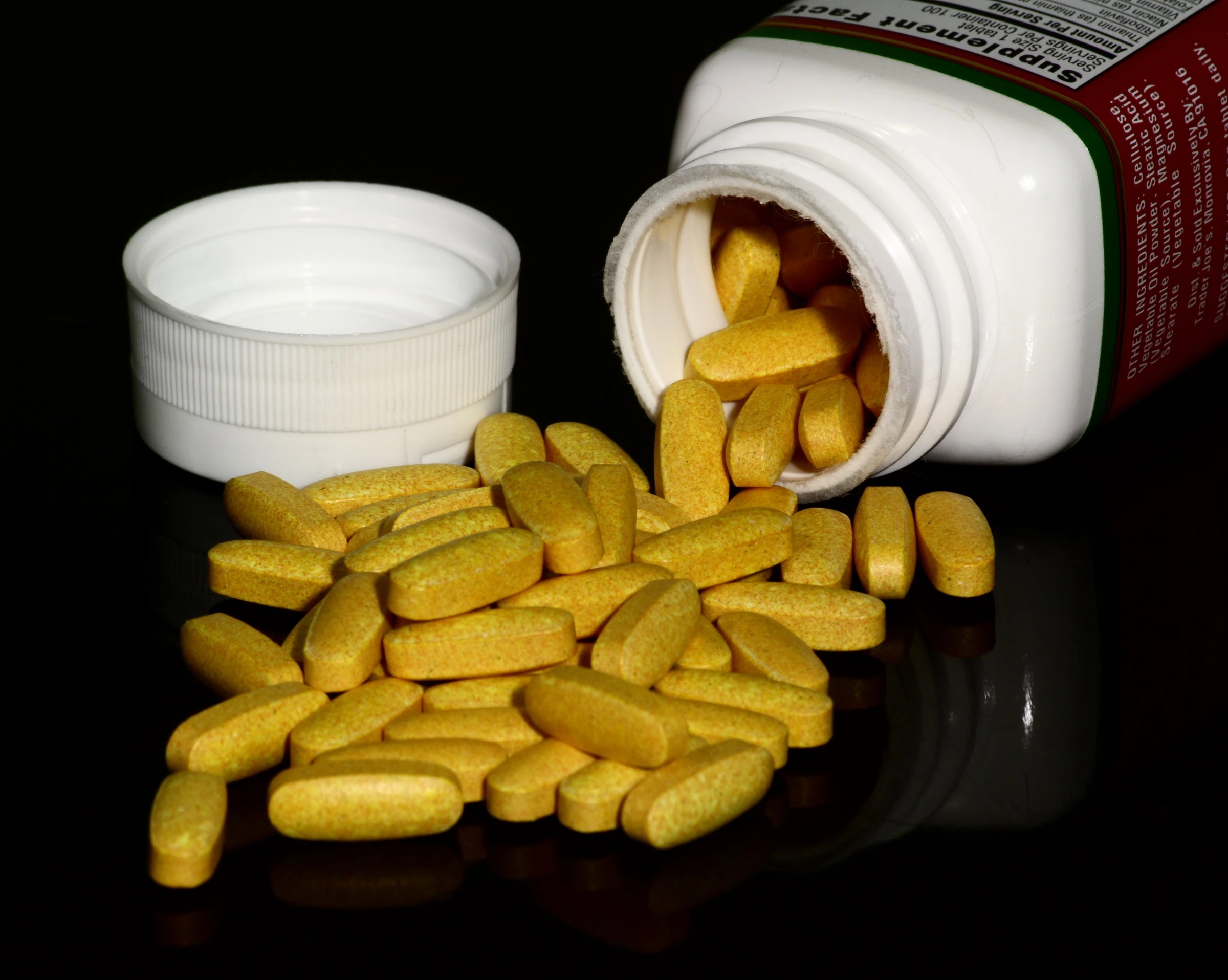
The Missing Slot
Story & products
A screenshot circulating in health discussions describes a peculiar fantasy. You collapse on the street, are rushed to hospital, and undergo a pile of tests. They find a severe deficiency in one vitamin. You start taking it and become the happiest, cleverest person alive, because every problem had come from that single lack.
The discussion starter asks what was the closest thing you found to “the vitamin.” It is an appealing question for anyone still looking for an explanation for feeling awful. Perhaps something has been missing all along.
This article follows the discussion summary supplied with the manuscript. The recovery stories are personal accounts, not diagnoses for other readers or endorsements of a supplement brand, clinic, or hormone protocol. The replies describe different circumstances, from everyday habits to tests and treatment.
Sleep comes first for some
The top-voted commenter in the summary puts sleep first, followed by water, exercise, and meditation. Keto brought anxiety; adding carbohydrates back helped a lot. Another person adds sunshine and genuine friendship. Someone else says water resolved their back pain, fatigue, and itchiness. Prioritizing sleep above almost everything also appears among the replies.
These answers are ordinary compared with the screenshot's promise of a single discovery explaining an entire life. They still deserve a place in the conversation. Fasting, meditation, and community appear too, as experiences to consider in their own circumstances.
Talking about sleep does not erase a deficiency found through bloodwork. Finding an abnormal result does not make everyday habits irrelevant either. Keeping both in view makes it harder to turn health into a contest to find the next bottle.
What was taken, and how
The iron replies bring more detail. One commenter explains their experience in terms of iron helping get oxygen to the brain, adding that life is difficult when the brain lacks oxygen. Another says they tried oral iron for a year without any improvement in their levels. An iron infusion was, in their words, basically the fantasy in the post.
A reply in the same discussion insists that iron pills should be prescribed by a doctor, because taking too much can do real harm. Someone else reports feeling better than ever after a few weeks of prenatal vitamins following an anemia diagnosis.
Copying only the name of the supplement leaves much of those accounts out. A year without improvement matters, as does the eventual change in treatment route. Absorption, measured levels, and follow-up cannot be reduced to a claim that iron works.
Another commenter describes vitamin D3 and B12. They had severe brain fog and constant tiredness despite sleeping for many hours. Blood tests found deficiencies; after several months on the doses they described, the fog and tiredness were gone and they woke feeling fresh. Methylfolate with B12 and B12 injections appear in other replies.
Each story has conditions attached. Hearing that someone felt better after correcting a measured deficiency is useful. Copying their dose skips the question of what is causing your own symptoms. The tests and medical advice belong to the recovery story too.
Beyond vitamins
One commenter writes TRT, or testosterone replacement therapy, then adds, “I was cooked.” Another describes reaching their forties and watching testosterone fall from the 500s to the low 200s over several years despite going to the gym and lifting. Life was objectively amazing, yet they felt strangely depressed and run down. TRT felt like the missing piece being reinserted, bringing back their old self.
That commenter also suggests hormone therapy for men and women may be among the greatest anti-aging tools available. That is their view. The numerical change and subjective recovery can be recorded without turning the account into a reason to self-start hormones.
The replies become more varied. Someone mentions Adderall. Another describes discovering a rare autoimmune disease behind a pile of problems, adding that a metabolic or weight-related prescription was “pretty nice too.” Sleep-apnea treatment appears as well.
A commenter using Dupixent says their hands visibly healed within days and their fingerprints returned, though they still did not know the exact autoimmune diagnosis. Another attributes hives, digestive trouble, and nerve-related problems to an allergy or sensitivity to Annatto extract. Someone says a carbon-dioxide meter explained seven years of feeling awful.
Other answers name levothyroxine, or antidepressants alongside exercise and community. One person says acetyl-L-carnitine, ALCAR, at 1 g/day made them feel more like themselves. Another pairs TRT with Adderall but adds that they still need a CPAP machine and are fighting with insurance.
Jokes about “superpowers” strike some readers as excessive; others hear a motto they need. The jokes can stay jokes. They do not remove the different diagnoses and prescription paths behind these answers to the same question.
Why the screenshot keeps returning
Some commenters are tired of it. One says a search turns up about twenty near-identical questions using the same screenshot. Another says the post appears roughly once a week; someone calls dibs on next week. A link to an older version in another supplements discussion comes with an accusation of karma farming. Those are reactions within the thread, not verified findings about an account's behavior.
The recurring question offers a simple hope. Something identifiable might explain a long period of feeling bad, and perhaps it can be corrected. Once people start answering, however, they bring back the details of sleep, test results, and their own experiences of care.
Independent judgment means distinguishing those experiences from your own circumstances. Someone who improved everyday habits and someone who found a deficiency can both have something worth saying. The symptoms, tests, and follow-up are more useful to notice than a treatment name alone.
Wanting an explanation is understandable. Believing one deficiency must explain everything is a further step. Someone else's missing slot can prompt a question; it cannot perform your medical assessment or authorize megadosing iron or starting hormones on your own.
The content of this article is only for viewing, reflection and your own judgment. It is not an instruction manual. It is simply a part of what exists in the world.
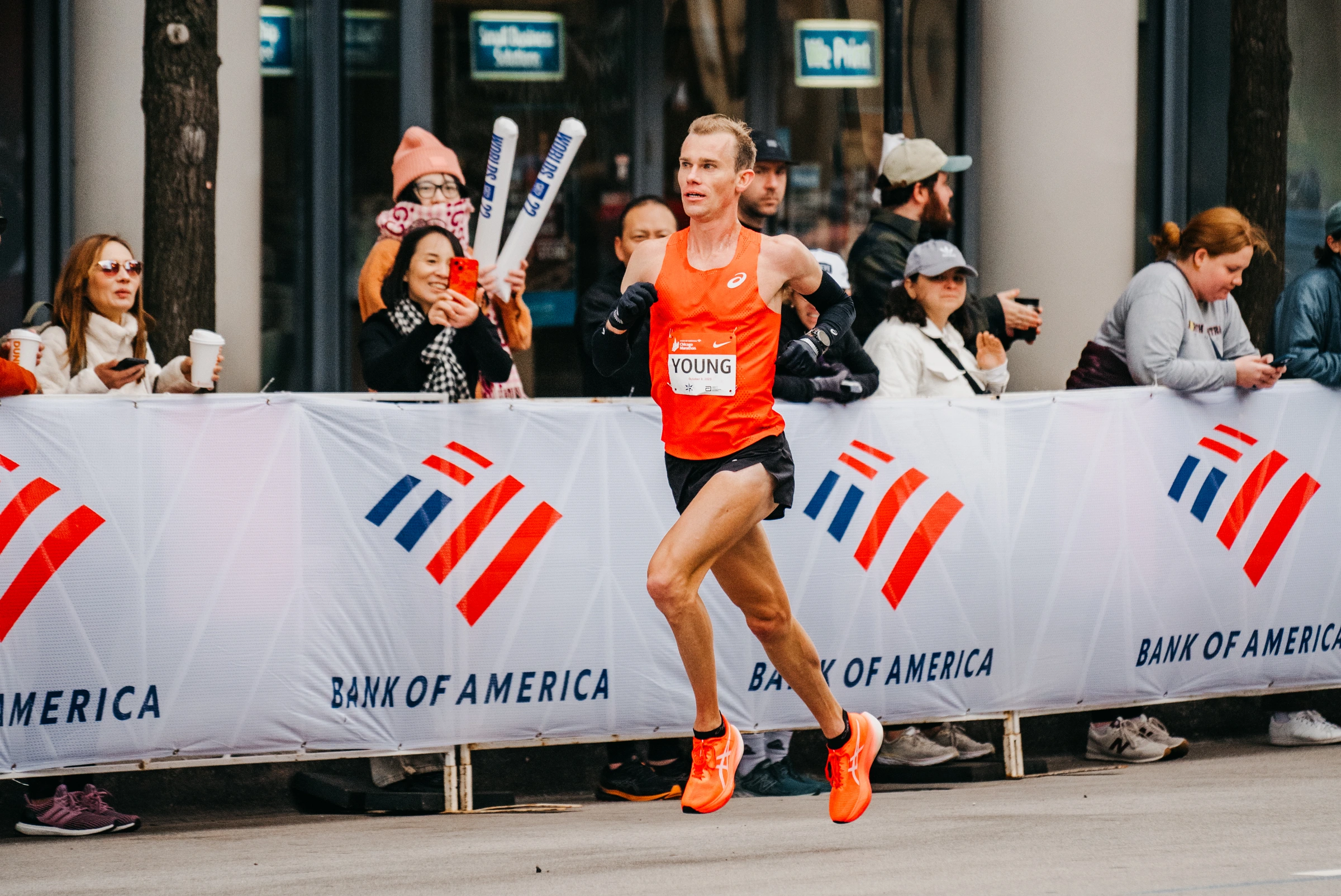
Beyond the Scan
Story & products
Clayton Young ran 2:05:23 at the 2026 Chicago Marathon, finishing as the top American. When Race Week | Chicago 2026 Marathon Build: Episode 6 appeared, the discussion quickly moved beyond the result. Viewers argued about his hamstring injury, what imaging could establish, and how the documentary presented the build.
The discussion title quoted Young: “I don’t want to be a proponent for people running through injuries… we’ve taken a very methodical approach”. That qualification deserves to be heard alongside the personal best. Reducing the story to a successful act of willpower leaves out the approach he was trying to describe.
This article draws on that public discussion and public biographical entries. It considers how people interpret an athlete’s experience; it does not diagnose Young or offer a plan for racing injured. Nor does it endorse a shoe brand, clinic or documentary channel. Viewers do not have his complete medical record.
The person behind the result
Young’s public biography lists a 1993 birth in Clovis, California, a hometown of American Fork, Utah, and residence in Springville. He is coached by Ed Eyestone. His background includes BYU, a master’s in engineering and work as an engineer at Stryker. He moved from Asics to Brooks in 2026.
His results have their own dates: ninth in the marathon at the 2024 Paris Olympics, ninth at the 2025 World Championships, and a half-marathon best of 1:00:52 in Houston in 2025. Chicago’s 2:05:23 became his marathon personal best in 2026.
A résumé helps place the performance. It cannot certify the wisdom of every injured start. One commenter joked that methodical discipline separates professionals from people who would tape an injury up and pray. The joke catches a real gap in what viewers can see. The finish time is public; the decisions leading to it depend on an individual training history, symptoms and medical follow-up.
What the commenters disagreed about
One argued that a small intra-substance hamstring tear might show on imaging while its severity remained “subclinical”, reasoning that a substantially symptomatic tear would not allow that mileage and those workouts. Another challenged the term immediately: imaging had been ordered because there were symptoms, potentially reproducible in an examination. A further reply distinguished tightness from a second-degree strain or partial tear, mentioning severe pain with contraction.
Those are competing comments, not a settled diagnosis. An imaging description, symptoms and tolerance of training load are different pieces of information. The word “tear” alone does not tell a reader what happened in full, much less how to manage their own training.
Some recalled Young repeatedly saying before the race that running did not hurt and was safe. They thought the documentary made the injury seem more dramatic than he did. Another commenter questioned a recent clinic partnership alongside the story of a “miraculous” 2:05 with a torn hamstring. That suspicion remains an opinion from the thread, not an allegation verified here.
Other comments drew on ordinary running experience. One suggested that many people tweak a hamstring and recover within a month, in time for race day. Another described racing with something that feels wrong but still functions as a gamble: sometimes the result makes it seem worthwhile; sometimes compensation leads to a succession of problems and six months out. A comment about hip discomfort contrasted a harmless taper niggle with a possible femoral shaft stress fracture and urged getting it checked. These views explain the range of concerns. A month or six months should not be read as a general recovery schedule.
The film and the performance
Reactions to the documentary were blunt. Some found the dramaturgy embarrassing: he ran a good marathon, one joked, rather than landing barefoot on the moon. Others disliked some production choices but saw no obligation to watch. Fans said the films made them excited to work harder at their own training.
The result prompted another argument. A commenter who expected another American to beat Young admitted being wrong and praised him after a difficult build. Others doubted an American record was realistic, placing Conner Mantz and other contenders ahead of him. Replies argued that better weather, someone to chase or a different racing situation might have yielded the thirty-odd seconds they were discussing. That remains a counterfactual, not a performance already achieved.
Even his shouted encouragement divided people. Some found it cringe; others accepted it as a motto that worked for him. Enjoying the production and valuing a 2:05:23 marathon need not be the same decision. A viewer can dislike the editing and still recognize the run, or enjoy the film without treating it as an injury-management guide.
Beyond the scan, several questions remain distinct. An injury account needs the context of symptoms and medical assessment. A race has a result. A documentary has a style that some viewers like and others do not. Collapsing them into one verdict makes it easy to turn an individual experience into a training script for everyone.
Young’s reluctance to promote running through injury belongs beside his personal best. Readers can take motivation from the film and still question its presentation. Decisions about their own training or next start require their own circumstances. Someone else’s successful race cannot make that judgment for them.
The ideas expressed in this article are for observation, reflection and personal judgment. It is not an instruction manual; it is simply one part of the world that exists.
Rebound Line
Story & products
A poster in Reddit’s Biohackers community shared fat readings from several extended fasts. Each before-and-after pair shows a striking drop. Then he adds the detail that makes the series harder to package into a success story. His visceral fat always returns to about 0.6–0.7 lb.
That return belongs beside the drop. Stopping the account on the last day of a fast leaves out what happens after food comes back.
The starting point matters
For his seven-day fast in November 2024, he reports total fat falling from 21.4 to 16.8 lb, a 4.6 lb drop of roughly 21%. Visceral fat fell from 0.62 to 0.21 lb, down 0.41 lb or about 66%. In the nine-day fast of February 2025, total fat went from 19.0 to 15.2 lb, down 3.8 lb or about 20%; visceral fat went from 0.61 to 0.24 lb, down 0.37 lb or about 61%.
The post also labels two ten-day sets Aug/Sep 2025. In set A, total fat went from 23.9 to 18.4 lb, down 5.5 lb or about 23%, and visceral fat from 0.62 to 0.37 lb, down 0.25 lb or about 40%. Set B shows 24.2 to 19.0 lb for total fat, down 5.2 lb or about 21%, and 0.70 to 0.42 lb for visceral fat, down 0.28 lb or about 40%. Those dates and groupings are the poster’s.
His reading is that total fat drops about a fifth while visceral fat falls forty to sixty-plus percent. He thinks metabolically active fat may go first. Yet the two ten-day bouts had the smallest percentage drops in visceral fat. He offers adaptation or resistance to fasting as possible explanations, while acknowledging DEXA variability. These observations do not separate those possibilities.
He describes himself as about 160 lb and 6'1", metabolically healthy and without extra weight. That context limits what anyone else can infer from his numbers.
What the decimals leave open
A highly upvoted commenter points out that DEXA estimates visceral fat through an algorithm and questions using it for comparisons this fine. The comment argues for watching larger trends. It does not establish that every scan is useless.
Another commenter discusses BIA and InBody readings, arguing that water and gut contents can complicate apparent changes. They describe their own nine-day fast, when a scale’s visceral-fat indicator dropped two points and returned within a week of refeeding. That is a separate person’s experience with a different kind of measurement, not another row in the poster’s DEXA results.
Then comes the muscle question. How much was lost? One commenter favours a slow deficit of about 10%, lifting and high protein over relying on fasting alone. The thread supplies questions and alternatives, not a controlled comparison that settles which approach wins.
The eating between fasts counts too
The poster says he felt fine during ten days without food and calls fasting a skill, like going to the gym. His first extended fast was difficult, particularly mentally; now he feels accustomed to it. That describes his experience, not what another person can safely tolerate.
He also admits that the calorie surplus between fasts has not worked as hoped. He wanted muscle, but says he has gained body fat instead and calls it work in progress.
A commenter estimates that roughly 6 lb of fat returned between the two ten-day sets and questions the size of the surplus. Their discussion of an extra 700–1000 kcal a day is an inference, not a verified daily food log. Their more pointed response is that eating is a skill too; the willpower used to avoid food could also be used to moderate a bulk.
Others ask why the starting fat readings appear higher after repeated aggressive fasts. One says it sounds like disordered eating. That expresses concern; a comment cannot diagnose the poster.
Another argues for a sustainable routine, mentioning a balanced diet, avoiding overall fat gain, progressive lifting four or five times a week without a surplus, roughly 150 minutes of Zone 2 cardio, sleep and stress management. Someone else stresses long-term maintenance rather than a two-week window. These remain positions in the discussion, not a programme prescribed to the reader.
Keep the return in the record
What makes the post useful to me is that the author leaves in the inconvenient parts. The rebound stays. So does the admission that gaining muscle has not gone well. Readers can ask more useful questions because those details have not been edited out.
The return to 0.6–0.7 lb prompts speculation about a set point. Smaller drops after ten days prompt questions about adaptation and measurement noise. The record cannot yet settle those explanations. It does not show that another ten days will permanently clear visceral fat, or that every form of fasting is pointless.
This is an account of one public self-report and the debate around it. Nutritional status, medical circumstances and disordered-eating risk matter when extended fasting is discussed. The numbers and feelings here are not personal medical advice. What happens after refeeding, what happens to muscle, and whether the measurements are comparable remain worth asking about.
The content of this article is only for viewing, reflection and your own judgment. It is not an instruction manual. It is simply a part of the world that exists.
Chase Shadow
Story & products
How many times can a chase scene bear rewatching? A Reddit post titled District B13 offers a clip of David Belle and just one line, “Little David Belle today!” The supplied account records roughly 885–888 upvotes and 51 comments. Those are a snapshot, not fixed totals. The replies move between affection for Belle, continuity complaints and memories of discovering parkour.
The figure people keep returning to
The top comment (~107) writes: David Belle everybody. What a legend. Someone writes (~2): it didn’t matter who you were or where you lived—if you did parkour you had seen this a million times, and it still never gets old watching Belle move—an icon. Someone else (~2): Little David Belle was on another level—fluid, fearless, making impossible jumps look effortless. Someone calls it their parkour awakening (~1); someone says David was one of their parkour teachers (~1).
How did the pursuers get there?
A comment with about 40 upvotes says the chase from the chasers’ POV makes zero sense—he jumps down a storey and they’re suddenly behind him; he swings to a balcony and again they’re suddenly behind him. Someone adds (~3): he jumps into a random stairwell with no way they could know which he entered, and they’re already there. Someone answers at once (~18): Shhhhh. Just enjoy. (I had never noticed this.) Someone else (~2): one reason they’re not into many movies is that most become unrealistic or illogical at some point and lose them.
Put Jackie Chan beside the claim
Someone writes (~24): that chase is absolutely wild—still one of the most creative and intense action scenes ever filmed. Someone asks best chase in movie history (also with parkour)? Nah, Jackie Chan movies exist (~8); someone immediately answers with Drunken Master / Rumble in the Bronx (~4). Someone writes (~28): fuck I’m old—when this came out, me and my buddy watched it like ten times a day. Someone writes (~13): can’t believe we didn’t see more parkour chases after that; someone answers (~3): they set the bar so high it may not have felt possible to do more. Someone calls the underbar through the gap above the door chef’s kiss (~3); someone says that first jump onto the tiny window gets them every time (~1); someone asks what’s with the convenient rope (~1).
From the screen back to training
A commenter (~31) writes: personally loves the Casino Royale opening—the juxtaposition of Bond as a ruthless hunter with no finesse, only brute strength, against who he is chasing; encapsulated when Bond shoulder-checks drywall after the villain delicately slips through the gap. Someone else (~3) kind of prefers the Bond who just walks through walls as an absolute unit. Someone writes (~6): this film plus Jump London got them into parkour; and clarifies it’s often just District 13—no B—the B13 was an abbreviation of the French poster Banlieue 13; English posters sometimes used D13. Someone adds the sequel Ultimatum (~19); someone adds the remake with Paul Walker and David Belle—Brick Mansions (~6). Someone asks if you’ve ever passed out to this with the crew after training all day before getting up to do more (~4); someone wonders how his knees are in 2026 (~4); someone says watching makes them nervous for ankles—one wrong landing and ouch (~1). One commenter adds that Chuck’s first episode stole the whole chase (~1); someone mentioned Luc Besson (~2)—a comment, not an established directing credit; someone side-notes Prince of Persia stunt work (~3)—a comment about stunt work, not a claim that he directed the film.
These memories give the clip a life beyond a ranking of the greatest chases. A viewer can love Belle’s movement and still notice the conveniently placed rope. Naming a continuity problem need not settle whether everyone else should enjoy the scene.
The remarks about Chuck and Prince of Persia remain commenters’ claims. Mentioning Luc Besson does not establish a directing credit. Questions about knees and ankles are reactions, not assessments of anyone’s health. This is one discussion of films, sequels and remakes, with no claim to represent every parkour practitioner.
Rewatching, comparing and disagreeing are all available to the viewer. Reproducing a window-ledge jump is a different decision. The ease of a screen performance cannot replace training, protection or a proper assessment of the location. “Ten times a day” and “that makes my ankles nervous” can coexist. A remembered scene is no licence to attempt a dangerous landing.

Abs in half an hour lying down? What is Emsculpt Neo selling?
Story & products
“Build muscle and lose fat while lying down” is a familiar aesthetic-treatment pitch. Emsculpt Neo, from Czech company BTL, belongs to this category of non-invasive body contouring. I compared the manufacturer's descriptions, clinical research and independent commentary to understand what it changes and what those percentages measure. Local contours, body weight, long-term training and metabolic health are separate questions.
One applicator, two forms of energy
Emsculpt Neo combines high-intensity focused electromagnetic technology, HIFEM, with synchronized radiofrequency, RF. The first induces muscle contractions; the second heats local tissue. According to the manufacturer, RF warms the muscle and brings subcutaneous fat to roughly 42–45°C, while electromagnetic stimulation produces what it calls supramaximal contractions. Changes following fat-cell heating develop over subsequent weeks and months. This explains the manufacturer's proposed mechanism, not the result any individual can expect.
The original Emsculpt primarily uses electromagnetic stimulation; Neo adds synchronized RF. BTL describes sessions of about 30 minutes, commonly four sessions spaced roughly five to ten days apart. Listed areas include the abdomen, flanks, buttocks and thighs; its contouring page mentions people with a BMI up to about 35. Actual treatment areas and indications depend on local authorization and assessment.
The manufacturer describes intense contractions and warmth, likening the heat to a hot-stone massage, and says downtime is generally unnecessary. Some accounts mention soreness afterward. Experiences and tolerance vary; “no downtime” does not mean nobody will feel discomfort.
Percentages and millimetres measure different things
BTL highlights about 25% muscle growth, 30% fat reduction and 87% patient satisfaction. These are results from research cited by the manufacturer, not maximum effects or individual guarantees. A 30% reduction does not mean losing 30% of body weight or a guaranteed change in waist size.
An upper-arm MRI study by Jacob and colleagues enrolled 34 participants for four weekly, 30-minute bilateral treatments. Among 28 participants assessed at one month, mean muscle thickness increased about 21.5% and fat thickness decreased about 22.3%. Among 25 assessed at three months, the respective changes were about 23.9% and 25.5%. Body weight was essentially unchanged. These measurements concern local tissue thickness, and fewer people completed follow-up than initially enrolled.
An independent review pooling Emsculpt and Emsculpt Neo literature reported abdominal imaging changes on the order of 5.5 mm less fat thickness and about 2 mm more muscle thickness. Its author questioned photographic effects, measurement methods, sample sizes and manufacturer relationships. Converting striking percentages into millimetres helps put their possible scale in context.
A later independent commentary also discussed equipment costs and cited a historical suggested patient charge of about US$3,400 for four treatments. That is pricing information in the literature, not a current Chinese clinic quote. A photograph after treatment cannot establish how long an effect lasts or whether further sessions will be needed.
Contouring and rehabilitation have different indications
In October 2024, BTL announced additional FDA clearance involving rehabilitation uses of neuromuscular stimulation in the limbs, including prevention of disuse atrophy, muscle re-education and maintaining or increasing range of motion. Additional rehabilitation indications do not mean the FDA guarantees every contouring claim.
The FDA explains that non-invasive body contouring is not intended to treat obesity or reduce body weight. Pregnancy, implanted electronic devices, metal or other implants near the treatment site, and local skin problems should be disclosed during assessment. Risks and contraindications differ by technology. The specific device instructions and professional assessment matter; one online exclusion list cannot serve all three machines.
Comparison one: CoolSculpting cryolipolysis
CoolSculpting includes different devices, such as Elite. It uses cryolipolysis to address local fat bulges, with changes developing over subsequent months. Its official material has cited a small study of ten people showing up to roughly 20–25% reduction in the treated fat layer at two and six months, with six participants represented at six months. It does not itself build muscle.
The experience can include suction, cold and subsequent numbness. Redness, swelling, soreness or altered sensation may persist afterward. Official safety information also lists paradoxical adipose hyperplasia, PAH: a firm, enlarged fat bulge can develop in the treated area and may require surgery. Estimates vary with studies and counting methods. “Rare” does not mean impossible.
The American Society of Plastic Surgeons' average fee for non-surgical fat reduction covers multiple treatments; it cannot be treated as a complete CoolSculpting quote for a particular body area. As of 28 October 2026, this article has not verified mainland Chinese clinic prices that match a specific device, area and course of treatment.
The comparison with Neo is straightforward. CoolSculpting focuses on fat contours; Neo promotes changes in both fat and muscle. Suitability still depends on the person's tissues and assessment. Wanting more visible abs alone does not determine the choice.
Comparison two: Cutera truFlex electrical muscle stimulation
Cutera's truFlex, previously called truSculpt flex, uses Multi-Directional Stimulation, MDS. Pads deliver electrical stimulation through a different route from Neo's electromagnetic technology. The official site describes sessions as short as about 15 minutes, with different stimulation modes and coverage of multiple muscle groups, mainly for sculpting the abdomen, buttocks and thighs.
truFlex does not incorporate synchronized RF fat reduction into the same treatment. Cutera pairs it with a separate truSculpt RF device when presenting its truBody approach. A two-device plan should not be understood as one device's price or treatment schedule.
Patient-platform price ranges and maintenance intervals mentioned in the supplied manuscript vary by location, treatment area and plan. They are neither a universal price list nor a schedule everyone must follow. Comparable mainland Chinese clinic prices have not been verified here, so the article cannot establish which device is cheaper or more widely available there.
What are these treatments selling?
Neo offers combined effects on muscle and fat in one treatment; CoolSculpting focuses on local fat bulges; truFlex centres on muscle stimulation. Calling them interchangeable alternatives obscures their different targets. The original Emsculpt should also be distinguished from Neo.
These treatments may change local shape, but cannot take care of body weight, fitness and long-term health together. Identifying the actual device model, its locally authorized uses and the total treatment cost is more useful than relying on a headline percentage. This is an explainer about public information for understanding and comparison, not a promise of results or an individual treatment plan.
Sources
BTL Emsculpt Neo https://bodybybtl.com/solutions/emsculpt-neo
Upper-arm HIFEM and synchronized RF MRI study https://pmc.ncbi.nlm.nih.gov/articles/PMC10005810/
Swanson independent commentary https://pmc.ncbi.nlm.nih.gov/articles/PMC11776875/
FDA non-invasive body contouring information https://www.fda.gov/medical-devices/aesthetic-cosmetic-devices/non-invasive-body-contouring-technologies
Cutera truFlex https://cutera.com/us-en/products/truflex/
CoolSculpting FAQ https://www.coolsculpting.com/how-it-works/faq
This article is only for reading, reflection and personal judgment. It is not an instruction manual. It is simply part of the world as it exists.
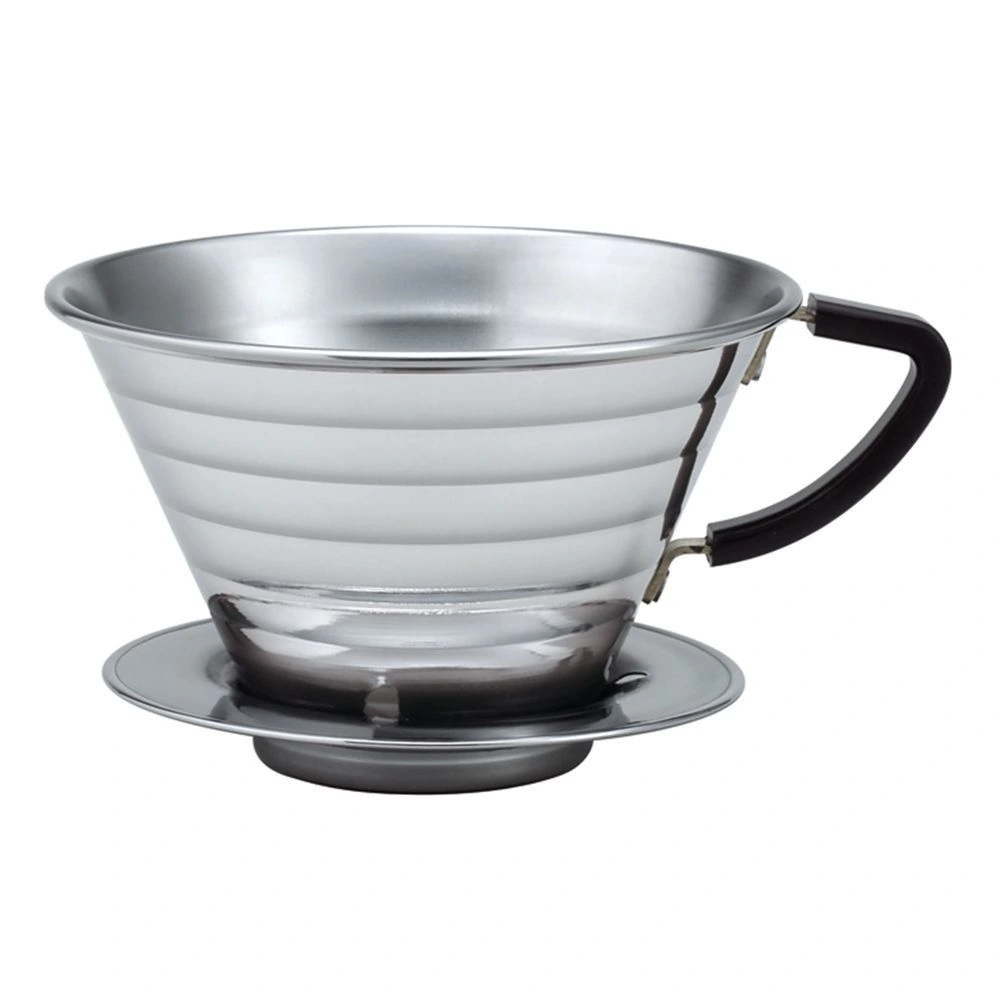
The Steel Discipline of Stripped-Down Desire: Kalita Wave 185 S Stainless Dripper
Story & products
Imagine this scene: late at night, post-training. Cleats are kicked off at the entryway, and only a single, dim overhead light illuminates the kitchen. When isolated, truly great athletes are ruthlessly stingy with their energy. A solitary living space should not have its countertops hijacked by bulky espresso machines that demand constant, tedious maintenance. You need a liquid intake tool that is cold, precise, and entirely devoid of hassle. The Kalita Wave 185 S Dripper is the physical manifestation of this obsessive lifestyle, reducing the acquisition of caffeine from a theatrical performance to a pure, physiological resupply.
Ruthless Stainless Steel Anatomy
Weighing in at 175 grams, this cold, Japanese-made stainless steel (Product Code 05151) rejects all fragile sentimentality. It requires no electrical outlet, and once washed and wiped, it stands stoically on the drying rack, awaiting its next deployment.
Anti-Performative Wave Geometry
Paired with Wave 185 filters, the flat bottom and fluted design enforce a physical regression to the mean. It demands no flashy barista pouring techniques; you simply watch the liquid level. The flat bed and wave filter help guide the water flow; extraction still depends on grind size, dose, and pouring.
Absolute Spatial Restraint
Use it with a suitably sized server or mug that supports it securely. It is designed for 2–4 servings. A solo apartment is not a cafe meant for public viewing; the core doctrine here is "enough to drink, easy to wash, and effortless enough to repeat tomorrow."
L2M Philosophy
The L2M store harbors a deep disdain for cumbersome gadgets designed merely to flaunt a lifestyle. The discipline of elite athletes is often reflected in their physical quarantine from useless desires. This Kalita stainless dripper aligns perfectly with that obsessive pragmatism. It is highly restrained, radiating a cold, masculine, and ascetic charm under solitary kitchen lights—perfectly suited for souls with a pathological pursuit of self-management.

After-Table
Story & products
A runner asks whether everything around a race matters to other people. His own list is training, nerves beforehand, dinner with friends and beers afterward. The supplied account records about fifteen upvotes and thirty-plus comments after cleanup. The replies make room for rather different reasons to keep running.
Some love the routine. Others hate training and love the event. One wants to linger at the finish through golden hour; another celebrates by sitting on the shower floor. Results matter, but they cannot explain all of that pleasure and exhaustion.
This article follows one public post and its comments. It is not a survey of ultrarunners or an endorsement of a race, beer or medal brand. Dinner and beer are things the contributors describe, not reasons to make drinking central to training or to force yourself to socialize when your body needs recovery.
Signing up for the training, or training for the event
One popular reply names the routine of training as the best part. Another calls the race a celebration of all that training. Someone usually signs up to justify heading into the woods for more than four hours on a weekend. A race gives that person a reason to keep doing something they enjoy.
Others like training and usually the race, while caring little about the before and after beyond something to eat. That preference can sit beside dinner with friends without deciding who deserves to be a runner. For one contributor, racing is the icing on the cake. Another says plainly, “I hate the training, love the events.”
A further reply explains the attraction of the event: hours spent concentrating on one purpose without having to think about the rest of life. The days immediately before and after also allow some guilt-free relaxation. People can enter the same race for quite different reasons.
Staying at the finish after a DNF
One commenter describes a first DNF. After bathing and feeling sorry for themselves, they went to the finish to cheer friends and the wider community. They ended up handing out medals and loved it. The unfinished race remained unfinished, but the day still contained something worth staying for.
Another runner is quick enough to be close to podium places and still loves hanging around afterward, especially through golden hour. Caring about performance does not prevent that person from enjoying the time after the clock stops.
Someone else realized during a recent 50k that racing itself mattered less than expected. Dwelling on performance drained the joy from the day. They shifted toward big adventures, keeping the pleasure of training and the satisfaction of doing something difficult while shedding some self-imposed performance anxiety. That is a personal adjustment, not a decision everyone else has to make.
Sometimes celebration means going home
One contributor says they are too wrecked on race day even to look straight, let alone have fun. Another heads straight from the finish to the shower and sits on the floor under the water until they no longer want to stay there.
Those replies add a practical question to the dinner invitation. Wanting company and having the energy for it are different things. Someone else’s willingness to hand out medals cannot require an exhausted runner to stay. A photograph of the celebration rarely tells the whole recovery story.
Fellowship matters differently too. One otherwise shy, quiet runner did most long runs and marathons with a couple of people met early in their running life. They probably completed twenty-five marathons together over the years. The commenter doubts they would have run that many alone.
Another person attended a race three years running despite a four-and-a-half-hour journey. This year most friends cannot make it, so they are not going. That says something about what the trip means to them, without ranking their commitment against anyone else’s.
On the other side of the aid-station table
One commenter enjoys volunteering and cheering almost as much as racing. Choosing between running and supporting friends can be difficult. They once ran a virtual 50k so there would still be time to staff an aid station. Another mostly trains alone and finds community before and after races: talking about preparation, sharing the difficult miles and celebrating together.
That runner particularly values events where people camp near the finish and stay to watch others arrive. Repeated meetings become friendships. Someone else jokes that runners do not have friends. The joke can coexist with the account of twenty-five shared marathons; neither needs to speak for everybody.
After-Table keeps these details in view because they affect whether people want to return. Routine, a meal and time beside the finish all count for something. So do fatigue and recovery. Loving an event does not require pretending to love every training day, and loving training does not require attending every gathering.
When considering someone else’s experience, ask what you want to keep in your own running: hours in the woods, the satisfaction of a hard effort, or another meeting with familiar people. Then consider what your body allows that day. Independent judgment includes accepting different answers and letting your own day end when you need rest.

Red-Light Pages
Story & products
A blogger presents a nightly routine as “THE BEST SLEEP POSSIBLE.” The supplied account records about 85 upvotes and thirty-plus comments after cleanup. Read the post beside those comments and the useful details are the ones the checklist cannot settle. Some readers question the dose. One has followed a similar routine for years and finds it much less helpful now. Others want to talk about eye masks and a consistent bedtime.
This is an account of that discussion, drawn from the blogger’s self-report and the comments. It is not a survey of sleep routines, medical advice, a supplement advertisement or a brand endorsement. The doses and mouth tape described here are not encouragement to copy a high-dose nightly regimen without medical assessment. The vote counts describe the discussion recorded in the supplied material, not community approval of a treatment.
What the blogger’s evening actually includes
The blogger claims to have done a lot of research and offers what he calls the simplest version. His example aims for roughly 8.5 hours of sleep, from around midnight to 8:30 in the morning.
At about 10:30 pm, he takes 5–10 mg of melatonin, magnesium glycinate supplying 400 mg of elemental magnesium, and 400 mg of L-theanine. He also uses mouth tape with the intention of encouraging nasal breathing. Glycine and apigenin are optional additions, with nasal spray on congested nights. From 11:00 to 11:30, he reads whatever he likes under a red light in a dark room. Between 11:30 and midnight he closes his eyes, saying he usually falls asleep quickly.
He stresses the environment too. A window air conditioner brings the room to 60–67°F, about 15.5–19.4°C. A warm blanket matters because being too cold can wake him; the room must also be dark. Circulating only the supplement list leaves out those conditions.
He calls melatonin “soooo fear mongered” and says claims that it damages natural production or lowers testosterone have “no studies” behind them, sometimes suggesting the opposite. Those are his claims. He describes his routine as basic and “isn’t really a lot,” while also writing “this is not medical advice.” Claiming to have researched a routine does not settle how it applies to someone else.
Even the times need untangling. The post says “12 pm”; commenters point out that midnight should be 12 am. Another reader calculates 10.5 hours from 10 pm to 8:30 am, and someone suspects time in bed has been confused with time asleep. That arithmetic deserves attention. A slip alone does not establish whether the routine works.
Correcting the unit does not settle the dose
A top comment, recorded at about 132 upvotes, questions whether 5–10 grams was a mistake. The post as captured already says mg; the blogger replies “you’re right I meant mg.”
Several readers still consider 10 mg high. One says 1 mg works better than 10; another finds 1.5 mg sufficient. Others discuss 1–3 mg and associate higher doses with next-morning grogginess. These remain their accounts, not a dosing table for everybody.
One commenter goes into liver metabolism and literature describing a physiological ballpark of roughly 300 mcg, linking higher doses to daytime sleepiness and enzyme-pathway burden. This article records that low-dose literature was raised in the discussion; it does not turn that commenter’s interpretation into a prescription. Asking about dose is compatible with wanting to improve sleep.
What happens after years of the same routine?
One commenter says “it’ll work until it doesn’t.” They describe years of melatonin, theanine and magnesium glycinate, a cold room and a warm blanket. The combination now helps far less, and both falling asleep and staying asleep remain difficult. The blogger replies that his research found no tolerance studies for the supplements listed. That response was downvoted into a negative score.
The experience alone cannot establish tolerance, and the reply does not resolve the commenter’s present difficulty. Another reader warns against depending on melatonin long-term; someone else says trying it repeatedly wakes them in the middle of the night. Those experiences belong beside the blogger’s report of falling asleep quickly.
Other comments are more ordinary. An eye mask costing about $20 can address light, one reader says, and going to bed at the same time matters more. Someone worries about a late bedtime and deep sleep; another asks how to stop waking after five hours. A reader in metro Phoenix points out what that air-conditioning setting would cost in summer and finds 74°F sufficient. A temperature is easy to put in a checklist. Climate and electricity bills are harder to leave out of real life.
One person describes two months of eating kiwi before bed, mentioning actinidin, melatonin and folate. Another suggests dropping melatonin and taking lower magnesium and theanine doses two hours before bed. Someone reports almost no sleep hygiene beyond making the room as dark as possible, alongside a low-protein, low-carb diet and moka-pot black coffee, yet sleeps well. These are individual accounts, not instructions for arranging another person’s evening. Valerian, peptides and other options also appear in the comments. Their appearance is recorded here without recommending peptides or prescription drugs.
Leaving room for your own judgment
The value of the discussion is that the conditions surrounding the supplements remain visible. Half an hour of reading under a red light, a blanket and a room temperature all belong to the blogger’s evening. The comments add grogginess, changing results and cost. Losing those details makes it easier to mistake one routine for a universal standard.
Taking sleep seriously does not require filling a supplement cabinet. Dose, darkness and regularity can all be questioned without treating caution as a lack of commitment.
Before changing a habit, distinguish whose experience you are drawing on, how long it lasted and how they felt the next day. Leave room for medical assessment and individual differences. “1 mg better than 10” and a $20 eye mask cannot bypass those questions or the concern about long-term dependence. Someone else’s red-light pages still leave you with a judgment to make.
The content of this article is only for observation, reflection and your own judgment. It is not an instruction manual. It is simply one part of what exists in the world.

After-Meal Slope
Story & products
One poster changed a small part of their evening. Instead of sitting on the sofa after dinner, they went for a short walk. After a week they felt good, and asked people who had kept the habit longer what changes they had noticed.
At the time the post had about 115 upvotes, a ratio around 0.99 and a little over thirty relevant comments after filtering. Some replies came from people who had walked for years; others were newer to it. They discussed digestion, the post-meal slump, glucose monitors and dog walks. These are personal accounts, not a decision about anyone else's activity or medical care.
From the sofa to the door
One commenter said walking improved their digestion and “gets things moving.” Another noticed less of the slump that used to hit around eight in the evening, leaving more energy for other things. Someone else reported less bloating and better sleep. The original poster, however, had only tried it for a week.
The time scales differed. One person said they had walked after every meal for six years and could no longer imagine life without it. Another, living near a national park, described a roughly two-mile forest walk after brunch. Someone who had resumed the habit for six months wondered how work had displaced it in the first place.
Is washing dishes the same as walking?
One reply used the German word Verdauungsspaziergang, a digestion walk. Another person wondered whether walking itself mattered or whether being upright and moving, even while washing dishes, might do the same. A long-time walker disagreed with the comparison.
For days when going out is difficult, commenters mentioned calf raises or bodyweight squats; one suggested squats in winter. Another waits five to ten minutes after dinner before taking a slow walk with a dog that stops to sniff. They said they feel less “gross” afterwards than if they had stayed seated. One person joked that more cats now follow them.
The discussion does not settle whether dishes and walking are equivalent. People's ability to go outside, health and schedules differ too.
Whose numbers are they?
One commenter said ten to fifteen minutes of walking could flatten a post-meal glucose spike. Another offered an explanation involving the large muscles of the legs. A 66-year-old wrote that their monitor showed a lower post-meal spike and that, while keeping up the habit and tracking generally, their A1C went from 7.8 to 5.9. That is one person's account involving several habits, not evidence of the same result for everyone.
One reply called the walk almost certain to be a net positive; another showed how work can make a known habit hard to maintain. The monitor trace, the feeling after a short walk and the question about dishes belong in their own contexts. Personal accounts cannot replace medical assessment for injury, medication or individual glucose management.
A week is too early for the original poster to draw a conclusion. Their question is an invitation to hear how others use the time after a meal and consider what fits one's own life.
The content of this article is only for viewing, reflection and personal judgment. It is not an instruction manual; it is simply one part of what exists in the world.
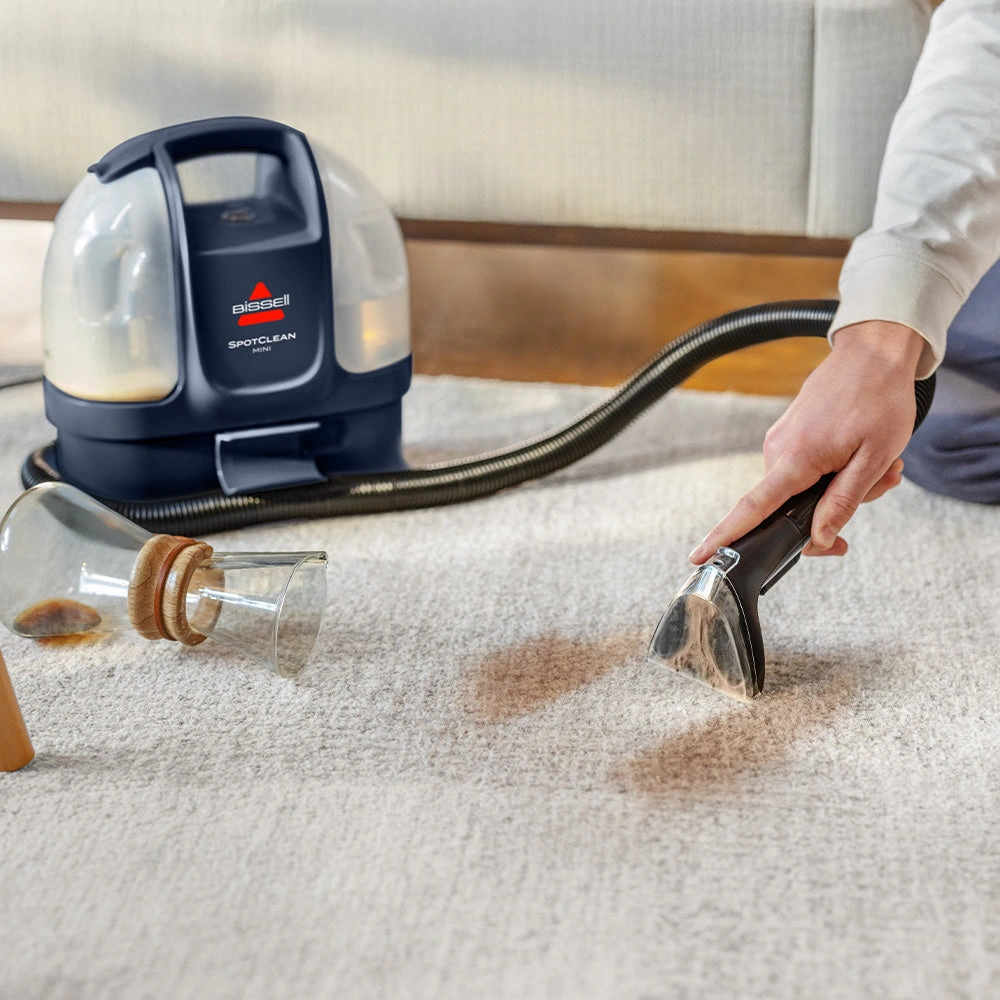
3.4 Kilograms of Wet Pickup: Bissell Pulls Sofa Stains Out of a One-Room Home
Story & products
Living alone, a spill in the sofa seam or pet hair on a cushion may be too small a job to justify a full-size carpet cleaner. Often it is one patch of fabric that needs attention.
BISSELL sells the SpotClean Mini 4103S in Korea for local wet cleaning. It measures about 308 × 343 × 254 mm and weighs 3.4 kg, with a 0.5 L clean-water tank and a 0.4 L dirty-water tank. Rated suction is 12 kPa; the cord is about 3.7 m and the hose 1.3 m. The package includes a 10 cm brush, a pet-hair tool, a HydroRinse hose tool and 236 mL of cleaning formula.
Measure the storage space first
The machine sprays, brushes and extracts water from a small area; it does not mop the whole floor. BISSELL lists sofas, carpets, mattresses, pet beds and car interiors among its uses. Check that the fabric can be wet-cleaned, test an inconspicuous patch and let it dry fully before use. Measure the cupboard or under-bed space before ordering.
The brand recommends spraying room-temperature water around the mark, brushing and making several extraction passes. Its guidance allows water up to 60°C for stubborn grease; protein stains such as milk or urine call for cool or room-temperature water. Too much spray can slow drying. Remove heavy pet hair first to help reduce blockages, and follow the fabric maker's instructions for delicate surfaces.
After the stain, clean the machine
Suction may fall when the dirty tank reaches MAX, so empty it before continuing. The HydroRinse tool attaches to the head and flushes the hose. BISSELL lists operating noise at 74 dB; how loud that feels depends on the room and your distance from it.
The question is whether your home has a suitable place to store it. It cannot promise to remove every stain, but separate tanks and a rinseable hose make it an option for small fabric-cleaning jobs.
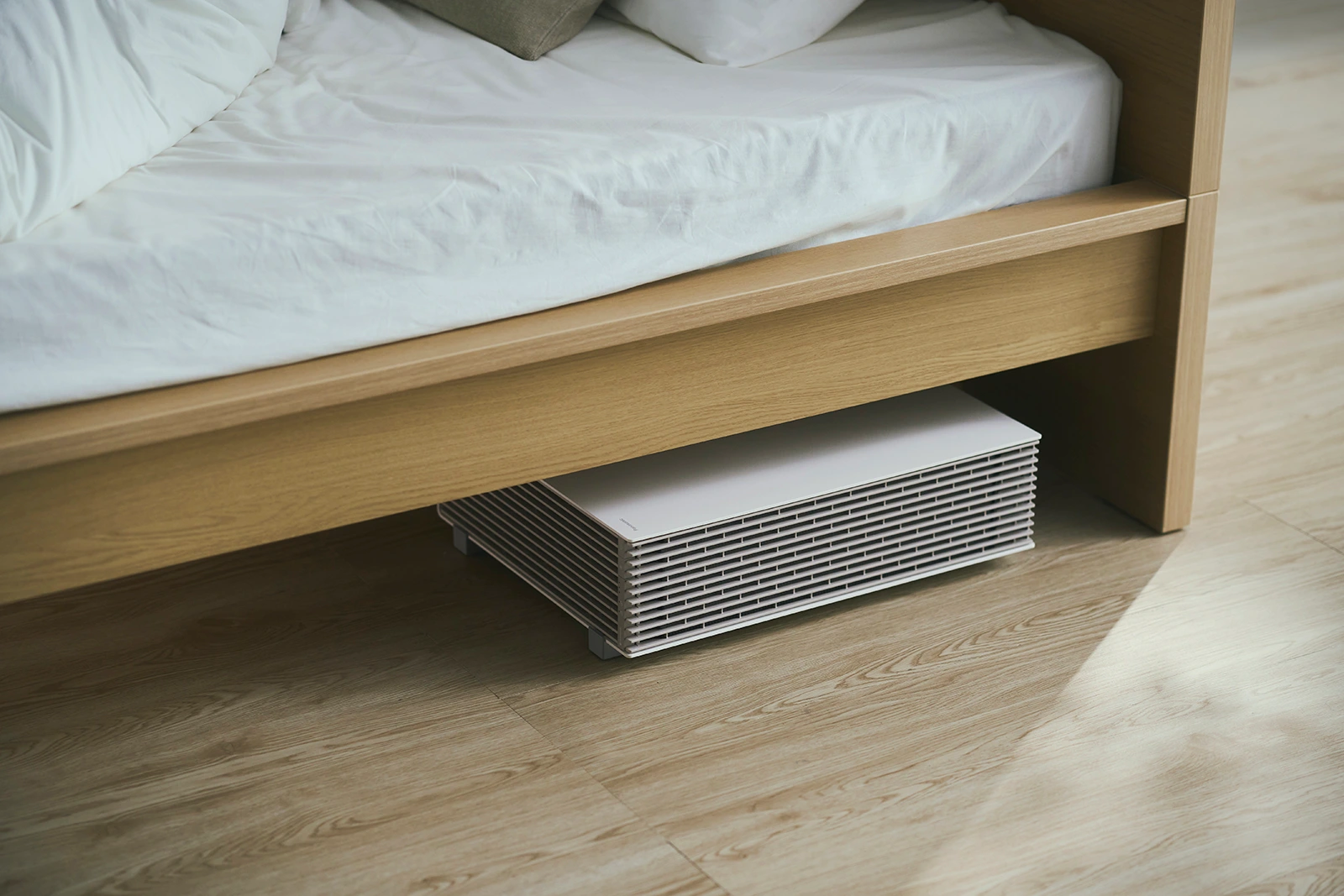
12.5 Centimeters Wide: Panasonic Slips an Air Purifier into the Bed Gap
Story & products
In a small home, the hard part of buying an air purifier can be finding a place for it. The space beside a bed or sofa may be too narrow for an ordinary upright machine, while a gap beside furniture or underneath the bed could be useful.
Panasonic's F-PX55D comes in white and dark gray. It measures approximately 12.5 cm wide, 50 cm high and 38 cm deep, and weighs about 4.8 kg. It can stand beside furniture or, with its supplied feet fitted, lie horizontally beneath a bed or sofa. There is no humidifier or water tank.
Measure the gap before choosing a position
For upright placement, Panasonic specifies at least 2 cm on each side and behind the unit, and 40 cm in front. That means a gap at least 16.5 cm wide. Horizontal placement with the supplied feet needs at least 15.5 cm of height and the clearances stated in the manual. Measure the space before ordering.
The stated coverage is 15 tatami mats, approximately 25 square meters, under the new Japanese standard, or 25 mats under the older standard. Panasonic gives about 12 minutes to clean an eight-mat room under its test conditions. The unit has an electrostatic HEPA filter and nanoe X 4.8 trillion technology. Actual experience will depend on the room and conditions.
Quiet operation and front access
There are high, medium, quiet and automatic fan settings. Panasonic lists approximately 19 dB and 4.4 W for quiet mode, 30 dB and 6.8 W for medium, and 55 dB and 67 W for high. Holding the fan button switches nanoe on or off; the clean-status light can also be turned off.
The front panel opens for filter maintenance. Panasonic recommends vacuuming dust from the filter surface roughly every two weeks and gives a replacement guideline of about two years, depending on conditions. The power cord is approximately 1.8 meters long.
For someone living alone, the attraction is another option for placement. The machine still needs its specified clearances and does not humidify, but a suitable gap under a bed or beside a wall can leave more of the walkway free.

Dust-Web
Story & products
One Reddit poster described his mind as covered in spider webs and dust, as though someone had come in and cleaned it. He was describing one morning after taking bromantane, not the result of a long follow-up.
He wrote that things had been going badly: alcohol, cigarettes, hangovers every other day, parties, and gym progress he had abandoned. He ordered bromantane hoping for a little lift in mood. One morning he placed 50 mg under his tongue. He felt little for two hours; then, he said, it kicked in and the thought of smoking disappeared. As a pack-a-day smoker, he found that remarkable.
He cleaned the room he usually left alone and cooked dinner instead of ordering takeout. He described a clear mind and good mood without frantic overstimulation. He smoked no cigarettes that day and had no thoughts of alcohol. At 11 p.m., lying in bed, he wondered whether the drug had fixed something his brain was missing, or whether he might have been depressed. This is his account, not a diagnosis or proof of a treatment effect.
The supplied draft recorded roughly 59 upvotes and 18 comments at its snapshot, with about 17 comments available for review and an upvote ratio near 0.94. Those counts can change. They measure the discussion, not the drug’s effectiveness.
The replies offered competing explanations. One commenter called the clear feeling dopamine-system repair and said a similar experience faded after a few weeks. Another warned that a stimulant can have a short honeymoon, saying thousands had “cried in elation” when first trying Adderall or Ritalin and, a year later, reported reaching the safe dose limit, losing the effect and feeling like death off it. The commenter urged scepticism about miracle cures. Another commenter described bromantane as having a dopaminergic angle without a hard-driving stimulant effect. Neither explanation establishes what happened in this particular case.
Someone else reported no effect from bromantane and said atomoxetine produced a similar feeling for them. Another thought the poster sounded depressed and mentioned Wellbutrin in relation to some people with major depression. People asked about the source, an oily nasal spray and taking it with a fatty meal. The poster said he opened a capsule, held it under his tongue for about ten minutes and then drank water. That is a description of his own use, not an instruction.
One reply cautioned, “don't mistake one good day for a fix,” and suggested tracking feelings for weeks. Another described the effect lasting only a day or two; a different commenter warned, from personal experience, that smoking while using bromantane might make withdrawal worse. These accounts do not establish medical facts or predict another person’s response.
The value of the discussion lies in keeping the vivid day alongside the unfinished questions. The lack of an urge to smoke, the cleaned room and the cooked meal mattered to the poster. His hangovers and uncertainty about depression matter too. “Repair” and “honeymoon” are interpretations offered in a comment thread, not conclusions about his brain.
A person’s reported improvement deserves to be heard without turning it into a universal dose, a diagnosis or a smoking-and-alcohol treatment.
The content of this article is for viewing, reflection and personal judgment only. It is not an instruction manual; it is simply part of what exists in the world.
Sticky Hand
Story & products
At the first aid station in Amsterdam, he poured most of the Maurten drink over his hand. After running the next stretch with sticky fingers, he decided to stick to his own gels. Fuelling practice had not prevented a small race-day mishap. He left it in his report alongside a finishing time of 3:01:31.
I checked the public race report behind this account. Its author describes himself as a 39-year-old man weighing about 73 kg, running the Amsterdam Marathon on 18 October 2026. He recorded 42.54 km. Sub-three was missed; sub-3:05 and a personal best were achieved. Compared with his previous 3:37:23, he had improved by roughly 36 minutes, yet his title still called it a big PB but not quite a “true BQ”. That is his description of the Boston qualification question; the report supplies no cutoff that should be invented here.
A large improvement and an unfinished ambition can coexist. So can an aid-station mistake and a race worth celebrating. The training and physical sensations below are his account, not a plan for someone else to copy through pain.
Giving it a proper go
He returned to running in 2024. His 2025 bests were 19:50 for 5 km, 42:06 for 10 km, roughly 1:31 for the half and 3:37 for the marathon, with about 1,455 km run that year. For his first marathon in Valencia he followed Hanson's plan, but injury and illness led him to abandon the time goal and concentrate on finishing. Amsterdam entries opened about a week later. He wanted to give it another proper go.
After reading Pfitz early in the year, he built from January to June towards five running days and about 35 miles a week, with long runs of 13 to 14 miles. A 1:04:38 ten-mile race in April gave him encouragement through VDOT: sub-three might be within range if the next block went well. He began the 18/55 plan in June while deliberately aiming to cap the biggest weeks at around 50 miles.
The first two marathon-pace sessions felt “absolutely brutal”. Other runners' experiences on the forum helped him trust the process. After the second, a niggle appeared behind his knee. He says his physio found no clear problem; he spent a week cross-training on the bike before returning gradually. In August the physio suggested nerve flossing. His next 10 km best was 39:31, over a minute quicker in eight weeks despite barely running in the preceding fortnight. Those events belong to his account, without establishing that one exercise caused the improvement.
His third marathon-pace run averaged around 4:19/km, and his half-marathon best came down to 1:30:04. Before the taper he completed two 32 km runs. In the second, the final 26 km averaged about 4:18/km, with the last two kilometres at 4:11 and 4:06. A good taper, carbohydrate preparation and race-day excitement made sub-three feel possible, although 3:02 to 3:05 remained his more sensible target. Weddings and stag parties overlapped the final three weeks; he ran four days a week and shortened the taper by a week.
Thirty seconds behind
Getting there was awkward. EasyJet cancelled the Glasgow flight to Amsterdam. A replacement journey via Stansted was delayed, leaving about 40 minutes of a planned two-hour connection. Garmin recorded roughly 2 km through the airport at 4:20/km, which he counted as a shakeout. He reached the hotel around 11 pm, about seven hours late.
Race morning was cool and wet. He carried six Maurten 160 gels, intending to take one every 6 km. After the drink spilled at the first station, he relied on his own fuel. Along the Amstel, roughly between kilometres 13 and 26, the wind picked up and the path narrowed to four or five runners abreast. Going wide to pass cost distance; sitting behind a group cost time.
Halfway came in 1:31:35, about 30 seconds behind what he had hoped. He stayed patient rather than trying to recover it immediately, planning to reassess at 32 km. Returning towards the city around 30 km, he still felt strong, but slowing for water kept giving back some of the time he gained.
At 35 km he was at about 2:31. Sub-three now demanded close to 4:00/km for the remaining 7.2 km. He felt willing to push, but his splits were not getting much faster. Other runners were stopping with cramp, including some who had recently passed him. In the final underpass his left hamstring began to ache. He decided to protect the race he had.
That decision belongs beside the result. He had looked at the pace required and noticed what his body was doing. Preserving a substantial improvement required judgment too.
Beyond the finish
Through Vondelpark and towards the stadium, recognising the size of the coming PB gave him another push. He finished in 3:01:31. A friend filmed the closing stretch; watching it afterwards, he found the difference between how fast he felt and how slow he looked comical.
While stretching against a fence, he started crying. He described it as emotion, or perhaps endorphins. Opening his eyes, he found an event cameraman pointing straight at his face. He walked away and met another finisher in a similar state. They hugged, exchanged a few words on the way towards the medals, then went their separate ways.
The supplied snapshot recorded about 47 upvotes, seven comments and a 0.91 upvote ratio, including three congratulations that could be checked. Readers praised the race and the write-up. One of a similar age found the improvement encouraging. Celebration did not require the runner to erase the disappointment in his title.
His own review was practical: practise aid stations and lose less time on overpasses and underpasses. He averaged around 50 km a week across the block and felt there was aerobic development left. Next came cross-country and shorter races, with speed sessions back in training. He intended to use Pfitz again, first building towards a point where 55-mile weeks felt less daunting, then using shorter-race results to shape the next marathon target.
There is room in that account to keep wanting sub-three and to value the race already run. The sticky hand and the decision after 35 km remain part of a 36-minute improvement. Another race offers things to work on. This one still deserves its celebration.
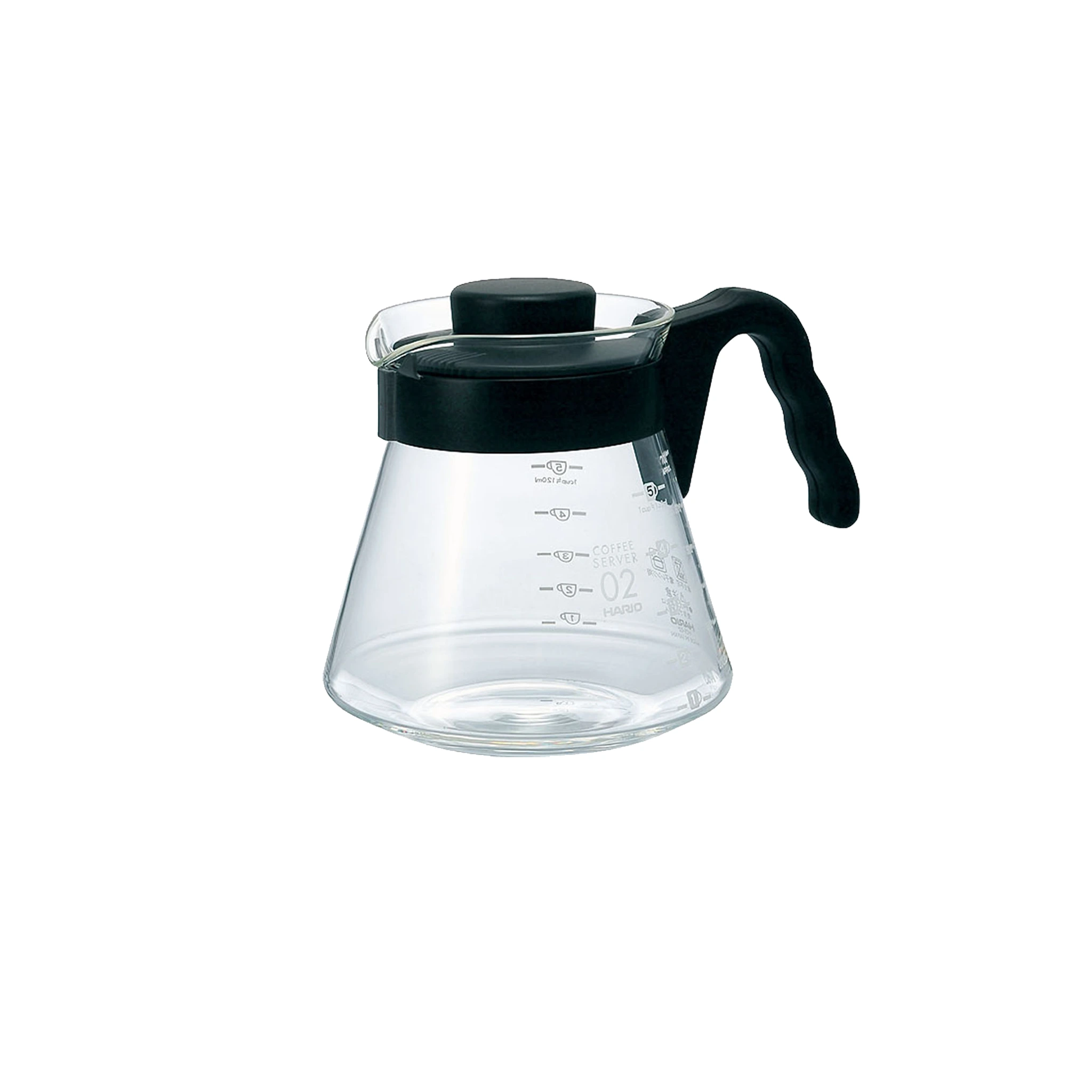
The Morning Calculus of Absolute Control: HARIO V60 02 Liquid Fuel Cell
Story & products
Imagine the early hours after training, with cleats tossed in the entryway and a single overhead light illuminating the kitchen. This is the author's imagined scene of solitary living, not a record of an athlete's routine. In that setting, a sprawling semi-automatic espresso machine can seem superfluous. The HARIO V60 VCS-02B coffee server is the physical manifestation of this cold, minimalist philosophy. It strips away all unnecessary pretenses, employing a ruthless pragmatism to provide the most unadulterated liquid containment for the solitary resident. This strict constraint of desires and obsession with efficiency is precisely what constitutes advanced athletic charisma.
The 700ml Practical Capacity
This Japanese-made heat-resistant glass server has a practical capacity of 700ml. That measures the container, not a suitable caffeine dose or an individual's post-training replenishment needs. With the dripper resting on the rim, the moment the water stops flowing, the initial phase of the refueling protocol is complete.
Visualized Fuel Consumption
Abandoning the stainless steel thermal flask is an intensely rational decision. A steel flask acts as a black box, leaving you entirely ignorant of the remaining liquid volume. HARIO's transparent glass allows you to coldly monitor the descending liquid level. Every sip is under absolute visual command, showing the remaining coffee volume against visible markings.
Anti-Redundant Thermodynamic Trade-offs
The lack of thermal insulation is not a flaw; it is a calculated, cold-blooded compromise. If you do not consume it promptly, it goes cold. That is a trade-off to accept when using a glass server. If delayed ingestion is tactically necessary, simply leave the lid on and shove it into the microwave for thermal reconstitution.
Tactical Storage and Closed-Loop Design
With an aperture of approximately 92mm, it forms a seamless tactical stack with the V60 02 dripper. An even more obsessively clever detail is the black handled lid: when inverted, it instantly transforms into a drip tray, perfectly catching the residual drops from the removed dripper. This traceless conclusion to the brewing process maintains absolute countertop sterility, projecting a grim, orderly aesthetic.
The L2M store extends its utmost respect to this HARIO server because it flawlessly aligns with our championed "philosophy of the obsessive." It offers zero sentimental value, delivering only absolute efficiency and transparency. For those hardcore souls who have stripped their lives down to nothing but training and recovery, this extreme exploitation of utility and cold rejection of superfluous features represents the highest echelon of self-management and magnetic appeal.
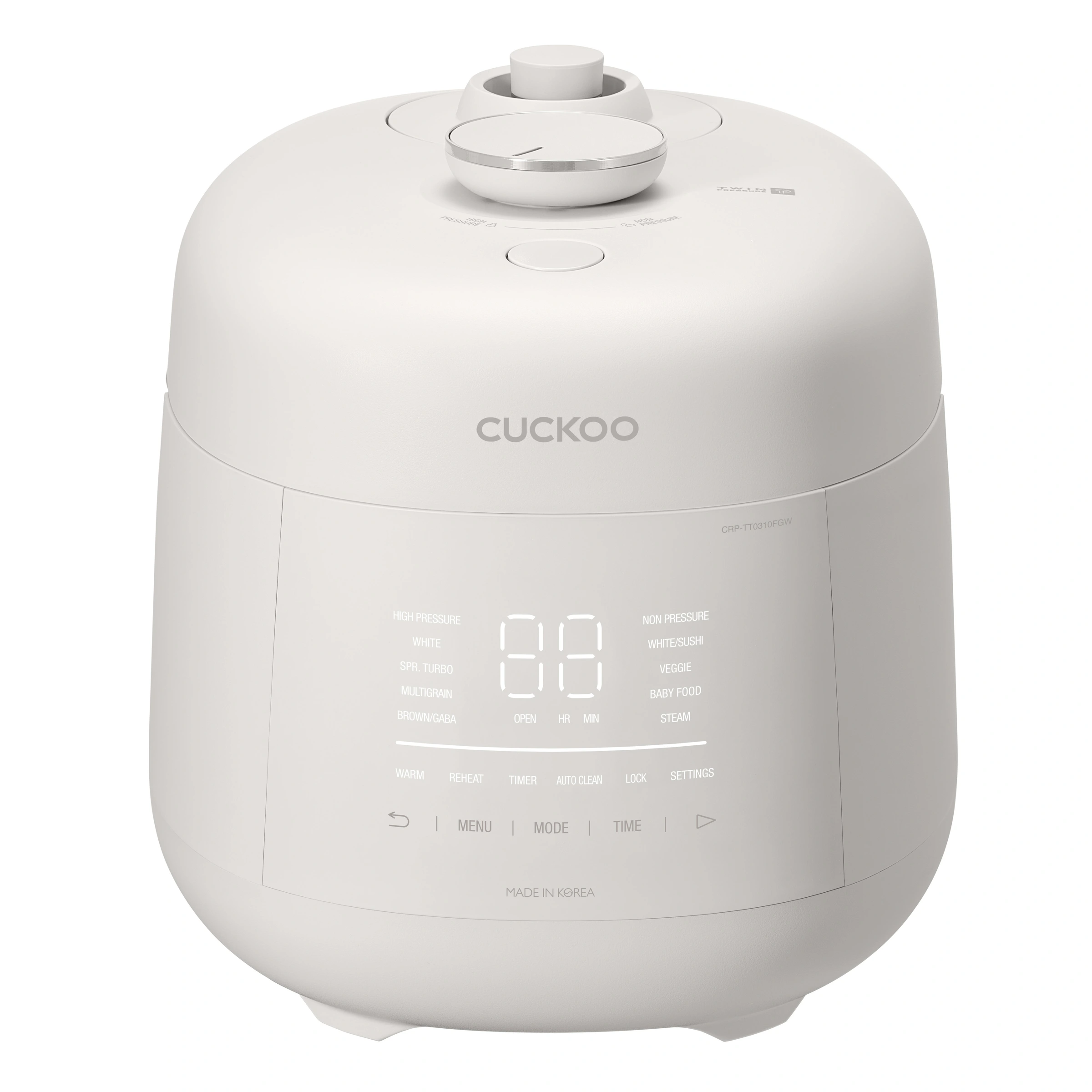
Thirty-One Centimeters of Counter: Cuckoo’s 3-Serving Pot Replaces the Family Cooker in a Studio
Story & products
Living alone, dinner usually fails in two ways: the pot is so big that one portion looks like a banquet; and the next day you open the lid to cold leftover rice waiting for you. Studio and officetel counters are already narrow. Drop a 6- or 10-serving pressure cooker in the middle and the cutting board and spice bottles get shoved to the sink edge. Those small frictions decide whether you eat something hot tonight more often than “whether the inner pot coating is better.”
Cuckoo’s Twin Pressure rice cooker (3 servings), CRP-TT0310FGW, is listed on the official mall as a Grace White 3-serving electric pressure cooker. Specs you can check: about W226 × D316 × H233 mm; about 4.6 kg; 653 W rated power; energy efficiency grade 1; heat-plate pressure type; high pressure / non-pressure Twin Pressure; hidden display; white-rice quick cook about 16 minutes for 1 serving (official copy also says Super Quick in about the “10-minute range”); Xwall diamond-coated inner pot; full stainless detachable cover; auto-clean for the steam path; keep-warm that ends automatically after 24 hours, with the manual recommending no more than 12 hours; button lock. Cuckoo Mall shows about ₩212,500 (a higher list price also appears on the page); street prices move with promotions. The only question this piece keeps asking: do you want the family pot that always cooks too much, or a small white block on the counter that fits one to three dinners?
Measure 31.6 centimeters deep and 22.6 centimeters wide before you talk about “not running a family pot for one”
CRP-TT0310FGW’s core move is buying by three servings, not by “maybe guests someday.” The linked official manual gives length 316 × width 226 × height 233 mm. Measure the strip of counter by the sink first, then order. 4.6 kg is not light for a move, but it takes less depth than common 6-plus serving pots—so a cutting board can still squeeze beside it.
653 W and grade-1 efficiency are written on both the official page and spec aggregators. That does not mean “power you can ignore”; it means a small pot does not need a 2,000 W blast to fit white rice and mixed grains into a weekday. The hidden display looks like a blank panel until it lights up with menus and time. For someone living alone, the real buy question is often: do overnight leftovers keep piling up? Does the counter still need to give up half a cutting board?
When you place it in a studio, check the outlet and clearance. A heat-plate pressure cooker vents steam; leave the top and rear gaps the manual asks for, and do not bury it in a sealed cabinet slot. At move-out, lift the 4.6 kg with both hands. Those checks cost less than complaining later that it was “too big.”
From high pressure to non-pressure: one pot, two weeknight textures
Twin Pressure is simple: a lid setting switches between high pressure and non-pressure. High pressure suits stickier, springier white rice and mixed grains; non-pressure leans drier and looser, and quieter nights without a long pressure hiss. Official and retailer pages also list white-rice quick cook, germinated brown rice, porridge, steam/braise menus—margin for “once in a while,” not an excuse to host every night.
Official copy puts Super Quick around the “10-minute range” for 1 serving of white rice; Danawa and similar listings record white-rice quick cook at about 16 minutes for 1 serving. Both point to the same fact: one serving should not wait for a family pot’s default half-hour-plus. Auto-clean minds the steam path; the full stainless detachable cover cuts dead corners when you wipe. Xwall diamond coating is a durability claim on the inner pot, not a forever non-stick promise—follow the manual on washing and dry-boil warnings.
Button lock blocks accidental taps. Keep-warm ends automatically after 24 hours; the manual recommends keeping it within 12 hours. None of this is romance. It only answers: is dinner still warm when you leave, will a guest mash Start, and can you wash the cover once it comes off?
Checking out the family cooker: what the small white pot gives back is counter space
A 6- or 10-serving pressure cooker eats counter, accepts “it always makes too much,” and sends leftovers into the fridge. Three servings rewrites the question: is there about 31.6 centimeters of depth and 22.6 centimeters of width? Is tonight one person or two plus a side? For a one-person household, it sits on the “small but enough to cook through” line.
There is no need to call three servings a party kitchen. It holds the bowl you actually eat every day, and the evenings you do not want to rearrange for dumping rice. The Grace White rounded body reads more like furniture than industrial gear—which is why the brand puts it in studio and small-kitchen copy. When guests come, three servings still covers two bowls of rice and a dish; when they leave, you are not staring at half a pot overnight.
Living alone well is sometimes just matching pot size to appetite
Solo cooking is rarely a commercial kitchen cut in half. It is asking again: do I still want a family pot for one bowl of white rice? A white cooker about 22.6 cm wide, 31.6 cm deep, and 23.3 cm high writes high/non-pressure, quick cook, a detachable stainless cover, and auto-clean into a rental scale. It does not promise you will love cooking. It only makes “I want something hot tonight” less of a stare-down with an oversized pot.
Turn the lid to tonight’s setting; the display lights up. If that small stretch works on weekdays, the machine earns its strip of counter. If you only bought it for photos, even a white pot is just a plastic shell taking space.
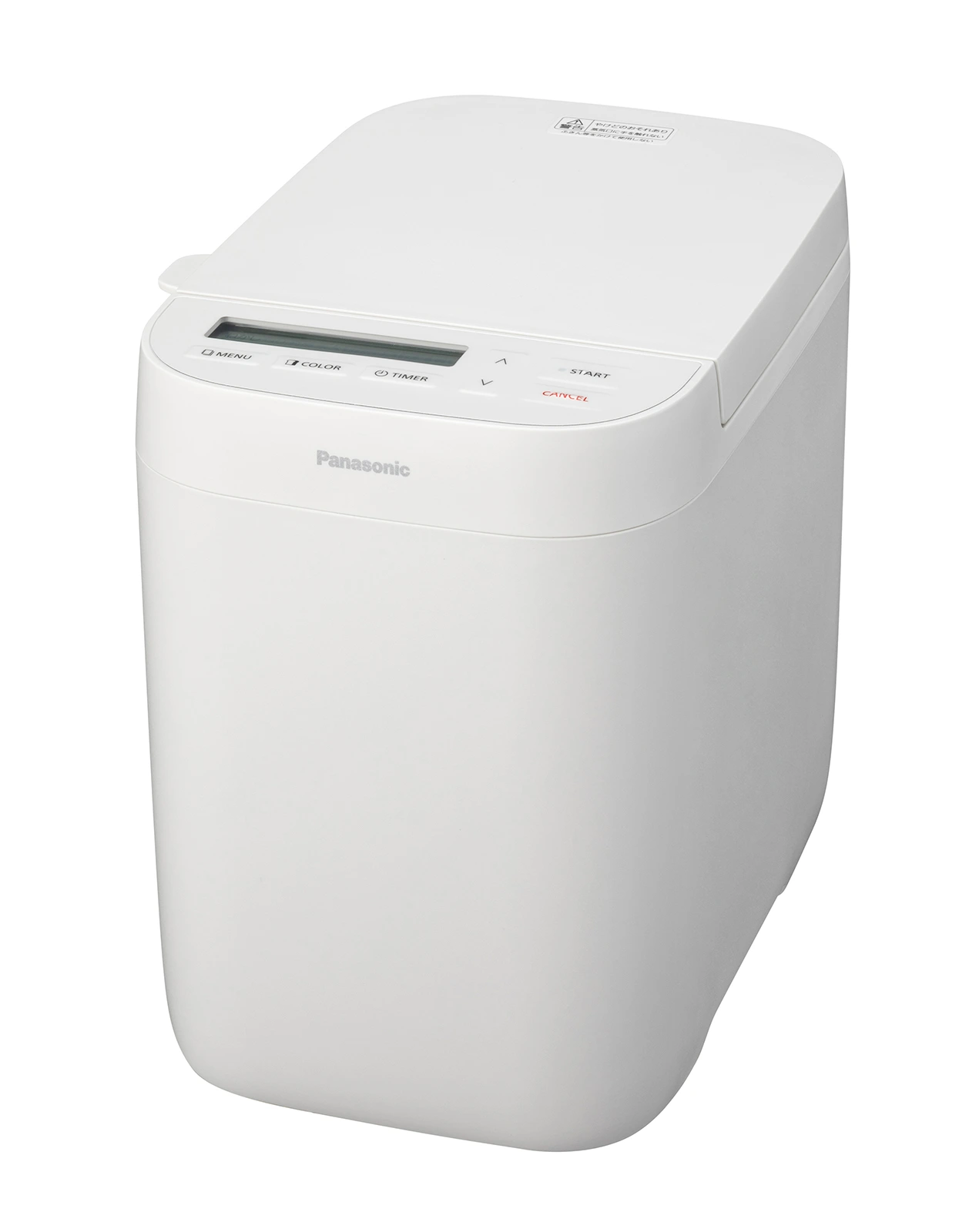
An 18.8 cm Counter: Panasonic Slots a Half-Loaf Bakery into a Solo Kitchen
Story & products
Living alone, breakfast usually hits two snags: a full store loaf goes stale at the edges by day three; and you want to bake, but the counter is already packed with a rice cooker, kettle, and dish rack. Typical home bakeries start around a full Japanese kin loaf. Cool it, eat it tomorrow, freeze the rest—the workflow is fine, yet for one person it often becomes “finish it so nothing is wasted.” That narrow strip of free counter—under twenty centimeters wide—decides whether you stick with baking more often than the question “should I get into bread?”
Panasonic’s Compact Bakery is model SD-CB1 (common finish: white SD-CB1-W). The 3 July 2024 press release calls it the industry’s smallest footprint (width × depth × height; as of that date, domestic home-bakery market, company research), built for about 0.6 kin. Launch: 1 September 2024; manufacturer’s suggested retail price: open. The spec sheet is blunt: about W18.8 × D28.5 × H24.3 cm, about 4.0 kg, about 285 W (100 V, 50/60 Hz), cord about 1.0 m; loaf capacity about 0.6 kin; 20 menus (30 kinds); fluoropolymer bread pan; crust color dark / standard / light; timer (selected menus only). One question runs through this piece. Do you want a full-kin machine that claims half the counter and leaves leftovers to freeze—or a half-loaf unit you can leave by the stove and finish every time?
Here, about 0.6 kin means roughly three-fifths of Panasonic’s Japanese one-loaf size, not a conversion from the Chinese 500 g jin.
Measure 18.8 cm first, then read “industry smallest”
In a solo kitchen, permanent spots are rarely the center of an island. SD-CB1 compresses width to about 18.8 cm, depth about 28.5 cm, height about 24.3 cm. The feature page says it fits a plane about the size of A4 paper. At about 4.0 kg it is not featherweight, but you do not need a meter-wide “baking corner.” The press release ranked “no place to put it / it makes the kitchen feel smaller” as the top reason people skip home bakeries. This machine’s first answer is dimensions, not a menu brochure.
About 0.6 kin (versus the company’s 1-kin reference) is the second answer. Official copy: sized so small households can finish it, cutting the chore of next-day bread or freezing, so each bake can be fresh. The feature page adds: roughly three-fifths of a full kin, fine to tear in half by hand without a knife. For solo living this is not a “mini demo bakery.” It moves “how much to bake” from an inventory problem to a breakfast portion you can actually run: load at night, aroma in the morning, one small loaf on the table—no half bag left over.
The look stays simple. Official line: designed for daily use, so appearance and controls stay simple. The white body does not dominate a rental stove edge. The fluoropolymer pan sheds less scorched crust when you wash it. Cord about one meter—measure outlet to counter before you decide whether it can truly live there, or whether it goes back in a cupboard after every bake.
From a three-hour Daily loaf to twenty menus: a schedule one person can keep
The spec table lists 20 menus (30 kinds). Automatic breads include Daily, high-hydration, Quick, rice-bread loaf, Rich, brioche-style, whole-wheat, swirl, and rice-flour loaves (with / without wheat). Dough modes: bread dough, pizza dough, wheat-free rice-flour dough. Also butter cake, rice-flour cake, gateau chocolat, vegetable cake, jam, nama-choco, and Bake. This is not a pro bakery at home. It is “change the taste on the weekend” written onto buttons: weekday toast, a rice-flour try, pizza dough, a small jar of jam.
Times from the official spec page: Daily about 3 hours; Quick about 1 hour 50 minutes; high-hydration about 2 hours 20 minutes; Rich about 1 hour 55 minutes; wheat-free rice-flour loaf about 1 hour 40 minutes; whole-wheat about 3 hours 10 minutes; rice-bread loaf about 3 hours. The timer works on Daily, rice-bread loaf, whole-wheat, and both rice-flour loaves—load at night, finish at a set morning time. No auto raisin/nut dispenser; a buzzer tells you to add them yourself, up to about 50 g total (about 30 g on some menus). Three crust colors cover the small whim of “darker today.”
The included flour cup and spoon are the official friction reducers: less wrestling with a scale; put ingredients in and run the program. In solo life, Daily and Quick are what get reused; the rest are optional variety, not a weekly homework checklist.
Living alone well sometimes means “the counter still has a gap”
Solo bread baking is rarely equal to turning the kitchen into a bakery. It is closer to asking again: will I really give up half a counter—and another freezer bag—for two days of toast? Width 18.8 cm, about 4 kg, about 0.6 kin, about 285 W, twenty menus: industry-smallest sizing language and a finishable portion, written into a compact bakery you can leave out. No promise you will bake every day. Just fewer rounds of “bought a big loaf, half left, unsure whether to toss it.”
At night, flour and water into the pan. Timer to 7 a.m. In the morning the machine finishes quietly; the small hot loaf on the counter still burns the fingers. If that short loop works on weekdays, the 18.8 cm is worth occupying. If it is only an unboxing photo, even the smallest body is just dusty plastic.
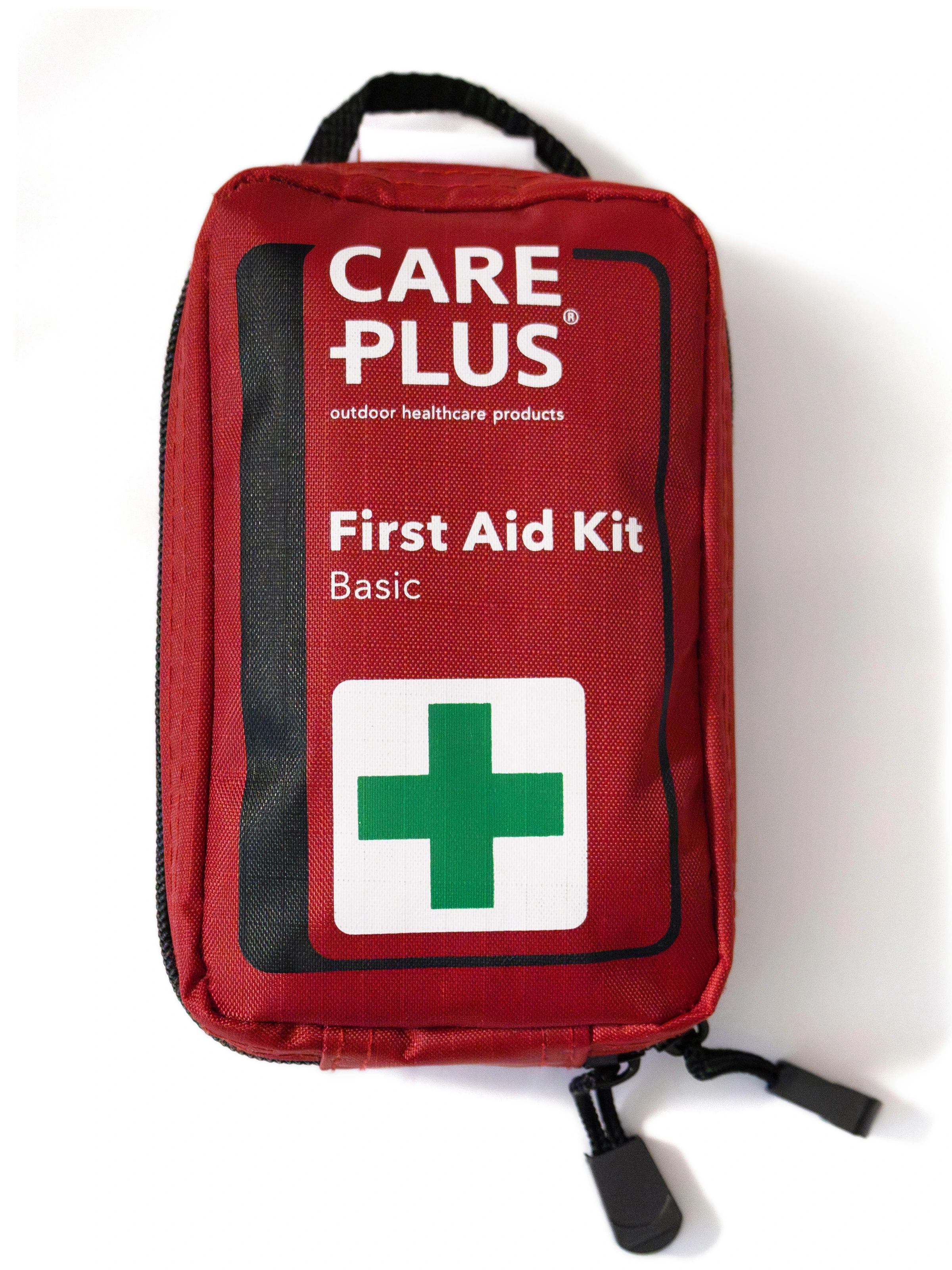
Vest Pharmacy
Story & products
What actually earns a place in an ultrarunner’s first-aid kit? A Reddit poster asked whether people carry a small kit in their vest, a few loose supplies, or rely mainly on aid stations. They also wanted to hear about injuries and the things runners had wished they had brought, especially on longer, more remote routes.
The supplied snapshot recorded about eight upvotes, fifty-nine comments and an upvote ratio of roughly 0.9. Those figures describe that capture, not the ultrarunning community as a whole. The drugs and equipment below are what participants reported carrying. Their accounts offer context, not prescriptions or first-aid instructions to copy.
A kit that gets smaller
One commenter answered with dark humor. Their essentials were an Ace wrap, a windbreaker and trekking poles; if those could not fix the problem, it had been a good life. The joke belongs in its conversational setting, not in an assessment of a serious injury.
Another runner said their supplies had shrunk as they ran more and farther. Blister tape, small band-aids, lubricant, acetaminophen and small scissors remained. Unsupported runs called for water purification, an emergency blanket, an InReach and an emergency bivy. They had used most of it, though not the blanket or bivy; the satellite device had only been used for ordinary communication. Lubricant was the most frequently used item.
That smaller kit comes with conditions. Dealing with friction and blisters is different from waiting for help on an unsupported route. Quoting only the part about carrying less loses the equipment added for the latter.
Required gear and an unopened kit
A participant followed each race’s mandatory kit list and added anti-chafe goo. For training, they kept the previous race’s setup because changing it felt like too much trouble. Having never used anything in the first-aid kit, they wondered whether they had become extremely complacent.
Another runner described their first fifty-mile ultra about a month earlier. Tissues in the vest had helped with a cut that bled heavily. Supplies in the drop bags went unused, but knowing they were there was reassuring. Someone else kept Tylenol, allergy tablets, ginger candies, electrolytes and a large bandage in a small ziplock, alongside lubricant, lip balm, eye drops and migraine medicine. It was thin enough to fit the vest. These were personal contents; whether a medicine is appropriate depends on the individual.
Other comments mentioned a race requirement for a self-adhesive bandage, difficulty sticking band-aids to sweaty skin, and personal use of clotting powder or improvised materials. One participant recalled spending two hours applying pressure to an elbow injury close to home. That is their account, not a suggested waiting period or an instruction to improvise treatment.
Never opening a kit describes what happened on past runs. It cannot settle what the next route requires. Nor does someone’s successful use of tissues establish that tissues are all another runner needs.
Supplies for somebody else
An Australian participant listed a snake-bite bandage, band-aids, non-stick dressings, gloves, a space blanket, pre-cut Fixomull, antiseptic wipes and a little toilet paper. Gloves were for helping another person without getting bodily fluids on their hands. They explained that the particular snake-bite bandage had tension indicators whose rectangles became squares. That product explanation should not be detached from local first-aid guidance.
Someone else said they now carried supplies almost more for others. They had fallen, got up and kept running; for something serious they expected to use their phone and fall sensor. Another person listed a friend, satellite SOS, a whistle and a Mylar blanket. Their concern was an unexpected night waiting for help, and they emphasized having someone know their whereabouts and expected return.
A self-described nurse and former EMT disliked the tactical-tourniquet craze. Their own supplies included an EpiPen for a bee or wasp allergy, basic bandages and blister care. They pointed out that there is no CT scanner or surgeon on the trail; some problems require faster access to more help, which made satellite communication valuable to them. A self-described paramedic mentioned blister supplies, stomach tablets and ibuprofen, while stressing basic first-aid or BLS training and calling qualified help in a genuine emergency.
Racing and remote backcountry travel also raised different expectations. One participant added a small bivy, a light puffy, fire-starting supplies and gauze for an overnight wait. Another reported more than 150 ultras without carrying first-aid supplies, apart from tape and scissors in a hundred-mile drop bag. By contrast, a runner broke a finger before mile three of a first 50k and regretted lacking splint materials. Such different histories do not resolve into one universal list.
One commenter actually called their bag a “pharmacy”: NSAIDs, antacids, salt capsules and vet wrap. When bringing a dog, they added tape and gauze for possible paw injuries.
Before packing the vest
The useful part of this discussion is why each person kept particular items. Some were mainly dealing with chafing and blisters. Others wanted to help a companion, or had to consider a night before rescue arrived. Those conditions tell us more than judging seriousness by the amount of equipment on display.
A reader can compare the mix of training and racing, the event’s requirements and distance from support, then consider personal medical history and first-aid skills. Other people’s accounts provide leads; practical preparation still needs event rules and professional guidance. A lighter vest is easy to measure. Whether the omitted item matches a risk on the next route takes more thought.
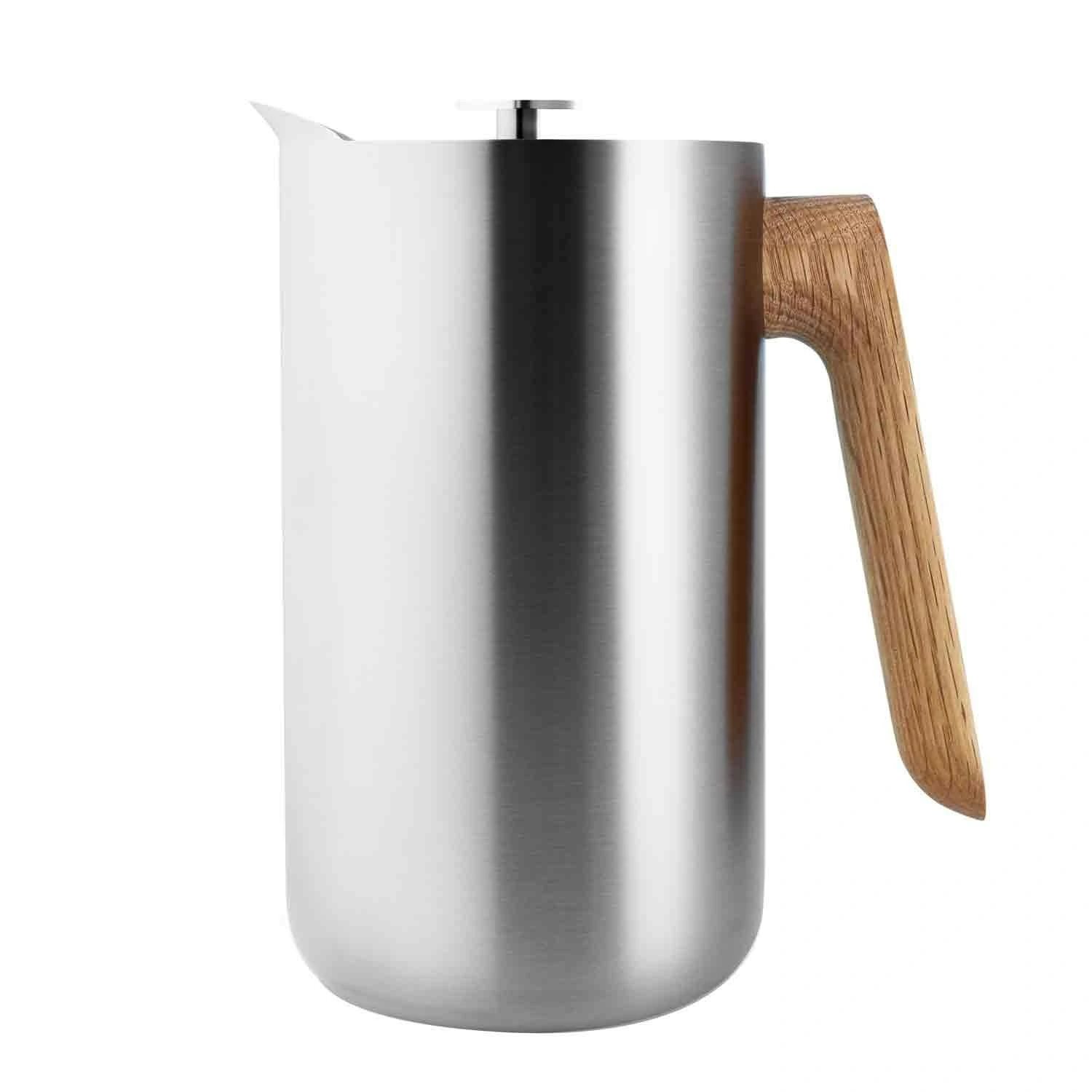
The Architecture of Solitude: Eva Solo Nordic Kitchen Thermo Cafetière
Story & products
Imagine the following recovery-morning scene; it is the author’s hypothetical setting. The scene is not a stadium illuminated by floodlights, but a quiet, slightly frigid European rental apartment on a recovery morning. The curtains remain half-drawn; compression socks hang lifelessly over the back of a chair. For an elite athlete feeling exhausted and sore, performative coffee rituals are an unacceptable drain on residual energy. There is no patience for the theatricality of an espresso machine or the obsessive timing of a pour-over. On the counter sits only this stainless steel French press with its raw oak handle. It represents a borderline antisocial pragmatism: boil water, add coarse grounds, plunge, and keep the preparation simple.
Thermal Vacuum Armor
The 1-liter capacity is encased in a double-walled stainless steel vacuum architecture. The brand says this construction keeps coffee hot for longer. Its utility lies in offering thermal retention for someone who wants to pour a second cup later.
Zero-Friction Extraction
On a rest day, cognitive load must be ruthlessly minimized. This vessel requires no gooseneck kettle precision, or digital scales. It utilizes brutal mechanical immersion to brew coffee, an approach the author values for its directness.
Tactile Brutalism
The brushed stainless steel body intersecting with the organic, unpolished oak handle creates a sharp, uncompromising aesthetic. It is not designed to entertain guests; it exists to enforce a cold, disciplined spatial order for a solitary occupant. It acts as a handsome, structural piece of sports image management within the domestic sphere.
Precision Pour Dynamics
The brand describes the stainless-steel spout as drip-free. For the obsessive-compulsive athlete whose mental clarity relies on a pristine environment, a stained countertop is a symptom of lost control. That design responds to a preference for a clean countertop.
The L2M store respects and recommends this instrument because it embodies our philosophy of ruthless, solitary efficiency. True discipline is never performative. We reject the bloated culture of artisanal coffee in favor of a tool that executes its function with cold precision. Its brand-described thermal retention and severely handsome profile suit the solitary recovery-day setting imagined here.
Lentil Pot
Story & products
Is longevity becoming something only wealthy people can afford? That was the question the Himedi account brought to Reddit’s Biohackers community. Expensive screening, genetic tests, supplements and personalized treatments keep promising more years. The post acknowledged that sleep, exercise and healthy food need not cost a fortune. Access to healthcare and preventive testing can be a different matter.
There is a commercial background to keep in view. Himedi’s profile describes its business arranging health checkups in Korea for international clients. At the manuscript’s snapshot, the thread had roughly 15 upvotes, 16 comments and an upvote ratio close to one. Those figures describe a small conversation, not a population survey or clinical evidence.
How cheap are the basics?
One commenter gave a blunt answer. A whole-food, plant-based diet, sleep and plenty of cardio can cost very little. In their view, unnecessary screening, uninformative genetic tests and pointless supplements add little benefit.
Another put it in percentages. They reckoned that 98% was accessible to ordinary people through a Mediterranean-style diet, good sleep, regular movement, stress management and avoiding harmful habits. The remaining 2% of marginal optimization could be expensive. Those were the commenter’s estimates; the thread supplied no study establishing that split.
There is something worth keeping in that argument. Taking care of yourself does not require an expensive test receipt as proof. But the replies soon reached a question that good habits cannot settle by themselves. What happens when you need help?
Lentils and the scan
A participant argued that the basics may be cheap while the real gap lies in early detection and access to good care. They offered a sharp hypothetical. You could eat lentils and run with the hope of reaching 90, yet struggle if your insurer would not pay for a scan until cancer reached stage 4. It was an expression of concern, not evidence that every insurance policy works that way.
Someone else wanted universal healthcare that was free at the point of use. They also pointed out that people die from more than cancer, and stressed the role of diet and lifestyle in heart disease. Another reply took a longer view, referring to the Middle Ages and the nineteenth century. Its argument was that money has long shaped access to care, while parents and upbringing influence the resources people start with.
Everyday habits can matter, and access to healthcare can remain unequal. The discussion becomes more useful when there is room for both observations.
Food takes time, too
One commenter said that affordable food was only part of the story. Knowing what to look for and where to find it also takes knowledge. They described the prevalence of junk food in poor neighborhoods, while acknowledging exceptions. Another added the time spent preparing meals. An effort can be worthwhile and still carry a cost.
A reply pushed back. Put frozen, pre-chopped whole foods into an Instant Pot, they said, set it to one minute, then eat. That was their account of an easy routine, not a promise that an entire meal cooks in one minute or that everyone can organize their day the same way.
A public-health-minded participant listed social determinants of health. Environment, toxic exposures, genetics and chronic illness all featured, alongside parents’ education and income, a person’s own education and income, community and walkability. They also mentioned smoking, drinking, drug use, seat belts and helmets, as well as exercise and food. They argued that poverty is statistically associated with earlier death and placed particular weight on quitting smoking and drinking. The list captured their perspective; it could not assess an individual reader’s circumstances.
Another comment made the practical constraints harder to overlook. Rotating shifts can make eight hours of sleep difficult. Taking a morning off to see a doctor can mean lost wages. Money can make these supposedly simple things much easier. That commenter welcomed cheaper tests, but also wanted ordinary care without fear of the bill.
What spending can prove
There was some optimism about costs falling. One participant thought wealthy people would try new longevity interventions first and that cheaper options could follow. They mentioned vitamins and statins as relatively inexpensive examples. Yet spending several thousand on a full-body MRI, they added, shows the ability to try something; the price alone does not establish a benefit. The comment was not a reason to start medication or supplements on your own.
I would keep the disagreement in this conversation. There is good sense in making room for sleep, movement and food. There is also good reason to listen when someone brings up insurance, appointments and time away from work. “Keep life simple” can end that conversation too quickly. An expensive screening bill is no reliable measure of how seriously someone takes their health, either.
The lentil pot is a memorable image from a discussion. It does not decide whether a reader needs a test, a particular diet or a new kitchen appliance. Personal medical history, insurance arrangements and a clinician’s judgment still need attention. Other people’s comments can help us think; they cannot write our next test order.
The content of this article is only for reading, reflection and personal judgment. It is not an instruction manual. It is simply one part of the world as it exists.
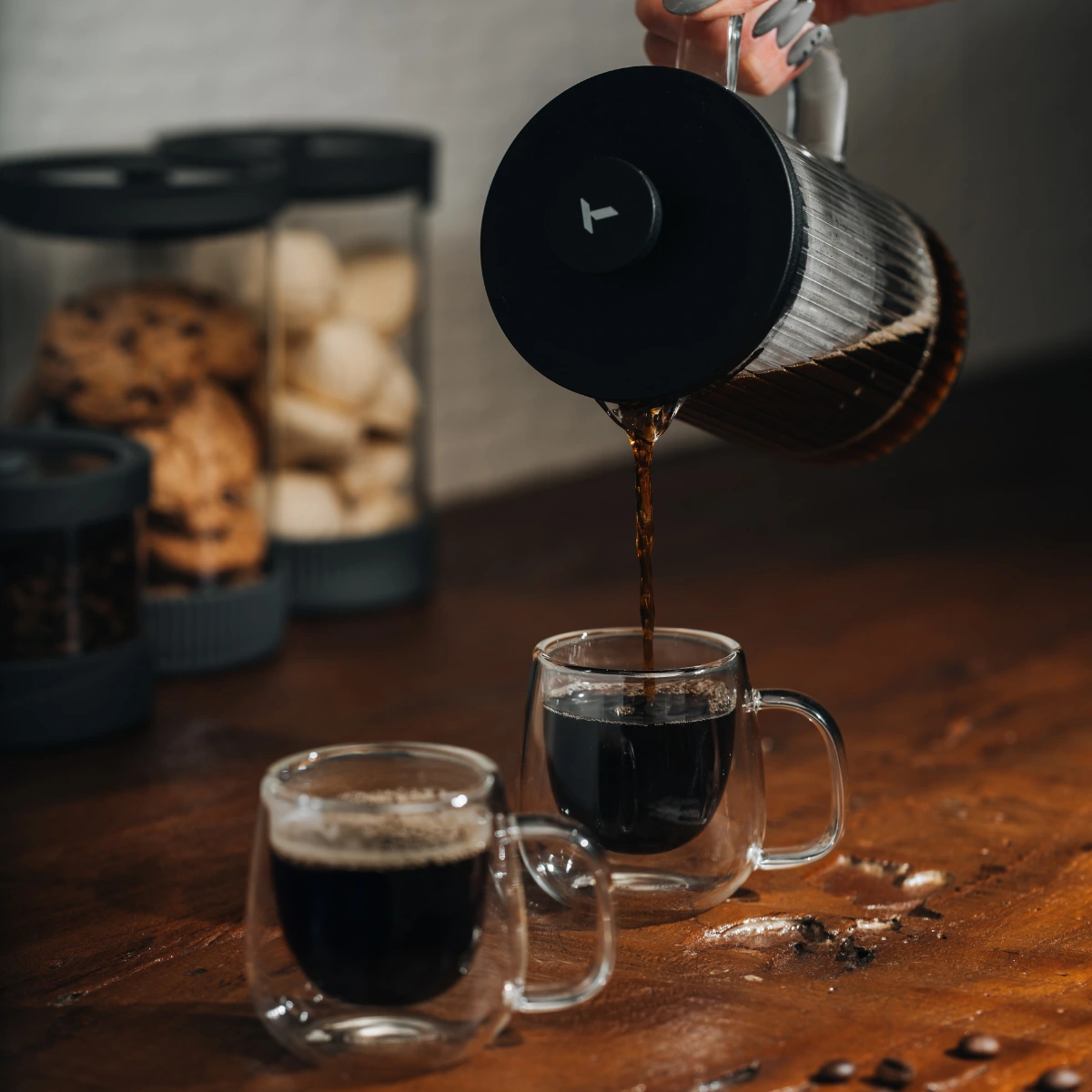
Three Minutes of Tactical Silence: Tramontina 600ml French Press
Story & products
Imagine the following solitary athlete's routine as an author's scene, rather than a verified account of anyone's life. There are no loud celebrations, no performative hissing of luxury espresso machines—only restraint and routine. After a high-intensity match, an athlete returns to a stark, quiet apartment to review tactical footage. In this imagined setting, the Tramontina 600ml French Press is a kitchen accessory that requires no electricity or complex settings. It calls for hot water, ground coffee, and the brand's recommended infusion of about three minutes. The mechanical resistance of the slowly descending plunger adds a steady, deliberate gesture to the scene.
The Physics of Unplugged Brewing
In the author's imagined exhausted morning or late night, complicated electronic devices may add an operational burden. This French press strips away superfluous functions: coffee steeps in hot water, and the descending filter separates the grounds. Boiling water, pouring, and pressing are the basic actions of this manual brewing routine.
600ml of Calculated Restraint
The official 600ml figure describes the vessel's capacity. It is not a standard serving or a calculated caffeine dose, and it does not guarantee that drinking the coffee will leave sleep unaffected.
The Cold Architecture of Borosilicate Glass and Stainless Steel
The transparent borosilicate glass body, paired with a polypropylene lid and a stainless steel mechanical filter, exudes a clinical, laboratory-like coldness. It is highly heat-resistant and brutally easy to clean, fully compatible with dishwashers according to official guidelines. In the author’s imagined routine, this unpretentious practicality means fewer cleaning steps and more time for competitive preparation.
The language of control and filtration here is the author’s metaphor for a daily ritual, not a promise of a definite psychological effect from this utensil. The L2M Store recommends the Tramontina 600ml French Press because we possess extreme respect for the solitary discipline of those who execute tedious routines in unseen corners. True strength does not rely on flashy equipment; it is found in the ability to reclaim absolute authority over one's body and mind through a three-minute silent wait and a steady, deliberate downward press. This is not merely the extraction of coffee; it is the physical filtration of chaotic desires.

Zero Elevation
Story & products
Chase Tesoro and his friend Jacob Szilagyi chose the Mission Beach shoreline in San Diego as their starting point, at 0 feet above sea level. In their Reddit account, they set off around 2 a.m. on October 24, 2026, and made their way to the summit of El Cajon Mountain, about 3,675 feet high. They reported 42.82 miles, 6,278 feet of climbing and a total time of 16 hours 23 minutes.
The route and the comments make those numbers more interesting. Both were students of around twenty, and neither described himself as an endurance athlete. They wanted to test their limits, explore San Diego and encourage others to do difficult things. Connecting the Pacific to one of the county’s prominent peaks felt, to them, like an aesthetic line waiting to be run.
Their account also makes room for a question about seriousness. Does a run have to begin with buying a race bib? An organized event offers its own finish arch and support. Drawing a route with a friend can deserve care and commitment too. Neither choice needs the other to be dismissed.
The city was part of the route
They followed Mission Bay Dr. and Friars Road, stopping at open gas stations and coffee shops when they needed supplies. Through the night they took Mission Gorge Road into Lakeside, then climbed Wildcat Canyon Road toward the El Cajon Mountain trailhead.
By the trailhead, they had covered about 30 miles and gained roughly 3,000 feet. Pavement gave way to dirt and rock. Chase placed their summit arrival at around 4 p.m.; the separately reported total was 16 hours 23 minutes. Those are the timings he supplied, rather than a basis for inventing a more exact schedule.
They called the effort self-supported, without a following crew. Their account lists gels, chews, assorted candy and electrolytes, with roughly 50–70 grams of carbohydrate per hour. They carried 2 liters of water in a backpack and a 16-ounce electrolyte bottle, refilling at gas stations. These details describe their outing; they do not establish a fueling plan for everyone else.
A summit photograph is easy to remember. The ordinary stops belong in the story too. Self-support still involves finding water and food, and explaining those stops makes the effort easier to understand than a finish photograph alone.
The narrow shoulder mattered
Some commenters praised the creativity and grit. Others went straight to Wildcat Canyon. Chase acknowledged that it was among the sketchier stretches, with little shoulder. Another commenter mentioned drivers hurrying toward the casino and accidents on that road, while still finding the run impressive.
Admiration did not cancel that concern. Chase said that, if he did it again or advised someone else, he would choose a somewhat different route with less highway and busy-road running. That qualification belongs beside the appealing line from ocean to summit.
Local runners recognized the roads. One commenter thought it was much cooler than anything they had done at college; others simply offered congratulations. Someone asked whether the pair had crossed paths with SD200 runners, whose race had started on Friday and, according to the comment, passed near the bay around mile fifty. Together, these remarks give context, not an approved route guide.
A submission still has to be reviewed
Chase described it as the first completed attempt of this route as far as he knew. He said he had submitted it to Fastest Known Time that morning and hoped it would appear within a few weeks. That remains his claim and his account of the submission, rather than confirmation of an accepted record.
The Strava link prompted several replies. Some readers could not open it; another thought the activity was private. Chase said he had fixed it and offered the username ChaseTesoro. The post also included a GPX link. A visible track can help someone check a route, but it does not settle whether that route is suitable for them.
The supplied manuscript captured roughly seventy upvotes, sixteen comments and an upvote ratio near 0.91. This was a discussion of one personal effort, with room for both encouragement and concerns. It cannot stand in for all ultrarunners or prescribe a timetable for other students.
Starting where you actually are
Zero elevation gives the outing a very definite beginning. The shoreline, city roads and rocky climb all had to be covered. Entering an organized race can matter to someone; planning a route with a friend can matter to someone else.
An independent choice asks for an honest view of the conditions. A summit photograph may inspire, while the risks and the changes its subjects would make deserve equal attention. Chase and Jacob wanted to encourage difficult efforts. Chase also wanted less busy-road running next time. Reading both points is more useful than keeping only the motivational half.
After their account, a reader might choose a race with a finish arch or keep considering a route of their own. Neither needs an immediate verdict on who is more serious. Before the next start, it helps to know where you stand and which stretches still need another look.
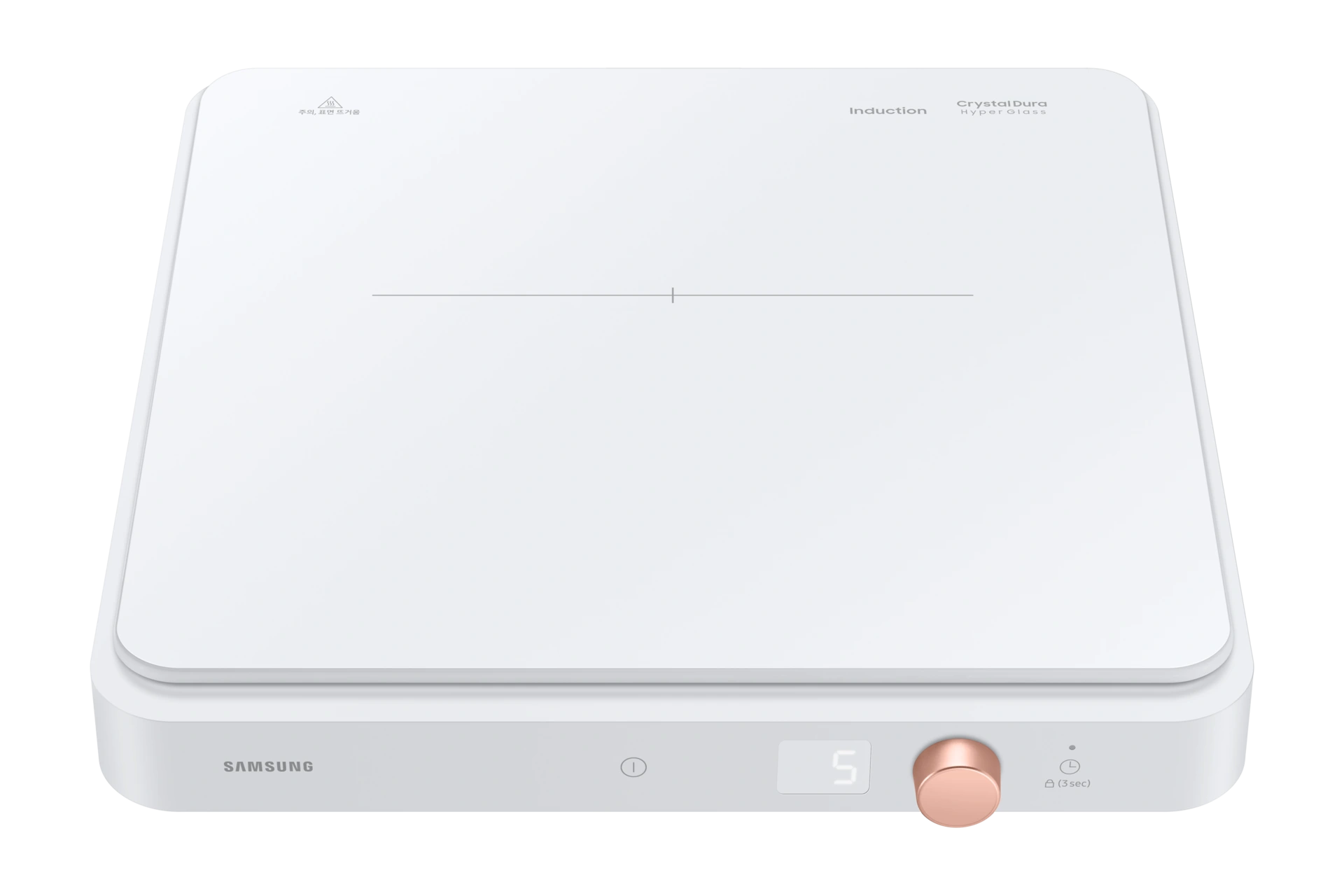
Forty-Six Millimeters of Cooktop: Samsung Takes the Gas Burner Out of a Rental Kitchen
Story & products
Living alone, cooking often runs into two practical obstacles: gas needs hookup and leak checks, and the rental counter is already a thin strip between sink and cutting board. In a one-room or officetel, everyday cooking might mean one bowl of noodles, an egg, reheating leftovers. Cutting the counter and booking a built-in install for that is rarely worth the money or the wait. Those small inconveniences can matter more to everyday cooking than the choice of a full-size electric range.
Samsung launched The Plate 1-burner induction NZ31DG200CFH around April–May 2024. The official page is plain: portable single-zone induction; no cutout, plug in and cook; about 310 × 320 × 46 mm; up to about 2000 W; NEG ceramic glass; white with a rose-gold dial (black is another series variant); LED display, power levels 1–10; timer, button lock, residual-heat display, overheat detection, pan absence detection; cord about 2 m. The supplied article records a Samsung.com reference of about ₩139,000 and comparison-site prices around ₩126,000–174,000. Those figures vary with promotions; the separately dated product information below gives this publication’s current price check. This piece asks one question. Do you want a cutout install, or a forty-six-millimeter slab on the counter?
Measure the 31 by 32 cm footprint first, then talk about “no drilling”
NZ31DG200CFH’s core move is plugging in, not rewriting plumbing or wiring. Official copy says no cutout or install work—plug it in and use it in a suitable location. For rentals that means cooking without a cooktop cutout or built-in installation. The footprint is about 31 cm wide by 32 cm deep, with a thickness of 46 mm. Measure the strip beside the sink before you buy.
Two thousand watts sounds like “small burner, real heat.” For one-person boils, eggs, and soup reheats, it is usually enough. Levels 1–10 read on the LED so you are not hunting icons. The rose-gold dial gives you a direct physical control. Official scenes put it on a kitchen counter or a dining table—it can keep cooked food warm during a meal when set up there according to the manual.
The thin white plate looks more like furniture than industrial gear. For someone living alone, the real buy question is often: keep the gas contract? Cut another hole in the counter?
What the lock, timer and pan detection actually do
A portable induction hob is still a high-power appliance. The safety list matters more than the look. Official and spec-site copy lists timer, button lock (child lock), residual heat, overheat detection, and pan absence detection. The NEG ceramic-glass surface has fewer awkward grease-catching corners than a gas burner. It still needs protection from impacts and improper heating; follow the manual’s placement and cookware requirements.
Cord about 2 m. Official caution: prefer a wall main outlet; if you must extend, use 16 A / 250 V or higher alone, and do not share a strip with other high-draw gear or power may cut out. At two kilowatts, the socket’s capacity matters as much as the space on the counter.
Ten power steps let you move from a boil to a simmer with the dial. The lock helps prevent accidental input. Detection of absent or unsuitable cookware does not guarantee protection against boiling a pan dry. A timer does not replace supervision while cooking, whether you are heating soup or milk.
Making room for the pot you use every day
Built-in electric cooktops need a cutout, circuit prep, and an install day. The practical questions are simple. Is there room for a 31 by 32 cm footprint? Is there an outlet that can carry two kilowatts? For one-person households it stands on the “small but can cook” line.
There is no need to call one burner a banquet kitchen. It makes room for the pot you actually heat each day, without arranging a gas hookup for that one burner. Forty-six millimeters of thickness is a counter detail you feel after use—cutting board and dishes can still squeeze beside it, without a gas pedestal lifting a ridge.
Living alone well can mean “plug in and the pot is on”
Solo cooking is rarely halving a commercial kitchen. It asks whether you still want a gas contract for one bowl of noodles. The white, forty-six-millimeter hob combines up to two kilowatts of power with plug-in installation, ten dial settings, a timer and pan absence detection. It will not make you love cooking. It can cut how often “I want something hot tonight” means a hookup call.
Turn the dial to the level you need. The LED lights. If that short loop works on weekdays, the counter strip is worth it. If it only poses for photos, even a thin board is just a glass brick taking space.
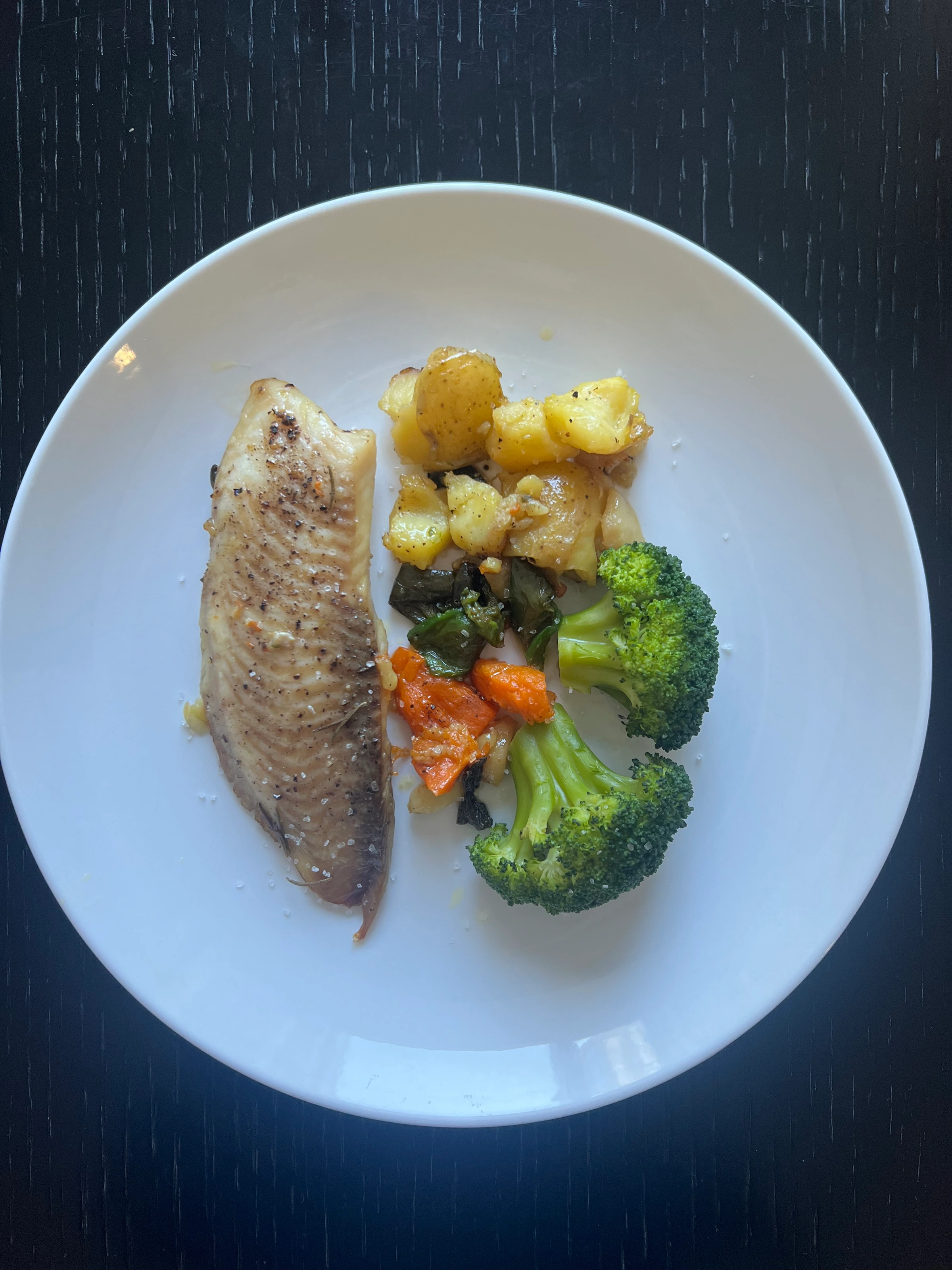
The Base
Story & products
A poster in a biohacking community made a bold claim. Once exercise, diet, sleep and stress are optimized, he argued, science has very little else that produces a substantial improvement. Correcting a major deficit belonged, in his view, to medicine. He also wondered whether getting those everyday habits right deserved the name biohacking at all.
The supplied snapshot recorded about 47 upvotes, 81 comments and an upvote ratio of 0.84 under the flair Longevity & Anti-Aging. What follows is an account of that exchange, including personal claims and experiences. It is not a survey of the community or a set of medical findings and shopping recommendations.
The poster described a sweet spot for exercise frequency and intensity, with risks potentially outweighing benefits on either side. He thought the useful range was more attainable than people assumed, without becoming the world's strongest person or pursuing marathon extremes. Sleep and stress followed a similar logic for him. Many people ate poorly or exercised too little, he acknowledged, but did correcting that need a new name?
He extended his argument to IQ, brain plasticity and cognition. As he understood it, supplements, pills and puzzle training did not produce meaningful, lasting gains in intelligence beyond ordinary education and vocational training. Correcting a substantial deficit still counted as medicine to him. The replies challenged both his definition and his assumptions.
What counts as a hack?
One commenter called the argument a strawman. Deliberately changing a lifestyle through data or self-experimentation was already biohacking in their view, including work on exercise, diet, sleep and stress. Their illustration put the foundations at 80% and the remaining opportunities at 20%. Discussing the latter did not make the former unimportant.
Another described medicine as reactive and wellness as proactive, then criticized biohacking as a label often used to sell shortcuts. The promise was the same return with less time, effort and sacrifice. That was the commenter's distinction between concepts and marketing, rather than a definition everyone accepted.
A sleep example made the disagreement practical. If someone simply stayed up too late, one person argued, going to bed on time barely qualified as a hack. Enough time in bed accompanied by fragmented, inefficient sleep and persistent tiredness raised a different problem. Looking for a less obvious cause or adjustment came closer to their idea of an intervention. Diet and exercise could involve similar distinctions.
Different people want different outcomes
A critic thought half the forum seemed to involve taking large quantities of supplements and vitamins that a balanced diet could already supply, then excreting the excess. Another warned that fat-soluble vitamins could accumulate, and that treating vitamin A like candy presented a different risk from B12. The comments addressed different issues; they did not establish one judgment about every supplement.
Someone else challenged the assumption that everyone was optimizing general health. Athletic performance, endurance, strength, recovery from injury and capacity for activity were also goals. They believed those goals left room for interventions beyond diet, sleep and stress alone, and saw medicine and biohacking as different ways of interpreting an intervention.
One reply invoked intense pleasure during mania, steroids and stimulants to dispute the idea that ordinary or optimized functioning marked an upper limit of experience. It also acknowledged consequences. These examples belonged to the argument, without making a short-term sensation a health benefit or supplying instructions for use.
Other comments revealed different reasons for being there. Some missed earlier, more experimental discussions and disliked the dominance of supplement stacks and marketing. One person had arrived after the forum was mentioned at a psychiatry conference. Another said long-lived communities might never have heard the term and simply ate well, slept and stayed active. Someone questioned how many peptide users were pursuing athletic performance rather than abs and impressive lifts. Peptides are short chains of amino acids; the thread did not provide statistics to answer that question.
Gene testing, including drug-response genes, became another example. A commenter pointed to differences in caffeine metabolism to explain why telling everyone to do the same thing could fall short. Others discussed Silicon Valley, wearables and data, or recounted doctors discouraging excessive attention to sleep scores. These were accounts of particular circumstances, not a shared testing or treatment plan.
What does an experiment establish?
Skeptics called biohacking a fashionable term for healthy living. One sharper criticism concerned placebo effects and confirmation bias, with people chasing immediate results while others sold promises. Expectations can shape reported feelings, and selective attention can favor evidence that supports a prior belief. The commenter's complaint was about how easily those possibilities disappeared from discussion.
Supporters offered brown fat, altitude training and red blood cells, heat shock and HRV, or heart-rate variability, training as examples of deliberate biological intervention. One believed there was relatively strong evidence for lasting physiological changes. Others mentioned sauna, cryotherapy, red light, hormone optimization and implants. These were proposed avenues and participant judgments; the exchange did not establish the evidence, appropriate population and risks for every item.
A participant described fasting with water and electrolytes for up to about 26 days, cold baths lasting minutes followed by shivering and a feeling of greater weather tolerance, and meditation they still found difficult but believed had documented benefits. They also mentioned aggressive martial-arts stretching, knuckle and shin microtrauma conditioning, and military-style movement through the day with frequent sets of roughly 20 pushups. They felt short sets improved repetitions faster with less injury. That safety claim remained part of an individual account, not a demonstrated training plan for others.
Another commenter thought the approaches that worked often took time, intention and discomfort, while people wanted a magic pill or injection. Someone argued that if diet and exercise accounted for 80%, they deserved most of the attention; a new training method or micronutrient interested them more than another supplement or peptide. One broad definition was simply using biology to move toward personal health goals, while recognizing that useful ranges were hard to find and biomarkers differed between people.
Before the next purchase, it helps to separate the desired change, existing habits and the basis for expecting a benefit. A measurement, a personal feeling and someone else's promise are different kinds of information. Other people's experiences can prompt thought without deciding the next intervention for you. Taking everyday habits seriously leaves room for curiosity.
The content of this article is only for viewing, reflection and your own judgment. It is not an instruction manual. It is simply part of what exists in the world.
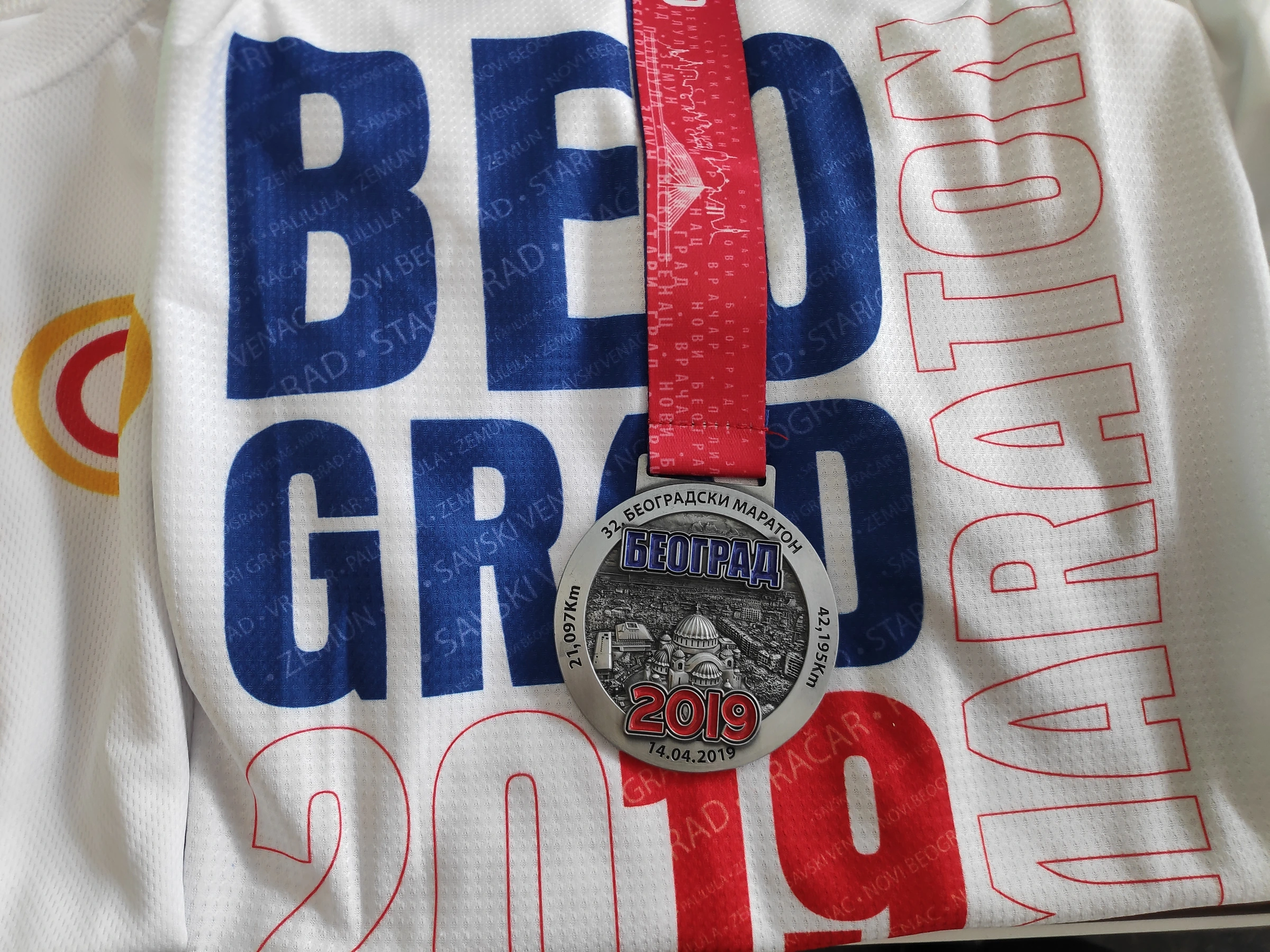
Price Tag
Story & products
A runner considering a return to racing opened the San Francisco Marathon website and found an entry fee of about $430. His memory of race prices belonged to another period: around $130 at the NYRR member rate for New York in 2008, and about $80 for Boston in 2004. Marriage and children had interrupted his running life. Now that racing felt possible again, the price was a surprise.
Big Sur, the other California marathon on his bucket list, came to about $350 after processing fees in his search. He put inflation since 2008 at roughly 56%, and the increase in a decent pair of running shoes at 50–60%. Entry fees seemed to be more than three times what he remembered. He was also seeing $50 5Ks and $75 10Ks. Was he being cheap, he asked, or had prices got out of control?
The supplied snapshot recorded about 263 upvotes, 184 comments and an upvote ratio of 0.94. The prices and cost claims below belong to that discussion: recollections, searches and opinions from the poster and commenters, rather than a current official fee list. Comparing different races in different years does not establish the increase at any one event.
Why people still pay
Some commenters pointed to the post-COVID running boom. More runners were concentrating on a handful of sought-after marathons, and they expected prices to rise until demand fell or entry standards increased. Another repeated a rumor that San Francisco was using price to limit the field, yet people kept paying. That was not a confirmed statement from the organizer.
Others simply thought $430 was steep for a non-Major. One compared race pricing with concerts and spectator sports: an almost-full venue at $500 a seat could be preferable to selling every seat at $200. It was an interpretation of organizers’ incentives, not access to their accounts.
Accommodation added another bill. A commenter cited roughly $800 a night for Boston marathon weekend, against $300 the weekend before. For a travelling runner, the entry fee is only part of the cost of choosing a particular race.
Permits, police and insurance
Other contributors described the work behind an event. One said municipalities increasingly required paid officers at intersections and overtime for public-works staff putting up and taking down barriers. Jobs once covered by volunteers could require paid personnel as races grew. Someone with organizing connections relayed that staffing requirements had risen roughly fourfold in two decades. That was a limited account, not a survey of the industry.
Insurance was another explanation. A commenter argued that organizers were passing increases on to runners. Small and medium-sized organizers listed permits, road closures, police, aid stations, medical provision, medals, portable toilets and shirts as rising expenses. Some said they barely covered costs and charitable commitments, and did not enjoy raising fees. Frustration with a popular race’s pricing can coexist with an understanding of those pressures.
A European comparison appeared in the thread too: about £80 for London, €215 for Berlin, €169 for Paris, €99 for Milan, €120 for Madrid and €70 for Lisbon. The commenter thought the problem looked especially American, with European Majors relatively affordable despite difficult entry lotteries. These were the commenter’s figures, not verified registration offers.
Another runner recalled paying about $90 for Marine Corps in 2010, $180 in 2019 and $240 in the year of the post. Following one event over time makes the source of that runner’s frustration easier to see, although remembered prices still need their original context.
The experience behind the fee
One person thought Big Sur justified its cost through the Highway 1 closure, buses to the start and strawberries at mile 20. A San Francisco local felt differently about that race’s difficult course, early start and limited crowd support, and would not pay the marathon fee. A claim that a missing title sponsor explained the price remained unverified. Large claims about Chicago’s race-day municipal costs were also explicitly unverified by the person repeating them.
Whether an experience feels worth its price and what it costs to organize are separate questions. Scenery, a long-held ambition, service and the chance to test training can matter differently to different runners. Willingness to pay does not settle how seriously someone runs.
Cheaper fields and optional souvenirs
A commenter objected to small 5Ks and 10Ks bundling medals with poor-quality shirts. They wished opting out could save $20–30, no longer wanted to pay for anything shorter than a half marathon, and hoped small trail events often costing under $100 would remain accessible.
Another preferred parkrun’s usually free, volunteer-run timed events, giving something back by volunteering periodically. Someone reported running Eau Claire in Wisconsin for about $75. Others had enjoyed local charity 5Ks and 10Ks costing $30–45. These were alternatives participants had found, not a requirement that everyone make the same choice.
One commenter used the phrase K-shaped economy to describe the split between people feeling squeezed and those still paying high fees. Another said 42.2 kilometres was the same distance anywhere and had started spending elsewhere.
A training goal and a registration budget deserve separate consideration. You can want a particular race while acknowledging its price, or choose a cheaper event without defending your commitment. A medal can mark real effort. For the next entry, the useful question is what you want from the event and whether that experience is worth the cost to you.

The Pass
Story & products
A runner spent 41 days travelling on foot from Dali, Yunnan, to Lhasa, Tibet, following the G214 and G318 national highways. In his r/Garmin account, he reported 1,915 kilometres and more than 26,000 metres of climbing, with a base pack weight of about six kilograms. He travelled alone, resupplying along the way without a support vehicle. Fastpacking, in this account, meant combining walking and running while carrying as little equipment as possible.
The numbers could make a striking finish poster. His account also included days of exhaustion and several occasions when he cried while running alone through high-altitude passes. He kept going step by step, pass after pass, until he reached Lhasa.
He ended with the words, "I'm pretty tired. I think I'll go home now."
In the comments, he called these the happiest 41 days of his life. Both statements belong to the journey. Leaving either one out would make it less honest.
Forty-one days on the highway
Trail and ultra discussions can become absorbed in finishing times and public photographs. Those records matter, but they leave much of a journey outside the frame. This runner described being alone, finding his own supplies and struggling emotionally on the passes. His commitment included moments that would be awkward to fit into a celebratory poster.
He also explained what came before. In 2021, he had cycled about 8,000 kilometres through Tibet and Xinjiang over three months. A growing passion for marathons followed. He felt that life was too short to leave the things that moved him unexplored, and connected that feeling to this trip.
His previous longest single run was 110 kilometres with more than 6,000 metres of ascent in 2024. This was his first continuous multi-day running journey. He brought substantial travel experience while still encountering a new kind of effort.
The supplied snapshot recorded about 541 upvotes and an upvote ratio of roughly 0.996 on r/Garmin. Some readers simply expressed admiration; others suggested submitting the route as an FKT, a fastest known time. A suggestion in the comments does not establish a record. The distance, ascent and equipment details remain the runner's own report.
A light pack still comes with daily work
His equipment list named a Garmin Fenix 7 Pro Solar, a Salomon XA 25L pack and Black Diamond Z-Poles. He reported about 1,050 kilometres in ASICS Novablast 5 shoes and 865 in Superblast shoes, switching on day 23.
When a commenter asked whether the shoes had survived, he gave the date of the switch. The commenter guessed that the first pair had died. That was a guess, not a measured finding about their condition or a replacement interval for everyone else.
Food was familiar and practical. He ate local rice plates with toppings, or gaifan, and Tibetan dishes. In county towns with delivery, he treated himself to roast chicken, burgers and boba milk tea. He reported losing about five kilograms along the way. That describes his experience; it supplies no weight-loss target for another traveller.
Documenting the trip added work. Asked whether filming and evening editing became a burden, he said shooting did not take much time, but editing at the end of each day could easily take an hour. Internet connectivity in mainland China made it harder. The six-kilogram figure describes the pack, not the full demands of a day.
What the watch can say
A commenter joked about an extraordinary achievement accompanied by Garmin reporting a lower VO2max and an unproductive training status. The runner said he was used to it. A foot injury had reduced his running the previous year, when the estimate fell to 45; he later said it was back at 53.
Other commenters pointed to altitude, temperature, poor sleep and insufficient recovery as possible explanations for higher heart rates and lower watch estimates. Those were participants' explanations. VO2max here is the watch's estimate of aerobic capacity, and unproductive is a training-status label. Neither should be treated on its own as a medical diagnosis.
A deeply satisfying trip can also be physically exhausting. The watch records one view of the effort; the traveller describes another. Taking the data seriously means asking what it measures. Taking the experience seriously leaves room for readings that do not fit a triumphant narrative.
Happy, exhausted, ready for home
He credited cyclists, hikers and Tibetan pilgrims with encouragement and support along the way. Travelling without a support vehicle did not remove human connection. Turning self-support into an ideal of needing nobody would erase people he deliberately thanked.
His happiest 41 days included crying on mountain passes and wanting to go home at the end. Happiness did not cancel exhaustion, and exhaustion did not invalidate the pleasure of the journey. There is more to learn from keeping those feelings together than from supplying him with a slogan about never stopping.
The comments become useful when they get specific. Questions about food, shoes, filming and the watch reveal how someone lived through 41 days, beyond the headline distance of 1,915 kilometres.
Readers can admire the journey without turning it into their next itinerary. Another person's route and six-kilogram pack are not a ready-made plan; altitude, sleep and individual circumstances still matter. A finish photograph can mark an achievement. The passes crossed along the way deserve to remain in the story too, including the wish to return home after an exceptionally happy stretch of life.
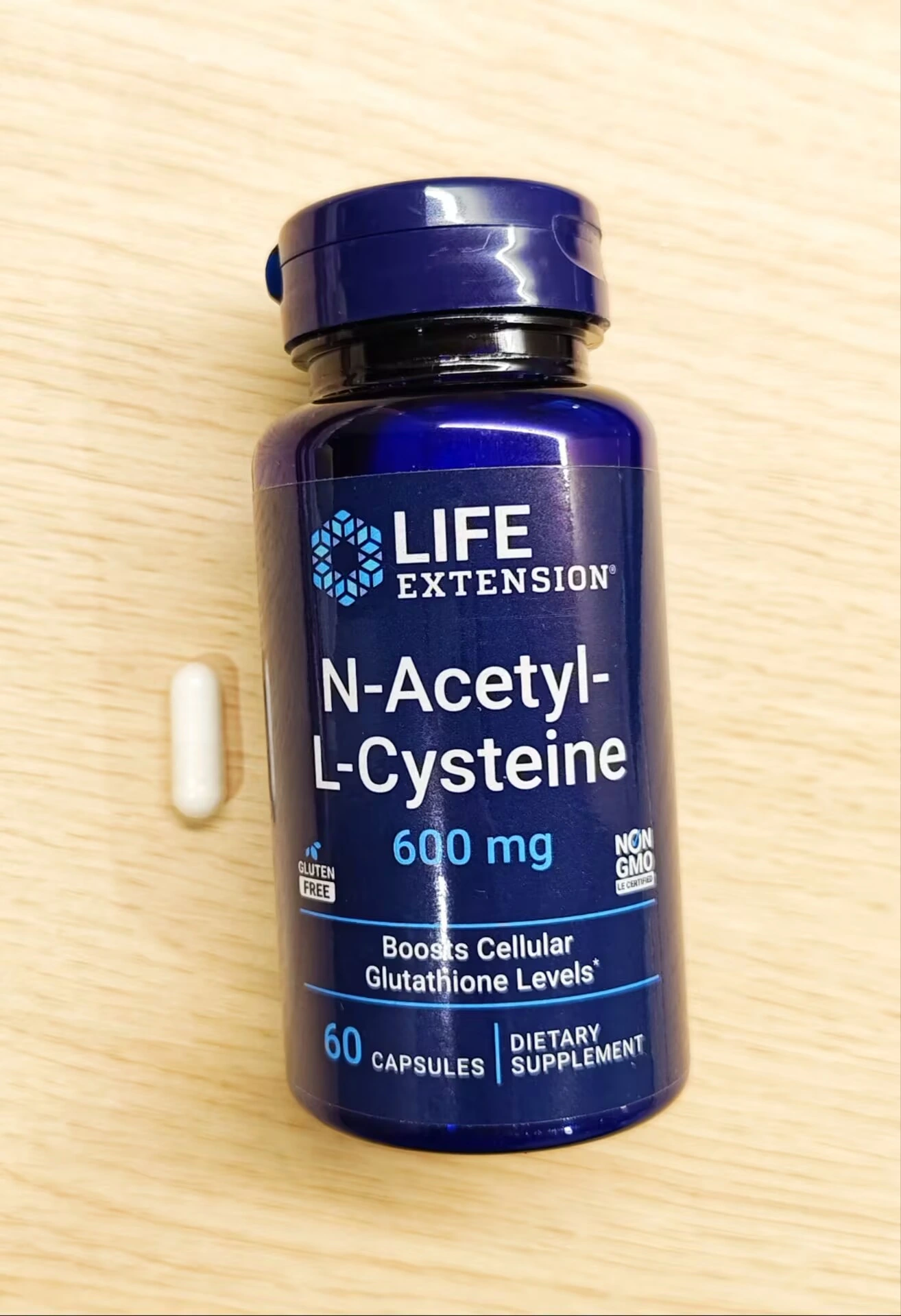
Eighth Week
Story & products
A writer in the Nootropics community placed the turning point of his NAC experience at week eight. After consistent use, he said, he woke one morning and realized that his behavior had been nudged, little by little. It was a different timescale from the familiar urge to feel something on day one.
NAC is N-acetylcysteine. In this discussion it was described as a slow-to-show “stabilizer.” At collection, the post had roughly 16 upvotes, 80 comments and an upvote ratio around 0.64. Agreement was far from universal. The doses, durations and bodily experiences below are self-reports, which cannot establish causation or supply a personal supplement regimen.
Turning down the volume
The author reported taking 1200mg at bedtime every night for more than two months, with no intention of cycling off. The main change, he said, was reduced “signal intensity.” Junk food and pornography remained appealing, but the pursuit felt less urgent and the pleasure less intense. Irritability and negativity seemed quieter too.
He denied experiencing emotional blunting. After eight weeks, he described greater control, less excitability and more stability. His metaphor was a stabilizer that lifts you slightly when down and gently lowers you when up.
His description of anhedonia was more complicated. Mundane tasks became tolerable, while small pleasures such as cotton candy, prolonged gaming or energetic play with his child became “meh.” Academic and work interests, he said, were largely untouched; he could detach and return on his own terms.
The distinction between control and diminished pleasure deserves attention. Eight weeks was his interpretation of his experience, not an established onset time for everyone. His preference for the word stability cannot define someone else’s similar feelings.
A change someone else may not want
One commenter compared regular use to a “soft antipsychotic” and said they would not recommend it unless becoming an emotionless robot helped someone reach their goals. That is a commenter’s metaphor, not a drug classification or demonstrated mechanism. The author agreed with the description and claimed it did not bring problems such as weight gain or movement disorders. His reply cannot establish safety either.
Others reported severe anhedonia and barely recognizing themselves. Another felt that rumination and intrusive thoughts had eased, leaving a more stable version of themselves. Someone objected to treating a supplement as a psychoactive drug. A response turned the discussion toward supplement culture: why does saying “it didn’t work well with me” so often prompt attempts to fix the person rather than accept the criticism?
Dose did not settle the argument. A commenter reported 2000mg daily for nearly a year without breaks, with neither the effects in the main post nor emotional blunting. Another felt effects on day one but described crippling anhedonia after more than a week, questioning the eight-week claim. The author suggested that some people reporting unbearable anhedonia had treated pleasure-seeking as their default lifestyle. That judgment reaches beyond describing his own experience, and helps explain the disagreement.
Keeping warnings in context
Some comments raised copper, zinc and selenium depletion, histamine intolerance and taking breaks. Others discussed gut dysbiosis, DAO, histamine, sulfur intolerance and suppressed dopamine peaks, particularly for people already struggling with motivation. These were commenters’ proposed mechanisms and advice. The thread did not validate them as clinical conclusions.
The personal reports varied too: headaches said to resolve after stopping, acne, and unusual alertness and anxiety attributed by the commenter to histamine. One person described daily use for a month without trouble, then breathlessness starting a day after stopping and persisting for three years. The reported sequence alone cannot establish NAC as the cause.
Someone suggested low-dose lithium and ginkgo. The author said he used lithium but distrusted herbals. This records what the exchange contained; it does not recommend that combination. Positive experiences, adverse experiences and explanations offered for them need separate consideration.
Eight weeks cannot decide for a body
“Give it time” meets two different situations here. One person may not yet notice a change. Another has noticed one and dislikes it. Keeping only the delayed-benefit story can make reduced pleasure or motivation sound like stages to endure. Turning one bad experience into everyone’s inevitable outcome erases the contradictory reports as well.
Independent judgment starts with distinguishing a feeling, a hypothesis and a verified conclusion, then asking what is known about dose, duration and other substances. Someone may value feeling steadier; someone else may refuse the loss of small daily pleasures. Neither needs a verdict about whose lifestyle is superior.
Another person’s eighth week and your next bottle remain separated by more than a post can resolve. Immediate sensation does not establish suitability, and waiting longer does not guarantee benefit or safety. Keeping the account as material for observation and thought preserves the conflicting voices better than copying it into a schedule.
The content of this article is only for viewing, reflection and personal judgment. It is not an instruction manual. It is simply one part of the world that exists.

Frost Bridge
Story & products
At the Baystate Half Marathon in Lowell, Massachusetts, on 18 October 2026, a runner finished in 1:19:48. He met all three goals he had set himself: break 1:20, break 1:21, and improve on his previous best of 1:22:51. Yet the details that linger from his report include a frosty bridge and the decision to let a pack go after mile six.
This is one runner’s account, with roughly 34 upvotes and 14 comments when collected. It shows how a training plan, race numbers and decisions made on the day came together. Its usefulness ends well short of a prescription to copy Marathon Excellence.
Getting the sessions to fit
He had trained seriously for about five years. A self-described mediocre 200/400 runner in high school, he moved from Hal Higdon’s free plans to several years of Pfitz, tried a Daniels half-marathon plan and disliked it, then ran 2:57 for his first marathon using Pfitz 12/70.
Writing his own Chicago plan exposed two gaps: progression in the 95–100% workouts, and the balance between hard midweek and weekend sessions later in the plan. A good workout could leave him too tired for the next. A nine-week half-marathon build in March still produced 1:22:51, but he felt it had been too short to build the bigger sessions properly.
John Davis’s Marathon Excellence, through Running Writings, helped him understand the structure. Its full-spectrum, Canova-style approach arranges work from easier to race-specific intensities within a cycle. This time he built a full-spectrum base before moving toward half-marathon-specific work, peaking at about 60 miles per week.
The interesting change is how the sessions connected. A newer book or another hard workout can look like proof of commitment. Neither removes the need to manage progression and recovery.
The forecast was still over eighty minutes
Summer heat kept his threshold work around 6:0x per mile, and float workouts were difficult to bring down to the target 6:06. Most of his 95% runs seemed to suggest fitness closer to 6:10 pace. A VDOT estimate from his 10k pointed to the middle of the 1:20 range. He doubted that sub-1:20 was available this cycle.
His taper departed somewhat from Davis. He made a larger mileage cut, about 45 to 28 miles, retained intensity and allowed more recovery, following a pattern he preferred. The race plan allowed room for judgment too: start around 6:10–6:15 per mile, then run by feel rather than forcing 6:06.
Recent results and threshold sessions gave him useful estimates. Weather, footing and his response on the day would still matter.
Frost on the metal plates
The two-loop course follows the Merrimack, reaching Rourke Bridge at about 2.5 miles. In his account, the “temporary” bridge built in 1983 had lost much of its asphalt by 2026, leaving mostly metal plates. On the first crossing, a collective “woah” went up. There was frost, and runners were trying not to slip.
A commenter who ran the same race remembered it similarly. Another was glad never to have crossed it in the rain and linked the Massachusetts replacement project. Sunlight made the second crossing somewhat better, though still rough.
His opening two miles were around 6:15, followed by running near 6:05. After mile six, part of the pack pushed harder than he wanted to go. He let them leave, hoping to catch people later. Halfway showed about 40:17 on his watch, still pointing toward mid-1:20. Ten miles took 61:36; roughly 61:00 would have put him on 1:20 pace.
Then he began taking time back. His closing miles were 5:59, 5:48 and 5:44. He saw about 1:19:20 on the finish clock and crossed in 1:19:48, half gasping and half sobbing. A clear negative split, then a medal, a space blanket and orange slices.
The sequence resists a single rule. The training forecast had been cautious, the bridge introduced a hazard, letting the pack go required a decision, and the late acceleration worked. None of those details explains the whole race alone.
Keeping a judgment of his own
He called it a “perfect day.” Hard work does not always pay off, and it feels good when it does. Weather, race and how he felt came together. He never spent the second half simply hanging on for the finish. It was his best VDOT performance so far, and for once it came in a half. His takeaway was that every specific workout need not be crushed for a race to go well.
Next came a winter 5k. Closing his recent 10k in 18:0x and the half in 18:1x made his 17:57 best look vulnerable. Commenters praised the negative split, fellow racers discussed the bridge, and someone asked about adapting Marathon Excellence to distances from 5k to the half. He said the general phases were similar and the specific phases differed; he wanted to continue with the approach. There was shoe talk too, incidental to this exchange rather than a product verdict.
That is a useful form of independence: learn from a book, recognize what your own plan missed, read a prediction and keep making decisions, adopt a structure while retaining a taper that suits you.
Another runner’s frosty bridge and your next half remain separate situations. Fitness, weather and course will differ. This report leaves questions worth carrying into training about progression, recovery, following a group and letting one go. Those questions offer more than either “full-spectrum always wins” or “running by feel is not serious.”
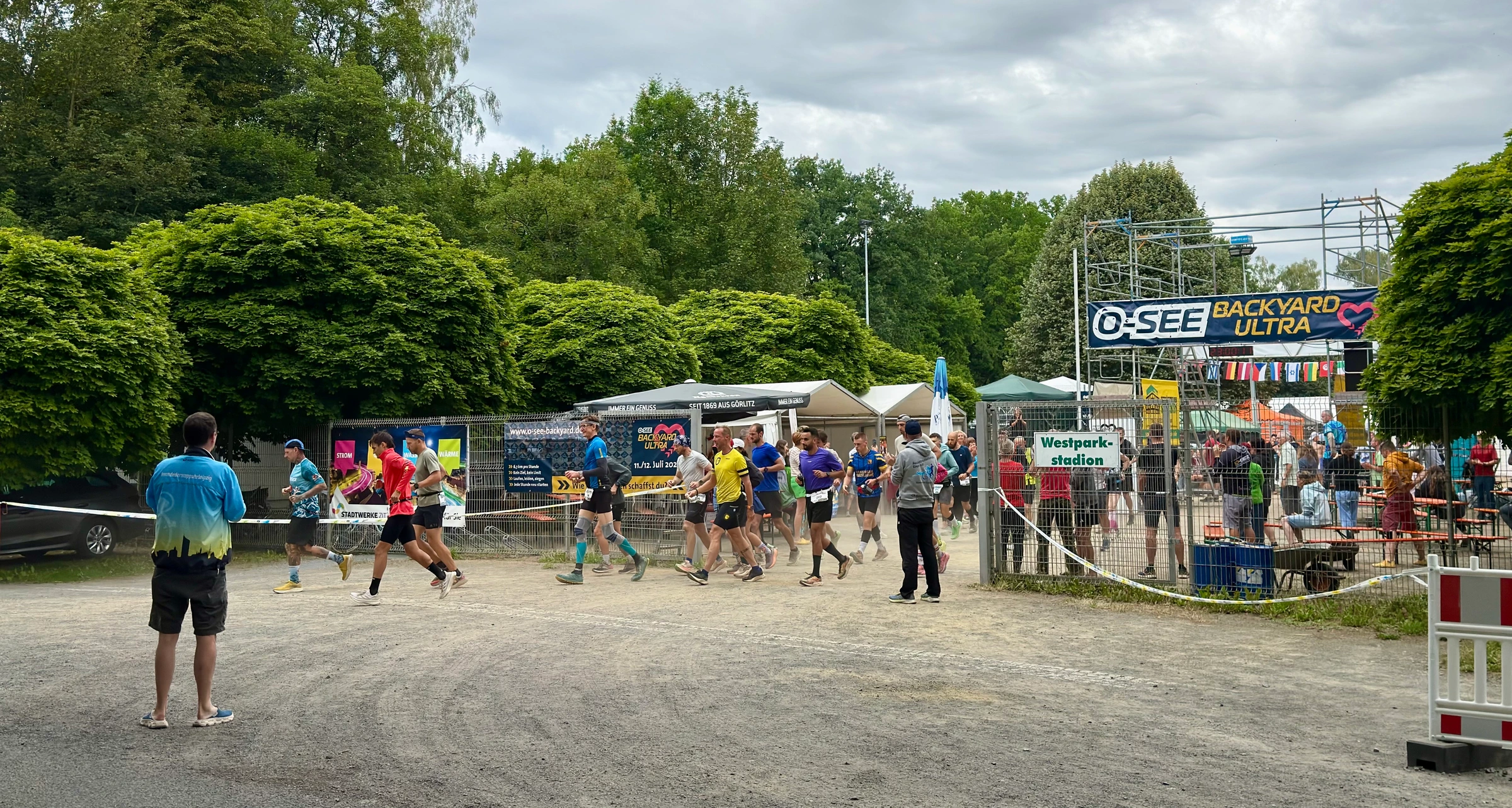
Before the Last Yards
Story & products
Team USA won the 2026 Backyard Ultra World Team Championship with 1,120 yards. It also had the slowest average lap among all 67 nations and led only during the final 37 yards. Belgium’s Geerts and Steyaert reached 124 yards, the farthest anyone had run at this championship, while their team finished third. Taken together, those results complicate the familiar assumption that the champion must be the fastest.
The discussion began with a short community post, collected at about 68 upvotes and eight comments, and continued on a public analysis page titled “The middle wins.” The post, comments and analysis concern one championship. They offer a way to read its results, not a pacing prescription for every backyard ultra. They also leave individual race details and splits unstated.
The slowest average, a late lead
A backyard ultra starts a loop each hour, usually about 6.7 kilometres or 4.167 miles. Runners must complete it within the hour to remain eligible for the next start. Miss the limit and you are out. A “yard” here means one loop.
Running talk often treats faster laps and shorter averages as proof of seriousness or dominance. Peak athletes draw attention; leading from start to finish makes an easy championship story. The United States’ result resists that neat version. The slowest average coexisted with the title, and leading only for the last 37 yards still ended in a total of 1,120.
Each number describes something different. Average lap time concerns speed. The timing of a lead describes the race’s progression. Accumulated yards concern the team result. Picking only the most striking measure can turn a team championship into a story about its most visible runner.
What the tenth runner tells us
“The middle wins” looks at full teams with at least 12 runners. Its argument is that the tenth runner’s performance often correlates more closely with team placing than the performance of the team’s best runner. That shifts attention toward the people who keep the team accumulating yards beyond the spotlight.
A commenter adds an early-race comparison. Over roughly the first 40 yards, while the leading nations still had their runners in, the US averaged about 52:21 per lap. Australia averaged about 47:25, Belgium 48:20 and Japan 48:32. In that comparison, the US was around 3:49 to 4:56 slower per lap.
The figures make the discussion more useful than another celebration of peak performance. How far the strongest runner goes and how long the tenth runner lasts are separate questions. Recognising the middle does not require dismissing the stars.
Nor does “the slowest team won” establish that going slowly guarantees a win. One commenter asks readers to account for elevation gain on the US loop. Course conditions and individual differences remain relevant, and an average over the first 40 yards cannot tell every runner’s story. An explanation of this result is not a tactic everyone can copy.
Belgium’s 124 yards and third place
Geerts and Steyaert took the championship’s farthest distance to 124 yards. The progression runs from 75 to 101, then 110 and now 124. Belgium’s team nevertheless finished third.
In the supplied thread, a high-scoring comment calls Belgium the real heroes: a small nation with great trail events and lovely, crazy people. Another calls Merijn and Ivo legends. Those reactions express what spectators admired. They do not automatically amount to an argument that Belgium should have received the team title.
Individual distance and team placing deserve to be understood separately. Admiring 124 yards does not require disputing the American win. Accepting the standings does not stop people seeing heroes in the third-placed team. The elevation reminder, likewise, deserves attention without becoming a complete explanation for every difference in pace.
Keep the measures distinct
This discussion gives independence a practical meaning. When someone says a champion must always be fastest, look again at average lap time and accumulated yards. When someone says slow always wins, bring course conditions and team depth back into the picture. Neither speed nor slowness needs to become the only acceptable virtue.
If you fear that running slowly makes you look unserious, keep that fear separate from what the race data show. Admiration in the comments can be moving, and the analysis of the tenth runner can change how you watch a race. Neither removes the conditions particular to someone else’s performance.
The next time a championship photograph catches your eye, it is worth asking how long the less visible teammates kept going. Your own next backyard ultra will still require decisions that fit your body and your course.
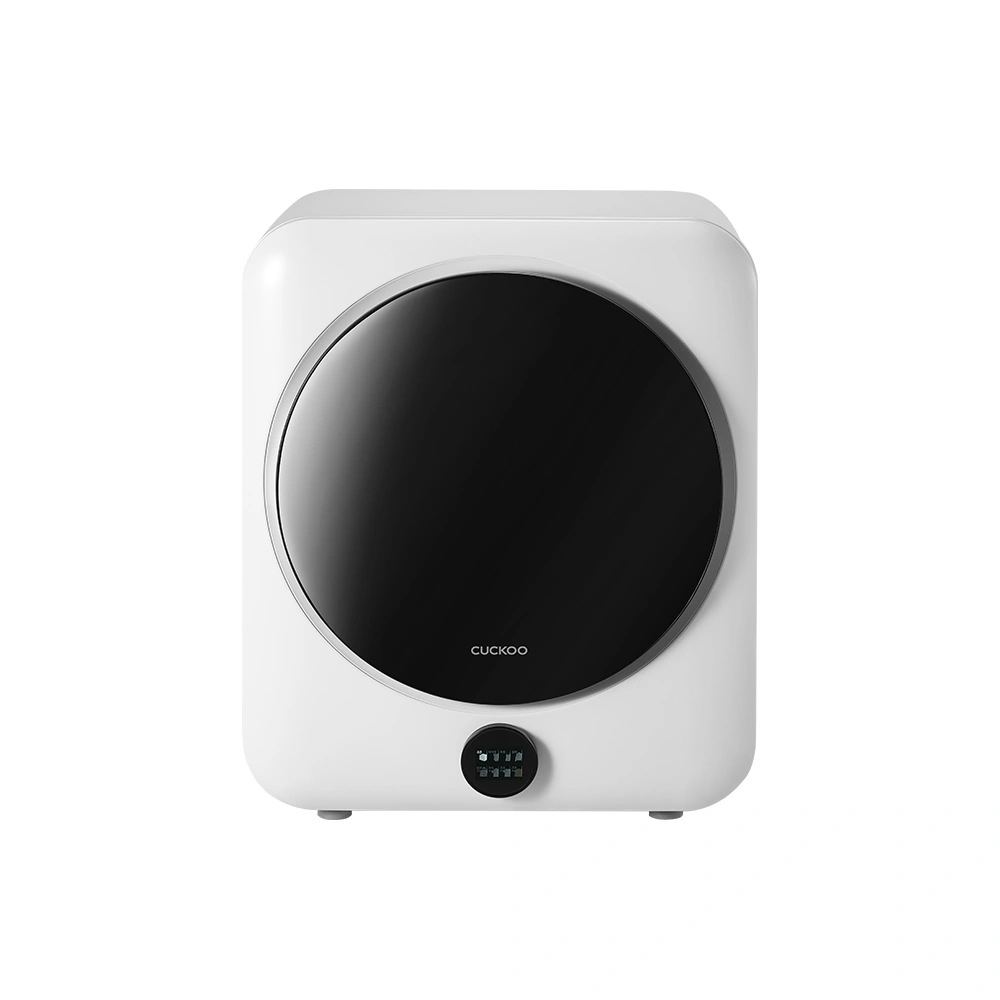
Three Kilograms and No Drill Holes: Cuckoo Pushes the Drying Rack Out of the One-Room Corner
Story & products
When you live alone, a drying rack can take up the very floor space you need to move around. In Korean one-rooms and officetels, damp towels and seasonal knits end up on chairs and doorknobs. Humid weather brings the smell before the clothes are dry. A vented dryer may need an exhaust hose, adding another installation job.
Cuckoo launched the white Mini Care CCD-A0310AW around December 2025. Its official shop and press materials describe a 3 kg capacity, dimensions of about W535 × H650 × D420 mm and 1100 W power consumption, with no exhaust hose or wall drilling required. Cuckoo Mall lists a normal price of about ₩359,000 and a retail reference of about ₩259,000. For a renter, the first question is where it will fit.
Measure the space before ordering
The machine is about 53.5 cm wide, 65 cm tall and 42 cm deep. Measure beside the entrance, at the foot of the bed or outside the bathroom before choosing a spot. Installation must still follow the manual. Press coverage mentions utility rooms, balconies and living rooms; the chosen location also needs the clearance required for use.
Three kilograms suits the sort of small daily loads a person living alone might have: towels, underwear and a few tops. Press materials list eight care courses, including standard, baby clothes and underwear, and describe bidirectional tumbling to reduce tangling. The LCD and quick dial make selecting a course straightforward; read the manual before first use. Specification sites and retailers put the weight at roughly 19.5–20 kg, so moving it later takes some planning.
The white body and round door look at home among furniture. If this small cabinet means the folding rack no longer blocks the aisle, it has earned its floor space.
Warm-air care and the noise reference
The brand describes 55 °C care airflow. Its press material promotes 99.99% sanitizing care, mentioning towels and baby clothes. An internal temperature sensor monitors drying and controls when it stops to limit over-drying. Nosearch also lists UV sanitizing, a roughly 30-minute quick course, about 20 minutes for deodorizing and 60/90-minute drying courses. Use the panel and manual for exact names and operation.
About 47 dB is the brand’s noise reference, a figure to consider for evening use or a home with children. The filter is washable, marketed as a “30-second washable filter,” and the drum is stainless steel. Overheat prevention, smart temperature sensing and motor overheat protection make up the “3-in-1 safeguard,” alongside an automatic stop when the door opens. Before buying, look at the parts you will have to clean yourself.
The shop estimates electricity at about ₩192 per cycle, depending on the tariff and programme. Specification listings give it energy class 5. Small capacity and hose-free installation have their conveniences, but energy use belongs in the decision too. Choose standard for everyday loads, quick when time is short, or deodorizing for clothes with odours, following the manual.
A fixed place for everyday laundry
A vented dryer may require an exhaust hose. This model avoids that installation step, while still requiring placement and use according to its manual. Press coverage calls it Cuckoo’s first own-brand dryer, after previously selling another brand’s machines. It addresses one-person homes and smaller loads; 3 kg is not a whole family’s change-of-season wardrobe.
Close the door and turn the dial to the course you need. If that makes the weekly laundry easier, the strip of floor by the wall is well used. If it only poses for photos, the round door is just another white box taking up space.
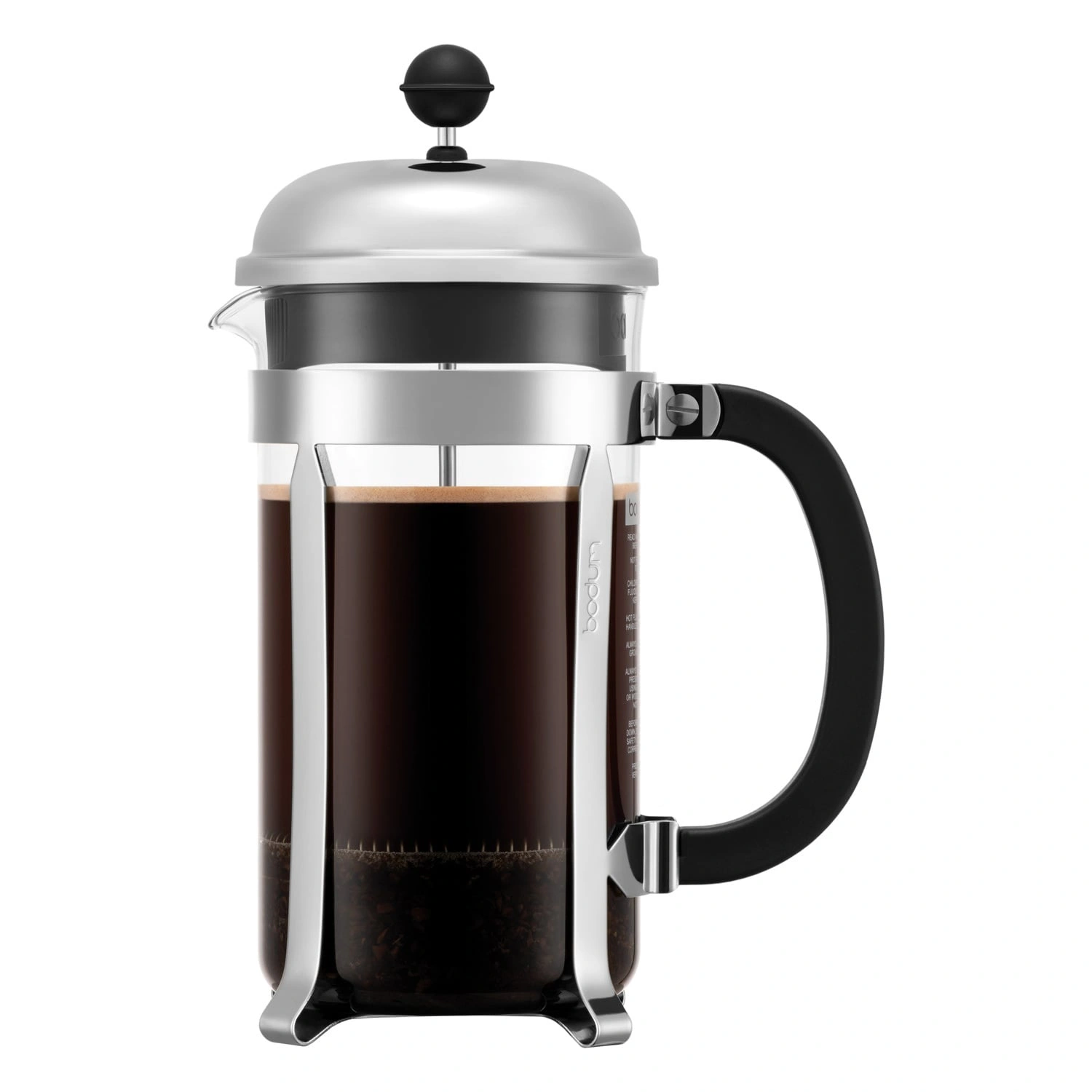
Four Minutes of Absolute Silence: Bodum Chambord and the Pre-Winter Training Mechanical Ritual
Story & products
Elite athletes despise the chaotic beeping of smart appliances. In a narrow European apartment before dawn, the mental fortitude required to face a freezing pitch is forged entirely in silence. The Bodum Chambord French Press refuses to connect to any network. It demands nothing but coarse-ground beans, hot water, and exactly four minutes of your time. There are no app notifications announcing "extraction complete" and no scheduling features. This stubbornly analog operation is the pre-match preparation ritual the author favors. One person, half a pot of black coffee, with the remainder poured into a thermal flask to go. The entire routine is executed with the cold, efficient precision of muscle memory, forming a core ritual for the solitary individual bracing against external pressure.
Grid-Independent Architecture
The cold, calculated union of a polished stainless steel frame and heat-resistant borosilicate glass strips away any weak reliance on electricity. It requires no outlets and ignores global voltage discrepancies, operating purely on basic thermodynamics and manual physical pressure to reduce brewing to its most primal mechanical form.
Precision Extraction Parameters
With a 1.0-liter standard capacity (8 cups), it requires the user to pour water at precisely 92 to 96 degrees Celsius. The brand recommends a four-minute steep; the author also values it as a tactical pause for a high-functioning mind.
Industrial Filtration Core
The stainless steel plunger and high-density mesh fit flush against the glass walls, isolating the grounds with ruthless efficiency. The polypropylene handle provides the only ergonomic warmth in a freezing morning kitchen, ensuring absolute stability and restraint during every downward press.
The L2M store respects and recommends this specific piece of equipment because it rejects the coddling nature of modern smart technology. It demands patience, precise thermal control, and manual force. This borderline obsessive analog ritual perfectly mirrors the extreme discipline and constraint of desires required by elite athletes to maintain relentless focus amidst the monotony of daily physical conditioning.

After the Assist
Story & products
A runner on r/ultrarunning announced their first backyard ultra win and included the two races that came before it. In May, their first attempt ended at seventeen yards and 10th place. In July, they ran thirteen yards and took the assist, the last opponent remaining before the winner, often described as runner-up. On the day of the post, they won their third race.
The win deserves celebrating. What stays with me, though, is that the runner kept the earlier results in the story. Tenth place and an assist were part of getting here. Calling both simply “not winning” leaves a lot out.
Seventeen yards, then thirteen
In a backyard ultra, each loop is about 4.167 miles, or 6.7 kilometres. Runners must finish before the hour and start the next loop on time; the last person standing wins. Yards tell you how far someone went. Place also depends on how long the other runners last, while the course changes what each loop demands.
The poster reported about fifteen thousand feet of gain across July’s thirteen yards. Asked which race it was, they named Sweaty Cox BYU and described roughly a thousand feet of climbing per loop. Those figures are the runner’s own estimates. Thirteen is smaller than seventeen, but that alone tells us little about the second performance. The terrain and the assist belong in the comparison too.
The race name prompted a small detour in the comments. Someone admitted actually googling “sweaty cox” to make sure it wasn’t a joke. An Austrian commenter mentioned a local race with around 350 metres, or 1,150 feet, of gain per loop. The same race format can involve very different amounts of climbing.
A winner who still wants twenty-four
Another commenter had completed twenty-four yards and barely cracked the top fifty. The new winner was envious and wanted to reach twenty-four as well. One person was talking about place; the other was looking at a distance they still hoped to achieve. Winning had left room for another ambition.
Someone also asked whether the July opponent was a mutual friend, and the poster confirmed it. Among the congratulations was “with all the work you've put in, it was only a matter of time”. At collection, the thread had roughly 368 upvotes and fifteen comments. Congratulations sat alongside the joke about the race name and a connection between friends.
That encouragement makes sense in its setting. It becomes a different claim if treated as a guarantee for everyone. “Third time’s the charm” describes this runner’s sequence of races. The post gives no exact yard count for the third race, nor pace, fueling or heart-rate data. It cannot supply a training plan that someone else can follow to a win.
Keeping the earlier races
I don’t think a championship should decide, retrospectively, whether the previous attempts were worth recording. May’s 10th place has its place in this account, as does July’s assist. The win is a happy development. The effort before it had already happened and did not need a championship to make it count.
Wanting to improve can coexist with taking a current result seriously. An assist needn’t be treated as surrender. Twenty-four yards needn’t lose their value because of where someone finished. Before comparing results, look at the course, the field and each runner’s race history. Those conditions determine how much the numbers can tell us.
Independent judgment comes down to distinctions like these. You can welcome encouragement while keeping a personal story separate from a repeatable method. Take inspiration from the win, then decide what to pursue at your own next race, under your own conditions. This runner still wants twenty-four yards. There is room for more than one measure of progress.
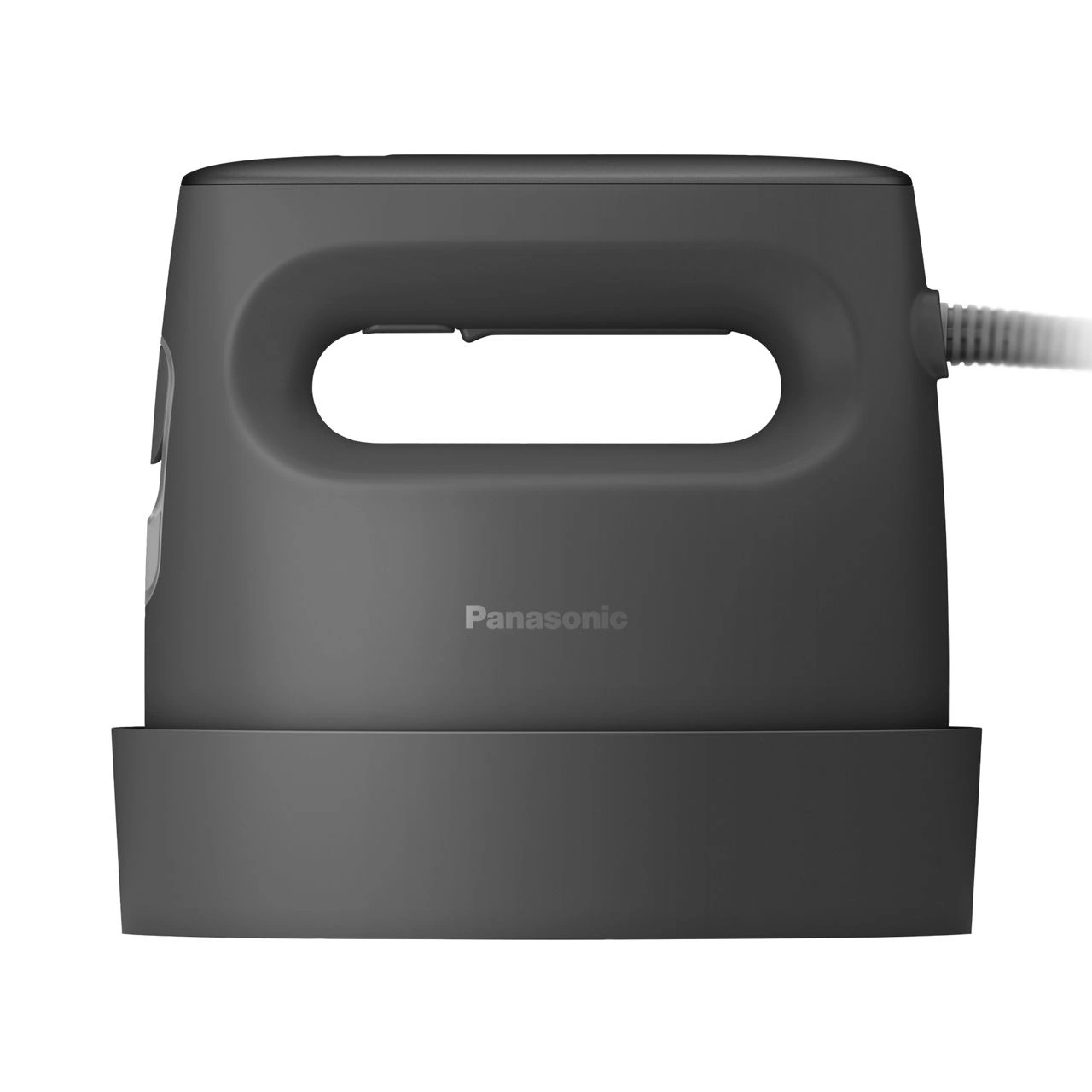
Seventeen Seconds and a Hanger: Panasonic Writes Morning Creases into Touch Steam
Story & products
When you live alone, mornings often bring two problems: there is never enough time to leave, and the shirt collar still holds last night’s fold. An ironing board takes up floor space, and you may not want to leave it out in a rented living room. Jackets, knits, and clothes you do not wash often keep subway or restaurant smells. Together, these small chores can affect how you look today more often than “do I own an iron?”
Panasonic launched the clothing steamer NI-FS70A on 1 March 2024. The official pitch is plain: hang clothes and smooth creases with penetrating steam; about 17 seconds to ready; body about 660 g without the stand; about 130 mL tank for roughly eight minutes of continuous steam; deodorizing and sanitizing for pieces you wash less often (under official test conditions). Colors are Calm Black and Clay Beige. Suggested retail is open; early official-shop pricing was often around ¥17,820. The practical question is simple: do you need an ironing board before you leave, or a few passes of steam on a hanger?
Put the board away first, then talk about steaming while it hangs
Solo mornings are counted in minutes. NI-FS70A compresses the loop: fill water, plug in, wait about 17 seconds, spray on a hanger. Official copy says about 15 g/min of penetrating steam on HIGH reaches into fibers so creases ease while garments hang. Pleats and textures you want to keep need not be flattened. For stretched knit cuffs, the official example sprays about 30 seconds per side from roughly 1 cm away (not every fabric responds, and clothes do not become new again).
Body size is about W8 × H13 × D16 cm; stored with stand about W9 × H15.5 × D17.5 cm. Mass is about 660 g for the body, about 745 g with stand. Cord about 2.5 m. Those dimensions tell you whether it fits in a cabinet corner. The weight matters when moving it up and down with one hand; the steam time helps you judge whether a fill will cover a shirt.
360° multi-direction steam (official note: when aimed parallel to hanging clothes) helps long coats and hems. Electrostatic touch control: a light finger on the steam key starts flow; hold to keep spraying, without repeatedly squeezing a mechanical trigger. Three temperatures—HIGH about 160 °C, MED about 140 °C, LOW about 110 °C. As a steamer you mostly use HIGH/MED; as a dry iron you can also use LOW. The flat soleplate can press collars and cuffs (use a press cloth to limit shine).
Deodorizing and sanitizing clothes between washes
In a solo wardrobe the hard cases are jackets, coats, and wool knits—washing is a project, skipping it leaves odor. Official text says penetrating steam lifts odor particles from fibers across common household smells, plus aging and mothball notes (perception varies). Sanitize tests by Japan Food Research Laboratories report about 99% reduction for two bacteria with one-second contact or five-second spray from about 1 cm (see official report numbers). Allergen-suppression notes for pollen and mite-related substances appear in house tests; the product-page footnotes explain the test conditions.
Regular washing still matters. Steam turns “today this cannot go in the washer” into a doable pre-exit step: spray ten seconds, sniff, leave. Outerwear you wash rarely finally sits between dry-cleaning appointments and just wearing it.
Auto heater-off helps if you forget the plug. A combined fill window shows remaining water. The heat-resistant stand holds a hot head—cool before closet storage. Official cautions: unplug before filling; at about 950 W use a dedicated 15 A or higher outlet, no extension cord; keep the head about 1 cm from fabric.
Living alone well can mean hanging it, spraying, and leaving
For garment care at home, it is worth asking whether you want to unfold an ironing board each week. The compact tool combines hanger steaming and touch control with care for clothes that are hard to wash often. It will not make you love ironing. It can cut the time spent dealing with morning creases.
Touch the key. Steam rises. Turn the hanger half a turn; the collar settles. If that short loop works on weekdays, the cabinet corner is worth it. If you still hunt for a board, wait, and hate the heat, Calm Black is only a plastic shell taking space.

Forty Centimeters of Shoulder Width and a Second Fridge: Clawind Writes Kimchi Temperature Control into a Solo Scale
Story & products
Living alone does not mean the fridge stays empty. Kimchi, beer and face masks compete for space, and food smells can spread. Korean households often use a kimchi fridge as a second unit, with smaller models aimed at rentals and one- or two-person homes. The question is whether a studio-sized appliance can keep its temperature steady.
CRK (Otec group; also sold under Carrier branding) launched the Clawind Sodam 40 L mini kimchi fridge (model KRDT040SKN1) around August 2026. Reported size is about W400 × D470 × H590 mm, 40 L, white. It can hold up to six kimchi containers (four 2.6 L + two 3.6 L), and copy also lists rice, wine, beer, and cosmetics. On Today’s House it often shows list ~₩499,000 and sale ~₩349,000.
Measure the space before choosing a second fridge
Sodam suggests something quietly full rather than flashy. The cabinet is about 40 cm wide, 47 cm deep and 59 cm tall. Coverage describes it as suitable for studios and officetels. Beside a table, against a wall or near the entrance may be options, but measure the space before ordering.
Forty liters does not sound huge, but by containers it is four 2.6 L plus two 3.6 L for a full six. Containers are not included (Danawa lists “vessel not included”). Use what you already own or buy matching sizes. It is a single lid-type door. Casters at the bottom mean you need not deadlift it to clean or re-corner. Soft damper closes the door slowly and lowers finger-pinch risk—useful with kids, and for solo renters it simply cuts the bang.
The white finish is unobtrusive. Reports suggest the kitchen, living room or table side. The practical question is whether you have space for it alongside the furniture already there.
Fanless direct cooling and three temperature settings
Cooling is fanless direct: coolant lines wrap the cavity and pull heat without a circulating fan. Cold-chain coverage notes lower running noise and less moisture loss than indirect fan cooling. Double smart sensors plus an inverter compressor push the cabinet toward “stable.”
There are three temperature settings: −1, −2 and −3 °C. The external display lets you adjust them without opening the door. Dual silicone gaskets help keep outside air out. A low-temperature metal-catalyst deodorizing filter addresses food smells, while automatic moisture evaporation carries condensate through a dedicated path, reducing drainage work.
Choose among the three settings according to the salt content of the kimchi and the storage requirements of each item. Drinks, glass bottles and cosmetics should not automatically be stored at kimchi temperatures.
What else would you store in it?
Press and store descriptions also list rice, wine, beer and cosmetics. Those uses depend on the storage requirements of each item. A second cabinet can separate things that crowd a small fridge, but it helps to decide what you would regularly keep there before buying.
The public listing gives DC 24 V / 72 W, China as the country of manufacture, Carrier CRK as the manufacturer, and July 2026 as the model’s release month. Check the detailed listing for the energy grade and installation requirements. Read the delivery conditions too; Jeju and island destinations may be excluded.
Is it worth making room for another door?
If you already have a large fridge, the small cabinet offers a separate place for kimchi while milk and eggs stay in the main one. Its value depends on what you need to store separately and how often you would use it. A six-container capacity is little help if you buy it for its looks and leave it idle.
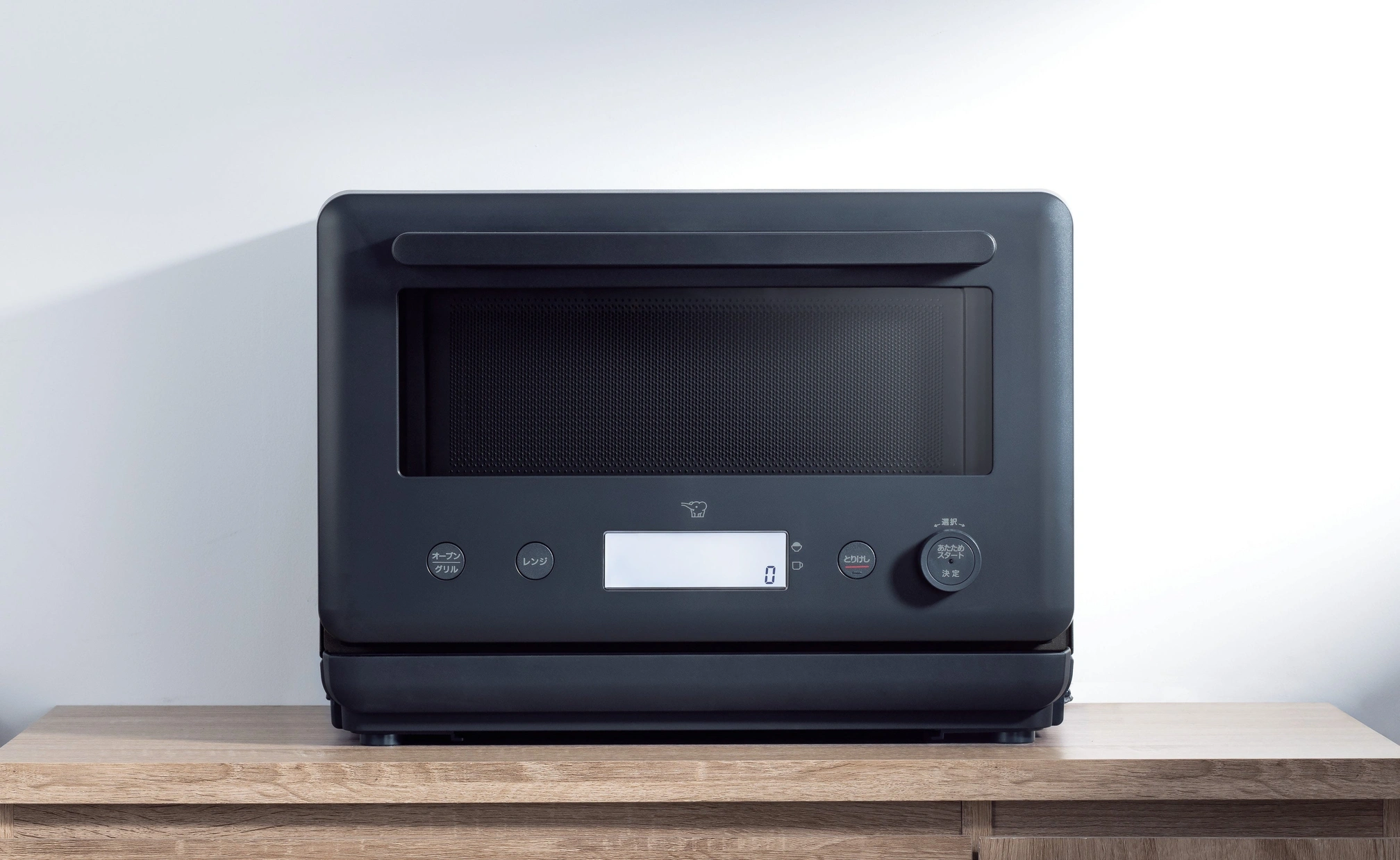
Eighteen Liters and a Forty-Centimeter Cupboard: Zojirushi Writes Solo Reheating into a One-Second Sensor
Story & products
Living alone, a kitchen usually fails in two places: the counter is too tight, and reheating is always almost right. Bento boxes warm unevenly. Frozen meat thaws too far. You want a bowl of noodles but do not want to put a pot on the stove. Stack those small frictions and they decide dinner more often than “do I own an oven?”
Zojirushi launched the 18 L oven-microwave EU-CA18 (Slate Black BM) on 1 September 2026. It is aimed at one-person homes: it fits a cupboard about 40 cm deep and can sit flush to the wall (with caveats for heat-sensitive walls, furniture, and glass behind the unit). Zojirushi Direct lists about ¥49,280 tax-in; the suggested retail price is open. The useful question is do you only need tonight’s bento at an eatable temperature, or do you also want one heatproof bowl to finish the noodles?
Measure the forty-centimeter depth first, then talk about flush-to-wall clearance
The common rental regret is a machine that arrives and blocks the cupboard door. EU-CA18’s claim is plain: it fits a 40 cm-deep cupboard and supports 0 cm rear clearance so you do not leave a useless gap. Official notes still matter—keep distance if exhaust heat may stain or warp nearby surfaces; leave 20 cm or more if glass is behind the unit because temperature shock can crack it (and cracking can still happen after you move it).
Mass is about 15 kg. That weight matters when choosing a place for it or moving it. Capacity is 18 L by JIS. The wide flat cavity opens about 37 cm, with silicone coating on the sides and rear, so large plates and bento boxes slide without catching. Microwave power uses a 900 W inverter (900 W only for a short burst—about three minutes max—then it steps down to 600 W). The oven runs 100–250 °C (220–250 °C for about five minutes, then 210 °C). Annual energy use is listed at 73.4 kWh/year, class B.
The roughly 37 cm opening makes large trays easier to put in. The flat floor also avoids a dish catching on a turntable.
From one-second sensing to full or half thaw: heating is an action, not a manual quiz
Size settles “will it fit.” Daily life is what happens after Start. EU-CA18’s rapid infrared sensor reads food temperature every second on some auto menus. Auto reheat is put-food-and-press; you can set 45–90 °C in 5 °C steps (factory default 70 °C). Preferred temperature stretches −10–90 °C in the same steps (default 40 °C)—softening ice cream or warming baby food without “about a minute and a half.”
Thawing splits into full and half: ground meat to a break-apart firmness, sashimi to a cut-ready firmness. The two settings let you choose a thawing level for the next cooking step. That is useful when the freezer holds half a pack of meat or a piece of fish.
Noodles in one bowl, dishes in under ten minutes: a small kitchen that skips the pot
The noodle recipes use one heatproof bowl for pasta, chilled Chinese noodles, and instant bag noodles (official notes use a roughly 25 cm glass bowl; see the cooking notebook). Taiwan-style mixed udon, sesame chilled noodles and carbonara are among the recipes. The practical saving is one less pot to wash and a free burner.
“Quick recipes” map to auto menu 11 (notebook dishes only): pick weak / medium / strong; cook time stays within ten minutes excluding prep; ingredients and conditions can affect the result. The dishes include Chinese-style pork and eggplant, shrimp in chili sauce, and cod with carrot and plum mayonnaise. There are also easy dishes using store-bought mentsuyu (2× concentrate).
A deodorize mode breaks down smells with heat (not every smell). Controls are a dial plus white-backlit LCD, with weak / medium / strong finish. For everyday use, the repeated tasks are likely to matter most: reheating, defrosting, and occasionally cooking noodles in one bowl.
Living alone well can mean four words: heated just right
Whether it deserves that cupboard space depends on everyday use. If you still have to check the food and add another thirty seconds every time, an attractive finish will not make up for the inconvenience.
Salt in the Night Woods
Story & products
After finishing a first ultra, a poster returned to the channel where they had asked for advice a few months earlier. Could they attempt an ultra without ever having run a marathon? In their recollection, most people said it was impossible; others said it would be brutal. They finished, and thanked the people who had helped.
The discussion drew about 258 upvotes and thirty-odd comments. It offers one person's account and the responses around it, rather than a training prescription. The finish, the salt tabs and the pacing advice all need to be read with that limit in mind.
A finish without a marathon first
One commenter said the idea of skipping a hard thing to try a harder one resonated with them. The poster remembered telling themselves “running hurts so walk, and later walking hurt too so might as well run to get it over with.”
There is satisfaction in that reply, but also a fairly plain account of how difficult moving had become. Reduce the story to finishing without a marathon and that difficulty disappears.
Their finish deserves to be acknowledged. It challenges a blanket judgment about who is qualified, without deciding whether marathon preparation would help someone else. There is no need to turn either skipping the marathon or having yet to run one into a test of character.
Both legs cramped at 28 km
The poster said both legs cramped at about 28 km. Until then they had felt strong. They were frightened because it seemed so early in the race. In their account, things eased after three salt tabs and painkillers, and they continued.
A highly rated reply urged them to avoid painkillers in future races, citing risks to the kidneys and other organs, and suggested building tolerance to pain. Another commenter wondered whether medication could suppress signals worth listening to. These were comments from the discussion, not instructions from this article. The poster agreed with the warning; someone else in the thread said they had not known about the risk.
The account places the salt tabs, medication and subsequent relief in sequence. That does not make three tablets or a dose of medication a method for another runner to copy. The pleasure of finishing can sit alongside the warnings without reducing the whole experience to willpower.
Another reply asked whether an 80 km event was a more “proper ultra.” Others brought the conversation back to pacing, suggesting an easier start and saving the strength spent in the first 20 km for the final 20 km.
The final 10 km and the months before them
The last roughly 10 km were the hardest, the poster said. The forest was completely dark. They were shivering with cold and their legs could barely walk. They kept moving slowly toward the finish because, having suffered so much, they did not want to leave halfway.
Questions about training filled in the preparation behind that finish. Work had limited their running to about 45–50 km a week for the previous three months. They had completed four long runs of about 30 km, with a longest run of about 36 km in the block. During the final 3–4 weeks before the race, they had felt poor and had not wanted to run.
They also cycled to work and rode regularly, covering about 70–100 km a week. They had done many cycling ultras and played football and competed on the track at school. Having no marathon finish did not mean having no endurance background. Limited running mileage and substantial cycling experience were both part of the picture.
A commenter with an aerobic base in cycling and swimming, also without a marathon, was planning a first 50-miler the following summer. They asked how the poster had prepared. The poster recognised a similar background and encouraged them.
Two views on the early pace
The poster's pacing advice came from their own experience. Deliberately slowing down to conserve energy made their legs hurt more. They preferred to settle into their own zone 2, an easy aerobic zone, and maintain it. They offered that advice to the prospective 50-mile runner.
Another commenter said the first 10–20 km should feel easy enough to tempt you to go faster, and that failing to hold back could make the rest of the day much harder. Someone else looked at the poster's average heart rate and said they could not sustain it.
Each response comes with the runner's own experience. Reading the zone 2 advice alongside the cycling background gives it context that a short injunction not to start too slowly cannot carry. Encouragement and caution can remain in the same conversation.
What makes the account worth keeping is the willingness to include the unpleasant parts of finishing. The fear at 28 km and the cold, barely walkable final stretch belong to that result too. Someone else's report can inform a decision; the next entry still has to fit your own preparation and available time.

The Charge Against the Roast
Story & products
A blogger asks why so many people seem to regard caffeine as unhealthy. In their experience, calling something a stimulant quickly turns into an accusation. If it keeps you awake, you must be running yourself down; if you have not quit, perhaps the coffee industry has fooled you. They bring BMJ and PubMed links into the discussion and ask readers to consider the evidence.
At the time the material was collected, the post had a score of around forty-six and more than ninety comments. Some readers discuss average benefits. Others describe anxiety, stomach trouble, or nights when they cannot sleep. This account follows the supplied discussion. The commenters' experiences and explanations remain their own, rather than medical conclusions.
What the 17% figure means
The blogger cites the 2017 umbrella review by Poole and colleagues, bmj.j5024. An umbrella review brings together reviews of research to examine the direction of evidence across outcomes. In this paper, coffee was more often associated with benefit than harm.
One memorable finding concerns three to four cups a day compared with none. The relative risk of all-cause mortality was about 0.83, or roughly 17% lower. The post also lists observational associations between around two to three cups and lower risks of coronary heart disease, heart failure, and stroke; each additional cup and lower type-2 diabetes risk; and findings involving Parkinson's disease and other neurological outcomes. Two or more cups also appear in its discussion of lower cirrhosis and liver-cancer risk.
The authors stress that much of the evidence is observational and that causation needs trials. Pregnancy-related outcomes, including low birth weight, and fracture risk in women require separate consideration. None of this turns four cups into a daily instruction for everyone.
The review gives the blogger grounds to challenge the assumption that stimulants must be harmful. It cannot decide what every reader should drink next.
What else is in the cup?
One commenter brings up a caramel, butterscotch, cinnamon, and pumpkin latte with fifty grams of sugar and extra cream. That, too, gets filed under coffee. A discussion about its effects can easily lose sight of everything added to it.
Other commenters disagree about the source of coffee's possible benefits. One argues that research more often concerns black coffee and that added sugar or milk may alter the benefit. Another points to caffeine's role in some effects and to the polyphenols, plant antioxidant compounds, that remain in decaf. Someone objects that decaf does not always show the same benefits.
Another reader says longevity-related benefits also appear with decaf, suggesting that polyphenols may do much of the work while caffeine mostly brings on jitters. Someone else estimates a roughly equal contribution from caffeine and other compounds. These are the commenters' interpretations and estimates, not an established fifty-fifty allocation.
Coffee and caffeine pills deserve separate discussion. So do black coffee and a sugary drink with cream. A verdict about coffee can become misleading when it leaves out what a person actually consumes.
The person drinking it still matters
One commenter says coffee or caffeine pills bring more anxiety and stomach trouble. Their “gut feel” tells them it is unhealthy for them, yet they still drink it because the energy feels worth the cost. Enjoyment and discomfort coexist in that choice.
Another describes higher cortisol, depleted collagen, and a lasting fight-or-flight state, then reports better hair and skin after quitting. Those are personal observations and proposed explanations; the account does not establish the mechanisms. Elsewhere, someone treats the word stimulant as proof of harm, while another calls coffee a “toxic seed” after stopping.
Iron absorption enters the conversation too. One reader says effects on some minerals last about an hour while the drink passes through, with little effect on heme iron from animal products and more on non-heme iron. Another raises low ferritin, particularly among menstruating women. These remain claims made in the discussion, not an interpretation of any individual reader's test results.
Someone argues that excessive intake can be harmful for some people but that two to five standard daytime measures may offer more benefit than harm for an average person, and urges experimentation. Someone else has already stopped because they cannot sleep. The disagreement makes the everyday cost visible alongside the average figures.
Research can change how a person thinks about coffee. Feeling worse after drinking it also deserves attention. Taking the evidence seriously gives no reason to mock that discomfort. Independent judgment includes keeping observational findings, personal experience, and the costs one is willing to accept in view. Someone else's next cup cannot make that decision for you.
The content of this article is only for viewing, reflection and personal judgment. It is not an instruction manual. It is simply a part of the world that exists.
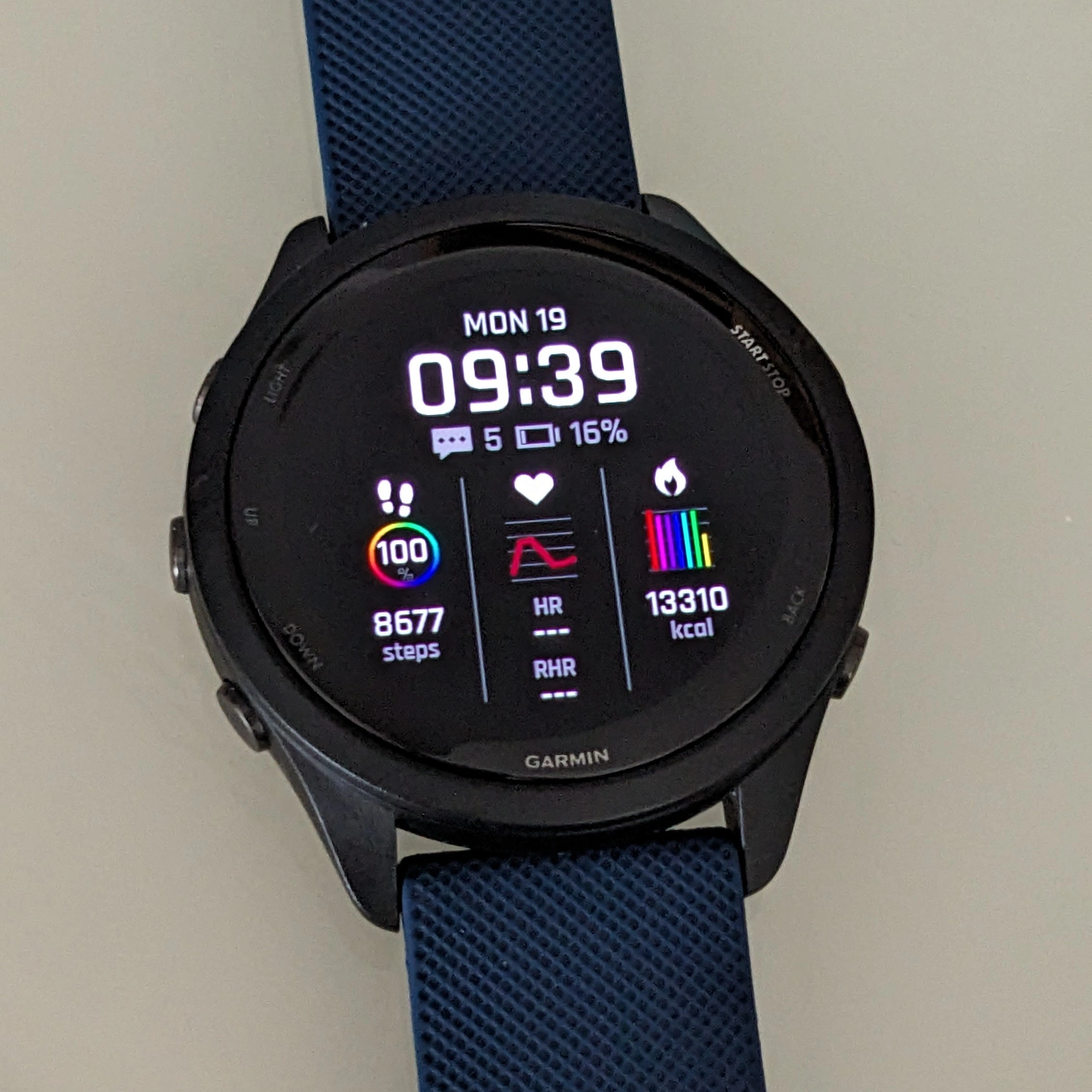
False Fair Weather on the Wrist
Story & products
Heart rate, pace and load can all look normal on a running watch while a tempo session falls apart. Training culture makes it easy to read that gap as a failure of willpower. No warning in the numbers, so keep grinding. That mismatch is the “false fair weather on the wrist” at the centre of this discussion.
The blogger describes themselves as a PhD student studying mental fatigue and sport performance. Their early reading focused on research into a single prolonged mental task. Everyday life, they point out, involves multitasking and context switches that call on executive functions. Getting home does not necessarily bring full recovery. In their account, mental fatigue can accumulate while the watch continues to look reassuring.
This article draws on the collected account and comments. At the time of collection, the post had a score of around sixteen and about nine comments. That is a small discussion, not a survey of every study or watch brand. The training adjustments described below are the blogger’s suggestions, rather than a prescription for an individual runner.
Normal readings, earlier exhaustion
The blogger cites Marcora and colleagues’ 2009 study. After ninety minutes of demanding mental work, participants cycled to exhaustion about 15% sooner than after watching a documentary. Heart rate and blood lactate did not differ significantly.
That result makes a single heart-rate reading a poor explanation of an entire session. The body can still be working while mental effort changes how demanding the exercise feels. The blogger connects this with a familiar running frustration: the watch records an apparently normal day, yet the tempo session collapses or exhaustion arrives sooner than expected. The cycling experiment and the running experiences have different scopes. Both deserve attention without being treated as interchangeable.
A bad day or a bad block?
The harder question, for the blogger, is how long the problem has been building. Russell and colleagues’ 2019 research records elite athletes and staff describing mental fatigue accumulating within a day and across weeks. One difficult session and a sustained stretch of difficulty call for attention to different time scales.
The blogger also draws on Van Cutsem and colleagues’ 2017 review, in which endurance performance was affected by mental fatigue while maximum strength and power did not show the same effect. Their suggested response to a bad day is to move the long session or consider something shorter and more intense. After roughly three weeks of grinding, they favour finding a manageable minimum and building back slowly.
Those are suggestions made in the post. Three weeks is the time frame used in this discussion, not a universal threshold for every runner. The blogger acknowledges that distinguishing a bad day from a bad block currently involves considerable guesswork.
They say they are validating two short questionnaires, one about the present moment and one about the preceding few weeks. The distinction matters to their question: beyond how you feel, what do you currently use to tell the two situations apart?
What an easy run tells you
One commenter mostly relies on how easy runs feel, while admitting that this is not particularly scientific. Dragging through a slow five-miler for a week straight feels like more than a bad day. A single session with legs like bricks can be written off as an isolated event.
The real mindfuck, in their description, is that the watch data looks the same. The body is doing the work, the brain has checked out, and the numbers fail to show the difference.
Other commenters examine the questionnaire wording. One item seems to ask two things at once; later sliding scales lack a clear reference point. Some say the post reads like machine translation or empty text, with paragraphs that do not connect. Those reactions belong to the discussion. Criticism of its wording does not by itself settle the value of the research or the person behind it.
Leave room for how it feels
The useful part of this exchange is the room it leaves for both watch data and subjective experience. An unchanged heart rate may not explain why a session feels unusually difficult. One heavy-legged run differs from a week in which even easy running feels hard. Duration helps put those experiences in context.
Wanting to trust the watch can coexist with being afraid of looking fragile. Neither feeling requires an immediate verdict about willpower. The commenter’s five-mile example is theirs; the blogger’s suggested adjustments are theirs too. They can inform a conversation without deciding your next tempo session.
Numbers offer information, and so does experience. Independence here means keeping their limits in view and taking enough time to ask how long this particular fatigue has lasted before deciding what to do with the schedule.
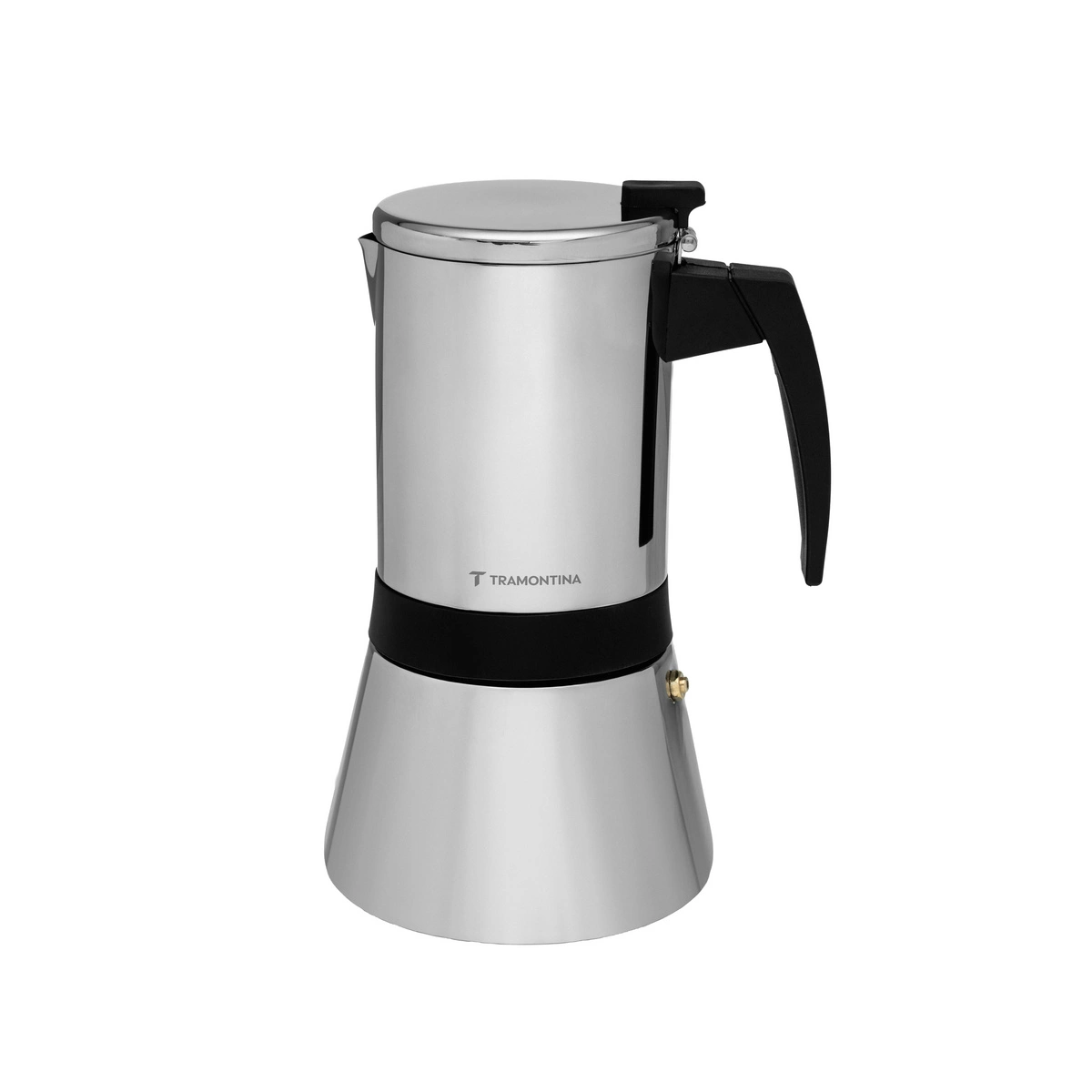
The Anatomy of Solitude: Tramontina 600ml Stainless Steel Moka Pot
Story & products
The most elite South American athletes often harbor an almost obsessive, solitary morning discipline. Long before the roar of the stadium and the flash of the cameras, their day begins in absolute silence with mechanical repetition. The Tramontina 61768050 Moka Pot is the physical manifestation of this cold discipline. It rejects the flattery of digital screens and the false convenience of plug-and-play appliances. Instead, it demands that the user, standing alone in a quiet kitchen, engages in a physical confrontation between water, heat, and metal to complete an unyielding daily neural awakening. This is not merely about caffeine intake; it is an extreme constraint of desire and a sharp focusing of attention.
Cold Stainless Steel Architecture
Measuring approximately 22.6×12.6×15.9 cm and weighing 0.97 kg, this full stainless steel body discards any fragile materials. It relies on zero electrical cords yet adapts flawlessly to gas, electric, glass-ceramic, and induction stoves. This rigid metallic nature and high versatility mean that as long as a basic heat source exists, it will extract the necessary energy through pure thermal conduction and internal high pressure. Before first use, wash the pot with water and discard the first batches of coffee.
The 600ml Capacity
The manufacturer lists a pot capacity of 0.6 liters. Capacity is not a caffeine dose.
Thermal Isolation Nylon Grip
As the steel body reaches dangerously high temperatures on a small stove, the black nylon handle and knob become the sole safe contact points. It draws a calm, physical boundary between boiling metal and human skin. This forces the user, even when not fully awake, to maintain high muscle control and precision, ensuring they never touch the hot surface—much like managing one's own explosive physical limits on the pitch.
The Psychology of the Unplugged Ritual
Water must be strictly filled below the safety valve with the valve facing outward, the funnel filled evenly with ground coffee without pressing it down, and the upper and lower chambers tightened with pure grip strength. Dry heating without water is absolutely forbidden. This uncompromising, mechanical procedure forces a wandering mind into a state of absolute hyper-focus. During the minutes waiting for the high-pressure steam to erupt on the induction cooktop, this unplugged ritual acts as an indispensable psychological warm-up before facing the immense pressure of the outside world.
The L2M store holds immense respect for pragmatic tools that carry an undertone of asceticism. We recommend the Tramontina 61768050 because it strips away lifestyle illusions, returning to the hardcore physics of energy extraction. True masculine charm and athletic spirit are invariably forged in these cold, repetitive, and intensely solitary daily routines that demand manual execution.
A Few Bars Outside the Firehose
Story & products
A reader interested in both running and climbing training describes a familiar frustration. Running advice feels “refreshingly simple”; climbing training media feels “overwhelming.” After hours of reading, they can be less certain about what to practise than when they started. Their phrase for the experience is a “firehose of media.”
This discussion draws on that post and its comments. The supplied account recorded a score of around three and roughly seven comments, a small exchange rather than a survey of either sport. The training claims belong to the participants; they are not prescriptions for the reader.
When a few principles feel useful
The poster distils the running advice they encounter into easy running, an occasional long run, and not increasing volume too quickly. In their experience, coaches and seasoned ultrarunners largely agree on these basics. After a few hours, further reading brings diminishing returns because the same ideas keep appearing.
Climbing feels different. Technical demands, mental challenges and social aspects all play a part, and the poster struggles to discern “what really matters.” Keeping up with training content can start to feel like another obligation. There is always a new video promising the most important skill.
The frustration deserves to be taken seriously. Time spent consuming training media does not, by itself, establish expertise. A useful idea need not be dismissed as lazy simply because it can be stated briefly.
Titles that pull in different directions
The poster uses Power Climbing Company as an example, while explicitly calling it a good source overall. Scrolling its titles still feels intimidating. The examples concern isolated finger training missing an important element, whether board climbing is holding you back, the simplest effective movement and technique training, the simplest effective climbing training, and the most important skill for climbing 5.13.
Board climbing uses a fixed-hold training wall; 5.13 is a sport-climbing grade. Each video has a particular subject. Add other channels claiming that board climbing is the single most effective way to get stronger, or that a different skill matters most for 5.13, and deciding what to do becomes harder.
After a few hours with running material, the poster feels clearer about the fundamentals. After the same time with climbing material, they feel more confused about the best way to train. They ask whether this is an unavoidable consequence of such a multifaceted sport, and whether others share the feeling.
A title can help someone find a video without explaining whom its advice suits. Recognising that gap gives the confusion a concrete cause. It need not be treated as proof that the viewer has failed to read enough.
The comments disagree too
One well-supported response suggests working on your “lowest hanging fruit,” described here as an obvious weakness. Once it ceases to be a weakness, move on to the next. The difficult part, the commenter says, is identifying it and being willing to work on it. Another knows what is holding them back but struggles with the discipline to practise it.
A sharper criticism concerns the way training advice is sold. One commenter argues that online personalities overcomplicate training, encourage a sense that one must constantly improve, then sell methods to meet that need. They feel that nearly every thumbnail on the linked channel prompts viewers to doubt their training. In their view, a balanced schedule, gently pushing near one's limits and allowing recovery already matter a great deal. That is their criticism of the content, not evidence that every creator is manufacturing anxiety.
Other replies point to the sport itself. One attributes limited consensus partly to sport climbing's relative youth and the difficulty of quantifying training. Moves and grades can be counted, yet every route is different and energy demands vary. Another thinks climbing has fewer established resources than running or lifting and pays too little attention to everyday progress. They argue that fundamentals such as progressive overload and specificity apply here too.
Running does not escape the discussion unscathed. A commenter lists its own noisy debates: heel striking, tempo versus threshold work, heart rate versus pace, and interval rankings that put 30-30 in F and 12×400 in S. There is plenty to become confused about in that sport as well.
Someone else offers a short climbing outline, including easy climbing for an aerobic base, hard limit bouldering and avoiding rapid increases in volume. It echoes the running principles that appealed to the poster. It remains a community suggestion, with all the limits that implies.
Before the next hour of scrolling
These replies describe several different problems. Identifying a weakness and consistently working on a known weakness are separate tasks. Information overload cannot always be reduced to a lack of willpower. The complexity of the sport, the maturity of its resources and competition for attention may all contribute.
There is room to keep learning without pursuing every claim to the “most important” skill. There is also room to value a simple outline without pretending it settles every training decision. Wanting more information and worrying about endless scrolling can both be reasonable feelings.
Before giving another hour to a channel, consider the question its content answers and whether that question matches your current difficulty. Suggestions about schedules and recovery still need to be considered against your own circumstances. Someone else's experience can help you think; it cannot make that decision for you.

The A4 Perimeter of Dietary Discipline: BRUNO BOE021 Compact Hotplate
Story & products
The solitary life of an elite athlete often resembles that of an ascetic monk. Much like Son Heung-min’s stubborn, unchanging breakfast routines during his time at Tottenham, absolute physical peak requires an almost obsessive control over one's environment. A sprawling, fully-equipped kitchen is a liability; it invites culinary chaos and caloric excess. The BRUNO BOE021 Compact Hotplate is not a lifestyle accessory—it is a tactical constraint. The unit measures approximately 375×235×140 mm. The manufacturer recommends it for two to three people, and users can also arrange individual portions. It transforms the chaotic desire for a late-night meal into a cold, calculated, and highly focused ritual of solitary refueling, perfectly suited for those who manage their bodies with clinical precision.
A4 Spatial Anchoring and the Philosophy of Constraint
The device measures approximately 375×235×140mm and weighs 2.3kg. It occupies merely a fraction of a small coffee table. This severe spatial limitation is its primary tactical advantage.
1200W and 250℃ Thermal Precision
Despite its diminutive footprint, the unit delivers 1200W of power with stepless temperature control ranging from 65℃ to 250℃. For an athlete strictly monitoring lipid intake, the ability to rapidly reach 250℃ is crucial. High-temperature searing promotes surface browning without the need for excess cooking oils. This is the scientific exploitation of heat to make ascetic diets palatable.
Modular Nutrient Separation System
The inclusion of both a flat plate and a takoyaki plate offers distinct modalities for nutritional intake. The flat plate is engineered for the direct searing and steaming of monolithic protein blocks. Conversely, the takoyaki plate—with its spherical molds—can be repurposed by the obsessive athlete to create exact, uniform bites of complex carbohydrates or egg-white protein spheres. The included wooden spatula ensures the non-stick coating remains uncompromised during these precise maneuvers.
Tactical Magnetic Power Cord for Post-Exertion Safety
Following extreme physical exertion, an athlete's proprioception and motor control are compromised. The BOE021 features a magnetic breakaway power cord. The magnetic cord can detach when pulled, helping reduce the risk of dragging the appliance. This is a pragmatic engineering choice for exhausted bodies. (For use in Japan only, AC100V).
The L2M store endorses this equipment. It strips away the emotional comfort of cooking, reducing it to a sharp, disciplined protocol of energy intake. It is recommended for those who understand that true charisma and athletic dominance are forged in solitude, over a plate of meticulously measured fuel.
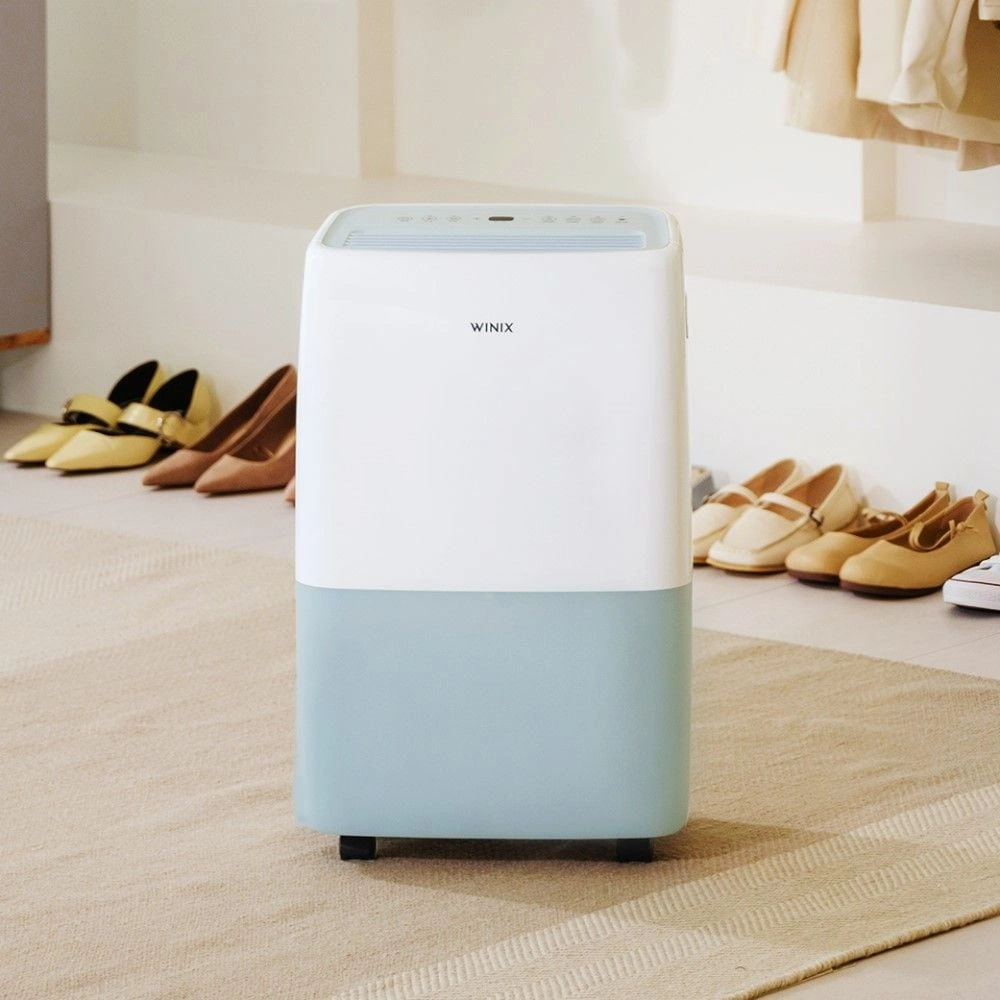
About 362 mm Wide, 12 Liters: How Winix Writes Studio Humidity as a Roll-Away Dehumidifier
Story & products
Damp builds up after a wash, through a half-open bathroom door, or overnight with the windows closed. In a studio, corners and wardrobes can feel it first. When there is nowhere outside to hang long garments, a visible tank and a reliable full-tank stop matter more than another promise of “powerful dehumidification.”
The official Winix Posong 12L listing identifies the mint model as DXTE120-MPK. Its published specifications are about 12 L of daily dehumidification, a dedicated area of 53 m², a 3.0 L tank with a 2.2 L full level, and 315 W. It measures W362 × D257 × H590 mm, weighs 16.3 kg, runs on 220 V / 60 Hz and carries energy grade 4. The listed price is KRW 299,000, with a KRW 259,000 member price shown separately; check the current conditions. Whether you want laundry ready to put away or steadier humidity for sleep determines which figures matter most.
Measure the doorway first
A slim-looking appliance can still block a small room's door. Measure the intended space for its 362 mm width and 257 mm depth. Casters let one person roll it between rooms; carrying 16.3 kg up steps is another matter. Check the stairs and lift before deciding to park it by the balcony.
Connect the power, choose a target humidity or automatic dehumidification, and make sure the tank is seated before starting. The official feature table lists continuous drainage, full-tank stop, defrost, current and target humidity, a water-level window, child lock, timer and low-noise mode. There is no inverter, phone control or bundled intensive-drying kit. A full tank stops operation; a continuous-drain hose reduces trips to empty it. Those are useful everyday functions.
At around 315 W, consider other loads on the same circuit, including heaters and induction cookers. Clean the filter and tank according to the manual, wipe the shell with a damp cloth and keep the outlet clear.
Watch the humidity and the tank
Once the machine fits, the next question is how it runs after reaching the humidity you set. The display and target setting make that easier to follow. Low-noise mode is an option when resting in the same room, and the child lock helps prevent accidental inputs. A 12 L daily rating is a useful reference for a one-room home with indoor laundry.
In humid seasons, a dehumidifier collects water from the air; existing mold still needs separate cleaning. Continuous drainage to a suitable floor drain or sink can mean fewer tank-emptying chores during a short trip. Follow the manual's drainage and operating conditions. When using the tank alone, check its level before leaving.
Washing the tank and removing filter dust are ordinary jobs, but they affect whether the appliance remains useful. Winix specifies about two years of free service after product registration and seven years of parts retention. Neglecting a smelly tank until the machine ends up gathering dust on the balcony defeats the point of comparing specifications.
The older 10 L DXAE100 as a comparison
Older Posong 10 L models such as DXAE100-JWK still appear in retail listings. Published specifications give about 10 L/day, a 3.0 L tank, 43 m², W345 × H540 × D257 mm, 14.5 kg and 250 W. It is a little smaller and lighter, with two liters less daily capacity. Compare the demands of drying a basket of laundry with those of simply keeping room humidity under control.
This article focuses on the current official 12 L model, whose specifications and product images are available to check. The 10 L model provides a size comparison. Whether the larger unit deserves 362 mm of floor space comes down to how easily emptying, cleaning and moving it fit into the week. If every empty feels like moving house, even a mint-green shell becomes a hallway obstacle.
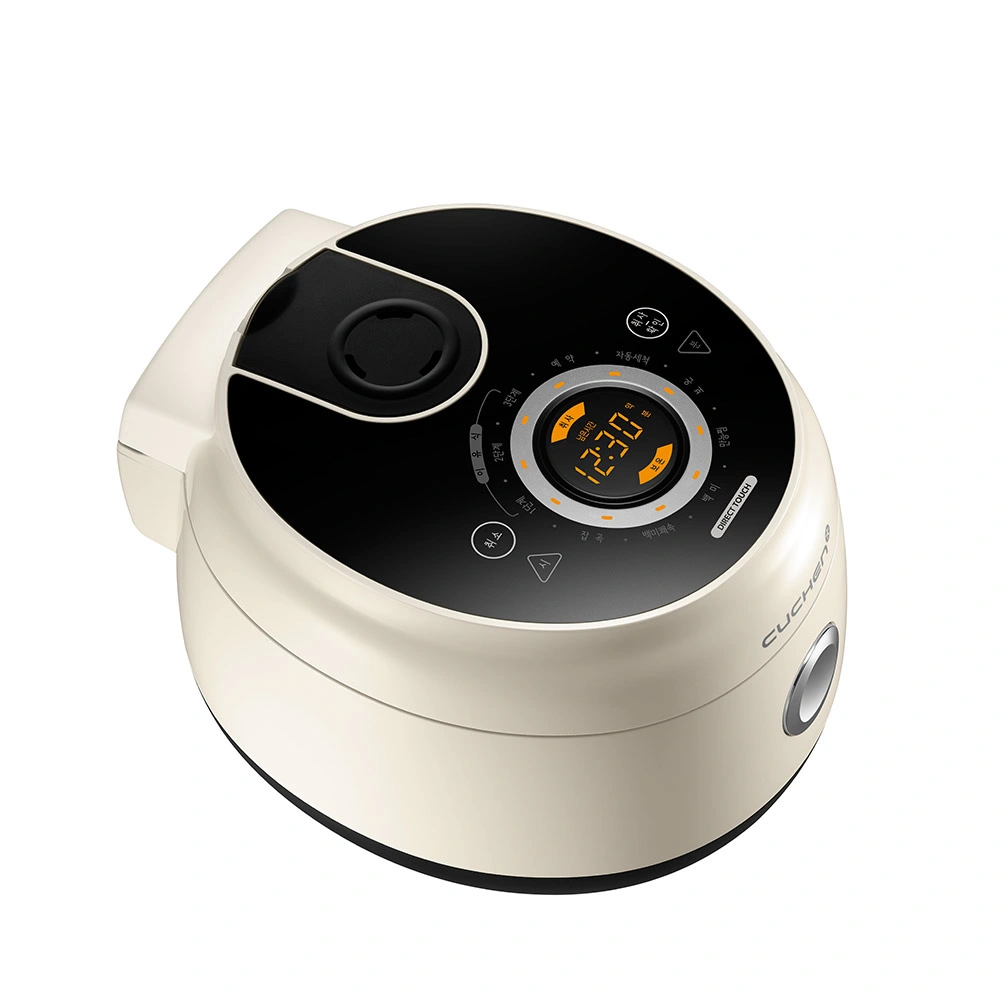
About 274 mm Long, 0.63 L: How Cuchen Writes Solo Rice as a 3.5-Serving Warmer Cooker
Story & products
Living alone, choosing a rice cooker often starts with the space left on the counter, how much to cook and whether washing the pot feels manageable. A large pressure cooker takes room; a small saucepan offers neither a timer nor keep-warm. A machine used every day needs to fit and be easy to put back in order.
Cuchen’s CD03 series includes the CJE-CD0301 and the same-series CJE-CD0302. The official manual lists about L273.6 × W244.8 × H211 mm, 2.3 kg and a maximum rice-cooking capacity of 0.63 L, labelled 3.5 servings by the manufacturer. It runs on 220 V, 60 Hz and is rated at 380 W. Alongside white rice, quick white and grains, it offers steaming, three baby-food stages, a timer, keep-warm and auto-clean, with a detachable inner clean cover.
Measure the counter corner first
The 211 mm height and roughly 274 mm length still need room around them for opening the lid and preparing food. Allow for the 2.3 kg weight when moving it. The body is white, with a black base and dark touch panel; fingerprints can be wiped away with a damp cloth. Check the model letters rather than buying on the word “mini” alone.
Measure and rinse the rice as directed, add water to the white-rice line, place the pot inside, check the clean cover and close the lid. Select the menu and hold cook/confirm for about a second or more. The manual gives 40–52 minutes for white rice at 1–3.5 servings, 30–40 minutes for quick rice up to two servings, and 50–60 minutes for grains up to two. Consider the 380 W rating alongside other appliances on the same circuit.
Planning the timer and keep-warm
The DIRECT TOUCH panel gives direct access to the menus. Cooking switches automatically to keep-warm; the manual recommends keeping this within 12 hours and avoiding prolonged warming of grain rice. Leftovers should be portioned for refrigeration or freezing instead of left in the cooker overnight.
The timer extends to 13 hours, with white rice bookable from about 46 minutes ahead. The manual notes spoilage risks from long soaking in summer. Steaming can be set from 10 to 60 minutes for foods such as sweet potatoes, potatoes or boiled eggs. Choose baby-food stages and ingredient amounts according to the manual. Living alone does not mean needing every menu; start with the meals and preparation time you actually use.
Clean the pot with a sponge and mild detergent, without steel wool on its coating. Follow the manual for the clean cover, steam cover and drip tray. Keep clear of hot steam and empty collected water promptly. Auto-clean uses water to the one-serving line and runs for about 20 minutes. Wipe the exterior with a damp cloth and never immerse the whole machine. These small jobs affect whether it remains pleasant to use.
Alongside the six-serving CJE-CD0612
Retail specifications for the CJE-CD0612 give W320 × H228.3 × D270 mm, about 3.2 kg, six-serving capacity, 685 W cooking power and 81.3 W keep-warm power. It is also a non-pressure micom cooker, with a detachable cover, quick white rice, DIRECT TOUCH, auto-clean, baby-food and steaming menus.
The CD03 is shorter and lighter; the CD0612 offers more cooking room in a larger pot and footprint. Weekday meals alone and weekends with guests call for different amounts. Measure the available space, then use your usual rice portions to decide which size you would use comfortably.
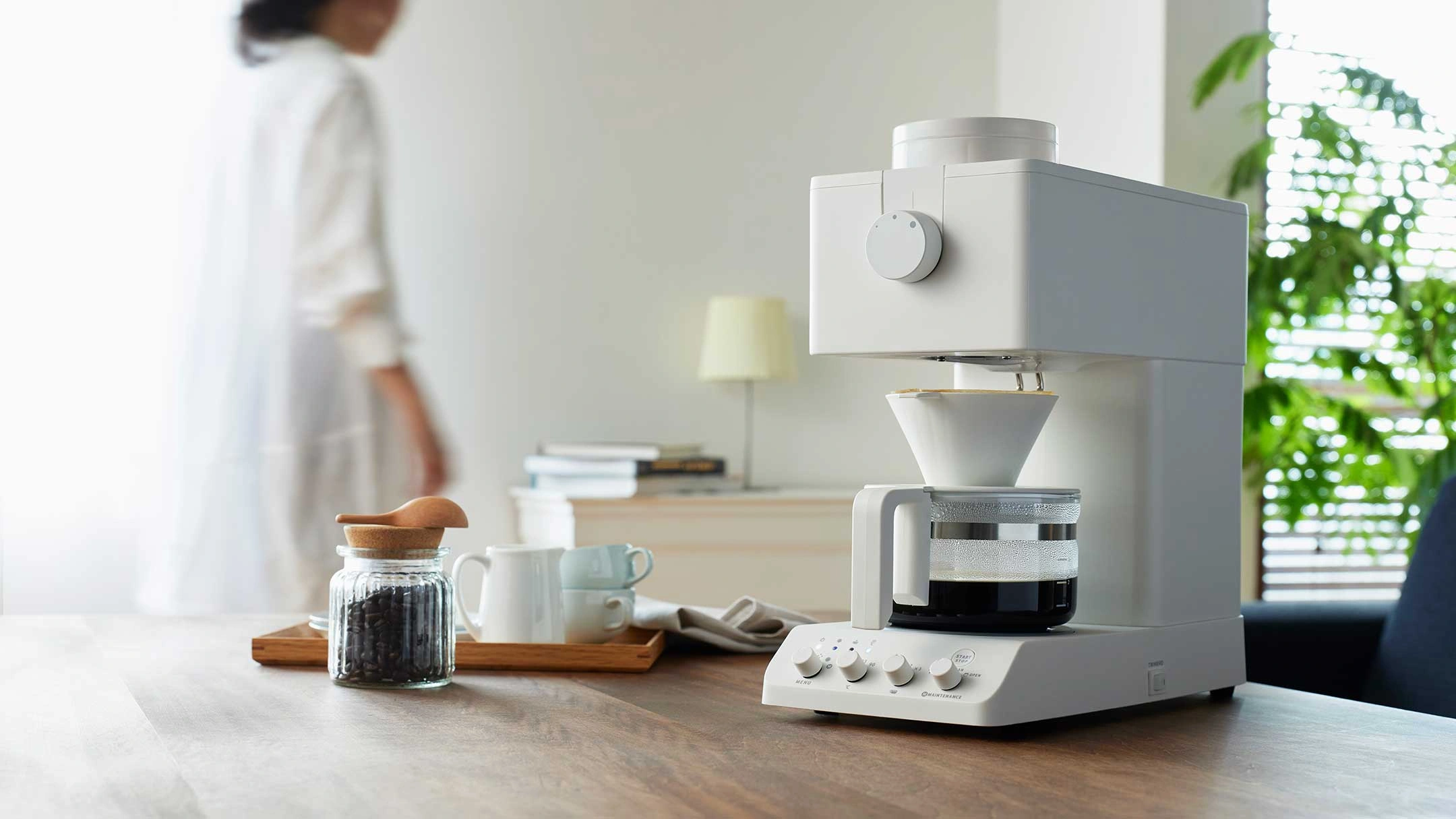
About 160 mm Wide, About 450 ml: How TWINBIRD Writes Solo Coffee as a Fully Automatic 3-Cup Maker
Story & products
Living alone, choosing a coffee maker often starts with measuring the counter. A pour-over setup needs a kettle, dripper and grinder; a capsule machine saves space but ties you to a capsule range. The machine you use every day has to fit, with filling and cleaning that feel manageable.
TWINBIRD’s CM-D457 comes in black as the CM-D457B and white as the CM-D457W. Official specifications list about W160 × D335 × H360 mm, a weight of 4.1 kg and a maximum capacity of 450 ml, or three of the machine’s cups. It uses AC100V, draws 610 W and has a 1.4 m cord. The official store lists it at ¥41,800 including tax, with its store-limited five-year warranty.
Measure the space before filling the machine
The 160 mm width is slim, but the 335 mm depth and 360 mm height matter too. You still need room to handle the basket and carafe without losing the space where you prepare food. Allow for the 4.1 kg weight when moving it, and measure the distance to the outlet before choosing its spot.
Add measured beans and water, then place paper in the basket. Select the 1-, 2- or 3-cup setting to match the water added, choose a coarse, medium or fine grind, set 83°C or 90°C and start. Developed under the supervision of Mamoru Taguchi of Café Bach, it uses a low-speed stainless-steel burr mill and six-direction shower drip. It keeps the coffee warm automatically for about 20 minutes after brewing.
Choosing between 83°C and 90°C
The brand describes 83°C as the more balanced option and 90°C as fuller and more bitter, suited to café au lait or iced coffee. Temperature and grind can both be adjusted to the beans and the taste you prefer.
The shower distributes water across the coffee bed, while the low-speed mill is intended to limit friction heat. Those are the brand’s explanations of the design. In daily use, the practical questions are whether brewing runs smoothly after filling and whether you are willing to clean up afterwards.
Wash the basket and glass carafe, clear grounds from the mill as the manual directs and follow its descaling procedure. Wipe the exterior with a damp cloth; do not immerse the machine. A manageable cleaning routine matters as much as its footprint if it is to keep its place on the counter.
What the six-cup CM-D465 adds
The CM-D465 keeps the same 160 × 335 mm width and depth but stands about 425 mm tall. It weighs about 4.5 kg, holds up to 900 ml, draws 800 W and has the same 1.4 m cord. The official store price is ¥48,800 including tax. It retains the low-speed mill, 83°C and 90°C settings and six-direction shower drip, with cup settings up to six.
Height, weight and batch size make the clearest comparison. The shorter, lighter CM-D457 offers 450 ml for one or two people’s everyday rhythm. The taller CM-D465 offers 900 ml for visitors or more cups at once. Start with what you drink on weekdays, then consider the extra weekend demand before deciding which deserves that 160 mm strip of counter.

Twenty Years Old in the Acid Bottle
Story & products
A thirty-three-year-old blogger reports taking about four to five grams of ascorbic acid, or vitamin C, every day for the past week. He describes energy and motivation throughout the day, high sexual desire and workouts that feel amazing. He feels as he used to in his twenties.
That last comparison travels easily. Retell it a few times and a week of personal experience can become a promise of rejuvenation for anyone willing to copy the dose. Yet his account remains specific to one person and roughly one week. The amount and the time window belong beside the appealing description.
What the thread contains
Reading the original post and its comments, enthusiasm sits close to caution. The supplied account records about 197 upvotes and more than 160 comments. That attention shows interest in the subject; it cannot establish that a practice works. Accounts of drugs, withdrawal and detox here belong to the people describing them. They are not supplement prescriptions.
The blogger calls his sexual desire “through the roof” and his workouts “amazing.” Those words make his satisfaction clear. They do not explain whether vitamin C caused the change or how long it might last. His twenties are his own point of comparison.
The supplied account also recalls a commenter joking that thirty-three is not very far from the twenties. The joke neither disproves the experience nor confirms a supplement effect. Someone can describe a welcome change while leaving its cause and its relevance to other people unresolved.
Stones, withdrawal and sauna
A highly rated comment makes a brief objection: kidney stones do not sound as much fun. The discussion quickly moves from energy to physical concerns.
Another commenter claims that megadoses of vitamin C flood the brain with endorphins, the body's own morphine-like substances. He then recalls using high doses while quitting heroin to ease withdrawal and links to gut-microbiome research identified as PMC8389205. These remain his claims and his experience. A linked paper does not by itself turn that account into a withdrawal treatment for readers.
Someone reacts to the sudden mention of quitting heroin. The commenter replies that it was part of his life, and he sometimes forgets other people do not regard it as “normal.” The exchange reveals how different the histories behind a shared supplement discussion can be. Familiarity for one participant offers little guidance about suitability for another.
A further comment brings up Scientology's detox program, describing large amounts of vitamin C alongside sauna use. Others mention diarrhea or “expensive pee.” Claims about impaired copper absorption appear with suggestions to add copper or collagen peptides. These are positions in the discussion, not a verified companion routine attached to the blogger's positive experience.
The supplied account includes conflicting personal reports. One participant describes years of three to four grams daily, regular running and no kidney stones. Another describes an aunt developing problems after prolonged high-dose use, then advises returning to recommended amounts after increasing intake during illness. Those personal and family reports cannot cancel each other out or determine a stranger's dose.
Long-term support for oxalate pathways and the vitamin C literature associated with Linus Pauling and Thomas Levy also enter the conversation. With each new reference, the reader has to keep track of who is speaking and what the material actually supports. There is no need to assemble every comment into a regimen.
Keep the week attached to the feeling
The discussion preserves both a satisfying personal report and the questions it raises. Someone can feel that their energy has returned while someone else raises a concern about stones. Listening to the first account does not require erasing the second.
Vitamin C in everyday food also needs to be distinguished from gram-level powder. Familiar pictures of citrus or juice cannot explain the amount being taken. Feeling good leaves the duration and the individual's circumstances relevant.
Independent judgment can start with keeping the dose, the period of use and the reported feeling together. Then separate that account from the explanations and suggestions in the replies. Wanting to hear an honest description of feeling better is compatible with refusing to make gram-level supplementation an article of faith.
Another person's week does not provide instructions for your next bottle. Neither “everyone should increase the dose now” nor “everyone must stop now” can settle the question for every individual. The phrase about feeling twenty can stay, with the one-week window and the unanswered questions still beside it.
The content of this article is for observation, reflection and personal judgment only. It is not an instruction manual. It is simply part of the world that exists.
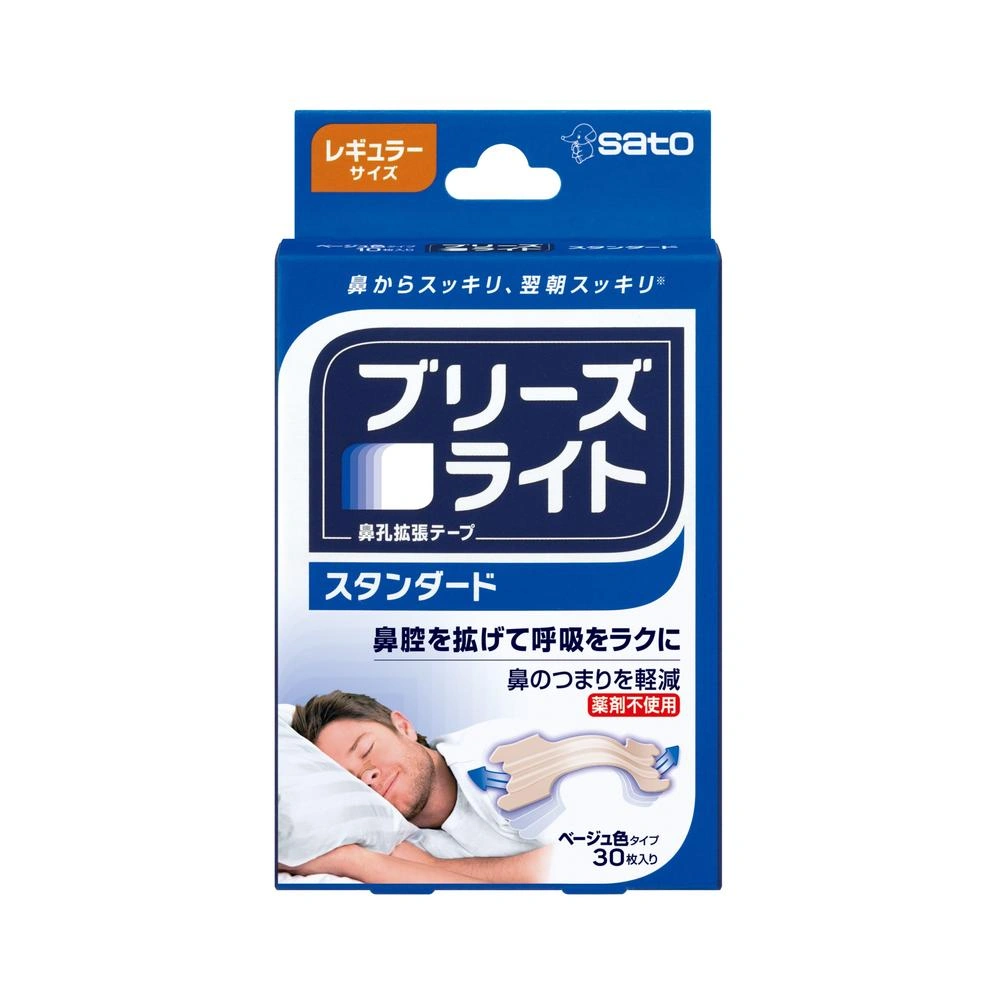
Mechanical Deprivation of Asphyxia: The Respiratory Obsession of Breathe Right Nasal Strips
Story & products
South American pitches are often synonymous with suffocating humidity, swirling dust, and aggressive pollen. For elite athletes harboring an extreme desire to control their physiological functions, resorting to mouth breathing due to nasal congestion is an unacceptable compromise of biological efficiency. They refuse to yield. The Breathe Right Nasal Strip is not some mythical performance-enhancing artifact; rigorous sports science has repeatedly concluded that it does not miraculously increase VO2 max in healthy athletes. Instead, it is a brutally cold, pragmatic mechanical intervention. When the nasal mucosa swells due to environmental factors or high-intensity aerobic stress, applying two spring-like plastic bands across the bridge of the nose uses pure mechanical tension to forcibly pry the airways open. This slightly eccentric facial modification projects a highly professional charm—a visual declaration of doing whatever it takes to maintain baseline respiratory efficiency.
Forced Physical Expansion: Utilizing built-in flexible, spring-like bands, the product applies a physical recoil force to gently but resolutely lift the sides of the nose from the outside. This instantaneously increases the cross-sectional area for internal airflow, neutralizing obstructions caused by allergies, colds, or anatomical narrowness.
Zero Pharmacological Reliance: It is entirely drug-free. It does not rely on vasoconstrictors to relieve congestion, meaning it carries no risk of pharmacological tolerance or rebound effects. Whether used before daytime high-intensity training or at night to combat snoring, it offers an absolutely rational method of intervention.
Obsessive Pre-application Ritual: This is not a cheap, peel-and-stick consumable. To combat sweat and sebum, it demands that the user execute a strict skin-cleansing protocol prior to application. Oily skin types are even required to strip away sebum with a toner beforehand. This stringent prerequisite perfectly aligns with the obsessive-compulsive nature of a professional athlete's pre-match ritual.
Boundaries of Time and Restraint: The manual clinically advises against wearing the strip for more than twelve hours a day. It is a temporary functional auxiliary tool, not a permanent prosthetic, serving as a reminder that after pushing the body to its limits, one must grant the skin and tissues the dignity of recovery.
The L2M store respects this meticulous obsession with the respiratory tract. We recommend Breathe Right not because it will magically make you run faster, but because it represents a hardcore refusal to bow to physiological discomfort. Slapping this strip across your face is a silent defiance against hostile environments and a testament to extreme self-management. Prioritizing ruthless pragmatism over conventional aesthetics is, in itself, a highly aggressive form of athletic magnetism.
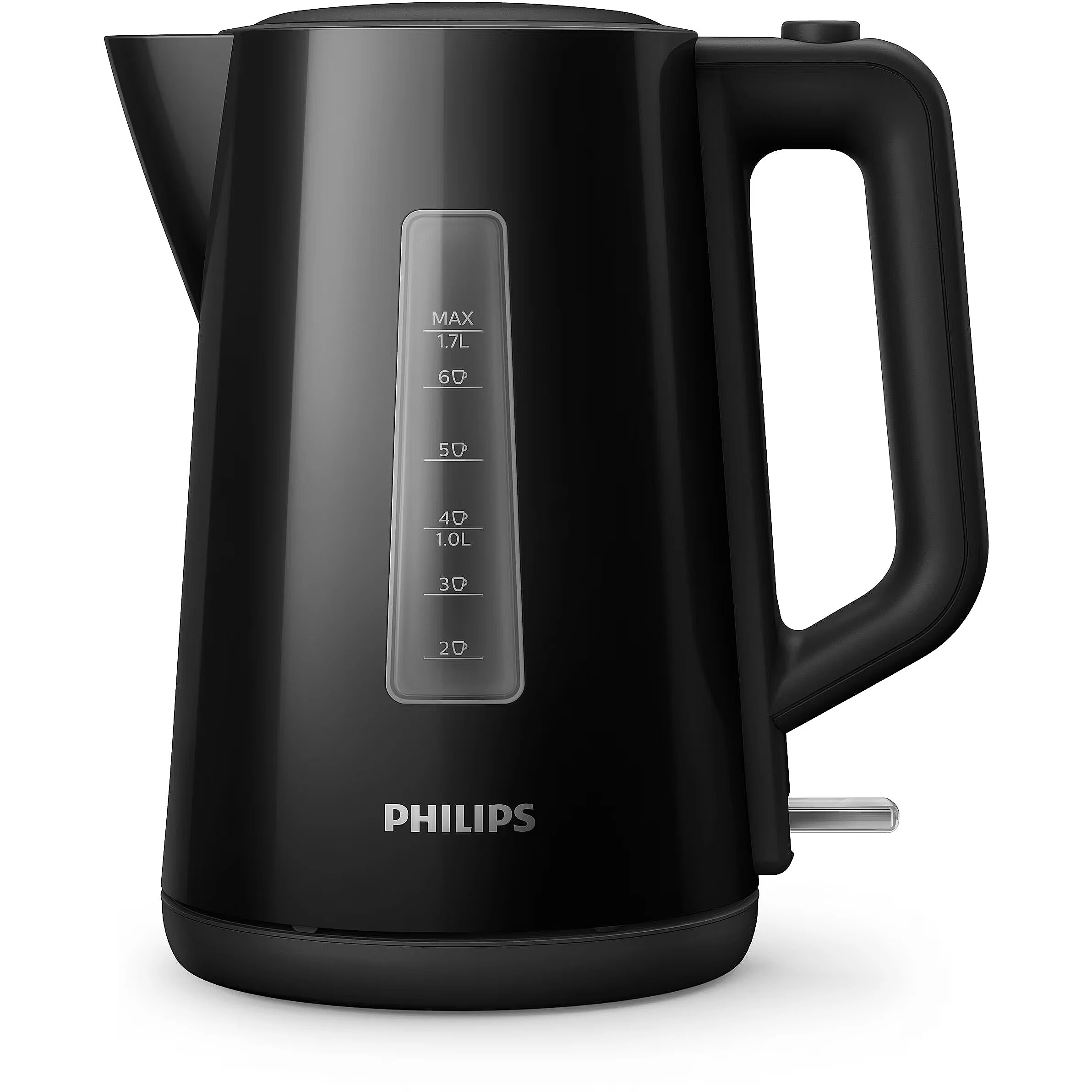
About 160 mm Wide, About 0.89 kg: How Philips Writes Solo Boiling as a 1.7 L Cup Scale
Story & products
Living alone, it is easy to fill a kettle, use half the water and leave the rest to cool. A large glass jug can feel awkward on a narrow counter, while a small saucepan lacks the convenience of pressing a switch and waiting for it to turn itself off. A readable water gauge and a base that is easy to lift from matter every day.
The Philips Series 3000 plastic kettle comes in black HD9318/20 and white HD9318/00 versions. The product pages and specifications list a 1.7 L capacity, dimensions of about W160 × D223 × H253 mm and a weight of about 0.89 kg. Power is about 1850–2200 W at 220–240 V, with a roughly 0.75 m cord. Features include a spring lid, power light, 360° base, removable micro-mesh filter, boil-dry protection and automatic shut-off. The side gauge has water and cup markings; fill within the minimum-to-Max range.
Measure the counter first
The 1.7 L capacity is intended for family use, but it also leaves room for guests when you live alone. For everyday use, the cup markings help you choose an amount within the permitted range instead of automatically filling the jug. At about 16 cm wide, 22.3 cm deep and 25.3 cm high, it is worth measuring the space before buying. Its roughly 0.89 kg weight should make it manageable to move.
The spring lid opens to a wide mouth for cleaning and helps keep hands away from steam. Water can go in through the spout or lid. The cordless body sits on a 360° base, and spare cord tucks underneath. A flat concealed element is easy to wipe clean; the removable micro-mesh filter catches fine scale.
At about 1850–2200 W, it is worth watching other high-power appliances on the same circuit, such as a microwave or oven. Automatic shut-off and boil-dry protection are everyday safety features, while the light shows that the kettle is working.
From the filter to the cup markings
Once the kettle fits, the daily habit is to glance at the gauge. Filling between the minimum and Max marks helps avoid boiling more than you need. Rinse the removable filter, wipe the interior once cool and do not immerse the whole kettle.
The black and white plastic versions sit differently against pale cabinets: white blends in, while black has a more distinct outline. Before drinking from a new kettle, follow the manual to fill it with water, boil it and discard that water.
Descale as the maker recommends and keep the base dry. A clean exterior is only part of looking after a kettle.
Beside it, the roughly 0.8 L Daily Collection Mini
The Daily Collection mini kettle HD4608/11 is listed at about 0.8 L and 2400 W, with a cup-level window and hinged lid. Its features include cord storage, boil-dry protection and automatic shut-off. It is an alternative to compare when counter space is tight and most hot drinks are for one person or two people sharing.
The HD9318 offers more capacity for visitors and several cups at once. The HD4608 suits smaller everyday amounts. Think about weekend tea with friends versus weekday coffee alone, and follow each model's own water-level markings.
Whether the Series 3000 deserves those 16 cm of counter comes down to filling, lifting and cleaning it every day. The 1.7 L capacity is useful room to have when you need it.
Main references
Philips KR HD9318/20 and HD9318/00 product pages and leaflet specifications
Philips KR HD4608/11 product page
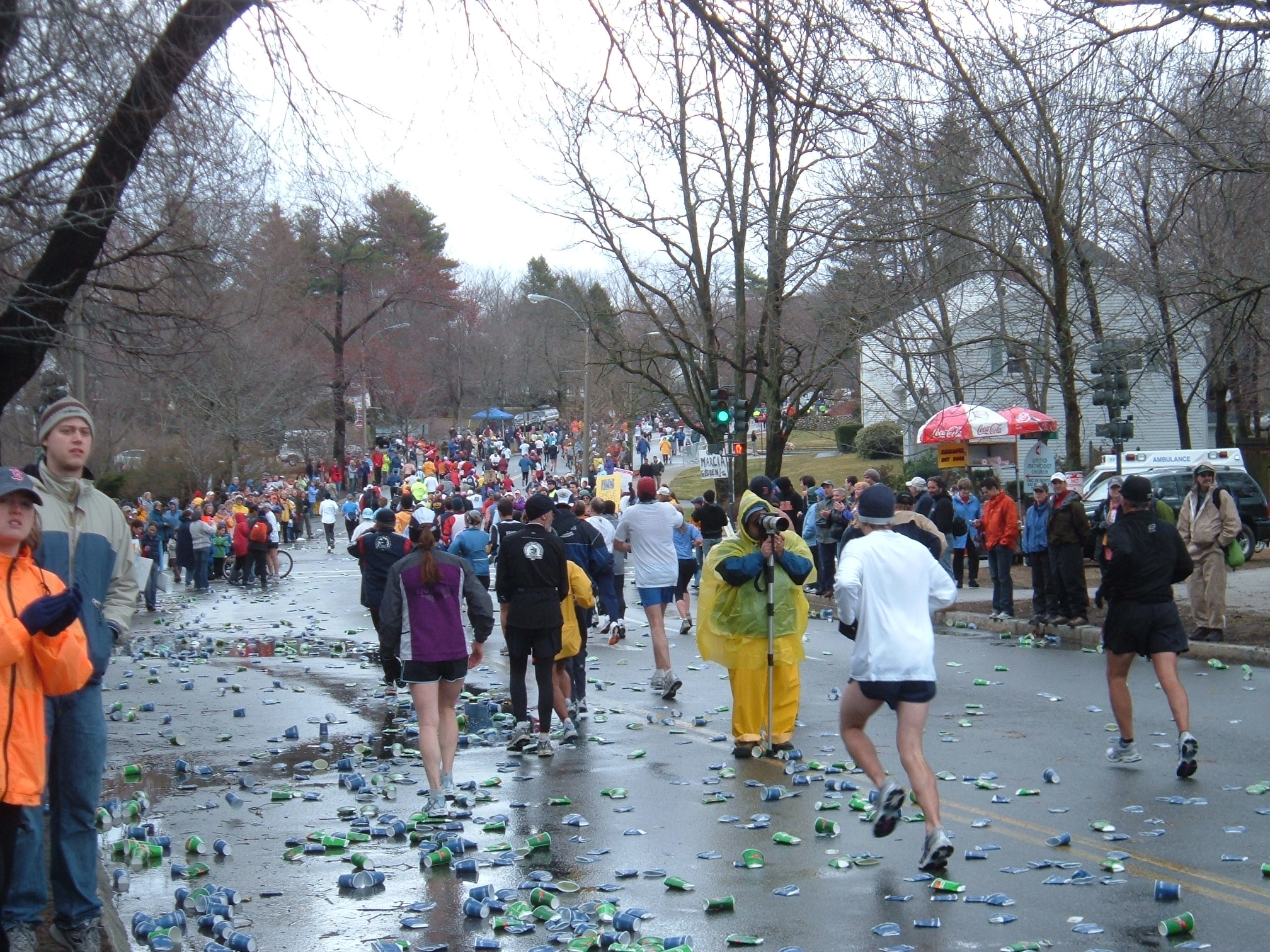
The Ticket Inside Short Distances
Story & products
How many marathons does it take to qualify for Boston, or to break three hours? A poster in Advanced Running wanted to hear the stories behind those milestones. They asked about debut times, years of running and changes along the way, offering 4:15→3:50→3:25→2:58 as an example of a progression.
Reading the original question alongside the replies, the years between those numbers deserve attention. A first-marathon qualifier may have spent years racing shorter distances. Someone who qualified on a fifth attempt may have taken a long break in between. Race counts tell only part of either story.
This is one community discussion, with more than 250 comments and roughly 223 upvotes on its top reply in the supplied snapshot. All performances and personal histories below are the contributors’ own accounts. Vote totals refer to that snapshot. The thread offers experience to consider, not a training prescription or medical advice.
Ten years before the first marathon
The top commenter ran a first and only marathon in 2:21 after nearly ten years of training at shorter distances. They had not felt ready before then. In their view, the marathon receives so much attention that many runners move up too early, when more time at shorter distances could help.
A reply with about 102 votes agreed while distinguishing goals. That runner wanted to “race” a marathon. Another, with about 80 votes, estimated that roughly 90 percent of marathon runners mainly want to finish. They considered that perfectly valid, while noting that this community concentrates on competitive performance. The percentage was a commenter’s estimate, not a survey result.
The 2:21 now has a history attached. “First marathon” describes a debut at one distance; it says little about how long someone has been running. A finish goal and a performance goal can each be taken seriously.
The running that came before
A contributor with about 56 votes thought the question needed more emphasis on running history. They had qualified on their first marathon, under standards they remembered as softer. Years of cross-country and shorter-distance training had prepared them, rather than that single marathon block accounting for the result.
Their suggestion was to spend several years developing at 5k and 10k, building toward 40–60 miles per week, roughly 64–96 kilometers. They felt this could be a smoother route than repeatedly targeting the marathon from the outset. That was their training judgment, not a schedule to apply to every reader.
A reply with about 42 votes was sharper. It criticized discussions around twelve-week plans and five-hour finishes that treated disagreement as gatekeeping. In that commenter’s view, three miles three times a week plus a loosely placed twenty-mile run prepared someone mainly to survive. Four to six hours of racing can be unpleasant enough that some never return. These were the contributor’s opinions about preparation and experience.
The distinction matters. Shorter-distance preparation can be a useful recommendation without becoming an admission rule that disregards someone else’s aims or available time.
Different routes to the same standard
A commenter with about 33 votes qualified on their fifth marathon, which was also their first after a four-year break. From 2017 to 2019, their times went 4:26→3:50→3:43→3:35. Returning in 2023 at 30, they ran 2:57. “Fifth attempt” alone misses the interruption and return.
Another, with about 24 votes, described 4:25→3:59→3:45→3:39→3:23→3:13 over roughly 22 years. They credited more serious training, losing about 15 pounds, speedwork and hip strength. A 39-year-old woman, whose reply had about 21 votes, qualified on her debut with 3:05. She already had a long running history and mainly needed to change her training focus.
One account with about 10 votes covered roughly eight years. A 4:56 debut in 2016 became 3:41 in 2018 after a serious plan; later, a 1:32 half marathon preceded a 3:13 BQ in Indianapolis in 2024. Looking back, the runner thought an earlier focus on shorter distances might have made the route smoother. Lifetime mileage and staying healthy had helped them get there.
Another contributor with about 10 votes qualified at the first attempt in 1994 with 2:59, recalling an open-men’s standard of about 3:10. Their eventual marathon best was only a minute faster, 2:58. They also distinguished a BQ from making the entry cutoff. Meeting the published standard does not always leave a large enough time margin to be accepted.
Keeping other people’s experience in perspective
These progressions are worth hearing, but they cannot plan someone else’s next race. Years of running before a debut, training changes and periods of injury or good health give more context than the number of marathons completed. Faster half marathons, structured training after weight loss and healthy accumulated mileage were factors these contributors identified in their own lives.
Independent choices leave room for both approaches. Some runners find short-then-long more rewarding; others are happy to aim for a finish. Wanting a BQ can coexist with spending several years at shorter distances. Choosing a marathon can coexist with preparing around health and a realistic calendar. Decide what the goal means first, then consider which parts of another runner’s history might be useful.
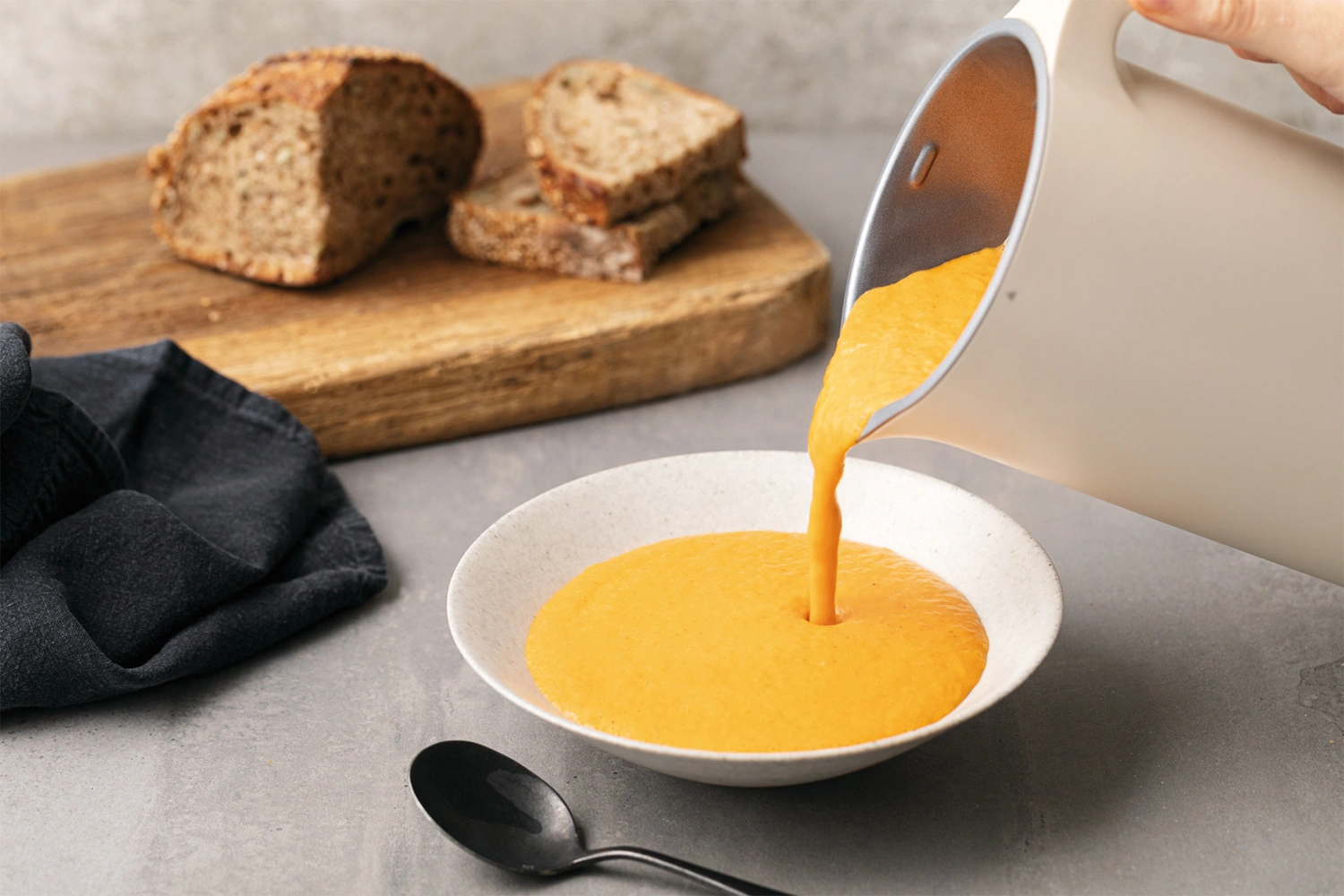
About 165 mm Wide, About 600 ml: How récolte Writes Solo Hot Soup as an Auto-Stir Pot
Story & products
For someone living alone, making dinner can start with a practical question: how much counter space is left? A large processor takes up room; a small saucepan leaves the chopping, stirring and heating to you. A slim automatic pot is appealing if it can stay within reach and take over some of that work.
récolte Auto Cooking Pot (RSY-2; Cream White RSY-2(W) / Natural Black RSY-2(BK) / Mocha Brown RSY-2(MBR)) states it plainly: about W16.5 × D12.0 × H23.3 cm, about 970 g, about 600 ml; AC 100 V, about 600 W (JUICE&CLEAN about 55 W); MSRP about ¥13,200 tax-in. Box includes body, lid, measuring spoon, cleaning brush, power cord, and recipe booklet. The useful question is whether you want smooth soup tonight or porridge with some texture.
Measure the narrow counter first, then “drop in and leave it”
An appliance can look slim in a photograph and still block the chopping board. RSY-2 is about 16.5 cm wide, 12 cm deep, 23.3 cm high—official pages use that frame. Its roughly 12 cm body takes up less room than a separate blender and saucepan.
Cut ingredients to about 2–3 cm; add liquid → soft → hard (between the ~300 ml line and Max); close the lid, align switch marks, plug in, tap SELECT. Five modes: POTAGE&PASTE (fine chop, high heat, final high-speed smooth), SOUP&OKAYU (short stirs ~1 sec/min, keep chunks), SOYMILK, JUICE&CLEAN (~3 min smoothie / clean, no heat), WARM (~75°C for ~20–25 min). No open flame—useful in a small rental kitchen.
At about 970 g, it should be manageable to lift onto the counter. 600 W is moderate, but still avoid sharing a peak circuit with a microwave or hot plate. Ceramic-coated stainless interior; brush reaches under the blade. Close the plug cover before washing the inside—do not dunk the outer body.
From potage to smoothie: mode lights beat a “menu button”
Once you know it fits, the next question is how much attention it needs during cooking. Official copy stresses speed, time, and heat per mode. Hot potage takes about 30 minutes; smoothie about 3 minutes; soy milk leaves okara. WARM holds around 75°C; the manufacturer does not recommend using it to keep porridge warm.
Three status lamps flash then stay lit by stage. WARM and JUICE&CLEAN differ (lamps 1–2 lit from the start). Some modes allow topping up within ~30 seconds while lamp 2 flashes—miss that window after lamp 3 and high heat, and a safety stop waits for cool-down.
After use: add water, run JUICE&CLEAN ~3 minutes; unplug, close plug cover, empty, brush, rinse, dry. Lid and gasket wash separately. Wipe the exterior only.
Beside it: Auto Cooking Pot Large, about 18.2 cm wide
Auto Cooking Pot Large (RSY-3; cream white / natural black): about W18.2 × D13.5 × H26.3 cm, about 1.3 kg; hot modes ~800 ml, juice/CLEAN ~1000 ml; ~600 W (juice/CLEAN ~130 W); about ¥19,800 tax-in. Seven modes including chunky “eating soup”; digital remaining time; 1–12 h timer on porridge/soy; dual ceramic coat; IPX4-class structure with plug cover closed.
RSY-2 is narrower and lighter (~970 g) at ~600 ml for one-person soup/porridge/soy/smoothie days. RSY-3 trades a bit of size and ~1.3 kg for ~800 ml hot soup, seven modes, timer, and easier-clean coating. Pick by whether weekdays need one bowl or weekends need a freezer batch.
Before choosing, measure the available space and think about how much soup you usually make. The smaller machine suits a modest weekday batch; the larger one gives you more room to cook ahead.
Main references
récolte: Auto Cooking Pot
Official shop RSY-2(W)
récolte: Auto Cooking Pot Large RSY-3
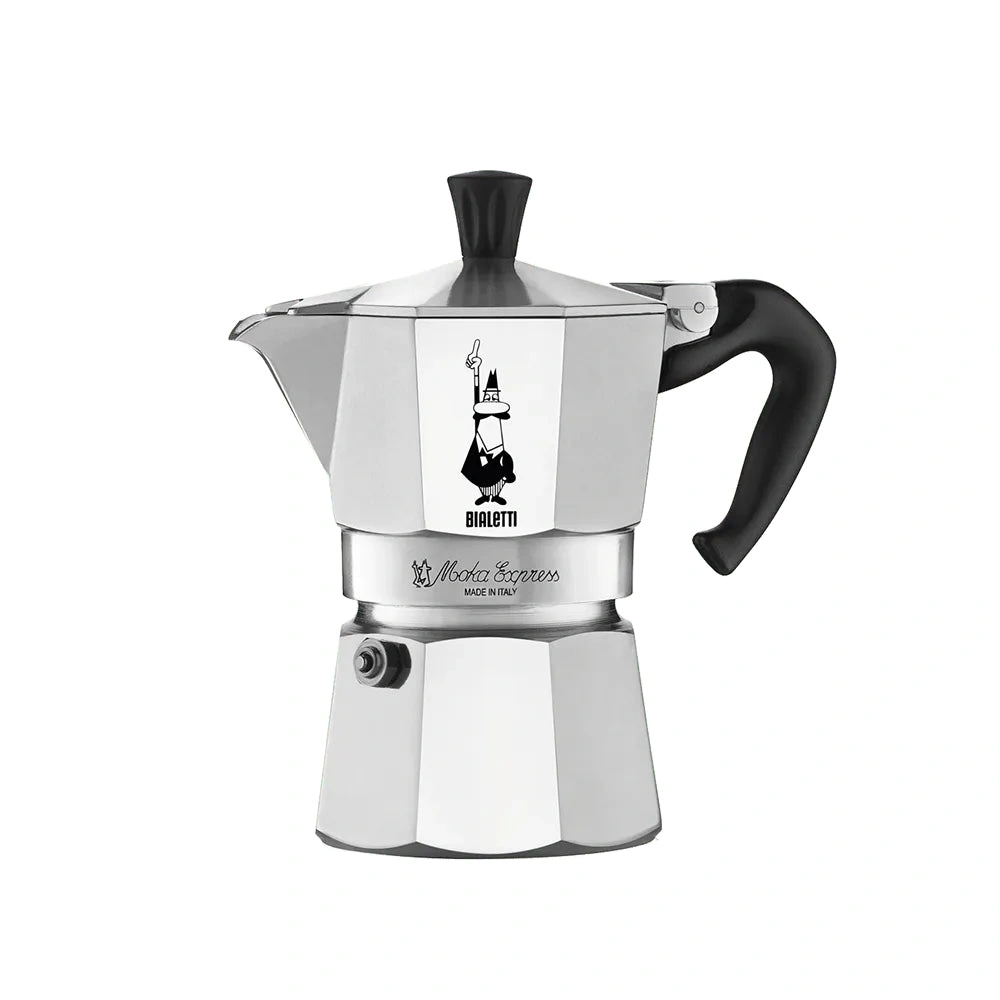
The Extraction of Discipline: Bialetti Moka Express 3-Cup
Story & products
South American mornings are not exclusively fueled by the bitterness of mate. Inside the solitary apartments of hyper-disciplined professional athletes, there exists a different, almost paranoid morning ritual. Elite competitors often harbor weird, unbreakable habits, such as standing in a half-lit open kitchen, intensely staring at the lowest blue flame on a gas stove. The Bialetti Moka Express is not a prop for a barista's theatrical performance; it is a thermodynamic instrument that compresses "absolute control" into a strict five-minute stovetop protocol. Only when the spout emits its signature guttural gurgle are the senses and muscles officially permitted to awaken.
Volumetric Constraint: The 3-cup capacity (approximately 130ml) is a ruthlessly precise measurement. It delivers the exact dosage required to aggressively stimulate the central nervous system of a solitary individual, without introducing excess fluid that could cause gastric heaviness during morning tactical drills. There is zero waste and zero indulgence. It demonstrates supreme professional restraint; a single drop more would disrupt the body's metabolic rhythm.
Thermodynamic Protocol: The 100% aluminum octagonal body and patented safety valve demand absolute obedience to the object's rules. The water level must halt strictly below the safety valve. The medium-fine grounds in the funnel must never be tamped, only leveled, before the chambers are tightly screwed together. This is not merely a brewing method for espresso-like intensity; it is an exercise in submitting to the laws of physics. Requiring no electricity and no capsules, it relies on raw gas or electric heat (an induction plate is required for induction stoves), trading five minutes of stoic patience for a high-octane neural spike.
Maintenance Obsession: This aluminum pot enforces a paranoid cleaning directive: it must be rinsed with water only. Detergent is strictly forbidden. This obsessive rule exists so the aluminum walls can absorb the coffee oils day after day, ultimately seasoning the metal into a highly personalized tool. It is a physical record of repetitive discipline and a literal manifestation of refusing to compromise.
The L2M store harbors immense respect for and recommends the Bialetti Moka Express because we understand that elite athletic performance and genuine personal magnetism are built upon these seemingly trivial, yet brutally strict daily protocols. Spending five minutes every morning watching the octagonal metal reflect the low flame is a daily calibration of absolute control. It is the psychological foundation for maintaining a cold, efficient, and deeply structured professional aura.

The Long Page Inside the Short Screen
Story & products
One blogger came to Biohackers with a problem that had lasted for months. Their eyes still scanned the page, but their mind wandered after about ten minutes. Working memory felt sluggish: thoughts vanished mid-sentence, recent details slipped away, and starting a new project seemed to require energy they no longer had. Midday brought brain fog as well.
They wanted to hear what had actually helped other people read for longer. Neurotransmitter precursors, compounds aimed at cellular energy and mitochondria, adaptogens: which had made a difference, and which had been a waste of money? They specified vegetarian or cellulose capsules. According to their account, their doctor had prescribed bupropion XL for executive focus and fatigue, but they wanted to explore biohacking and supplements first.
Read the post and replies, and a substantial part of the conversation turns out to be about screens. These are personal accounts and opinions, including the references to medication. They cannot diagnose the poster or anyone reading along.
What happens after ten minutes?
Supplement discussions readily settle on the next bottle: another ingredient, another addition to the stack. This thread keeps returning to how people spend their days.
In the supplied snapshot, the top comment had about thirty-one upvotes. Its author described exercise, putting away phones and other screens outside work, reading physical books, sleeping seven to nine hours, and writing on paper. After two to three months of doing these things consistently, they felt their working memory, cognitive perseverance and motivation return. Supplements they had tried had instead brought jitters and racing thoughts. The time involved matters, as does the fact that several habits changed together.
A reply with about thirteen upvotes simply said “Sleep.” Another, also around thirteen, listed marine omega-3 with EPA and DHA, morning B-complex and magnesium threonate before bed. Then it placed the emphasis on stopping Reels, Shorts and similar short-form content. That commenter believed short videos damaged attention and suggested longer podcasts and reading instead. Attention was compared to a muscle: read daily, increase the time gradually, and try a novel absorbing enough to make you want to continue. Those are the commenter’s claims, not a supplement shopping list endorsed here.
Count the screen time too
A reply at roughly eight upvotes expressed surprise that more people were not discussing screen addiction and the constant supply of algorithmic short videos. Another, also around eight, suggested a full month away from phones and social media wherever possible. The author described the process as painful and slow, kept only essential apps, and often deleted even the community app. Their explanation about giving new neural pathways time to form remained a personal interpretation.
These accounts offer more to consider than a general accusation of weak willpower. When does reading become difficult? How much time goes into short videos? Can a physical book still hold your interest? Someone may have benefited from a supplement while someone else found that reducing short-form media helped them read again. Both accounts can exist without becoming a universal rule.
The original post does not provide a complete picture of the blogger’s life. When sobriety came up, they added that they had never drunk alcohol, taken drugs or even had an energy drink. That does not identify the cause of their difficulties. Nor does the comment section’s interest in screens establish a diagnosis.
Two to three months, or the last twenty-four hours
One comment with about ten upvotes described daily workouts, saying similar symptoms appeared without exercise in the previous twenty-four hours. Set beside the two-to-three-month account, it shows how differently people describe their own patterns. Copying the action while overlooking those circumstances would miss much of the story.
Supplements and medical experiences remain part of the discussion. One person said iron and B12 helped their brain fog, though less than prescribed ADHD medication. Another described improvement after an infusion for anemia and stressed testing first. Others brought up hormones, sleep disorders and allergies. Similar symptoms in a thread do not establish a shared cause.
The useful questions remain specific: whether reading still lasts beyond ten minutes, how much attention short content takes up, and what sleep and exercise look like. Someone else’s two to three months, or twenty-four hours, can prompt a question without replacing your own medical assessment and prescribing decisions.
Independence here means listening to what others have tried while remembering whose life it describes. A full supplement cabinet does not tell you how far you can get into a book. An account of improvement after cutting screen time does not make everyone the same. Look closely at the reading, the screens and the physical state before deciding what to ask next.
The content of this article is only for viewing, reflection and independent judgment. It is not an instruction manual. It is simply one part of the world that exists.
Blank Spaces on the Schedule
Story & products
Fifty, seventy, a hundred miles a week. The total rises; the race result does not necessarily follow. A blogger on AdvancedRunning described runners chasing a sub-three-hour marathon or a Boston Qualifier (BQ), piling on mileage and then blowing up on race day. His conclusion was blunt. You don’t need more mileage.
The replies pushed back. The supplied account recorded about sixteen upvotes and fifty-five comments at the time. One reply, with roughly 111 upvotes, read simply, “Popular opinion: You need both.”
Read further and the disagreement becomes less tidy. One runner is talking about an already crowded training week; another is still building an aerobic base. Someone else is trying to understand a marathon that fell apart. A straight choice between volume and quality leaves much of that context out.
What still fits into the week
In the original post as preserved by the supplied manuscript, the blogger argued for long runs, faster work, tempo sessions, recovery miles and consistency. He objected to chasing the most mileage a body could tolerate, then wondering why progress had stalled. Training supplies stress, he argued, but improvement also needs recovery. Most amateurs work full time. Professionals with coaches, doctors and time devoted to recovery live with different constraints.
That concern is recognizable. The difficulty lies in extending “you don’t need more mileage” to everyone. A runner already doing seventy miles and someone without a stable weekly base may need different things. One commenter pointed out that high-mileage runners are a small minority, with many others closer to forty miles a week.
When checked for publication, the original post had been removed by moderators; its comments remained readable. The blogger’s position here follows the supplied account, while the training experiences belong to the individual commenters. This is a discussion of experience and disagreement, not a personal training plan.
The evidence behind “both”
A commenter brought in Science of Ultra’s Mileage Matters Most. Its emphasis on overall volume did not dispense with intensity. A 2016 study cited in the thread examined more than 2,300 recreational runners and found an association between weekly mileage and performances from 5K to the marathon. A 2019 study of 85 elite distance runners also identified easy-running volume as an important predictor of performance. The cross-country research cited in the discussion supported the value of low-intensity training even when the race itself was relatively short and hard.
That is difficult to reconcile with a blanket claim that more mileage has no value. It still does not calculate next week’s mileage for any particular runner. An association has to be read alongside training history, the mix of easy and harder work, and whether an increase can be sustained.
How the runners explained their progress
One commenter reported doubling mileage over several years and taking a marathon from 3:43 to 2:50. Another followed Pfitz 18/70 at forty, ran 2:58 and planned to go to Boston the following year. In their early thirties, with more attention to speedwork and a peak of 50–55 miles a week, they had repeatedly gone out too fast and faded badly in the second half.
Another runner credited major personal bests to Pfitz half- and full-marathon plans peaking above sixty miles a week. The quality work, they said, had changed little; the mileage had. These are retrospective accounts spread over time, with other conditions attached. “Double the mileage” is not the whole story in any of them.
Other replies offered rough distinctions. A four- or five-hour marathoner might benefit first from more easy running; a runner aiming below three hours might need quality sessions as well. Some put forty mpw, or miles per week, near a starting point for a solid build and saw clearer diminishing returns beyond seventy. Another doubted that fifty mpw would reliably produce a sub-three result without unusual talent. These were the commenters’ judgments, not a set of universal entry requirements.
Which weakness are you addressing?
One commenter used Brad Hudson’s Run Faster to explain a diagnostic approach. For limited aerobic endurance, consider volume and threshold work. For a neuromuscular limitation, look at speedwork, strides and hill sprints. Specific endurance means extending an existing speed reserve to the demands of race pace. The same commenter suggested diminishing returns often become more noticeable around eight to ten aerobic hours a week. That threshold, too, was their judgment within the discussion.
A runner reporting 110–120 mpw started with roughly forty miles and one or two quality sessions, then asked how much more could fit without burnout or injury. Beyond seventy, they felt, the decision depended on the goal and on what the rest of life could accommodate. Other comments about lifetime mileage, periodization and polarization widened the view beyond a single week.
Blank spaces on the schedule have a practical meaning here. Work, injury history and recovery after hard sessions all take up real time. Mileage can matter while recovery still deserves room. Independent judgment means hearing someone else’s success without losing sight of those differences. After reading about another runner’s 2:50, the next task is to look at your own week and see what space remains.
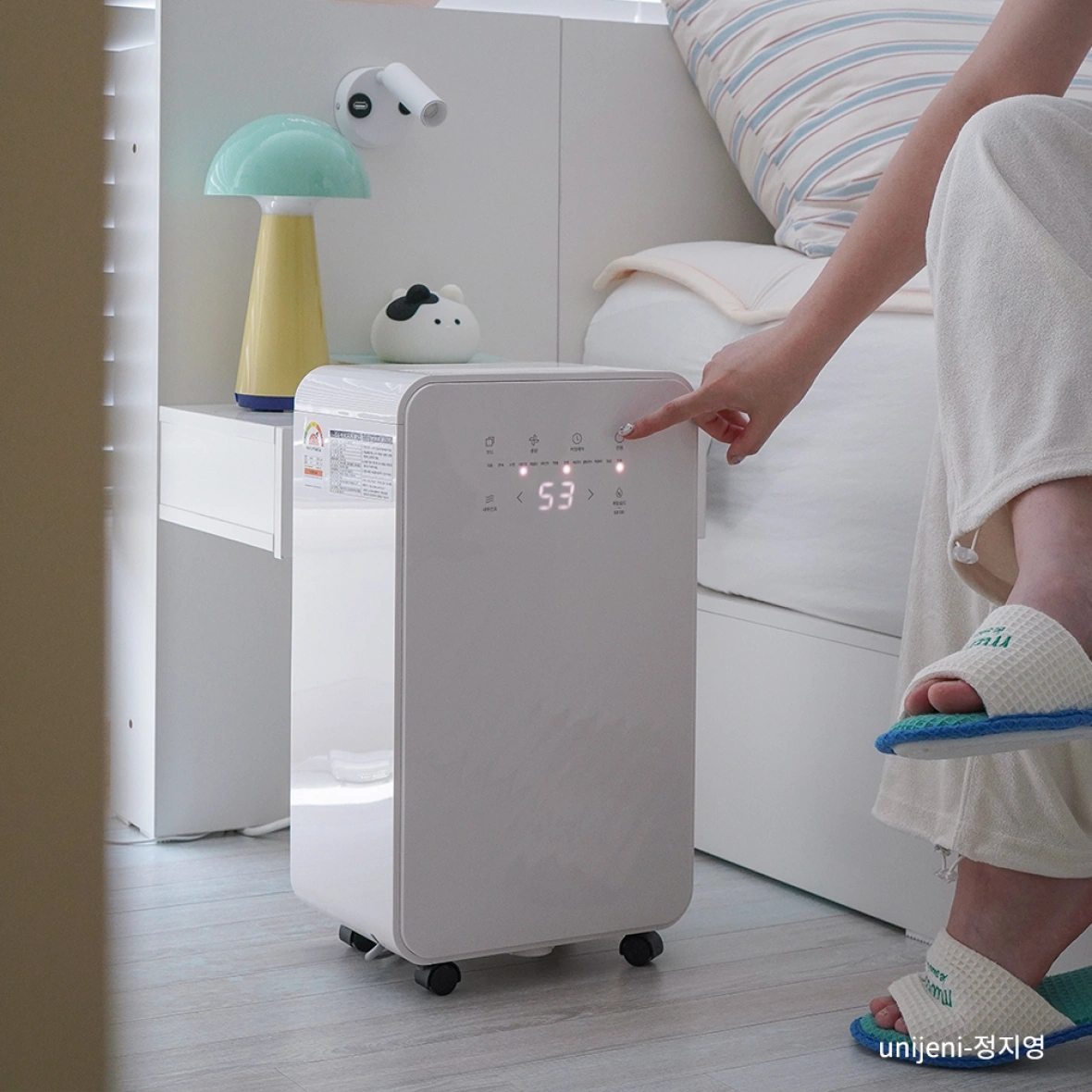
About 28 cm Wide, 5.5 L a Day: How Cuckoo Writes One-Room Humidity as “Fits Against the Wall”
Story & products
Humidity in a one-room flat has two familiar problems: rainy-season damp on corners and laundry that will not dry; and machines too wide for the strip beside the door or wardrobe. A dehumidifier is not décor for “a household should own one.” For someone living alone who will not leave windows open all night, it is a tool that moves water from air into a tank.
Cuckoo Inspure dehumidifier 5.5 L, model DH-V06201EB. The official specifications list about 5.5 L moisture removal per day; tank about 2.0 L; body about W280 × D200 × H490 mm; mass about 10 kg; about 180 W; energy grade 4; color Earth White. Marketing points at 1-person households, one-rooms, and dressing rooms—narrow space, wheeled.
For placement and emptying, the useful figures are about 28 cm width; about 5.5 L per day; about 2 L tank. They decide whether the door-side gap can hold the unit, and how often you empty water.
Measure the doorway strip before “liters per day”
Korea’s share of one-person households is already high. Floor area does not grow; appliances still fight for wall edges. Twenty-eight centimeters of width is a measurement to check against the space available.
DH-V06201EB’s daily capacity is rated 5.5 L (standard test conditions; real rooms vary). The 2.0 L tank will not hold a full day’s take in one pour, so continuous drain with a hose is listed. Casters, button lock, auto defrost, post-use internal dry, and a washable rear filter complete the practical list.
About 20 cm deep and 49 cm tall, its footprint can be checked against a hallway, allowing space for passage and the ventilation required by the manual—closer to solo life than “suitable for living rooms” slogans.
5.5 L solves “this room,” not a basement plant
Width answers placement. Daily life still asks: how full is the tank, can you sleep through the noise, how often to wash the filter. Official copy names one-rooms and dressing rooms, 1-person and small households—the intended setting is a small home during a damp season.
About 180 W and grade 4 are also worth considering. Power connections and continuous drainage should follow the manual; wattage alone does not establish whether a shared power strip or unattended operation is suitable. Soft floors want gentle caster moves; hose drain needs a drop to a drain—ordinary setup details that affect if the machine becomes a two-use paperweight.
A long spec graphic lays out modes, tank removal, wheels, continuous drain, and filter cleaning—faster than adjectives.
Before choosing a place for it
Check the space and your routine: how much width is left by the door? Is a 2 L tank enough for tonight’s shift out? 5.5 L/day and 28 cm width need to be considered together.
Living alone does not shrink humidity—laundry still needs drying, corners still dampen. A unit that fits the available space and can drain by hose is closer to a solo answer than a “bigger on paper” box stuck in the entry carton forever.
Product list
1 · Cuckoo Inspure dehumidifier 5.5 L DH-V06201EB · ~280×200×490 mm, 5.5 L/day, 2.0 L tank, ~10 kg · https://www.cuckoo.co.kr/mall/productView?productNo=8488
Main references
Cuckoo mall: Inspure 5.5 L (DH-V06201EB)
https://www.cuckoo.co.kr/mall/productView?productNo=8488
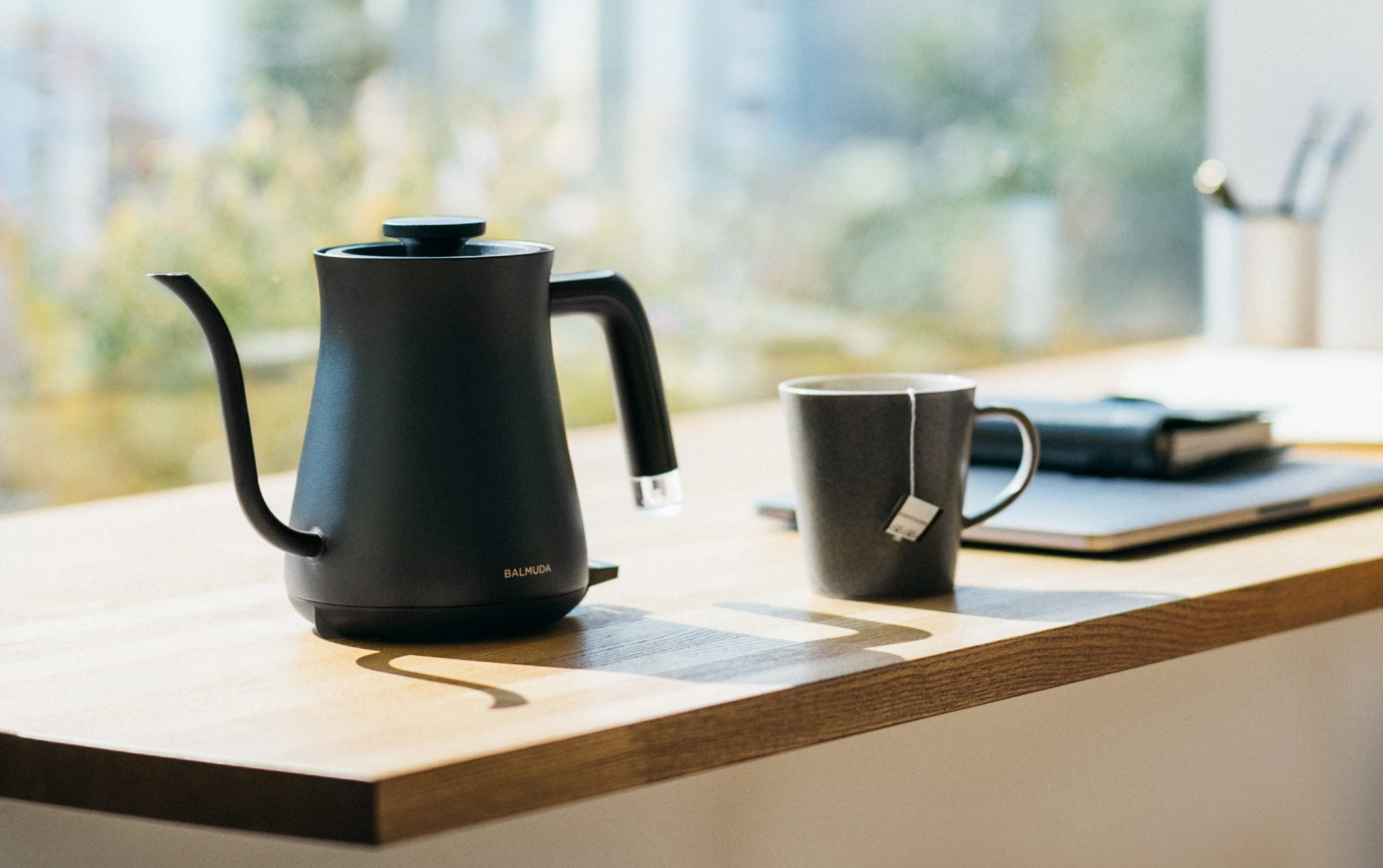
The Calculus of Hydration and Constraint: BALMUDA The Pot
Story & products
BALMUDA The Pot is not designed for hosting dinner parties; it is a micro-instrument of spatial and psychological control for the solitary professional. By deliberately abandoning large capacities and keep-warm functions, it locks its volume at exactly 550ml. This is the precise calculus for two cups of black coffee, or one cup of tea paired with a post-match cheat-meal cup noodle. There is no surplus. Every pour is a reset, a moment to focus on the act of pouring.
Calculated Capacity and Thermodynamic Velocity: The 550ml limit is an intentional constraint, forcing the user to abandon the lethargy of hoarding hot water. Powered by an AC100V / 1200W core, it achieves a rolling boil in approximately 3 minutes (with both water and room temperature at 23℃). This ruthless efficiency mirrors the decisive, no-nonsense mentality required in top-tier competition.
Hydrodynamic Spout and Torque Equilibrium: Weighing a mere 0.7kg, the handle and slender spout are designed for comfortable handling and pouring.
Spatial Discipline and Safety Design: Available in austere Black, White, and a highly mechanical Chrome finish, it refuses to monopolize precious counter space, acting like a highly specialized tactical unit in a cramped apartment. Equipped with empty-boil protection, automatic power-off, and a spill-resistant structure, it is designed to reduce spills, although hot water may still escape when it tips over.
The L2M store respects and recommends this item because it perfectly embodies the hardcore philosophy that "to subtract is to conquer." It strips away the bloated keep-warm features designed to coddle the masses, imposing a borderline obsessive metric that forces the user to focus entirely on the present three minutes and the immediate 550ml. This pragmatic restructuring of daily hydration is the kind of everyday ritual the author values.
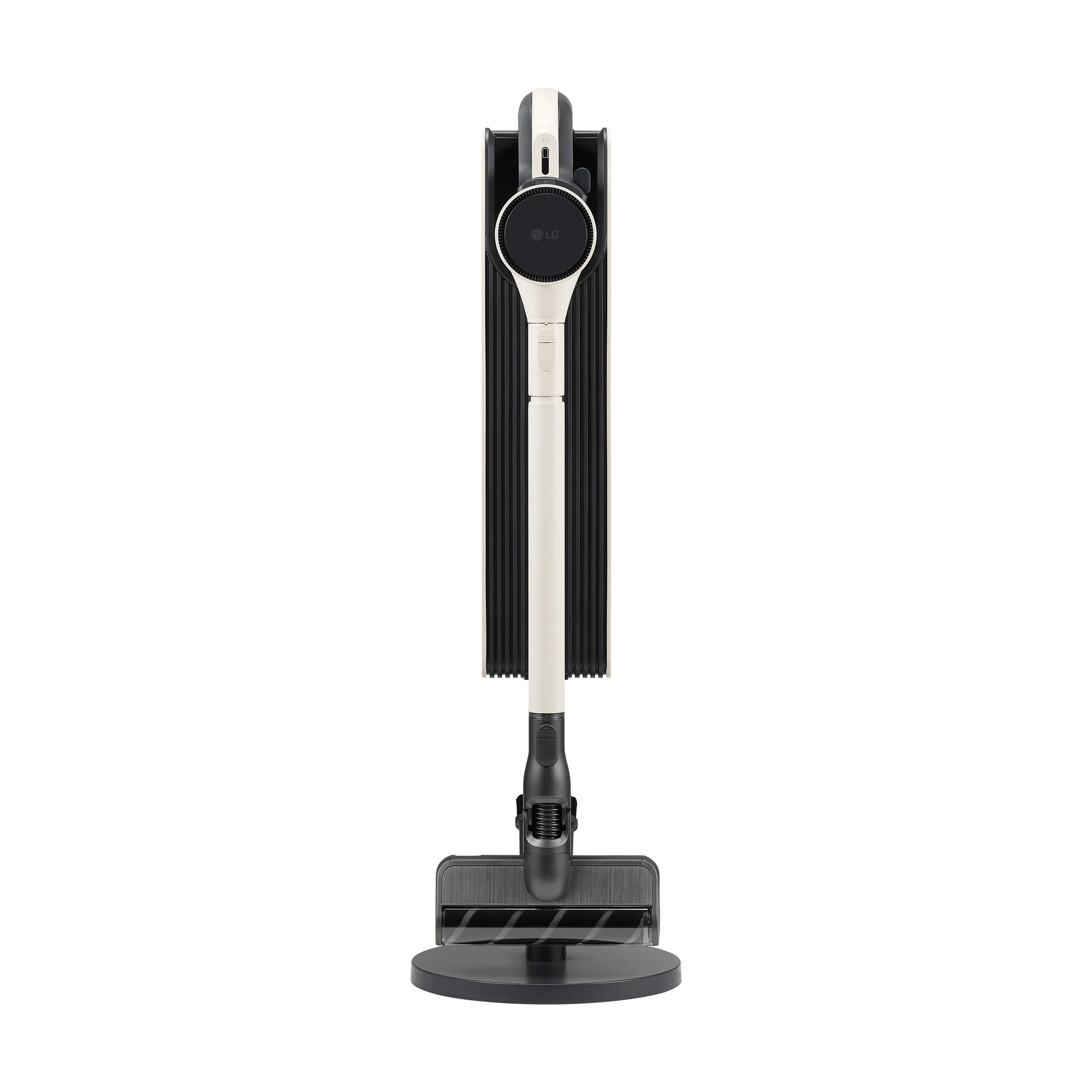
Tower Volume Cut About 40%, Dust Bag Still 2.1 L: How LG Writes Cordless Cleaning as a “Slimmer Dock”
Story & products
In a one-room apartment or officetel, emptying the dust cup can be more annoying than vacuuming. Open it and fine dust rises, settling on the sill again. An auto-empty charging tower saves that step, but it also takes up hallway space. The entrance and the floor under the sofa still need regular attention, so a cleaner has to be easy to pick up and put away.
LG Electronics introduced its A7/A5 Compact Tower range in a June 2026 newsroom release. Compared with LG’s own All-in-One Tower, the dock has about 40% less volume while retaining charging and automatic emptying. The representative model is the CordZero Objet Collection A7 Core Compact Tower A730WC, with maximum suction of about 220 W and a 2.1 L tower dust bag. Those numbers matter when you measure the corner where it will live.
Measure the corner before choosing auto-empty
For a Korean solo household, the choice often comes down to a light hanging charging cradle or a tower that empties the cup without handling it. The latter is convenient, but generally costs more and takes up more space. Compact Tower keeps automatic emptying in a slimmer dock.
The A730WC’s official dimensions are approximately W250 × H1120 × D260 mm at 2.47 kg; the tower is W309 × H1013 × D309 mm at 9.3 kg. The colour is Calming Beige. Maximum suction is 220 W under LG’s stated IEC-related turbo test conditions; results vary with the head and environment. Rated cleaner power is about 350 W, rising to a maximum of about 650 W in turbo. Emptying draws about 1200 W at the tower, takes about 35 seconds and uses a 2.1 L bag.
With one lithium-ion battery, LG lists about 30 minutes in standard mode without a head, 15 in strong mode, seven in turbo and 60 in low-power mode. A full charge takes at least about 240 minutes. The cleaner has five-stage fine-dust blocking, the tower has its own containment structure, and the filters and cup can be removed for washing.
The newsroom release listed launch prices of KRW990,000 for A7 Core+ Compact Tower and KRW790,000 for A5 Compact Tower. Whether the extra tower is worthwhile depends partly on how much you dislike emptying the cup each day.
A 2.1 L bag still needs replacing
LG says the tower automatically draws dust out of the cleaner when it is docked. The shell loses about 40% of its volume while the bag stays at 2.1 L. The five-stage filtration, including metal mesh, micro and exhaust filters, is intended to reduce re-emission. Dirty filters still need cleaning according to the manual, then drying fully before reassembly.
About 30 standard-mode minutes can suit a daily pass around a studio, though coverage depends on the room and head. Turbo’s roughly seven minutes make it more useful for concentrated dirt. Charging takes around four hours, which suits leaving it docked during the day and using it at night.
The roughly 450 mL water tank and 30-minute standard wet-mopping figure in the newsroom release belong to another, combination-cleaning SKU. The A730WC specification page lists a suction-only configuration with multi-purpose, crevice, bedding and slim floor heads. Check the exact bundle on the relevant product page before buying.
The lighter A5 Compact Tower
The CordZero A5 Compact Tower A520WC offers maximum suction of about 150 W. LG commonly cites 1.97 kg for the body, battery, wand and slim floor head together; the specification table also gives about 1.98 kg. The body and battery alone weigh about 1.1 kg. Overall dimensions are approximately W251 × H1026 × D242 mm. Its tower is about 309 × 1013 × 309 mm and 9.3 kg, with the same 2.1 L bag. The newsroom launch price was KRW790,000.
The A7 pairs about 220 W maximum suction with a 2.47 kg cleaner. The A5 brings about 150 W and a cleaner under two kilos to the same kind of auto-empty dock. If a robot already does most of the floor and this is for gaps and under the bed, the A5’s weight may matter more. If suction headroom matters most, consider the A7. Measure the corner and try holding the cleaner before deciding.
Product list
LG CordZero Objet Collection A7 Core Compact Tower A730WC · Tower ~−40% vol, 220 W, 2.1 L bag, auto-empty · https://www.lge.co.kr/product/vacuum-cleaners/a730wc
LG CordZero A5 Compact Tower A520WC · ~1.97 kg, 150 W, same slim-tower contrast · https://www.lge.co.kr/product/vacuum-cleaners/a520wc
Main references
LG newsroom: Compact Tower launch
https://www.lge.co.kr/story/newsroom/236090
LG official: A730WC
https://www.lge.co.kr/product/vacuum-cleaners/a730wc
LG official: A520WC
https://www.lge.co.kr/product/vacuum-cleaners/a520wc
LG vacuum buying guide
https://www.lge.co.kr/story/buying-guide/lg-vacuum-cleaner
LG CordZero Objet Collection A7 Core Compact Tower A730WC · LG CordZero A5 Compact Tower A520WC
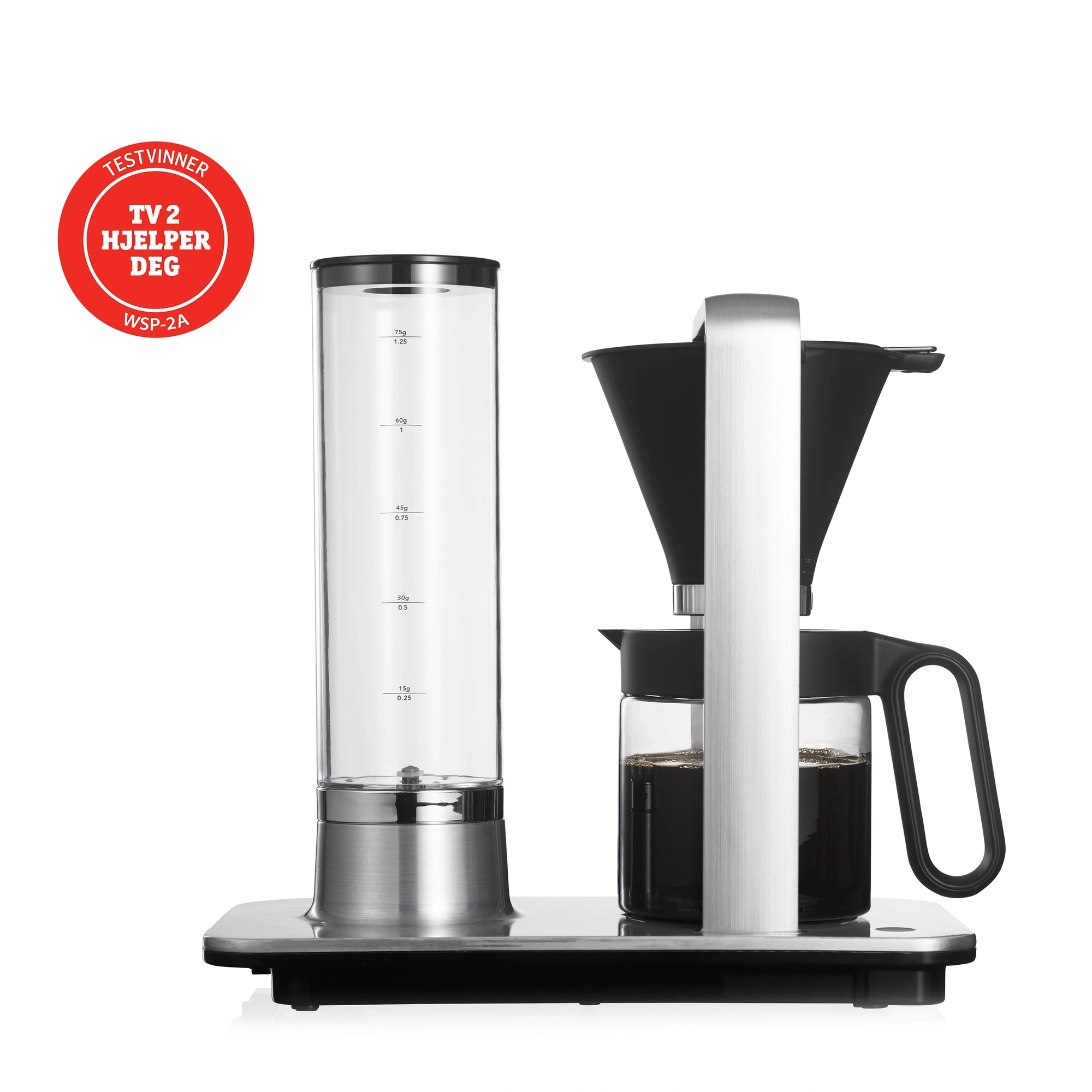
Zero Tolerance for Stale Residue: The Solitary Extraction Discipline of Wilfa Svart Precision
Story & products
In the survival ecosystem of top-tier European leagues, the greatest exhaustion is rarely physical; it is the erosion of psychological order. When a highly disciplined athlete returns to a quiet apartment after a grueling night training session, they do not seek cheap comfort. They need a physical anchor to rebuild order. The Wilfa Svart Precision (WSP-2A) Norwegian coffee maker is the absolute embodiment of this cold discipline. It is not a "smart" appliance designed to coddle lazy modern habits. It is an extraction instrument built on obsessive-compulsive principles. With its cold aluminum body and inviolable physical rules, it forces you to maintain absolute control over the microscopic details of your life, even when you are utterly exhausted.
The Detachable Water Tank Obsession: The most counterintuitive and fascinating design of this machine is how it systematically eradicates human laziness. Most people habitually use the freshly emptied coffee carafe to refill the water tank. Wilfa’s engineers treat this habit with borderline physiological disgust. The residual coffee oils clinging to the carafe walls, once introduced into the internal plumbing, will taint the next batch with a nauseating "stale oil" taste. To prevent this, the WSP-2A features a strictly detachable water tank, physically forcing you to walk to the sink and draw absolutely pure, fresh cold water. This paranoia regarding purity mirrors the exact psychological foundation required to maintain peak athletic performance.
Ruthless Thermal Consistency: Driven by an 1840W heating element, this machine violently locks the extraction temperature within the uncompromising 92–94°C golden zone. There are no gimmicky touchscreens. There is only a precision showerhead dispenser, coldly and evenly distributing hot water over the grounds. For a professional who spends their life hunting for competitive advantages measured in milliseconds and millimeters, this absolute control over thermodynamic variables provides more psychological grounding than any sports therapist could.
Flow Control and Residual Purge: Whether you need a single cup to shock your nervous system before a match, or a full 1.25L carafe to survive an afternoon of tactical video analysis, the adjustable drip stop and flow control allow you to dictate the exact flow rate and steeping time. Even more obsessive is the internal purge pump. After every single brew cycle, it forcefully evacuates any residual water left in the internal lines. No stagnant water. No compromises. Every single extraction is an absolute reset.
L2M Perspective: The L2M store profoundly respects the product philosophy behind the Wilfa Svart Precision. We despise mediocre designs that sacrifice core quality for the illusion of convenience. True charm and handsomeness do not stem from flamboyant on-pitch celebrations; they are forged in the solitary, unseen hours of the night, in the stubborn refusal to refill a water tank with an oil-stained carafe. This extreme restraint and discipline over the smallest details is the true bedrock of greatness.
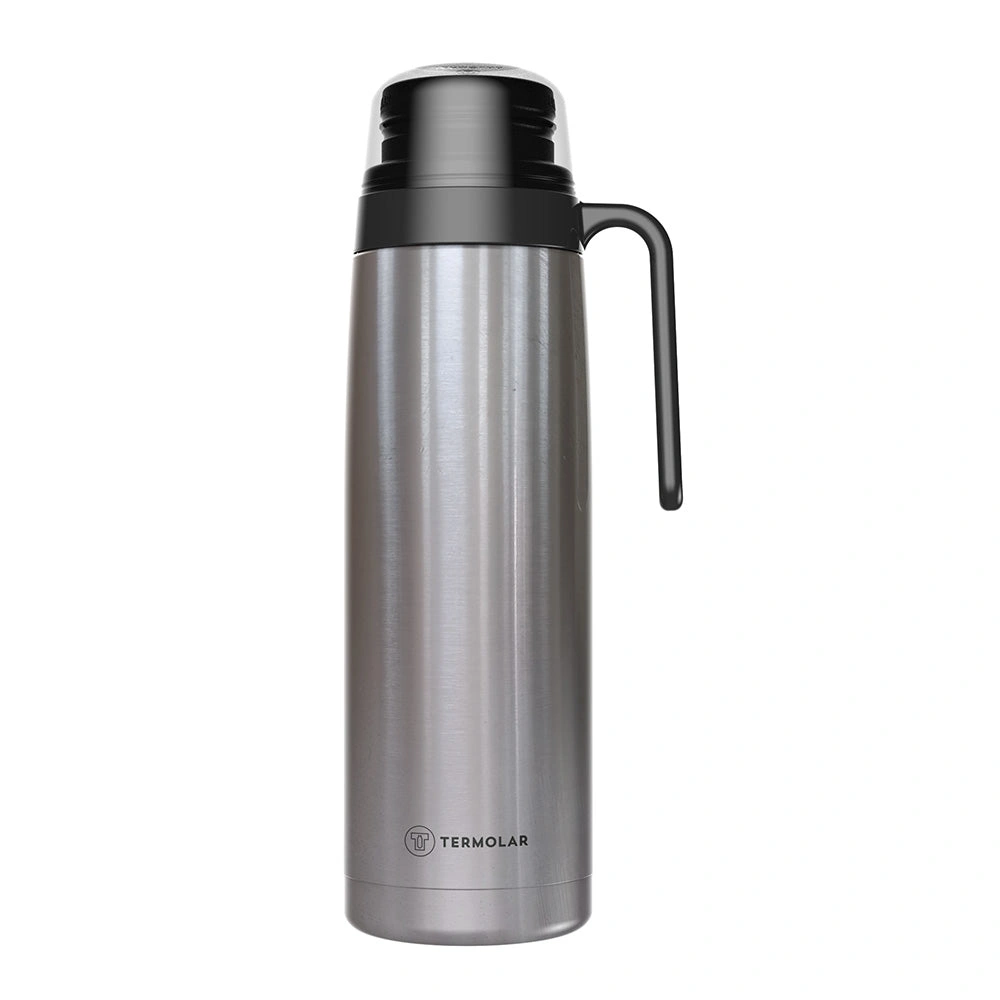
The Solitary Cadence: Termolar R-Evolution 1L and the Athlete's Obsessive Ritual
Story & products
Beyond the roaring stadiums and chaotic locker rooms, the daily lives of elite South American athletes are governed by borderline neurotic habits. At 5:00 AM, isolated on a balcony or in a dark kitchen, they bypass the generic formulas of team nutritionists to engage in the strict ritual of mate preparation. This is not a social endeavor; it is an intensely introverted psychological calibration. The Termolar R-Evolution 1L (SKU 9510) is the physical manifestation of this solitary rhythm. It strips the act of pouring hot water of any sentimental warmth, distilling it into a cold, mechanical repetition. With no included cup or bombilla, it exists solely for the pure, self-sufficient closed loop of the individual.
Full Stainless Steel Armor: Rejecting the unacceptable fragility of traditional glass inner flasks. Whether thrown callously into a duffel bag during away games or enduring the brutal vibrations of a team bus, the 100% stainless steel construction provides an absolute physical defense. Elite athletic gear cannot tolerate the uncontrollable variable of fragility.
Extreme Thermodynamic Lockdown: Delivering 20 hours of heat retention and 36 hours of cold insulation. Water boiled in the pre-dawn darkness remains mathematically locked at the precise temperature required for yerba extraction, outlasting grueling training sessions, afternoon recovery, and late-night tactical debriefs. This is a violent intervention against entropy.
Precision Flow Mechanics: Engineered specifically for the Chimarrão and Mate context. As a standalone pouring tool, its spout mechanics ensure a highly restrained cascade of water. It guarantees that the stream hits the target without destroying the meticulously sculpted yerba slope, maintaining optimal osmotic pressure and absolute consistency in flavor extraction.
L2M Store Philosophy: We hold profound respect for this pathological level of discipline. The Termolar 9510 is not merely a vessel; it is an anchor for psychological pacing when an athlete is entirely isolated from the crowd. L2M recommends this item because true elite performance is forged in these cold, precise, and entirely self-reliant routines. The sheer aesthetic of gripping this indestructible steel cylinder projects a silent, intimidating focus that defines true athletic charm.
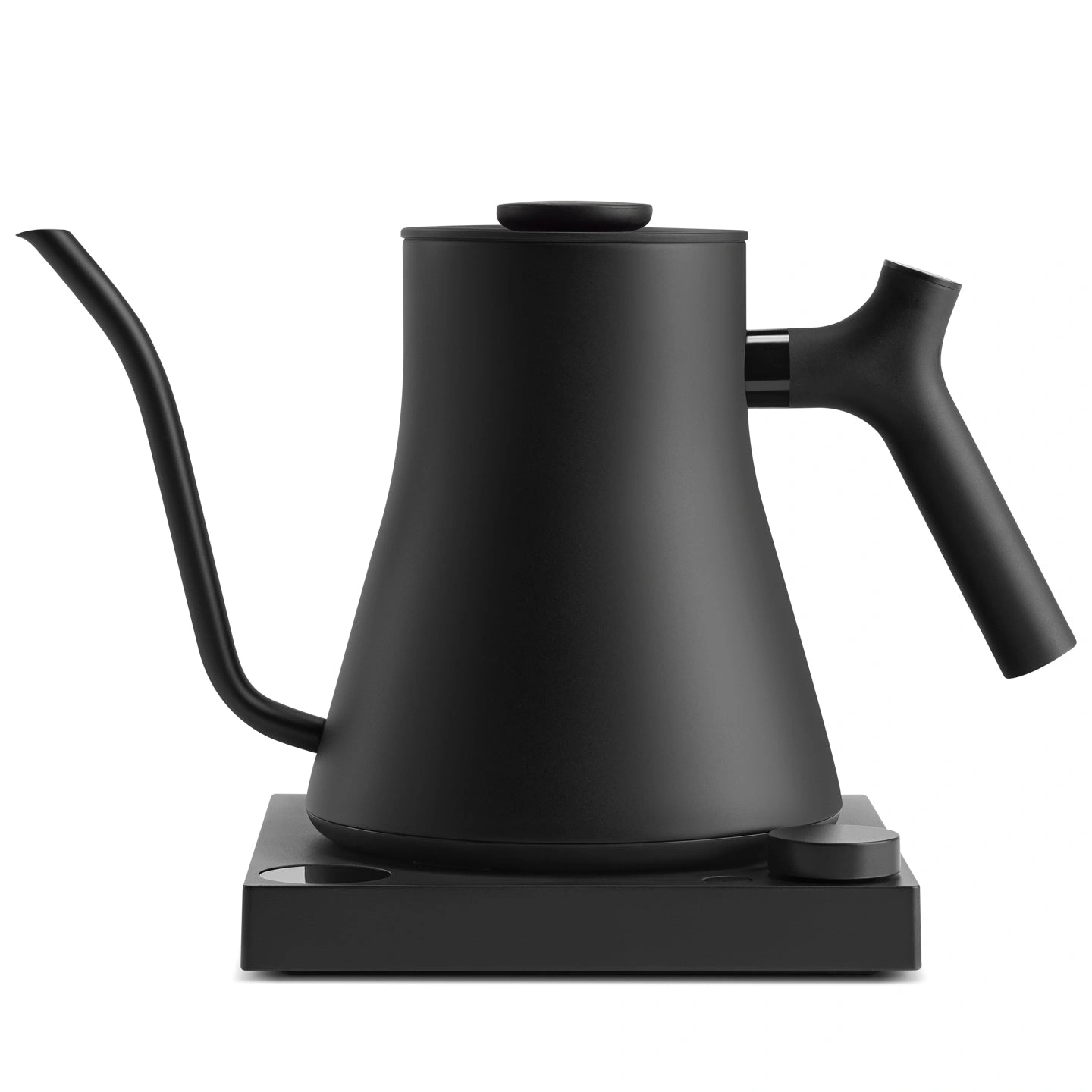
The Control Freak’s Deceleration Protocol: Fellow Stagg EKG Pro Electric Kettle
Story & products
It is midnight in late autumn in Europe. A player pushes open the door to their apartment, the physical toll of high-intensity tactical drills and an ice bath lingering in their muscles. The adrenaline is fading, and the central nervous system urgently needs to transition from the chaos of the pitch to absolute stillness. In the hidden slices of European football culture, elite post-match recovery is not merely physical stretching; it is a psychological deceleration. The Fellow Stagg EKG Pro is not utilized to deliver a jolt of caffeine, but rather serves as a precision instrument for neuro-muscular calibration. Weighing the beans, aligning the water level, and executing the slow, circular pour for four to six minutes creates a monotonous soundscape that acts as an anchor to reality, suppressing residual hyperarousal. The repetitive appearance of this exact stainless steel kettle and the same cup is a declaration of an almost pathological orderliness in life.
Gooseneck Flow Suppression: The extremely narrow gooseneck spout is fundamentally an exercise in anti-efficiency. It forces the user, even when muscles are heavily fatigued and flooded with lactic acid, to summon the micro-motor control of the forearm and wrist to maintain absolute flow stability. This mandatory stripping away of impatience is a compulsory course in post-match psychological reconstruction.
Obsessive Thermoregulation and Altitude Calibration: The 0.9-liter capacity is restrained and exact. The internal chip brutally locks the water temperature to any specific degree between 40 and 100°C without compromise. The Pro version's unique altitude calibration prevents boiling over in different geographical locations. This extreme desire to control environmental variables perfectly matches the elite athlete's obsessive-compulsive relationship with their own physical metrics.
Night-Training Scheduling and Visual Feedback: The full-color, high-resolution screen offers no frivolous entertainment; it coldly displays the progress bar of the temperature climb. The scheduling function means that when you open your door after a freezing night session, a kettle of pure water waiting exactly at 92°C is already prepared. It is a silent, system-level reward for supreme discipline.
European Voltage and Operational Restraint: When residing or playing in Europe, one must secure the local 220-240V voltage and appropriate European plugs, such as the UK 3-pin. Attempting to force a US 110V appliance into this ecosystem is strictly prohibited. Furthermore, the interior chamber is permitted to heat pure water only; the official guidelines strictly forbid heating milk or other liquids. Post-match hydration coffee can never replace professional electrolyte beverages, and to maintain the precision of the temperature probe, routine descaling according to the manual is non-negotiable.
L2M Selection Philosophy: The L2M store maintains an extreme reverence for slightly neurotic habits. We recommend the Fellow Stagg EKG Pro because it perfectly illustrates that "restraint is charm." On the path to ultimate performance, true professionals do not indulge their desires off the pitch; instead, they utilize agonizingly precise micro-rituals to refine their existence into a flawlessly operating machine.
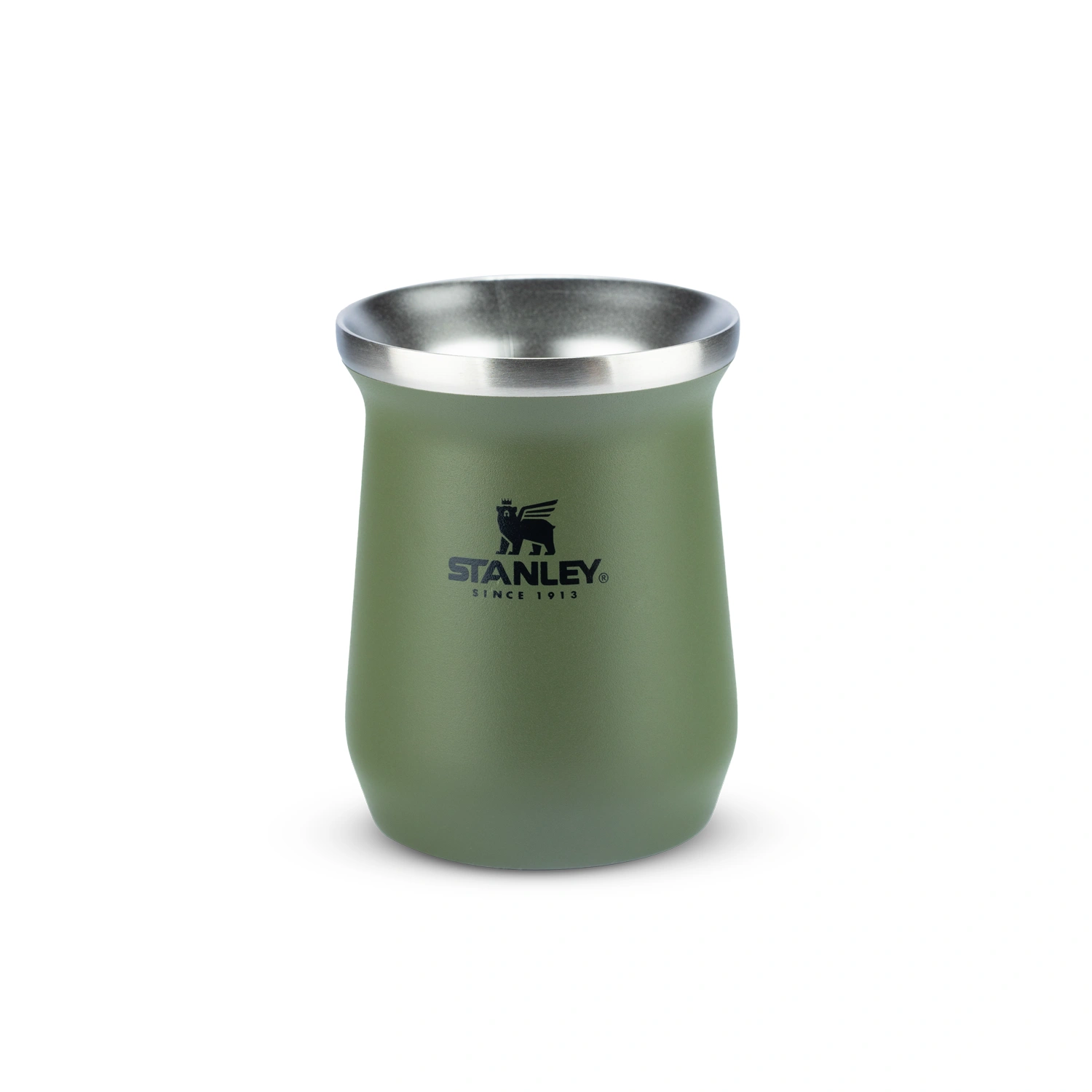
Forty-Five Minutes of Absolute Isolation: Stanley 236ml Solitary Cuia
Story & products
The morning after a grueling league match in South America is defined by silence. A handful of yerba, hot water, and a solitary screen reviewing tactical footage from the previous night. The traditional gourd belongs to the locker room's loud camaraderie; the solitary morning routine demands a different, utterly pragmatic tool. It demands thermal consistency and zero distractions.
Solitary Capacity and Thermodynamic Constraint: The precise 236ml volume strips away the communal sharing aspect of traditional chimarrão, transforming it into an isolated companion for tactical review. The 18/8 double-wall vacuum stainless steel structure enforces approximately 45 minutes of heat retention and 3 hours of cold preservation, ensuring the exact same temperature and bitter profile from the first sip to the last.
Anti-Condensation Physical Exterior: Weighing exactly 156 grams and strictly confined to dimensions of 8.1×8.1×10.5 cm. The exterior categorically rejects any condensation caused by temperature differentials. This guarantees that an athlete's hands remain completely dry, preventing any moisture transfer when immediately handling tactical boards or biometric recovery devices.
Accessory Restraint and Separation: Built with BPA-free materials to eliminate chemical interference. The product provides only the vessel; the bomba (straw) must be sourced independently, respecting the individual's obsessive preference for filter density. This is not a bloated 800ml hydration system, but a pure, highly efficient thermal terminal designed for isolation.
L2M Store Note: L2M respects this borderline antisocial level of domestic discipline. Elite athletic performance is built on brutally monotonous and highly controlled daily repetitions. By severing the social aspect of mate and applying industrial-grade thermodynamics, this Stanley Cuia protects the athlete's sacred, inviolable time of morning introspection.

The Powder Cabinet and the Sidewalk
Story & products
A thirty-six-year-old male blogger looked back over two years of experiments. He had tried dozens of compounds, sleep trackers, cold-exposure routines and niche adaptogens in pursuit of better daily focus. In his account, about eighty percent of the expensive powders and supplement stacks made no measurable difference to his resting heart rate or morning alertness.
What interests me in this public account is his willingness to separate what he bought from what he measured. A cabinet can fill up, and the spending can be substantial, without the readings changing. His conclusion concerns one person's records. It cannot settle whether every supplement is useful or useless. The measures, conditions and number of repetitions still matter.
The habits he kept
He described three ordinary changes that consistently seemed to improve his focus and stamina. He drank about a litre of water before his morning brew, took a brisk twenty-minute walk outdoors immediately after waking to get natural light, and stopped eating heavy food three hours before sleep.
Those quantities and timings belong to his routine. Before copying them, it is worth asking how they fit into a day and whether they suit the individual. The outdoor walk had a particular time and setting; an evening treadmill session would be a different arrangement. The post does not provide enough evidence to separate the contribution of each change.
How do you drink a litre?
A commenter asked the obvious practical question. A litre after waking is a lot; how did he manage it? The blogger explained that his drink had flavour, naming tmrw, and that he preferred it cooler. He also said it would take a few days to adapt. Those details help explain what a short headline leaves out.
Another commenter kept a litre beside the bed, drank half after waking during the night and the rest in the morning. That was someone else's experience, with a different schedule. It should not be folded into the blogger's routine as though the two were identical. Other replies mentioned homemade electrolytes with magnesium, potassium, salt and lemon, while one person said L-tyrosine alone had helped them. These remain individual claims in a conversation. This article does not recommend a recipe or a product.
There is still room in the cabinet
The blogger was prepared to record expensive experiments that had produced no measurable change, while continuing to note ordinary habits that seemed to help him. His own conclusion was that it is easy to spend money on routine problems, and that simple consistency had repeatedly served him better than complicated stacks.
That judgment has a personal history behind it and a clear limit. Two years of one person's notes do not become a study of everyone. The eighty-percent figure refers to the expensive powders and combinations he discussed. Someone else's result cannot do the work of assessing our own circumstances.
The powder cabinet and the sidewalk can coexist. There is a place to record what was bought and tried, and a place for those twenty minutes outside. Before the next purchase, or a sweeping rejection of every tool, check what was actually measured and whether the change happened repeatedly. A purchase history alone cannot establish effectiveness.
The content of this article is only for reading, reflection and personal judgment. It is not an instruction manual. It is simply one part of the world.
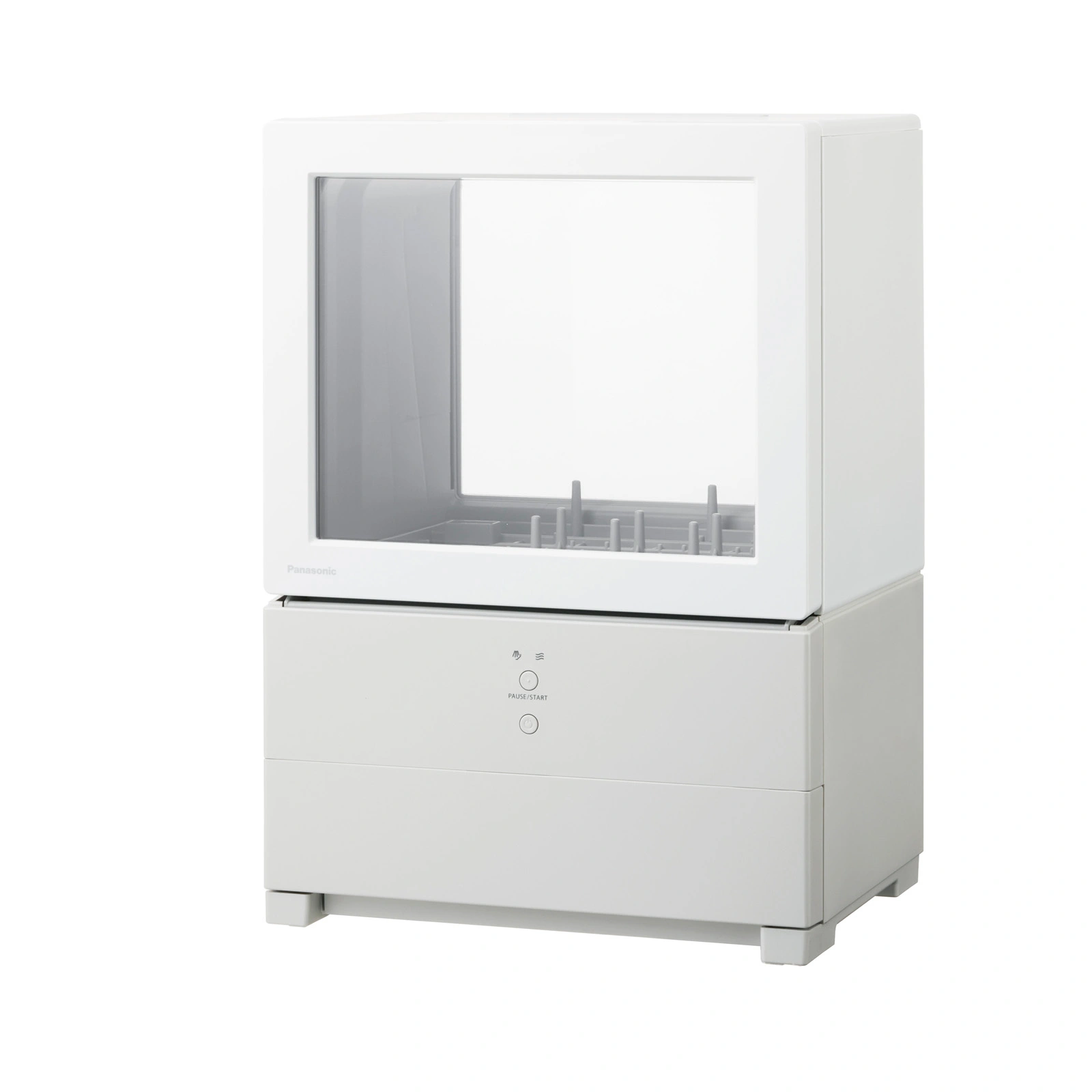
About 31 cm Wide, Six Pieces at a Time: How Panasonic Writes the Solo Dishwasher as “A4-Sized”
Story & products
In a one-room kitchen, the bowls, plates and cups left by the sink can feel like more work than cooking. Choosing a family dishwasher means thinking about cabinets and plumbing. Someone living alone is likely to ask more immediate questions. Can I use it today? How much counter space is left? Will one meal's dishes fit?
Panasonic introduced its personal dishwasher SOLOTA (NP-TML1) in 2023. The name points to one person, and the practical details follow. A removable tank can be filled at the tap, without changing the pipes. The body measures about 31 × 43.5 × 22.5 cm, with a footprint close to an A4 sheet.
About 31 cm wide, up to six standard pieces of tableware and around 2.5 liters of water per run. Those numbers determine whether it fits beside the sink and how much washing it can take off your hands.
Measure the counter before planning the installation
A dishwasher often falls down the solo-living checklist because fitting and installing it seem difficult. Japanese rental properties commonly restrict changes to water fittings. A branch faucet may need a technician, and it has to come out again when you move.
SOLOTA's tank lifts out for filling. The specifications give a body about 310 × 435 × 225 mm, reaching about 485 mm deep with the door open. It weighs around 7.5 kg, has a roughly 10-liter tub and holds six standard dishes under JEMA's voluntary criteria. The cord is about 1.9 m and the drain hose about 0.8 m. Allow at least roughly 1.7 cm behind the machine for the hose.
The familiar white model is NP-TML1-W; the black NP-TMLK1 followed. A window in the door lets you see inside and makes the box feel less imposing on a small counter. Panasonic's “almost A4” describes the footprint. The space between sink and stove still needs enough room for the open door, drainage and everyday handling.
Will six pieces cover a meal?
Once it fits, the next question is what goes inside. Can the breakfast plate, dinner bowls and soup cup share a load? Panasonic's survey found that singles in their 20s and 30s used about two to three dishes per meal, excluding cutlery. Six pieces leave some room around that amount.
The machine uses hot, high-pressure spray and Panasonic's Stream sterilizing wash. The stated reduction of over 99% comes from a test on one bacterium under specific conditions; placement and soil can affect the result. A standard cycle takes about 120 minutes, including around 60 minutes of fan drying. Washing without drying takes about 60 minutes. Check the manual before loading heat-sensitive plastics. Clean dishes can stay in the machine for a while after the cycle.
Official noise figures are about 41/43 dB at 50/60 Hz, with peak power around 270 W. Water use is about 2.5 liters. Panasonic's defined hand-washing comparison uses a little over 20 liters for comparable tableware, hence the “about one-eighth” claim. Temperature, soil and detergent affect the comparison. The capacity suits a few dishes each day; large pans need another solution.
There are only a few controls. Scrape off food first, and don't expect spatulas, cutting boards and large frying pans all to fit. Being able to load the meal's dishes, press a button and do something else can remove one recurring chore.
A sixteen-piece alternative: siroca SS-M151
siroca's SS-M151 also uses a tank and can connect to a branch faucet. Aimed at one to three people, it holds sixteen standard pieces. It measures about 42 × 43.5 × 43.5 cm, weighs around 13 kg and uses roughly 5 liters per run. Programs include standard, intensive, quick and soft. Standard takes about 90 minutes and quick about 39 minutes. Drying uses a fan, so some droplets may remain.
The comparison makes the trade-off fairly clear. SOLOTA's near-A4 footprint, six-piece capacity and removable tank suit a narrow counter and a wash after each meal. SS-M151 has room for more accumulated dishes, at the cost of weight and counter space. Whether two days' dishes fit depends on what you use and how large they are.
Measure the counter, work out filling and drainage, then count the pieces you actually use for a meal. About 31 cm wide, six pieces and a tank that lifts out only become useful specifications when you put them against your own kitchen.
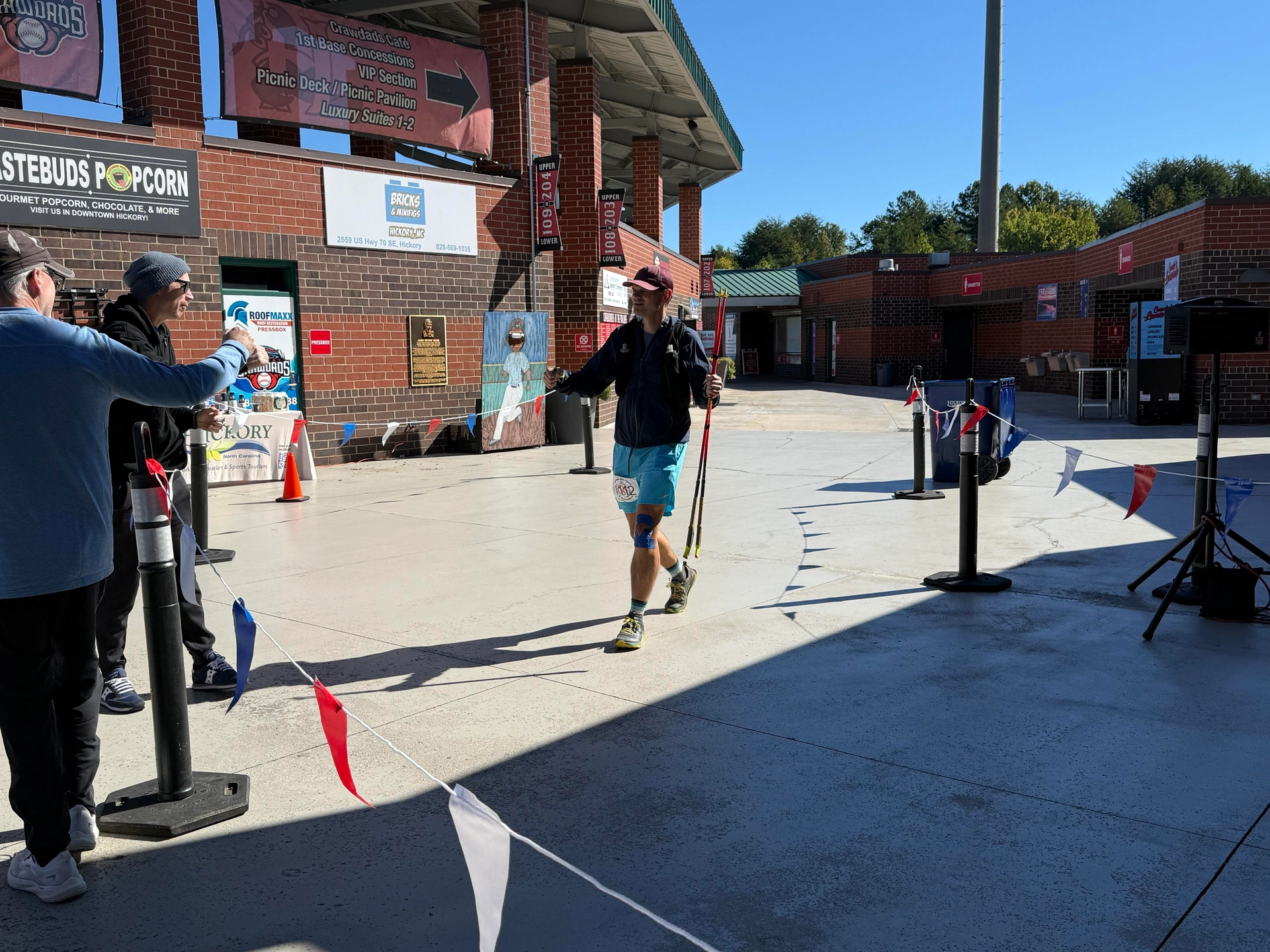
Second Wind on the Loop
Story & products
After two DNFs at the hundred-mile distance, a Reddit poster began to wonder whether they should stick to 100Ks. The most recent withdrawal, four weeks earlier, had been caused by gastrointestinal problems. Their wife encouraged another attempt at a local race while they were still in peak condition.
They entered the inaugural Hickory 100. The small local event consisted of twenty-five four-mile trail loops, with about sixteen thousand feet of climbing, roughly 4,900 metres. They finished in twenty-eight hours and thirty-seven minutes.
The original post is short. Alongside the result are an account of feeling completely finished and then running well again half an hour later, and a final lap accompanied by three organisers. Those details tell us more than two DNF entries alone can about this particular attempt. A withdrawal records an outcome; understanding it takes the circumstances too.
Another start after two DNFs
The poster had considered dropping back to 100K before their wife's encouragement led to another start. What the account establishes is a reported GI problem, a four-week interval and the decision to enter a local race. It does not supply a full history of both withdrawals or establish four weeks as a suitable interval for everyone.
The new event offered another opportunity. A local race still has its distance and climbing. Four miles repeated twenty-five times makes a hundred; the same trail and aid points come round again. One commenter was astonished by the loop count. Going round and round seemed a mental feat in itself. Another asked the poster to tell their wife she was the best.
Someone congratulated them and said it was cool to see a city putting on an ultra. The poster acknowledged that the organisers had things to learn, while praising the positive, energetic environment they had created. It was a specific appreciation of a first edition, without pretending the event was perfect.
Thirty minutes at mile forty-eight
A commenter preparing for a first hundred-miler in a few weeks asked for advice. The poster replied that plenty was already available online about pacing, nutrition and solving problems during a race. Their strongest takeaway was discovering that a second, third or fourth wind really could arrive.
At about mile forty-eight, they thought they were cooked. Even walking at a decent pace on flat ground was difficult, and they could not imagine recovering. About thirty minutes later, they were running at a very good pace again. Their advice, drawn from that experience, was to give yourself another thirty minutes and keep moving when you feel finished; the improvement might surprise you.
That is an account of one person's race. It is worth keeping with its circumstances, rather than turning it into a promise that another half-hour will restore everyone. The later recovery does not erase the time when even the flats were difficult.
Another commenter described sitting for ten minutes at mile forty-five, during the hottest part of their race, on its steepest hill. They could not take another uphill step before resting, and could not picture the remaining sixty-five miles. They did eventually complete them, and believed their accumulated training miles had carried them through. This was a separate race account. Those sixty-five remaining miles do not belong to the Hickory 100 poster's attempt.
The training question stays with the commenters
Someone else asked what training made a runner feel ready. A respondent said that a person might never feel ready, and suggested plenty of time on feet, practising eating while running, and hill and strength work for a steep course. In their view, being competitive might require hundred-mile-plus weeks. These were a commenter's opinions; the original poster did not set out a personal training schedule in the visible replies.
The title's use of 100m for a hundred miles also brought jokes. One person said they could run a hundred metres in about thirteen seconds. Another pointed out that hundred miles should be written as 100mi. After the joke, twenty-five loops and twenty-eight hours and thirty-seven minutes make the distance plain. A small local event need not be an easy weekend.
Three people head out for the final lap
The poster reserved the best part for the community. While they were recovering at the finish, the last runner, a seventeen-year-old, began his final lap. Three organisers went out to run the whole loop with him and encourage him all the way to the line.
The poster's own clock had already stopped. For the last person still on the course, four miles remained. The organisers left the finish and ran those miles alongside him.
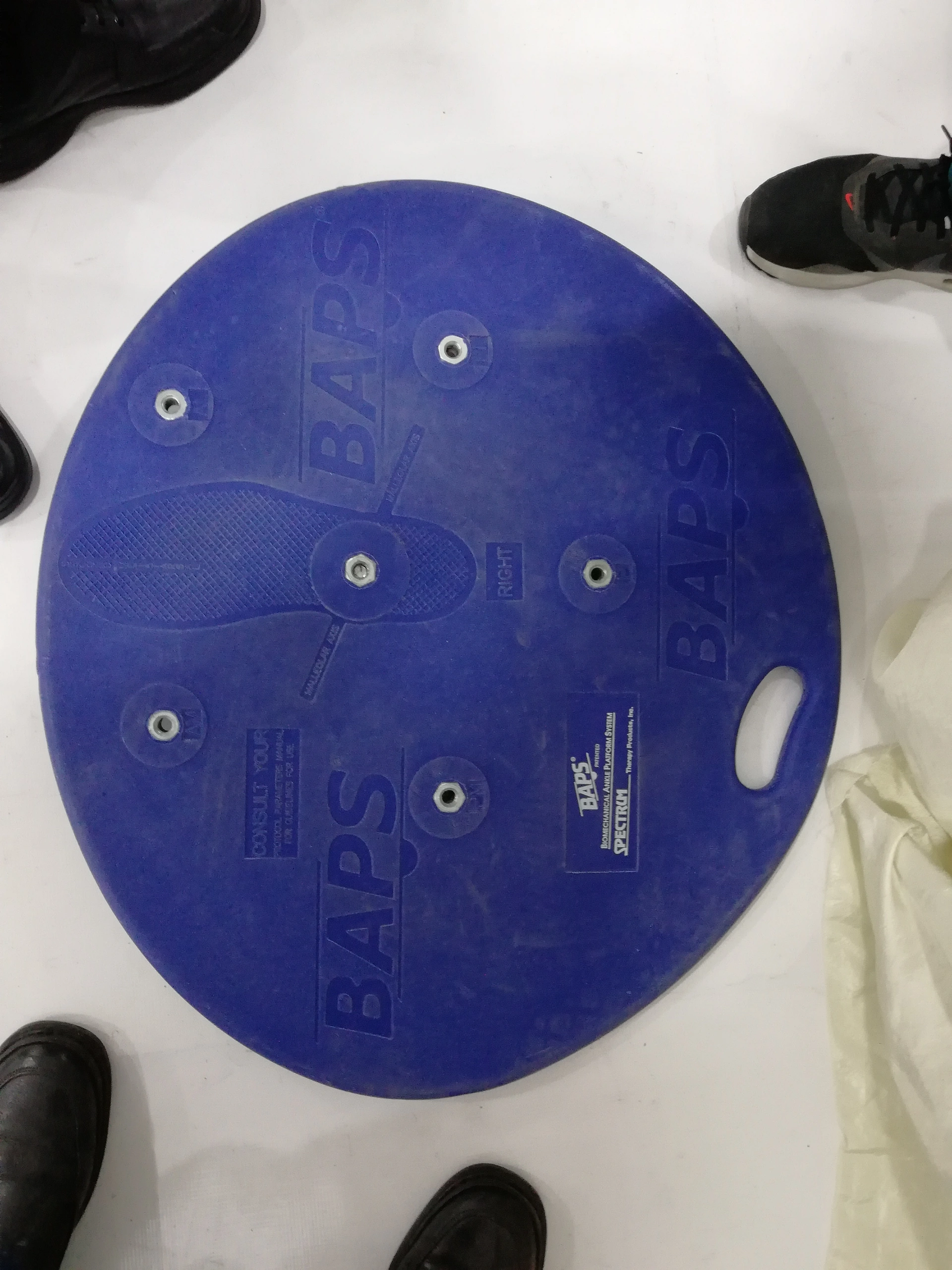
Two Seconds by the Counter
Story & products
A Reddit poster describes a small morning habit. Barefoot, arms at their sides and eyes forward, they stand near the kitchen counter and check ten seconds on the left foot, then ten on the right. They say their left side has consistently been worse by about two seconds. That difference gives them a personal baseline.
They like turning ordinary activities into small, repeatable experiments. Their notes include which leg they used and roughly how long they held it, whether they touched the counter, whether they wore shoes, and whether they felt dizzy, weak or in pain. They also record any persistent difference between sides. The surface, eyes-open condition, nearby counter and left-to-right order stay roughly the same. A worse result after terrible sleep gets a note; a decline lasting weeks gets more attention.
The poster says their balance has improved and wonders whether their sense of mental balance has improved too. The first is a personal report, and the second a subjective impression. This account and its comment thread describe experiences, rather than establish a medical outcome.
What “84% higher” refers to
The habit began after the poster read a 2022 study of 1,702 adults aged 51 to 75. Researchers assessed whether participants could complete a ten-second unsupported one-leg stance. About 20.4% could not. Over a median follow-up of about seven years, 17.5% of those who could not complete it died, compared with 4.6% of those who could.
After adjustment for age, sex, body-mass index and several health conditions, inability to complete the stance was associated with an adjusted hazard ratio of about 1.84 for death from any cause. That ratio is the source of the often-repeated “84% higher” figure. It describes an observational association in that group of adults. It does not establish that poor balance caused those deaths or provide an individual verdict about survival.
The poster makes that distinction themselves. The number sounds dramatic, but needs context, and a poor balance result may reflect more than leg strength. A standardised research test and a person's morning observations by the counter come with different conditions. One cannot simply be converted into the other.
Closing their eyes meant reaching for the counter
While trying to understand the difference between sides, the poster learned about proprioception, the sense of where the body is and how it is moving without having to look. Finding the nose with the eyes closed relies on the nervous system sensing the position of the arm and fingers.
The first time they tried standing on one leg with their eyes closed, they grabbed the counter almost immediately. Removing vision made them notice information they had been using without thinking about it. Staying upright draws on vision and the inner ears, along with information from the feet, joints and muscles coordinated through the spinal cord and brain. A two-second difference between sides may have more behind it than a weaker left leg.
They consequently stopped calling their routine a Romberg test. A classic examination usually involves standing with both feet together, first with the eyes open and then closed, while a trained examiner observes nearby. A kitchen-counter habit and a formal neurological examination belong in separate categories.
The replies returned to brushing teeth and putting on socks
A highly upvoted commenter wanted fewer posts about GLP-1s and supplements and more grounded observations like this, adding that they planned to try it. Another described poor balance after a brain injury and beginning to put on socks and shoes while standing. It was difficult at first, and they gave up several times; later it felt much easier. That remains their own experience.
Many replies came from people who already brushed their teeth on one foot. One described nudging their partner with the raised foot. Another changed sides across four thirty-second electric-toothbrush intervals, about a minute per side, holding the thigh parallel to the floor and dimming the lights at night. Someone else did air squats while rinsing, then held a one-leg quadriceps stretch. The number of people doing this surprised another commenter. These variations already differ from the poster's effort to keep observations consistent.
One runner said lumbar nerve problems affected the left foot, so running marathons did not enable them to pass this check. Age and neurological history change what the same task means for different people. Some commenters thought ten seconds too short and proposed a minute or even ten. Others stressed that illnesses can impair balance, making performance a marker of underlying health. Someone asked why one-leg standing and hiking could not both fit into life; someone else suspected the post was AI-written.
The replies do not add up to a single training programme. They give the discussion concrete context and return attention to correlation and causation. There are ordinary changes to notice beyond supplement stacks and wearable scores.
Keep the conditions with the two seconds
The poster's interest is whether a change persists under roughly the same conditions. A left side that has long been two seconds worse is a personal reference. An occasional worse result after poor sleep has another piece of context. Recording both makes it harder for one day's ten seconds to become the whole story of a body.
The routine needs no promise of longevity attached to it. The study's hazard ratio belongs with the study's conditions, and these observations belong to this person's daily life. Independent judgment begins with keeping that distinction clear.
The content of this article is only for viewing, reflection and independent judgment. It is not an instruction manual. It is simply a part of what exists in the world.
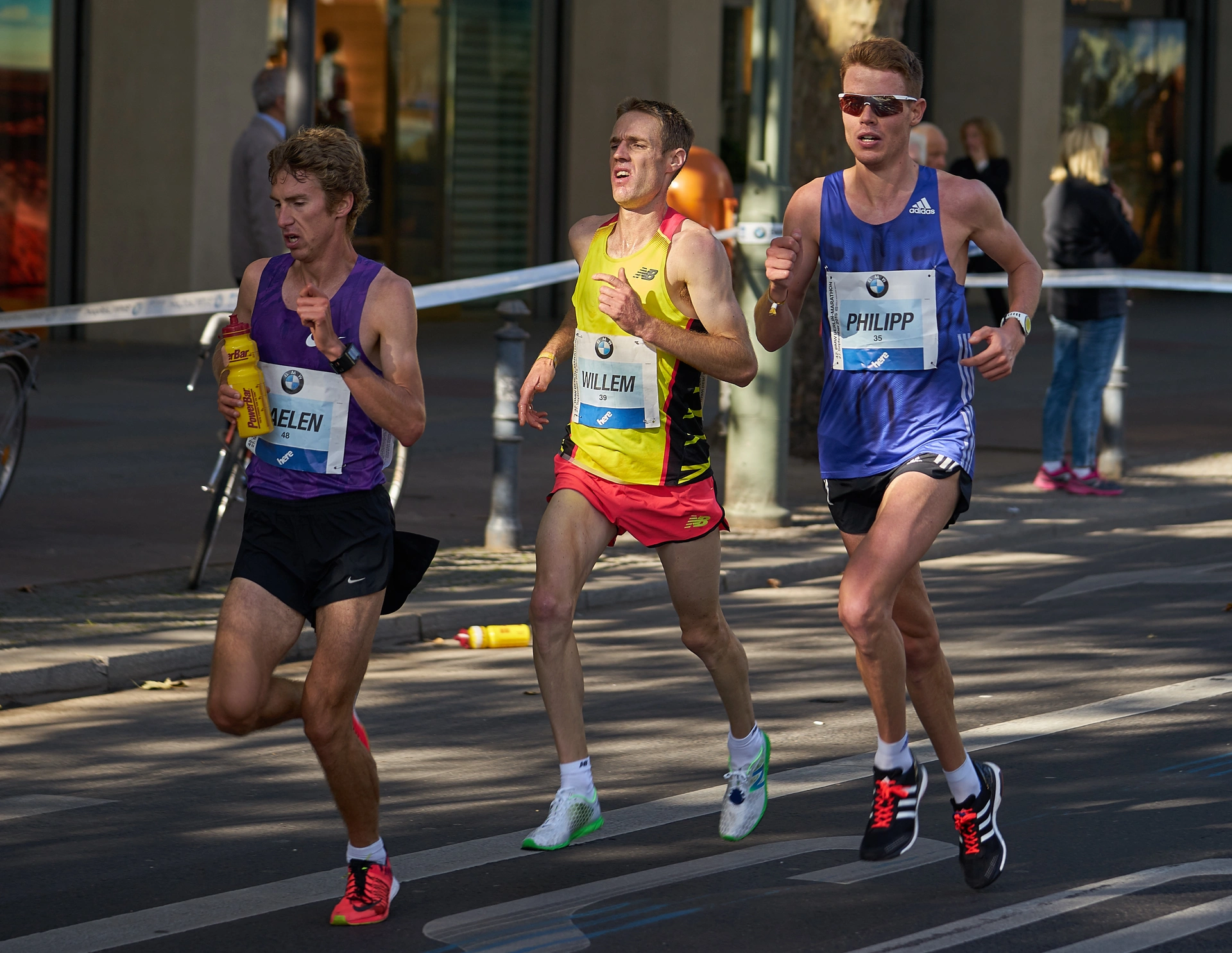
Readings on Heavy Legs
Story & products
A twenty-five-year-old woman posted on Reddit after running an 18:44 5K during the peak weeks of her marathon block. It felt slow and unpleasant. About a month earlier, in the same block, she had set an 18:10 personal best after a lighter recovery week that amounted to a mini-taper.
The thirty-four seconds need some context. Before the slower race, she had run back-to-back weeks of about 127 km, or 79 miles each. Those followed two consecutive weeks with longer races, a half-marathon personal best of 1:24:03 and a 24 km race at marathon pace rather than all-out effort.
Her question was straightforward. How much do shorter races or time trials suffer at peak mileage? Does anyone still set a personal best because the gains from marathon training outweigh the fatigue? Her account and the replies offer useful comparisons, but one runner, two 5Ks and a comment thread cannot establish a standard penalty for tired legs.
What came before the 5K
A short race can feel like a clean test of current fitness. A fast result is reassuring; a slower one can make the whole block look doubtful. Yet her two results came after different amounts of recovery. The 18:10 followed a lighter week. The 18:44 came after high mileage and recent longer races.
Both belong to the same training block. To compare them sensibly, the times need their training history alongside them. How much had she run that week? How recently had she raced long? Had she reduced the load for this particular 5K? Those questions give the thirty-four seconds something more useful than a verdict.
Thirty seconds, a minute and race preparation
One highly upvoted reply thought a slowdown of about thirty seconds sounded reasonable. Another runner had the same 18:10 personal best and had run 18:42 on tired legs during the previous block. The resemblance is reassuring, though it remains a comparison between individual experiences.
Another commenter said every marathon cycle reminded them that completing a VO2 training block did not put them in peak 5K shape. They thought a slowdown approaching a minute was plausible for someone with substantial aerobic development running around 80 miles, or 129 km, a week. In their view, many runners setting 5K personal bests during marathon training had previously been undertrained aerobically. That was their explanation of individual differences, rather than a rule for everyone.
Someone else pointed out how often runners only enter 5Ks or half marathons as tune-ups during marathon blocks. These shorter races can help practise racing and check fitness, but many of the same runners never train and taper specifically for a 5K outside that block. The preparation behind the comparison is already different.
One runner described finishing a demanding marathon block with a 5K twenty-five seconds slower than their personal best. A few months after the marathon, they gained those twenty-five seconds back and matched the old record. Their advice was blunt, do not use the 5K alone to judge marathon fitness. Another had recently run a heavy-training time trial nearly forty seconds slower than their fresh personal best. Their legs simply did not respond the same way. They still considered an 18:44 under that much fatigue impressive.
A runner who usually lost thirty to forty seconds said they had never set a 5K personal best in a marathon block, yet had managed small 10K improvements even on heavy legs. Someone else predicted the original poster might beat 18:10 about six weeks after the marathon. That was encouragement and a prediction; the eventual result would still depend on recovery and training.
Some runners do improve at peak mileage
The replies included runners who had set 5K personal bests deep in marathon training. Some joked about recognising themselves in the discussion. Others said they were still relatively early in their training and developing aerobically fast enough for the gains to outweigh fatigue.
Training history, aerobic development and experience of preparing specifically for shorter races all affect the comparison. Taking someone else's thirty seconds or minute and applying it to your own result skips the conditions that made their experience meaningful.
Keep the training history with the time
The thread offers neither a reason to ban peak-week 5Ks nor a universal marathon prediction formula. It does give a reason to record tune-ups separately from races reached through dedicated preparation and a taper. Each says something about the conditions in which it was run.
If two high-mileage weeks and recent longer races came before the test, keep that information with the result. An 18:10 and an 18:44 can both belong to the same block. There can be room for fitness to improve while fatigue still makes racing feel poor. Understanding what went into this particular result is more useful than asking one line on a watch to settle the whole question of progress.
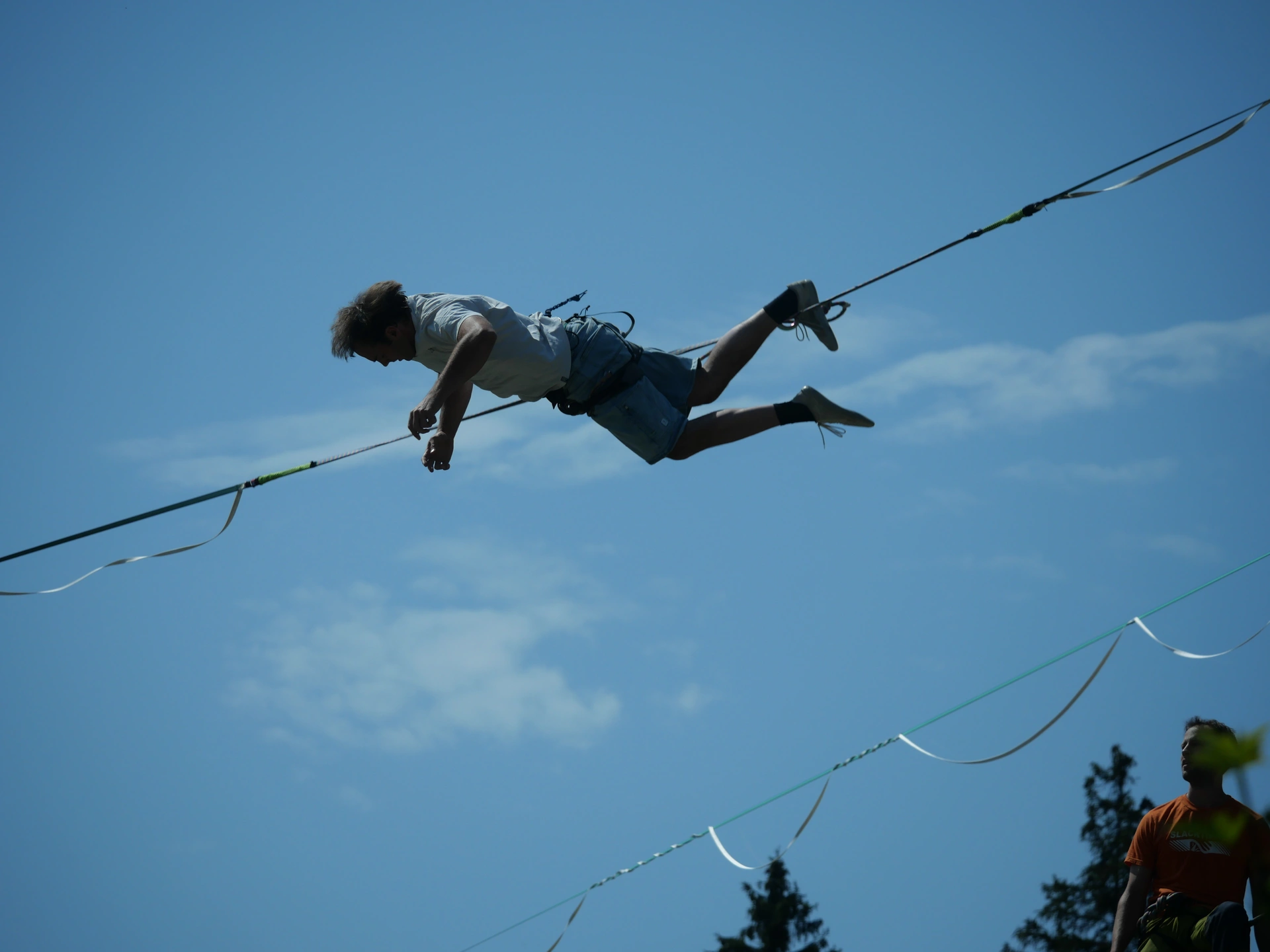
Impossible Sunrise Without a Seat
Story & products
If, over the past decade or so, the spectrum of slackline (a taut flat webbing people walk or stand on) in ordinary life was still drawn as a straight line—on the left, “world champion means high-altitude tricks and short bursts”; on the right, “hold steady for a few minutes and snap a highline selfie and you have arrived”—then when Davis Hermes placed a twenty-four-hour no-sitting goal, the then-continuous standing record of about eighteen hours, and a second-night self-account of 18.5 hours still short of twenty-four side by side on the table, that line had already folded into two: one called tricks; one called a time ledger. The image that runs through this discussion is not the next easier slogan of “extreme challenge” or the next brighter proof of “world champion,” but an impossible sunrise without a seat: it shows that a record sometimes is not about flying higher, but about whether you can wait the sun out of the night on the bill of soles and attention; it also shows that the gap between 18.5 and 24 is not a slogan, but whether a pair of feet is still willing to keep paying.
Boundary first: scenes here come from a blogger’s public retelling of a video self-account, a beat sheet of that video, and checkable background such as Vail Daily—not a census of every slackline record or endurance challenge. It is useful because it presses “world champion” from high-air demo into the felt fact of not being allowed to sit; it is limited because it covers one person, two consecutive nights of attempts, and one step-off short of twenty-four hours.
A slackline set up in a park. Used to contrast: the default writes champion stories as high tricks; this attempt nails the ledger to time you cannot sit through.
Default logic: write the world champion in the sky first, then in short bursts
Industry default likes to write slackline champion stories as a high-air handbook: highlines between hot-air balloons, freestyle between cliffs, burst power at world championships. The default holds in many shop windows—until you unfold Davis Hermes’s attempt. Per the video self-account, the goal was blunt: stay on a slackline for twenty-four hours; the continuous standing world record then was about eighteen hours; and he called himself zero-experience in endurance challenges—this was the first. Rules were earthy: walking and standing allowed; sitting not; no borrowing balance from another person; food and water allowed (Heather handed food); he even considered solving bathroom needs on the line rather than stepping off.
Background can stay light. Reporting such as Vail Daily has noted: he started after seeing a demo at the 2012 Mountain Games in Vail, later took world titles, and walked highlines between hot-air balloons. That material serves the spectrum—showing the “trick champion” label is not empty—but the tension of this attempt is not “he flew again,” it is how the label tears. Default assumes a world title automatically covers “how long can you stand”; the scene says—for him, balance may already feel like flat ground; what smashes the default is the time ledger of not being allowed to sit.
What this section really measures is not whether high air deserves awe, but: when the record rewrites from “fly once” into “twenty-four hours without sitting,” is the champion card in the viewer’s hand still enough?
A highline scene. The left of the spectrum often writes champions as high tricks; this attempt asks the same feet to serve a sunrise you cannot sit through.
First night: distraction fall; second night: almost no sleep, back on
If “world champion” is easy to read as “of course he can stand forever,” the two-night timeline tears that ad open. First night about eight hours: while dealing with leg chafe, adjusting underwear and a glove, he lost focus and fell—framed in the self-account as a slightly silly miss, not a dramatic collapse. Next day, little sleep, back on. Neck, shoulders, back tight; toes numb and tingling; mental fatigue from the night before still hanging on. Friends kept him company (names such as Sammy Colon, Jimmy Harry, Heather appear in the materials); pizza arrived in foil; overnight care was handed to friends; around 3 a.m. he was still optimistic about sunrise; sunrise was treated as a milestone; a breakfast burrito reached the line; the hours before sunrise were written as the hardest stretch.
At about 18.5 hours he stepped off: soles felt crushed, he needed a bathroom, and he felt a long way still remained—so the attempt ended short of twenty-four. A week-later edit added: tape marks every twenty-five feet to count laps; about 1,225 laps, roughly 61,250 feet, about 18.67 km / 11.6 miles. He also compared Tibor’s prior continuous distance (Tibor also about eighteen hours, about 14.8 km) and Taimen’s distance inside a twenty-four-hour window that allowed stepping off (about 16 km)—framing himself as aiming at one continuous twenty-four-hour goal while claiming three records along the way; this essay treats that only as video self-account contrast, not an official leaderboard verdict.
His self-critique is blunt: stacking two nights cost him; he beat the eighteen-hour record by under half an hour; he still believes better prep could reach twenty-four; he thanks the support crew. One commenter summed the second night as “unhinged”—funny, and accurate: this was not an ultra-style taper finish, more an impulse record stacked on fatigue that had not cleared.
Public thumbnail from the attempt video (source: YouTube). First night ~8 hours, distraction fall; second night little sleep, ~18.5 hours.
How the comments reweigh “18.5”: balance tax, prep, and the joke line
If the blogger keyed the story to “broke eighteen hours,” the comments immediately hand over harder conditionals. One commenter, who has run 103 miles in twenty-four hours, wrote: you vastly underestimate the accumulated physical and mental exhaustion of being on your feet that long, let alone on a slackline where you constantly adjust balance—twenty-four hours already sounds insane; thirty-six is far more than twice as hard. On the other side, commenters fix on “zero prep + eight hours the night before”: some bet that retrying a week later would hit twenty-four easily; with a little endurance training, even thirty-six seems thinkable for a two-time highline freestyle world champ—and they trust that for him, balance on this line barely differs from walking flat ground.
Both sides side by side are what the discussion really measures. Default either writes 18.5 as “a champion casually stands and breaks a record,” or as “short of twenty-four means it does not count”; the scene says—the same attempt stacks zero endurance experience, back-to-back fatigue, the attention tax of constant balance, and the counterfactual of “with systematic training, maybe longer.” Joke lines also appear: bathroom and pants riffs, jokes that record circles will always contain someone willing to stake face on wilder rules. Those jokes can be touched lightly—they show the community heard “cannot step off” as real—but need not become a vulgar center; what stays nailed to the ledger is soles and attention, not the bit itself.
A highline between rock faces. Comments contrast “103 flat miles” with “constant balance on webbing”: the same “no sitting,” different bill thickness.
Closing: redefine “independence”—not a higher trick, but holding the no-seat rule and the second-night cost of the miss
If slackline culture often reads independence as “one person plasters a world-champion card across the sky before talking about anything else,” or “one person believes 18.5 is bright enough without asking what twenty-four still costs,” this discussion is closer to another independence—holding at once the rule of “no seat” and the cost of the second-night miss, and seeing that the gap between 18.5 and 24 is not a slogan but a bill of soles and attention. The open discussion the blogger laid out is worth public writing because it puts checkable scenes on the table: twenty-four-hour goal; continuous record then about eighteen hours; self-described zero endurance experience; walk/stand yes, sit no, no borrowed balance, food allowed; first night ~8 hours, distraction fall while adjusting glove/underwear; next day little sleep; tight neck/back, numb toes; friends chatting, foil pizza, overnight handoff, sunrise milestone, breakfast burrito; hardest hours before sunrise; ~18.5 hours off for crushed soles and bathroom need; later lap count ~18.67 km; self-critique that two nights cost him, record margin under thirty minutes, still believes prep could reach 24; and comments weighing the 103-mile contrast, no-prep madness, training that might go longer, and joke lines kept light.
The value of the discussion is that it does not push only “everyone should stand twenty-four hours” or “short of twenty-four means nothing,” but talks the spirit of challenge back: first separate “trick champion” from “time ledger,” then “impulse consecutive nights” from “ultra-style prep,” and with “impossible sunrise without a seat” and “second night on almost no sleep” still polish, inside the rising tide of “of course a champion can stand longer” and “almost doesn’t count,” the layer that independence’s difficulty often hides in whether you still treat the next higher highline photo as your only body history—not only in the next easier “he broke the record” or the next brighter “only 5.5 hours short.”
A usable prompt is plain: treat “cannot sit” as the rule itself, not as a footnote to tricks. If you also want a long-stand or long-focus challenge, ask first whether the first night’s miss cost is written into the second night’s start conditions, before asking whether to stack a record on zero sleep. When you read “18.5 beats 18,” ask first on what fatigue floor the extra half hour was earned, then ask whether the gap to 24 is slogan or sole-bill. Keep someone else’s “train and you could hit 36” separate from your own “last night’s eight hours have not cleared”: testimony is not a license. Write “independence” as “holding the no-seat rule yourself”—allow breaking a record and missing twenty-four to be true at once; allow world-champion tricks and zero endurance experience to be true at once; the real danger is mistaking the champion card for a master key that ignores attention tax, or mistaking “almost” for a hard bar that erases bills already paid—not “forever outsourcing to the next easier of course he can” or “forever outsourcing to the next brighter short means nothing.” The sun will rise; an impossible sunrise without a seat is still written in whether you honestly recorded: in the hours from night into light, did the soles agree to keep paying. People who hold both the rule and the miss-cost at least know which lever they are measuring: trick height, or unsittable time.
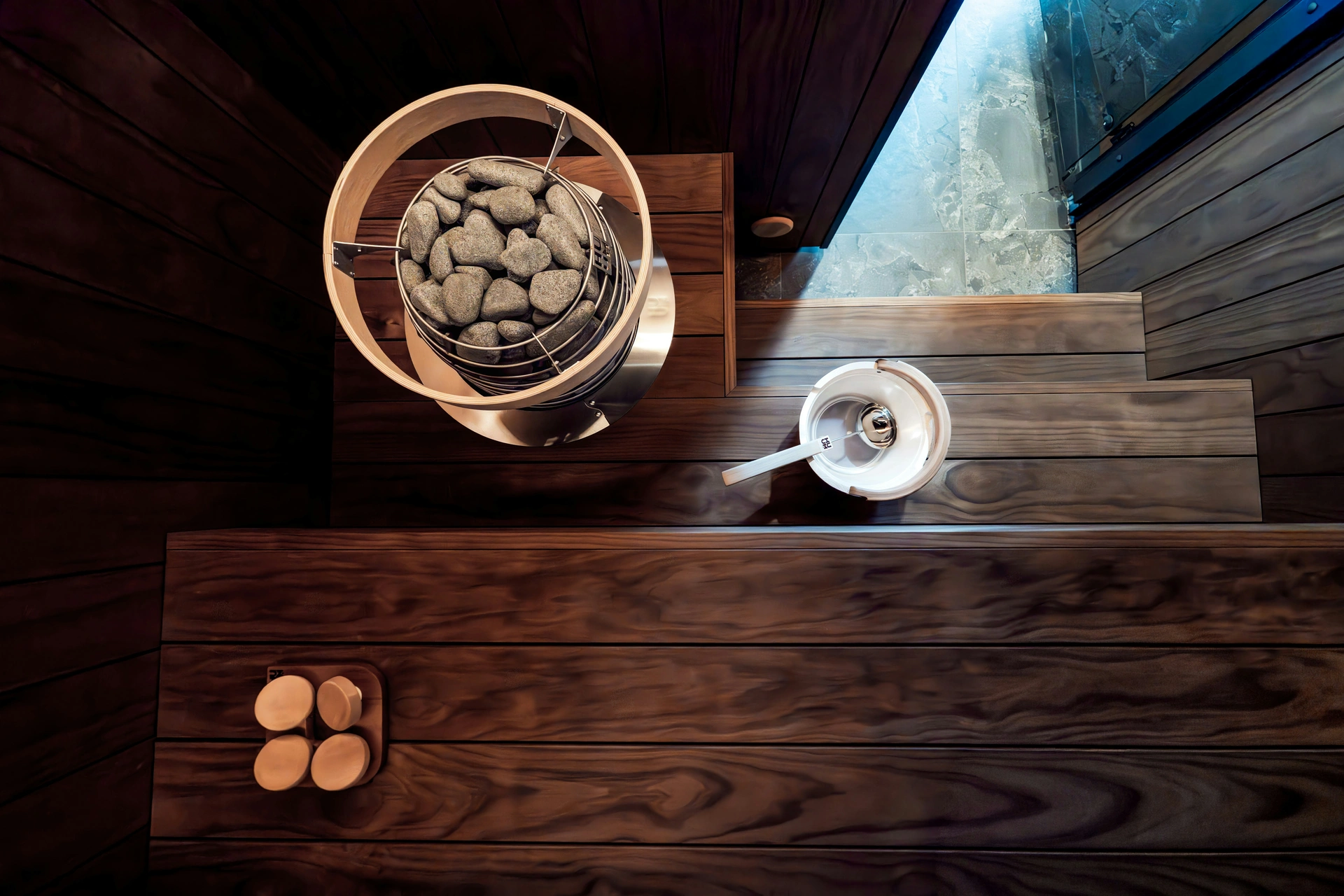
The Veto of Residual Heat
Story & products
If, over the past decade or so, biohacking (actively tweaking sleep, recovery, and nervous-system state with measurable self-experiments) has been drawn in the ordinary evening dictionary as an ever-finer line—on the left, “if the sympathetic system (the alert, heart-rate-up gear) runs too high, add magnesium, ashwagandha, valerian, CBD, and if that fails, heavier sedation”; on the right, “the gym and the sauna are health investments—don’t cut them lightly”—then when one blogger places a schedule of “basic weight training at 4 p.m., sauna at about 85°C (about 185°F) for 15–20 minutes three times a week, sleep at 12:30 a.m.” next to a self-report of being hot, sweaty, AC blasting, heart and mind racing before bed, that line has already broken into two segments: one called stacking a stronger parasympathetic force (the relax, heart-rate-down gear); the other called the veto of residual heat. The image that runs through this discussion is not the next harder sedative, nor a ban that deletes the gym, but how core temperature left by evening heat load (the body’s internal temperature—not whether the skin feels cool) casts a veto over the sleep-onset window—a vote that magnesium and stacks (piling several supplements together) often cannot outvote.
Boundary first: the scenes come from the blogger’s own account and checkable sides of the comment thread. This is not a census of all sleep disorders, ADHD-type brains (the hard-to-stop kind of attention wiring), or all sauna schedules, and still less a clinical prescription. It is useful because it presses “strongest parasympathetic force” and “when should stimulation sit on the clock” from a quarrel into a readable time ledger; it is limited because it covers one person, one stretch of evening overload, a refusal to drop training and sauna, and how a community immediately reweighs “big guns” as “whether residual heat has not yet cleared.”
Sauna stove and benches. Heat itself is not the enemy; evening residual heat can still cast a veto over sleep onset.
Default logic: ask for the strongest parasympathetic force, then fill the table with bottles
Industry default likes to write “can’t sleep” as a supplement-and-gadget manual: take magnesium; try ashwagandha, valerian, CBD; lay out an acupuncture mat; run a cooling bed pad; do breathwork. The default holds in many shop windows and biohacking groups—until you open the blogger’s question. He writes: since adding a little gym and sauna, his nervous system is far too jacked before bed; hot, sweaty, AC at full blast, heart rate and mind racing together. He has always been wound a little tight: sweaty hands and feet, an ADHD-type brain, hypersensitive to caffeine; otherwise he considers himself quite healthy—stress and diet fine. He does not want to remove the gym or the sauna; he does not think he is overdoing it—basic weight training at 4 p.m., sleep around 12:30 a.m.; sauna about 85°C for 15–20 minutes, three times a week. What he wants is clear: rather than cut physical stimulation, find a way to rapidly and strongly push the body into a parasympathetic state and lower heart rate—because the body stays elevated too long into the evening.
The tension in this section is not “supplements are useless,” but how the default ranking tips its hand. Default assumes calming agents will automatically outrank stimulation; the scene says—for this person, magnesium, ashwagandha, valerian, and CBD are often not strong enough, and the only heavy gun that works is Valium (a prescription sedative); acupuncture mat, cooling pad, and breathwork have all been tried. The closing ask is blunt: what do you feel is the strongest thing that will rapidly force a parasympathetic state and lower heart rate? He wants big guns, or something more creative.
The default is tempting precisely because “one more bottle” looks serious, controllable, and immediately buyable. Moving the sauna to the morning, or ending the session before 6 p.m., looks crude: it is just moving the clock. Crude is often harder to sell—and harder to admit—because admitting means the veto is not on the shelf but on the temperature curve.
Hand holding a dumbbell. The blogger keeps 4 p.m. basic lifting and refuses to drop the gym; stimulation is treated as a health investment to keep.
How the comments reframe “big guns”: timing, core temperature, and a free lever
If the blogger sets the key with “strongest parasympathetic force,” the comments immediately hand back harder conditional sentences. One commenter is direct: timing is probably the whole thing. Sauna spikes core temperature and sympathetic drive; the body needs core temperature to drop before it will allow sleep. Evening sauna means fighting that signal. This commenter moved sauna to at least three to four hours before bed and saw a large difference; a lukewarm shower afterward (not hot) helps dump heat faster. For the acute wired feeling: slow breathing with a longer exhale—say four in, six to eight out—for a few minutes lying down pulls the foot off the sympathetic gas pedal; cadence often matters more than depth.
A longer comment sharpens it further: you are asking for the strongest way to force a parasympathetic state, but reading the schedule, this looks like a timing problem wearing a nervous-system costume—and timing is free. Fifteen to twenty minutes at about 85°C is a serious cardiovascular stressor; core temperature stays elevated for hours; the body needs a core-temperature drop to initiate sleep. If any sauna lands in the evening, you are not failing to calm down—you are physiologically blocking the sleep-onset signal and then trying to override the block with magnesium. No supplement out-argues core body temperature. Before adding anything new, run a real experiment for two to three weeks rather than stacking more calming agents: morning sauna only, or immediately post-workout ending before 6 p.m., and finish every session with a properly cold shower—the rebound cooling is what flips you parasympathetic; skip it and you stay in the “hot, AC on, heart racing” state described. Do not judge by feel—feel is what has been lying (“wired” can read as energized or anxious by the hour). Judge by overnight resting heart rate (RHR) and heart-rate variability (HRV) trends, plus time-to-fall-asleep. If evening heat was the problem, overnight RHR often moves within days of shifting the schedule. If the numbers do not move, you have ruled timing out and can escalate with a clear conscience. The same comment names another cheap lever on ADHD wiring: a racing mind at 00:30 is partly circadian. Strength training at 4 p.m. is fine, but check the last two hours—screens, bright light, and mentally engaging content hold an ADHD brain in sympathetic mode better than any sauna. Dim + boring + fixed wake time is unsexy and outperforms most of the calming stack. The pattern pushed back gently: adding downers to cancel stimulation instead of scheduling stimulation where it helps. Subtraction-and-timing experiments are less satisfying to buy, but they are the ones that keep working.
What this section actually weighs is not a final verdict on magnesium, but how the community takes a “need big guns” ask apart into parts you can still question: whether the residual-heat veto is still active, whether a three-to-four-hour buffer is enough, whether a lukewarm shower is dumping heat, whether the experiment window watches feel or overnight numbers. Default likes to cast pushback as “afraid of intensity”; the scene says—in this thread, reframing “strongest parasympathetic force” often starts by admitting the temperature curve holds a veto.
A clinical thermometer. Comments keep nailing the discussion back to core temperature: no supplement out-argues “sleep onset needs temperature to fall first.”
Other weighings: sodium and sweat, earlier training, screens, and a night-owl boundary
If the timing story is easy to misread as “just move the clock and done,” other comment weighings widen the ledger. One commenter asks: are you replacing sodium lost in workout and sauna sweat? The system that conserves sodium is linked to the stress system in general; a heavy sweater may lose a gram or more of sodium in an hour of hard exercise, and with sauna still more; conventional low-sodium advice may not fit heavy sweating—sports physiology has studied this closely. Another suggests moving weight training earlier; a rough idea floated is that muscle repair carries something like an eight-hour half-life feel—the body is still working when you want to sleep. Magnesium glycinate is named as a calmer form; there is speculation about chronic anxiety or trauma history and seeing a therapist who knows ADHD skills (such as 4-7-8 breathing)—speculation, not a diagnosis. Cold plunge after sauna to cool the core, with equal time spent relaxing; electrolytes before, during, and after; avoid eating for a couple of hours after an intense session so core temperature can fall; dim lights an hour before bed; physiological sigh breathing—these appear side by side, but this essay will not center another shelf stack (phosphatidylserine / glycine and the like). The axis stays timing versus residual heat.
The blogger’s own replies nail a boundary so the talk does not slide into “then just gym at 5 a.m.” He writes: no apnea on three tests; he is an extreme night owl with delayed sleep phase (DSPS)—a chronotype set to stay up late; years of 6 a.m. wakeups never felt good, and he tried all the biohacks of the time—biology simply said no. Long evening walks; cigar / nicotine use could be better; more bloodwork planned. A commenter pulls the cigar thread: nicotine raises heart rate and adrenaline in the same direction as caffeine; cigars deliver it through the mouth lining whether or not you inhale. Another bluntly says “gym at 5 a.m.”—for someone with a DSPS boundary, that slogan easily miswrites “movable stimulation” as “must become a morning person.” What is worth keeping from the scene is not a moral trial over bedtime, but: without dropping training and sauna, which clock levers still move; which “just wake early” slogans hit a chronotype wall already tested for years.
A dimly lit bedroom. Comments cast the last two hours of screens and bright light as a lever that can hold an ADHD-type brain in sympathetic gear harder than sauna.
Closing: redefine recovery independence—not buying stronger downers, but holding the residual-heat veto and the hours you can still move
If biohacking culture often reads independence as “buy the full calming stack before anything else” or “believe big guns are a master key,” this discussion sits closer to another independence—holding at once the veto of residual heat and “stimulation can change clock position,” and seeing which bill “strongest parasympathetic force” is actually asking for. The public thread is worth public prose because the checkable scene is on the table: lifelong tightness, sweaty hands and feet, ADHD-type brain, caffeine hypersensitivity; evening overload worse after adding gym and sauna; 4 p.m. lifting, 85°C sauna 15–20 minutes three times a week, sleep at 12:30; refusal to drop either; magnesium / ashwagandha / valerian / CBD / acupuncture mat / cooling pad / breathwork tried, Valium as the heavy gun that works; the ask for strongest parasympathetic force; and the comment chorus on a three-to-four-hour buffer, lukewarm heat dump, core temperature out-arguing supplements, a two-to-three-week morning-or-before-6 p.m. experiment with cold-shower rebound, judging by overnight RHR / HRV / time-to-sleep, dim-and-boring last hours, sodium and sweat, earlier training and magnesium glycinate, cold plunge and electrolytes, DSPS night-owl boundary, nicotine that could be better, another blood test planned.
The value of the discussion is that it does not push only “everyone should stop sauna at once” or “supplements are all a tax on intelligence,” but returns recovery to: first tell “stack more downers” from “residual-heat veto,” then tell “the clock that works for me” from “copy someone else’s wake-at-6 slogan,” and, with the veto of residual heat and the free timing lever, still polish that layer inside the rising tide of “big guns must be stronger” and “healthy habits must never move”—the hard part of independence often hides in whether you still treat the next sedative bottle or a “just wake at 6” line as your only body history, not only in the next easier “science has proven” or the next brighter “my stack is complete.”
An actionable tip stays plain: treat evening heat load as a veto that must clear, not as a cue to buy a heavier downer at once. If you still keep afternoon lifting and sauna, first ask whether the session ends at least three to four hours before sleep, and whether lukewarm or cold water afterward helps core temperature fall—then ask whether to add the next herb. Run two to three weeks changing only clock and shower; watch overnight RHR, HRV, and time-to-sleep, not only “how tonight feels.” In the last two hours before bed, treat screens and bright light as a sympathetic switch, especially if you call your brain ADHD-type. Book sodium and sweat on their own line; do not copy sports-physiology needs into a low-salt dogma. With a DSPS boundary, separate “movable schedule” from “must become a morning person”: side evidence is not a license. Write “calm” as “holding your own residual-heat veto”—allow supplements to help and still lose to temperature at once; allow “keep training and sauna” and “evening residual heat can block sleep onset” at once; the real danger is mistaking “strongest parasympathetic force” for a master key that can ignore the core-temperature curve, or mistaking “health investment” for a bar that can ignore the clock—not “always outsourcing to the next harder sedative” or “always outsourcing to the next brighter just-wake-early.” A timer can hold one day’s line; the veto of residual heat is still written, before the bottles fill the table, in whether you honestly noted that the body is still casting a no-vote for heat from hours ago. People who hold both the veto and the movable hours at least know which lever they are measuring: the shelf, or the temperature curve.
The content of this article is only for viewing, reflection and independent judgment. It is not an instruction manual. It is simply a part of what exists in the world.
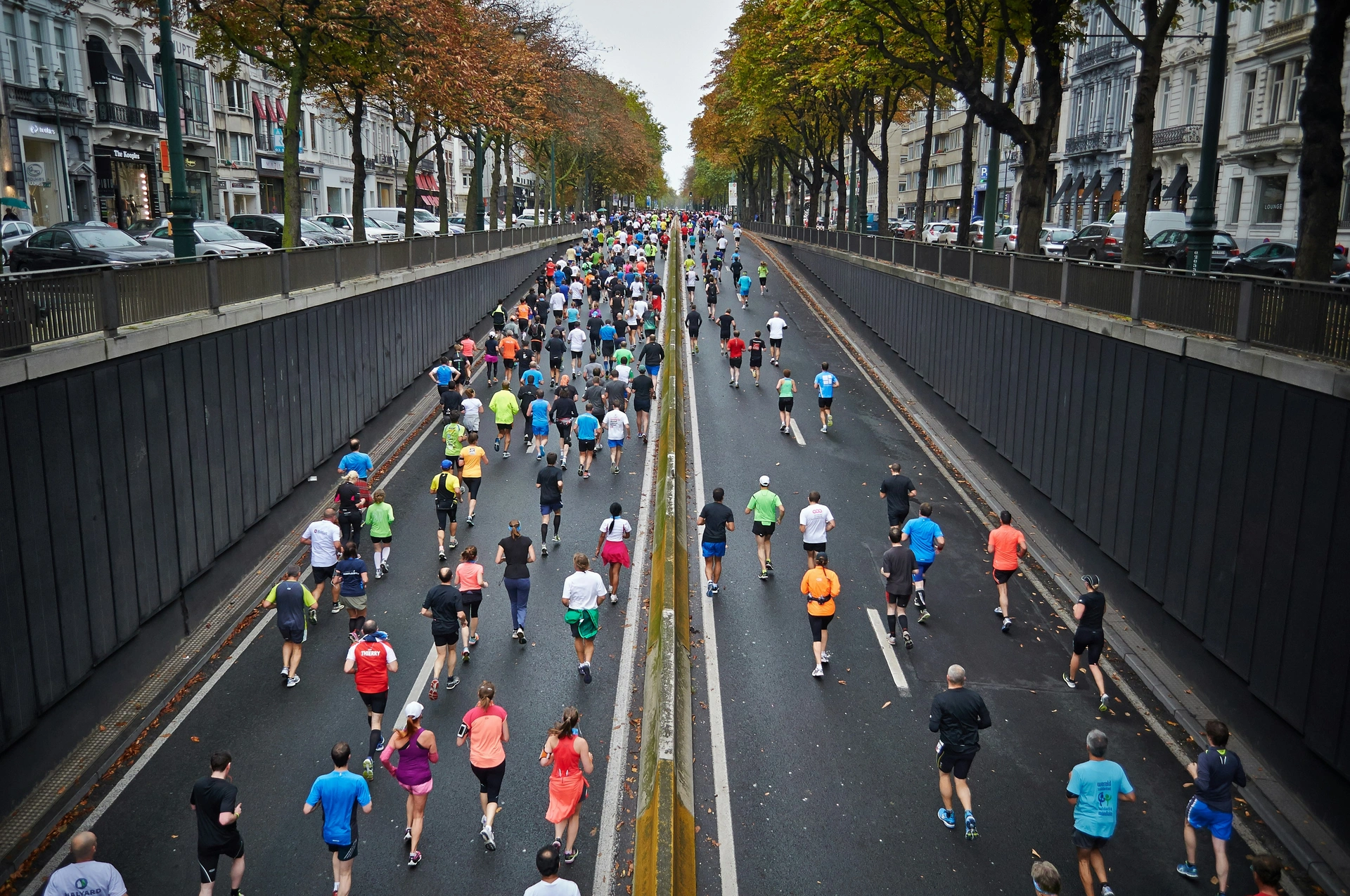
The Extra Thirty Kilometres
Story & products
If, over the past decade or so, amateur marathon training in ordinary people’s dictionaries was still drawn as an ever-finer line—on the left, “first polish every one-percent detail: recovery boots, carb ratios, gel counts, carbon-plate race shoes (racing shoes with a stiff carbon plate in the midsole that make each landing feel more efficient)”; on the right, “don’t touch weekly mileage yet, wait until you’re injured”—then when one blogger set six race results stuck between about 2:50 and 2:48 beside a personal-best improvement of roughly ten minutes after peak weekly mileage rose from 110 km to 140–150 km, that line already bent into two segments: one called marginal gains; the other called the extra kilometres. The image that runs through this discussion is not the next easier slogan—“science proves more running is faster”—or the next brighter “finish by checklist,” but the extra thirty kilometres: it shows that weekly kilometres can rewrite a result more bluntly than details; it also shows that “just run more” was never a slogan everyone can copy straight away.
Boundaries first: the scenes here come from the blogger’s own account and cross-checkable sides of the comment thread, not a census of every marathon method or age group. It is useful because it presses “detail control” and “weekly mileage” from a quarrel into a felt ledger of numbers; it is limited because it covers one person, one peak block, one jump of about ten minutes, and how a community immediately reweighs that jump as “can the body hold it.”
A pack of runners on the Berlin Marathon course. A reminder that results are often written as gear and details—and just as often as the invisible weekly kilometres inside the crowd.
From one percents to 2:48: how details fill the table first
Industry default likes to write marathon progress as a handbook of marginal gains: wear the recovery boots (compression boots that squeeze the calves with air pressure, marketed as speeding recovery); count the carbs in the bottle; count the gels; keep carbon-plate racers in the cupboard, and preferably several pairs of daily trainers. The default holds in many shop windows and training chats—until you unfold the blogger’s timeline. He writes that for years he chased those “one percents”; the time only moved from around 2:50 to 2:48, with six races trapped in that narrow band. Shoes were not missing; carbon plates were there, and plenty of pairs. What was missing was not the next item on the list, but a thicker lever outside the list.
The tension in this section is not “gear is useless,” but the way the default order gives itself away. Default assumes details will stack into ten minutes; the scene says—for this person, details filled attention first, while the result barely moved. The blogger is blunt: he is not denying recovery or fueling; he is noticing that effort went to the edge while the duller, louder lever of weekly mileage stayed unpulled.
The one percents matter precisely because they look more modern, more controllable, more like “taking it seriously.” The extra thirty kilometres look crude: just run more. Crude is often harder to sell; it is also often harder to sustain.
Running shoes on a rack. The blogger describes owning carbon-plate racers and many training pairs; details filled the table while the result stayed in a narrow band.
From 110 to 140–150: how the extra kilometres rewrite ten minutes
If the detail story is easy to read as an anti-ad—“stop buying gear”—the peak numbers turn that anti-ad into a table people can crowd around. The blogger writes: this year, peak weekly mileage rose from about 110 km to 140–150 km; most of it was zone 2 (easy aerobic intensity where you can still talk fairly comfortably); about one quality session per week (a workout with a clear pace or intensity target, such as intervals or marathon-pace work). Not much else changed. About two months before the post, the personal best dropped by roughly ten minutes.
The scene is hard. It is not “you felt stronger so you won”; it nails the jump to checkable conditions: weekly kilometres up by about thirty, intensity structure mostly easy, quality frequency restrained, time window about two months. Default likes to write breakthroughs as mystique or talent; the scene says—at least in this account, the change came from the extra stretch of mileage, not the next pair of carbon plates.
The blogger also keeps a boundary: this does not apply to everyone; handling that volume needs a very strong base. In a later edit he agrees mileage was probably the bulk of the difference, but quality can matter too; he is curious whether he can still race well on less volume, more cross-training (bike, strength, and other non-running load), plus a solid marathon-pace workout and a speed session. Boundary and curiosity side by side keep “run more” from becoming the only religion.
The extra thirty kilometres matter because the six-year narrow band already settled the earlier ledger: same person, similar detail habits, almost no movement; after mileage rose, the ten minutes followed. It is not a philosophical pose; it is a body adapting through more easy kilometres in a peak block.
A longer solo run on the road. Extra kilometres are rarely glamorous: mostly zone 2, conversational, the days outside one or two quality sessions a week.
How the comments reweigh “run more”: hierarchy, injury, and who can hold it
If the blogger seals the story with ten minutes, the comments immediately hand back harder conditional sentences. A highly upvoted note is direct: you may be right; the problem is that not everyone can “just run more”—the body may break first; some people need diet and strength before they can handle higher mileage. Climbing from 110 to 140 takes most people a long time; three weeks at 140 is one thing; six, ten, or fifteen weeks is the real test. The other side is blunt too: plenty of runners do 100–120 km a week and are nowhere near fast—some cannot even break three hours—mileage is not an automatic exchange rate.
Someone writes a sharper order: Consistency → Mileage → Recovery and fueling → Quality sessions → Other stuff. The commenter adds the cut: most amateurs start from the last two—obsessing over shoes, gels, and fancy sessions before noticing that base weekly kilometres and sleep are unstable. Someone asks whether fueling really ranks above quality. The answer is not mystical: if sleep and daily calories are rotten, even a perfect interval day spins in place; recovery and fueling are often the precondition for quality to “count,” not decoration competing with quality for the spotlight.
Similar stories appear at once. One commenter was stuck around 2:57 for several marathons on roughly 80–110 km; after bumping to 100–130, the time became 2:48; the next aim is sub-2:40 with 120–160—an old-school line returns: as many kilometres as you can without getting injured. Others fold “base first, then specificity” back into Lydiard-style periodization: what looks like “less mileage plus more quality won” often still rests on an earlier high-mileage base paying for the later specific work. Another commenter reminds readers to see the full athletic history—today’s high-mileage, low-workout breakthrough may leverage yesterday’s quality tuition; the reverse is also true. Pulling one block out as the only truth tends to close the wrong ledger.
There are jokes, which can be soft-pedaled: someone jabs that if you run 120 km a week and cannot break three, maybe switch sports—the tone is crude; what it points at is still real: body type, stride, training years, and session structure sit between mileage and the clock. Crude lines can be toned down; the variables cannot be pretended away.
What this section really measures is not a final verdict on whether the ten minutes are “true,” but how a community takes a clean jump table apart into askable parts: who can add volume, for how long, what to fix first, where quality ranks, how thick the lifetime base is. Default likes to cast pushback as “afraid to run”; the scene says—in sports-science talk, reweighing the premises of “run more” is itself part of training.
Near a marathon finish. When the result looks good, comments often ask whether those ten minutes were bought by mileage—or already paid for by the base.
Closing: redefining training independence—not slogan mileage, but holding thirty kilometres and “not everyone can”
If marathon gear and schedule culture often read independence as “buy every one percent first” or “believe more running is a master key,” this discussion is closer to another kind—holding both the extra thirty kilometres and “not everyone can,” and seeing which ledger the ten minutes belong to. The blogger’s public thread is worth public writing because it puts checkable scenes on the table: years chasing recovery boots, carb and gel counting, carbon plates and many shoes; six races stuck between 2:50 and 2:48; peak 110 to 140–150, mostly zone 2, about one quality session a week; roughly ten minutes off about two months earlier; the self-limit of needing a strong base; the later agreement that mileage was the bulk, quality also matters, and curiosity about less volume plus cross-training; and the comments’ side-by-side questions on injury, ramp duration, consistency first, recovery and fueling before fancy sessions, a similar 2:57-to-2:48 story, Lydiard-style base then specificity, and lifetime training context.
The value of the discussion is that it does not push only “everyone should add thirty kilometres at once” or “details are all a tax on intelligence,” but returns the spirit of training: first tell “marginal gains” from “blunt mileage,” then tell “true for me” from “copyable for you,” and with “the extra thirty kilometres” and “the weeks you cannot hold” still polish—inside the rising tide of “gear must be correct first” and “the slogan must be run more first”—the harder layer: independence often hides in whether you still treat shop-window details or a single “just run more” as the only body history, not only in the next easier “science has proven” or the next brighter “my gel count is precise.”
The actionable tip is plain: treat volume as a capacity you build, not a slogan you can shout today. If your base weekly kilometres are still unstable, ask whether sleep, strength, and diet can hold the next tier before asking whether to add thirty kilometres. If you have been stuck near 110 for years and body and calendar allow, honestly lifting peak easy kilometres one tier may rewrite a narrow band more than another carbon plate—but book “three weeks at the new level” separately from “ten to fifteen weeks.” Do not delete quality; do not let it rank above consistency and recovery. Separate other people’s ten minutes from your own injury history: evidence is not a license. Write “progress” as “holding the extra thirty kilometres yourself”—allow that details can help and still fill attention; allow that “more running works” and “not everyone can” are both true; the real danger is mistaking “one percents” for a master key that ignores weekly kilometres, or mistaking “run more” for a slogan that ignores base and injury—not “forever outsourcing to the next easier insole and gel” or “forever outsourcing to the next brighter just mileage.” A watch can hold one day’s line; the extra thirty kilometres are still written in whether, before details wear out your patience, you honestly record which weekly-kilometre tier the body can already carry. Anyone holding both mileage and boundary at least knows which lever they are measuring: slogan, or capacity.
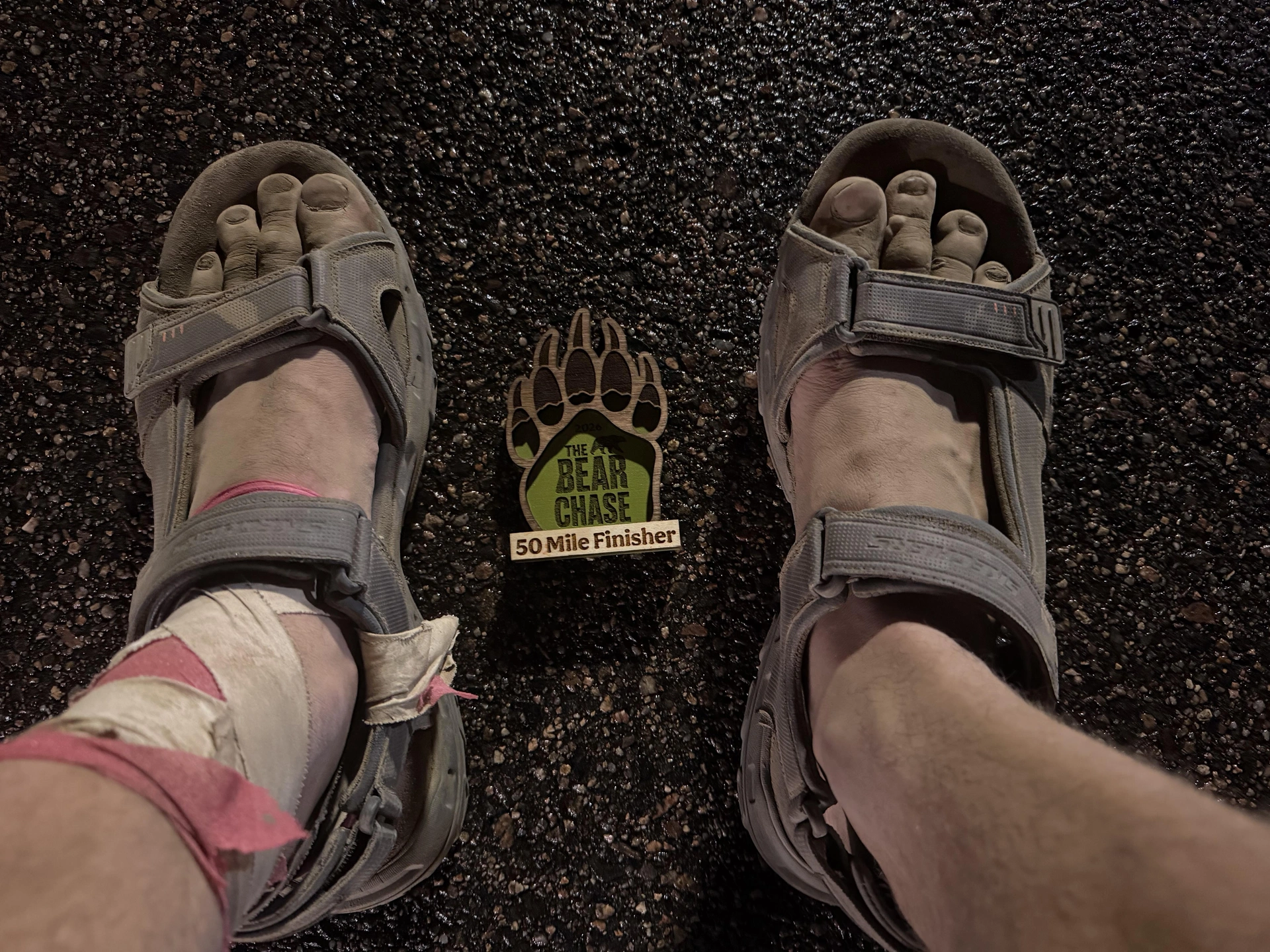
The Third Pair of Sandals
Story & products
If the past decade-plus still drew the amateur ultramarathon spectrum in ordinary life as a straight line—on the left "buy the right shoes first, then talk about whether you can run fifty miles," on the right "swollen feet, tape, and a finish-line selfie all count as victory"—then after a blogger laid a third nearly identical pair of sandals, a pair of expensive "correct" running shoes that never got worn, and a post-finish foot photo that looked rough side by side on the table, that line had already broken into two segments: one called familiar; one called correct. The image that runs through this discussion is not the next, easier slogan of "barefoot philosophy" or the next brighter "minimalist manifesto," but the third pair of sandals: it proves the body rewrites itself around what you wear every day; it also proves that "correct" sometimes injures you first, then teaches you humility.
The boundary needs to be clear up front: the scenes in this piece come from the blogger's own account and from checkable angles in the comments, not a census of every shoe type or every fifty-mile race. It is useful because it compresses "should you run an ultra in sandals" from a joke into a felt ledger of adaptation; it is limited because it covers one person, one Colorado Front Range route (Bear Chase, named by a commenter), and one finish.
From casual running to "correct": which shoes the body remembered first
The industry default likes to cast the running-shoe story as an upgrade path: sandals are starter toys; proper running shoes plus corrective orthotics are a coming-of-age ritual; ultras must be run in shoes with "enough protection." That default holds in many store windows—until you unfold the blogger's timeline. Years ago, when he started running casually, he wore this kind of sandal; when they wore out he bought the same again; the photo shows the third pair. He never planned to race an ultra in them. What he did not expect was that his whole skeletal-muscular system had already rewritten itself to the sandals' landing pattern: feet and shins felt "super comfy" in them.
Later he got serious, bought expensive running shoes, and bought expensive corrective orthotics. The arch sat in the "precisely correct" spot, so he ran with near textbook pronation (how much the foot rolls inward on landing). Then the problem arrived: switching to "correct" pronation meant rewriting muscle use and rewriting where shock landed on the shin and tendons—and he got injured. On race day for the fifty miles, those expensive shoes were brought to the start and never put on. He chose the most familiar, most comfortable pair: the sandals.
The tension in this section is not "sandals beat running shoes," but the way the upgrade path shows its seams. The default assumes "correct" will automatically overwrite "familiar"; the scene says—for this person, familiar came first, and familiar was already written into the tendons. The blogger put it bluntly: for this specific race, wearing sandals was objectively the right decision; but he does not plan to wear them forever, and in training he will taper off and return to those expensive running shoes. Recommend them to others? He would not.
The third pair of sandals matters precisely because the first two had already settled the accounts. It is not impulse spending; it is a repeat purchase. It is not a philosophical pose; it is a body that quietly finished adapting across years of low-risk running.
What the photo charges: tape, blisters, and "that does not look fine"
If the training story is easy to read as a "barefoot running gospel" ad, the post-finish foot photo tears the ad open. Tape wraps the ankle; toes look wrinkled, dark, crooked; there is a blister on the middle toe. The comment section's first reaction lined up neatly: "That does not look fine at all." Someone said: just looking at all that wrapping suggests things were not so smooth. Someone else said the toes were denying the blogger's optimism.
The blogger unpacked the photo item by item. The middle-toe blister came from toe spacers, removed around mile twenty-five. The ankle wrap had nothing to do with the sandals—in hindsight, a tight left hamstring led him to compensate with an awkward form that overused the extensor tendon; he had hit the same issue while training in the expensive shoes plus corrective orthotics. The wrinkled, dark toes were dirt; a shower at home cleared them. The crooked toes had been that way since childhood, not twisted by fifty miles.
The tension in this section is not "the photo is fake," but how an audience uses one image to deliver a verdict. The default likes to treat a finish-line foot photo as iron proof that the shoe type failed; the scene says—inside the same frame sit at least toe spacers, compensatory form, dust, and congenital toe shape. The tape was real, and the pain was real; they do not necessarily take the stand for "sandals." The blogger's own closing was colder: fine by ordinary standards, or fine by "good enough for an ultra" standards—he would rest a few days, skin would heal before muscle, so he figured it was fine.
The photo is funny precisely because looking bad and finishing can sit side by side. Some people laughed along; some called him stupid; some praised him for finishing fifty miles regardless of shoe type. The blogger wrote: none of that matters much, because finishing this race was his private struggle, and the sandals were only a small, finally not-very-important piece of it.
How the course and the comments rewrite "fine"
If the blogger stamped the story with "right for me," the comment section immediately handed over harder conditional clauses. One commenter named it: Bear Chase is a good race, but the route is extremely non-technical, with almost no technical sections, so you are unlikely to kick a rock and break a metatarsal; if they ran it again, they might even wear road shoes. They also listed risks: most sandal brands are not made for running, so support and friction points blister or injure structure more easily; stream crossings might suit sandals; the biggest worry is debris inside the shoe—glass, sharp rock, nails, even needles that could open a season-ending gash; rattlesnakes are common in that Front Range area, and shoes at least protect from the ankle down.
On the other side, experience testified the other way. Someone said they run all their miles in Luna sandals, finished a hundred miler in them in 2018, and later learned they prefer fifty. Someone said: in a hundred miler, a person in sandals beat them. Someone asked why sandals stacked that thick still count as sandals—the blogger answered: they began as beginner shoes, adaptation happened without noticing, he still wears them casually, and training will switch. Someone saw him at the same race; someone running the 100k lapped him on a roughly 12.5-mile loop—he wrote that many good runners "humbled" him that day. A teacher commenter showed the photo to students: impressed and grossed out at once; congratulations, teenagers think you are cool.
Joke and warning side by side are what this discussion actually measures. The default either writes sandal ultras as "freedom anyone can copy" or as "obviously idiotic at a glance"; the scene says—fine has to be tied to course hardness, debris risk, personal adaptation history, and the self-boundary of "I do not recommend this to others." The blogger even added: more experienced people told him sandal ultras can go to a hundred miles, and so far nearly every brand they named was Luna. He posted his Amazon link and wrote "do not copy me" into the body.
Closing: redefining "the right shoe"—not more expensive, but the tuition this body has already paid
If ultra gear culture often casts independence as "one person buying the most correct orthotics before talking about anything else" or "one person believing ugly feet equal a wrong decision," this discussion is closer to another kind of independence—holding the third pair of sandals and the correct running shoes that never got worn at the same time, and seeing clearly which bill "fine" is naming. The public thread the blogger opened is worth turning into public writing precisely because it puts checkable scenes on the table: years of casual running in the same sandals and the third pair; how expensive shoes and orthotics rewrote pronation and brought injury; the pair brought to race day and never worn; toe spacers removed at mile twenty-five; ankle wrap unrelated to the sandals; dirt and congenital toes; Bear Chase's non-technical nature and the debris-and-snake reminders; Luna and hundred-mile side evidence; eighty-thousand-plus views and the laugh, scold, and praise in the comments; and that line of not recommending it to others, of tapering off sandals in training.
The value of the discussion is that it did not push the topic only toward "everyone should run ultras in sandals" or "ugly feet prove you failed," but spoke the spirit of finishing back into place: first tell "familiar" from "correct," then tell "true for this race" from "replicable for others," and with "the third pair" and "the pair that never got worn" still polish, inside the rising tide of "gear must be correct first," that layer—independence is hard often because of whether you still treat the storefront standard as the only body history, not only because of the next easier "barefoot freedom" or the next brighter "tape hero."
The actionable tip is plain: treat a shoe change as a training variable, not a moral upgrade. If the body has rewritten itself around one pair for years, race-day "correct" may have to yield to "familiar," then transition slowly in training, rather than completing the reform on fifty-mile day. When you read a finish-line foot photo, ask first where the blister, the tape, and the dust each came from, then ask whether the shoe type is guilty. Keep someone else's Luna hundred and your own Skechers fifty in separate ledgers: side evidence is not a license. Write "fine" as "skin heals first, muscle still needs rest"—allow looking bad and arriving to be true at once; allow "true for me" and "I do not recommend it for you" to be true at once; the real danger is mistaking "correct running shoes" for a master key that can ignore adaptation history—not "forever outsourcing to the next easier 'as long as it is minimal enough'" or "forever outsourcing to the next brighter 'look at his feet.'" A storefront can hold that line on the shopping list; the third pair of sandals is still written in whether, before "correct" injured you, you honestly recorded which landing the body already remembered. A person holding two pairs at least knows which lever they are measuring: correct, or familiar.
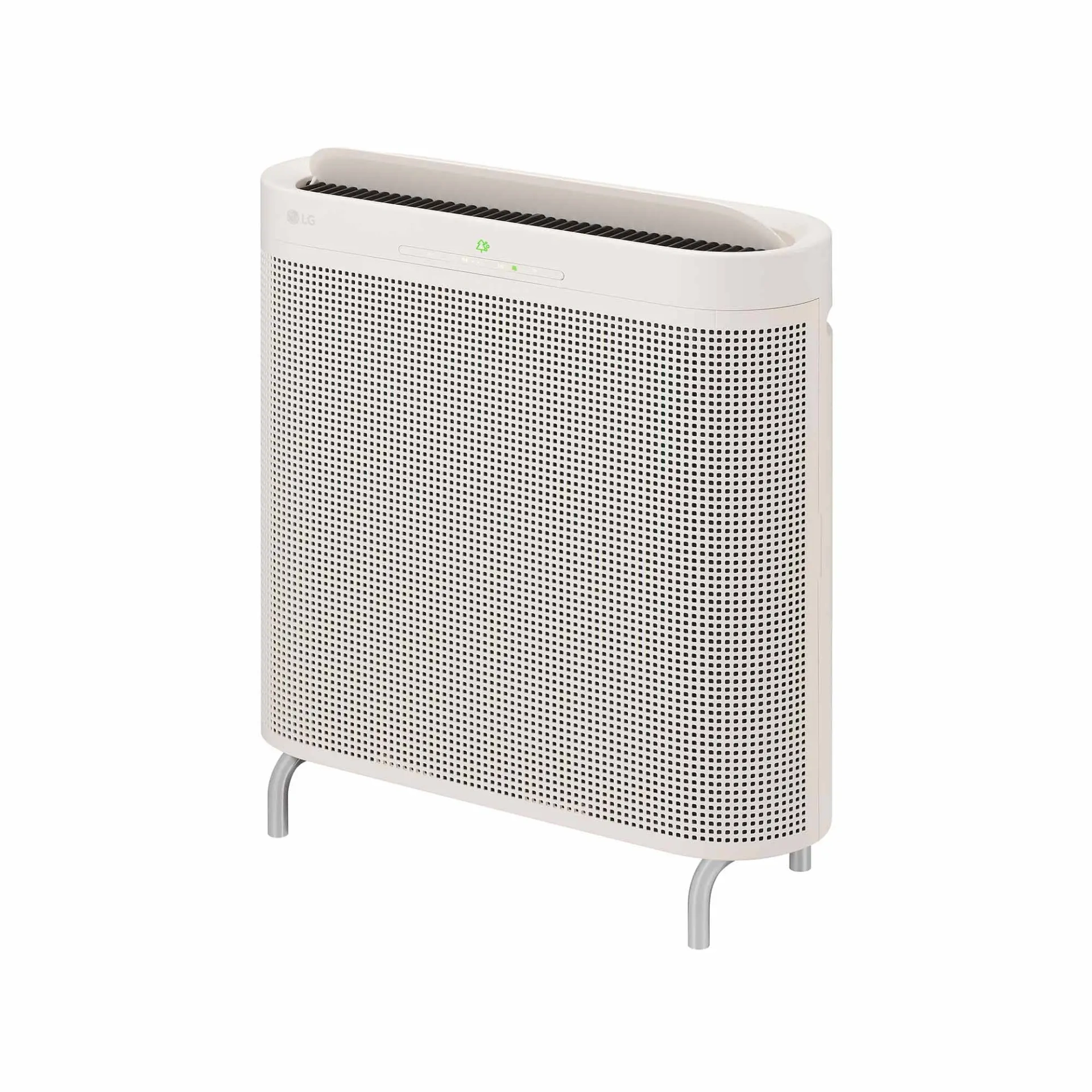
Eighteen Centimeters Against the Wall: How LG Wall Fit Moves Air Cleaning Off the Floor
Story & products
In a one-room flat (원룸), air is always the same room’s problem: cooking smell, dust after sweeping, stuffiness with the window shut. Everyone knows an air purifier helps—until a tall cylinder steals a patch of floor next to the bed, desk, and charging cables.
Around 2026 LG launched the Puricare AI Objet Collection Wall Fit (퓨리케어 AI 오브제컬렉션 월핏). The pitch is plain: side thickness about 18 cm, can sit flush to the wall; cleanable area about 59.4 m². The AI and Objet names can wait—first ask whether it eats floor space.
Two easy dimensions run through this piece: about 18 cm on the side; roughly W560 × H540 × D180 mm overall. They are not flashy, yet they decide whether the machine can tuck into a wall that is already full.
Measure the wall gap before the filter talk
Single-person households in Korea are already common. Ministry stats put one-person households at about 42.3% of all households by end-2025. Search and media keep repeating “mini,” “compact,” “one-room”—not fashion words, but rent that does not grow while appliances keep fighting for floor.
Classic tower purifiers assume: stand in a corner, leave intake space behind. Wall Fit writes it the other way: front intake, top/bottom outflow, back can sit closer to the wall. Official pages list about 560×540×180 mm; a common color is “calming beige.” Stand and wall-mount versions exist—stand can move; wall-mount gives the floor back; wall-mount must follow the manual (soft walls need proper anchors, not two casual screws).
Filter side uses Wall Fit deodorizing/cleaning filter lines (names like Wall Fit V2 / Puri-clean V appear in coverage and product pages—check the live listing). AI mode adjusts fan by air quality; front lights (red/orange/yellow/green style) show how the air is. Filters are replaceable/washable per model notes; ThinQ Wi-Fi is a bonus, not the first reason to buy.
Eighteen centimeters solves “where it stands,” not “never change a filter”
If flush-to-wall solves footprint, daily friction is still: does cooking smell clear, is fan noise tolerable at night, how often must you service the filter.
Official figures: about 59.4 m² cleanable area, ~43 W, energy grade about 2 (AS185/AS186 family pages; stand/wall SKUs differ; mass around 10 kg). For one person’s원룸, 59.4 m² is usually “enough with margin”—margin is not for show; it is leftover capacity after cooking and airing out.
An optional shelf kit can turn the top into a tiny ledge—remote and a book yes, heavy storage no. Convenience that never becomes a scene is only ad copy: come home, lights on, indicator still green—that is what wall-flush air cleaning is for at night.
Same “take less space” line: Bissell SpotClean Mini
Air purifiers handle air; sofa and mattress stains are another job. Bissell SpotClean Mini (often 4103S) is a compact fabric wet cleaner: about 3.4 kg, roughly 308×343×254 mm, about 12 kPa suction, spray–scrub–suck for coffee spots and pet hair (includes a hair tool). Clean tank ~0.5 L, dirty ~0.4 L, cord ~3.7 m.
It is not a substitute for Wall Fit, but it shares the “can it go back in a cabinet” logic of one-room life: use it, stow it—do not permanently occupy floor. Street prices often sit a bit over 200,000 KRW (promos move). Placing it beside Wall Fit only reminds you: solo cleaning is often “air” plus “that one fabric patch,” and both ask where they live when idle.
Living alone is not a family air purifier shrunk one size.
It is asking again: do I have spare floor? Can the wall take it? Will I actually maintain the filter? Eighteen centimeters against the wall is those questions written into the depth chart and the install guide.
Product list
1
LG Puricare AI Objet Collection Wall Fit (e.g. AS185LGAA / AS186LSAA / wall AS185LGAAW)
~18 cm side, wall-flush, ~59.4 m², stand/wall
https://www.lge.co.kr/air-purifier/as186lsaa
2
Bissell SpotClean Mini 4103S
~3.4 kg fabric spot cleaner, stains/pet hair contrast
https://www.bissell.co.kr/products/스팟클린-미니-4103s
Main sources
Viva100: mini appliances for solo living (incl. Wall Fit)
LG Newsroom: Wall Fit stand
LG: Wall Fit stand AS186LSAA
LG: Wall Fit wall AS185LGAAW
Bissell: SpotClean Mini 4103S
LG PuriCare AI Object Collection WallFit AS186LSAA · BISSELL SpotClean Mini 4103S
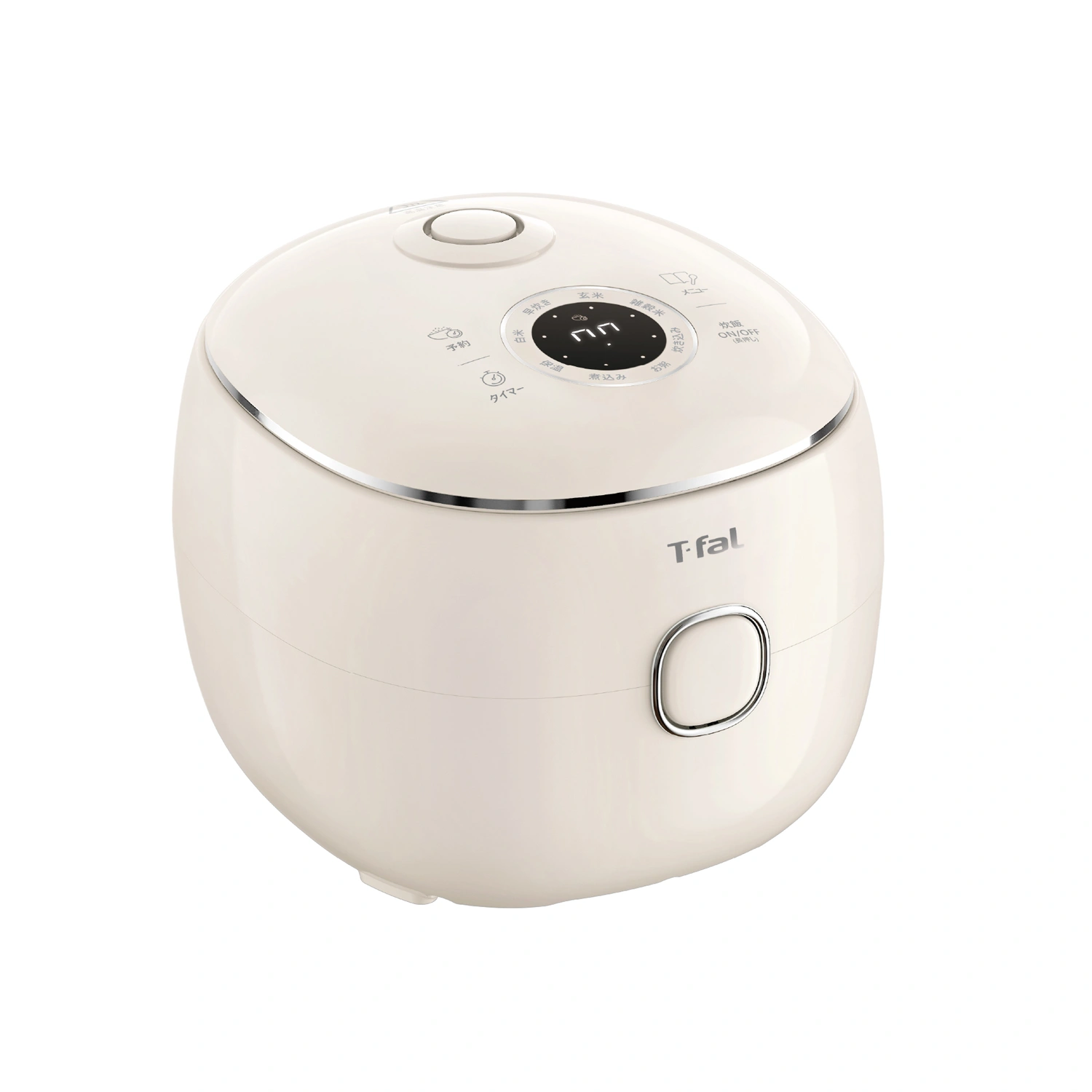
Four Cups, Four Colors, One Pot That Cooks Without a Flame: How T-fal Writes the Solo Rice Cooker as “Skip the Stove”
Story & products
In September 2026, T-fal (ティファール) launched “The Pop” microcomputer rice cooker for up to 4 cups (合). The name is playful; the job is plain: a one-person kitchen is often narrow, and many people would rather not light the stove every night—this 4-cup pot tries to put rice and simple side dishes in the same machine.
Three easy numbers run through this piece: max 4 cups; four colors; about ¥11,000 tax-in. They are not flashy, yet they decide whether the machine can live on the short strip of counter in a one-room flat (ワンルーム).
The solo-kitchen problem is rarely “do you own a rice cooker.” It is “how many centimeters are left beside the stove, do you still need a flame tonight, and how long will washing take.” Family machines assume stir-frying, stewing, and a wide counter. People who live alone more often face reheating takeout, leftover rice, and the occasional pot of soup—preferably with less fire and fewer pans.
First, footprint: about 25 cm of “four cups”
Open any “must-have for living alone” list and a rice cooker is almost always there. The industry line is easy: pick 3 or 5 cups, timer optional. Lists rarely ask the next question—how wide is the body? Is there room left for a cutting board?
Official specs are clear: about W24.8 × D22.6 × H20.2 cm, mass about 2.1 kg; white rice up to 4 cups (~0.72 L). Four cups sounds larger than “one cup for one person,” but the pitch is “up to about eight bowls”—cook little day to day, cook a bit more for the fridge when you need to.
Four colors: ivory, lemon yellow, mint blue, sunny orange (RK535AJ0 / RK5352J0 / RK5354J0 / RK535TJ0), about ¥11,000 tax-in on the official store. The round form is not “luxury”; it is meant to keep a small kitchen from looking like a storeroom.
Beyond rice: eight programs and a “no flame” habit
If size solves “it fits,” daily life still turns on “do I need the stove tonight.” Among younger households in Japan, “コンロキャンセル” (skip the gas burners when electricity will do) keeps showing up. Rice cookers are asked to stew and simmer, not only cook rice.
The Pop packs about eight modes: white rice, quick cook, brown rice, mixed grains, takikomi, porridge, simmer, plus keep-warm. Keep-warm up to about 12 hours; timer up to about 24 hours (some modes cannot be timed—check the manual). Includes rice paddle, cup, spoon, and steamer basket; lid and small parts are mostly dishwasher-safe; the pot has a nonstick coat.
Controls are a touch panel with a smile that “winks” when cooking starts—easy to remember, not a substitute for measuring rice. NFC on the body opens a recipe page when you tap a phone (NFC and internet required). For one person that is not a gimmick; it is one less manual to dig through.
Rated power about 350 W; annual energy about 33.9 kWh, efficiency achievement about 116%. Numbers move with use, but the point is clear: daily small batches and the occasional stew—not a family weekend feast.
Beside it, a 3-cup Tiger: JBS-G055
T-fal is not alone in small capacities. Tiger’s microcomputer JBS-G055 does 0.5–3 cups, about 24.7×27.8×19.2 cm, about 2.7 kg, also ~350 W. It leans on a thick “donabe-coat” pot and menus for premium rice, freezer rice, and high/low cooking—more “cook carefully, also work as a mini cooker.”
Put them side by side not to crown a winner. The Pop packages color + 4 cups + simmer + NFC for people who want one pot and less flame; JBS-G055 trims capacity to 3 cups and writes cooking menus in finer grain. Choose by what you care about: cheerful color and skip-the-stove versatility, or smaller batches and deeper cook programs.
Living alone is not a family rice cooker shrunk one size.
It is asking again: do I need a flame tonight? How much counter is left? Can the parts go in the dishwasher? Four cups, four colors, one pot that rice-cooks and simmers—just those questions written into the size chart and the mode keys.
Product list
1
T-fal The Pop microcomputer rice cooker 4 cups (RK535 series)
~25 cm wide, 4 colors, 8 modes incl. simmer, NFC recipes, ~¥11,000 tax-in
https://www.t-fal.co.jp/ricecooker/discovery-product-thepop/
2
Tiger microcomputer rice cooker JBS-G055 (3 cups)
0.5–3 cups, thick donabe-coat pot, high/low cooking contrast
https://www.tiger-corporation.com/ja/jpn/product/rice-cooker/jbs-g/
Main sources
T-fal PR: The Pop 4-cup launch
T-fal official: The Pop
T-fal store: Ivory RK535AJ0
Tiger: JBS-G055
The First Row Goes Dark
Story & products
If the past decade-plus still drew the public spectrum of "longevity interventions" as a shelf—louder supplement names on the left, brighter "optimal dose" ads on the right, with sauna (a hot dry heat room), rapamycin (a drug often discussed in longevity circles), and assorted peptides squeezed in between—then when a blogger ranked roughly ninety papers by effect × evidence tier × population applicability and pressed smoking cessation into the first row of the table, the shelf went quiet for a stretch. The image that runs through this discussion is not the next, easier "add another stack" or the next, brighter "the mouse study already proved it," but the first row goes dark: the top cell of the ranking fills with quitting smoking, like a cigarette put out first, so the noise underneath can finally be priced.
Boundaries first: the scenes here come from the blogger's public analysis page, checkable sides from the comment section, and papers named in the post—not a census of every longevity tool. It is useful because it presses "what matters most" from slogan into a score you can argue with; it is limited because it covers one community thread and a scoring method whose author admits the weights are choices, not measurements.
The default shelf: how "effect" becomes three multipliers
Industry default likes to write longevity as addition: one more supplement, one more protocol, one more lab panel. For years that sounded smooth—until you open the blogger's formula: score = effect × tier weight × population applicability. Effect is relative risk reduction from a hazard ratio (HR; e.g. HR 0.80 means about 80% of the risk, so relative reduction is logged as 0.20). Tier discounts by hardness of evidence: T7 hard-endpoint randomized controlled trials or meta-analyses (RCT/meta) get full weight 1.0; T6 surrogate-endpoint RCTs or large cohorts (long follow-up of a group) get 0.6; lower tiers keep cutting, mouse work around 0.2, very weak evidence only 0.05. Population applicability asks: does this reach most adults? Coenzyme Q10 (CoQ10) in chronic heart failure (HF/CHF) can show a huge raw effect, but symptomatic heart failure is roughly 2% prevalence, so applicability is crushed.
The scene is hard. It is not "you feel this is trendy so you win"; it nails interventions back to three multipliers: how much real drop, how hard the evidence, whether it lands on most people. Default therefore slips: it thought ranking meant "newer name = higher row." The scene says what you are really measuring is how much noise remains after the first row goes dark.
How the first row extinguishes: 0.60 and two ledgers for "next closest"
If the formula is easy to flatten into a science blurb, the top ten turn the blurb into a table you can crowd around. The blogger's tip roughly runs: don't smoke / quit 0.60; resistance training (weights/machines) 0.21; aerobic training about 0.18 after an observational-tier discount; sleep 7–9 hours regularly 0.15; manage body composition / waist 0.15; in hypertensives, push systolic BP toward ~120 for 0.12; measure ApoB (an apolipoprotein closer to atherosclerotic risk than "bad cholesterol" alone) and treat to target 0.12; statins for LDL about 0.10; sauna 4–7 times/week 0.10; check Lp(a) once (a genetic lipid risk marker) and escalate other risk control if high 0.10.
The blogger is blunt: smoking cessation at 0.60 dwarfs the next closest at 0.21; quitting at ages 25–44 recovers on the order of ten years of life expectancy. If you still smoke, everything else is rounding error. Comments split at once: some call cessation "too obvious," like putting "don't do meth" on a longevity menu; others—including an anesthesiologist—answer that because it is obvious it belongs at the header, to calibrate every later score that looks advanced; a beautiful surgical outcome still often loses to quitting on a smoker's longevity ledger.
One easy mix-up must be split. Sauna's raw effect on the table is about 0.40 (Laukkanen 2015 Finnish KIHD cohort: 4–7 sessions/week vs 1/week, fatal CVD HR ~0.50, all-cause HR ~0.60). A commenter therefore asks: you say next closest is 0.21—did you miss the 0.40 in between? In the blogger's wording, "next closest 0.21" means the score after tier and applicability discounts, not raw effect. Sauna still takes a T6 observational cut (×0.6) and ~0.4 population applicability, landing near 0.10—so it can beat glucosamine, cold showers, some fashionable molecules, and rapamycin, yet stays far below the extinguished first row. Default likes to write the surprise as "sauna beats everything"; the scene says the surprise is that it still enters the top ten after discounts—not that it darkens row one.
Strength, cardio, and statins: who gets the under-written prescription
If row one quiets the shelf, rows two through eight reweigh what "looks more medical." The blogger notes resistance training outranks statins in this scoring—comparable effect size, larger applicability, parity of evidence tier—and calls it among the most under-prescribed items in the whole wiki. Cardio scoring below RT does not mean cardio is weaker: the cleanest cardio mortality evidence is often observational (T6), while RT has meta-analytic RCT support (T7); the tier discount is real. The right reading is do both; combined benefit in summaries such as Saeidifard 2019 can approach ~40%. Comments add sides: for sedentary skinny-fat bodies, build muscle first; falls kill many older adults, and muscle/bone are guardrails; when cardio fitness is poor, rest between heavy sets also waits for heart rate—strength and cardio already overlap in the body.
On another flank, CoQ10 in chronic HF has a large raw effect (Q-SYMBIO all-cause HR ~0.51) yet ranks low on narrow applicability; for symptomatic HFrEF on standard therapy it may be a high-leverage adjunct, for most healthy adults it barely enters the table. Rapamycin is marketed loudly and ranks low here: best evidence remains mouse (T3); the human PEARL trial missed its primary visceral-adiposity endpoint (p=0.379). What misses the top twenty is equally calm: HRT after WHI long follow-up, all-cause HR ~0.99, near mortality-neutral; CPAP (continuous positive airway pressure for sleep apnea) in SAVE 2016 missed the CV primary; glucosamine is mostly observational; NMN/NR null on clinical endpoints; universal vitamin D in non-deficient adults null in VITAL; resveratrol and undefined "anti-aging" peptides lack human hard endpoints. A commenter notes that for apnea patients CPAP may still feed the sleep row—missing a CV primary is not the same as sleep not mattering.
A menu, not one finished stack: honest limits written outside the table
If the top ten is easy to copy as today's must-do list, comments and the blogger's own honest limits tear the list back into a menu. Effects are point estimates; confidence intervals live on per-paper pages; mortality is not healthspan, cognition, or quality of life—symptom-driven tools (HRT for symptoms) get under-scored by a death ranking; interactions are unmodeled, and cardio + RT is closer to additive; tier constants are choices—top six more robust, lower half more sensitive; adherence is unmodeled—sauna 4–7×/week often means owning a sauna. One commenter writes: the hard part is not adding another item, but after months of stacking you cannot tell what works; lifestyle tiers give fast feedback and stack cleanly, while peptides or pharma tiers tangle causality with dose and timing variance—the table is a menu to sample over years, not a stack to swallow in a day. Sauna itself is pressed: single cohort, obvious confounds; heat shock proteins are mechanism speculation; "is it just sweating" still hangs. These probes do not cancel the top ten; they prove that after the first row goes dark, the remaining cells must be read with the limits attached.
Closing: redefine "ranking"—not the next brighter bottle, but people willing to let the first row go dark
If longevity culture often reads independence as "fill the shelf before talking" or "mock every advice that is too obvious," this thread is closer to another independence—holding both the extinguished first row and the discounted score, and seeing which ledger "0.60 vs 0.21" is about. The blogger's analysis earns a public essay because it puts checkable scenes on the table: three multipliers; cessation dwarfing the rest in bulk; RT's applicability story over statins; cardio discounted for observational tier yet still to be done with strength; sauna's raw 0.40 versus score 0.10; CoQ10's large effect and narrow indication; rapamycin's mouse volume and missed human primary; the null and near-neutral list outside the top twenty; and comments side by side—"too obvious," anesthesiologist calibration, strength before cardio, falls and bone/muscle, CPAP into the sleep line, single-cohort sauna, menu not stack.
The value is not pushing "everyone buy a sauna first" or "anything outside the top ten is a scam," but saying ranking back: first tell raw effect from score after discounts, then tell menu from a stack you can no longer parse, and use "has the first row gone dark" to keep polishing—inside the rising supplement myth—the hard part of independence: whether you still treat the loudest name as the highest row, rather than outsourcing to the next easier "science proved it" or the next easier "it's all pseudoscience."
Executable prompts stay plain: reading a cell, ask whether it is effect or score. If you still smoke, write other items as rounding error first, not as comforting parallel tasks. Keep strength and cardio in the same field at what the body can bear; you need not first believe which is "more optimal." Reading sauna, also ask cohort, confounding, ownership cost, and adherence. Write "optimal" as "holding the extinguished first row yourself"—knowing which stretch proves cessation crushes shelf noise, and which stretch only proves the discount constants remain arguable; knowing 0.60 can be loud without canceling a clarification of raw 0.40; knowing menu and stack can share a table, while the real danger is mistaking "the next brighter bottle" for the only rightful first row—rather than forever outsourcing to the next easier ranking slogan or the next brighter "I don't buy any of it." A table can hold one day's line; the first row goes dark still writes whether you honestly logged: did the cigarette go out first, and did the ledger close on effect or on score. People who hold both first-row and discount ledgers at least know which lever they are measuring: the shelf, or the extinguishing.
The content of this article is only for viewing, reflection and independent judgment. It is not an instruction manual. It is simply a part of what exists in the world.
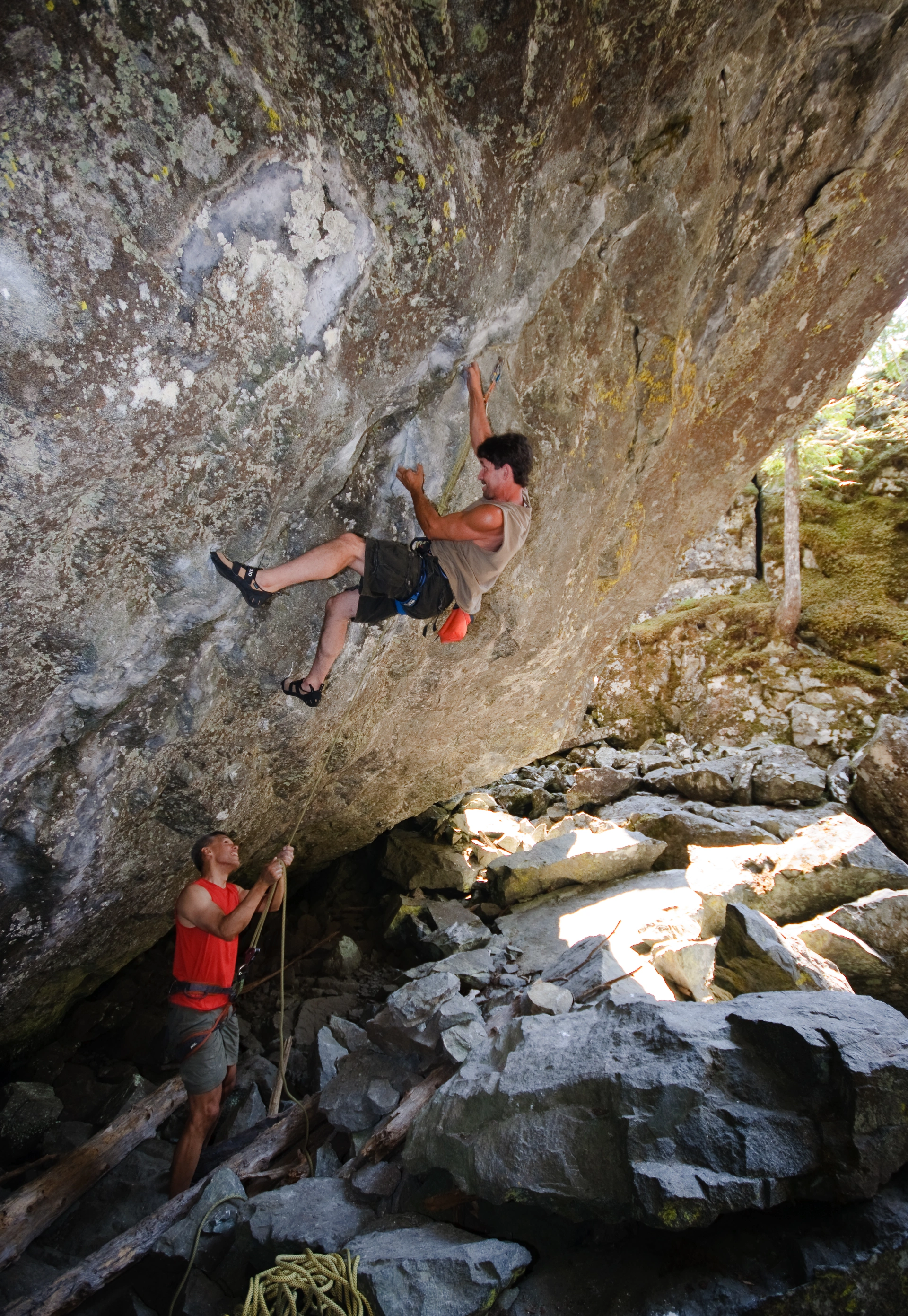
Two Minutes Overhead
Story & products
If, for the past twenty-odd years, the default rest posture in ordinary climbing training still looked like one simple picture—arms dangling at the sides, a light shake, waiting for the forearms (the muscles that “fill up” with pump) to drain on their own—then once a poster laid a 2005 comparison note on the table, that default split in two: one still called the dangling shakeout; the other raised the same arm overhead and dropped it again, five seconds each way, alternating. The image that runs through this discussion is not the next easier line—“science has already proved it”—or the next brighter poster—“the ninefold secret.” It is two minutes overhead: in the same rest window, arm height rewrites return flow; the same tidy table of “eighteen percent versus two percent” is also weighed again in the comments. Numbers can look clean; source and sample size are another ledger.
Boundary first: the scenes here come from the poster’s research notes, checkable sides of the comment thread, and publicly cited training literature as retold there—not a census of every recovery method in climbing. It is useful because it presses “just shake it out” into posture and timing you can feel; it is limited because it covers one community argument and one comparison that was repeatedly asked whether it counts as a “really published study.”
The default dangle: how pump gets rewritten as a blood-flow story
Industry default likes to write forearm swell as “lactic acid buildup.” That default sounded fluent for years—until you open the physiology in the poster’s notes: lactate is more an energy substrate than waste you must dump at once; what truly “pumps” you is often muscle crushing the vessels when force runs high. The notes say: above roughly seventy percent of maximal voluntary contraction (MVC—the hardest you can squeeze), vessels are nearly fully occluded—oxygen cannot enter, metabolites cannot leave. Recovery is rewritten as something plain: reopen blood flow, not “flush the acid.”
The scenes are hard. This is not “you feel acidic so you lose”; it nails pump back to mechanical conditions: contraction intensity, occlusion, anaerobic work, then restoration. Default therefore slips: it thought shaking only chased discomfort; the scene says—what you are really waiting for is blood moving again through tissue that was pressed flat. The poster puts this line up front to floor the posture contrast that follows: if recovery equals return flow, then how high the arm rises and how long it moves stop being style questions and become questions of whether veins get help sending blood back to the heart.
Overhead and at the side: how “ninefold” in two minutes reaches the table
If the physiology story is easy to compress into a popular-science sentence, the comparison numbers turn the sentence into a table the room can surround. The poster retells: in 2005, Luke Roberts at University College Chichester placed the traditional dangling shakeout against G-Tox—Eric Hörst’s popularized alternating raise that uses gravity to assist “detox” return—inside the same two-minute rest window. After a hard traverse, grip strength was measured: the dangling group recovered about two percent; the G-Tox group about eighteen percent. Same two minutes, one posture change, recovery amplitude written as roughly a ninefold difference.
The protocol itself is short enough to sound like a joke: raise one arm overhead, shake loosely five seconds; drop it to the side, shake five seconds; switch arms; repeat. The mechanism writing is equally plain—when the arm hangs, blood pools in hand and forearm; when raised, gravity helps venous return; alternating high and low acts like a small pump. The limit is also written down: you need a free arm; locked rests—knee bars, stuck heel hooks—cannot use it.
The tension in this section is not that “ninefold sounds cool,” but that intactness can be named as concrete conditions: a fixed two minutes, two postures, grip before and after, and the alternating how-to. Default likes to write recovery as mystique or talent; the scene says—at least in these notes, the change came from whether the arm passed through overhead. The name G-Tox itself carries a marketing accent (a gravity-toxin nickname), yet the motion is not mysterious: raise, drop, raise again.
Intactness matters precisely because it later cracks in the comments. Without the “eighteen versus two” table, the quarrel would be only taste; with it, the crack looks like turning a page in the ledger—same posture set, same phrase “research says,” beginning another account in the next comments about source, sample, and conflict of interest.
How the comments reweigh “research”: source, six points, and interest
If the poster sealed the story with a tidy contrast, the comments immediately offered another seal. One commenter said flatly: this does not look like a journal paper that passed; it looks more like a lab report that would not—missing clear design, procedure, and data tables; the publicly visible “results” described as two lines of three points each, about six data points in total; the author’s path traced to an Adventure Education degree rather than a long sports-science research track; the promotion chain pointing back to Eric Hörst himself—the person with the most motive to make G-Tox sound effective. Others smelled advertising: the notes were posted in full, the app linked only in a comment; still others called “AI voice.”
The other side was not soft either. A commenter wrote: they had always used Eric’s method and felt a clear difference, useful on longer routes too. Another reminded: elevating a limb to reduce swelling is first-aid common sense—gravity and blood flow are not fiction—but that is prolonged elevation in medical scenes, not proof that two minutes of alternating shakes are nailed down in sports science. Someone else said quietly: they tried it and felt no difference from ordinary shaking; the rule of thumb of “about a minute of rest per limit move” was also called far from enough.
The poster later admitted in comments: the source sits closer to undergraduate-dissertation level, not peer-reviewed verdict; Hörst does have skin in the game; the institutional history of the Chichester college is real, yet that does not save the methodology from the cut. He reframed—personally it seemed to help, could be placebo, or “any active movement beats a dead hang”; choice returned to each body’s own test.
What this section truly measures is not a final verdict on whether ninefold is true or false, but how a community takes a pretty contrast table apart into askable parts: published or not, sample and charts, promoter and conflict, felt effect and placebo. Default likes to write pushback as nitpicking; the scene says—in sports-science talk, reweighing the source is itself part of the training.
Neighboring ledgers: warm-up, work:rest, and “arms feel fine” ≠ power is back
The discussion did not stop at raising the arm. The poster wrote flash pump—going hard before forearms are warm, a disproportionately nasty pump that clears slowly—as warm-up not optional: cold muscle has poorer vasodilation, so even moderate effort can near occlusion early; a pyramidal warm-up (easy → moderate → sub-limit) is written as the difference between two or three quality attempts and five messy ones. Work:rest ratios cite frameworks in the Steve Bechtel / Juliet Hammer line: about 1:8 for sub-limit boulders; up to about 1:20 for limit boulders; about 1:6–1:8 for power endurance; about 1:4 for route endurance—and notes that limit bouldering often needs more relative rest, because it hits the central nervous system (CNS), not only the forearms.
Local fatigue and CNS fatigue sit side by side: pump may ease in five to fifteen minutes with rest and posture; CNS fatigue from limit moves, campus boarding (explosive upward moves on a board without much foot help), and heavy hangs may linger twenty-four to forty-eight hours. The notes say: forearms can feel completely “fine” while power is still down about thirty percent—you feel okay until you are on the wall again. A 2024 observation on elite climbers after competition is retold: forearm swelling took about twelve hours to return to baseline—not twenty minutes, not two hours.
Commenters’ felt rest split the same way: some found longer rests clearly improved redpoint quality and admitted “getting cold and having to relearn try-hard” is a skill; someone near fifty, climbing twice a week, mixing styles toward endurance, felt little difference between about 1:2 and 1:5. The fork does not cancel the framework; it only proves that the same work:rest ratios settle different felt accounts across age, frequency, and style.
Close: redefining “two minutes overhead”—not a ninefold myth, but people willing to lift the arm past the default
If climbing recovery culture often reads independence as “believe the contrast table” or “mock everything unpublished,” this discussion sits closer to another independence—holding both the two minutes overhead and the comments’ reweighing, and seeing which ledger “ninefold” is talking about. The notes the poster opened are worth public discussion precisely because they put checkable scenes on the table: pump and occlusion rather than a lactate myth; eighteen versus two in a two-minute window; the five-up, five-down alternating sheet; the knee-bar limit; flash pump and pyramidal warm-up; longer relative rest for limit boulders; local five-to-fifteen minutes versus CNS a day or two; the twelve-hour swelling baseline; and the side-by-side asking in comments about undergraduate papers, conflict of interest, six data points, felt yes and felt no.
The value of the discussion is that it does not only push “everyone must G-Tox” or “every unpublished posture is a scam,” but speaks recovery back: first tell return flow from feeling comfortable, then tell tidy percentages from thickness of source, and with “raise” and “reweigh” still polish, inside a tide of “one table settles it,” the layer that matters—independence often hides in whether you still treat a marketing-accent name as the only story, not only in the next easier “science proved it” or the next easier “all pseudoscience.”
Executable prompts stay plain: write rest as checkable posture and timing, not as a temperament label. When you try high-low alternating, allow it to be only a candidate for “active movement beats a dead hang,” without first believing ninefold. When you read a contrast table, ask publication, sample, and promotion chain with it. Warm up easy to hard; after limit efforts, stretch rest past “arms don’t hurt.” Write “recovery” as “holding your own two minutes overhead”—knowing which stretch shows posture may change return flow, and which only shows the community still reweighing sources; knowing ninefold can sound loud without canceling the ask about six points; knowing felt yes and felt no can both be true, and the real danger is mistaking either dangling shakeout or the overhead trick for the only correct posture—rather than forever outsourcing to the next easier “research says” or the next brighter “I don’t buy it.” A grip meter can hold one line on one day’s sheet; two minutes overhead still writes whether you honestly logged where the blood went and on which page the account closed. People who hold both posture and source at least know which lever they are measuring: myth, or return flow.
The content of this article is only for viewing, reflection and independent judgment. It is not an instruction manual. It is simply a part of what exists in the world.
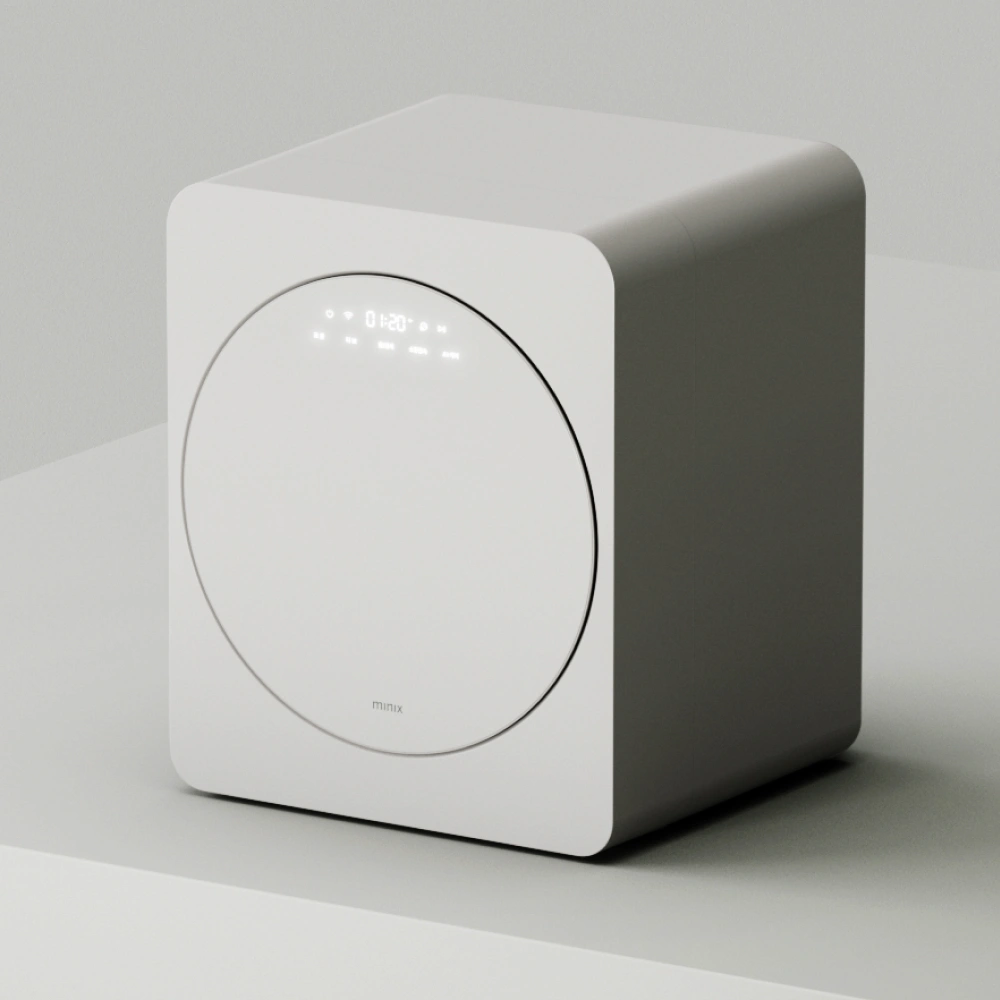
One Kilogram in Forty Minutes and Humidity Calling the Shots: How Minix Writes Mini Drying Past the “No-Drill Plug-In Box”
Story & products
If the past few years of Korean one-room appliances still treated clothes drying as two extremes—either a balcony line plus a dehumidifier, or a family ten-kilogram heat-pump cabinet—then spring 2026’s “The AirDry” finally designs around “the one kilogram you need to wear today” and “how wet the fabric still is,” not around the imagination that “your home should have a laundry room.”
What runs through this piece are two equally plain numbers: about one kilogram of everyday clothes in roughly forty minutes on small-load quick dry; and smart humidity sensing—humidity calling the shots. They do not sound glamorous, yet they decide whether the machine can eat a one-room night’s damp, instead of handing a half-dry shirt back to the pillow.
Solo drying politics was never “can you afford a spinning box.” It is “does this machine assume you still lack a line to the balcony, a three-hour free slot, and a laundry basket you only clear on weekends.” Family units often assume clothes pile up and drying is an occasional bonus. People who actually live there find the problem in small, frequent loads—one jacket, two towels, the set that must be dry before a trip. If industry only offers “large standard cycles,” solo households stay trapped between airing and waiting.
From “plug it in” to “humidity decides”: the sensor is the real threshold
Open any “must-have one-room appliance” list and the mini dryer almost always appears—especially in no-drill, plug-in contexts: rentals that forbid exhaust holes use a small electric drum to keep moisture inside the machine. The industry line is easy: drying is enough, three or four kilos for one person. Lists rarely ask the next question—is time a fixed menu, or does it adjust to fabric humidity?
The usual answer is still “pick a course and watch the clock.” Result: the same “quick dry” sometimes overshoots, sometimes leaves damp; people add another cycle by feel, or open early and touch the cloth. Minix writes the problem the other way. Press reports describe smart humidity sensing that reads fabric moisture in real time and auto-tunes drying time; you can also set time yourself in ten-minute steps up to about three hours. What industry does here is not another “smart” sticker—it turns “how dry is dry enough” from guessing into feedback you can feel.
On the heat side: dual PTC heaters—two roughly 650 W-class units adjusting temperature to fabric state. In small-load quick mode, about one kilogram of everyday clothes can finish in as little as about forty minutes (environment, material, and thickness still move the clock). If the door stays closed for about five minutes after the cycle ends, the drum turns on its own to limit wrinkles—more useful for “wash, leave for a meeting, take clothes later” than another long menu list.
Five-kilo max and four-kilo standard: “thirty towels” inside volume politics
If humidity sensing solves “dry accurately,” what still jams daily life is “how much per load.” Industry loves “bigger is better.” On one-room paths and power budgets, people want something concrete: weekend towel piles, a light seasonal duvet, or the few everyday pieces—not a warehouse for family sheets.
Press figures put The AirDry at about 5 kg maximum and about 4 kg standard—roughly 1.43× prior models—translated in copy as about thirty towels, nineteen T-shirts, or eight summer duvets. That is not a dare to stuff full every time; it leaves headroom for occasional peaks. The high-frequency job remains the one kilogram that small-load quick targets. Writing capacity and speed apart keeps solo life from being tied again to “save until a standard cycle makes sense.”
Modes include about five tailored drying options with Air Care deodorizing; reports cite about 99% deodorizing performance and coverage for shoes, hats, pillows, and other hard-to-wash pieces—stretching the machine from “clothes only” toward small-item care. The exterior stays minimal while internal volume was reworked enough to take an iF Design Award 2026—the award is not a purchase reason, but it shows the design constraint: keep a one-room silhouette while packing capacity and sensors together.
Convenience that cannot become a scene is only ad copy. Put about one kilogram in, let humidity sensing finish the time, take wearable clothes in about forty minutes—that is the morning mini drying actually serves. Minix mini dryers have been reported around the 160,000-unit cumulative mark—numbers move, direction is clear: no-drill plug-in is not a niche corner; it is a main demand under rental rules.
Market parallel: Winix compact also sits on the four-kilo shelf
Minix is not alone. Winix Inverter Compact Dryer S (e.g. HS4E400) writes about 4 kg max and about 2.5 kg standard into the same compact lane; official and press talking points often include about 43 dB, quick and towel modes, and a cumulative story around 190,000 units. Placing it beside Minix is not a ranking—it admits Korean solo drying has moved from “whether you have one” to “who fits fragmented loads and noise tolerance.”
In one-room media and unboxings, “mini dryer” and “no-drill” keep returning—not buzzword piles, but rental echoes: you cannot drill, balconies are uncertain, indoor airing in monsoon or heating season gives smell back to the whole room. When Minix talks one kilogram in forty minutes and humidity sensing, and Winix talks four-kilo-class compact and low noise, the market is finally writing “one person” as cycle time and capacity constraints, not only “a smaller family machine.”
One more contrast often missed: the family laundry room’s “complete” look is for the camera—big drum centered, heat-pump badge, sorted baskets. Solo drying’s complete is often that it plugs in, finishes one piece, and sensing does not over-bake. The AirDry leaves max capacity at five kilos and aims small-load quick at about one kilo—not for a prettier table, but for daily load and short cycles. Once industry ships to humidity and fragments, “optimal for one-person households” finally has minutes and kilos you can check.
Living alone is not shrinking a family dryer by one size.
It is closer to redefining independence: independence is not “I deserve a ten-kilo heat pump too,” but “the machine matches whether my one kilogram needs about forty minutes, lets humidity call the shots, and fits a rental that cannot drill.” One kilogram in forty minutes and humidity sensing are just that sentence written into course names and sensor logic.
Product list
1
Minix The AirDry mini dryer
Humidity sensing auto-timing; dual PTC; ~1 kg small-load quick ~40 min; max 5 kg / std 4 kg
https://minix.life/product/신제품-미닉스-미니건조기-더-에어드라이-최대-5kg/586/
2
Winix Inverter Compact Dryer S (HS4E400 etc.)
Max ~4 kg / std ~2.5 kg; ~43 dB compact contrast
http://www.winix.com/product/1969
Main references
Herald Business: Minix The AirDry launch
TheElec: Athome Minix mini dryer
News1: humidity-sensing mini dryer
Minix official mall: The AirDry
Winix: Inverter Compact Dryer S

Eighty-Eight Liters and Which Way the Door Opens: How Nitori Pulls the Solo Fridge Out of the “Shrunk Family Machine” Default
Story & products
If the past decade-plus of Japanese home appliances still treated “living alone” as a scaled-down family fridge—capacity cut in half, door swing left to chance, body still shipped as if a center-kitchen French door belonged there—then this 88-liter direct-cool two-door unit in early 2026 finally designs around the wall gap and floor plan of a one-room flat, not around the prediction that “you will become a family soon.”
What runs through this piece are two equally plain numbers: a total volume of eighty-eight liters, and which way the door opens. They do not sound glamorous, yet they decide whether the machine can actually live in that one room—the strip of wall by the entry, the half-step beside the bed, the façade less than fifty centimeters wide next to the stove.
Solo cold-storage politics was never “can you afford a big fridge.” It is “does this machine assume you still lack half a wall, a door-swing radius clear to the opposite cabinet, and the habit of clearing stock only on weekends.” Family units often assume the hinge can be swapped later, that the top is only a lid, that the body should shine and announce itself. People who actually move in find the problem at move-in and at the first open—the door hits the bed edge, or a glossy cabinet turns the whole room into an appliance showroom.
From “enough capacity” to “the right swing”: the opening radius is the real threshold
Open any “must-have appliances for living alone” list and the fridge is almost always there. The industry line is easy: around a hundred liters for one person, two doors for convenience. Lists rarely ask the next question—does the door open right or left? And can you change it after install?
The usual answer is still kitchen inertia: volume first, power second, swing last—or even “swap the hinge after you buy.” In the store the machine looks solo-friendly; on site the door opens into the path—bed foot, vanity side panel, or the last turnaround in the corridor.
Nitori writes the problem the other way. Official specs: rated volume 88 L (fridge 63 L, freezer about 25 L); about W487 × D534 × H840 mm; mass about 26 kg; ¥24,900 tax-in. Only white and black—matte surface, square form, handles kept quiet, pitched as “flat & matte.” In a one-room flat that is not “quiet aesthetics”; it is one less reflective face stealing the eye.
The sharper footnote sits beside the door: right- and left-hinge models both exist, and the swing cannot be changed—you must match the floor plan before you buy. Family machines often treat “reversible hinge” as after-sales slack; a solo wall gap often cannot afford a second move. Writing “swing is fixed—measure the plan first” into the pitch admits that a one-person household is a full use case, not a waiting room for family life.
How eighty-eight liters split: sixty-three plus twenty-five, and a microwave on top
If swing solves “can it open,” daily life still turns on “can it hold today’s portion.” Industry talk loves “stock once, big.” Solo rhythm wants something concrete: a few days of bentos and vegetables in the fridge, a few packs of meat and a bag of ice in the freezer—not a warehouse for weekend parties.
Officially the fridge is 63 L and the freezer about 25 L; adjustable shelves and a vegetable drawer, door pockets three on fridge and one on freezer, pitched as easy to organize. That is not a parameter show; it admits solo food is small and fragmented and needs layers, not one big flat shelf.
The top plate is rated for a microwave—on a kitchen that is only one narrow counter, that stacks “heat” above “cold” and returns the counter to chopping and washing. Footnotes still apply: load and heat dissipation follow the manual. “Use the top” is a space claim, not a cancel of physics.
At ¥24,900 tax-in, a two-door direct-cool unit that fits a one-room lands under the ¥30,000 mental line. Annual energy use is listed at 205 kWh/year—serving not a “weekend bulk-buy cold empire,” but the fragmented loop of opening a few times a day for a little each time. Direct-cool also means frost needs periodic care; convenience is not zero maintenance.
Convenience that cannot become a scene is only floor talk. Milk in the door pocket, last night’s leftovers on the middle shelf, door swinging the only way the floor plan allows—that is the morning eighty-eight liters actually serve.
A parallel on vertical space: fold-lid washers also shave about twelve centimeters
Fridge swing and top plate are not alone. Laundry corners also count “above”—a top-load lid needs clearance; a folding lid that cuts about 12 cm of open height, on a body about 565 × 565 × 845 mm, is another millimeter war for low ceilings and racks above the machine. Comfee’s pitch for fold-lid fully automatic washers runs the same parallel as “which way the fridge door opens”: small households, space performance—industry admitting swing radius and overhead clearance are as expensive as floor area.
In lifestyle media, “small-household space-performance appliances” keep returning—not buzzword piles, but an echo of rental reality: area does not grow, while appliances long shipped to family templates. When fridges talk 88 L and a non-reversible swing, and washers talk twelve centimeters less lid travel, the market is finally writing “one person” as a spec constraint, not only a marketing tag.
One more contrast often missed: the family kitchen’s “complete” look is for the camera—French doors centered, light on stainless, empty counters. A solo kitchen’s complete often means it fits through the door, the swing misses the bed, and the top can still hold a microwave. GZ2G01 (later retail may include GZ2G04 and similar; check the live Nitori Net page) holds height near 840 mm and splits swing into two SKUs—not for a prettier table, but for floor plan and daily reach. Once industry ships to one-room swing radius, “ideal for living alone” finally has millimeters and hinge direction you can check.
Living alone is not shrinking a family fridge by one size.
It is closer to redefining independence: independence is not “I deserve French doors too,” but “the machine matches my eighty-eight liters, the only way my door can open, and whether I still need a microwave on top.” Eighty-eight liters and which way the door opens are just that sentence written into the size chart and the cart options.
Product list
1
Nitori 88L direct-cool 2-door fridge (GZ2G01 etc.)
Matte & flat; right/left hinge by SKU; fridge 63L + freezer ~25L; microwave on top
https://www.nitori-net.jp/ec/product/2113400054776s/
2
Comfee fold-lid fully automatic washer
~12 cm less lid clearance; ~565 mm square solo/duo contrast
https://prtimes.jp/main/html/rd/p/000000298.000115454.html
Main references
Nitori PR: 88L direct-cool 2-door fridge launch
Nitori Net product page
Kaden Watch coverage
Comfee fold-lid washer PR

The Bend in Daily Practice
Story & products
If, over the past decade or so, the public spectrum of “how much exercise is enough” was still drawn as a straight line—on the left “more is better, more sweat means longer life,” on the right “one more hour will bend another risk bar downward”—then once a blogger laid a line chart of running versus all-cause mortality (the chance of dying from any cause) on the public table and offered an estimate of about forty-five minutes a day, that line was already no longer straight: it bends at a visible place, and farther out the sample thins and the curve ends in a way that looks suspicious. The through-image of this essay is not the next convenient slogan of “just run longer” or the next brighter ad for an “optimal dose,” but the bend in daily practice: on the outside it looks like a chart that hands you an answer; on the inside it is a scale you have to reread every day—where it bends, why it bends, and whether you can trust it after the bend are what actually deserve attention.
Boundary first: the scenes here come from the blogger’s own account, checkable sides of the comment thread, and publicly verifiable journal threads—not a census of all runners. It is useful because it presses “optimal” from slogan into a disputable bend; it is limited because it mostly covers people already willing to read a chart and talk dose and joints—many others are still negotiating even ten minutes outdoors a day.
From “more is better” to “about forty-five minutes”
Industry default likes to write running as endless: more minutes, more kilometers, lower risk, story over. That default occasionally held for years—until you put “estimate” beside “slogan.” What the blogger did was plain: not hunt a louder longevity number, but post a chart and write that the estimate is about forty-five minutes a day; then add an efficiency conversion—running saves more time than walking, for example fifteen minutes of running ≈ about fifty minutes of walking. The material trail points to discussion around the Journal of the American College of Cardiology and a Nutrition Facts video explainer.
The scene is hard. Default assumes “optimal” must equal “as much as possible”; the chart says—there is a bend, and the bend is the center of the argument. What you see is the easy number forty-five; what you hold is a bend in daily practice: before the bend, risk falls with more activity; near the bend, gains no longer scale linearly with “one more hour”; after the bend, the chart itself often cannot finish the sentence because too few people live out there.
Two rulers: “forty-five” on the chart and “even a little helps” in Lee
If the blogger’s chart pushes public chat toward “forty-five minutes a day,” the publicly checkable 2014 JACC work by Lee and colleagues is often flattened into a softer slogan: runners had roughly 30% lower all-cause and 45% lower cardiovascular mortality than nonrunners; benefits were broadly similar across running-volume quintiles; even under 51 minutes a week was associated with benefit; persistent runners showed the strongest associations. That paper’s spirit is closer to “even a little helps / more is not clearly better” than to “you must hit forty-five minutes every day.”
Only with both rulers side by side is this section honest. Public talk often kneads several studies into one “forty-five-minute daily lesson”; the scene asks you to separate them first: the bend on the blogger’s chart is one reading of an estimate figure; Lee’s line is “the threshold is low, and going much higher is not clearly superior.” Default wants either/or: either “you must charge to forty-five,” or “just jog a little.” The scene refuses either/or: the bend can mark where marginal returns change; the low threshold can remind most people to get out the door first; both can share a city, but neither may impersonate the other. Here the bend in daily practice gains a double scale: one tick for “where the chart bends,” one for “whether even a little already associates with lower risk.”
“Will it dive next?” Parabola, ultra volume, thinning samples
If the bend brings relief, the comment thread immediately asks about the right half. One high-scoring commenter asked: is the running curve parabolic? It looks ready to dive. Another first feared ultramarathoners were far more prone to heart attacks and wanted the raw scatter plot, then corrected themselves—claims that ultras “way more often” get heart attacks may not hold; scar tissue on ultra runners’ hearts and some risk signals have been discussed, but proof that moving from reasonable exercise to excess definitely raises death risk is not firm. Someone else did the math: at a leisurely pace for a daily runner, forty-five minutes a day can already sit near marathon-training weekly volume; the data are probably a daily average, not “must run every single day”; the chart may stop where it does simply because almost nobody runs more.
These sides are not there to scare. They prove that default likes to paint the right half as a cliff of “run more and you die”; the scene says—a cliff needs scatter and sample size; steepness at the empty far right is sometimes just too few people and too much error. Here the bend gains a third meaning: bend is not instant break; a truncated ending is not science nailing “excess must kill.”
The time-saving side: walking at equal energy, and running’s higher injury chance
If the chart stresses running’s efficiency, comments hand over another ruler. One commenter noted: running saves time, but injury is more likely. A 2013-era comparison of about 33,060 runners and 15,945 walkers at equivalent energy expenditure found broadly similar associations with reductions in hypertension, high cholesterol, diabetes, and coronary heart disease; related Aerobics Center longitudinal analysis found walkers had significantly lower injury risk than runners (especially under 45), and among men, running 15–30 min/day and 30+ min/day raised injury odds versus under 15 min/day. Pace and body weight were also challenged: does an all-out sprint count? Can a chart tell a very heavy person “running” slowly from walking fast?
Default loves to write “fifteen minutes = fifty minutes” as a victory formula; the scene says—time may win while the joint ledger runs a different column. Someone had already switched to brisk walking, sensing chronic knee trouble ahead; someone else does zone 2–3 on an elliptical for joints and still gets cardio; someone mentioned a specialty shoe shop and a particular shoe/insole easing knee pain; someone suggested wall sits to strengthen tendons around the knee. Others asked reverse causation: if you are healthy enough to run forty-five minutes a day, were you already less likely to die—is it the running, or the fitness that lets you run? Someone answered: running a lot is how you become fit enough to run forty-five; running trains running.
Two mirrors side by side: one says efficiency and risk reduction can look alike; the other says injury curves are not symmetric. So the bend in daily practice is not only drawn on mortality risk—it is also drawn on knees, tendons, and whether you can walk out the door tomorrow.
Closing: redefine “optimal”—not welding forty-five, but reading where it bends
If training culture often reads independence as “nail the daily lesson at forty-five before anything else” or “believe more always means longer life,” this discussion leans toward another independence—holding both the bend ruler and the threshold ruler, and seeing which studies the slogan flattened. The blogger’s estimate chart earns a public essay because it puts checkable scenes on the table: a ~45 min/day bend reading; the time-efficiency example of running versus walking; the high-score question of a parabolic dive; self-correction on ultras and heart scarring; the weekly-volume math near marathon training and the reminder it is likely a daily average; equal-energy walking and running with similar risk reductions but asymmetric injury; knees switched to brisk walking, ellipticals, specialty shoes, wall sits; reverse causation versus “running is how you become able to run”; and Lee 2014’s public ruler of “even a little associates / more is not clearly better.”
The value is not pushing “everyone must do forty-five daily” or “the right half of the chart equals poison,” but saying the spirit of the daily lesson back: first tell apart the chart’s bend and the paper’s low threshold; then tell apart saving time and whether joints can afford it; use “do you still know where the line bends and where the sample thins” to keep, inside the rising myth of an “optimal dose,” the harder layer—optimal difficulty often hides in whether you still treat one memorable minute-count as the only answer, not only in the next convenient “one more hour” or the next brighter longevity ad.
Practical prompts are plain: when you read a chart, ask first whether this is an estimated bend or a slogan crushed flat by chat. When you plan the day, put the joint ledger and injury risk on the same sheet as the time conversion. If forty-five minutes already sounds like a knee alarm, brisk walking, elliptical, or other lower-impact work need not mean surrender—they may still sit on the same cardiorespiratory bend. Write “optimal” as “being able to read the bend in your own daily practice”—knowing which tick measures association with all-cause mortality and which measures whether you can leave the house tomorrow; knowing forty-five can be loud without being the only legal mark; knowing “even a little helps” and “returns blunt near the bend” can share the field—rather than forever outsourcing to “more is always better” or “must be forty-five.” A bend can hold that one fold on a chart; what you still have to grip is whether, after the fold, you will admit: answers can look clean, samples can thin, joints can raise a hand first—and the point of daily practice is to reread that bend each day, not weld one fold into faith.
The content of this article is only for viewing, reflection and independent judgment. It is not an instruction manual. It is simply a part of what exists in the world.
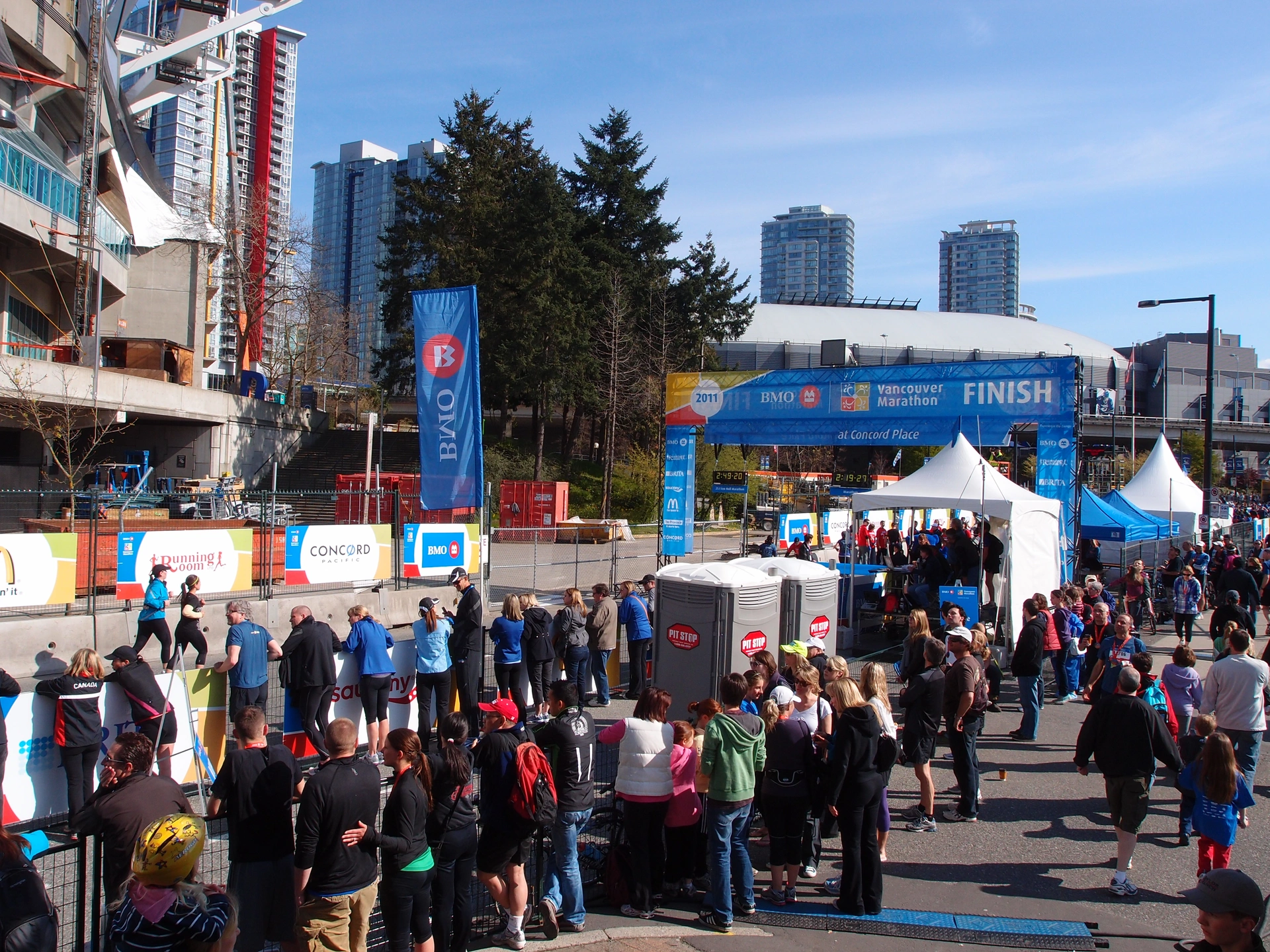
The Thin Rope of Reserve
Story & products
If, over the past decade or so, the public spectrum of how a marathon’s late miles feel was still drawn as a straight line—on the left “hitting the wall, grinding, walking it in,” on the right “negative split (a faster second half than the first), strong finish, calm confidence”—then once a blogger who had just finished a fourth full marathon laid on the table a roughly −2% negative split beside the felt truth of muscles tightening after mile 18, a cramp nearly wrecking the race in the last 800 meters, and holding together by the “skin of one’s teeth,” that line had already bent into two rulers: the first still measures pace and splits; the second measures how much of the thin rope of reserve you still hold, and whether you can push one more inch. The image that runs through this piece is not the easier slogan “the strong finish calm” or the brighter finish-line smile, but the thin rope of reserve: from outside it looks like a steady landing; inside it feels like walking a tightrope that can snap at any step.
A boundary first: the scenes here come from the blogger’s account and checkable sides from the comments, not a census of all marathoners. They are useful because they press “ran well” from appearance into felt reserve; they are limited because they mostly cover the layer that already talks about negative splits, segment feel, and fueling—many more people still grind or walk the second half.
From “Strong Finish” to “Holding On by Skin”
Industry default likes to write a negative split as confidence: about 6:25 per mile in the first half, roughly 6:05 in the last three miles, the curve rising, the finish photo looking good, story over. That default has occasionally held for years—until you put the results sheet beside what the body felt. What the blogger did was plain: not hunting a louder slogan, but admitting pride in that roughly −2% negative split while confessing that past about mile 18 the muscles tightened hard; that a cramp nearly arrived in the last 800 meters; that one wrong step could have undone the whole race. Outside, a strong finish; inside, holding on by the skin of reserve.
The scene is hard. A negative split itself is already rare air: one commenter said nine marathons over thirty years, and the best was still about a two-minute positive split; for most people the last 10K is “really, really hard,” including on a personal best. So the default shows its seam: it thinks lifting late-race pace writes calm into the story; the scene says a strong finish can share the course with “could fall apart at any moment.” What you see is 6:05 in the last three miles; what you hold is a rope of reserve growing thinner.
Segment Scripts: From “This Feels Amazing” to the Pain Cave to “So Easy”
If the results sheet tells a story in numbers, the comments tell another in segment feel. One commenter cast the race in five acts: miles 1–13 “this feels amazing”; 14–20 “a bit fatigued, but still good”; 20–23 “okay, it’s getting harder”; 24–26 “gotta dig into the pain cave—when is this over?”; last 0.2 miles—“this is so easy, I never doubted myself for a second.” Another almost mirrored it: early miles thinking go faster; middle regretting going out hot; 20–23 certain the next six miles were impossible; 24–26 wondering whether death waited in the next hundred yards; last 0.2 suddenly “so easy.” Someone else wrote: first half a half-marathon PR, middle heart rate stuck high, regret after 18, walking through cramps to the finish—then last 0.2 wondering if it was all mental.
These sides are not there for jokes; they prove that the sudden ease of the last two-tenths is often not a rebirth of fitness, but a short illusion after the rope is down to its last fibers and the crowd and finish line pull attention away. Default likes to treat the sprint smile as proof of whole-race calm; the scene says the smile can appear after the pain cave’s 0.2 miles, and the pain cave is the main stage of the late race. Here the thin rope of reserve gets a timetable: thick in the first half, thinning after 18–20, almost fiber alone at 24–26, and in the last 0.2 you think it thickened again—when really the finish only stole your gaze.
“Perfect Late Miles” and the Tightrope: The Cramp That Never Quite Arrives
If a strong-looking finish can deceive, the comments also give a sharper definition of the best kind of late race. One commenter said: after mile 20 in a perfect marathon, the legs should feel on the edge of cramping while you still hold pace—and the cramp never truly comes. Negative splitting is more about race strategy and knowing your endurance—running hard without emptying the tank too early. Another replied that a best marathon (about 2:41, nearly even) felt exactly like that—worry about heavy quads stayed present, yet only landed in the final 2K, when already winding into top gear. In undertrained races, the quads often hurt by about 20K.
The word “tight rope” lands in the thread too: someone with only ten marathons said the best ones felt like a tightrope after 18/20—hard to know how much was left and how hard to push. Truly fast runners may take long runs to 22/24 miles, but that is high-mileage territory. Fueling, hydration, first-half pacing, and whether the long runs were done decide whether any thin rope remains for the second half. One said a best marathon’s last few miles felt like arms and legs would not move any faster no matter how hard they were pumped; another with seventeen races from 2:27 to 3:01 had known late-race bonks, feeling great, and crying while limping over the line—near-perfect strategy still blown by a random cramp.
Default likes to write “looking steady” as proof of ability; the scene says the best late miles are often a Tightrope on the thin rope of reserve: looking steady while ready to snap; whether it snaps depends not on the face in the photo, but on whether the cramp actually lands. The blogger’s “skin of the teeth” and the commenter’s “edge of cramp that never comes” are two names for the same rope.
Rare Air and Everyone Else’s Grind: Two Mirrors
If the blogger’s main line writes a negative-split strong finish as “calm outside, tightrope inside,” the comments hand over two mirrors. One says: if you can negative-split, you are already in rare air; more people grind, slow, or walk the second half. The other says: even a negative split is not ease inside—when others look strong and confident, know they are often suffering too; if they were not, they might have run faster still.
Honest reading puts both mirrors side by side. Default likes a binary: either “negative split = calm master” or “late-race hurt = training failure.” The scene refuses the binary: hurt can be failure, or success perched on the edge of reserve; ease can be real reserve, or too much left on the table in the first half. Someone’s first marathon went out far too hot and turned the last six into a death march; someone else’s PB at mile 18 already knew the pace was sustainable and maybe a bit faster—“the last six as joy” labeled once-in-a-lifetime. The normal case: the last six are work, needing concentration and discipline not to give in to slowing “just a little.”
So the thin rope of reserve is not a soup filter; it is a measuring stick for this race—whether fueling held, whether the first half went out hot, whether the long runs were done, whether a random cramp checked in early—and which segment you still hold. Readings differ by person, day, and race; different readings do not make the stick useless. Someone cries and limps in; someone walks the edge of cramp without falling; someone negative-splits yet feels held by skin alone—three scenes can share a city or even a field. What to watch is treating “looking easy” as the only correct posture of “running well,” and writing the person on the rope as merely under-confident.
Closing: Redefining “Ran Well”—Not Looking Easy, but Knowing Which Segment of Reserve You Hold
If training culture often reads independence as “negative-split first, talk later” or “believe a strong finish equals calm,” this discussion leans toward another independence—holding both the pace ruler and the reserve ruler, and seeing the tightrope the camera misses. The blogger’s fourth full marathon is worth public airing because checkable scenes sit on the table: roughly −2% negative split and about 6:05 in the last three miles; tightening after 18; a near-race-ending cramp in the last 800 meters; the confession of holding on by skin; comment scripts from early joy through the pain cave to last-0.2 “so easy”; “perfect late miles” as edge-of-cramp that never arrives; the tightrope after 18/20 and not knowing how much is left; the rarity of negative splits beside everyone else’s grind; fueling, hydration, first-half pace, and long runs deciding the rope; seventeen races from bonk to limping tears.
The value is not pushing “everyone must negative-split” or “hurt proves failure,” but speaking the late race back: first tell apart the results-sheet strong finish from the body’s thin rope; then tell apart looking steady from whether the cramp actually fell; keep polishing, inside the rising myth of calm, the question of whether you still know which segment of reserve you hold—the hard part of running well often hides in whether you still treat easy appearance as the only story, not only in the next easier “negative-split again” or the next brighter finish smile.
Practical prompts are plain: before the race, treat long runs, fueling, and hydration as weaving the rope, not as regrets afterward. In the first half, ask whether any rope will remain before deciding to empty the tank early. Past 18/20, treat tightness as information, not shame—holding pace on the rope can be the mark of a race gone right; an early cramp does not automatically equal moral failure. Write “ran well” as “holding your own thin rope of reserve”—knowing which ruler measures splits and which measures what is left; knowing a negative split can be loud without being the only legal proof of calm; knowing the pain cave and the last 0.2’s “so easy” can share a race, and the real danger is mistaking the latter for the whole—rather than forever outsourcing to “the strong never feel tired” or “I negative-split again.” The pace ruler can hold the line on the results sheet; the thin rope of reserve is still written after mile 18’s tightening and the last 800 meters’ near collapse, in whether you will still admit: looking steady sometimes only means it has not snapped yet. Those who hold both rulers at least know which lever they are measuring: appearance, or reserve.
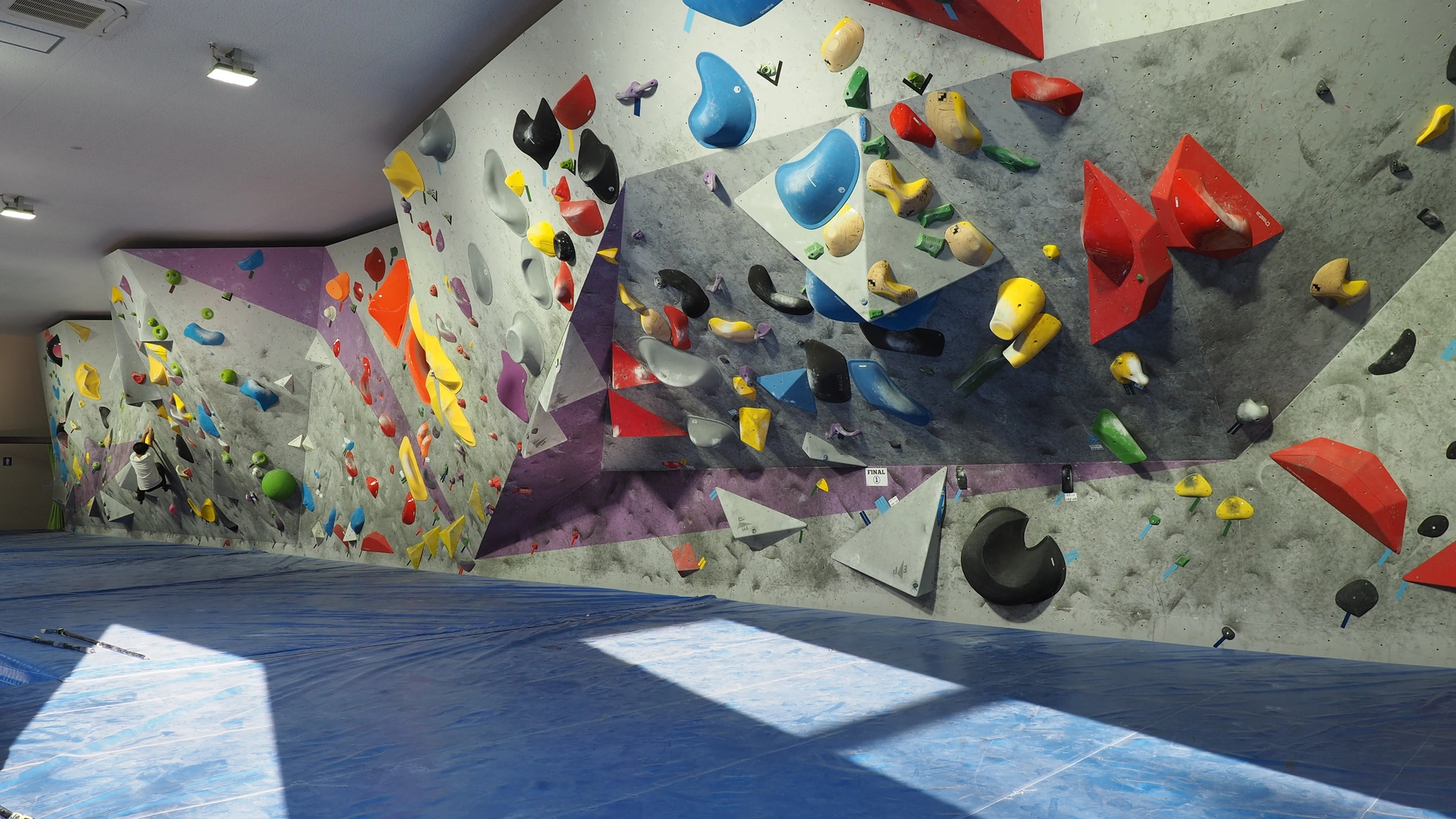
Six Inches Apart
Story & products
If, over the past decade and more, the spectrum of climbing in ordinary life was still drawn as a straight line—on the left “niche hobby, rough gyms, people packed tight,” on the right “a gym in every big city, halls growing larger, training boards sharing a screen with ranking apps”—then when a blogger who has climbed for about fifteen years sets the laughter from the old gym’s “six inches apart” beside the scene under the local Tension Board 2 (TB2, a common training board) where often only he is talking and laughing, that line has already bent into two rulers. The first still measures difficulty, projects, and sends. The second measures how many adjacent six inches remain between strangers. The image that runs through this discussion is not the next easier phrase “times have changed” or the next brighter claim that “everyone is getting stronger,” but six inches apart: old gyms used route density to push people of different ages, incomes, and interests inside six inches; new gyms and training-board culture pull them apart; failure stops being funny, and sending hard becomes the only identity.
A boundary first: the scenes here come from the blogger’s account and checkable sides of the comment thread, not a census of the whole climbing industry. They are useful because they press “the community feels thinner” from a mood word into a felt distance. They are limited because they often cover the training-board and hard-project layer—one commenter reminds us this may only cover about 5% of the community.
From Forced Closeness to the Emptiness of Mega-Gyms
Industry default likes to write climbing as progress: bigger gyms, thicker pads, more professional setting, “prettier” competition-style routes. The default held for years—until you set fifteen years ago beside today. What the blogger does is simple: not another louder slogan, but a memory of the gym when he started about fifteen years ago. Big cities already had gyms, yet in most places climbing was still unusual; gyms were rougher, routes denser, people forced to sit close—“six inches” away. People of different ages, incomes, and interests mixed: joking, roasting each other, trying hard moves, falling and laughing again.
The scene is hard. Popularity itself dilutes community: a huge loose crowd rarely becomes a meaningful commons. Capital makes gyms larger; “comp-style setting” (routes set in a competition style) lowers route density, so no one is forced to sit six inches from a stranger. Space widens; social life thins—not because people turned mean, but because physically you no longer have to see the person beside you. The default cracks: it thought making the gym big and the lines “comp-style” ended the story; the scene says community sometimes depends on forced closeness, not a larger air-conditioned hall.
Commenters agree that climbing expanded roughly linearly from about 2012, and that after mega-gyms entered every big-city market the feel changed. Someone still sees friends cheer a tricky dyno (a hard dynamic move), yet no one stays until closing. Someone recalls a European gym that once had pizza nights and shared beta (route-reading tips); now sharing beta is nearly frowned on. Someone points to outdoor rock at Siurana in Spain: a dozen or so North American climbers in noise-canceling headphones projecting (working their main project lines), zero social contact—a sharp contrast with outdoor chat of earlier years. These sides are not nostalgia; they show that emptiness is not only floor area growing, but the six inches between people being pulled apart.
The Board’s Brief Community and the Instagram Black Hole
If mega-gyms pull people apart with emptiness, training boards briefly pulled them back. The blogger notes: boards once rescued community—people sat beside you watching you climb; it was hard to pretend not to see. Before Kilter boards (programmable lit-hold training boards) and similar gear bound deep to apps for posting and ranking, the space under the board was still a shrinked old gym: you fell, the person beside you saw it; you laughed, the air could still catch it.
After Instagram entered, the scene rewrote. Some companies marketed in an Edward Bernays style (selling product as identity and desire), selling “always send hard, always be strong” as the only identity. The board stopped being only a finger tool and became a stage for posts, ranks, and the yearning for Board Lordship. Default likes to call this “tech empowering training”; the scene says: if empowerment only leads to sends and ranks, the community layer is sucked into a black hole—under the local TB2, often only the blogger is talking and laughing.
Enjoyment falls not because grades rose, but because the way of “being seen” changed: from the person six inches away to likes and leaderboards on a screen. Experimenting, setting together, playing games grew rare; only Benchmarks/Classics (classic problems on board leaderboards) remained. Default thinks leaderboards motivate everyone; the scene warns—when the only legitimate pleasure is “send one more,” chat and light laughter become inefficiency. The blogger is not against getting stronger; he is against shrinking strength into a single script—outside which laughter, co-setting, even just sitting and watching someone fall, are written as wasted time. A training board can save people; it can also train people to nod only to the camera.
Dry Fire Is No Longer Funny: How the Cost of Failure Rose
Inside the adjacent six inches, one of the cheapest social currencies of the old gym was failure. The blogger writes: dry fire (fingers suddenly skating off a hold) used to draw a light laugh; now no one laughs lightly—the cost of failure is too high. No spare time for chat—everyone is optimizing, yearning for Board Lordship. Little experimenting, co-setting, or play—only Benchmarks/Classics.
The tension of this section is not “people are more serious now,” but that failure moved from a public scene to private risk. In the old gym, falling and laughing again worked because the people beside you shared the six inches; failure was shared. In the new training culture, failure looks more like a gap on a leaderboard, a “not hard enough” in a short video, a crack in an identity story. Default likes to write “serious training” as virtue; the scene says: if seriousness squeezes light laughter out of the room, it may also squeeze community out of the room.
Commenters attribute some change to age—thirties versus twenties-five, different life duties, not only cultural decay. The rebuttal holds, and must sit beside the rest: age debt makes people tighter and more rushed; yet headphones on projects, beta frowned at, empty floors before closing, are not explained by birthdays alone. Age and culture stack together and raise the cost of failure; after it rises, what vanishes first inside the six inches is often that harmless light laugh.
“Only 5%” and Age Debt: Two Mirrors in the Comments
If the blogger’s main thread casts training boards and send-hard culture as chief culprits, the comments hand over two mirrors. One says: this may only cover about 5% of the community; most climbers at V5–V6 (mid-grade bouldering levels) still chat, laugh, and talk technique. The other says: the change is real—mega-gyms in cities, headphones outdoors, pizza nights gone, shared beta frowned on—yet the whole climbing map need not be painted one shade of gray.
Two mirrors side by side are the honesty of this section. Default likes either/or: either “climbing community is dead” or “you’re just older.” The scenes refuse either/or: 5% can be small, yet often occupies the most visible walls, the loudest apps, the templates beginners take as “correct climbing”; V5–V6 laughter can still exist and still struggle to enter the brightest wall. Age debt can explain “why I want to send and go home faster”; it cannot explain “why the person beside me wears headphones.”
So six inches apart is not a nostalgia filter but a ranging stick: it measures, on the layer you inhabit—board layer, comp-style routes, weekend outdoor—how much forced seeing remains between strangers. Readings differ by gym, city, and grade band; different readings do not make the stick useless. Someone in the V5 zone can still laugh until closing; someone under a TB2 may hear only their own breath—two scenes can share a city, even a gym; what needs watching is treating the latter as the only correct posture of “serious climbing,” and writing the former as not hard enough.
Closing: Redefining “Getting Stronger”—Not Board Lordship, but Still Talking to the Person Beside You
If training culture often reads independence as “one person pushes board rank first, then talks about anything else” or “one person believes always sending hard equals climbing,” this discussion is closer to another independence—holding both the difficulty ruler and the six-inch ruler, and seeing the corners marketing does not light. The blogger’s decade-plus of observation is worth public discussion because checkable scenes sit on the table: jokes and falling-then-laughing six inches apart in old gyms; emptiness opened by mega-gyms and comp-style setting; community briefly rescued by boards, then invaded by Instagram and ranking apps; under the local TB2 often only himself talking; dry fire no longer lightly laughed at; Benchmarks/Classics crowding out experiment and play; the comment-thread contrast of about 5% versus V5–V6 still chatting; age debt set beside cultural debt; headphones projecting at Siurana and pizza nights vanishing from a European gym.
The value of the discussion is that it does not push only “return to rough old gyms” or “refuse every training board,” but speaks community back: first tell “popularity” from “commons,” then “bigger gym” from “closer people,” and with “can failure still be lightly laughed at” and “has sending become the only identity,” still polish, inside the rising tide of “always strong,” this layer—the hard part of getting stronger often hides in whether you still treat the leaderboard as the only story, not only in the next easier “one more Classic” or the next brighter “Board Lord” screenshot.
Practical prompts are plain: in the gym, occasionally look six inches out—are people still talking, still cheering someone’s dyno, still lingering before closing? On the board, treat app ranks as a tool, not an ID card. On failure, allow a harmless light laugh, and allow handing beta to the stranger beside you. Write “getting stronger” as “holding the adjacent six inches yourself”—know which ruler measures difficulty and which measures whether people are still there; know Board Lordship can be loud and still not climbing’s only legal ending; know V5–V6 laughter and the hard 5% can share a gym, and the real danger is mistaking the latter for the whole—rather than “always outsourcing to the next easier times have changed” or “always outsourcing to the next brighter I sent another one.” The difficulty ruler can hold the line on a score sheet; the adjacent six inches are still written in whether, after old gyms forced closeness and new gyms pulled people apart, you are still willing to talk to the person beside you. People who hold both rulers at least know which lever they are measuring: the send, or still being present.
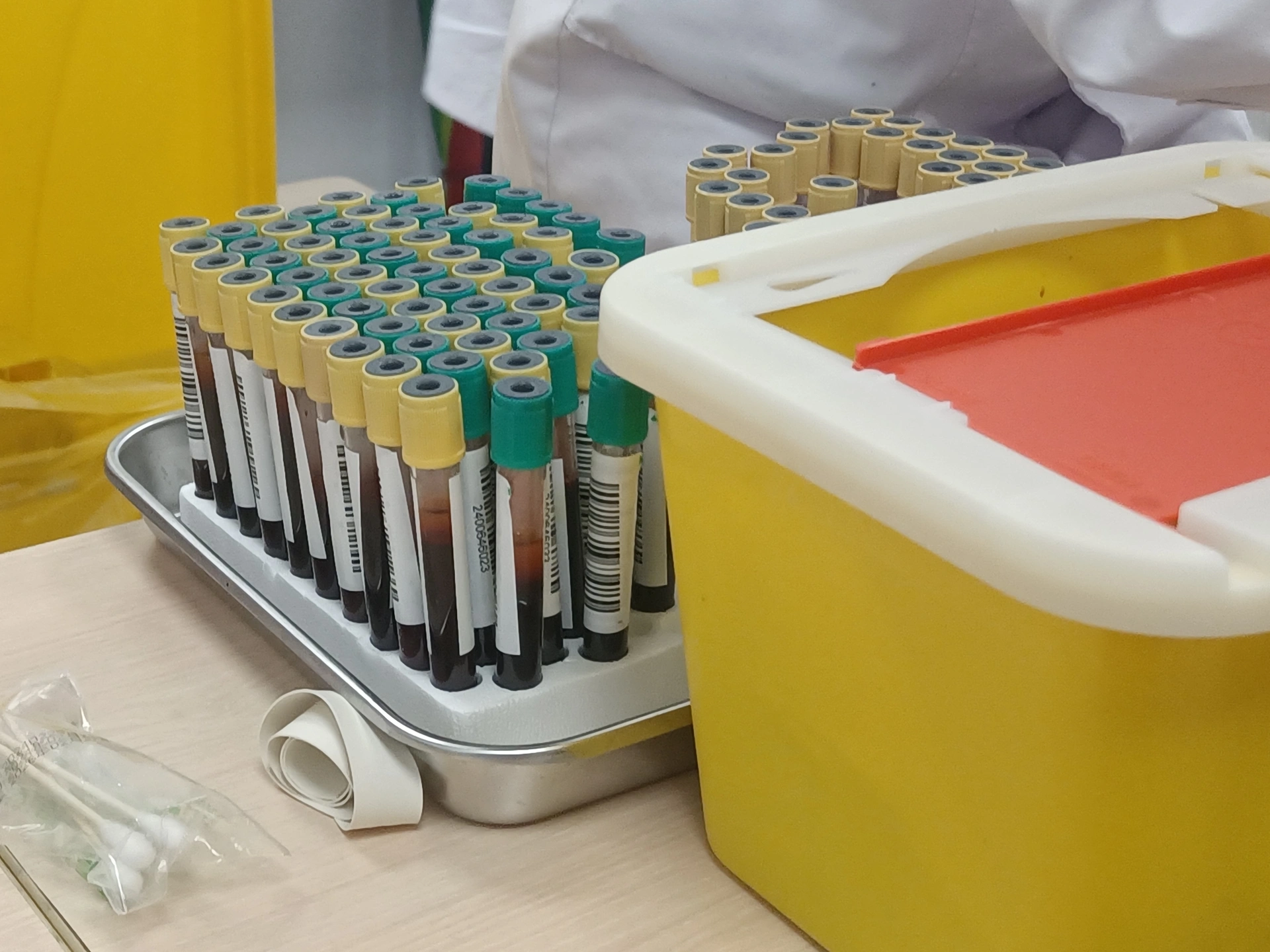
The Calendar Running Backward
Story & products
If the spectrum of personal health management over the past decade-plus was still drawn as a straight line—on the left, “feeling fine is enough”; on the right, “passing the yearly checkup equals health”—then once a blogger laid out three rounds of screening (February 2024, February 2025, March 2026) and had a language model produce a structured comparison plus a directional “biological age” estimate, that line had already folded into two calendars. The first is the familiar chronological age—39, 40, 41, one page forward each year. The second is the biological-age estimate—roughly from 42–43 down to 36–38, then to 35–37: even though chronological age is at its highest, the estimate lands on the best cell in three years. The image running through this piece is not the easier slogan “I got younger” or a brighter “all metrics green,” but the calendar running backward: time moves forward; the estimate flips pages the other way; measurement rewrites “feeling fine” into two ledgers you can reconcile; and the spine and posture the formula cannot see are where the new flags fall.
One boundary first: the “biological age” here comes from the blogger’s posted directional estimate, not a clinician’s diagnosis. It is useful because it compresses scattered lab numbers into a readable trajectory. It is limited because it cannot see early thoracic kyphosis, tighter hamstrings, or forward head posture—the functional aging signals left by desk work.
From “Feeling Fine” to Two Calendars
Industry default likes to write health as sensation: sleep, appetite, stairs—pass. That default sometimes held for years—until you put the same screens side by side by year. What the blogger did was plain: not hunt a louder slogan, but hand three years of weight, body fat, blood pressure, HbA1c, lipids, pulse-wave velocity, vitamin D, creatinine, and the rest to one structured comparison. The tone is almost like turning in homework: here are my last three health screens; please summarize.
The scene is hard. Chronological age: 39 (2024) → 40 (2025) → 41 (2026). Directional biological-age estimate: about 42–43 → about 36–38 → about 35–37. Calendar one adds a year; calendar two flips backward. Weight from 87.2 kg to 76.0, then back to 77.8; body fat from 17.2% to 16.5% to 15.3%; BMI from 28.47 to 24.82, then 25.4. The numbers are not sentimental; what stings is the seam they expose when aligned: you can “feel fine” and still push diastolic pressure to the edge at 88 in 2024; you can bring blood pressure to 112/77 in 2025, then watch it rise to 121/85 in 2026 amid life changes and stress swings—sensation does not always keep up with the dashboard.
Commenters argue over the words “biological age”: science, or narrative packaging that soothes? Both reactions hold. The estimate folds complex markers into a comparable “age,” which helps you see trend; it is also easy to misread as “I am really only 35.” Default thus fails: it assumes a green lab sheet ends the story; the calendar rewrites it with checkable fields—health is not a single pass, but whether two calendars can keep reconciling over time.
Eleven Kilograms and the Lean-Mass Gap: How Body Composition Rewrites the Metabolic Ledger
If calendar one only records years, the body-composition table records what you filled those years with. From 2024 to 2025, weight fell about 11 kg—sounds like victory. Yet fat-free mass dropped from 64.7 kg to 60.3: not all of the loss was fat; muscle and other non-fat tissue went too. In 2026 weight rose to 77.8, but fat-free mass recovered about 1.8 kg to 62.6; body fat hit the three-year low of 15.3%. That is not “rebound”; it is the trail of strength training putting mass back—same scale, two stories.
The metabolic ledger rewrites with it. HbA1c (glycated hemoglobin—average blood sugar over roughly two to three months) fell from 32 to 29 and held across 2025 and 2026; triglycerides from 1.28 to 0.87 to 0.80; diabetes risk from 2.1% to 0.4% to 0.3%. HDL rose to 1.5 in 2026; LDL stayed in the 2.3–2.6 band. Waist-to-height ratio held at 0.46–0.47. Default loves weight loss as the only KPI; the scene says: if loss costs lean mass, the metabolic ledger may not look better; put lean mass back, and body fat can still fall—“lighter” and “better” are not the same tick.
Cardiovascular markers read almost like a control arm. PWV (pulse-wave velocity—how stiff the arteries are) sat at 6.0–6.1 m/s for three years; peers often land at 7–9. QRisk (ten-year cardiovascular risk estimate) stayed below population averages: 1.3% (avg 1.0%) → 1.0% (avg 1.4%) → 1.2% (avg 1.5%). Lung function above predicted every year. ESR (a rough inflammation marker) at 2 all three years. Platelets from a low 146 in 2024 back above 200. These fields do not cheerlead; they show that the body-composition mainline rewrites more than the mirror—it rewrites the structure behind a long column of “fine” on the lab sheet.
Vitamin D and the Spine the Formula Cannot See: Correction and Omission
A backward-running calendar is easy to write as “everything improved.” Vitamin D is a clean correction curve: 30 (insufficient) in 2024 → 24 (deficient) in 2025 → 84 (normal) in 2026. That is a supplement path written on paper—checkable, reviewable, testable again next screen. Default likes to put this kind of fix on the biohacking success cover: fill what is missing, and numbers obey.
Yet on the same 2026 sheet, new flags rise that the formula may not score: early signs of thoracic kyphosis, reduced hamstring and lumbar flexibility, forward head posture—classic desk-work posture debt. A biological-age estimate can flip pages backward because of lipids, glycated hemoglobin, and body fat; it cannot see how long you sat, whether shoulders hike, whether the low back is doing the hips’ job. Lp-PLA2 (an enzyme marker linked to vascular inflammation) swung among 151, 178, and 163—not monotonically “younger.” Creatinine rose to 118 (high) in 2026; eGFR (estimated kidney filtration) fell to 66—the post judges this almost certainly a creatine-supplement artifact, not to be weighted heavily; still it reminds you: a single odd number can be signal or noise, and the reader must ask what the field is measuring.
Correction beside omission is the tension of this section. Vitamin D from deficient to normal proves measurement can drive action; the new spine and posture flags prove that a checklist serving only a “biological age formula” will miss functional aging—the kind that will not instantly bounce the estimate back to 42, but will, a decade on, write pain, stiffness, and an awkward climb of stairs. If the backward calendar only celebrates the pages it flipped, it is still on the cover; put the spine the formula cannot see on the same table, and the calendar is complete.
The Honest Boundary of Biological-Age Estimates: Directional Numbers Are Not Diagnosis
If community default writes “biological age” as a marketing hook, this discussion sits closer to another use—treat it as a directional dashboard, not a second line on your ID. The blogger’s posted estimates: about 42–43 in 2024 (slightly above or near chronological age), about 36–38 in 2025, about 35–37 in 2026. The trend is clear: across three years of chronological advance, the estimate walked back about half a decade. Clear is not diagnosed.
The honest boundary has three layers. First: input fields write the output story—body fat, lipids, glycated hemoglobin, and blood pressure weigh heavy; flexibility, posture, sleep fragmentation, and stress load may never enter the formula. Second: read units and methods side by side—HbA1c here is 32 / 29 / 29 as in the post (often mmol/mol), lipids in the 4.3 / 3.7 mmol/L band; comparing absolute values across labs and devices turns noise into plot. Third: one person’s three-year trail is not a population conclusion—“everyone supplement vitamin D and lose five years” does not follow.
Some commenters ask: if it is only directional, why take it seriously? Because if you do not, you have only sensation; if you take it too seriously, the dashboard becomes a verdict. The useful middle: use the estimate to see whether metabolic and composition mainlines move together; use raw fields to see which column is moving and which is playing dead; use functional checks to fill the formula’s blind spots. Biological age can run backward; diagnostic authority stays in clinic, not in a summary bubble.
Closing: Redefine “Getting Younger”—a Reconcilable Trail Plus One Functional Reminder
If anti-aging culture often treats independence as “drive biological age down first” or “believe a supplement list equals youth,” this discussion is closer to another independence—holding the chronological calendar and the estimate calendar at once, and seeing the corners the formula does not light. The blogger’s three screens deserve public discussion because they put checkable scenes on the table: weight 87.2→76.0→77.8, fat-free mass 64.7→60.3→62.6, body fat to 15.3%; PWV steady at 6.0–6.1; diabetes risk from 2.1% to 0.3%; vitamin D from 24 to 84; directional biological age from about 42–43 to about 35–37; and in 2026, new flags of thoracic kyphosis, reduced flexibility, and forward head; creatinine/eGFR judged a creatine artifact, not to overweight.
The value of the discussion is that it does not only push “supplement a bit more” or “biological age is all a scam,” but returns the spirit of measurement: first tell “feeling fine” from “two calendars,” then “weight loss” from “lean mass,” and with “correction” and “omission” still polish, inside the rising tide of “I got younger,” the layer that says—the hard part of getting younger often hides in whether you still treat a single total score as the only story, not only in the easier next line “take another biological-age test” or the brighter “all-green labs.”
Practical prompts are plain: write chronological age and key markers year by year into your own calendar, rather than screenshot this year’s summary alone. When losing weight, watch fat-free mass and body fat together, so an eleven-kilogram win does not hide a four-kilogram quality gap. For correctable items like vitamin D, close the loop on the next screen instead of declaring success by feel. When the biological-age estimate improves, still do a posture and flexibility check—where the formula does not score, the body keeps a ledger. Write “getting younger” as “holding the calendar that runs backward”—knowing which book flips forward and which flips back, knowing the backward book is still a directional estimate not a diagnosis, knowing spine and desk are where new flags may fall—rather than “forever outsourcing to the easier feeling fine” or “forever outsourcing to the brighter I am only thirty-five.” The chronological calendar can hold the passport line; the backward one is still written in the cells after three lab sheets sit side by side. People who hold both calendars at least know which lever they are measuring: a pass, or a trail.
The content of this article is only for viewing, reflection and independent judgment. It is not an instruction manual. It is simply a part of what exists in the world.
The Second Tick Beyond the Standard
Story & products
If, over the past decade or so, the spectrum of Boston Marathon qualifying culture was still drawn as a straight line—with “a BQ is a ticket in” on the left and “the standard is the only ruler” on the right—then once the Boston Athletic Association (BAA) published the acceptance rules for the 131st running (April 19, 2027) after registration week and nailed 5 minutes 17 seconds as the public tick meaning “at least that much faster than your age-and-gender qualifying standard,” that line had already folded into two rulers. The first remains the familiar qualifying standard—you run under it before you even have the right to apply. The second is the cutoff—among 33,649 applications, 24,630 people are taken in order of time buffer, and a further crack called Boston Qualifier Selection opens for 1,000 who “qualified but missed 5:17.” The image that runs through this discussion is not the next easier sentence of “go a little faster next year” or the next brighter screenshot of “I finally BQ’d,” but the second tick beyond the standard: the first ruler tells you whether you may apply; the second tells you whether an application becomes a place; the lottery is a seam opened beyond that second tick—it does not rewrite “fast enough” as “lucky enough,” yet it rewrites “fast enough” from a single answer into a verifiable three-layer structure.
From “Qualify and You’re In” to “Qualify Only Buys the Right to Apply”
When the blogger dropped the news in the community, the tone was almost weather-report flat: Boston cutoff announced. What followed was not celebration but reconciliation of accounts. Someone rechecked the buffer seconds on the watch face; someone stacked the age-group standard against 5:17 and tried to reverse-engineer that men 18–34 now need roughly 2:49:43—because from 2026 that age group’s standard itself tightened by five minutes, and with a 5:17 cutoff the bar falls under 2:50 for the first time; women 18–34 land near 3:19:43. These numbers are not mood. They are the verifiable consequence of BAA admission logic landing on a personal training plan.
The industry default likes to write a BQ as a ticket. That default occasionally held: in 2022 and 2023 there was no cutoff, so qualifying nearly equaled acceptance; 2021’s reduced field produced an extreme 7:47 buffer; 2024 was 5:29, 2025 was 6:51, and 2026 snapped shut to 4:34—more than two minutes stricter than the year before. 2027’s 5:17 is 43 seconds looser than 2026’s 4:34, yet still far stricter than 2025. The history table is itself a spectrum: some years the second tick is almost invisible; some years it bites harder than the first ruler. What the blogger forwarded was not “someone BQ’d again,” but “where the second tick stopped this year.”
The scene is hard. Registration week ran September 14–18, 2026; 33,649 people applied. 24,630 were taken by time buffer; the new Boston Qualifier Selection lottery took another 1,000 who had qualified but fallen short of 5:17; together 25,630 accepted or pending verification—a record, BAA said. The field is sized near 30,000; the rest go to charity, invitational, and professional channels. 8,019 qualifiers were still not accepted. In the time-buffer pool: 13,898 men, 10,641 women, 91 non-binary; about 120 countries; roughly 10,745 first-time Boston starters; ages 18–84; 1,498 Massachusetts residents. The most common qualifying races: 2026 Boston itself 4,448; 2025 Chicago 2,043; 2025 New York 826; 2025 CIM 812; 2026 London 610—the second tick does not only filter people; it also writes a public list of which races most often serve as proof of application.
One comment-thread ledger reads almost like a fable: someone cleared a 5:01 buffer and still missed; in the same training block, a Manhattan Half left them 26 seconds short of a New York Marathon qualifier—“forty seconds across a four-hour-ten race.” Forty seconds is not laziness and not a skipped block; it is the kind of seam you see when two rulers settle accounts at once. The men’s 18–34 standard itself grew harsher with the 2026 tightening; stacked with the second tick, a BQ rewrites from “I did it” into “I earned the right to apply.” The default therefore shows its seam: it assumed the story ended when the first ruler was drawn; policy rewrites it with countable heads—qualifying is a threshold, not a ticket.
The Ledger of Seconds: How 5:17 Became a Public Tick
The cruelty of a cutoff is not “fast.” It is that it rewrites a private training diary as a public ledger. You no longer ask only “Did I break the standard?” You ask “By how many seconds did I beat it, and how many people beat it by more?” 5:17 is not a slogan; it is a sort key: larger buffer, earlier place; past 24,630, the first ruler still shows green while the second has already dialed you outside—unless you fall into those 1,000 lottery places.
BAA’s official release lays the scene open: the 131st Boston Marathon, Monday, April 19, 2027; the cut-off written plainly as “at least 5 minutes 17 seconds faster than the applicable age-and-gender standard.” Jack Fleming (BAA CEO) does not dodge: dedication and resiliency—honoring the work and the toughness, while admitting not every qualifier can be taken, yet still seeing everyone who trained toward this course. The value of that sentence is not inspiration; it is honesty about policy: the second tick exists because the first ruler no longer fits the field.
Historical comparison nails the “public tick.” On BAA’s qualifying page: 2024 at 5:29, 2025 at 6:51, 2026 at 4:34, 2027 at 5:17; 2021 at 7:47 under a reduced field; 2022–23 with no cutoff. Same course, same age-and-gender standards, yet in four years the second tick swings from “almost absent” to “more decisive than the first ruler.” Runner’s World, Marathon Handbook, the Boston Globe and others cross-check the same set: 43 seconds looser than 2026’s 4:34; men 18–34 needing about 2:49:43; women 18–34 about 3:19:43. Cross-checking matters not as a pile of citations but as proof that 5:17 has moved from an association parameter into a public tick on community calendars—people reverse-engineer how fast they must run, compare this year to last, and decide whether an autumn qualifier is the last throw.
A tick is called a tick precisely because it can be seen, compared, and predicted—and for that reason it cuts deeper than the abstract phrase “limited spots.” Limited spots is fog; 5:17 is a number you can match the moment the watch stops.
Prediction Dashboards and Errors of a Few Seconds: How a Community Reads Policy as Science
If the association publishes the tick in a news release, the community chases it with dashboards. Brian Rock’s dashboard was opened again and again around registration week: his prediction sat near 5:13. Another commenter offered a regression near 5:14, with a 95% confidence interval roughly 4:04–6:23 and R² ≈ 0.9326—a handsome model with an honest interval: it admits uncertainty yet still translates “policy” into a fittable time series. Actual announcement: 5:17. Both landed within a few seconds.
Those few seconds of error are themselves a scene. The community did not treat the cutoff as a black-box draw; it treated it as a public variable that can be modeled: historical buffers, application volume, field caps, supply of qualifying races, fed layer by layer into spreadsheets. Prediction threads and post-mortems moved “science” from the lab into the comments—not lab science of repeatable experiments, but the collective science of runners reading policy as data and data as training decisions. When the actual number sits only seconds from the forecasts, what is celebrated is not who was prophetic, but that the second tick has been fully publicized: it no longer belongs only to a conference room; it also belongs to people who open a sheet after a long Sunday run.
Yet dashboards have their own seams. A confidence interval spanning more than two minutes shows that a handsome R² does not insure that your 5:01 buffer will clear. Between the person who missed with a 5:01 buffer and the predicted 5:13 / 5:14 / actual 5:17 lies not a story but a sort order. Models can approximate a public tick; they cannot guarantee your rank among 33,649. Reading policy as science is community maturity; misreading science as personal insurance is another default—and 8,019 unaccepted qualifiers are that default settling accounts.
The Lottery Seam: How 1,000 Places Rewrite What “Fast Enough” Means
If the story stopped at 5:17, the narrative would still be “faster.” BAA instead opened a seam beyond the second tick: Boston Qualifier Selection, 1,000 places for those who already qualified yet could not clear 5:17. It does not void the cutoff; it admits that outside the second ruler there still stands a crowd in the green light of the first, only not long enough, not bright enough.
What those 1,000 places rewrite is not mathematics but meaning. “Fast enough” once meant “hit the standard”; later it meant “hit the standard and beat the cutoff”; now a third layer appears—“hit the standard, miss the cutoff, and still maybe be drawn.” All three layers stand at once; none cancels the others. The 24,630 taken by time buffer prove the second tick remains the main channel; the 1,000 drawn prove the association will not write every “qualified but short by tens of seconds” as fate ended; the 8,019 refused prove the seam has a width limit. The field is still about 30,000—charity and invitational lanes remain—but on the qualifier path, the rule has become two rulers plus a lottery.
Reaction in the comments is not uniform. Some feel the seam softens the cruelty of missing by seconds; some feel it muddies a clean sort. Both reactions hold, because the seam’s job was never to make everyone comfortable; it was to leave a verifiable millimeter between pure speed ranking and the admission that qualifying itself still carries weight. 1,000 is small beside 8,019; beside “no seam at all” it is large. It does not promise the feeling of fairness. It promises a visible structure.
Closing: Redefine Qualification—Not One Line, but Two Rulers and a Lottery
If qualifying culture often understands independence as “run under the standard first, then talk” or “believe a BQ equals Boston,” this discussion sits closer to another independence—holding the first ruler and the second tick at once, and seeing where the lottery seam sits. The cutoff post the blogger forwarded earns a public discussion precisely because it lays verifiable scenes on the table: 33,649 applications; 24,630 by time buffer; 1,000 by lottery; 25,630 combined, a record; 8,019 qualified and refused; the history table’s 5:29 / 6:51 / 4:34 / 5:17; Brian Rock’s ~5:13 and a commenter’s ~5:14 against the actual 5:17 within seconds; the ledger of a 5:01 buffer still missing, a half marathon 26 seconds short, forty seconds across four hours ten; the reverse-engineered ~2:49:43 and ~3:19:43; Jack Fleming’s public words that do not dodge the field cap.
The value of the discussion is that it does not push the topic only into “be harsher” or “the lottery ruined everything,” but speaks the spirit of the rule back: first distinguish “qualify” from “accepted,” then “public tick” from “private buffer,” and with “the second tick” and “the lottery seam” still polish, inside the rising tide of “I BQ’d,” the layer that matters—the hardness of qualification often hides in whether you still treat the first ruler as the whole story, not only in the next easier sentence of “forty seconds faster next year” or the next brighter screenshot of “I’m finally in the field.”
The actionable prompts are plain: write the age-group standard beside recent cutoff history in the plan, instead of staring only at the BQ line. Make “right to apply” and “a place in the field” two separate checkboxes, so qualifying night does not default into a ticket already won. When you read community forecasts, take the confidence interval with the median, not the median alone as insurance. If you fall beyond the second tick, still grant that the first ruler counted—the lottery seam exists, but it is not a promise. Write “qualification” as “holding the second tick beyond the standard yourself”—knowing a green standard still has a sort beyond it, knowing a narrow seam sits beyond the sort, knowing 8,019 and 1,000 can both be true—rather than forever outsourcing to the easier line “qualify and you’re in” or the brighter line “fast enough always finds a place.” The first ruler can carry the row on the application form; the second tick is still written in the seconds after the watch stops. People who hold both rulers at least know which lever they are measuring: qualifying, or entry.
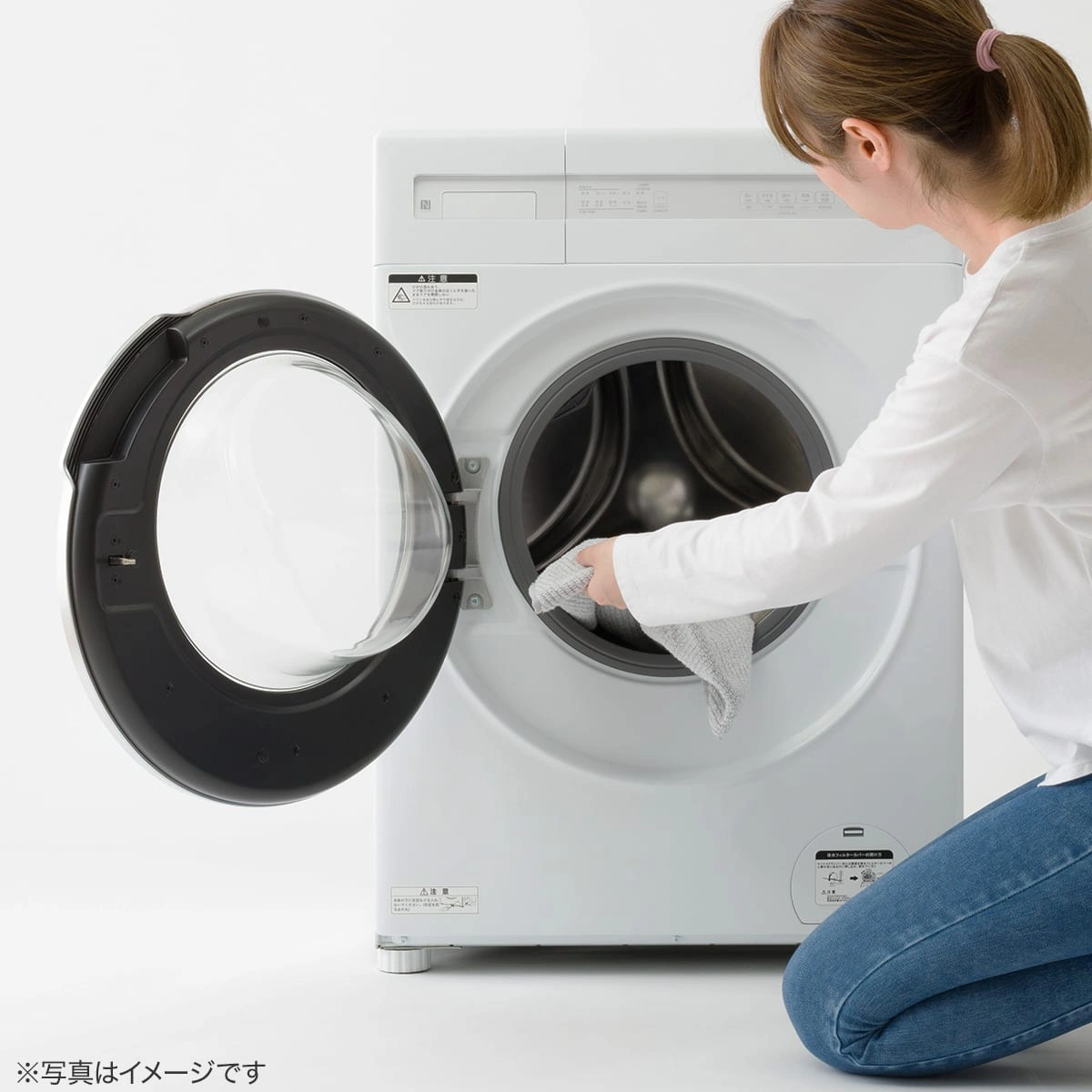
Fifty-Three Centimeters of Laundry Depth and Sixty Minutes: How Nitori Pulls the Drum Washer-Dryer Out of the “Shrunk Family Machine”
Story & products
If the past decade or so of Japan’s laundry industry still liked to write “solo living” as a thumbnail of a family drum machine—halve the capacity, keep the feature list, ship a body still imagined for a hallway that can take a 10 kg unit—then the 2026 ND60KL finally designs the drum by the depth of the laundry niche, not by the prediction that “you will become a family sooner or later.”
What runs through this piece are two equally unglamorous numbers: depth about fifty-three centimeters, and an express wash-and-dry of about sixty minutes (at about one kilogram). They do not sound grand, yet they decide whether the machine can truly sit in that one-room laundry slot—beside the water heater, beside the washbasin, in the strip of wall your knee hits when the door opens.
Solo laundry politics was never “can you afford a drum with drying.” It was “does this machine assume you still lack several laundry baskets, a line to a balcony, and weekend patience for hang-drying.” Family 10 kg washer-dryers often assume clothes pile up and drying is an occasional bonus; people who actually move in find the problem at both ends—at install, when the body sticks past the basin and eats the circulation path, and in daily life, when no drying leaves a damp room returning its smell to the pillow at night.
From “Enough Capacity” to “Enough Depth”: Depth Is the Real Gate
Open any “must-have appliances for solo living” list and a washer almost always appears. The industry default sounds smooth: six kilograms is enough for one person; a top-loader is the easy choice. The list rarely asks the next question—if what you want is “wash and wear,” what depth is the drum washer-dryer designed for?
The usual answer is still family-kitchen inertia: drums that can dry are often cut down from 10 kg models; wash and dry power look full on paper, yet the shape still assumes a home with a delivery path. So the machine looks “solo” on the showroom floor and will not fit the elevator at the entrance—or it squeezes into the washroom and its depth hits the opposite door frame, eating the last breath of a narrow path.
The ND60KL writes the problem in reverse. Official copy states: standard wash 6 kg, standard dry 3 kg; body about 600 mm wide, 857 mm high, 521 mm deep—often rounded in marketing to “about 53 cm depth.” Against a same-capacity 6 kg top-loader, this drum’s depth is actually smaller—for people who once gave up on drum washer-dryers because of install and carry-in path, that is not a spec show, it is a gate moved aside.
Read the footnotes. Environment, load, fabric, thickness, and weave can all pull finish and run time off the “about 60 minutes” claim; the drain filter still needs periodic care—auto-clean saves the high-frequency “clear lint after every dry,” not all maintenance. “Ultra-compact” is a claim about install freedom, not a slogan that cancels physics and use conditions.
That is the detail of depth politics: not the ad line “everyone can place it,” but an admission that a solo laundry wall is often more fragmented than a family washroom—heater, storage, door swing stacked together. When industry finally writes “about 53 cm depth” into the selling point, it admits the solo household is not a transitional family but a complete unit of use.
One Kilogram and Sixty Minutes: How Express Wash-Dry Pins Abstract Convenience
If depth solves “it fits,” what stays high-frequency in daily life is still “the one thing I need to wear today.” The industry loves “wash a big load once”; solo rhythm wants something concrete: a shirt still damp in the morning, or a night wash you refuse to hand to the whole room as humidity.
The ND60KL carries an “express wash-dry” course: official copy says about 1 kg of clothes finishes wash-to-dry in about 60 minutes. It serves gap time—not weekend closet clearing—the forgotten top, the jacket needed for an appointment, the set that must be dry before a trip. Family machines often assume a “laundry day”; solo time is fragmented, and fragmented volume must be eaten by short cycles.
If convenience cannot be pressed into a scene, it is only showroom talk. Put in about a kilogram, choose express, take back wearable clothes in about an hour—that is the morning drying actually serves. On price, ¥79,900 tax-included pulls a “6 kg drum with drying” under the psychological 100,000-yen line—what Nitori has repeatedly done since 2024 is rewrite the drum from “family exclusive large appliance” into infrastructure a solo household can choose.
Auto-Clean Filter: Pulling Maintenance Out of Endurance
Beyond depth and speed sits a layer family machines often ignore: lint and dust after drying. The traditional path is to pull the filter after every dry—enough, on a tired night, to push someone back to “wash only” and hand humidity to an indoor drying rack.
The ND60KL states: tub, dry filter, and door gasket can auto-clean, so you need not hand-clean lint and dust after every dry; the filter need not be removed for care. The footnote remains: the drain filter needs periodic clearing. Industry here does not cancel maintenance; it removes the highest-frequency, most discouraging stretch from the flow.
The scene is clear: wash, dry, open the door, take clothes—the filter need not become a second chore. Family specs often assume you have surplus energy to “maintain every part correctly”; solo surplus often only covers the wash itself. If auto-clean holds, independence gains a stretch of night not held hostage by lint.
Before and after purchase, Nitori also stacks online consult and a five-year free warranty on large appliances (natural-fault free repair after the maker’s one year, per official terms)—these are not purchase reasons, yet they show the brand knows solo fear is not only price but “bought it, can’t install it, don’t know who to call when it breaks.”
A Parallel on the Counter: Dishwashers Are Shrinking Millimeters Too
Laundry depth is not a lone case. Kitchen counters are counting millimeters too—when a branch faucet cannot be fitted and a rental forbids pipe work, a “family dishwasher” is out at once. Panasonic’s personal dishwasher SOLOTA (NP-TML1) presses footprint near A4 file size, uses a removable tank, needs no branch faucet, and takes up to about six dish pieces—the same parallel as “a washer-dryer at about 53 cm depth”: small households, space performance; industry starts to admit counters are as expensive as laundry niches.
In lifestyle media such as iemone and non-no, “small-household space-performance appliances” keep returning—not trend-word stacking, but an echo of rental reality: floor area does not grow, while appliances long shipped to family templates. When drum washer-dryers start designing for about 53 cm depth and dishwashers start talking A4-class footprint, the market finally agrees to write “one person” as a spec constraint, not only a marketing tag.
One more contrast often missed: the “completeness” of a family washroom is prepared for the camera—double storage, a 10 kg machine centered, a balcony line. Completeness for a solo laundry niche is often: it carries in, it finishes drying, maintenance does not discourage. The ND60KL sets dry at 3 kg and aims express at about 1 kg not for a pretty table but for daily load and short cycles. Once industry ships by laundry-niche depth, the phrase “optimal for solo living” finally has a checkable millimeter basis.
Solo living is not shrinking a family washer-dryer by one size.
It is more like redefining independence: independence is not “I too deserve a 10 kg dryer,” but “the machine comes to my depth, to whether my about-one-kilogram needs sixty minutes, to whether I must clear the filter again after drying.” Fifty-three centimeters and sixty minutes are simply that sentence written into the size chart and the course name.

A Summit Without a View
Story & products
If the spectrum of ultrarunning culture over the past decade-plus was still drawn as a straight line—on the left, “enough weekly mileage means you are ready”; on the right, “what actually works is only the elevation chart and the mountain-specific plan”—then when Cameron Messier finished the Grindstone 50k at Natural Chimneys, Virginia, on September 19, 2026, and afterward laid the three worries he had written on the plane against what the course actually did, that line had already folded into a pair of scissors: one blade is how the aerobic tide turns Zone 2, a sixteen-week Koop Training Essentials block, and fifty-to-sixty-mile weeks into the default answer that “the engine is ready”; the other is how the eccentric edge still cuts, under the tree line on the long climb, in the quads on the descent, and in the braking load a treadmill in Ohio can never give, separating the “known limiter written into the plan” from “the system that actually broke on the course.” The image that runs through this discussion is not the next convenient “add another week of climbing” or the next brighter finisher’s sheet, but a summit without a view: you climb five and a half miles and 2,100 feet, and the reward is only that the climbing stops—high up in thick woods, you know you are high, and you cannot see out.
From “known limiter” to a gap never closed: how naming pretends to be handling
What Messier did was plain: when he built the plan in April, he put “hill and elevation experience” at the top of the weakness list and gave it a two-word label—known limiter. Twenty weeks later, same words, same status, nineteen days to the start. He does not write the ledger as a story of slacking: through July and August, on top of a full-time job, three kids, and two coaching jobs, he held fifty-to-sixty-mile weeks; he did the interval block and the steady-state block; two weeks out he ran a full three-hour dress rehearsal in race kit. The volume happened. The engine got built.
What did not happen was hills.
The scene is hard: for a race of about 32.5 miles and 5,020 feet of climbing, in twenty weeks of training he did one treadmill session with elevation and one week of hill running on vacation in San Diego. In northeast Ohio near Lake Erie, real sustained climbing is about a forty-five-minute drive; highway overpasses sit almost at the door, and he ran none of them. The treadmill sat in the house all season with the door open—he would not put the long runs on it (he knows himself: the miles would not shorten; the run would get skipped)—but the shorter incline sessions in the April plan slid into blank July calendars with no week of “weighed it and chose otherwise,” only never happening. Industry default likes to treat “written on the weakness list” as “already being handled”; Messier’s own accounting pries that default open—the diagnosis was right, the plan was right, and almost none of it happened.
That San Diego week was more like a small preview: four miles straight up, then four miles pounding down. On the climbs, flat fitness seemed to transfer; he even felt he could push. On the descent, the lungs got all the relief they wanted and the quads got none. At eight miles you can get away with it; at thirty-two, with most of the gain in the first half, luck collects its bill. He wrote it clearly afterward: his instinct on a climb is to push, and that instinct has to be overruled while everything still feels easy. Portable training (volume, a 5 a.m. alarm, whatever road is outside the door) survives a busy life; specificity that is not portable either has a physical address forty-five minutes away or asks you to want something you do not want. Writing “known limiter” into a document felt like dealing with it. It was not. It was naming it. Naming and closing the gap are different—and the plan does not tell you which one you have done until it is too late to fix. Nineteen days out, he chose not to cram a hill block: getting hurt would end it more finally than starting with the gap. He knew exactly where the gap was—that is more than most people can say; the rest, the course would say.
Under the tree line: the reward for climbing is that climbing stops
The race itself pins the image down. Grindstone 50k, Natural Chimneys, Virginia. Officially about 32.5 miles and 5,020 feet; he finished in 6:29:20, 90th overall, 7th in M45–49. Thursday flight into DC; on the plane he wrote three worries: the hills, who he would become once tired, whether he had prepared enough—written down so he could not revise them later. Two of the three turned out fine; the third was the wrong question—not “enough?” but “which system was ready, and which never took the field.”
Thursday afternoon was empty on purpose: a hotel near the airport, nowhere to be, letting the week drain. Afternoons like that are rare with three kids and a full-time job. Dinner was mild chicken fried rice from a Thai place, plus plain jasmine rice; the day before the day before a race is not the time to get adventurous; over 500 grams of carbs. Friday, a two-and-a-half-hour drive west with friends running the 100k into a valley that stopped looking like anything he trains on. Packet pickup at Natural Chimneys, lunch in Staunton, an Airbnb closer to the start; pasta with red sauce and grilled chicken; bed by 8:30; the sleep you get the night before a race—not well, not badly enough to matter.
Alarm at four. Coffee, a bagel with jelly, a banana. Left at five to get the 100k friends to their 6 a.m. start; watched them through the first mile, then an hour alone: bathroom, no line, nothing to do. That hour was the best logistical accident of the weekend—most people spend the pre-race hour in a parking lot with their nerves; he spent his getting friends to their start, which left less room to think about his own. Off at 7:02.
Opening paved section about nine-minute pace, as planned. Right calf tight from the first stride; afterward entirely irrelevant—and it still took more attention than it deserved. Gel every thirty minutes, salt capsule every hour, one bottle of Tailwind and one of water. Through Lick Run 1 at 5.7 miles: stop, pee, refill, keep moving. Somewhere on the first real incline a guy nearby said about thirty percent grade; whether true or not, it felt like it. Wolf Ridge aid at 11.6 miles in 1:57:59—at that point he was still in exactly the race he had planned.
After Wolf Ridge it goes up for about five and a half miles and 2,100 feet. He got behind a runner he thought said he was from Peru: run the flats, run the gentle downs, walk everything that went up—for the better part of an hour and a half. The method was simple and correct. He had it in his head that they would top out around mile sixteen or seventeen; it was more like eighteen. Those extra miles of climbing past where he had told himself it would end were among the worst of the day.
There was no view. The course stays under the tree line; even on the ridges you are in thick woods. You can tell you are high up. You just cannot see out. You climb for five and a half miles and the reward is that the climbing stops—not a vista, not sudden openness, only the verb “up” temporarily switched off. Industry default likes to sell “summit” as an exchange for a view; this stretch of Grindstone pries that default open: some summits never sold a view; they only sold whether the load itself had been trained. The watch face speaks too—before Wolf Ridge, still the nine-minute world inside the plan; inside the trees, the reward is rewritten from “seeing” to “stopping.” The through-image therefore drops from “known limiter” to “high places can have no scenery”: the question is whether you treated climb work as a preview of vistas, or as the false calm before eccentric braking takes the stage.
It broke on the descent: the calves you feared, the eccentric that failed
Where it actually went wrong was not the calves he had worried about all build, but the quads and eccentric load on the way down. Coming off the ridge, the legs burned in a way he had never felt on a road. He got behind an older guy who was moving well and let himself be pulled down—damage control, not running. By Sand Spring the eccentric load had done what it was going to do; every gradual uphill from there was a walk, because the quads were gone. Wolf Ridge to Lick Run 2—about 16.5 miles including the big climb, the descent, and an aid stop—took almost four hours: that is where the race actually was. Uphill, walk and hike; flat or downhill, shuffle. A season’s anxiety about “hills” was written on the calves; the bill was written on the eccentric. Default therefore shows its seam: it assumes the part you worried about will break on script; the course rewrites it with the same verifiable clash—what breaks is often what you did not train, and thought a treadmill incline key could replace.
By about mile 28 he was finished with gels; could not look at them. What got him home was watermelon dipped in salt, peanut-butter-filled pretzels, a PB&J, and a bottle full of ice—everyone plans a gel strategy; almost nobody finishes on one. Thirteen and a half minutes stopped across four aid stations: discipline right; shoes (Peregrines) right; after months chasing a forefoot hotspot, not a single blister. The final 4.4 miles on pavement came in at 41:19, about 9:22 per mile—within half a minute per mile of the nine-minute pace he opened with on fresh legs. Heart rate among the highest of the day. It felt like a grind, like the slowest part; it was not. He was closing, and could not tell from the inside. Average HR 132, max 159; never anaerobic—not on the thirty-percent wall, not on the five-mile climb, not closing on the road. The watch answers the plane question, just not the way he expected: aerobically, yes, completely; he prepared every system except the one that broke. That line afterward—“You cannot train downhill running on a treadmill in Ohio”—is not a slogan; it is the physical distance between the machine in the Ohio living room whose door stayed open and never took the braking sessions, and the descent under Virginia trees. The watch logged 33.5 miles; the race said about 32.4; trail GPS under cover is generous; he neither claims the extra mile nor gives it back.
Sunday: walking mostly fine; going downstairs very hard. Twenty-four hours later, it was still the descent collecting. Finished Saturday at 1:31 p.m.; left the Airbnb at 10:30 that night to pick up the 100k friends. They finished late, same mountain, twice as far, called it brutal; he could only extrapolate. Standing at a finish line at midnight having already run that day: you know exactly what is in their legs; you also know you got to stop hours earlier. Both are true at once and they do not cancel out. On the plane he had worried who he would become once tired; afterward he said he was about the same guy, just slower, and stayed pleasant on the walls. What he is proudest of is not the time, not the age-group place—but that.
Closing: rewrite “prepared” as knowing where the gap is—and refusing to mistake naming for closing
If trail culture often reads independence as “one person stacks weekly miles before talking mountains” or “one person believes a Zone 2 rise equals a course safety window,” this discussion is closer to another kind of independence—holding the aerobic tide and the eccentric edge at once, refusing the false binary. Messier’s recap matters because it lays verifiable scenes on the table: the sixteen-week plan and fifty-to-sixty-mile weeks; one treadmill climb plus a San Diego week; three questions on the plane; the planned rhythm to Wolf Ridge; no view under the tree line; the innocent calf and the quad bill; the closing pace and never-anaerobic heart rate; the double truth at a midnight finish. The discussion’s value is that it does not push only toward “ban the flats” or “aerobics will always carry you,” but says the rule back: first tell portable volume from non-portable specificity; then tell the limiter written in a document from the short incline sessions that never appeared on the calendar; use “the reward for climbing is that climbing stops” and “the race was on the descent” to keep one edge bright inside the rising tide of “the engine is ready”—the hard part of preparation is often whether you mistook naming for closing, not the next convenient “add another week of climbing” or the next brighter age-group result.
The executable prompts are plain: treat downhill and braking as their own sessions, not something defaulted to a treadmill incline key. Write overpasses, parking garages, any real-grade repeats as addresses that must take a slot outside volume—not as kind labels on April paper. Beside the gel strategy, carry real food earlier. Read average heart rate and closing splits, not only “it felt slowest.” Write independence as holding a summit without a view—knowing height may have no scenery, knowing the system that breaks may not be the one you feared all season, knowing a midnight finish can hold two truths at once—not as forever outsourcing to “weekly miles were enough” or “I wrote known limiter once.” The aerobic tide can carry a six-and-a-half-hour engine; the eccentric edge is still written on the stairs going down. People who hold both blades at least know which lever they are training: naming, or closing.
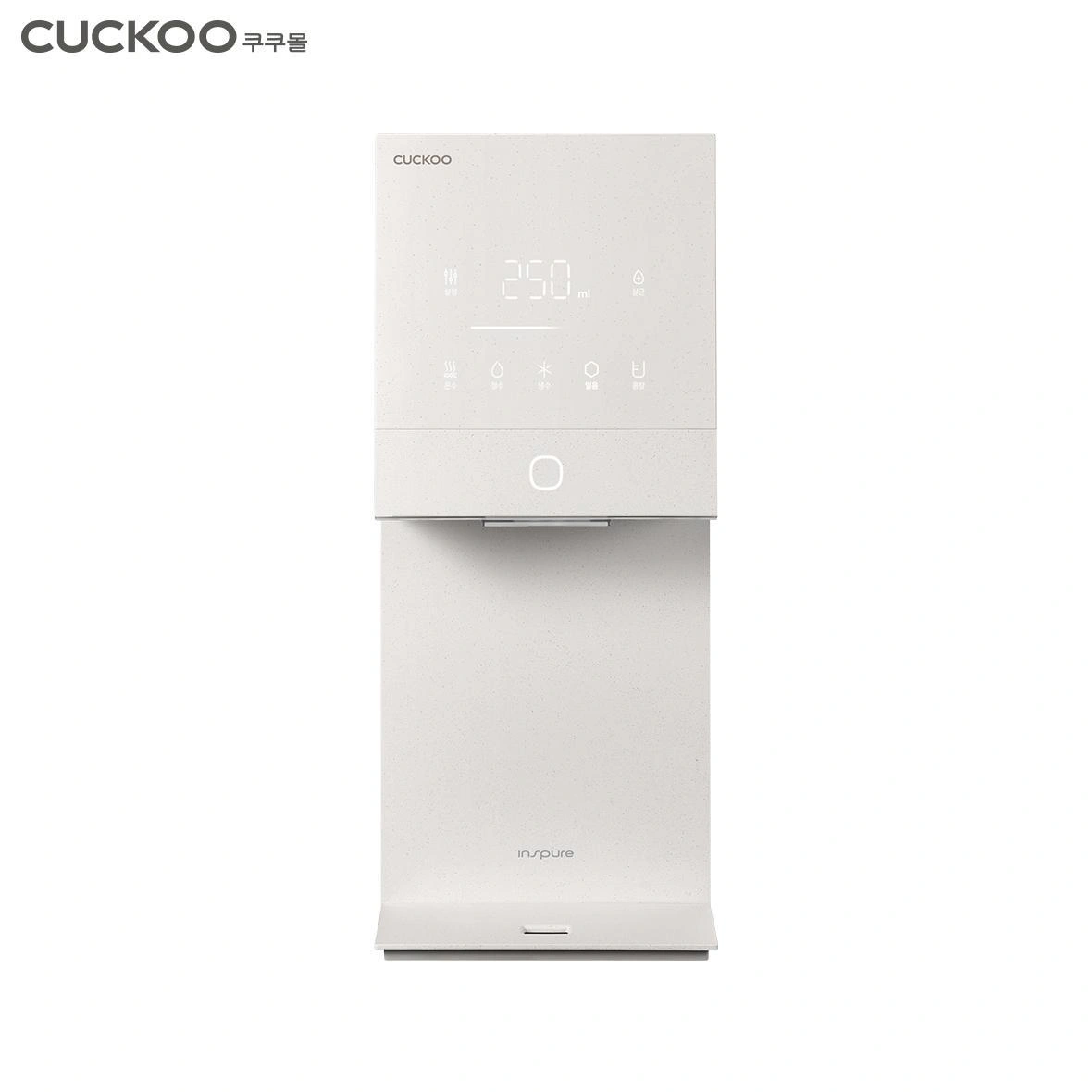
Nineteen Centimeters and Six Hundred Cubes of Ice: How Korea’s Solo Households Pull the “Ice-Water Counter” Out of Family-Machine Width
Story & products
If for more than a decade Korean urban kitchens still wrote ice-making purification as “a large block beside the island”—wide enough to demand a cleared appliance stage, with a feature list stacked for whole-family drinking and parties—then the Zero 100 Mini ice water purifier finally designs the machine by a nineteen-centimeter seam, not by the fantasy that “your kitchen ought to be wide.”
What runs through this piece are two equally unglamorous numbers: body width about nineteen centimeters, and about six hundred ice cubes a day. They do not sound grand, yet they decide whether the machine can retreat into a one-room counter gap, rather than stand in the middle of the circulation path broadcasting “here sits a cabinet that spits ice.”
Solo drinking-water politics is often written as filter-price or rental-contract detail. People who actually live there know a more daily layer: iced americano, cup noodles, the occasional highball—demand is fragmented, frequency high, and the kitchen is often only a few steps from the bed. Family-spec ice purifiers assume “guests should get ice water too”: expensive, wide, install like a move. Solo households then swing between “keep buying bag ice at the convenience store” and “raise something the size of a mini wine fridge.”
From “Full Features” to “Width First”: The Politics of Nineteen Centimeters
Open a Korean search for “ice water purifier” and it almost always ties to rental, visit maintenance, and a large ice room. Industry default: you want ice and hot water “enough for family and guests.” Solo reality flips it—the counter is already sliced by rice cooker, coffee maker, knife block; another body over twenty-three centimeters means clearing a stage.
Width brings two failures. One is forcing a mainstream model: it makes ice and also eats the last breath of an open small unit. The other is giving up: buy bag ice in summer, kettle for noodles, hand “making iced drinks at home” to endurance outside weekends. The absurdity appears: it is not that ice is unwanted, but that “raising a living-room-class purifier for one person” fails the gut check.
Zero 100 Mini rewrites the brief: admit narrow, and still design for it. Cuckoo’s public specs are concrete: width about 19 cm (brand claim of smallest domestic ice-purifier class as of the press date); models such as CP-AQS100EWH (self-care), recorded in third-party spec libraries at about 190×445×435 mm and about 15.55 kg. It does not prove “solo homes deserve commercial ice volume”; it admits that in a studio, footprint and “can I use it every day” are the same ledger.
Color is no longer only “appliance white”: white, beige, gray, black, pink, blue—six colors—so the machine reads more like a counter object than forced infrastructure. For open plans, that almost equals demoting ice purification from “visible living-room giant” to “daily thing in the seam.”
Five Fingers of Ice and Twelve Minutes: Pressing “I Want Ice” into a Scene
If width solves “it fits,” what stays high-frequency is ice itself. Industry loves “big storage, hard freeze”; solo cup volume wants something concrete: do not wait too long for one iced americano, and do not keep stale ice in the bin.
Public reports and brand newsletters describe the same structure: five evaporator fingers, five cubes per cycle; about twelve-minute-class fast ice; brand claim of about six hundred cubes a day—enough for fifty-plus iced drinks; ice storage about 0.45 kg. Old ice can melt out and new ice form—freshness as structure, not slogan. On temperature: mild cold water, 40°C lukewarm, up to 100°C boiled water (also about 80°C for cup noodles) fold morning tooth sensitivity, late noodles, and occasional pour-over into one spout.
These numbers look like a manual, yet match a solo truth: you rarely need party ice stock; you need “short, enough for one cup, done.” If convenience cannot become a scene, it is only a rental ad. Reach the cup, pick temperature, take five cubes—that is the afternoon a nineteen-centimeter body actually serves.
On hygiene, In-and-Out auto sterilization covers interior to spout, lines, tank, and ice tray with electrolyzed water; the ice room gets daily UV—splitting “fear of dirty pipes” from door-to-door anxiety into an automatic loop. Self filter change unhooks the cartridge from mandatory technician visits—the same class of freedom as a no-branch-faucet dishwasher for renters who move often.
An Outdoor Parallel: Portable Ice Makers and “Ice Need Not Live Only in the Kitchen”
Counter width is not alone. Another parallel is outdoors: camping and car camping take “want ice” out of the kitchen but cannot drag a nineteen-centimeter purifier up a hill. In the same summer narrative Cuckoo fields an Inspure full-stainless portable ice maker—top fill, plug in, daily ice on the order of about 18 kg, small/large cubes about every seven to eight minutes—answering another sentence: ice can be pulled out of the family-machine default, and pulled again out of “only installable in the kitchen.”
Placing the two lines side by side is not a pitch to “buy the set.” It shows what industry is doing: break large default drinking gear into sizes that fit seams, short cycles, and one cup; hand extreme scenes to portable. Nineteen centimeters and eighteen kilograms do not sound like one revolution, yet they sit closer to square meters on a lease and a campsite outlet than any “smart kitchen” adjective.
When Korean business reporting puts mini summer appliances on solo-household pages, Zero 100 Mini and the portable ice maker often stand together—the market admits narrow rooms and outdoors are two complete units of use, not leftover corners of a family kitchen.
Independence Is Pulling One Cup of Ice Out of Endurance
One purchase ethic should not be covered by six-color beauty shots: rental versus buyout cost, filter cycle, whether night noise can share a studio sleep, whether install needs water lines—each household checks contract and floor plan; this piece decides for no one. Nineteen centimeters solve footprint; what truly pulls iced drinks out of “go out and buy” is still whether use frequency and maintenance keep up with the rhythm of that one cup.
Korean solo households were long taught “appliances should be one-and-done” and “completeness counts when guests come.” One-and-done costs width; preparing for guests costs capacity unused daily. Whether Zero 100 Mini lasts, whether mild cold water suits the mouth, whether 100°C boil is worth the premium—each household still checks against its own cup count.
At least it puts one judgment on the counter: one cup of ice is also a complete unit of life. Independence is not “I can finally ignore thirst,” but “I need not prove I deserve ice water with family-spec width.” Nineteen centimeters and six hundred cubes simply write that sentence into width and daily yield.
Longevity Research Beyond a Blood Test
Story & products
If the last decade-plus of consumer longevity still drew the spectrum as a straight line—on the left, “a rising blood marker equals a longer life,” on the right, “only the prescription cabinet really works”—then when a blogger spread seventy-five peer-reviewed papers on longevity, rejuvenation, and preventive medicine into an open wiki, and around 25 April 2026 expanded the general-prevention corpus to seventy-five sources with layered recommendations, that line had already folded into a pair of shears: one blade is the tide of stacks, how NMN, NR, vitamin D, young plasma, and telomerase slogans became the default answer on the shelf; the other is the knife-edge of endpoints, still cutting “marker up” away from “mortality down” with RCTs and cohorts on all-cause death, cardiovascular events, and clinical endpoints. The image that runs through this discussion is not the next easier line—“add another layer of supplements”—or the next brighter claim—“biological age dropped again”—but the tide of stacks and the knife-edge of endpoints: on one side, the blogger’s checkable scenes—blood NAD+ rises while grip, skeletal-muscle index, and gait speed often fail to follow; on the other, the industry default almost in chorus—“stack = longevity” does not automatically cash out as endpoint benefit; the edge still asks whether you mistook a transient blood marker for a safe window on mortality.
From “NAD+ rises” to “endpoints do not follow”: how the default gets overturned
What the blogger did is plain: pull peer-reviewed literature out of the noise of a multi-billion supplement industry, and write “signal” back into layers—free tier, prescription tier, emerging tier, laboratory horizon—instead of inventing a longer shopping list. The title itself carries a harsh judgment: most of the stack is a nothing-burger; what actually moves mortality is often not in a capsule. The body need not become anxiety soup; it only needs to press the scenes concrete first.
NMN and NR are the most visible wave in the tide. Blood NAD+ can rise; clinical endpoints often do not follow. A 2025 large-sample NR RCT in long COVID was at best mixed on cognition and recovery metrics; later systematic reviews and meta-analyses (including public trails such as PMC11365583 and PMC12022230) likewise show no significant improvement in grip, skeletal-muscle index, or gait speed. Industry default likes to write “cofactor up” as “person younger”; the papers overturn that default—markers can flood, the edge still asks whether endpoints ebb with them.
Supplementing vitamin D in non-deficient adults is equally awkward. VITAL 2019 (NEJM, n=25,871, 5.3 years of follow-up) freezes the scene: cancer HR 0.96, CVD HR 0.97, all-cause death HR 0.99—approximately null. Test first, then supplement; supplement only confirmed deficiency. That sentence pulls the running image from “universal pill on the shelf” back to “whether the half-inch edge sits on evidence of deficiency”: the tide can raise the volume of “everyone should take D,” yet it cannot cut open whether you have already tested, rather than merely twisting the bottle open.
“Young plasma” without a clear active component is harsher. A 2025 RCT (Horvath co-author) showed plasma removal without IVIG as negative, with some clocks even accelerating; what worked was a TPE+IVIG protocol (biological age about −2.6 years), hinting that the activity more likely sits in IVIG than in simple plasmapheresis. The telomerase-drug page also writes a half-inch edge: a 2022 PNAS paper claiming +41% lifespan was retracted in August 2025. Most longevity stacks—resveratrol, anti-aging peptides, exotic herbal mixes—remain nearly blank at endpoint-grade RCTs. The default therefore shows its seam: it thought “marker up” could cash out losslessly as “mortality down”; the layers rewrite it with the same checkable clash—the tide of stacks can raise the cart, the edge still asks whether endpoints keep pace, rather than hiding only in the next, more expensive NAD+ precursor.
Five-point-oh-four and grip: how the free tier cuts into mortality
Quiet scenes almost embarrassingly stick to the free tier itself. Mandsager 2018 (JAMA Network Open, n=122,007) writes cardiorespiratory fitness into all-cause death: low VO2max versus elite, HR 5.04—in the same cohort, larger than smoking, diabetes, or prior CAD; no clear ceiling of benefit either. A Norwegian 4×4 protocol can lift VO2max about 13% in roughly eight weeks (Helgerud 2007, MSSE). The question lands cleanly: the tide writes itself on capsule ads; the edge writes itself on whether you treat peak oxygen uptake as a harder lever than the next bottle.
Grip and resistance are equally sharp. PURE (n=139,691, seventeen countries) shows grip predicting cardiovascular death more strongly than systolic pressure. Resistance alone about −21% mortality risk; combined with aerobic about −40% (Saeidifard 2019 meta-analysis). Sleep 7–9 hours is U-shaped: Cappuccio 2010 meta-analysis (about 1.4 million adults) has short-sleep RR 1.12, long-sleep RR 1.30. Waist, not BMI: Pischon 2008 (NEJM, EPIC, n=359,387) finds waist and waist-hip ratio independently predicting death at every BMI stratum. Not smoking; ethanol about ≤100 g per week (about ≤7 drinks/week)—Jha 2013 (NEJM) writes smoking as more than ten years of life lost; Wood 2018 (Lancet, n=599,912 drinkers) pins lowest mortality risk near 100 g ethanol/week; “moderate drinking protects” often vanishes after correcting for sick quitters.
For people who already treat “supplement stack = anti-aging” as a holy grail, HR 5.04 and grip are quenching; for people who already treat a “biological-age app” as discipline, waist independent of BMI is more quenching. The running image therefore drops from “tide of stacks” to “the knife still in the sheath must still tell endpoint before it edges out half an inch”: the question is how many points blood NAD+ rose, or whether VO2max, grip, sleep, and waist still read the tide. The free tier writes itself on cohorts and meta-analyses; the edge writes itself on whether you still mistook “marker up” for an “endpoint safe window.”
VITAL and retracted telomerase: the half-inch edge inside the supplement tide
The prescription side is not blank. CTT 2012 (Lancet IPD, 27 RCTs) writes statin primary prevention: each 1 mmol/L drop in LDL-C, about −21% vascular events per year, including low-risk adults—systematic under-prescription is itself an edge. SPRINT 2015 (NEJM, n=9,361 non-diabetic hypertension) presses blood-pressure targets toward <120: intensive control, all-cause death −27%, stopped early for benefit. Measure apoB; do not only watch LDL-C: trails such as Sniderman 2011 show apoB about 12% better on relative-risk prediction than LDL-C; ESC/EAS already names it a preferred lipid marker. Rapamycin stays in the “emerging” tier: PEARL 2025 shows one-year safety and healthspan-marker improvement—among emerging drugs, one of the few with human RCTs; the text need not write “prescribe for everyone,” only admit: the prescription tier has endpoints; most of the supplement tide does not.
The laboratory horizon can pass in one sentence: anti-IL-11 antibodies, trametinib+rapamycin, AAV-Klotho, CAR-T senolytics, partial reprogramming—horizon beyond the tide, not yet for sale, and not to be pretended already consumable. Comment-section common sense is plain: get the base right first, then talk drugs and supplements; the layering itself is the clash—industry default “stack = longevity,” data overturn “endpoints do not follow.” The dial itself speaks—NAD+ lights up while all-cause HR does not light with it; the tide writes itself on a seventy-five-source wiki and shelf slogans; the edge writes itself in the cracks of HR 5.04, VITAL’s near-null, grip stronger than systolic pressure, waist independent of BMI, and a retracted +41%. The body need not adjudicate every medicine cabinet; it only needs to admit: the default thought “marker up” and “add another layer” could cover endpoint credentials; the layers rewrite that with checkable RCTs and cohorts—the tide of stacks often dies on “biological age dropped again,” while the knife-edge of endpoints often pretends the capsule was already enough.
Close: rewrite “independence” as “holding both blades—tide of stacks and knife-edge of endpoints”
If anti-aging culture often reads independence as “one person fills the cart before talking training” or “one person believes marker up equals living longer,” this discussion sits closer to another independence—holding the tide of stacks and the knife-edge of endpoints at once, refusing the false binary. The blogger’s compilation has value precisely because it lays checkable scenes on the table (seventy-five-source layers, NMN/NR endpoints not following, VITAL near-null, young-plasma activity more likely in IVIG, telomerase retraction, VO2max HR 5.04, grip and resistance, sleep U-shape, waist independent of BMI, statins and SPRINT and apoB, rapamycin only as emerging); the discussion’s value is that it does not push the topic only toward “quit all supplements” or “the tide will always recede,” but says the spirit of the rule back: tell endpoint from marker first, then tell “stack” from “free-tier half-inch,” and with HR 5.04, VITAL, grip, and waist still polish that blade inside the flood of “NAD+ rose / biological age dropped”—the difficulty of longevity often hides in whether you can read both blades, tide of stacks and knife-edge of endpoints, rather than only in the next easier “add another layer” or the next brighter “marker rose again.”
Executable prompts are plain: test deficiency before vitamin D, rather than chase shelf slogans first. Treat VO2max, grip, sleep 7–9 hours, and waist as the first layer, rather than automatically cashing out “supplements already enough.” Treat the prescription tier (statins, blood-pressure targets, apoB) as checkable contrast, rather than default outsourcing to the next, more expensive precursor. Watch all-cause death and clinical endpoints, rather than only transient blood markers. Write “independence” as “holding both blades—tide of stacks and knife-edge of endpoints,” rather than “always outsource to the next easier add-another-layer” or “always outsource to the next brighter biological-age drop.” The horizon beyond the tide can be glanced at; do not pretend you can already place the order. Whoever holds tide and edge at least knows which lever they are pulling: endpoint, or marker.
The content of this article is only for viewing, reflection and independent judgment. It is not an instruction manual. It is simply a part of what exists in the world.
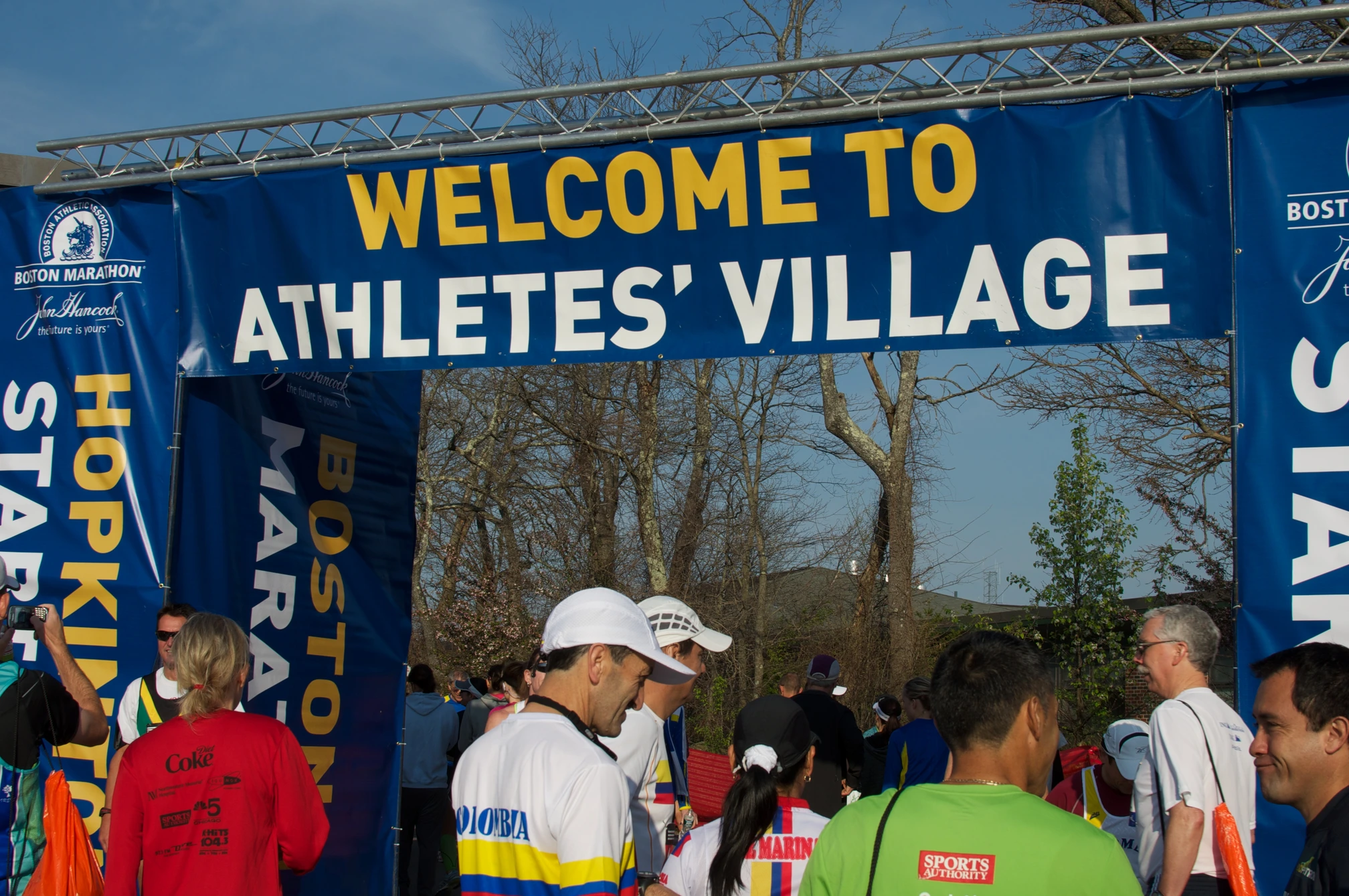
The First Hurdle of a Marathon Is Getting a Bib
Story & products
If the past decade-plus of mass marathons was still drawn as a straight line—on the left, “race day is far off; a local major always has room,” on the right, “only Boston-class gated races are truly hard to enter”—then after Brian Rock laid out the sellout calendars of roughly the fifty largest U.S. marathons on 28 May 2026, that line had already folded into a pair of scissors: one blade is the tide of sellouts turning nineteen of twenty-three spring races into “full,” the other is the knife-edge of bibs still cutting registration calendars away from training calendars inside twelve-hour sellouts, a 5 January cutoff, and a rebound of about three thousand reopened spots. The image that runs through this piece is not a lazier “sign up in the fall” or a brighter “you can still snag one,” but the tide of sellouts and the knife-edge of bibs: on one side, the verifiable scene the blogger forwarded—among the fifty largest races by 2025 size, of the twenty-three held January–June 2026, nineteen had sold out; on the other, the industry default almost in chorus—“race day is far off” does not automatically convert into a safe window; the edge remains whether you mistook the opening of your training block for a registration safety window.
From “Still Open” to “Nineteen of Twenty-Three”: How the Default Was Overturned
What the blogger did was plain: put a long piece tracking sellout dates for roughly the fifty largest U.S. marathons on the table—the title itself carries the sharp judgment “faster and more often,” yet the body need not become anxiety porridge; first press the scenes concrete. Brian Rock’s Spring 2026 Update spreads the same verifiable clash: of the fifty largest races by 2025 size, twenty-three fall in January–June 2026; nineteen have sold out; only four have not—Rock ’n’ Roll San Diego, Austin, Denver Colfax, REVEL Mt. Charleston. The three that are “effectively sold out / nearly impossible” year after year need no invented drama: Boston’s time gate, Big Sur’s lottery, Disney selling out in hours—none of them was ever covered by “race day is far off.”
The narrative is familiar in running circles and still sharp enough. Industry default likes to write “a local major always has room” as common sense, or “only gated races are truly hard” as comfort; the post and the long piece overturn the default not by inventing a third slogan, but by pressing scenes concrete—the same verifiable numbers: nineteen of twenty-three full; six newly sold out in 2026 after not selling out in 2025—Jersey City (sold out 2/12 → race 4/19), Flying Pig (4/30 → 5/3), Rock ’n’ Roll Nashville (4/21 → 4/25), Mesa (2/13 → 2/14), Oklahoma City (3/25 → 4/26), OC (3/13 → 5/3). Finisher counts often rose: Flying Pig 4,685 → 5,251; Nashville 2,706 → 3,173; OC 3,056 → 3,545. The default therefore shows its seam—it assumed “still open” could convert losslessly into “spots a week before the race”; the calendar rewrites it with the same clash: the sellout tide can raise the threshold feel of local races; the edge remains whether the registration calendar sits earlier than the training calendar, not only in the self-soothing of “months until race day.”
Twelve Hours and the Fifth of January: How the Tide Cuts into Fall and Spring
The key scenes sit almost awkwardly on the sellout dates themselves. Los Angeles: sold out 5 Jan 2026 → race 8 Mar, versus 4 Feb → 15 Mar in 2025—a full month earlier. Houston: sold out 1 Oct 2025 → race 11 Jan 2026, versus 15 Nov the prior year; finishers also rose from 7,553 to 8,852. Eugene: sold out 14 Jan → 26 Apr, versus roughly March the year before—about two months earlier, finishers 3,764 → 4,518. Mountains 2 Beach: 26 Feb; Miami: sold out about ten days after opening on 11 Aug 2025. Sharpest of all is Grandma’s: sold out in about twelve hours; organizers shifted half-marathon bibs to the full marathon and still could not slow the rush. That sentence yanks the through-image from “spring races can still wait” back to “is the half-inch edge on the register button”: the tide can lift finisher counts and local heat, yet it cannot cut open whether you already held a bib before the training block opened.
For people who treat “race day is far off” as a holy grail, 5 January and twelve hours are thirst-quenching; for people who treat fall majors as “register after training starts,” the early fall/winter sellouts are more so. The through-image therefore drops from “sellout tide” to “the knife still in the sheath must tell registration calendar from training calendar before another half-inch”: the question is not how many months until race day, but whether you still read the tide in the week after registration opens. Detroit (October race) sold out 7 Jan 2026, about a week after opening; CIM sold out 5 Mar, versus 8 May the prior year; St. George 29 Apr; Wineglass 18 May, versus 25 Jun—some fall races now sell out before many people even start their fall training block. The tide is written on sellout dates; the edge is written on whether you still mistake “training-block start” for a “registration safety window.”
Three Thousand Reopened and Rising Scale: Half an Inch of Bib Edge
Philly’s scene almost looks like a tidal rebound: after selling out on 28 Apr, about three thousand spots reopened with a new title sponsor—registration opened again, yet no one can guarantee how long the rebound lasts. That half-inch asks cleanly. Industry default shows its seam again: it assumed “sell out then reopen” could convert losslessly into a second safety window; the calendar spreads the priority—reopening is tidal rebound, not a default reset. The four that sold out at similar times but grew in scale are equally sharp: Pittsburgh finishers 3,781 → 5,013; Atlanta 1,947 → 3,070; Shamrock 1,957 → 2,421; Cowtown 1,757 → 2,134. Sellout dates need not leap much earlier; the edge is already written on whether, without more bibs next year, the cut moves into March or earlier.
For people free to race-hop and keep flexible calendars, three thousand reopened spots are leverage; for people who treat “a local major always has room” as discipline, the same tide reads like an edge pressed on the register button. The dial itself speaks—finisher counts glow, while the registration safety window is buried in the menu; the tide is written on nineteen of twenty-three and six new sellouts; the edge is written in the cracks of twelve hours, 5 January, about a week after opening, and “training-block start ≠ registration safety window.” The body need not adjudicate everyone’s race calendar; it only needs to admit: the default assumed “race day is far off” and “reopening always lets you in again” could cover bib eligibility; the long piece rewrites it with verifiable sellout calendars—the sellout tide often dies on “sign up in the fall,” while the bib edge often pretends three thousand reopened spots were already enough.
Closing: Rewriting “Independence” as Holding Both Blades of Sellout Tide and Bib Edge
If running culture often understands independence as “fill the training block first, then talk registration” or “believe a local major always has room,” this discussion is closer to another independence—holding both the sellout tide and the bib edge at once, refusing the false binary. The blogger’s post has value precisely because it spreads verifiable scenes (Brian Rock’s tracking of roughly fifty sellout dates, nineteen of twenty-three spring races full, six new sellouts and six significantly earlier ones, early fall/winter examples, Philly’s about three thousand reopened) on the table; the discussion’s value is in not reducing the topic to “miss it, switch races” or “the tide will recede,” but saying the spirit of the rule back: first tell registration calendar from training calendar, then tell “still open” from “half an inch of bib edge,” and with twelve hours, 5 January, about a week after opening, and the rebound of reopening, still polish that blade inside the rising tide of “race day is far off / locals always have room”—the difficulty of the marathon often hides in whether you yourself can read both blades of sellout tide and bib edge, not only in a lazier “sign up in the fall” or a brighter “reopening still lets you snag one.”
The actionable tip is plain: read the sellout calendar, instead of first chasing the self-soothing of “months until race day.” Treat the training-block start as a tidal condition, not an automatic voucher for a registration safety window. Treat reopened spots as a verifiable rebound contrast, not a default reset. Watch sellout dates a week after opening and months before race day, not only rising finisher counts. Write “independence” as “holding both blades of sellout tide and bib edge yourself,” not as “forever outsourcing to a lazier fall signup” or “forever outsourcing to a brighter ‘locals always have room.’” Limits remain: the Reddit comment section was not pulled line by line; individual finisher counts follow the long piece’s tables—the half-inch edge is admitting these, not turning sellouts into a personal fate verdict. People who hold tide and edge at least know which lever they are pulling: the registration calendar, or the training calendar.
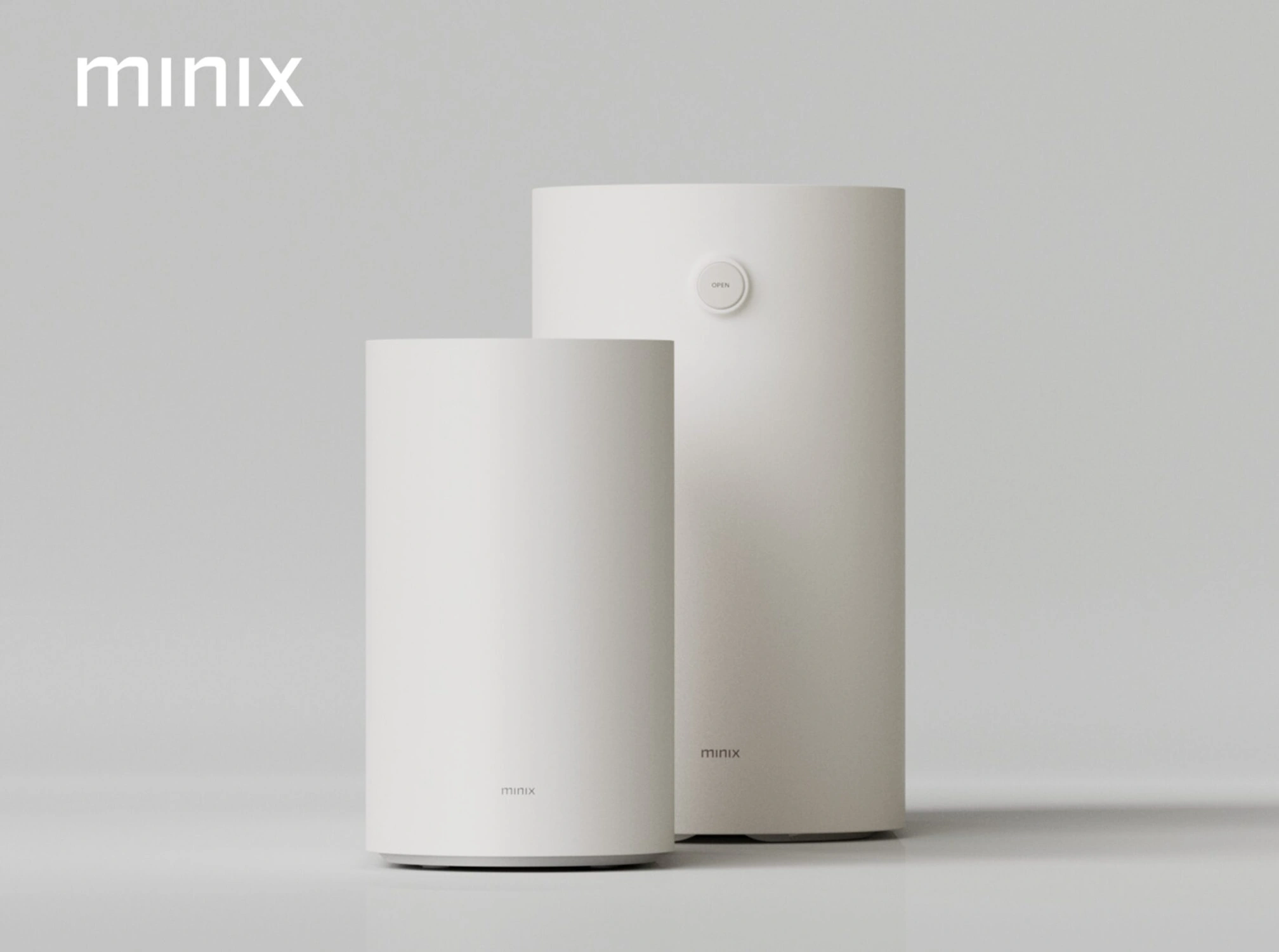
Seventeen Centimeters and One-and-a-Half Liters: How Korea’s Solo Households Pull “a Little Food Waste” Out of the Smell
Story & products
If the past twenty years forced Korea’s urban solo households to handle cooking aroma and garbage smell in the same “kitchen-living room,” the problem was never that there was too little trash—it was that a little residue is harder to handle. Not enough to fill a conventional food-waste bin, yet enough to occupy the whole room overnight.
Two plain numbers run through this essay: a body seventeen centimeters wide, and a capacity of one and a half liters. They do not sound loud. They decide whether a machine can retreat to a counter corner instead of standing in the room’s center and broadcasting what you ate today.
The politics of solo food waste is often written as eco slogans or sorting rules. People who live there know a sharper layer: a spoon of sauce at the bottom of a delivery box, fruit pits, a few leaves—too little to bother going downstairs, large enough for a sealed bag to swell at night. Family-size processors are designed for “a household’s daily volume”: expensive, wide, noisy. Solo renters then swing between “keep enduring the smell” and “buy something the size of a mini appliance cabinet.”
From “Too Little Trash” to “Smell Too Close”: The Arithmetic of a Little Residue
Open Korean search results and “food waste processors” almost always bind to family capacity, filter price, and municipal rules. Industry default: you process “enough waste.” Solo reality flips it—small amounts, high frequency, kitchen only steps from the bed.
Small volume creates two failures. One is conventional disposal: because it is not a full bag, it piles by the sink until it sours. The other is forcing a large machine: two- or three-liter bodies eat a narrow counter; heat and noise in an open studio have nowhere to hide. Absurdity follows: not that you cannot afford it, but that “raising a large appliance for a little residue” fails psychologically.
The Blender mini rewrites the brief: admit that a little also deserves design. Specs from Athome’s Minix brand are concrete: 17 cm wide, about 39% narrower than prior models; 1.5 L capacity; launch promo around the 200,000-won range. It does not argue that solo homes need a large processing center. It admits that in a kitchen-living room, footprint and odor are the same ledger.
Survey numbers are often written as purchase intent—for example, over nine in ten non-users responding positively. Read those as marketing language. The harder fact is rhythm: small, frequent, close to the sofa. If a machine cannot answer “today only about 100 g,” by week two it becomes sculpture that occupies space.
The Concession of Seventeen Centimeters: How Footprint Becomes Odor Management
In narrow flats, counter depth is limited and width is already sliced by rice cookers, coffee makers, and knife blocks. Seventeen centimeters means the machine can stand in a seam against the wall instead of demanding an “appliance showroom” cleared for it. In open layouts, that almost demotes food-waste processing from “object visible from the living room” to “corner infrastructure.”
On performance, reports and brand copy point to the same structure: double protrusions, triple blades, drying grind—claimed to handle seasoned scraps and harder bits. Convenience features match solo tempo: Quick mode for roughly 100 g; Store mode for temporary holding without immediate spoilage; one-touch high-heat cleaning and a ceramic-coated inner pot to lower washing friction; activated-carbon filter plus sealed design to press down process odor.
Written as a manual these features are dull. As scenes they are clear: after a late snack, a few kimchi leaves and sauce—Quick mode; before a trip, day’s scraps into Store mode; weekend wash of the pot. Family machines often assume a “batch processing day.” Solo time is fragmented; fragment volume must be eaten by short cycles.
Market response has checkable figures: reports say an Today’s House launch live sold 1,700+ units in about an hour. Existing 2 L PRO and 3 L MAX still sell—the brand did not cancel large capacity; it finally admitted a narrower line should exist. Pricing: the ~200,000-won launch band is promo language; shelf prices rebound later, as with all launch appliances—buyers must reckon the cost of enduring smell themselves.
A Parallel of Moisture: Mini Dryers and Odor in the Corner
Food waste is not the only source of smell and moisture in a narrow room. Another parallel is laundry: a central drying rack steals circulation; overnight damp mixes with kitchen odor into a whole-apartment humidity. The mini-dryer boom—reports cite Winix inverter compact dryer S cumulative around 190,000 units, and Minix The Air Dry 5 kg in the same context—is the same spatial negotiation: pull moisture from the room’s center into a machine that can stand in a corner.
A rack in the center, a waste bag in the corner—both fight over who deserves floor. Mini dryers answer moisture on fiber; mini food processors answer rot on food. Fix only one and the other still reminds you at night: this room has no corridor as buffer.
Placing the two lines side by side is not a pitch to “buy the full set.” It shows what industry is doing: breaking family-default large devices into sizes that can hug a wall, run short cycles, and answer for a little. Seventeen centimeters and five kilograms do not sound like revolution, yet they sit closer to the square meters on a lease than any “smart living” adjective.
Another purchase ethic should not be covered by live-commerce numbers: whether dried powder is accepted by the local government, filter replacement cost and cycle, whether night noise coexists with sleep. The reported 1,700 units proves demand was named, not that every unit fits every studio. Seventeen centimeters solves footprint; what really pulls smell out of endurance is whether use frequency and maintenance keep up with how that little residue is produced.
Independence Means Pulling a Little Out of Endurance
Korea’s solo households have long been taught to “save trash until it is enough” and to “buy a machine that does everything at once.” Saving enough costs smell; doing everything at once costs space. Whether The Blender mini lasts, how expensive filters are, whether the building allows dried powder—each household must check its own rules. This essay does not purchase for anyone.
It at least puts a judgment on the counter: a little residue is also a complete unit of living. Independence is not “I can finally ignore food waste,” but “I need not prove thrift with family-size endurance.” Seventeen centimeters and one and a half liters are that sentence written into width and capacity.
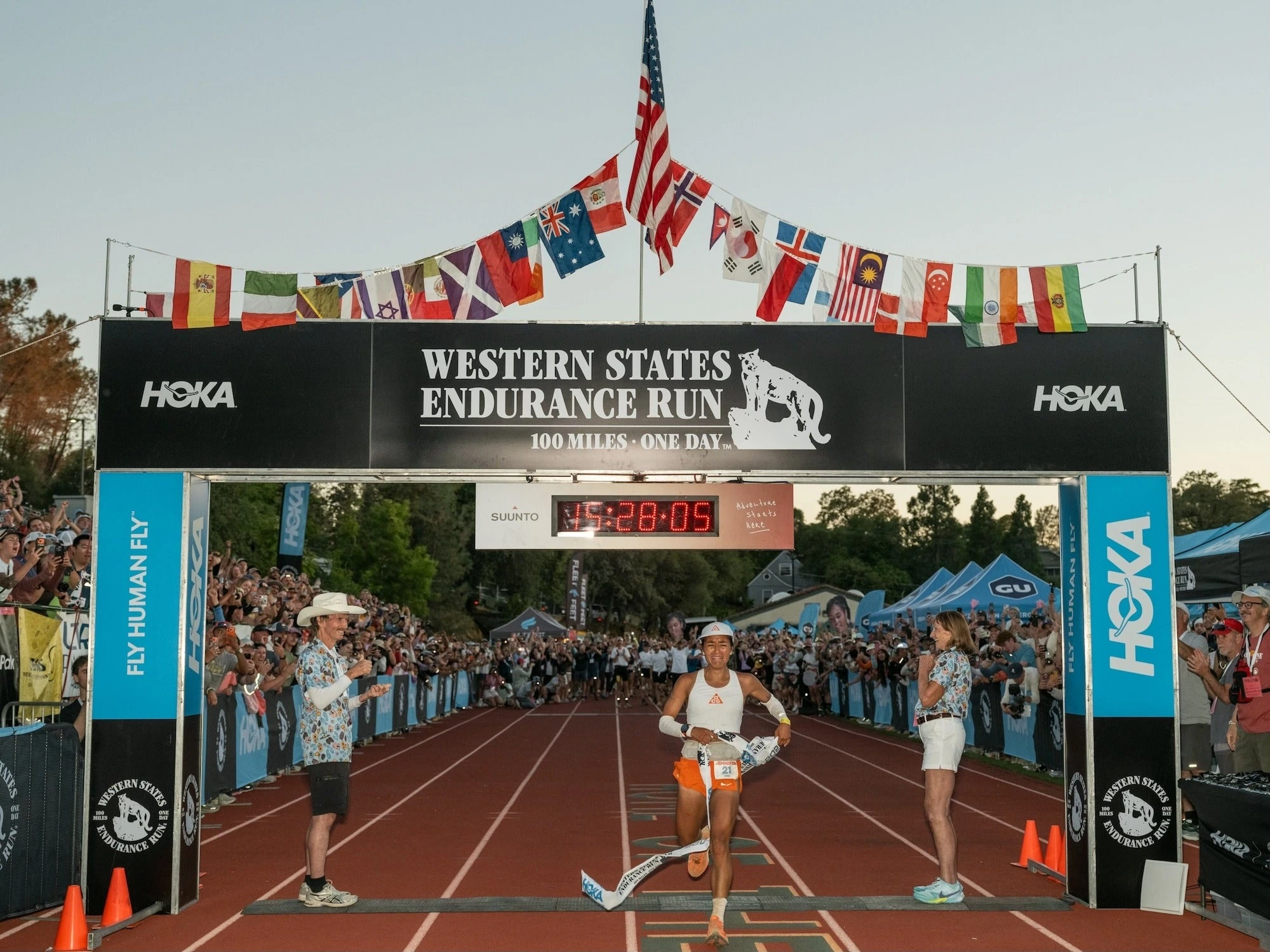
A First 100-Miler, a Western States Record
Story & products
If the past decade-plus of hundred-mile trail culture still drew its spectrum as a straight line—on the left, “pay tuition first, stack multiple hundreds, then you may touch a course record”; on the right, “deep fields and paid systems are the real breach entry”—then once the 53rd Western States 100 (about 100.2 miles, Olympic Valley to the Auburn Placer High track) closed on 27–28 June 2026, that line had already folded into a pair of shears: one blade the tide of first passage, how a first-ever hundred can be written as a women’s course record; the other the knife-edge of the record, still cutting cool-year weather and a deep field with execution after Devil’s Thumb, in the river-crossing duel, and in the last mile. The image that runs through this essay is not the next dearer Golden Ticket or the next easier slogan of an “experience threshold,” but the tide of first passage and the knife-edge of the record: on one side, Jennifer Lichter (also Jenn Lichter) peeling the default open—thirty years old, Missoula, Montana; first hundred, win, about 15:28:05 / 15:28:06 (sources differ by about a second), breaking Courtney Dauwalter’s 2023 mark of 15:29:33 (roughly eighty-five to eighty-eight seconds faster); on the other, recaps and comment threads almost in chorus—a cool year and a finish rate near eighty-seven percent are a tide, not an automatic knife; the edge still sits in whether you dare push at the decisive moment, and whether you can read the duel.
From “experience threshold” to “first-passage record”: how the default is peeled open
What the poster did was plain: reshare a CTS Western States 2026 recap—its title already carries checkable numbers and scenes—while the comment section slid quickly toward coaching fees and “system myth.” The essay need not become a price rant; it only needs to press the scenes concrete. The WSER official Race Recap, iRunFar results, and Runner’s World / Canadian Running summaries lay the same checkable clash on the table: women’s winner Jennifer Lichter, first hundred, win and record; second Riley Brady 15:42:14 (third-fastest ever); third Marianne Hogan 15:51:44. The men’s side is equally sharp—Vincent Bouillard 13:46:15, breaking Jim Walmsley’s 2019 mark of 14:09, the first sub-fourteen; Francesco Puppi about 13:51, Ryan Montgomery about 13:53, others also under the old record. About 18,000 feet of climb, about 22,000 of descent; start near 51°F, finish high about 73–74°F, far below a historical mean near 90°F; 322 of 370 finishers, finish rate about 87%, historically high.
This story is familiar in trail circles, and also sharp enough to sting. Industry default likes to write “pay tuition on hundreds first” as a threshold, or “multi-race experience” as the precondition for touching a record; the post and recap peel the default open not by inventing a third slogan, but by pressing scenes into the concrete—the same checkable numbers: before the race Lichter had already broken the Black Canyon 100K record in February at 7:57:05 for a Golden Ticket, and broken a Gorge Waterfalls 50K record; here she deliberately shelved her usual front-running for more restraint. The CTS piece also notes coach John Fitzgerald: steady control early, push at the decisive moments; nine CTS athletes in the men’s and women’s top tens—usable as a “system / first passage” contrast, without turning into soft advertising. So the default shows its seam—it thought “years of experience” could convert losslessly into “license to touch a record”; the recap and results rewrite it with the same checkable clash: the first-passage tide can raise a record, yet the knife still sits in post-halfway execution, not only in the résumé column on the entry form.
Duel and canyon knife: the half-inch after Devil’s Thumb
The decisive scenes almost awkwardly mirror the course profile. Around Devil’s Thumb (about mile 47.8) Lichter took the lead; before that, a duel with Riley Brady. At the river crossing (about mile 78) Brady closed to about two minutes; by mile 85.2 the gap opened to about seven; at Robie Point the lead on the record was about a minute; the last mile had to be bitten into the record. That sentence drags the through-image from “first-passage myth” back to “is the half-inch of knife still underfoot”: the tide can raise a cool year and a deep field and still fail to cut the edge of whether you dare push, whether you can read the duel. For people who already treat the “experience threshold” as a grail, a first-passage record quenches thirst; for people who already treat paid systems as the entry, early control and a late push quench more. So the through-image falls from “tide of first passage” to “the knife still in the sheath until you tell tide from execution before drawing half an inch”: the question is not only which numbered hundred this is, but whether after Devil’s Thumb you still read yourself inside the duel; not only whether cool weather automatically gifts a record, but whether, with about a minute on the record at Robie Point, the last mile still dares to bite. Riley Brady and Ryan Montgomery are noted as non-binary by iRunFar—Chinese (and this English) can keep full names and skip pronoun guesses; what is recorded is time and duel, not label judgment. On the men’s side Bouillard / Puppi / Montgomery cutting the fourteen-hour edge is likewise not a scene a “system slogan” can automatically cash: the tide is written in weather and finish rate; the lab is written in the last mile’s feet.
Cool-year tide and system myth: the half-inch first passage does not see
Weather extremely cool: start near 51°F, finish high about 73–74°F, far below a historical mean near 90°F; finish rate about 87%, historically high. That half-inch asks cleanly. Industry default shows its seam again: it assumes a record must first stack years of experience, or must be outsourced to the next brighter “system myth”; the post and thread spread priorities open—the cool-year tide lifts finishes and field depth, yet the knife still sits in Lichter’s restraint after shelving front-running, the lead after Devil’s Thumb, and whether a duel closed to two minutes at the river is still readable. Comment threads talk coaching fees at length—a light touch on “first-passage myth vs paid system” is enough: on one side, the tide-scene of a first hundred as course record; on the other, deep fields and coaching systems written as breach entries. The essay need not expand into a price rant; it only needs to admit that the default thought “experience” and “paid system” could cover license to break a record, while the recap rewrites it with checkable results—the first-passage tide often dies in “one more tuition race,” while the knife-edge of the record often pretends a cool year already suffices.
For people who can freely choose seasons and recovery windows, tickets and systems are levers; for people who treat “run several hundreds before talking records” as discipline, the same tide reads like a knife pressed onto the calendar. The dial itself speaks—finish rate lit, whether you dare push at the decisive moment buried in menus; the tide written in start and finish temperatures, the knife written in the seven-minute gap at mile 85.2 and the last mile with about a minute on the record at Robie Point. The knife’s half-inch lives in these cracks: whether cool weather equals an automatic record; whether first passage equals “no system needed”; whether paid systems steal attention that belonged to reading the race and restraint; whether the duel makes the “experience threshold” sound like another privilege. The essay need not adjudicate everyone’s race calendar; it only needs to admit: the default thought “multi-race experience” and “buy the system” could cover license to touch a record; the post and recap rewrite it with official results and lived scenes—the tide of first passage often dies in “wait one more,” while the knife-edge of the record often pretends it already suffices inside field depth.
Closing: rewriting “independence” as reading both blades—first passage and record
If trail culture often reads independence as “one person pays enough tuition before touching a record” or “one person outsources to the next brighter paid system,” this discussion sits closer to another independence—holding both the tide of first passage and the knife-edge of the record, refusing the false binary. The poster’s value is laying checkable scenes on the table (WSER official recap, iRunFar results, CTS notes on early control and decisive push, cool-year finish rate and deep field); the thread’s value is not reducing the talk to “are coaches expensive” or “first-passage myth solves everything,” but speaking the rule’s spirit back: first tell tide from knife, then tell experience threshold from half-inch of execution, and with the duel after Devil’s Thumb, the close at the river, and whether the last mile still dares to bite, keep polishing that edge inside the rising tide of “cool year / system myth”—the hard of a hundred often hides in whether you can read both blades of first passage and record, not only in the next Golden Ticket or the next easier “run a few more first.”
The executable prompt is plain: read results and the course profile, rather than chasing the résumé number of “which numbered hundred.” Treat cool weather as tide conditions, not as a voucher automatically cashed for a record. Treat systems and coaches as checkable contrasts of control and decisive moment, not as soft-ad entry or fuel for price rant. Watch the duel at decisive miles and the last mile, not only finish rate and field depth. Write “independence” as “reading both blades—first passage and record yourself,” not as “forever outsourcing to the next experience race” or “forever outsourcing to the next brighter system slogan.” Source limits remain: finish seconds differ by about a second across outlets, recap angles differ—the knife’s half-inch is admitting these, not writing first passage as a personal fate verdict. People who hold tide and knife at least know which lever they are pulling.
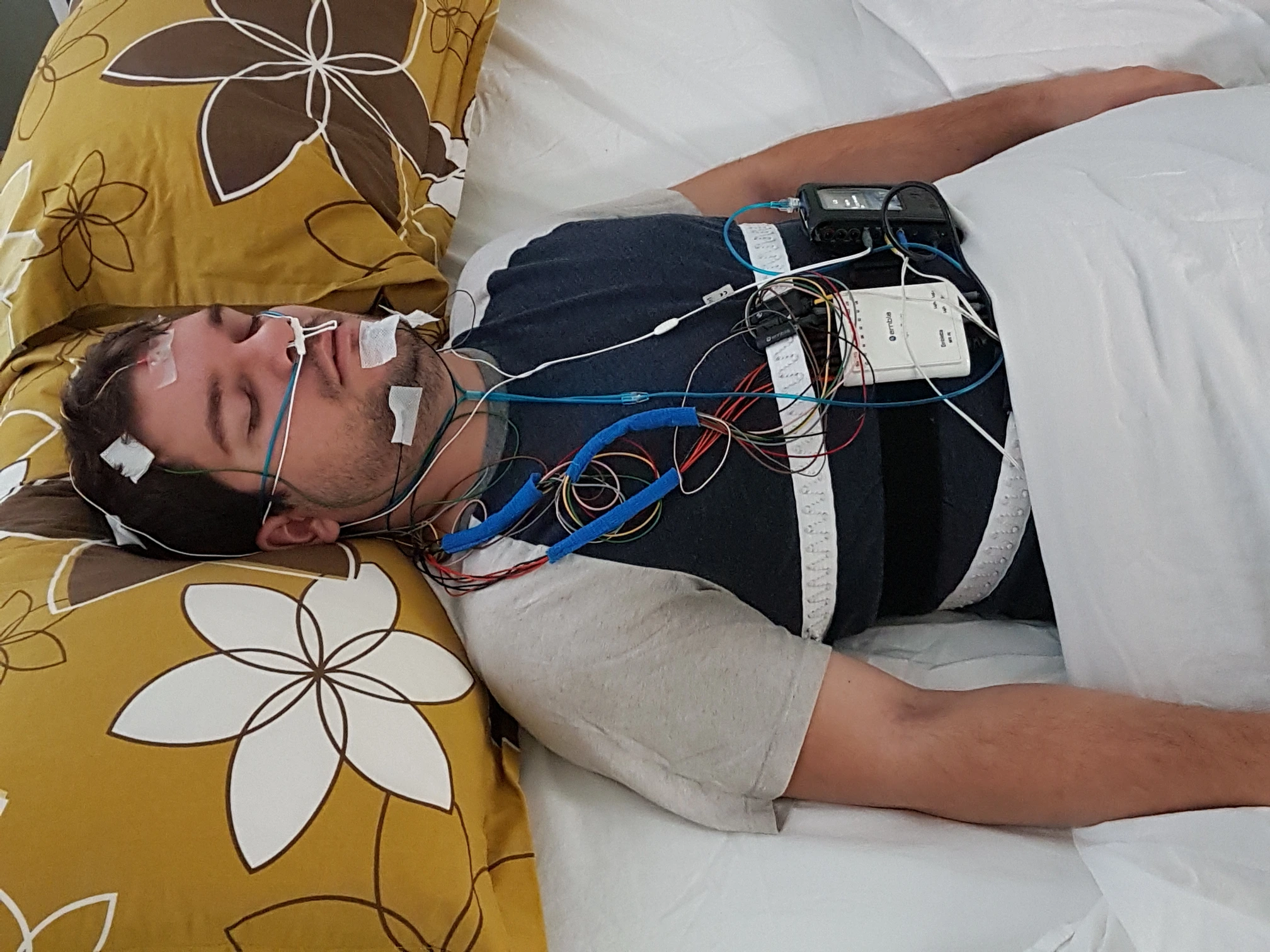
Another Measure of Sleep: Regularity
Story & products
If the past decade-plus of mass sleep and biohacking culture still drew its spectrum as a straight line—on the left, “seven to nine hours a night equals sleep health”; on the right, “sleep scores, mouth tape, and supplement stacks are the real optimization entry”—then once someone laid UK Biobank data from about sixty thousand people and more than ten million hours of accelerometry on the same table, that line had already folded into a pair of shears: one blade the tide of rhythm, how regularity can out-predict duration for mortality; the other the knife-edge of duration, still cutting score-worship with the scene of “enough sleep, yet shifted by ninety minutes.” The image that runs through this essay is not the next dearer melatonin stack, but the tide of rhythm and the knife-edge of duration: on one side, Sleep Regularity Index (SRI) tides that associate with about twenty to nearly forty-eight percent lower all-cause mortality risk; on the other, a comment section almost in chorus—the worst mornings are often not the shortest nights, but the nights that still logged seven and a half hours while bedtime moved ninety-plus minutes.
From the “duration grail” to “regularity predicts more strongly”: how the default is peeled open
What the poster did was plain: reshare a prospective cohort study in SLEEP (2024) whose title already carries the edge—sleep regularity is a stronger predictor of mortality risk than sleep duration. The paper is by Windred and colleagues; the sample is about 60,977 UK Biobank participants, more than ten million hours of wrist accelerometry; mean age about 62.8, women about 55%; median SRI about 81.0. After accelerometer wear, follow-up ran up to about 7.8 years; 1,859 deaths; about 4.84 per 1,000 person-years. Higher sleep regularity versus the least-regular quintile: all-cause mortality risk about 20%–48% lower; cancer mortality about 16%–39% lower; cardiometabolic mortality about 22%–57% lower—after adjustment for age, sex, ethnicity, and sociodemographic, lifestyle, and health factors. Most-regular quintile (80–100th) versus least-regular (0–20th): minimal-model HR ≈ 0.52; fully adjusted ≈ 0.70. Regularity and mortality show a monotonic relation; duration looks more U-shaped in the minimal model and more linear when fully adjusted. By AIC, regularity models fit all-cause mortality better than matched duration models (minimal p < .001; fully adjusted p = .005). In nested models, adding duration on top of SRI adds limited extra explanation.
This story is familiar in biohacking circles, and also sharp enough to sting. Industry default likes to write “seven to nine hours” as a grail, or “sleep score” as an optimizable dashboard; the post peels the default open not by inventing a third slogan, but by pressing scenes into the concrete—the same checkable numbers: the regularity tide cuts mortality risk more sharply than the duration edge; duration still signals, yet in nested comparison looks more like an outcome than a lever. One highly upvoted commenter puts it cleanly: regular sleep helps circadian rhythm, so no surprise. Another maps the data onto their own body: after locking wake time to about ±30 minutes (weekends included), resting heart rate dropped a few beats and HRV jumped less; the wake anchor matters more than bedtime, and bedtime self-corrects once the anchor holds—if you get only one lever, pick a wake time you can keep seven days and hold it; consistency beats chasing a perfect eight hours every time. The poster’s own replies soften the tone: consistency seems key; eight hours still feels good; the study lists known physiological effects of circadian disruption among reasons for the finding.
So the default shows its seam—it thought a “duration number” could convert losslessly into “sleep health” or a “longevity-stack entry”; the post and thread rewrite it with the same checkable clash: regularity is written as the stronger predictor; duration remains, yet more like flotsam in the tide than the half-inch of knife you can pull each day.
Input and outcome: why the same 7.5 hours still cuts like a knife after a 90-minute shift
One long comment almost awkwardly mirrors the paper’s mechanism. The commenter writes: regularity is the input the circadian system can actually use; duration is an outcome, bouncing with stress, training load, alcohol, and life chaos. A stable sleep/wake window is the lever you can pull every day. Lived test: the worst morning is not the shortest night, but the night bedtime shifted ninety-plus minutes while sleep still hit 7.5 hours—same duration, utterly different recovery signal. After weeks of fixed wake time (weekends included), overnight metrics smoothed while average duration barely moved.
That sentence drags the through-image from “did I sleep enough” back to “did an input reach the circadian system”: the tide can raise the duration number and still fail to cut the knife-edge of a twisted rhythm. Another commenter wonders how much reverse causality and confounding sit here—illness itself making sleep irregular—which matches the paper’s limits: one week of accelerometry is a snapshot; covariates are not synced to the recording; the sample skews older and relatively ethnically homogeneous; association is not causation; fully adjusted models may include mediators. The essay need not pretend association is causation; it only needs to set the pair side by side: the monotonic lowering of mortality risk with the regularity tide, and the half-inch of knife still needed for “which came first.” The thread also carries a half-inch joke that uses a diagnostic label to tease “as if measuring longevity in a certain population”—usable as tone, not expanded into label judgment.
For people who already treat “eight hours” as a grail, the paper’s HR ranges quench thirst; for people who already treat supplement stacks as the entry, the long comment’s split of input and outcome quenches more. So the through-image falls from “tide of rhythm” to “the knife still in the sheath until you tell input from outcome before drawing half an inch”: the question is not only how many hours, but whether the circadian system receives a stable daily timestamp; not only raising a score, but whether the same duration is still self-made jet lag.
Weekend jet lag, shift work, and buried wearable scores: the half-inch the biohacking stack does not see
The long comment’s executable list is hard: anchor wake, not bedtime; the consistency/regularity metrics buried in wearables are what this study says predict mortality; weekends are where regularity dies—shifting Saturday by two hours is roughly self-made jet lag, about a hundred times a year; watch downstream markers (two-to-four-week resting-heart-rate trends) rather than sleep scores. It also names what makes biohacking circles uncomfortable: the highest-ROI sleep intervention is free, boring, and zero-product—so it gets less airtime than mouth tape and supplement stacks.
That half-inch asks cleanly. Industry default shows its seam again: it assumes the optimization entry must be a purchasable stack; the post and thread spread priorities open—the free wake anchor, the buried regularity metric, whether weekends manufacture jet lag may sit closer to the variable the paper measured than the next bottle. Shift-work comments read bitter: someone only replies “nice to read lol”—the industry-default contrast scene sits right there: for people who can choose their sleep/wake window, regularity is a lever; for shift workers, the same tide reads like a knife pressed onto the calendar. Another comment notes that optimal-duration numbers fight each other across studies, perhaps because there is no group optimum; regular bedtime, by contrast, is a consistently positive signal. The wrist itself speaks—sleep score lit, consistency buried in menus; the tide written on the wrist, the lab and cohort written in accelerometers and follow-up.
The knife’s half-inch lives in these cracks: whether two weekend hours equal about a hundred self-made jet lags a year; whether wearables hide the mortality-predicting metric on a secondary screen; whether supplement stacks steal attention that belonged to the wake anchor; whether shift reality makes “free intervention” sound like another privilege. The essay need not adjudicate everyone’s roster; it only needs to admit: the default thought “enough sleep” and “buy the stack” could cover sleep health; the post and thread rewrite it with cohort numbers and lived scenes—the tide of rhythm often dies on weekends, while the knife-edge of duration often pretends it already suffices.
Closing: rewriting “independence” as holding both the tide of rhythm and the knife-edge of duration
If mass sleep culture often reads independence as “one person guarding eight hours a night” or “one person stacking sleep supplements,” this discussion is closer to another independence—holding both the tide of rhythm and the knife-edge of duration, refusing the false binary. The post’s value is that it lays checkable scenes on the table (UK Biobank accelerometry tides, the monotonic SRI–mortality relation, AIC favoring regularity over duration, limited extra explanation from nested duration). The thread’s value is that it does not shove the poster into “duration is useless” or “regularity slogans only,” but returns the spirit of the rule: first tell input from outcome, then wake anchor from bedtime; use whether weekends manufacture jet lag, regularity metrics buried in wearables, and two-to-four-week resting-heart-rate trends to keep polishing that edge inside the rising tide of score-worship—sleep’s difficulty often hides in whether you can give the circadian system a stable daily timestamp, not only in the next sleep score or the next bottle.
Executable prompts are plain: anchor wake time (weekends included) and let bedtime self-correct, rather than first chasing a perfect eight hours. Open the regularity/consistency metrics buried in the wearable and treat them as closer to this study’s variable than the sleep score. Manufacture less weekend jet lag—Saturday’s two-hour shift is not “catch-up virtue,” more like a repeating yearly knife. Watch two-to-four-week resting-heart-rate trends rather than single-night score tides. Write “independence” as “reading both blades of rhythm and duration yourself,” not “forever outsourcing to the next brighter supplement” or “forever outsourcing to the cheaper line that enough sleep is enough.” The paper’s limits remain: snapshot, association, sample structure—the half-inch of knife is admitting these, not turning HR intervals into personal fate verdicts. Whoever holds tide and knife at least knows which lever they are pulling.
The content of this article is only for viewing, reflection and independent judgment. It is not an instruction manual. It is simply a part of what exists in the world.
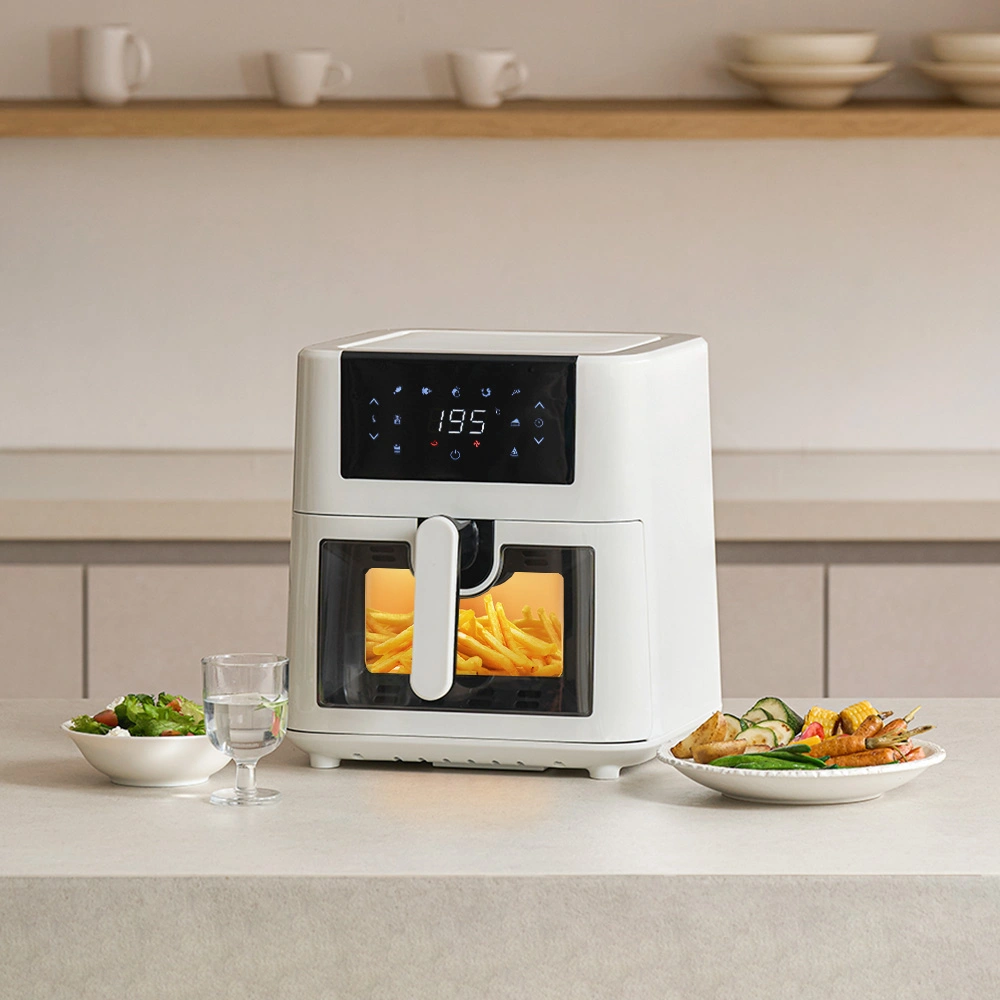
Tape Measure and Bundles: Korea Solo Living—Don't Rush the "Must-Buys"
Story & products
Japanese solo-living pieces love room vibes. Korea's 자취 (renting on your own) is blunter: check what appliances the place already has; worry about bundles later.
Not romantic. Saves you one regret.
Unboxing videos teach the "I'm finally independent" photo. A tape measure teaches you how to survive the first summer. Both are real. Only the second decides whether you reorder in month two.
One-person households in Korea are common now. Young people move into a 원룸 (one-room studio). Open the door: bed, desk, and stove share one view. Share of solo households is already high—no need to call it a "special lifestyle." Sellers push 자취 필수템 (solo-living must-buy lists) packs: washer, fridge, microwave, vacuum in one go—plus fast install and installment plans. People who actually move in spend week one on the same chores: measure fridge width, check the breaker box, crouch to see if the washer is already 옵션 (landlord-included gear).
This piece is not about pretty unboxing. One plain line: check what's included first; bundles later. A bundle looks like "life is complete." The listing tells you whether you already paid for that once.
300k, 700k, 1.5M won: the split sits near 700k
Korean guides are often table-clear. Some split "first appliances" into three budgets: about 300,000 / 700,000 / 1,500,000 won. The blunt takeaway—the better value usually sits near 700k.
The 300k tier is the easy trap. You think you bought a "mini washer," about 3 kg, then it can't wash a duvet; buy again next season and you paid twice. The 1.5M tier can get a slimmer drum, a bigger fridge, even a mini dryer or combination oven—but when you move out, disposal and hauling cost money too.
Around 700k, the usual combo is: a top-loader that can wash a duvet, a 200–300 L two-door fridge, about a 20 L microwave, plus a 3–6 person rice cooker—not luxury, just "no forced reorder soon."
Note: these prices are a snapshot from guides of a certain period, not forever price tags. Keep the structure—too-cheap minis push you to buy again; overbuilt sets become a burden at move-out.
Sellers love bundles because they photograph well. People who've lived there love to unpack the bundle, because every centimeter of a 원룸 counts. Regret from buying twice shows up more than "missing one gadget": someone wrote that ignoring included gear and reordering once burned the mood of 200,000+ won. Numbers change; structure doesn't—the "complete set" you never measured is often the most expensive.
Order gets written in stone too: confirm 옵션 first, then washer, then fridge; decide the rest after a week. That week is not stalling. It lets the room tell you what you lack—not the ads.
Rank survival appliances first; brand stories can wait
If budget is the X-axis, order is the Y-axis.
Priorities from ten years of 자취 often put the microwave as "survival item #1": reheating delivery, thawing convenience food, a ten-minute hot meal after work. More honest than any "smart" pitch. Fridge size follows cooking habits—light cooks can go smaller; heavy cooks need a bigger tier. Some warn that a tiny included fridge is almost useless for a weekly shop.
Washers often rank first—not from loving chores, but from duvets and seasons. Minis look space-saving until "can't do the big job" forces a reorder. Vacuums can be handheld, or a robot later; in a ~12-pyeong place, the charging dock itself steals floor.
There's also a "day one" vs "month two" split. Move-in day: microwave, rice cooker, power strip, router, vacuum, desk, fan or heated pad; pack extra bathroom towels; don't forget a drying rack. After settling: air fryer, kettle, air purifier—when kitchen smells won't leave a 원룸, you'll get why the month-two list exists.
Dehumidifiers in small damp rooms year-round often get called "quiet but useful long-term." Handheld vacuums shouldn't be bulky—oversized docks become new hallway obstacles. Spec articles pile model numbers; what to keep are constraints: can you stand the noise, is the filter washable, can you read the energy grade.
Rice-cooker size shows eating habits. Practical Korean pieces more often suggest 3+ servings for freeze-and-portion. Japan's "one person, one go" machines aren't the mainstream answer here. Not who's more advanced—different eating: finish now vs cook once for days. Side by side, "must-have" was never a universal truth; it's one country's meal rhythm printed on appliances.
Mini appliances in a 원룸: high wants, useful is another story
In community polls, "must-have solo appliances" often look different: robot vac, air fryer, mini dryer, countertop dishwasher, food-waste disposer. Not survival like a fridge, but they keep coming up as online evergreen topics—especially the last few: big wishes, still few owners.
삼신가전 once meant washer, fridge, TV as the marriage trio; in 자취 talk the list rewrites, dishwasher yields to air fryer. Mini dryers get called a fix for rainy season and fine dust—and bring noise and filter costs. Countertop dishwashers sound nice; you still haul water in and waste water out.
Air fryers get a very Korean honest line: "you'll pull it out again eventually." Size up a tier; too small and it sits idle. It also overlaps microwave and oven—so some mark it "buy later," not week-one pioneering.
Dishwashers are wish vs reality.
Food-waste disposers often top wish lists; models around 300,000+ won get discussed, but uptake stays low. They're "imagined essentials": you know they could improve smell and leaving-the-house rhythm, yet leases and drain rules may block them.
Mini appliances aren't better for being cute. Each one asks the same question: does it cut repeat chores, or add footprint and noise?
Community hype and buy order shouldn't mix. A robot can be wish #1 and still shouldn't beat "is there a washer tonight." Wish lists dream; survival order gets you through move week—both matter, different start times.
When you buy, don't forget policy and after-sales
If this Korea piece stopped at product-push, it'd waste its densest part: policy and service often sit inside the buying guides.
High-efficiency subsidies can refund part of power bills or purchase cost, with caps; old appliances can book free pickup; a seven-day cooling-off gives impulse bundles an exit. The shopping path gets stepped: compare specs on price sites first, then check fast install, then brand-mall card deals. Coupang here is more a channel name than a must-open shopping essay.
These lines aren't pretty. They change how "independence" adds up. Independence isn't hauling a full set to prove adulthood. It's checking 옵션, counting double buys, calling recycling, stopping before the breaker maxes out—don't stack microwave and induction blindly; circuit load beats influencer lists.
After-sales and energy grades also enter "how to pick": loud brand, but repair is unaffordable or no house call—that's hidden renting cost. Solo homes have no spare person to queue for exchanges; systems and service networks are infrastructure.
Back to the plain line: check what's included first; bundles later.
Solo living gets redefined here: not "I bought every 필수템," but "I bought in the right order, and I know which costs policy covers." Doing the math isn't stingy. For one-person households it's real freedom—spend on the one thing you actually lack, closer to independence than staging a room like an ad.
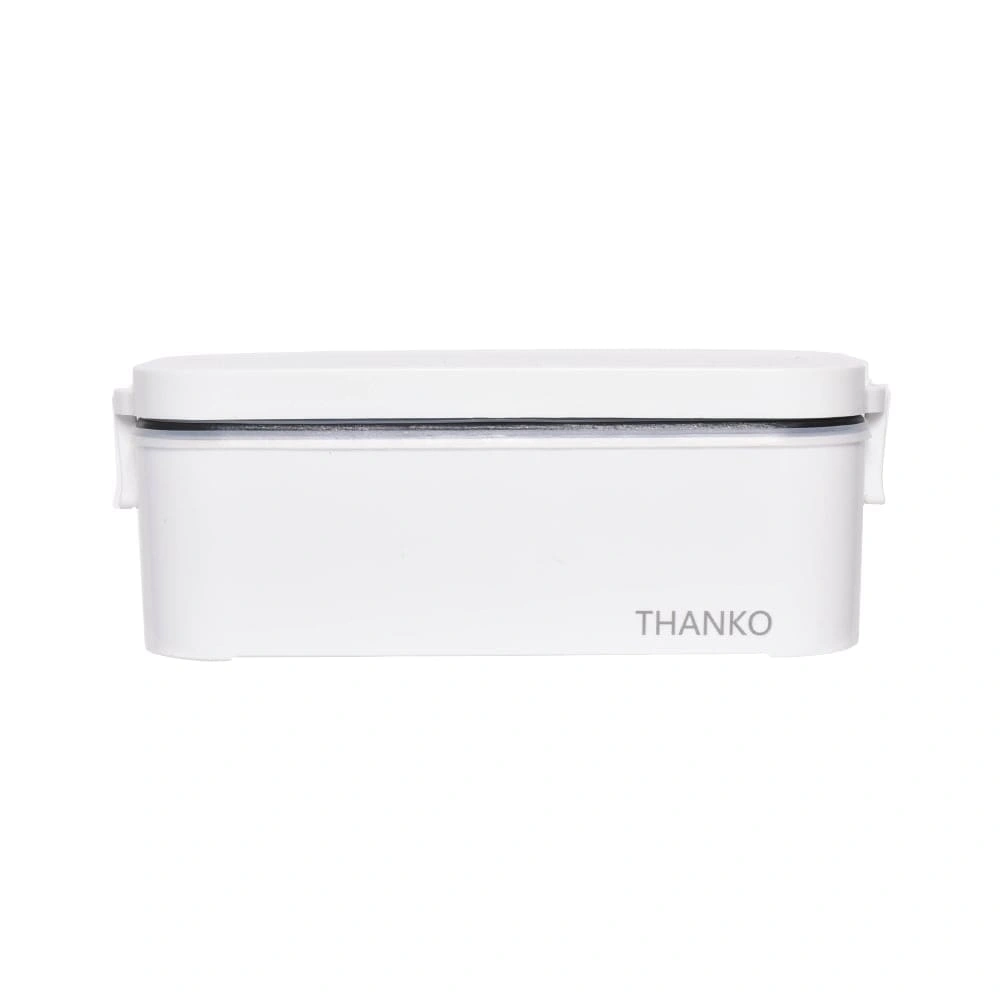
Bento Cookers and Oversized Pots: In Japan's Solo Living, "Bought and Loved" Is Not a Checklist
Story & products
If "bought and loved" sounds like a shopping list, what Japan's hitori-gurashi is really practicing is something else: when you want to eat, cook only the portion you can finish.
That sense of portion is harder to copy than any "fifteen picks."
Shopping platforms like to translate it into "solo living must-haves"; people who actually move in discover that the real difficulty is refusal—refusing family-sized capacity, refusing completeness designed for the camera, refusing to live "alone" as "a household that just hasn't assembled yet."
For twenty years, one-person households in Japanese cities have long ceased to be the exception. Rent a tiny 1K or 1DK, fridge against the wall, stove so narrow you turn sideways to chop—yet the industry's default answer remains "appliance sets," "family 5.5-go rice cookers," "stage the living room like a magazine." People who actually live there often only realize by month three: the problem is not that things aren't expensive enough, but that they are too big, too full, too much like a life designed for someone else.
What runs through this piece is not a "must-own gadget" gospel, but an almost homely image: that lunchbox-sized pot on the counter, rice just covering the bottom of the inner pot, steam clearing, you sit down, finish, wash the bowl. If a idle 5.5-go cooker still sits beside it, it isn't wrong—it simply doesn't belong to this moment.
"Bought and loved" is not a list—it is frequency of use
Open a search and Japanese "買ってよかった" has almost become a template. Furniture bloggers list fifteen items; appliance sites list three must-buys; room-show posters add three more "vibe" pieces. Industry default: readers want a checkable table.
People who have lived ten years write harder. One personal blog puts "good things" next to "useless ones": the cordless vac you touch every day stays; the home bakery, yoga mat, heavy bookshelf, humidifying air purifier abandoned after filter hassle gradually become failure specimens in the room. Her rule is simple—buy by frequency of use, not by "how solo living is supposed to look."
This is not an anti-consumption manifesto. It only reminds you: lists manufacture anxiety; frequency manufactures judgment.
In real-room roundups, "bought and loved" often lands on movable, dual-use objects: a low stool that is side table and storage; a shelf that works as a desk; a portable lamp that follows the body. When the room is small, anything that only looks good on camera is quickly kicked into a corner.
Failure talk is often more honest than success talk. Buying the wrong thing takes more space than buying one fewer—that is hitori-gurashi's cruelest arithmetic.
There is a subtler failure too: the object isn't ugly, only the rhythm is wrong. A home bakery needs proofing and waiting; a humidifier needs filter changes; a "pretty ambient light" that never moves with you becomes décor stuck in a corner. Solo time is fragmented; only objects that nest into fragments stay.
Three must-haves, and the things that light the room
Appliance articles have an almost fixed division of labor: first "must," then "nice to have."
Fridge, microwave (or oven-microwave), washer—these three are still the floor in most Japanese solo guides. Prefer fan-defrost for the fridge, and an exterior that isn't oppressive; washers of four to five kilos are common, and if you go drum, measure the move-in path first—door width, stairs, elevator matter more than the model name.
Only then comes "light." Portable lamps, small speakers, mini projectors land in the "nice to have" column. They don't keep you alive; they keep a 1K night from feeling like a temporary camp. In one Japanese-modern 1DK: a clear glass canister on the table makes tea leaves visible, and brewing becomes habit; a waterproof mini speaker in the bath keeps washing from being blank time.
Industry will sell the second column as "must-buy" too. People who have lived there split the columns: the first asks "can you get through winter without it?"; the second asks "does it move with your body?" A lamp that can come to the bedside is closer to solo rhythm than ambient light forever plugged in a corner.
Rice cookers sit in that seam too. Guides say: you can buy one, or manage with a pot or microwave. Some eventually choose around three go, batch-cook and freeze—trading "batches" for "lighting the stove every day"; others refuse the big pot and accept only one portion on the spot. Both answers hold, if you first admit how narrow your kitchen is and how late you get home.
Another ledger is often ignored. Someone moving from an Osaka family home to a Tokyo 1K of about twenty square meters: of total moving costs, deposit and fees take most; furniture and appliances get only a slice of budget. If the company subsidizes rent, monthly living costs can support "adding slowly." SNS showrooms assume you have already paid the invisible slice.
"Ohitorisama appliances": industry finally admits one person eats
If the three must-haves are survival, then Japan's market for ohitorisama appliances—gear sized for one—is a belated admission: family-portion kitchen machines force you to leftover or throw away.
Brands answer concretely. One lunchbox-shaped rice cooker holds about half to one go, officially priced around seven thousand-plus yen, rice in as fast as a dozen-plus minutes; the tagline is almost this essay's through-line—when you want to eat, cook only what you can finish. It is not meant to replace the 5.5-go at home; it admits that one person's dinner should not be shamed first by "family spec."
On the other side, a small fryer: oil about three hundred to five hundred milliliters, modest wattage, washable pot, cord that stores inside. The pitch is not "fry for the whole family," but "when you want fried food, you need not open a whole pot of oil for one meal." In a narrow kitchen, oil smell and storage are themselves costs—so "small" is not cute; it is manageable.
Of course, separate two voices. Cumulative shipment figures on brand pages are marketing language; a blogger writing "a three-go cooker covers six frozen meals" or "5.5-go is too big" is living language. Some still choose a Zojirushi three-go: cook a little more once, portion and freeze—another kind of "finishable," by rhythm, not by a smaller pot.
Discretion sits here: do you want one portion on the spot, or a batch. Both hold, if you know which you are, rather than being pushed by "solo must-buys."
"Ohitorisama" sounds like a marketing tag; on the counter it is plain: pot rims get lower, oil gets less, dishes get fewer. Once industry admits one person is a complete dining unit, products need not comfort you with "family discounts"—they speak in portion.
The room's story speaks before the product name
The last layer listicles often skip: room narrative first, product entrance second.
In the same 1K, someone envies a shared kitchen's wide counters yet can only finish a meal on a cutting-board-sized space; someone keeps budget on "cute and cheap" ready furniture and deliberately does not chase SNS checklists. A lamp can be a brand portable or a chain-store substitute—the difference is not the brand letters, but whether you still charge it, move it, and truly use it to light the hour after overtime.
Room stories also decide whether you buy "ritual." Hand-drip coffee, a single-stem vase, Ryukyu tatami and paper lamps—when these appear in real-room interviews, persuasion is not price but whether they happen every day. An invisible tea canister rarely builds a brewing habit; a silent bath rarely makes washing stay-able time.
Vacuums work the same way. Someone buys a handheld barely over a kilo just to lower the "should clean" mental bar; some guides honestly say: in a tiny 1K, a floor wipe is enough. There is no single right answer, only an honest pairing of floor area and laziness.
So if "bought and loved" is still worth reading, it should not be read as a seeding table, but as other people's failures and restraint: which things are still at hand after three months, which became yoga-mat laundry racks.
The room votes for you. A bento-sized pot, a movable lamp, a canister that shows the tea—they are not "minimalist dogma," but an executable aesthetic: good-looking, and finishable, usable, storable.
Solo living is not family life scaled down one size.
It is closer to redefining independence: independence is not "I can finally buy everything," but "when I want to eat, I cook only what I can finish"—leaving taste, and the discretion to say no, inside portion, frequency, and room scale.
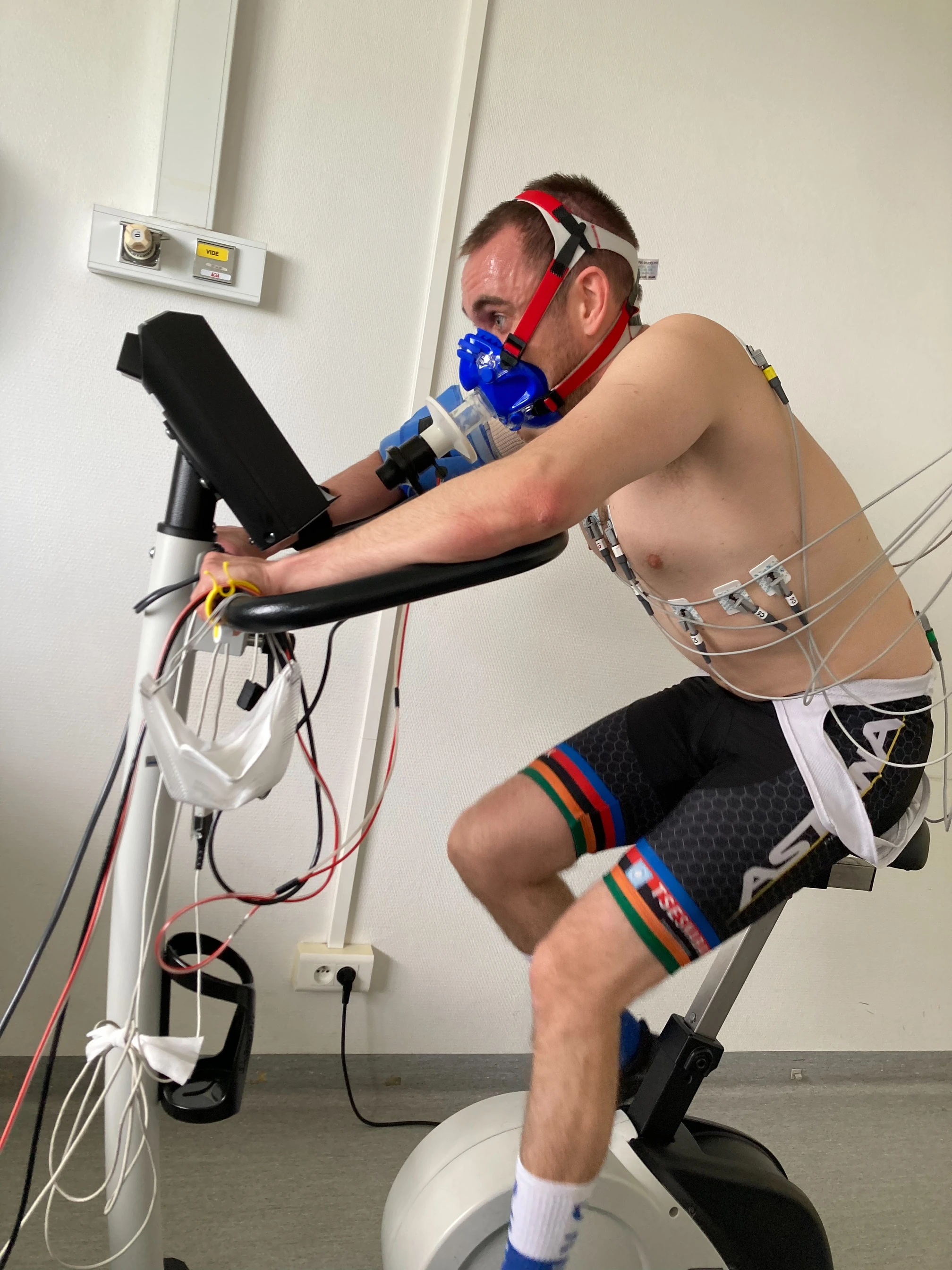
From VO₂ Max on Your Watch to Race Day
Story & products
If, over the past decade or more, the spectrum of mass endurance and wearable culture was still drawn as a straight line—on the left “VO2 max number equals running ability,” on the right “beyond the half marathon VO2 does not matter, the ceiling is genetic”—then once someone laid the lab tone of “highly trainable” from a podcast beside the influencer tone of “don’t worship the peak” from social media on the same table, that line had already folded into a pair of scissors: one blade is how dial tides write the peak as holy grail or scrap paper; the other is how economy and threshold pace still cut through number-worship with race-day steel. The image that runs through this essay is not the next brighter watch estimate, but the tide of peak oxygen and the knife-edge of economy: on one side, a wristwatch estimating thirty-seven and forty-three on the same day pretending to be a lab; on the other, commenters almost in chorus reminding us that high VO2 with poor economy can still lose to lower VO2 with better economy.
From “Dial Holy Grail” to “Both Overhyped and Underhyped”: How the Default Was Lifted
What the blogger did was simple: after a podcast that treated Olav Bu’s take—VO2 max as highly trainable—he ran into the opposite claim on social media: for the half marathon and beyond, VO2 max does not matter, and there is a genetic ceiling. He did not pick a side at once. He set two defaults side by side: one that writes the peak as a trainable grail; one that writes it as a side note at the elite edge. His own reading was honest—ceilings may exist, but most people are still far from theirs and can still improve—and he asked whether people confuse “predictive power among elites” with “still important among sub-elites.”
This story is familiar in running circles. Industry default logic likes poles: influencers write VO2 as the master key to longevity and race fitness; the simplified counter-version writes “don’t bother with peak work for long distance.” The post lifts the default not by inventing a third slogan, but by pressing the scene concrete—suppose one person has VO2 60 and another 50; regardless of lactate threshold (LT) and running economy (RE), the former should be faster over most distances; a hundred-mile ultra might be an exception. The hypothesis itself invites a fight: it uses the peak tide to press against “half marathon and up, who cares,” while leaving economy and threshold in parentheses for the comments to cut.
A highly upvoted comment (~105) writes the scissors in full: VO2 max is both overhyped and underhyped. Overhyped—amateurs stare at dial swings; watches are inaccurate, true values need a lab; high VO2 with poor economy can lose to lower VO2 with better economy; most amateurs should train running economy first. Underhyped—marathon and ultra crowds often skip HIIT and speed work; those sessions can also help economy. Genetic plus trainable; train up to your own genetic plateau. Another commenter (~9) adds the naming ebb: thanks to Garmin and the like, VO2Max is already a default performance metric—it is not “underhyped”; it is simply less useful than influencers claim. Norwegian-style threshold and Daniels-type systems do not prioritize “training VO2”; they emphasize threshold and sub-threshold. Long-distance performance correlates more with high mileage and “knowing how to eat” than with whether you do VO2 sessions. Skipping VO2 work hurts short distance—but low mileage hurts too; it is a priority problem.
The dial scene speaks for itself. Someone in the comments wrote of estimating 37 while sitting the same day and 43 after a running test—tide on the wrist, lab under a mask and gas analyzer. Fitbit dropping the VO2max name for Cardio Fitness Score looks like a naming ebb: the peak is still estimated; the grail wording is wiped. So the default shows its seam—it thought a “number” could convert losslessly into “fitness” or “scrap paper”; the post and comments rewrite it with the same checkable clash: the peak is overhyped by dials and underhyped by long-distance culture; the real edge is usually not the next estimate, but economy, threshold, and dose.
60 Versus 50, and vVO2: Why the Peak Tide Cannot Cut the Economy Edge
The in-post hypothesis is sharp enough: 60 versus 50, regardless of LT and RE, the former should be faster. It pushes the peak tide forward—and exposes itself to the knife—because comments promptly pull absolute VO2max out of the race-predictor slot. One commenter (~8) is blunt: absolute VO2max is not even a predictor of running ability at the sub-elite level; vVO2max (speed) is. Billat / Rønnestad-style ultra-short intervals (20–30s) can enlarge the heart and raise the number, but the evidence does not necessarily prove they make you faster than 2–4 minute intervals. Economy at VO2max is more trainable than VO2max itself, and more visible in results. Example: someone lab-tested at VO2max 58 and was still very slow.
That sentence drags the scene from “how high the peak” back to “peak speed and economy”: the tide can raise milliliters; it cannot cut the per-kilometer oxygen cost on race day. PullPush archive notes add—among the general population VO2 predicts performance; in highly / reasonably trained groups the correlation vanishes. From the 1970s through the 2000s VO2 was overemphasized because it was measurable; endurance, economy, and threshold pace matter equally; about 70–90% of recreational runners who care about these topics aim at half / full / ultra, where VO2’s weight falls. These lines do not cancel peak sessions; they refuse to miswrite “trainable peak” as “convertible finish time.”
The blogger also notes Steve Magness questioning whether you can precisely target VO2 max with specific training, while Olav Bu seems to disagree. This essay need not pretend to settle the lab dispute; it only needs to present both: belief in targeted peak blocks on one side, and the reminder that “targeting” itself may be swallowed by economy and overall stimulus structure on the other. For those who already treat the dial as grail, 60 versus 50 is thirst-quenching; for those who already write the half as “peak-irrelevant,” vVO2 and economy’s edge is thirst-quenching. So the through-image falls from “peak tide” to “the knife still in the sheath must still tell speed from economy before another half-inch”: ask milliliters, or the speed those milliliters buy; ask raising the number, or running cheaper at the same peak intensity.
Cycling Blocks, Track History, and Weekly 8×1km: Half-Inches Across Sports and Dose
The blogger also asks: do amateurs obsessed with long distance stall growth by overdoing heavy threshold? VO2 max blocks are common in cycling and other endurance sports, less talked about in running; many elites on threshold-led plans seem to have track racing history, so VO2 may already be laid down. That half-inch question is precise—it drags a cross-sport default into the running calendar: a bike power meter can hold pace steady; running struggles to copy the same edge; when comments discuss 4×8 minutes, float recovery, Billat intervals, the cross-sport contrast is itself a scene.
Dose scenes are concrete too. Classic Daniels-style 8×1km (3–5k pace) hits the legs hard; recovery often needs 4–5 days; forcing it weekly scrambles the whole stimulus structure. Someone’s week looks like: two sessions below VO2 or shorter intervals, plus a tempo slightly under threshold, plus a long run. Another comment says a VO2 block can only hold about six sessions or so before fatigue stacks—treat it as a dose scene, not a hard law. Older or thirtysomething starters: VO2 sessions injure easily; some switch to 10K–HM pace intervals plus strides. The problem of over-focusing VO2 is named in a ~12-upvote comment—this essay need not invent ungiven bullets; it only admits that writing peak work from “occasional edge” into “weekly grail” turns the tide into an injury tide.
Industry default shows its seam again: it thought “Norwegian threshold” and “VO2 blocks” must be either/or; the post and comments spread priorities—short distance without peak stimulus suffers; long distance without mileage and fueling suffers; the track history behind elite threshold plans may already have laid the peak into the base. The knife’s half-inch sits in these cracks: can you move sessions across sports wholesale, will weekly 8×1km eat recovery, will dial tides write “should do peak” as “should raise the number every day.”
Closing: Rewrite “Independence” as “Holding Both Blades of Peak and Economy Yourself”
If mass running culture often reads independence as “one person glued to watch VO2” or “one person memorizing half-and-up doesn’t matter,” this discussion is closer to another independence—holding both the peak tide and the economy edge at once, refusing the false binary. The blogger’s post matters because it laid checkable scenes on the table (the trainable tone from the podcast, the counter-claims online, the 60-versus-50 hypothesis, Magness versus Bu, cycling blocks versus track history); the comments matter because they refused to push him into “peak equals truth” or “peak equals scrap,” and spoke the spirit of the rule back: first tell dial from lab, then absolute VO2 from vVO2; use economy, threshold, mileage, and dose to keep polishing the race-day blade inside the rising tide of number-worship—finish difficulty usually hides in how cheap each kilometer is, how steady the threshold, how the stimulus is scheduled, not only in the next estimate.
The actionable tip is plain: don’t only watch VO2; the same-day 37 and 43 tide reminds you an estimate is not a lab. Look at economy, threshold, and mileage before deciding whether to add a peak block; short and long distance have different priorities—don’t cut with influencer grails or “half doesn’t care.” If you do VO2 sessions, ask dose and recovery—will 8×1km scramble the week, will ~six sessions of stacking become injury; ultra-short intervals raising a number is not the same as trading it for finish time. Write “independence” as “reading both blades of peak and economy yourself,” not “forever outsourced to the next brighter dial” or “forever outsourced to the next easier genetic ceiling.”
The content of this article is only for viewing, reflection and independent judgment. It is not an instruction manual. It is simply a part of what exists in the world.
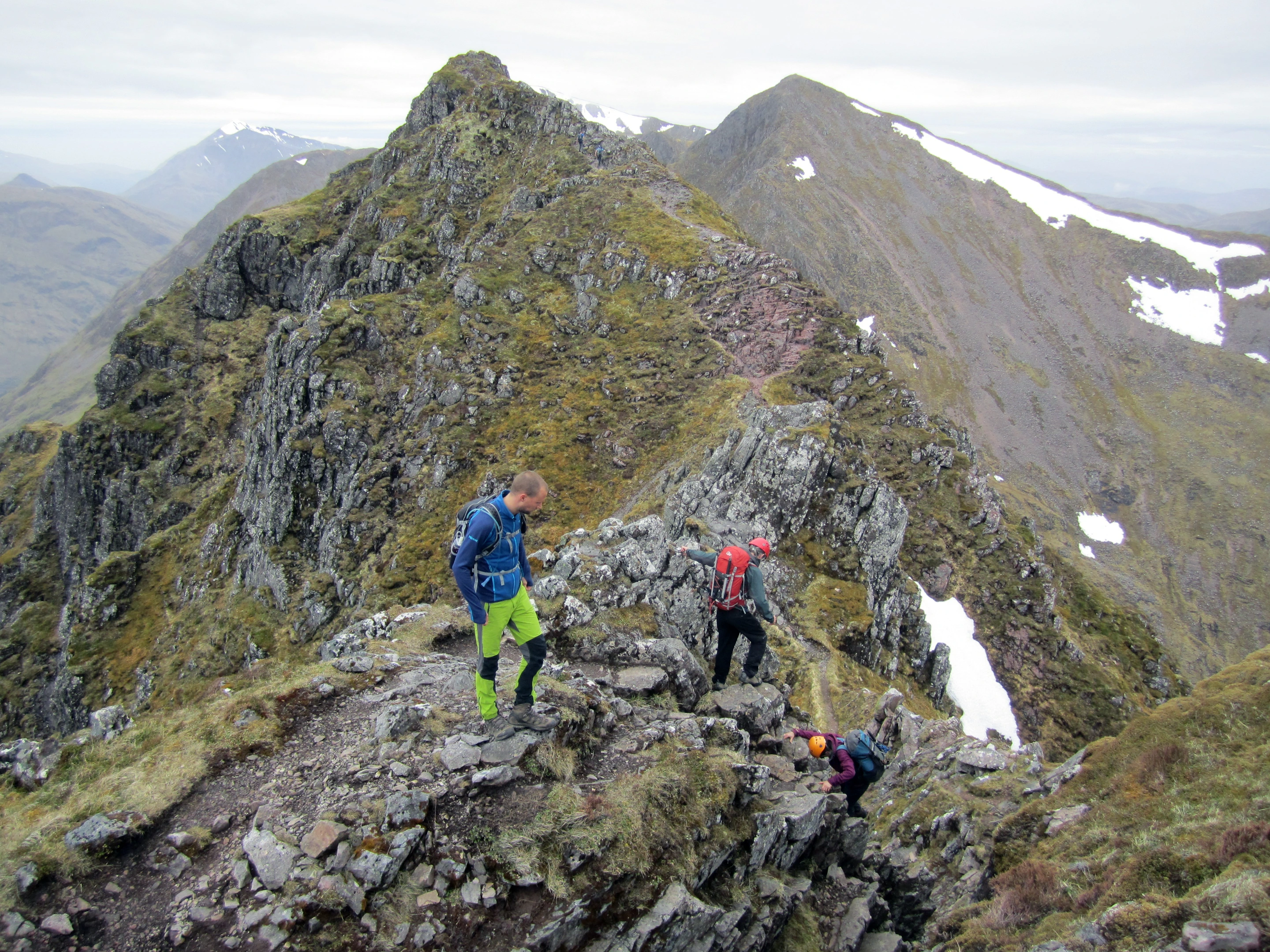
Climbing per Kilometre: Another Measure of Trail Difficulty
Story & products
If, over the past decade-plus, the spectrum of mass trail and ultra culture was still drawn as a straight line—with “hard because long” on the left and “brand epic equals steepest” on the right—then once someone divided cumulative climb by distance across more than two hundred eighty European public races and laid “meters of elevation per kilometer” on a table, that line had already folded into a pair of scissors: one blade is the almost absurd vertical density of short mountain races; the other is the epic loops of three hundred kilometers and beyond that still press gradient talk under mileage myth. The image running through this discussion is not the next longer finish certificate, but the tide of gradient and the knife-edge of epic: on one side, how a vertical tide of roughly eighty meters per kilometer cuts open the default that “hard = long”; on the other, the comment section’s nearly unanimous reminder—average grade ≠ difficulty, and the blade still needs half an inch more.
From “hard because long” to “elevation per kilometer”: how the default gets overturned
What the blogger did was plain: using public course data, divide D+ (cumulative climb) by distance to get D+/km (meters per kilometer), deliberately stripping out “hard because long.” The sample lands on two hundred eighty-seven European trail races. The method itself almost invites a fight with the industry default—the default says epic equals long, long equals hard; the table says: once length is pulled out, the definition of steep changes hands.
The ranking table’s scenes are concrete enough. The 52 km Glen Coe Skyline, about 4,280 m of D+, about 82.3 D+/km, sits at the top; the 144 km Échappée Belle about 76.4; the 360 km Swiss Peaks Trail about 73.9; the 93 km GR20 Nord Ultra Trail about 73.1; the 330 km Tor des Géants about 72.7; the 450 km Tor des Glaciers about 71.1. Further down, the 31 km Sierre-Zinal also sits around 71.0—able to match epic races at ten times the mileage. Salomon Ultra Pirineu is written as a 60 km tier at about 68.3; and the hugely famous UTMB, by the same metric, lands around 58 m/km—not especially steep.
This narrative is familiar in trail circles: finish posters love “hundreds of kilometers, twenty thousand meters of climb”; brand epics love stacking absolute mileage and absolute climb into myth; short afternoon mountain races get casually filed under “festival runs” or “vertical kilometer” side branches. The post overturns the default not by denying long distance, but by changing the ruler: ask first how much elevation each kilometer lifts, then talk about hard. The blogger’s surprise is honest—the 52 km Glen Coe Skyline outranks Tor des Géants and Swiss Peaks on D+/km; 31 km Sierre-Zinal can still match epics at ten times the distance. The surprise holds because the ruler changed; it is also dangerous, because the ruler itself has not yet been cut open by the comments.
82.3 versus 58: why the short-steep tide still cuts the UTMB myth
The numbers in the post speak for themselves. 82.3 against about 58: on one side, nearly continuous steep rises and drops on a Scottish Highland ridge; on the other, the Tour du Mont Blanc epic’s cultural default as “one of the hardest.” Vertical density and horizontal myth collide here—the tide is written in meters per kilometer; the myth is written in finish narratives and media spectrum. The industry default shows its seam again: it assumes “hard” can be derived losslessly from “long”; the comments and the table rewrite it with the same public data—what is truly steep may be the vertical tide squeezed into short races, not forever outsourced to the “300 km+” epic label. UTMB around 58 m/km does not diminish the Mont Blanc loop; it only refuses to cash fame directly into “also steepest by elevation per kilometer.”
Press the scene further: if the calendar holds both “30 km-class steep” and “300 km-class long,” yet finish narrative rewards only the latter, training and race choice get swallowed by horizontal myth—short-steep becomes warm-up, long-gentle becomes ultimate. Criticism beyond the top likes already cuts in: average grade is not difficulty; short afternoon mountain races and multi-day epics cannot share one stage; some propose metrics closer to energy cost (NOLS energy miles and similar). These objections do not cancel D+/km; they remind that the tide can cut myth but cannot alone crown a god.
Loops, finish elevation, and discontinued names: half an inch of data blade
The comment section did not follow the comfort story that “the ranking is final truth.” One commenter (~32 upvotes) questioned generative traces and noted that no Ultra Pirineu 60 km tier exists in the calendar—the common local distances are around 100 km and the like; there never was a 60. One row on the table thus slides from “verifiable fact” toward “half an inch of data blade”: however clean the method, one wrong input writes the tide onto the wrong shore.
Another commenter (~8 upvotes) added two steeper scenes—PicaPica about 110 km / 11,500 m; Trail du Besso about 59 km / 5,800 m—and called Sierre-Zinal “cheating”: the finish sits far higher than the start, while many others are loops or more balanced undulation. That sentence pulls the profile back from the average into geometry: net climb, loop descent, one-way lift can masquerade as the same steepness on one D+/km ruler. Another comment mentioned Gran trail Courmayeur 100k at about 100 km / 7,400 m; a Pyrenees-side commenter reported local steep-race numbers (Trail Valle de Tena, Canfranc, and so on)—scenes, not an encyclopedia of undetailed facts.
One more reminder must sit in parallel: a comment (~5 upvotes) said Glen Coe Skyline is no longer held. Public Skyrunning-type pages had still listed the name around 2023 at about 51 km / 4,563 m climb—the name remains in the difficulty spectrum; whether it is still raced is another matter. The text need not pretend to adjudicate “does it still count”; it only needs to present both: the top of the list can be a discontinued name; the myth can be a brand still running; half an inch of blade sits in those two cracks.
Together these comments do not deny the blogger’s intuition (vertical density really can cut “hard = long”); they refuse to read “data trail” as “forever covering the course with the next ranking.” The through-image therefore drops from “gradient tide” to “the knife still in the sheath must discern profile before drawing half an inch”: verify whether distance tiers truly exist, ask loop versus finish lift, ask whether the race is still held, ask whether average grade has swallowed technical terrain and multi-day recovery—all half an inch, yet enough to bring race choice from myth back to profile.
Closing: rewriting “independence” as holding both blades of gradient and epic
If mass trail culture often reads independence as “signing up alone for a longer epic” or “memorizing brand difficulty myths alone,” this discussion is closer to another independence—holding at once the tide of elevation per kilometer and the knife-edge of epic narrative, refusing a false binary. The blogger’s table matters because it lays verifiable scenes on the table (287 races, D+/km, Glen Coe ~82.3, UTMB ~58, short races matching tenfold mileage); the comments matter because they did not push the blogger into “ranking equals truth,” but spoke the spirit of the rule back: first verify inputs (do race names and distance tiers exist), then verify geometry (loops, finish lift, net climb), and with profile, technical trail, and multi-day load, still polish the epic blade inside the rising short-steep data—epic hardness often hides in recovery, sleep deprivation, and cumulative consecutive days, not only in meters per kilometer.
The actionable tip is plain: when you read the next race calendar, look at profile and D+/km, not only the poster’s total mileage and total climb; compare short-steep and long epic on separate stages, rather than crowning with one average; verify whether the race is still held, whether a distance tier was miswritten, whether start–finish elevation difference wrote “steep” into one-way lift; train both vertical density and consecutive-day recovery and fueling rhythm—write “hard” as “you can read both blades of gradient and epic,” not “forever outsourced to the next longer brand myth.”
At Three in the Morning, Questions in a Glucose Trace
Story & products
If, over the past decade or more, the popular biohacking spectrum was still drawn as a straight line—on the left “wear one more sensor,” on the right “add one more bite of protein before bed”—then once continuous glucose monitors entered non-diabetic households, that line folded into a pair of scissors: one blade is the overnight sugar curve slowly sinking and the adrenergic alarm that rings on time at three; the other is whether hepatic glucose output, counter-regulation, and metabolic flexibility can still carry a normal overnight fast. The image that runs through this discussion is not the next supplement checklist, but the tide on either side of three o’clock: on one side, nocturnal glucose drawn as a smooth CGM curve; on the other, a comment section almost in unison warning that when the curve drops to about 60 with anxiety and hunger, the knife-edge should not be “just eat one more bite before sleep.”
From “the bedtime snack as ballast” to “the overnight fast as the test itself”: how the thread pries open the industry default
The poster is clear: no matter what is eaten by day or before bed, blood sugar creeps downward all night until about 3 a.m., when it reaches roughly 60, then wakes them—anxious, hungry—often unable to stay asleep more than four or five hours. The question is honest, and it sits flush against a default logic in much quantified-self talk: if you wake at night, refuel; if the curve is unsteady, add protein, fat, complex carbs; treat sleep-maintenance insomnia first as “not enough overnight fuel.”
That narrative is familiar in biohacking circles. Once a CGM is on, night stops being darkness and becomes a dashboard; when a trough appears, the most intuitive move is to pour something else into the tank—eggs, nuts, casein, even a spoon of honey. The post itself almost invites that answer: “Why can’t anything I eat stop the tide at three?”
The comments do not follow the comfortable story of “optimize one more midnight snack.” One commenter (about 21 upvotes) rewrites the question from “what to eat at night” into “is your counter-regulation still on duty”: if a finger-stick also confirms about 60—and it is not a compression low from lying on the sensor—then waking at three because glucose has drifted, with anxiety, is not a “try more eggs before bed” problem. It is a sign that glucose control and counter-regulation are badly dysregulated. A bedtime snack can paper over the symptom; the deeper crack is that the body apparently cannot hold stable fasting glucose through the night. In a metabolically healthy state, a person should sleep through a normal overnight fast without an adrenergic hunger-and-anxiety wake-up.
This is not a pedantic word game. For someone who already has a verifiable overnight sugar curve, “add a snack” is not a foreign trick—it is the circle’s default emergency language; treating that language as the only solution usually costs more than first asking whether hepatic glucose and insulin still keep time. The poster’s wish to “sleep past three” is entirely valid—what the comments refuse is rewriting “sleeping past” as “infinite refueling by night snack.”
About 60 and three on the clock: why the night tide still needs the knife-edge of hepatic output
The numbers in the post speak for themselves. A slow all-night decline, about 60, anxious hunger, waking after four or five hours—in biohacking circles these figures are often read as two opposing stories: one says “not enough overnight fuel, top it up”; the other says “the fuel story masks failed counter-regulation.” The highly upvoted comment stands with the latter: recurrent nocturnal hypoglycemia-style awakenings often point to unstable insulin dynamics—too much insulin relative to available glucose, mistimed hepatic glucose output, impaired metabolic flexibility, or some form of late reactive hypoglycemia that overlaps with insulin-resistant / prediabetic physiology—not a harmless personal sleep quirk.
Another commenter lays out a checklist: medications and supplements, evening exercise, alcohol, known hormonal issues, liver disease or other metabolic problems, and whether measurement is CGM, finger-stick, or subjective feel. The questions look fussy, yet they drag the “tide at three” out of a single-supplement narrative into a multi-cause scene: alcohol, muscles still taking up glucose after evening resistance work, and sensor compression lows can all impersonate the same “about 60” on one curve.
Here the industry default shows its seam again: it assumes “stable overnight glucose” equals “one more feed before bed”; the comments rewrite it with the most basic metabolic test—the overnight fast. True stability is the liver dripping glucose into the blood on rhythm, and counter-regulation lifting the line when needed; that knife-edge is exactly the hepatic and fasting tolerance long covered by the bedtime-snack myth.
Press the scene more concrete: if the same adrenergic wake-up hits every night at three, the calendar fills not only with fragmented sleep but with a growing dependence on “eating every few hours.” The highly upvoted comment’s direction is to admit that food can temporarily cover the symptom—and therefore to change the prescription from “always snack” to “gradually rebuild fasting tolerance”: an earlier eating window, lower glycemic-load meals, walking and resistance training, progressively longer overnight fasts, so insulin comes down and hepatic regulation returns to tempo. Intermittent fasting / time-restricted eating is often observed to improve fasting glucose, fasting insulin, HOMA-IR, HbA1c and related markers in insulin-resistant populations—but the premise is not treating symptomatic lows near 60 as a badge to tough out alone; that is a serious metabolic signal.
“A spoon of honey” and “false lows”: patches, compression, and half an inch of blade
Another commenter offers a very concrete scene: what finally worked was a tablespoon of honey just before bed—fructose preferentially stored in the liver, then slowly converted to glucose dripping into the blood; other bedtime carbs were tried, only honey worked. The narrative explains night waking as the liver lacking enough glucose to meet cortisol fluctuations in sleep, so the body stays alert. This is the patch logic with the clearest physiological picture: not the abstract “eat more,” but naming the liver as the reservoir.
It need not cancel the highly upvoted comment; together they form the tension of the through-image: honey can be half an inch of blade out of the sheath—while confirming finger-stick values, ruling out compression lows, and rebuilding fasting tolerance, a small hepatic substrate can hold the night’s alarm down; or it can be the knife fully sheathed—depending on a spoon of sweet every night without asking why a normal overnight fast fails. A parallel reminder comes from the sensor itself: pressure on the sensor can impede interstitial flow and the curve can “fake a crash”; lying on it awake for fifteen to thirty minutes can drop the number, then rolling over can bounce it back—so if about 60 has never been finger-stick verified, the tide may be written on the skin, not in the metabolism.
Taken together, these comments do not deny the poster’s intuition (the night sugar line and the awakening may share a mechanism); they refuse to define “biohacking” as “forever covering the dashboard with the next spoonful of patch.” The through-image therefore moves from “tide at three” to “the knife in the sheath must still tell truth from falsehood before it comes out half an inch”: finger-stick checks, questions about alcohol and evening training, questions about drugs and liver, small hepatic substrates, and turning the eating window and glycemic load back—each is half an inch, yet enough to make the overnight fast a trainable capacity again, not something forever outsourced to the fridge.
Closing: rewriting “independence” as holding both blades—the curve and the fast
If popular biohacking culture often reads independence as “buying every sensor alone” or “stacking the full bedtime stack alone,” this discussion is closer to another independence—holding at once the tide of the CGM curve and the knife-edge of the overnight fast, refusing the false binary. The poster’s question matters because the verifiable scene is laid on the table (all-night decline, about 60, anxious hunger at three, waking after four or five hours); the comments matter because they do not push the poster into the “eternal snack myth,” but speak the spirit of the rule back: first tell truth from artifact (finger-stick, not compression low), then tell layers apart (symptom patch versus metabolic rebuild), and with an earlier window, lower glycemic load, and progressive fasting, keep the hepatic knife bright even while the alarm tide rises.
The actionable tip is plain: if you also see a similar night tide on a CGM, first verify lows with a finger-stick while awake and rule out side-sleep compression; log alcohol, evening training, medications, and what was actually eaten before bed, rather than only changing “one more bite”; short-term, a small, verifiable hepatic substrate may hold the night’s alarm, but the mid-term goal should be written as “rebuild the capacity to sleep through a normal overnight fast”—rewrite “stable curve” as “counter-regulation back on duty,” not “infinite night refueling.” Recurrent symptomatic hypoglycemia warrants clinical evaluation, not treating about 60 as an endlessly self-experimentable tidal landscape.
The content of this article is only for viewing, reflection and independent judgment. It is not an instruction manual. It is simply a part of what exists in the world.
Tides of Mileage and the Knife-Edge of Threshold
Story & products
If, for more than a decade, popular endurance training still drew the spectrum as a straight line—more kilometers on the left, intervals on the right—advanced runners had already folded that line into a pair of scissors: one blade chronic load and weekly volume, the other lactate threshold, steady state, and neuromuscular recruitment. The image that runs through this discussion is not a finish-line watch, but the tide on either side of the threshold: on one side a slow rise from about 60 km toward 100 km of weekly mileage; on the other, structured intensity deliberately shelved—and a comment section almost unanimous in warning that when the tide rises, the knife should not disappear entirely into its sheath.
From “Stack Volume, Then Add Intensity” to “Volume Can Rise While Intensity Is Maintained”: How the Default Logic Gets Pried Open
the blogger states the case clearly: currently about 60 km per week; a 3:28 marathon last autumn and a 1:29 half last year. Over the next three to four months, the plan is to build gradually toward roughly 100 km/week and keep everything easy—no structured threshold or VO2 sessions for now, only strides twice a week, and occasionally letting a long run progress a bit, but no proper workouts.
That narrative sits flush against the default logic of many plans and coach talk-tracks: what limits you in the marathon is aerobic depth and durability, not speed; so spend a solid block getting comfortable at higher volume before inviting intensity back. The closing question is honest: has anyone done something similar at this level? Any real downside to leaving out LT work that long, as long as mileage is moving up?
The comments do not follow the cozy “pure aerobic first” story. one commenter (~36 upvotes) rewrites “volume or intensity” as “is chronic load stable?”: people go all-or-nothing about the two; the spirit of the rule is to stabilize the chronic load you have already adapted to—you can increase volume while maintaining intensity you already adapted to, rather than stacking biggest-peak threshold work on top of rising mileage. In other words, default logic misreads “add volume” as “intensity must first go to zero.” The crack this thread opens is that adding volume and maintaining intensity can share a table; the real danger is “peak threshold × rising mileage.”
This is not a semantic quibble. For someone who has already run 3:28 and 1:29, “intensity” is often not a foreign stimulus from scratch, but a language the body already knows; deleting that language for three months and relearning it later usually costs more than continuing to speak it at a lower dose. The desire to “get comfortable at higher volume” is sound—what the thread refuses is rewriting “comfortable” as “zeroed out.”
The Crack Between 1:29 and 3:28: Why a Durability Story Still Needs the Knife of High-End Aerobic Work
The numbers in the post speak. The gap between a 1:29 half and a 3:28 full is often read, in advanced circles, as: speed near lactate threshold may not be the weak link; carrying half-marathon capability across the full distance is. Ivan Gechev’s take is close: that gap points more to durability than to LT fitness itself; pure volume plus strides is well-precedented—yet also consider adding some steady/moderate work alongside the easy volume, rather than compressing the spectrum to a single color.
Raphael Serrano (~14) sharpens the blade: high-volume easy alone is often not enough for marathon durability—the race happens above LT1; you need high-end aerobic work; while mileage rises, keep a little steady/threshold—e.g. one mild workout + strides/hills + optional long-run progression; do not think in binary. another commenter (~6) offers a harder rhythm: if you are seriously upping volume, threshold at least every 10–14 days; in that view, 70–80 km weeks with threshold and strides often beat pure 100 km weeks for a faster marathon.
Default logic fails again: it equates “durability” with “more easy kilometers.” The thread rewrites it with race physiology—durability is the ability to hold on at a higher metabolic cost, and that cut is exactly what delayed threshold work trains.
Press the scene more concrete: as weekly volume climbs from 60 toward 100, the calendar fills with more easy kilometers, more recovery demand, and fewer windows for hard sessions. The compromise the comments offer admits the windows narrow—so swap “structured VO2 / big threshold” for “mild steady + strides + occasional progression,” not for blank space. Blank looks cleanest, and most easily lets pace feel and recruitment rust over three months.
The Cost of “Pure Easy for Months”: Recruitment, Pace, and Near-Threshold Length on a Lydiard Base
another commenter’s warning leans neuromuscular: pure easy for months makes you slower; you lose muscle recruitment at marathon pace and above—so periodize the jumps rather than leave intensity hanging for long stretches. another commenter offers a path that stays near the knife without hard LT: if you avoid tough lactate-threshold sessions, do longer, slower near-threshold / aerobic-threshold / steady work—e.g. ~40 minutes at 6:40 if LT is about 6:15/mile; Lydiard-style base often sits near this—and keep strides 6–8×15s twice a week for neuromuscular bounce.
Together these comments do not deny the blogger’s intuition (aerobic depth and durability may well have limited the marathon). They refuse to define “building the base” as “sheathing the threshold knife completely.” The through-line image thus moves from “rising tide” to “the knife must still flash half an inch from the sheath”: strides, near-threshold steady, mild threshold, controlled long-run progression—all half-inches, enough so recruitment and high-end aerobic work do not simply vanish three months later.
Closing: Redefining “Independence” as Holding Both Blades of the Scissors
If popular training culture often treats independence as “grinding alone to add miles” or “going hard alone on intervals,” this discussion points to another kind—holding both the tide of weekly volume and the knife-edge of threshold, and refusing the false binary. the blogger’s question matters because the numbers (60→100, 3:28, 1:29) are on the table; the comments matter because they refuse the pure-aerobic myth and return the spirit of the rule: stabilize chronic load, maintain adapted intensity, and keep mild work and strides polishing the edge while the tide rises.

Half-Inch Lift and a Dead Watch Face: How a Mohican 100 DNF Rewrote “Push Through” as “Knowing When to Stop”
Story & products
Original post: u/Dapper_Pop9544, “DNF’d first 1st attempt at 100M,” r/ultrarunning, ~402 upvotes
URL: https://www.reddit.com/r/ultrarunning/comments/1l1q9ve/dnfd_first_1st_attempt_at_100m/
If, for more than a decade, popular culture still pictured “endurance” as finish-line medals and motivational slogans, the ultrarunning community had already stretched that spectrum to the other pole: a watch that dies, quads that seize, a tank top at an aid station in forty-two-degree night air—and a quieter, harder skill: choosing to stop. The image that runs through this post is not a finish chute’s ribbon, but the moment—just before the orange GPS line on the map goes faint—when an ankle can barely rise half an inch.
From “Miles per Week” to “Vert per Week”: How Trail Reality Breaks the Default Logic
The poster trained about ten months, building weekly mileage toward sixty-two miles; the farthest run before that was a marathon eight years earlier. Nutrition and hydration held up reasonably well—one lap even meant four portapotty stops until a gin-gin settled things. By the default logic of road running and many beginner plans, that already looked like “enough”: mileage up, fueling tested, the storyline already titled “I will finish.”
The Mohican-area trails (the in-post map shows zigzags and climbs around Pleasant Hill Lake, Perrysville, Loudonville) do not honor that ledger. Commenters named it plainly: those paths are “gnarly”; mountain-biking a full loop there is torture. Someone else recalled a Mohican 50 six years ago with almost zero vert prep—and after a few hills, only “what have I signed up for.” The poster was more concrete still: after the second lap (~54.8 miles total) things felt decent; about six miles later the quads truly tightened; around sixty-two miles the foot could barely lift half an inch. The Strava screenshot caption: the watch died around mile sixty-five “along with my quads,” then roughly four more miles—64.86 miles, 9,787 feet of gain, 16h 32m—then the plug was pulled.
Default logic treats endurance as a linear function of “a few more weeks of mileage.” Trails rewrite it, with vertical, eccentric downhill load, and night temperature, into an exam of specificity. One comment put the lesson dryly: when you port a road plan to trail ultras, train proportional vert for the race; specificity beats the myth of “add 10% each week.” This DNF was not a failure to “try hard enough.” The body changed the exam questions first.
Arithmetic at the Aid Station: Tank Top, Four Hours, and an 18–22 Minute Pace
What often makes someone stop is not a single spike of pain, but a string of numbers that still do not add up after you do the math. The poster wrote: leaving an aid station, realizing another ~four hours in the woods at forty-two degrees Fahrenheit in a tank top just to finish the lap—then another 23.3 miles at an 18–22 min/mile pace—and calling it.
That arithmetic has three tangible layers. First, gear and body temperature: hot days, cold nights—the ultra’s common script; a tank top at night is not toughness branding, it is a risk line. Second, the shape of time: not “hang on a little longer,” but “there is still a whole dark work-shift ahead.” Third, pace turning into a hike: when minutes crawl to eighteen, twenty, twenty-two, the finish clock and injury risk press together. Someone in the thread said they would always DNF before risking injury; another admitted fearing the second night more—100K is still manageable; the darkness of the last sixty kilometers is where the mind fails first.
The poster did not aestheticize the DNF, nor rush it into soup-for-the-soul self-forgiveness. The tone was: sad and disappointed; also glad to have passed 100K and reached ~69 miles (watch death plus roughly four estimated miles)—a new boundary eight years on; and clear that next year would come with a fuller training plan. “I’ll be back next year with these learnings” carries weight because it sits on half-inch lifts and aid-station math, not on slogans.
DNF as Community Language: Raccoons, Watch Navigation, and “Special People”
Ultrarunning’s reaction to a DNF is often less cruel than outsiders expect. Someone congratulated a first 100K; someone else shared the absurd pain of a dead watch collapsing night navigation while the legs still felt great; someone joked that raccoons ate all the Tailwind from a drop bag; someone else confessed that beyond 100 miles you need to be a “special person,” and preferred multi-day stage racing—50–60K, sleep, repeat.
Together those asides draw a spectrum: finishing at one end, safety and sustainability at the other; between them, gut, lights, vert, sleep deprivation, and gear failure. The “1st attempt at 100M” map screenshot presses abstractions back into checkable scenes—an orange track folding through green hills and lakeshore until the dial goes dark. It reminds readers that ultra “lifestyle” is not only sunrise ridges and branded vests; it also includes learning to admit, in forty-two-degree night air: today’s distance was already honest enough.
Closing: Redefining “Independence” as Stopping the Watch on Yourself
If road finish culture often treats independence as “grinding alone to the chute,” this post points to another kind—stopping the watch as an act of responsibility to yourself. The half-inch lift is hard data from the body; aid-station arithmetic is the boundary drawn by reason; coming back next year writes an unfinished race into training history, not into a ledger of shame.
A practical note: if you are preparing a first ultra with real climbing, rebuild long runs around race-proportional vert instead of flat weekly miles alone; rehearse night sections with headlamp and/or waist light on real terrain; put hot–cold layers in the drop bag rather than betting on “I’ll warm up slow.” For the original post and the mutual-aid details in the comments: https://www.reddit.com/r/ultrarunning/comments/1l1q9ve/dnfd_first_1st_attempt_at_100m/

The Absolute Territory of Routine: Lumilagro Equipo Matero Motivo 1
Story & products
Product Logic: The Lumilagro Equipo Matero Motivo 1 is not merely a set of hydration vessels; it is a modular solution for the strict, regimented lifestyle of South American ritual. This ensemble features a 1000 cc double-wall stainless steel vacuum flask, a dedicated precision pour-spout for mate or coffee, a wide-mouth glass mate cup, and two tin canisters for yerba and sugar. Everything is organized within a unified eco-leather carry-all, converting the fragmented process of preparation into a streamlined industrial sequence—refusing the temptation of laziness that often follows scattered, disorganized equipment.
Technical Specifications: The core flask is engineered from food-grade stainless steel, strictly compliant with Mercosur GMC 46/06 and the Argentine Food Code. The vacuum insulation maintains a steady thermal equilibrium at 70-80°C, the critical threshold for extracting the nuanced bitterness of mate. The specialized flow-control pour-spout (Pico Cebador) is designed to regulate the water stream, preventing the structural degradation of the yerba bed during the pour and ensuring the precision of every single hit.
Discipline as Life: When you return from the training ground or a grueling late shift, the chaos of the outside world must be forcefully silenced. Rather than wasting mental energy on choices, this uniform, leather-clad equipment acts as a visual anchor, transforming the routine of "boil—fill—pour" into a cold, psychological restoration. It is crafted for those who refuse to let their lives fragment and who insist on maintaining order within their personal territory. Never losing a single component of this set is a testament to the maintenance of your own self-control.
L2M respects this product because it deeply understands the athlete’s reliance on "set patterns." Rather than fighting fatigue with fragile willpower, one should build physical "startup switches." This Lumilagro set serves as a physical barrier against the monotony and loss of control in your daily life.
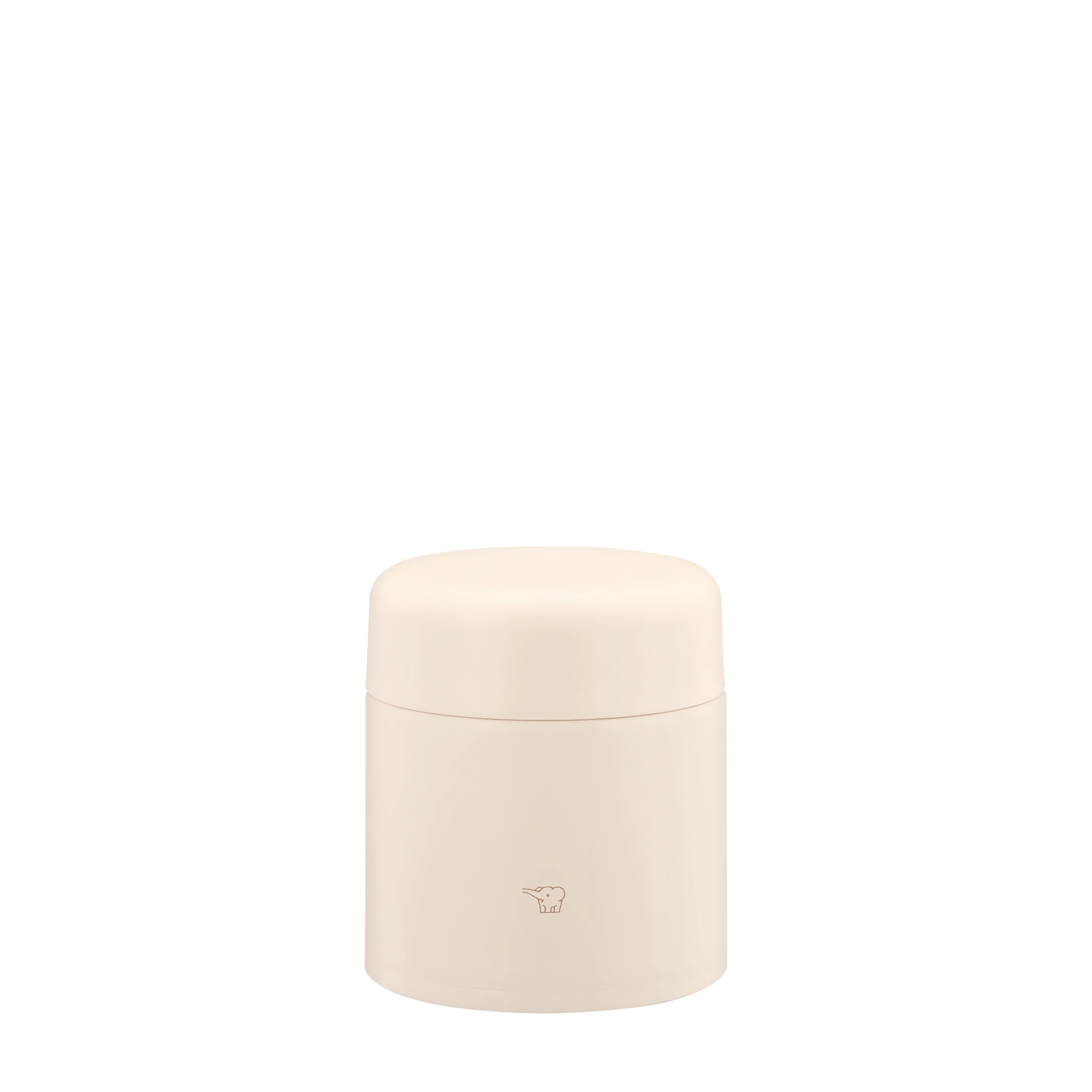
Locking Heat in a 0.3L Vacuum
Story & products
Product Specifications: The Zojirushi SW-LA series (SW-LA30/40/52) is an exercise in Japanese industrial precision. The SW-LA30 provides a 0.3L capacity, with larger variants (SW-LA40/52) available for higher demands. It features the advanced "Thermo Ring" structure and a seamless lid design. The SW-LA30 maintains heat above 62℃ for over six hours. It is dishwasher-safe and utilizes the "Rakuria Coat+" interior, engineered specifically to resist stubborn oils and residues.
Micro-expressions of Order: This is not a prop for influencer lifestyle content; it is a tool for those who live life on a strictly timed schedule. Elite athletes and career-focused individuals often inhabit minimalist spaces where a bulky, multi-tiered lunch box is a liability. They require a repeatable, low-friction recovery ritual. After a high-intensity session, opening the door to find a pre-prepared miso soup or porridge in this specific jar is a grounding experience. A 62℃ intake acts as a primitive, visceral comfort during the post-exertion recovery window.
Minimalism in Maintenance: The integrated gasket and lid design eliminate the common frustration of deep-cleaning soup jars. By removing the need to disassemble and scrub individual parts, you save mental bandwidth during the late-night hours when every ounce of energy is reserved for recovery. Whether in Airy Green, Ecru Beige, or Cloud Gray, these colors reject the noise of trendy aesthetics, favoring a restrained, professional look. The consistent, repeated appearance of this exact jar on your table is tangible proof of a life under control.
L2M respects the Zojirushi SW-LA because it stripped away every ounce of superfluous utility. It is designed for those who have mastered the art of self-restraint and have no patience for the idle scrolling of modern distraction. When your life is defined by training and competition, this precise, unobtrusive supply of warmth is the most reliable partner in your personal logistics.
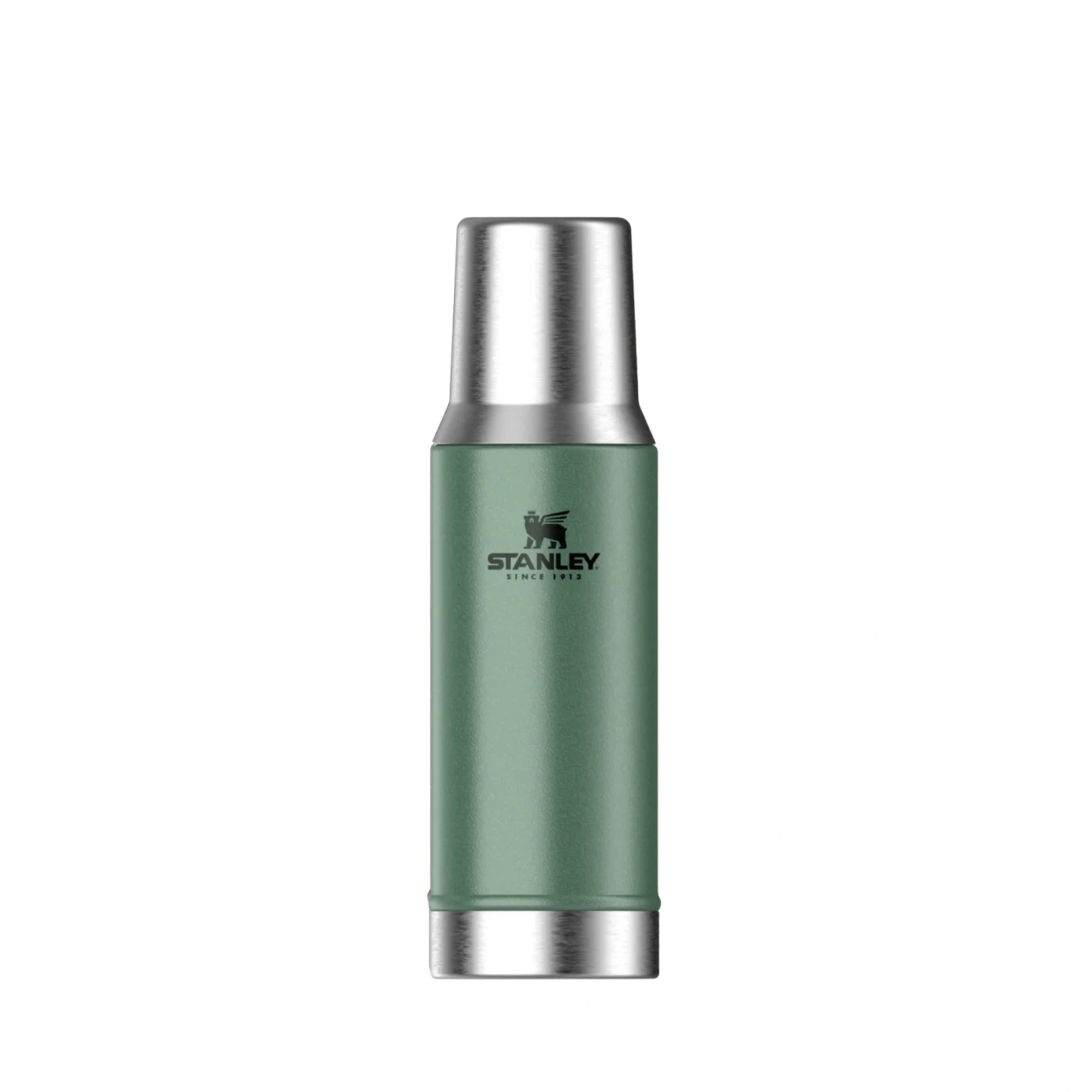
The Ritual of Thermal Control: Stanley Mate System 800ml
Story & products
Precision Flow Technology: Equipped with the specialized Pico Cebador spout, this system is engineered to direct hot water at a controlled rate into the precise sweet spot of the Yerba Mate, preventing the turbulent disruption of the herb structure. For the hyper-disciplined individual, this is not merely hydration; it is a calculated physical experiment in extraction.
Integrated Minimalist Design: The stainless steel cap doubles as a functional Mate cup, eliminating redundant baggage. Weighing approximately 700g with a 30cm frame, it maintains a compact footprint—ideal for the cramped environment of a team bus or the minimalist aesthetic of a single-occupancy apartment. The double-wall vacuum insulation holds temperature for up to 22 hours, sustaining you through the most grueling post-training recovery sessions.
The South American Logic of Focus: This is more than an insulated vessel; it is a tool for ritualizing the mundane, much like the locker room cultures of South America. After a taxing session, the routine of boiling water, preparing the herb, and executing that precise pour is the only mechanism for recalibrating one’s focus and rebuilding internal order. When you commit to the preparation of your Mate, you are effectively isolating yourself from external noise and returning to the integrity of the body itself.
L2M Endorsement: We recommend this item because of its inherent disdain for randomness. L2M holds high respect for athletes and creators who maintain their mental fortitude through rigorous, repeatable rituals. The Stanley Mate System provides no artificial dopamine spikes; instead, it offers a cold, high-efficiency solution for physical maintenance. When the world demands you remain "relaxed," use this uncompromising ritual to protect your own cadence.
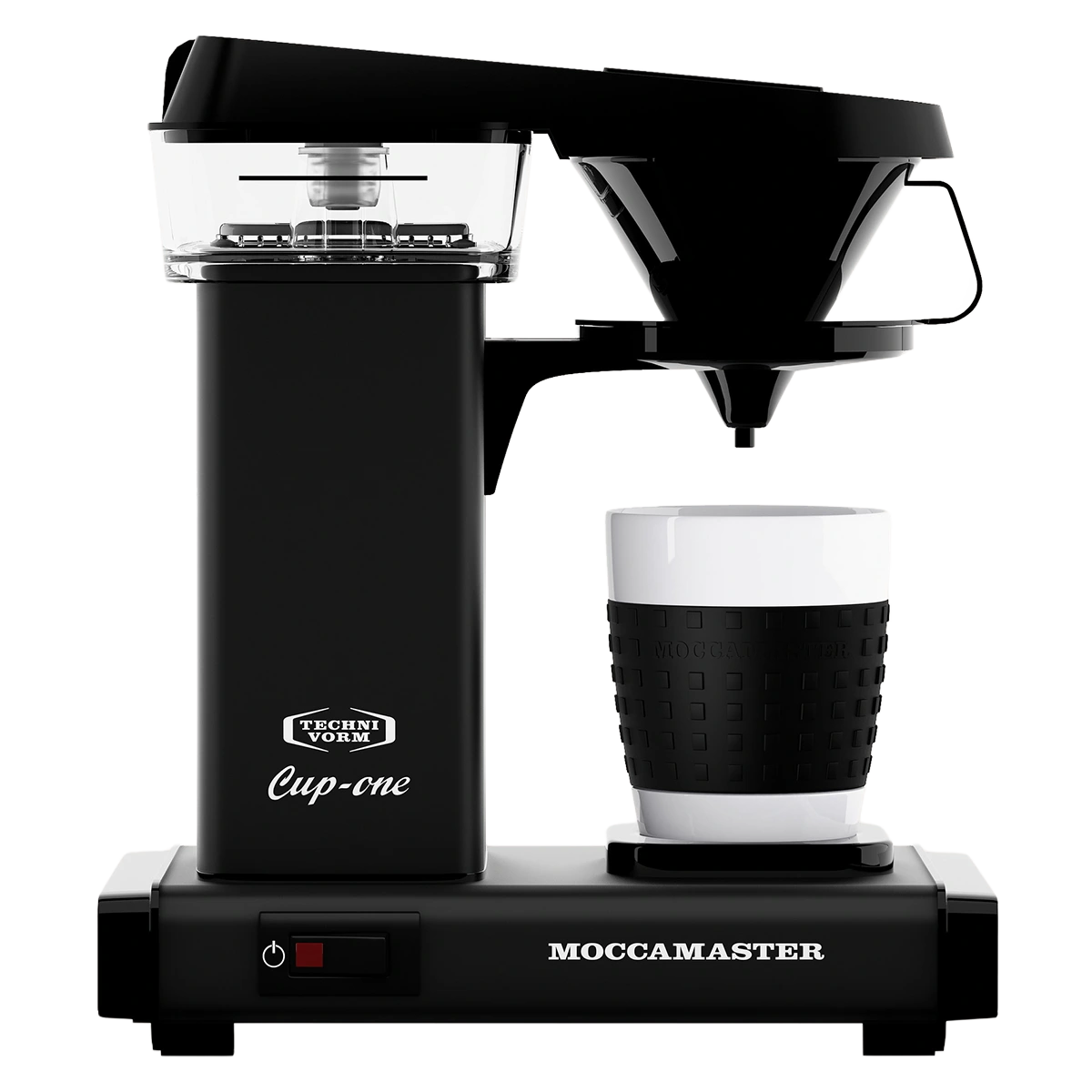
The Silent Minimalism for Solo Practitioners: Moccamaster Cup-One
Story & products
Industrial Aesthetics and Structural Efficiency: The Moccamaster Cup-One was never conceived for social gatherings; it is a precise refraction of "single-cup efficiency" from the Technivorm laboratories in the Netherlands. Its core advantage lies in condensing the cumbersome extraction process to its absolute essence, brewing directly into your mug and eliminating the meaningless labor of cleaning a glass carafe.
Thermodynamic Control Standards: Utilizing a precise copper heating element, this machine locks the water temperature within the golden window of 92–96°C. This is the physical boundary required to ensure full flavor extraction while avoiding the bitter notes caused by temperature fluctuations. Unlike multi-functional smart appliances, the Cup-One is restricted solely to the function of filter brewing—a restraint that serves as a testament to coffee science.
The Ritual Logic of the Solo Dweller: Upon returning to your apartment post-match, when the body is in the final stages of cooling down, you do not need tech-heavy distractions. You need a controllable routine. The sound of water at the one-minute mark—after the beans are ground and the filter is placed—acts as a physical barrier against the noise of the outside world. The existence of this machine defines a rhythm of elite solitude: nothing more, nothing less, just one perfect cup, leaving no residue behind.
L2M Recommendation: L2M respects this bordering-on-obsessive commitment to minimalism and efficiency. For athletes who exhaust their physical limits in the arena, the trivialities of daily life should be minimized. The Cup-One perfectly aligns with the cold, pragmatic philosophy of "not just winning, but commanding the quality of one's private life." It is the ultimate companion for those who value focus and rigorous self-discipline.
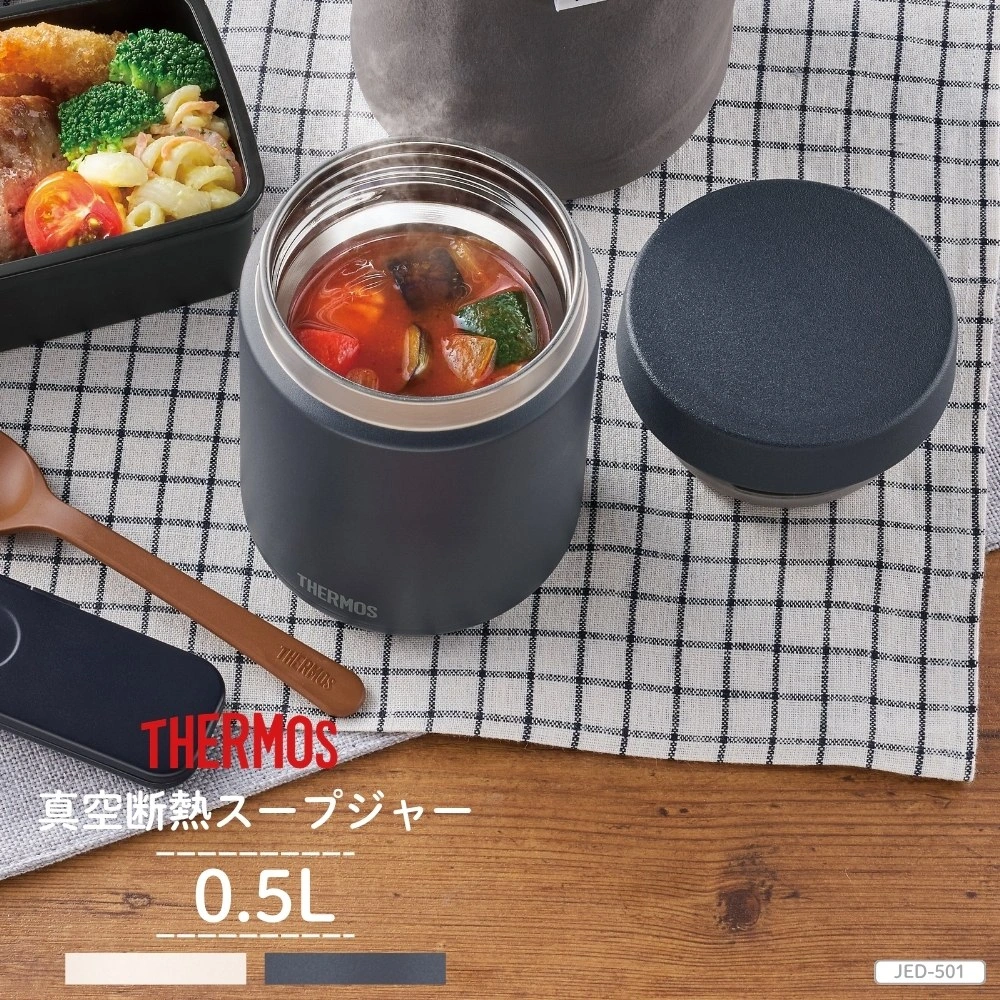
The Carbohydrate and Protein Storage Protocol for the Obsessive Solitary
Story & products
THERMOS JED-501 Vacuum Insulated Food Jar: This is the micro-mobile kitchen explicitly recommended by the JFA (Japan Football Association) for athletes living alone. When you retreat from the intensity of the pitch to your living space, faced with the late-night hunger, the significance of the JED-501 lies not in mere heat retention, but in the completion of your cooking. Its 0.5L capacity is calibrated for a precise ratio of complex carbohydrates, proteins, and anti-inflammatory vegetables. The vacuum insulation layer performs "residual heat cooking" during your commute or shower, maintaining a stable temperature above 63°C for six hours, ensuring that even at midnight, you are consuming nourishment that has been slowly stewed rather than processed industrial sludge from a convenience store.
Technical Parameters: The JED-501 utilizes standard THERMOS vacuum insulation construction with a 0.5L capacity, designed to complete the stewing process through retained heat after being taken off the flame. Insulation performance maintains temperatures above 63°C for 6 hours, while cold retention keeps contents below 11°C for 6 hours at an ambient temperature of 20°C. Available in Navy Black and Cream White, the minimalist aesthetic serves those with a rigid demand for visual order.
Philosophy and Discipline: We reject the notion of this object as a mere thermal mug. This is an instrument for exercising totalitarian control over what enters your body. Whether it is a salmon cream soup after a Friday night training session or oatmeal after high-intensity conditioning, the repetitive use of this container is visual evidence of your transition from "making do" to "self-mastery." It manages your nutrition and, through the ritual of preparation, effectively manages your willpower.
Why L2M Recommends This: We hold deep respect for the discipline required to resist the temptation of instant gratification. The THERMOS JED-501 is a remarkably cold, precise piece of industrial engineering that dissolves the chaos and decay often associated with solitary living. For the professional who must maintain peak physical status through rigid dietary control, mastering the closed-loop logic from cooking to consumption is the ultimate mark of elite professionalism.
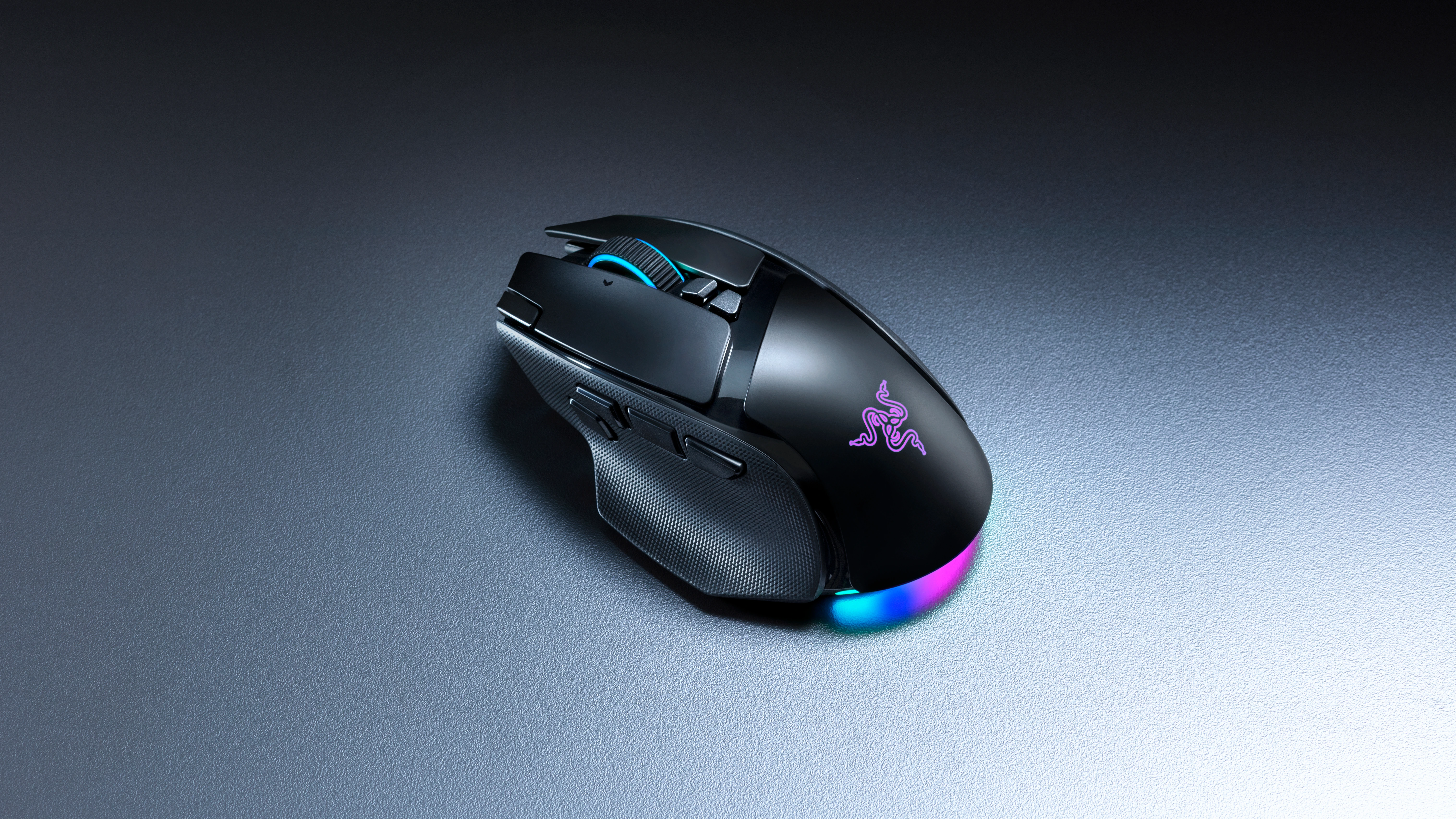
The Viper Reshaping Right-Hand Control
Story & products
In the highly homogenized field of esports peripherals, many mice adopt mediocre symmetrical designs to cater to a broader audience. But for hardcore gamers heavily reliant on right-hand micro-operations, who need to frequently switch skills and macro commands in MMOs or complex tactical shooters, symmetry means giving up support for the ring and pinky fingers, and surrendering the efficiency to control the situation.
The Razer Basilisk V4 Pro is a viper that thoroughly rejects mediocrity, custom-tailored for right-handed control freaks. Its official starting price of US$169.99 marks its absolutely uncompromising flagship material build.
Ultimate Asymmetrical Ergonomics: Its iconic thumb rest perfectly cradles the right thumb, and the curve of the entire back has undergone countless mold optimizations to completely fill your palm. This assertive asymmetrical design greatly alleviates wrist muscle fatigue from prolonged intense battles.
Cold-Blooded Focus Pro 35K Engine: Equipped with Razer's top-tier second-generation Focus Pro optical sensor, providing a terrifying resolution of up to 35,000 DPI. It not only achieves pixel-level precise tracking on any surface (including glass) but also automatically adapts to your lift-off distance via smart tracking algorithms.
Scroll Wheel and Buttons Controlling Everything: The signature HyperScroll tilt wheel not only supports four-way scrolling but can freely switch between a smooth free-spin mode and a tactile notched mode. Combined with up to 13 programmable buttons, you can condense all cumbersome tactical commands beneath the scales of this viper.
Using the most violent sensor specs and the most selfish right-hand ergonomics to dominate every pixel of the virtual world. For this heavy command core armed to the teeth, the L2M store believes it is the indispensable throne on your desktop.
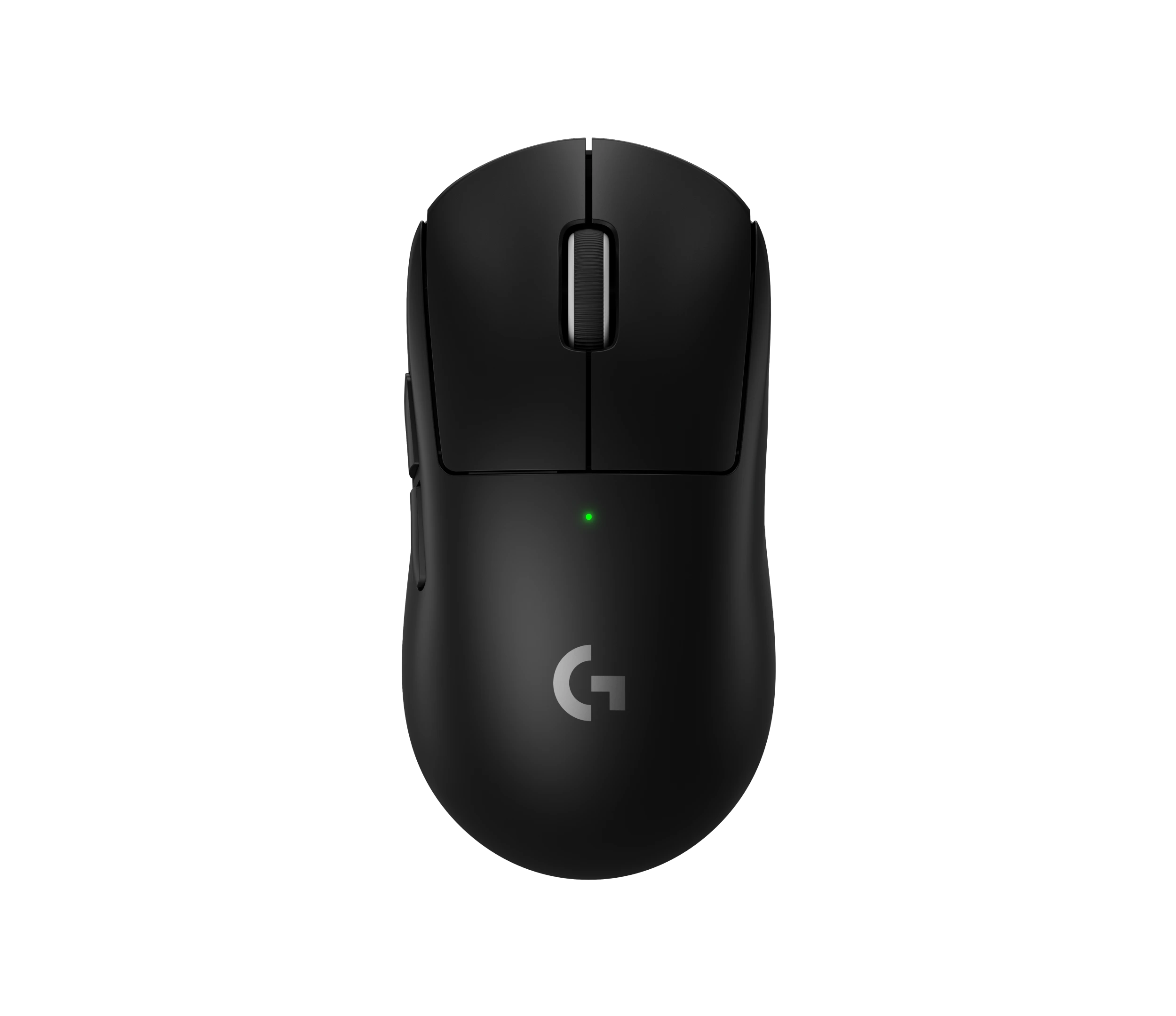
The Master of Micro-Operations with Ultimate Weight Reduction
Story & products
In top-tier FPS professional arenas like CS:GO and Valorant, where reaction speeds are harshly demanding, the weight of a mouse often determines the player's wrist fatigue and the ultimate threshold of flick shots. When every micro-adjustment concerns a million-dollar prize pool, every extra gram of weight is an extreme hindrance. For top-tier micro-operation masters, what they need is a neural extension that has almost no physical presence yet perfectly executes their intent.
The Logitech G PRO X 2 SUPERLIGHT is the ultimate lightweight killing machine tailored by Logitech for professional esports players suffering from "weight anxiety." Its official $179.99 price tag hints at its uncompromising flagship status.
60 Grams of Obsessive Weight Reduction: It has been thoroughly stripped of all non-essential elements—no RGB, no extra side buttons. Logitech's engineers frantically compressed its weight to an unbelievable 60 grams. When you hold it, it feels so light it's as if you're only holding a surgical scalpel's shell, completely liberating your wrist.
Sub-Millimeter Tracking of the HERO 2 Sensor: Equipped with the next-generation HERO 2 sensor, it provides insane tracking capabilities up to 32,000 DPI and speeds over 500 IPS. No matter how fast your hand moves, it captures every millimeter of trajectory change with cold-blooded precision.
LIGHTFORCE Hybrid Switches: To completely eradicate click latency and extend lifespan, it utilizes optical-mechanical hybrid micro-switches. It retains the crisp, robust tactile feedback of a mechanical key while achieving light-speed trigger response.
Stripping away all designs unrelated to a lethal strike, solely in pursuit of absolute speed and lightness. This hardcore tool, pushing industrial design to the extreme to entirely serve competitive domination, is undeniably a digital blade championed by the L2M store.
Logitech G PRO X SUPERLIGHT 2 · Logitech G PRO X2 SUPERSTRIKE
The Entry-Level Assassin Killing the Cable
Story & products
In the slaughter of the digital battlefield, a dragging mouse cable is often the biggest culprit destroying muscle memory. When you're executing an intense flick shot, the friction and drag of the cable are enough to turn a perfect headshot into thin air. Many players crave the freedom of a wireless mouse but are deterred by prices well over a hundred dollars and anxiety-inducing charging frequencies.
The Logitech G305 Lightspeed (Black) is a heavy hammer smashed onto this pain point by Logitech. With its brutally cold cost-effectiveness and borderline alien wireless technology, it completely flattens the threshold for high-performance wireless gaming.
Uncompromising Lightspeed Zero-Latency: As an entry-level mouse often priced around $29.99 (Amazon US reference), it luxuriously features Logitech's proud Lightspeed wireless technology. This means it provides an astonishing 1-millisecond report rate, delivering wireless transmission speed and stability that crushes many expensive wired mice on the market.
Precision Hunting with the HERO Sensor: Built with the HERO (High-Efficiency Rated Optical) sensor, it offers pixel-precise tracking up to 12,000 DPI. Without needing flashy lasers, it cold-bloodedly executes every micro-adjustment commanded by the brain.
Counter-Intuitive Insane Battery Life: It abandons built-in lithium batteries and annoying charging cables. Relying solely on a single standard AA battery, it can rampage for up to 250 hours in performance mode. You can fight intense battles for months without any battery anxiety.
No RGB lighting, no complex weight systems, just absolute wireless freedom and precise killing. For players who pursue absolute pragmatism and refuse to pay for extra gimmicks, the L2M store considers it the deadliest invisible assassin on the desk.
The Heavy-Metal Physical Hack for Your Desktop
Story & products
In the worlds of esports and high-intensity coding, input latency and the tactile feedback of a keyboard often determine your survival in the virtual realm. For hardcore gamers pursuing ultimate physical feedback and absolute control, the flimsiness of a plastic chassis is an intolerable compromise. What you need is a metallic monster that nails itself to the desktop like a heavy weapon.
The Keychron Q6 Ultra 8K Fully Assembled is precisely this kind of physical hack—rejecting any sense of cheapness and pushing material build and performance to the absolute limit.
Violent 8000Hz Polling Rate: This is the core parameter that earns it the "Ultra 8K" moniker. Compared to the 1000Hz of traditional keyboards, its wired mode compresses response time to a terrifying 0.125 milliseconds. Every keystroke command tears through the network without delay, reaching the core of the game server instantly.
Cold Full-Aluminum CNC Body: Devoid of superfluous plastic splicing, the entire body is carved from a massive block of high-purity aluminum alloy via CNC machining. This grants it an extremely stable deadweight; no matter how fierce or furious your operations get, it remains completely immobile like a block of pig iron.
Full Hot-Swappability and ZMK Open-Source Customization: Not only does it allow you to freely swap switches to tune the tactile feedback, but on a deeper level, it utilizes ZMK open-source firmware. This means you can neurotically deep-customize the function and macros of every single key, just like writing code.
Encasing the ultimate electronic transmission speed in the heaviest physical armor. This hardcore desktop gear, discarding flashiness in sole pursuit of absolute performance domination, is exactly the digital lifestyle philosophy the L2M store obsesses over.
Secretlab TITAN Evo / EWC 2025 Official Chair
Story & products
The Secretlab TITAN Evo is the official designated gaming chair for the 2025 Esports World Cup (EWC 2025). As the "standard equipment" for current top-tier global esports tournaments, this chair not only provides support for competing professional players but also stands as Secretlab's core flagship ergonomic product.
Here are the core highlights and configurations of this EWC 2025 official chair (TITAN Evo series):
1. Tournament-Grade Ergonomics and Support
To cope with the high-intensity training and matches of professional players lasting over ten hours a day, the TITAN Evo features extensive customizations for support:
L-ADAPT™ 4-Way Lumbar Support System: The built-in lumbar support allows for independent adjustments in four directions (up, down, forward, and backward), perfectly contouring to different spinal curves and providing invisible yet firm support.
Patent Cold-Cure Foam: Uses a specially formulated medium-firm sponge to provide even pressure distribution, ensuring it won't sag or cause muscle soreness after prolonged sitting.
Proprietary Pebble Seat Base: Compared to the restrictive feel of traditional racing chairs, its seat edges are wider with a natural curve. This not only guides you to maintain proper posture but also allows you to sit cross-legged or shift positions without pinching your thighs.
2. Magnetic Ecosystem
Secretlab extensively incorporates magnetic designs into the TITAN Evo, which is a major feature distinguishing it from other gaming chairs on the market:
Magnetic Memory Foam Head Pillow: Discarding the traditional strap design, the head pillow contains memory foam infused with Cooling Gel. It attaches directly to the backrest magnetically, supporting a wide range of vertical sliding adjustments to better fit the cervical spine.
CloudSwap™ Armrest Replacement System: The full-metal 4D armrests not only support up/down, front/back, left/right, and rotational adjustments, but their top pads are also magnetic. Players can swap them out in a second for softer PlushCell™ memory foam or Technogel versions according to personal preference.
3. Materials and Personalized Sizing
Fabric Choices: The mainstream versions typically offer two fabrics. One is the NEO™ Hybrid Leatherette, which is more durable than traditional PU leather and closely resembles the texture of real leather; the other is the SoftWeave™ Plus fabric, which boasts excellent breathability and is perfect for players who sweat easily.
Three Customized Sizes: To accommodate players of different body types, the TITAN Evo is available in Small (Size S, for 170cm and below), Regular (Size R, for 170-189cm), and XL (for 181-205cm and heavier weights), ensuring every player gets a "tailor-made" wrap-around feel.
As the official chair of EWC 2025, the ones used by players on the main stage (On-Stage Standard) are usually brand-customized appearance versions exclusive to the tournament (possibly featuring the EWC logo and exclusive colorways). For ordinary players, you can directly purchase the standard TITAN Evo with the exact same configuration, enjoying the same level of competitive support as the world's top esports players.
A Dimensional Strike of Sound in the Late-Night Solitude
Story & products
When night falls and the city's clamor fades, the only thing left in a solo apartment is the faint glow of the screen. In this absolutely private space, you need to completely detach from the real world and embark on a digital expedition lasting several hours. For highly critical hardcore gamers, the booming bass and cheap virtual surround sound of ordinary "gaming headsets" only ruin this lonely yet premium immersion.
The appearance of the Audeze Maxwell 2 Wireless Gaming Headset (PlayStation Edition) isn't meant to cater to the mainstream; it is a ruthless dimensional strike against traditional gaming audio gear. It forcefully packs top-tier technology from the audiophile Hi-Fi realm into a gaming headset.
Obsessive Planar Magnetic Drivers: It abandons the dynamic drivers used by 99% of gaming headsets on the market, utilizing massive 90mm planar magnetic drivers. This means faster transient response and pure, near-zero distortion audio. Even the faintest footsteps at the edge of the battlefield and the mechanical sound of a magazine reload are precisely isolated and presented.
Insane Battery Management: An ultra-long battery life of up to 80 hours. You can fight through multiple weekends without having your flow state rudely interrupted by a low battery warning during an intense firefight.
Studio-Grade Microphone Noise Reduction: Features hardware-level, AI-driven noise filtering that only captures your cold tactical commands, completely shielding out the clatter of mechanical keyboards or the traffic outside.
No flashy RGB lights, just weighty metallic texture and absolutely dominant audio quality. When you put it on, the whole world instantly falls silent, leaving only you and your digital battlefield. For a performance beast dedicated to pushing the solo gaming experience to the extreme, the L2M store believes it deserves a corner of your desk.
A wooden face for the PC
Story & products
A PC beside the desk can share some of the warmth of furniture. CORSAIR FRAME 4000D WOOD RS uses walnut strips across its front, adding another material to the black case.
This selection is the Black/Walnut case. The photograph illustrates a completed build; CPU, graphics card and other computer components are separate.
Bring the mic closer, clear the desk
Story & products
For calls, recording or playing together, a microphone need not occupy the middle of the desk. FIFINE BM88 extends from the edge, bringing the microphone closer and moving aside when unused.
This is the Black BM88 arm only. The same official page also lists BM88 Pro and microphone bundles, so check the selected option.
Clear blue, back on the desk
Story & products
The blue transparent shell brings a little old-electronics charm to the desk. 8BitDo Retro 87 Clear Blue puts that look into an everyday keyboard, with neat rows of keys and oversized buttons beside it.
The report names the Retro 87 family; Clear Blue is the verified selection here. Colours, accessories and prices from other editions should not be mixed.

Make room beneath the screens
Story & products
Phones, notes and small accessories often gather beneath two screens. Vaydeer turns a long riser into a desk organiser: drawers for loose items, a top for the displays and charging within reach.
This is the Black All-in-One. Measure desk depth and monitor bases before deciding whether it fits your setup.
A little light blue for the desk
Story & products
A smaller keyboard leaves more room beside the mouse. AULA F75 gathers familiar keys into a 75% layout, with light blue and white keycaps brightening the place you return to each day.
This selection uses Reaper switches and wired, Bluetooth or 2.4 GHz connectivity. It is distinct from the wired-only F75 and F75 Pro.
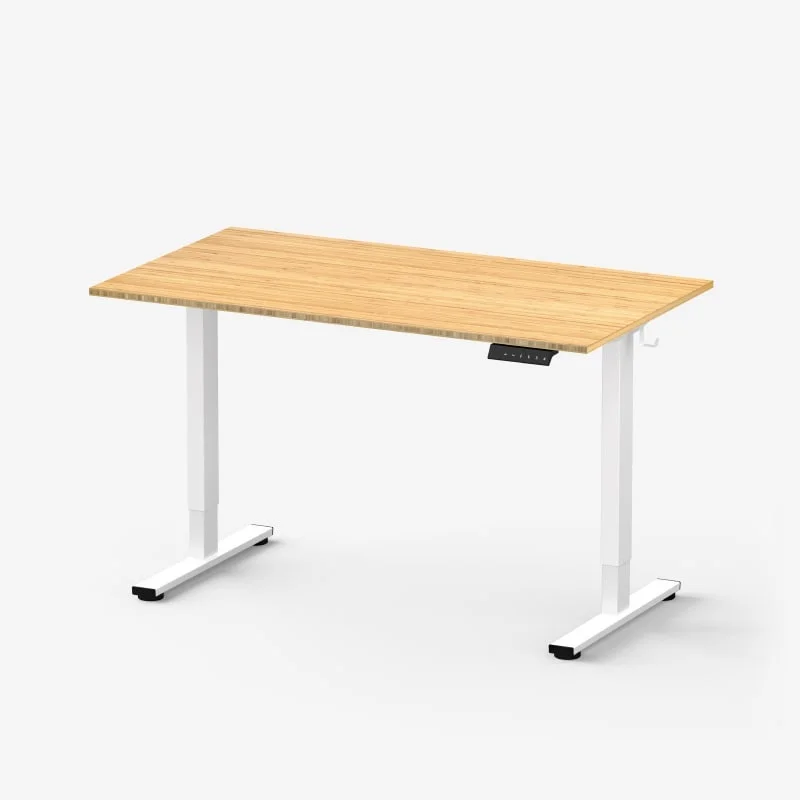
A different height, the same desk
Story & products
Finish a paragraph and change position. Books, screen and water stay where they are; only the height of the workspace changes.
FlexiSpot E2 keeps its controls within reach, with four presets for different heights. Measure the room and desktop first, then leave slack in the cables. Make the desk fit your routine.
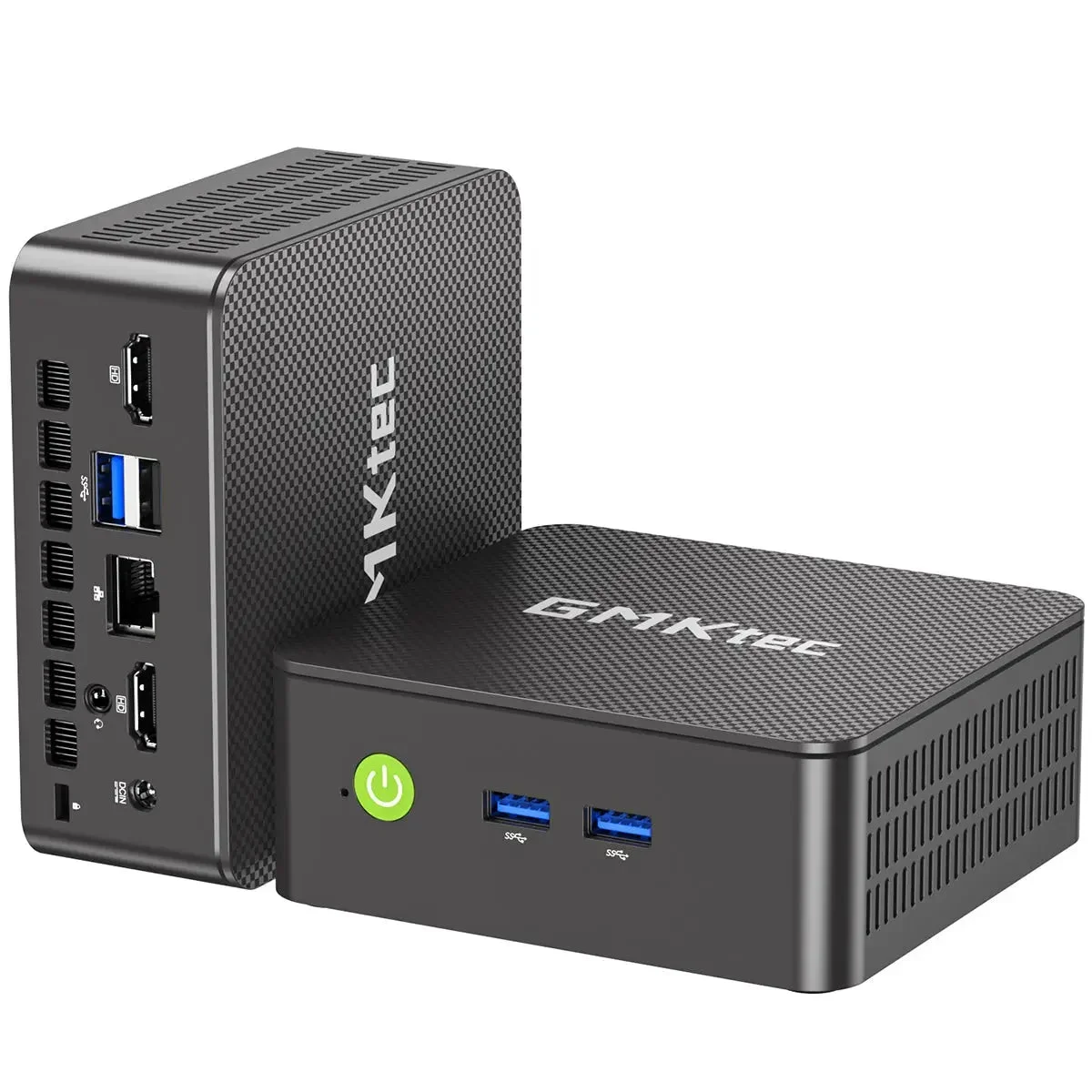
A smaller PC, a freer desk
Story & products
Some desks do not need a full-size tower. Email, spreadsheets and music may be enough to make a computer useful without making it the centre of the room.
GMKtec G3S puts an N95 platform in a small case, leaving more room for a keyboard and notebook. This selection is for basic office work; demanding games or heavy editing call for a different class of hardware.

A little higher, a little clearer
Story & products
Notes, adapters and charging cables compete for the small space in front of the screen. Before replacing the desk, try giving the loose pieces a drawer.
IKEA ELLOVEN pairs a white stand with a bamboo-toned drawer: screen above, essentials inside and a keyboard below when it is not needed. At the end of work, make room again for a book or a cup of tea.

A drawer you don’t have to rummage through
Story & products
Small things end up pushed into the same drawer: adapters beside batteries, spare cables wrapped around pens. Finding one means searching through everything.
Clear trays give similar items a place together. Keep everyday pieces near the front and spares further back, with some room left empty.
The Vtopmart 25-piece set has four sizes. Measure the drawer first, then choose a layout.
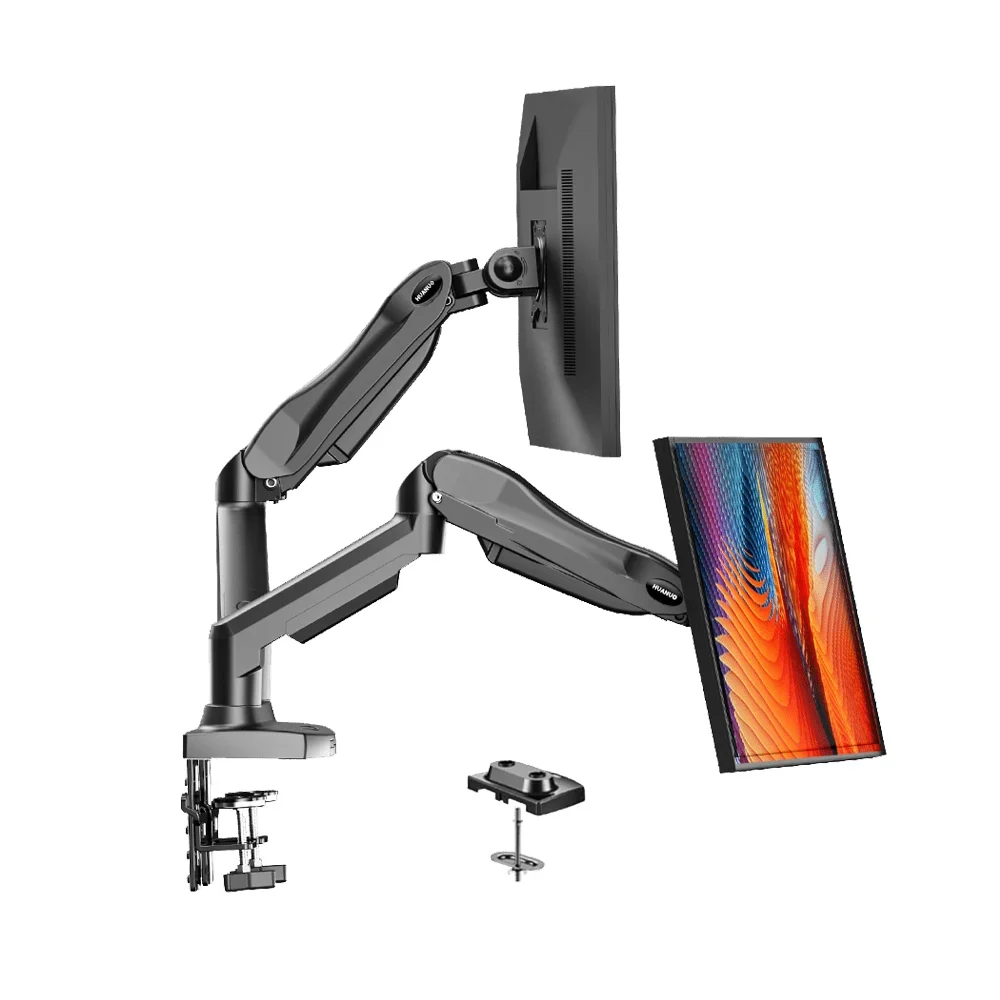
Two screens, room to spare
Story & products
A second screen brings convenience and another base. The cup moves to the edge, and the notebook squeezes beside the keyboard.
Monitor arms reclaim space around those bases. A game and chat, or a document and references, can sit side by side with room left for other things.
The HUANUO DS6 is one dual-arm option. Check mounting holes, screen weight, desk construction and room behind the desk.
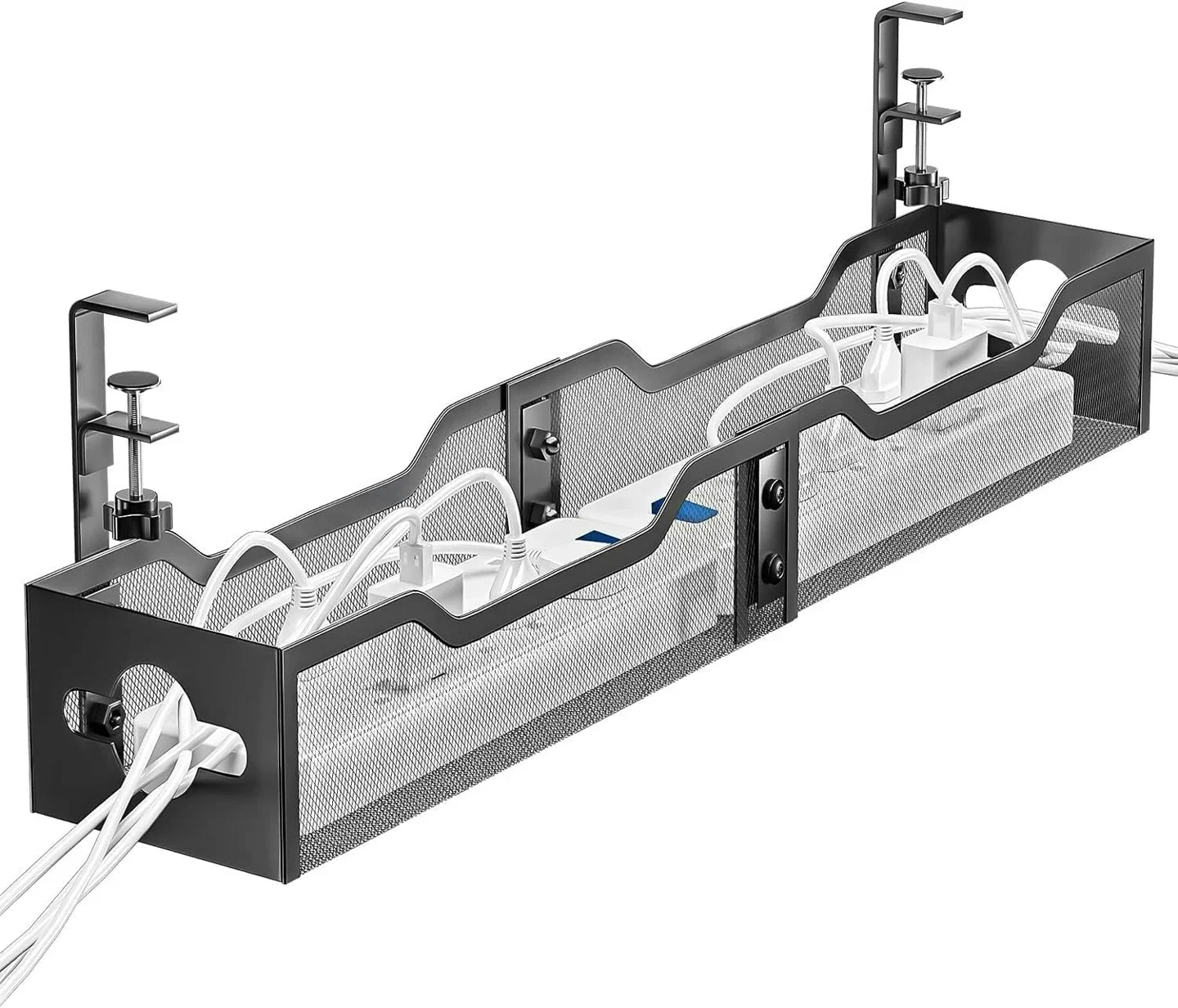
A clean desktop. What about underneath?
Story & products
The screens are in place and the keyboard is clean. Underneath, a power strip and tangled cables still sit near your feet.
The last step in a desk setup often happens out of sight. A tray gives the power strip a home, with enough slack left for each cable.
A compact clamp-on basket suits some desks; a longer organizer suits others. Measure the desk edge before choosing.
Litwaro Under-Desk Cable Tray · Univivi 36″ Cable Management Tray