Between-Group Blank
NAD+ went up. Did symptoms improve too? A community discussion about NR and long COVID separates questions that supplement marketing often joins together. In the supplied account, the poster says Niagen funded the research, then emphasized dramatic within-group changes and presented the study as a success. The poster wants to compare the intervention with placebo.
This article follows that supplied discussion and its reported comments, alongside figures from the eClinicalMedicine trial. Its scope is one study and a set of personal decisions, not every long-COVID study or every NAD precursor. Stopping, continuing, or finishing a bottle are the commenters’ choices, not prescriptions for everyone else.
A rise needs a comparison beside it
In the NR-NR group, NAD+ increased roughly 2.6- to 3.1-fold after five to ten weeks and remained elevated at about twenty weeks. That is an easy result to put in a headline. Cognition, fatigue, sleep, and mood still need their own examination.
Between-group p-values for ECog, RBANS, and TMT-B were approximately 0.47–0.74. Fatigue severity was about 0.59, sleep quality 0.69, anxiety 0.84, and depression 0.20. These comparisons found no significant between-group differences. The NAD+ increase and those findings belong on the same page.
That is the poster’s objection to the company’s emphasis. Changes from baseline can be worth investigating, but they cannot stand in for the intervention-versus-placebo comparison or become a promise of benefit for everyone. “Between-group blank” names the difference this material did not establish. It does not settle the usefulness of every NAD precursor for all time.
Stopping, or finishing this bottle first
One reported commenter brings up NOPARK, saying NR left Parkinson’s patients worse off than placebo in that trial. Another finds most human NR trials underwhelming. Someone has stopped all NAD+ supplements; someone else sees expensive products as seller hype and placebo feeling, and thinks niacin can offer similar effects. These remain commenters’ positions, not a basis for treating different supplements as interchangeable treatments.
Another comment focuses on presentation. The company, it says, still sounded as though it had cracked an ancient longevity code, offering a masterclass in selective reporting. The NAD+ bump had become almost a “curse”: enough of a mechanistic hook to advertise benefit while leaving null outcomes six paragraphs down. The commenter compares it with the old resveratrol story. Another adds that Sinclair led the charge in both narratives.
The objection concerns the jump from a biomarker to a benefit someone can experience. A changed number can deserve research without answering what it actually did for the person taking the supplement.
One commenter plans to retire NMN after finishing the current bottle. They watched a video about this study the previous night and had only refilled their supply the week before. The question that stayed with them was whether raising NAD is needed for meaningful outcomes, beyond whether NR or NMN can raise it at all. What NAD contributes to longevity also needs an answer beyond the rise itself.
They mention material on age and NAD stability, high-dose NMN increasing NAD without improving hearing or physical performance, and the NOPARK comparison. About every three months, they say, another supplement leaves their list. Grape-seed extract went because they considered the relevant ingredient dose insufficient. Once positive fisetin data were discarded, they felt only the negative “it does nothing” evidence remained. They wanted stronger public data rather than hope, anecdotes, animal experiments, and manufacturer material.
That account shows someone reconsidering a supplement cupboard. It can be read as a change of mind without becoming an instruction that everybody must stop.
Diagnostic arguments leave another question open
A reported commenter questions the diagnostic boundaries of long COVID and thinks they undermine the whole study. Another replies that, whatever the label, the participants were suffering, and in their reading NR did not improve that suffering. Defining a condition and showing an intervention’s benefit are questions that each need an answer.
There is room here to remain interested in NAD mechanisms and still reconsider the next bottle. A nonsignificant between-group result need not become a verdict on every future study. A higher NAD+ reading need not become a symptom improvement before the comparison establishes one.
Independent judgment comes down to practical questions. Who was compared with whom? Which outcome was measured? Did the presentation give both their due? Those questions are more useful beside a supplement cupboard than another spreadsheet devoted only to rising numbers.
The contents of this article are offered only for observation, reflection and personal judgment. It is not an instruction manual. It is simply one part of the world that exists.
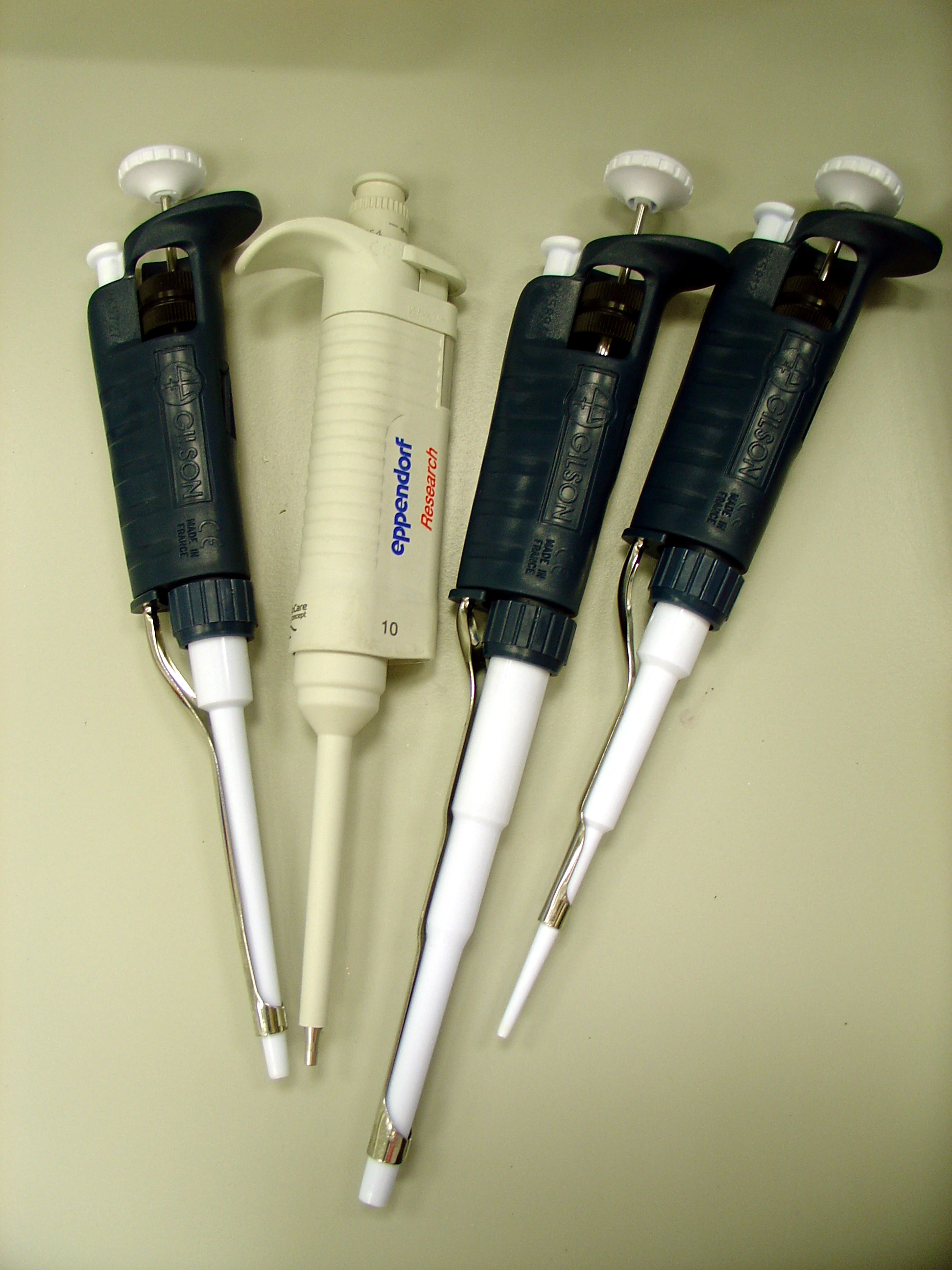
Laboratory micropipettes, a general research illustration, not this trial’s site. Retama, CC BY-SA 4.0. https://commons.wikimedia.org/wiki/File:Micropipettes.jpg · https://creativecommons.org/licenses/by-sa/4.0/ · WebP, full aspect ratio.
