The Second Tick Beyond the Standard
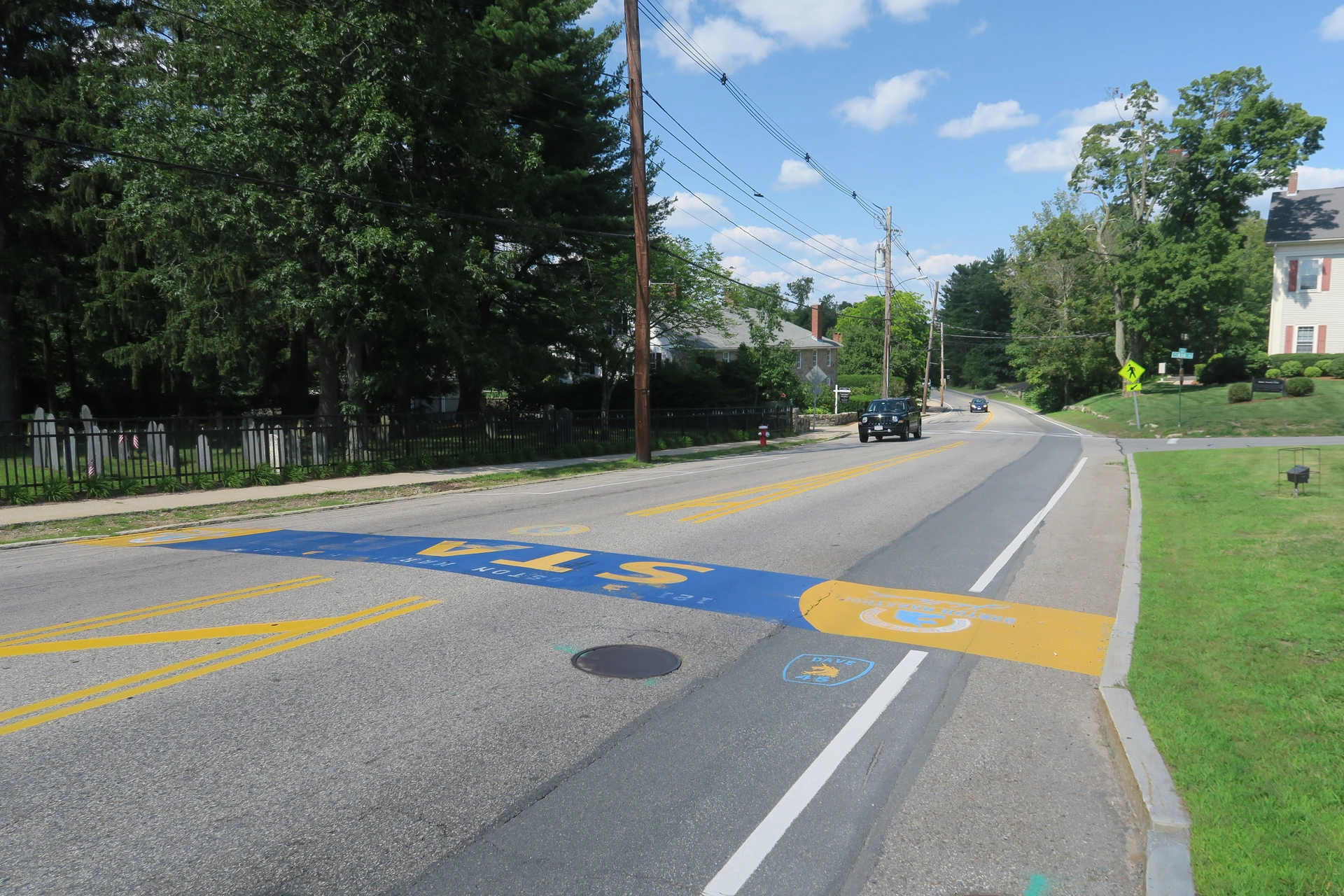
If, over the past decade or so, the spectrum of Boston Marathon qualifying culture was still drawn as a straight line—with “a BQ is a ticket in” on the left and “the standard is the only ruler” on the right—then once the Boston Athletic Association (BAA) published the acceptance rules for the 131st running (April 19, 2027) after registration week and nailed 5 minutes 17 seconds as the public tick meaning “at least that much faster than your age-and-gender qualifying standard,” that line had already folded into two rulers. The first remains the familiar qualifying standard—you run under it before you even have the right to apply. The second is the cutoff—among 33,649 applications, 24,630 people are taken in order of time buffer, and a further crack called Boston Qualifier Selection opens for 1,000 who “qualified but missed 5:17.” The image that runs through this discussion is not the next easier sentence of “go a little faster next year” or the next brighter screenshot of “I finally BQ’d,” but the second tick beyond the standard: the first ruler tells you whether you may apply; the second tells you whether an application becomes a place; the lottery is a seam opened beyond that second tick—it does not rewrite “fast enough” as “lucky enough,” yet it rewrites “fast enough” from a single answer into a verifiable three-layer structure.
From “Qualify and You’re In” to “Qualify Only Buys the Right to Apply”
When the blogger dropped the news in the community, the tone was almost weather-report flat: Boston cutoff announced. What followed was not celebration but reconciliation of accounts. Someone rechecked the buffer seconds on the watch face; someone stacked the age-group standard against 5:17 and tried to reverse-engineer that men 18–34 now need roughly 2:49:43—because from 2026 that age group’s standard itself tightened by five minutes, and with a 5:17 cutoff the bar falls under 2:50 for the first time; women 18–34 land near 3:19:43. These numbers are not mood. They are the verifiable consequence of BAA admission logic landing on a personal training plan.
The industry default likes to write a BQ as a ticket. That default occasionally held: in 2022 and 2023 there was no cutoff, so qualifying nearly equaled acceptance; 2021’s reduced field produced an extreme 7:47 buffer; 2024 was 5:29, 2025 was 6:51, and 2026 snapped shut to 4:34—more than two minutes stricter than the year before. 2027’s 5:17 is 43 seconds looser than 2026’s 4:34, yet still far stricter than 2025. The history table is itself a spectrum: some years the second tick is almost invisible; some years it bites harder than the first ruler. What the blogger forwarded was not “someone BQ’d again,” but “where the second tick stopped this year.”
The scene is hard. Registration week ran September 14–18, 2026; 33,649 people applied. 24,630 were taken by time buffer; the new Boston Qualifier Selection lottery took another 1,000 who had qualified but fallen short of 5:17; together 25,630 accepted or pending verification—a record, BAA said. The field is sized near 30,000; the rest go to charity, invitational, and professional channels. 8,019 qualifiers were still not accepted. In the time-buffer pool: 13,898 men, 10,641 women, 91 non-binary; about 120 countries; roughly 10,745 first-time Boston starters; ages 18–84; 1,498 Massachusetts residents. The most common qualifying races: 2026 Boston itself 4,448; 2025 Chicago 2,043; 2025 New York 826; 2025 CIM 812; 2026 London 610—the second tick does not only filter people; it also writes a public list of which races most often serve as proof of application.
One comment-thread ledger reads almost like a fable: someone cleared a 5:01 buffer and still missed; in the same training block, a Manhattan Half left them 26 seconds short of a New York Marathon qualifier—“forty seconds across a four-hour-ten race.” Forty seconds is not laziness and not a skipped block; it is the kind of seam you see when two rulers settle accounts at once. The men’s 18–34 standard itself grew harsher with the 2026 tightening; stacked with the second tick, a BQ rewrites from “I did it” into “I earned the right to apply.” The default therefore shows its seam: it assumed the story ended when the first ruler was drawn; policy rewrites it with countable heads—qualifying is a threshold, not a ticket.
The Ledger of Seconds: How 5:17 Became a Public Tick
The cruelty of a cutoff is not “fast.” It is that it rewrites a private training diary as a public ledger. You no longer ask only “Did I break the standard?” You ask “By how many seconds did I beat it, and how many people beat it by more?” 5:17 is not a slogan; it is a sort key: larger buffer, earlier place; past 24,630, the first ruler still shows green while the second has already dialed you outside—unless you fall into those 1,000 lottery places.
BAA’s official release lays the scene open: the 131st Boston Marathon, Monday, April 19, 2027; the cut-off written plainly as “at least 5 minutes 17 seconds faster than the applicable age-and-gender standard.” Jack Fleming (BAA CEO) does not dodge: dedication and resiliency—honoring the work and the toughness, while admitting not every qualifier can be taken, yet still seeing everyone who trained toward this course. The value of that sentence is not inspiration; it is honesty about policy: the second tick exists because the first ruler no longer fits the field.
Historical comparison nails the “public tick.” On BAA’s qualifying page: 2024 at 5:29, 2025 at 6:51, 2026 at 4:34, 2027 at 5:17; 2021 at 7:47 under a reduced field; 2022–23 with no cutoff. Same course, same age-and-gender standards, yet in four years the second tick swings from “almost absent” to “more decisive than the first ruler.” Runner’s World, Marathon Handbook, the Boston Globe and others cross-check the same set: 43 seconds looser than 2026’s 4:34; men 18–34 needing about 2:49:43; women 18–34 about 3:19:43. Cross-checking matters not as a pile of citations but as proof that 5:17 has moved from an association parameter into a public tick on community calendars—people reverse-engineer how fast they must run, compare this year to last, and decide whether an autumn qualifier is the last throw.
A tick is called a tick precisely because it can be seen, compared, and predicted—and for that reason it cuts deeper than the abstract phrase “limited spots.” Limited spots is fog; 5:17 is a number you can match the moment the watch stops.
Prediction Dashboards and Errors of a Few Seconds: How a Community Reads Policy as Science
If the association publishes the tick in a news release, the community chases it with dashboards. Brian Rock’s dashboard was opened again and again around registration week: his prediction sat near 5:13. Another commenter offered a regression near 5:14, with a 95% confidence interval roughly 4:04–6:23 and R² ≈ 0.9326—a handsome model with an honest interval: it admits uncertainty yet still translates “policy” into a fittable time series. Actual announcement: 5:17. Both landed within a few seconds.
Those few seconds of error are themselves a scene. The community did not treat the cutoff as a black-box draw; it treated it as a public variable that can be modeled: historical buffers, application volume, field caps, supply of qualifying races, fed layer by layer into spreadsheets. Prediction threads and post-mortems moved “science” from the lab into the comments—not lab science of repeatable experiments, but the collective science of runners reading policy as data and data as training decisions. When the actual number sits only seconds from the forecasts, what is celebrated is not who was prophetic, but that the second tick has been fully publicized: it no longer belongs only to a conference room; it also belongs to people who open a sheet after a long Sunday run.
Yet dashboards have their own seams. A confidence interval spanning more than two minutes shows that a handsome R² does not insure that your 5:01 buffer will clear. Between the person who missed with a 5:01 buffer and the predicted 5:13 / 5:14 / actual 5:17 lies not a story but a sort order. Models can approximate a public tick; they cannot guarantee your rank among 33,649. Reading policy as science is community maturity; misreading science as personal insurance is another default—and 8,019 unaccepted qualifiers are that default settling accounts.
The Lottery Seam: How 1,000 Places Rewrite What “Fast Enough” Means
If the story stopped at 5:17, the narrative would still be “faster.” BAA instead opened a seam beyond the second tick: Boston Qualifier Selection, 1,000 places for those who already qualified yet could not clear 5:17. It does not void the cutoff; it admits that outside the second ruler there still stands a crowd in the green light of the first, only not long enough, not bright enough.
What those 1,000 places rewrite is not mathematics but meaning. “Fast enough” once meant “hit the standard”; later it meant “hit the standard and beat the cutoff”; now a third layer appears—“hit the standard, miss the cutoff, and still maybe be drawn.” All three layers stand at once; none cancels the others. The 24,630 taken by time buffer prove the second tick remains the main channel; the 1,000 drawn prove the association will not write every “qualified but short by tens of seconds” as fate ended; the 8,019 refused prove the seam has a width limit. The field is still about 30,000—charity and invitational lanes remain—but on the qualifier path, the rule has become two rulers plus a lottery.
Reaction in the comments is not uniform. Some feel the seam softens the cruelty of missing by seconds; some feel it muddies a clean sort. Both reactions hold, because the seam’s job was never to make everyone comfortable; it was to leave a verifiable millimeter between pure speed ranking and the admission that qualifying itself still carries weight. 1,000 is small beside 8,019; beside “no seam at all” it is large. It does not promise the feeling of fairness. It promises a visible structure.
Closing: Redefine Qualification—Not One Line, but Two Rulers and a Lottery
If qualifying culture often understands independence as “run under the standard first, then talk” or “believe a BQ equals Boston,” this discussion sits closer to another independence—holding the first ruler and the second tick at once, and seeing where the lottery seam sits. The cutoff post the blogger forwarded earns a public discussion precisely because it lays verifiable scenes on the table: 33,649 applications; 24,630 by time buffer; 1,000 by lottery; 25,630 combined, a record; 8,019 qualified and refused; the history table’s 5:29 / 6:51 / 4:34 / 5:17; Brian Rock’s ~5:13 and a commenter’s ~5:14 against the actual 5:17 within seconds; the ledger of a 5:01 buffer still missing, a half marathon 26 seconds short, forty seconds across four hours ten; the reverse-engineered ~2:49:43 and ~3:19:43; Jack Fleming’s public words that do not dodge the field cap.
The value of the discussion is that it does not push the topic only into “be harsher” or “the lottery ruined everything,” but speaks the spirit of the rule back: first distinguish “qualify” from “accepted,” then “public tick” from “private buffer,” and with “the second tick” and “the lottery seam” still polish, inside the rising tide of “I BQ’d,” the layer that matters—the hardness of qualification often hides in whether you still treat the first ruler as the whole story, not only in the next easier sentence of “forty seconds faster next year” or the next brighter screenshot of “I’m finally in the field.”
The actionable prompts are plain: write the age-group standard beside recent cutoff history in the plan, instead of staring only at the BQ line. Make “right to apply” and “a place in the field” two separate checkboxes, so qualifying night does not default into a ticket already won. When you read community forecasts, take the confidence interval with the median, not the median alone as insurance. If you fall beyond the second tick, still grant that the first ruler counted—the lottery seam exists, but it is not a promise. Write “qualification” as “holding the second tick beyond the standard yourself”—knowing a green standard still has a sort beyond it, knowing a narrow seam sits beyond the sort, knowing 8,019 and 1,000 can both be true—rather than forever outsourcing to the easier line “qualify and you’re in” or the brighter line “fast enough always finds a place.” The first ruler can carry the row on the application form; the second tick is still written in the seconds after the watch stops. People who hold both rulers at least know which lever they are measuring: qualifying, or entry.
John Phelan · CC BY-SA 4.0 · https://creativecommons.org/licenses/by-sa/4.0/
https://commons.wikimedia.org/wiki/File:Boston_Marathon_Starting_Line,_Hopkinton_MA.jpg

Full original frame converted to WebP; aspect ratio retained.