Six Inches Apart
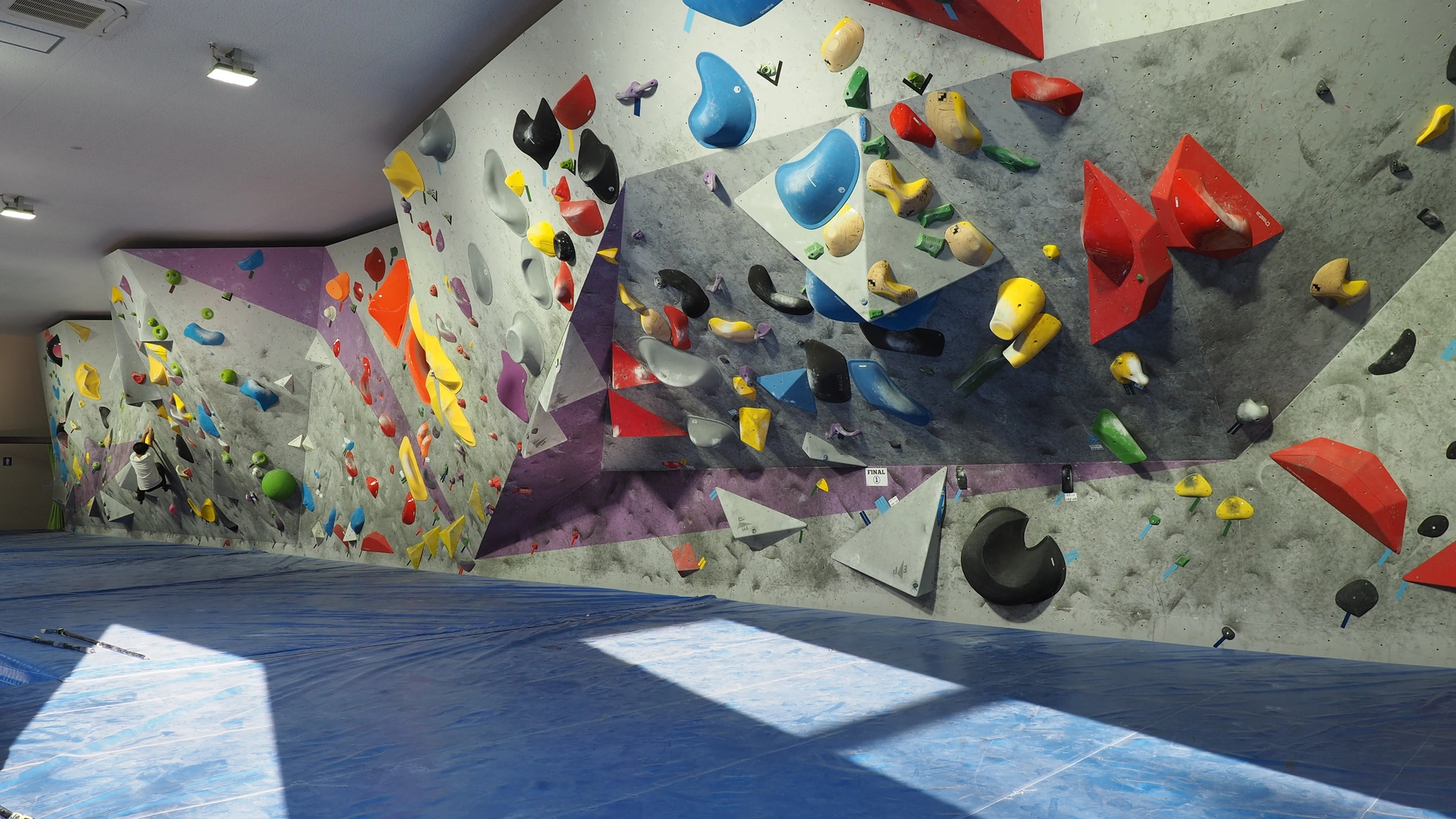
If, over the past decade and more, the spectrum of climbing in ordinary life was still drawn as a straight line—on the left “niche hobby, rough gyms, people packed tight,” on the right “a gym in every big city, halls growing larger, training boards sharing a screen with ranking apps”—then when a blogger who has climbed for about fifteen years sets the laughter from the old gym’s “six inches apart” beside the scene under the local Tension Board 2 (TB2, a common training board) where often only he is talking and laughing, that line has already bent into two rulers. The first still measures difficulty, projects, and sends. The second measures how many adjacent six inches remain between strangers. The image that runs through this discussion is not the next easier phrase “times have changed” or the next brighter claim that “everyone is getting stronger,” but six inches apart: old gyms used route density to push people of different ages, incomes, and interests inside six inches; new gyms and training-board culture pull them apart; failure stops being funny, and sending hard becomes the only identity.
A boundary first: the scenes here come from the blogger’s account and checkable sides of the comment thread, not a census of the whole climbing industry. They are useful because they press “the community feels thinner” from a mood word into a felt distance. They are limited because they often cover the training-board and hard-project layer—one commenter reminds us this may only cover about 5% of the community.
From Forced Closeness to the Emptiness of Mega-Gyms
Industry default likes to write climbing as progress: bigger gyms, thicker pads, more professional setting, “prettier” competition-style routes. The default held for years—until you set fifteen years ago beside today. What the blogger does is simple: not another louder slogan, but a memory of the gym when he started about fifteen years ago. Big cities already had gyms, yet in most places climbing was still unusual; gyms were rougher, routes denser, people forced to sit close—“six inches” away. People of different ages, incomes, and interests mixed: joking, roasting each other, trying hard moves, falling and laughing again.
The scene is hard. Popularity itself dilutes community: a huge loose crowd rarely becomes a meaningful commons. Capital makes gyms larger; “comp-style setting” (routes set in a competition style) lowers route density, so no one is forced to sit six inches from a stranger. Space widens; social life thins—not because people turned mean, but because physically you no longer have to see the person beside you. The default cracks: it thought making the gym big and the lines “comp-style” ended the story; the scene says community sometimes depends on forced closeness, not a larger air-conditioned hall.
Commenters agree that climbing expanded roughly linearly from about 2012, and that after mega-gyms entered every big-city market the feel changed. Someone still sees friends cheer a tricky dyno (a hard dynamic move), yet no one stays until closing. Someone recalls a European gym that once had pizza nights and shared beta (route-reading tips); now sharing beta is nearly frowned on. Someone points to outdoor rock at Siurana in Spain: a dozen or so North American climbers in noise-canceling headphones projecting (working their main project lines), zero social contact—a sharp contrast with outdoor chat of earlier years. These sides are not nostalgia; they show that emptiness is not only floor area growing, but the six inches between people being pulled apart.
The Board’s Brief Community and the Instagram Black Hole
If mega-gyms pull people apart with emptiness, training boards briefly pulled them back. The blogger notes: boards once rescued community—people sat beside you watching you climb; it was hard to pretend not to see. Before Kilter boards (programmable lit-hold training boards) and similar gear bound deep to apps for posting and ranking, the space under the board was still a shrinked old gym: you fell, the person beside you saw it; you laughed, the air could still catch it.
After Instagram entered, the scene rewrote. Some companies marketed in an Edward Bernays style (selling product as identity and desire), selling “always send hard, always be strong” as the only identity. The board stopped being only a finger tool and became a stage for posts, ranks, and the yearning for Board Lordship. Default likes to call this “tech empowering training”; the scene says: if empowerment only leads to sends and ranks, the community layer is sucked into a black hole—under the local TB2, often only the blogger is talking and laughing.
Enjoyment falls not because grades rose, but because the way of “being seen” changed: from the person six inches away to likes and leaderboards on a screen. Experimenting, setting together, playing games grew rare; only Benchmarks/Classics (classic problems on board leaderboards) remained. Default thinks leaderboards motivate everyone; the scene warns—when the only legitimate pleasure is “send one more,” chat and light laughter become inefficiency. The blogger is not against getting stronger; he is against shrinking strength into a single script—outside which laughter, co-setting, even just sitting and watching someone fall, are written as wasted time. A training board can save people; it can also train people to nod only to the camera.
Dry Fire Is No Longer Funny: How the Cost of Failure Rose
Inside the adjacent six inches, one of the cheapest social currencies of the old gym was failure. The blogger writes: dry fire (fingers suddenly skating off a hold) used to draw a light laugh; now no one laughs lightly—the cost of failure is too high. No spare time for chat—everyone is optimizing, yearning for Board Lordship. Little experimenting, co-setting, or play—only Benchmarks/Classics.
The tension of this section is not “people are more serious now,” but that failure moved from a public scene to private risk. In the old gym, falling and laughing again worked because the people beside you shared the six inches; failure was shared. In the new training culture, failure looks more like a gap on a leaderboard, a “not hard enough” in a short video, a crack in an identity story. Default likes to write “serious training” as virtue; the scene says: if seriousness squeezes light laughter out of the room, it may also squeeze community out of the room.
Commenters attribute some change to age—thirties versus twenties-five, different life duties, not only cultural decay. The rebuttal holds, and must sit beside the rest: age debt makes people tighter and more rushed; yet headphones on projects, beta frowned at, empty floors before closing, are not explained by birthdays alone. Age and culture stack together and raise the cost of failure; after it rises, what vanishes first inside the six inches is often that harmless light laugh.
“Only 5%” and Age Debt: Two Mirrors in the Comments
If the blogger’s main thread casts training boards and send-hard culture as chief culprits, the comments hand over two mirrors. One says: this may only cover about 5% of the community; most climbers at V5–V6 (mid-grade bouldering levels) still chat, laugh, and talk technique. The other says: the change is real—mega-gyms in cities, headphones outdoors, pizza nights gone, shared beta frowned on—yet the whole climbing map need not be painted one shade of gray.
Two mirrors side by side are the honesty of this section. Default likes either/or: either “climbing community is dead” or “you’re just older.” The scenes refuse either/or: 5% can be small, yet often occupies the most visible walls, the loudest apps, the templates beginners take as “correct climbing”; V5–V6 laughter can still exist and still struggle to enter the brightest wall. Age debt can explain “why I want to send and go home faster”; it cannot explain “why the person beside me wears headphones.”
So six inches apart is not a nostalgia filter but a ranging stick: it measures, on the layer you inhabit—board layer, comp-style routes, weekend outdoor—how much forced seeing remains between strangers. Readings differ by gym, city, and grade band; different readings do not make the stick useless. Someone in the V5 zone can still laugh until closing; someone under a TB2 may hear only their own breath—two scenes can share a city, even a gym; what needs watching is treating the latter as the only correct posture of “serious climbing,” and writing the former as not hard enough.
Closing: Redefining “Getting Stronger”—Not Board Lordship, but Still Talking to the Person Beside You
If training culture often reads independence as “one person pushes board rank first, then talks about anything else” or “one person believes always sending hard equals climbing,” this discussion is closer to another independence—holding both the difficulty ruler and the six-inch ruler, and seeing the corners marketing does not light. The blogger’s decade-plus of observation is worth public discussion because checkable scenes sit on the table: jokes and falling-then-laughing six inches apart in old gyms; emptiness opened by mega-gyms and comp-style setting; community briefly rescued by boards, then invaded by Instagram and ranking apps; under the local TB2 often only himself talking; dry fire no longer lightly laughed at; Benchmarks/Classics crowding out experiment and play; the comment-thread contrast of about 5% versus V5–V6 still chatting; age debt set beside cultural debt; headphones projecting at Siurana and pizza nights vanishing from a European gym.
The value of the discussion is that it does not push only “return to rough old gyms” or “refuse every training board,” but speaks community back: first tell “popularity” from “commons,” then “bigger gym” from “closer people,” and with “can failure still be lightly laughed at” and “has sending become the only identity,” still polish, inside the rising tide of “always strong,” this layer—the hard part of getting stronger often hides in whether you still treat the leaderboard as the only story, not only in the next easier “one more Classic” or the next brighter “Board Lord” screenshot.
Practical prompts are plain: in the gym, occasionally look six inches out—are people still talking, still cheering someone’s dyno, still lingering before closing? On the board, treat app ranks as a tool, not an ID card. On failure, allow a harmless light laugh, and allow handing beta to the stranger beside you. Write “getting stronger” as “holding the adjacent six inches yourself”—know which ruler measures difficulty and which measures whether people are still there; know Board Lordship can be loud and still not climbing’s only legal ending; know V5–V6 laughter and the hard 5% can share a gym, and the real danger is mistaking the latter for the whole—rather than “always outsourcing to the next easier times have changed” or “always outsourcing to the next brighter I sent another one.” The difficulty ruler can hold the line on a score sheet; the adjacent six inches are still written in whether, after old gyms forced closeness and new gyms pulled people apart, you are still willing to talk to the person beside you. People who hold both rulers at least know which lever they are measuring: the send, or still being present.
Ka23 13 · CC BY-SA 4.0 · https://creativecommons.org/licenses/by-sa/4.0/
https://commons.wikimedia.org/wiki/File:Climbing_wall_20211103_145408.jpg

Full original frame converted to WebP; aspect ratio retained.