Frost Bridge
At the Baystate Half Marathon in Lowell, Massachusetts, on 18 October 2026, a runner finished in 1:19:48. He met all three goals he had set himself: break 1:20, break 1:21, and improve on his previous best of 1:22:51. Yet the details that linger from his report include a frosty bridge and the decision to let a pack go after mile six.
This is one runner’s account, with roughly 34 upvotes and 14 comments when collected. It shows how a training plan, race numbers and decisions made on the day came together. Its usefulness ends well short of a prescription to copy Marathon Excellence.
Getting the sessions to fit
He had trained seriously for about five years. A self-described mediocre 200/400 runner in high school, he moved from Hal Higdon’s free plans to several years of Pfitz, tried a Daniels half-marathon plan and disliked it, then ran 2:57 for his first marathon using Pfitz 12/70.
Writing his own Chicago plan exposed two gaps: progression in the 95–100% workouts, and the balance between hard midweek and weekend sessions later in the plan. A good workout could leave him too tired for the next. A nine-week half-marathon build in March still produced 1:22:51, but he felt it had been too short to build the bigger sessions properly.
John Davis’s Marathon Excellence, through Running Writings, helped him understand the structure. Its full-spectrum, Canova-style approach arranges work from easier to race-specific intensities within a cycle. This time he built a full-spectrum base before moving toward half-marathon-specific work, peaking at about 60 miles per week.
The interesting change is how the sessions connected. A newer book or another hard workout can look like proof of commitment. Neither removes the need to manage progression and recovery.
The forecast was still over eighty minutes
Summer heat kept his threshold work around 6:0x per mile, and float workouts were difficult to bring down to the target 6:06. Most of his 95% runs seemed to suggest fitness closer to 6:10 pace. A VDOT estimate from his 10k pointed to the middle of the 1:20 range. He doubted that sub-1:20 was available this cycle.
His taper departed somewhat from Davis. He made a larger mileage cut, about 45 to 28 miles, retained intensity and allowed more recovery, following a pattern he preferred. The race plan allowed room for judgment too: start around 6:10–6:15 per mile, then run by feel rather than forcing 6:06.
Recent results and threshold sessions gave him useful estimates. Weather, footing and his response on the day would still matter.
Frost on the metal plates
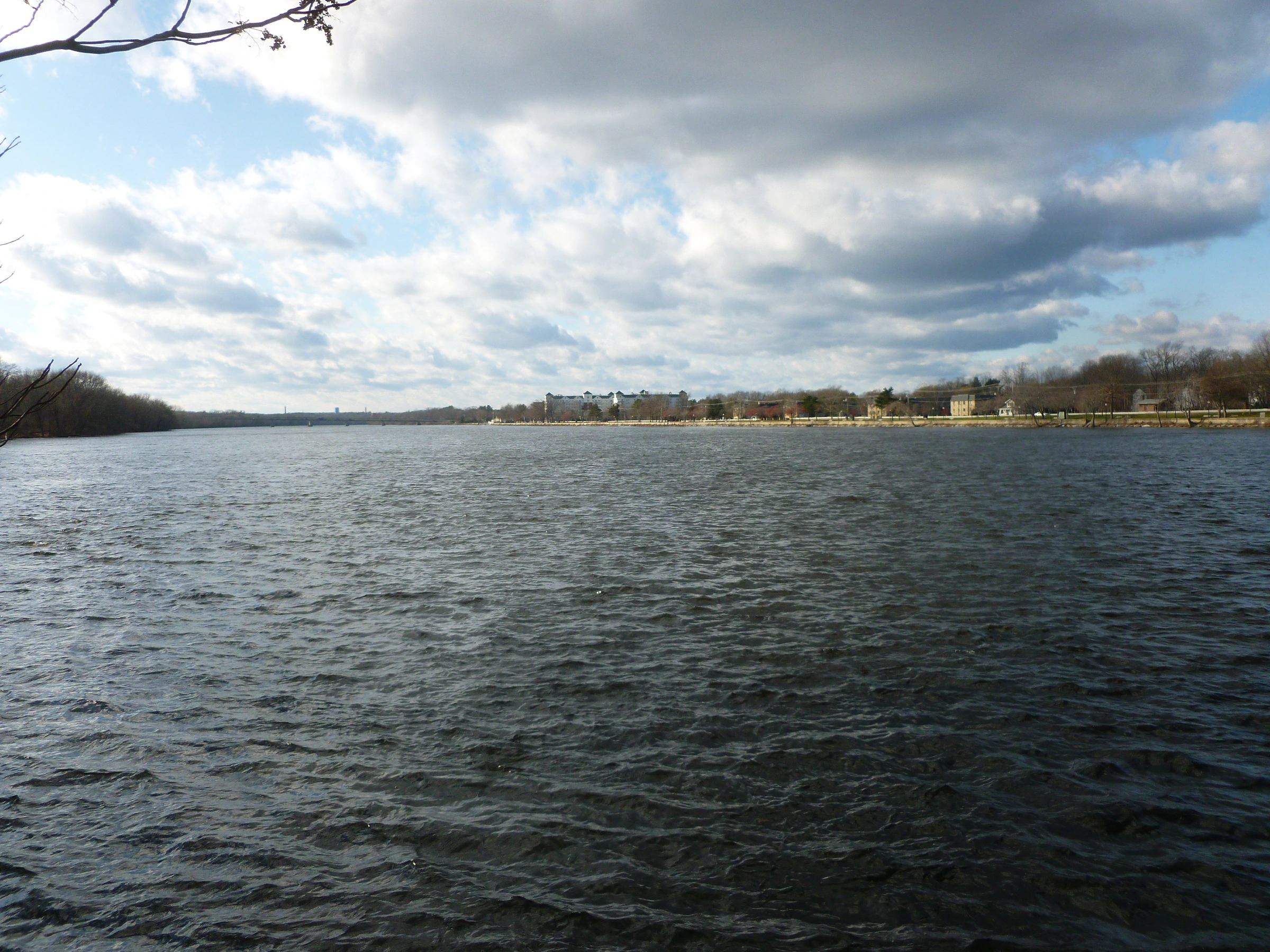
The two-loop course follows the Merrimack, reaching Rourke Bridge at about 2.5 miles. In his account, the “temporary” bridge built in 1983 had lost much of its asphalt by 2026, leaving mostly metal plates. On the first crossing, a collective “woah” went up. There was frost, and runners were trying not to slip.
A commenter who ran the same race remembered it similarly. Another was glad never to have crossed it in the rain and linked the Massachusetts replacement project. Sunlight made the second crossing somewhat better, though still rough.
His opening two miles were around 6:15, followed by running near 6:05. After mile six, part of the pack pushed harder than he wanted to go. He let them leave, hoping to catch people later. Halfway showed about 40:17 on his watch, still pointing toward mid-1:20. Ten miles took 61:36; roughly 61:00 would have put him on 1:20 pace.
Then he began taking time back. His closing miles were 5:59, 5:48 and 5:44. He saw about 1:19:20 on the finish clock and crossed in 1:19:48, half gasping and half sobbing. A clear negative split, then a medal, a space blanket and orange slices.
The sequence resists a single rule. The training forecast had been cautious, the bridge introduced a hazard, letting the pack go required a decision, and the late acceleration worked. None of those details explains the whole race alone.
Keeping a judgment of his own
He called it a “perfect day.” Hard work does not always pay off, and it feels good when it does. Weather, race and how he felt came together. He never spent the second half simply hanging on for the finish. It was his best VDOT performance so far, and for once it came in a half. His takeaway was that every specific workout need not be crushed for a race to go well.
Next came a winter 5k. Closing his recent 10k in 18:0x and the half in 18:1x made his 17:57 best look vulnerable. Commenters praised the negative split, fellow racers discussed the bridge, and someone asked about adapting Marathon Excellence to distances from 5k to the half. He said the general phases were similar and the specific phases differed; he wanted to continue with the approach. There was shoe talk too, incidental to this exchange rather than a product verdict.
That is a useful form of independence: learn from a book, recognize what your own plan missed, read a prediction and keep making decisions, adopt a structure while retaining a taper that suits you.
Another runner’s frosty bridge and your next half remain separate situations. Fitness, weather and course will differ. This report leaves questions worth carrying into training about progression, recovery, following a group and letting one go. Those questions offer more than either “full-spectrum always wins” or “running by feel is not serious.”
Rourke Bridge and the Merrimack, Lowell, December 2011. Location illustration, not the 2026 race. Emw · CC BY-SA 3.0 · https://commons.wikimedia.org/wiki/File:Rourke_Bridge_and_Vandenberg_Esplanade_viewed_from_across_the_Merrimack;_Lowell,_MA;_2011-12-08.JPG · https://creativecommons.org/licenses/by-sa/3.0/ · resized / WebP
