A Summit Without a View
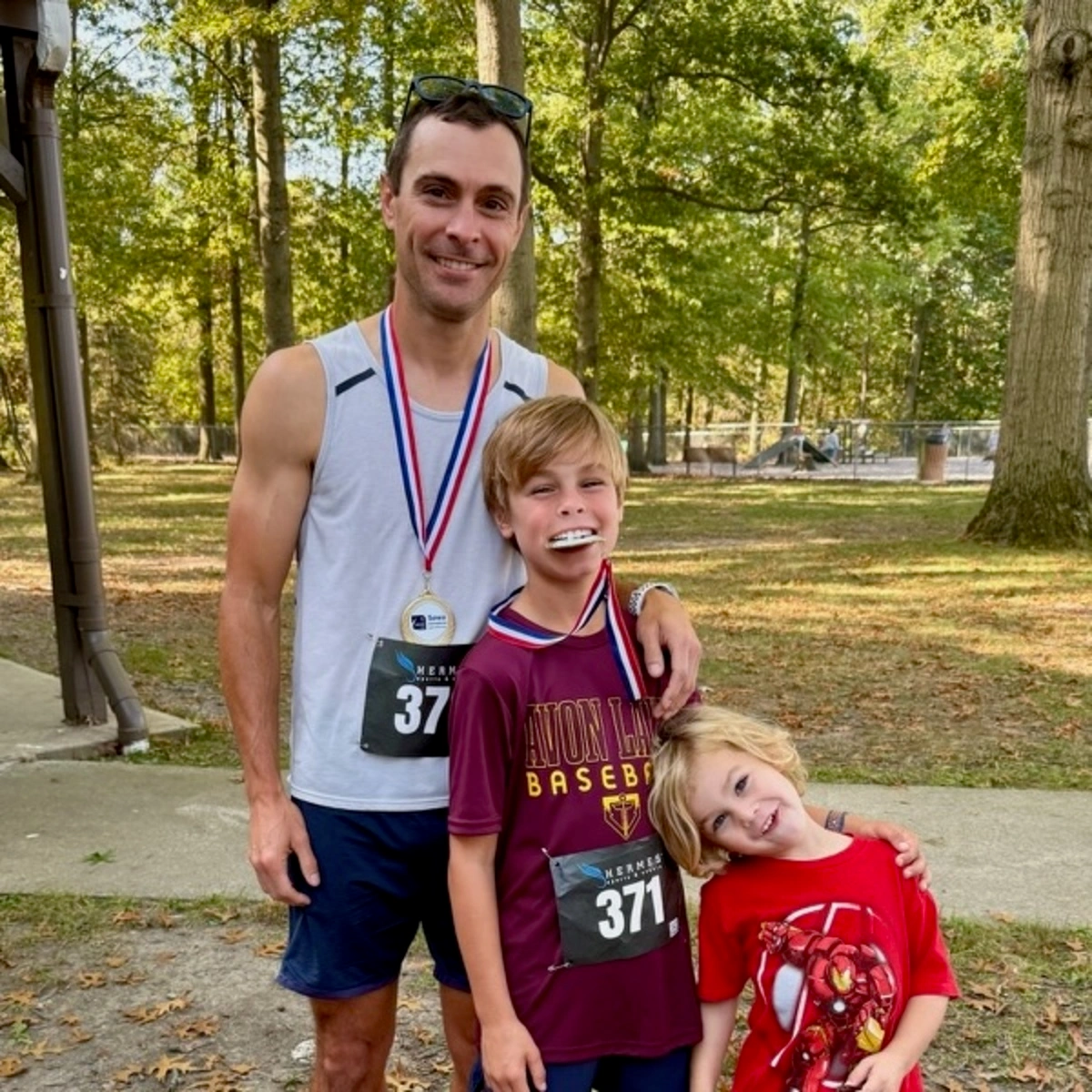
If the spectrum of ultrarunning culture over the past decade-plus was still drawn as a straight line—on the left, “enough weekly mileage means you are ready”; on the right, “what actually works is only the elevation chart and the mountain-specific plan”—then when Cameron Messier finished the Grindstone 50k at Natural Chimneys, Virginia, on September 19, 2026, and afterward laid the three worries he had written on the plane against what the course actually did, that line had already folded into a pair of scissors: one blade is how the aerobic tide turns Zone 2, a sixteen-week Koop Training Essentials block, and fifty-to-sixty-mile weeks into the default answer that “the engine is ready”; the other is how the eccentric edge still cuts, under the tree line on the long climb, in the quads on the descent, and in the braking load a treadmill in Ohio can never give, separating the “known limiter written into the plan” from “the system that actually broke on the course.” The image that runs through this discussion is not the next convenient “add another week of climbing” or the next brighter finisher’s sheet, but a summit without a view: you climb five and a half miles and 2,100 feet, and the reward is only that the climbing stops—high up in thick woods, you know you are high, and you cannot see out.
From “known limiter” to a gap never closed: how naming pretends to be handling
What Messier did was plain: when he built the plan in April, he put “hill and elevation experience” at the top of the weakness list and gave it a two-word label—known limiter. Twenty weeks later, same words, same status, nineteen days to the start. He does not write the ledger as a story of slacking: through July and August, on top of a full-time job, three kids, and two coaching jobs, he held fifty-to-sixty-mile weeks; he did the interval block and the steady-state block; two weeks out he ran a full three-hour dress rehearsal in race kit. The volume happened. The engine got built.
What did not happen was hills.
The scene is hard: for a race of about 32.5 miles and 5,020 feet of climbing, in twenty weeks of training he did one treadmill session with elevation and one week of hill running on vacation in San Diego. In northeast Ohio near Lake Erie, real sustained climbing is about a forty-five-minute drive; highway overpasses sit almost at the door, and he ran none of them. The treadmill sat in the house all season with the door open—he would not put the long runs on it (he knows himself: the miles would not shorten; the run would get skipped)—but the shorter incline sessions in the April plan slid into blank July calendars with no week of “weighed it and chose otherwise,” only never happening. Industry default likes to treat “written on the weakness list” as “already being handled”; Messier’s own accounting pries that default open—the diagnosis was right, the plan was right, and almost none of it happened.
That San Diego week was more like a small preview: four miles straight up, then four miles pounding down. On the climbs, flat fitness seemed to transfer; he even felt he could push. On the descent, the lungs got all the relief they wanted and the quads got none. At eight miles you can get away with it; at thirty-two, with most of the gain in the first half, luck collects its bill. He wrote it clearly afterward: his instinct on a climb is to push, and that instinct has to be overruled while everything still feels easy. Portable training (volume, a 5 a.m. alarm, whatever road is outside the door) survives a busy life; specificity that is not portable either has a physical address forty-five minutes away or asks you to want something you do not want. Writing “known limiter” into a document felt like dealing with it. It was not. It was naming it. Naming and closing the gap are different—and the plan does not tell you which one you have done until it is too late to fix. Nineteen days out, he chose not to cram a hill block: getting hurt would end it more finally than starting with the gap. He knew exactly where the gap was—that is more than most people can say; the rest, the course would say.
Under the tree line: the reward for climbing is that climbing stops
The race itself pins the image down. Grindstone 50k, Natural Chimneys, Virginia. Officially about 32.5 miles and 5,020 feet; he finished in 6:29:20, 90th overall, 7th in M45–49. Thursday flight into DC; on the plane he wrote three worries: the hills, who he would become once tired, whether he had prepared enough—written down so he could not revise them later. Two of the three turned out fine; the third was the wrong question—not “enough?” but “which system was ready, and which never took the field.”
Thursday afternoon was empty on purpose: a hotel near the airport, nowhere to be, letting the week drain. Afternoons like that are rare with three kids and a full-time job. Dinner was mild chicken fried rice from a Thai place, plus plain jasmine rice; the day before the day before a race is not the time to get adventurous; over 500 grams of carbs. Friday, a two-and-a-half-hour drive west with friends running the 100k into a valley that stopped looking like anything he trains on. Packet pickup at Natural Chimneys, lunch in Staunton, an Airbnb closer to the start; pasta with red sauce and grilled chicken; bed by 8:30; the sleep you get the night before a race—not well, not badly enough to matter.
Alarm at four. Coffee, a bagel with jelly, a banana. Left at five to get the 100k friends to their 6 a.m. start; watched them through the first mile, then an hour alone: bathroom, no line, nothing to do. That hour was the best logistical accident of the weekend—most people spend the pre-race hour in a parking lot with their nerves; he spent his getting friends to their start, which left less room to think about his own. Off at 7:02.
Opening paved section about nine-minute pace, as planned. Right calf tight from the first stride; afterward entirely irrelevant—and it still took more attention than it deserved. Gel every thirty minutes, salt capsule every hour, one bottle of Tailwind and one of water. Through Lick Run 1 at 5.7 miles: stop, pee, refill, keep moving. Somewhere on the first real incline a guy nearby said about thirty percent grade; whether true or not, it felt like it. Wolf Ridge aid at 11.6 miles in 1:57:59—at that point he was still in exactly the race he had planned.
After Wolf Ridge it goes up for about five and a half miles and 2,100 feet. He got behind a runner he thought said he was from Peru: run the flats, run the gentle downs, walk everything that went up—for the better part of an hour and a half. The method was simple and correct. He had it in his head that they would top out around mile sixteen or seventeen; it was more like eighteen. Those extra miles of climbing past where he had told himself it would end were among the worst of the day.
There was no view. The course stays under the tree line; even on the ridges you are in thick woods. You can tell you are high up. You just cannot see out. You climb for five and a half miles and the reward is that the climbing stops—not a vista, not sudden openness, only the verb “up” temporarily switched off. Industry default likes to sell “summit” as an exchange for a view; this stretch of Grindstone pries that default open: some summits never sold a view; they only sold whether the load itself had been trained. The watch face speaks too—before Wolf Ridge, still the nine-minute world inside the plan; inside the trees, the reward is rewritten from “seeing” to “stopping.” The through-image therefore drops from “known limiter” to “high places can have no scenery”: the question is whether you treated climb work as a preview of vistas, or as the false calm before eccentric braking takes the stage.
It broke on the descent: the calves you feared, the eccentric that failed
Where it actually went wrong was not the calves he had worried about all build, but the quads and eccentric load on the way down. Coming off the ridge, the legs burned in a way he had never felt on a road. He got behind an older guy who was moving well and let himself be pulled down—damage control, not running. By Sand Spring the eccentric load had done what it was going to do; every gradual uphill from there was a walk, because the quads were gone. Wolf Ridge to Lick Run 2—about 16.5 miles including the big climb, the descent, and an aid stop—took almost four hours: that is where the race actually was. Uphill, walk and hike; flat or downhill, shuffle. A season’s anxiety about “hills” was written on the calves; the bill was written on the eccentric. Default therefore shows its seam: it assumes the part you worried about will break on script; the course rewrites it with the same verifiable clash—what breaks is often what you did not train, and thought a treadmill incline key could replace.
By about mile 28 he was finished with gels; could not look at them. What got him home was watermelon dipped in salt, peanut-butter-filled pretzels, a PB&J, and a bottle full of ice—everyone plans a gel strategy; almost nobody finishes on one. Thirteen and a half minutes stopped across four aid stations: discipline right; shoes (Peregrines) right; after months chasing a forefoot hotspot, not a single blister. The final 4.4 miles on pavement came in at 41:19, about 9:22 per mile—within half a minute per mile of the nine-minute pace he opened with on fresh legs. Heart rate among the highest of the day. It felt like a grind, like the slowest part; it was not. He was closing, and could not tell from the inside. Average HR 132, max 159; never anaerobic—not on the thirty-percent wall, not on the five-mile climb, not closing on the road. The watch answers the plane question, just not the way he expected: aerobically, yes, completely; he prepared every system except the one that broke. That line afterward—“You cannot train downhill running on a treadmill in Ohio”—is not a slogan; it is the physical distance between the machine in the Ohio living room whose door stayed open and never took the braking sessions, and the descent under Virginia trees. The watch logged 33.5 miles; the race said about 32.4; trail GPS under cover is generous; he neither claims the extra mile nor gives it back.
Sunday: walking mostly fine; going downstairs very hard. Twenty-four hours later, it was still the descent collecting. Finished Saturday at 1:31 p.m.; left the Airbnb at 10:30 that night to pick up the 100k friends. They finished late, same mountain, twice as far, called it brutal; he could only extrapolate. Standing at a finish line at midnight having already run that day: you know exactly what is in their legs; you also know you got to stop hours earlier. Both are true at once and they do not cancel out. On the plane he had worried who he would become once tired; afterward he said he was about the same guy, just slower, and stayed pleasant on the walls. What he is proudest of is not the time, not the age-group place—but that.
Closing: rewrite “prepared” as knowing where the gap is—and refusing to mistake naming for closing
If trail culture often reads independence as “one person stacks weekly miles before talking mountains” or “one person believes a Zone 2 rise equals a course safety window,” this discussion is closer to another kind of independence—holding the aerobic tide and the eccentric edge at once, refusing the false binary. Messier’s recap matters because it lays verifiable scenes on the table: the sixteen-week plan and fifty-to-sixty-mile weeks; one treadmill climb plus a San Diego week; three questions on the plane; the planned rhythm to Wolf Ridge; no view under the tree line; the innocent calf and the quad bill; the closing pace and never-anaerobic heart rate; the double truth at a midnight finish. The discussion’s value is that it does not push only toward “ban the flats” or “aerobics will always carry you,” but says the rule back: first tell portable volume from non-portable specificity; then tell the limiter written in a document from the short incline sessions that never appeared on the calendar; use “the reward for climbing is that climbing stops” and “the race was on the descent” to keep one edge bright inside the rising tide of “the engine is ready”—the hard part of preparation is often whether you mistook naming for closing, not the next convenient “add another week of climbing” or the next brighter age-group result.
The executable prompts are plain: treat downhill and braking as their own sessions, not something defaulted to a treadmill incline key. Write overpasses, parking garages, any real-grade repeats as addresses that must take a slot outside volume—not as kind labels on April paper. Beside the gel strategy, carry real food earlier. Read average heart rate and closing splits, not only “it felt slowest.” Write independence as holding a summit without a view—knowing height may have no scenery, knowing the system that breaks may not be the one you feared all season, knowing a midnight finish can hold two truths at once—not as forever outsourcing to “weekly miles were enough” or “I wrote known limiter once.” The aerobic tide can carry a six-and-a-half-hour engine; the eccentric edge is still written on the stairs going down. People who hold both blades at least know which lever they are training: naming, or closing.
Photograph source: Cameron Messier / Morning Miles Co. public author profile.
https://www.morningmilesco.com/p/what-six-weeks-of-intervals-actually-bought-me