Bento Cookers and Oversized Pots: In Japan's Solo Living, "Bought and Loved" Is Not a Checklist
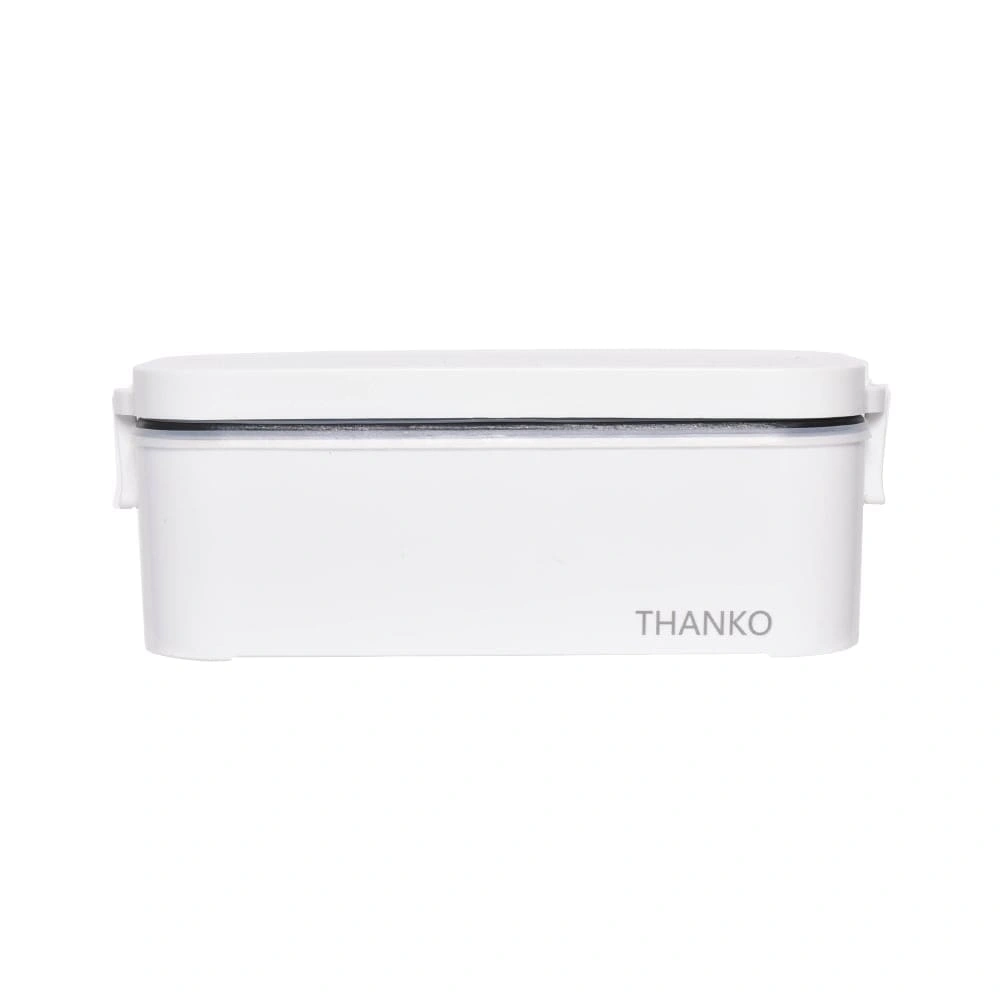
If "bought and loved" sounds like a shopping list, what Japan's hitori-gurashi is really practicing is something else: when you want to eat, cook only the portion you can finish.
That sense of portion is harder to copy than any "fifteen picks."
Shopping platforms like to translate it into "solo living must-haves"; people who actually move in discover that the real difficulty is refusal—refusing family-sized capacity, refusing completeness designed for the camera, refusing to live "alone" as "a household that just hasn't assembled yet."
For twenty years, one-person households in Japanese cities have long ceased to be the exception. Rent a tiny 1K or 1DK, fridge against the wall, stove so narrow you turn sideways to chop—yet the industry's default answer remains "appliance sets," "family 5.5-go rice cookers," "stage the living room like a magazine." People who actually live there often only realize by month three: the problem is not that things aren't expensive enough, but that they are too big, too full, too much like a life designed for someone else.
What runs through this piece is not a "must-own gadget" gospel, but an almost homely image: that lunchbox-sized pot on the counter, rice just covering the bottom of the inner pot, steam clearing, you sit down, finish, wash the bowl. If a idle 5.5-go cooker still sits beside it, it isn't wrong—it simply doesn't belong to this moment.
"Bought and loved" is not a list—it is frequency of use
Open a search and Japanese "買ってよかった" has almost become a template. Furniture bloggers list fifteen items; appliance sites list three must-buys; room-show posters add three more "vibe" pieces. Industry default: readers want a checkable table.
People who have lived ten years write harder. One personal blog puts "good things" next to "useless ones": the cordless vac you touch every day stays; the home bakery, yoga mat, heavy bookshelf, humidifying air purifier abandoned after filter hassle gradually become failure specimens in the room. Her rule is simple—buy by frequency of use, not by "how solo living is supposed to look."
This is not an anti-consumption manifesto. It only reminds you: lists manufacture anxiety; frequency manufactures judgment.
In real-room roundups, "bought and loved" often lands on movable, dual-use objects: a low stool that is side table and storage; a shelf that works as a desk; a portable lamp that follows the body. When the room is small, anything that only looks good on camera is quickly kicked into a corner.
Failure talk is often more honest than success talk. Buying the wrong thing takes more space than buying one fewer—that is hitori-gurashi's cruelest arithmetic.
There is a subtler failure too: the object isn't ugly, only the rhythm is wrong. A home bakery needs proofing and waiting; a humidifier needs filter changes; a "pretty ambient light" that never moves with you becomes décor stuck in a corner. Solo time is fragmented; only objects that nest into fragments stay.
Three must-haves, and the things that light the room
Appliance articles have an almost fixed division of labor: first "must," then "nice to have."
Fridge, microwave (or oven-microwave), washer—these three are still the floor in most Japanese solo guides. Prefer fan-defrost for the fridge, and an exterior that isn't oppressive; washers of four to five kilos are common, and if you go drum, measure the move-in path first—door width, stairs, elevator matter more than the model name.
Only then comes "light." Portable lamps, small speakers, mini projectors land in the "nice to have" column. They don't keep you alive; they keep a 1K night from feeling like a temporary camp. In one Japanese-modern 1DK: a clear glass canister on the table makes tea leaves visible, and brewing becomes habit; a waterproof mini speaker in the bath keeps washing from being blank time.
Industry will sell the second column as "must-buy" too. People who have lived there split the columns: the first asks "can you get through winter without it?"; the second asks "does it move with your body?" A lamp that can come to the bedside is closer to solo rhythm than ambient light forever plugged in a corner.
Rice cookers sit in that seam too. Guides say: you can buy one, or manage with a pot or microwave. Some eventually choose around three go, batch-cook and freeze—trading "batches" for "lighting the stove every day"; others refuse the big pot and accept only one portion on the spot. Both answers hold, if you first admit how narrow your kitchen is and how late you get home.
Another ledger is often ignored. Someone moving from an Osaka family home to a Tokyo 1K of about twenty square meters: of total moving costs, deposit and fees take most; furniture and appliances get only a slice of budget. If the company subsidizes rent, monthly living costs can support "adding slowly." SNS showrooms assume you have already paid the invisible slice.
"Ohitorisama appliances": industry finally admits one person eats
If the three must-haves are survival, then Japan's market for ohitorisama appliances—gear sized for one—is a belated admission: family-portion kitchen machines force you to leftover or throw away.
Brands answer concretely. One lunchbox-shaped rice cooker holds about half to one go, officially priced around seven thousand-plus yen, rice in as fast as a dozen-plus minutes; the tagline is almost this essay's through-line—when you want to eat, cook only what you can finish. It is not meant to replace the 5.5-go at home; it admits that one person's dinner should not be shamed first by "family spec."
On the other side, a small fryer: oil about three hundred to five hundred milliliters, modest wattage, washable pot, cord that stores inside. The pitch is not "fry for the whole family," but "when you want fried food, you need not open a whole pot of oil for one meal." In a narrow kitchen, oil smell and storage are themselves costs—so "small" is not cute; it is manageable.
Of course, separate two voices. Cumulative shipment figures on brand pages are marketing language; a blogger writing "a three-go cooker covers six frozen meals" or "5.5-go is too big" is living language. Some still choose a Zojirushi three-go: cook a little more once, portion and freeze—another kind of "finishable," by rhythm, not by a smaller pot.
Discretion sits here: do you want one portion on the spot, or a batch. Both hold, if you know which you are, rather than being pushed by "solo must-buys."
"Ohitorisama" sounds like a marketing tag; on the counter it is plain: pot rims get lower, oil gets less, dishes get fewer. Once industry admits one person is a complete dining unit, products need not comfort you with "family discounts"—they speak in portion.
The room's story speaks before the product name
The last layer listicles often skip: room narrative first, product entrance second.
In the same 1K, someone envies a shared kitchen's wide counters yet can only finish a meal on a cutting-board-sized space; someone keeps budget on "cute and cheap" ready furniture and deliberately does not chase SNS checklists. A lamp can be a brand portable or a chain-store substitute—the difference is not the brand letters, but whether you still charge it, move it, and truly use it to light the hour after overtime.
Room stories also decide whether you buy "ritual." Hand-drip coffee, a single-stem vase, Ryukyu tatami and paper lamps—when these appear in real-room interviews, persuasion is not price but whether they happen every day. An invisible tea canister rarely builds a brewing habit; a silent bath rarely makes washing stay-able time.
Vacuums work the same way. Someone buys a handheld barely over a kilo just to lower the "should clean" mental bar; some guides honestly say: in a tiny 1K, a floor wipe is enough. There is no single right answer, only an honest pairing of floor area and laziness.
So if "bought and loved" is still worth reading, it should not be read as a seeding table, but as other people's failures and restraint: which things are still at hand after three months, which became yoga-mat laundry racks.
The room votes for you. A bento-sized pot, a movable lamp, a canister that shows the tea—they are not "minimalist dogma," but an executable aesthetic: good-looking, and finishable, usable, storable.
Solo living is not family life scaled down one size.
It is closer to redefining independence: independence is not "I can finally buy everything," but "when I want to eat, I cook only what I can finish"—leaving taste, and the discretion to say no, inside portion, frequency, and room scale.
Product photographs: THANKO official. Full frames converted toWebP.
https://www.thanko.jp/view/item/000000003453
https://www.thanko.jp/view/item/000000004045
THANKO おひとりさま用超高速弁当箱炊飯器 RCKDSGSWH
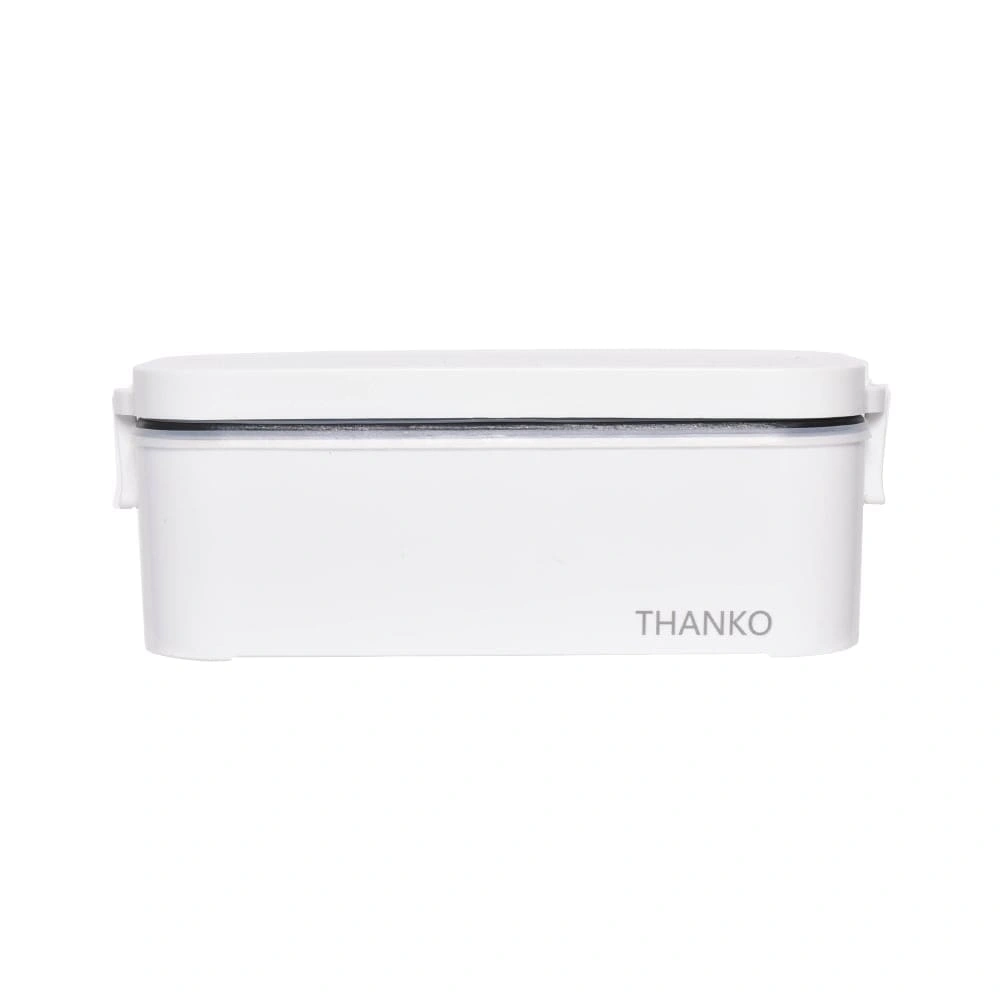
White RCKDSGSWH bento-box rice cooker. Capacity0.5–1gō; dimensions240×100×80mm. Follow the manufacturer’s instructions.
RCKDSGSWH / white / 0.5–1gō / 240×100×80mm
JPY 7,480 · Japan official reference · 2026-10-19
THANKO · THANKO おひとりさま用超高速弁当箱炊飯器 RCKDSGSWH
Why L2Mstore selected it
Our selection focus: small-portion rice cooking matched to meals and counter space
THANKO カラリ SGLFRYSBK
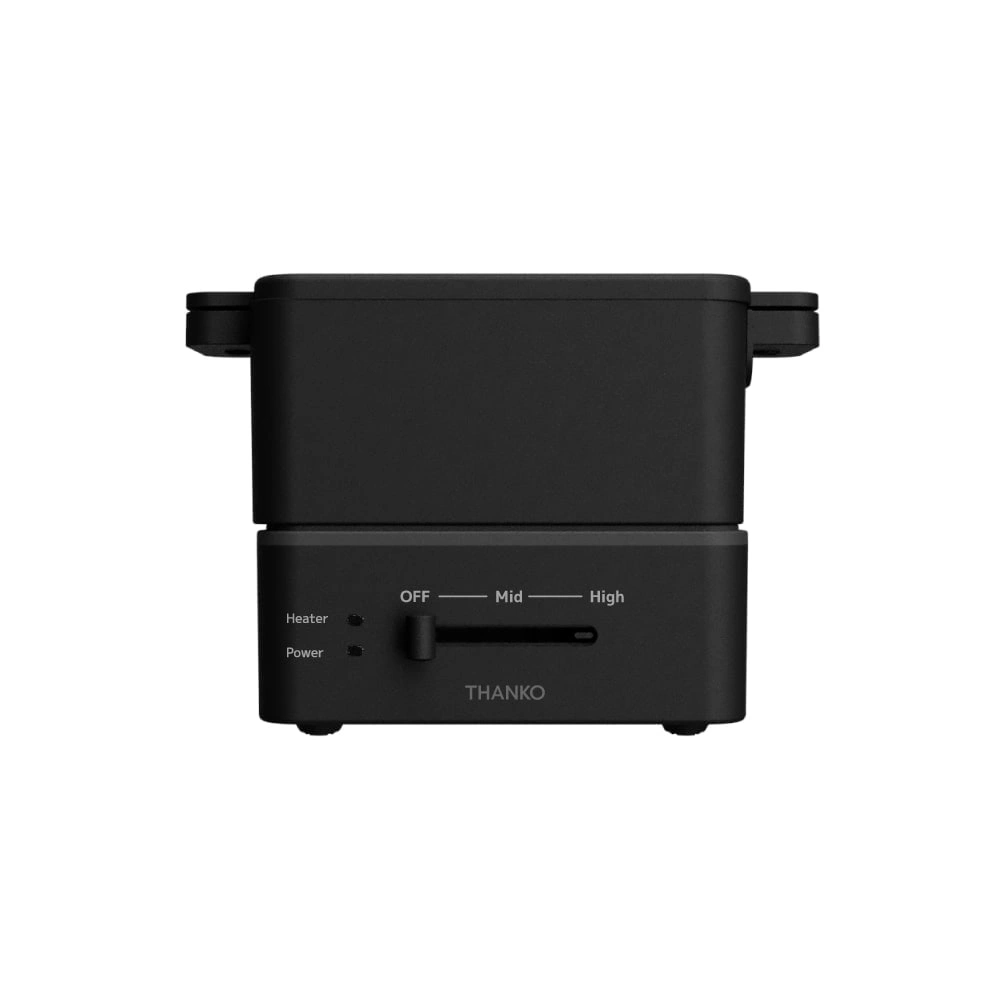
First-generation SGLFRYSBK Karari tabletop fryer, using about300–500ml of oil;206×107×145mm. This is a different model from Karari2.
SGLFRYSBK / black / 300–500ml oil / 206×107×145mm
JPY 6,980 · Japan official reference · 2026-10-19
THANKO · THANKO カラリ SGLFRYSBK
Why L2Mstore selected it
Our selection focus: small-quantity tabletop frying with careful oil and clearance management
Choose for your own portions and actual frequency of use.