One Kilogram in Forty Minutes and Humidity Calling the Shots: How Minix Writes Mini Drying Past the “No-Drill Plug-In Box”
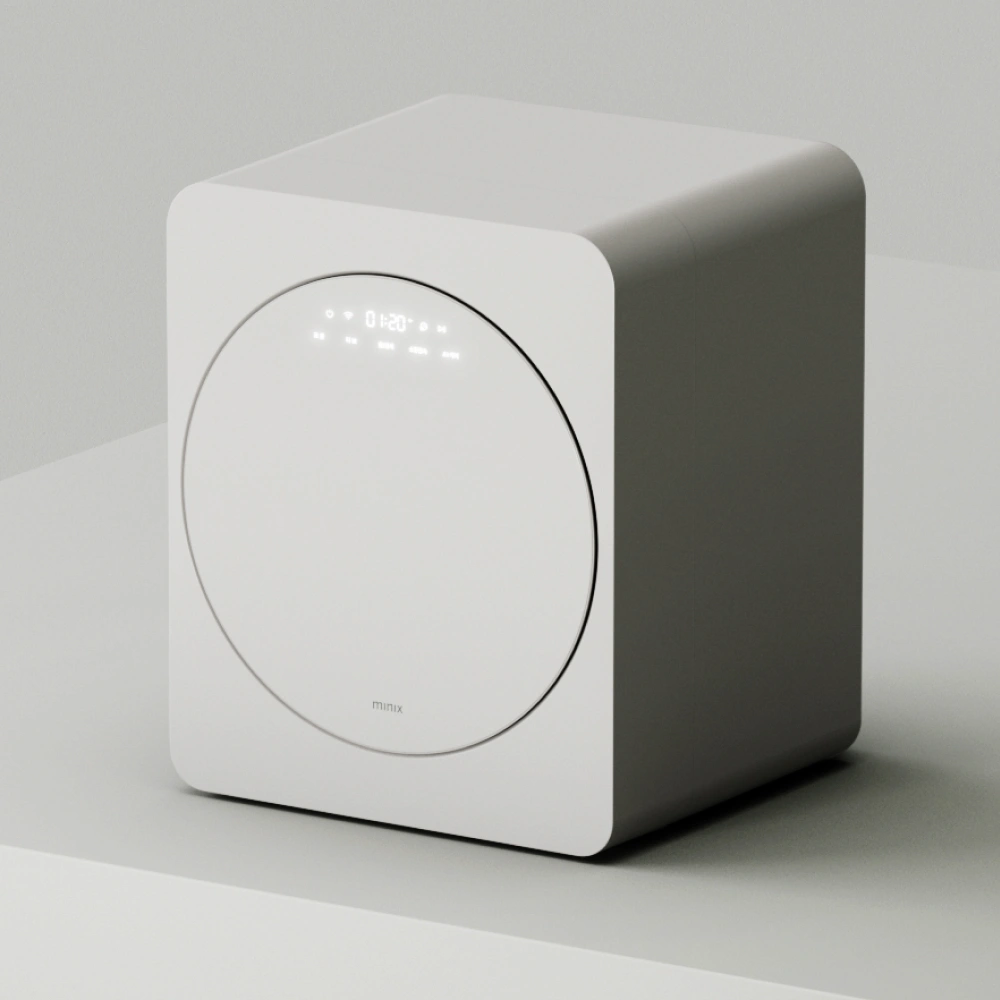
If the past few years of Korean one-room appliances still treated clothes drying as two extremes—either a balcony line plus a dehumidifier, or a family ten-kilogram heat-pump cabinet—then spring 2026’s “The AirDry” finally designs around “the one kilogram you need to wear today” and “how wet the fabric still is,” not around the imagination that “your home should have a laundry room.”
What runs through this piece are two equally plain numbers: about one kilogram of everyday clothes in roughly forty minutes on small-load quick dry; and smart humidity sensing—humidity calling the shots. They do not sound glamorous, yet they decide whether the machine can eat a one-room night’s damp, instead of handing a half-dry shirt back to the pillow.
Solo drying politics was never “can you afford a spinning box.” It is “does this machine assume you still lack a line to the balcony, a three-hour free slot, and a laundry basket you only clear on weekends.” Family units often assume clothes pile up and drying is an occasional bonus. People who actually live there find the problem in small, frequent loads—one jacket, two towels, the set that must be dry before a trip. If industry only offers “large standard cycles,” solo households stay trapped between airing and waiting.
From “plug it in” to “humidity decides”: the sensor is the real threshold
Open any “must-have one-room appliance” list and the mini dryer almost always appears—especially in no-drill, plug-in contexts: rentals that forbid exhaust holes use a small electric drum to keep moisture inside the machine. The industry line is easy: drying is enough, three or four kilos for one person. Lists rarely ask the next question—is time a fixed menu, or does it adjust to fabric humidity?
The usual answer is still “pick a course and watch the clock.” Result: the same “quick dry” sometimes overshoots, sometimes leaves damp; people add another cycle by feel, or open early and touch the cloth. Minix writes the problem the other way. Press reports describe smart humidity sensing that reads fabric moisture in real time and auto-tunes drying time; you can also set time yourself in ten-minute steps up to about three hours. What industry does here is not another “smart” sticker—it turns “how dry is dry enough” from guessing into feedback you can feel.
On the heat side: dual PTC heaters—two roughly 650 W-class units adjusting temperature to fabric state. In small-load quick mode, about one kilogram of everyday clothes can finish in as little as about forty minutes (environment, material, and thickness still move the clock). If the door stays closed for about five minutes after the cycle ends, the drum turns on its own to limit wrinkles—more useful for “wash, leave for a meeting, take clothes later” than another long menu list.
Five-kilo max and four-kilo standard: “thirty towels” inside volume politics
If humidity sensing solves “dry accurately,” what still jams daily life is “how much per load.” Industry loves “bigger is better.” On one-room paths and power budgets, people want something concrete: weekend towel piles, a light seasonal duvet, or the few everyday pieces—not a warehouse for family sheets.
Press figures put The AirDry at about 5 kg maximum and about 4 kg standard—roughly 1.43× prior models—translated in copy as about thirty towels, nineteen T-shirts, or eight summer duvets. That is not a dare to stuff full every time; it leaves headroom for occasional peaks. The high-frequency job remains the one kilogram that small-load quick targets. Writing capacity and speed apart keeps solo life from being tied again to “save until a standard cycle makes sense.”
Modes include about five tailored drying options with Air Care deodorizing; reports cite about 99% deodorizing performance and coverage for shoes, hats, pillows, and other hard-to-wash pieces—stretching the machine from “clothes only” toward small-item care. The exterior stays minimal while internal volume was reworked enough to take an iF Design Award 2026—the award is not a purchase reason, but it shows the design constraint: keep a one-room silhouette while packing capacity and sensors together.
Convenience that cannot become a scene is only ad copy. Put about one kilogram in, let humidity sensing finish the time, take wearable clothes in about forty minutes—that is the morning mini drying actually serves. Minix mini dryers have been reported around the 160,000-unit cumulative mark—numbers move, direction is clear: no-drill plug-in is not a niche corner; it is a main demand under rental rules.
Market parallel: Winix compact also sits on the four-kilo shelf
Minix is not alone. Winix Inverter Compact Dryer S (e.g. HS4E400) writes about 4 kg max and about 2.5 kg standard into the same compact lane; official and press talking points often include about 43 dB, quick and towel modes, and a cumulative story around 190,000 units. Placing it beside Minix is not a ranking—it admits Korean solo drying has moved from “whether you have one” to “who fits fragmented loads and noise tolerance.”
In one-room media and unboxings, “mini dryer” and “no-drill” keep returning—not buzzword piles, but rental echoes: you cannot drill, balconies are uncertain, indoor airing in monsoon or heating season gives smell back to the whole room. When Minix talks one kilogram in forty minutes and humidity sensing, and Winix talks four-kilo-class compact and low noise, the market is finally writing “one person” as cycle time and capacity constraints, not only “a smaller family machine.”
One more contrast often missed: the family laundry room’s “complete” look is for the camera—big drum centered, heat-pump badge, sorted baskets. Solo drying’s complete is often that it plugs in, finishes one piece, and sensing does not over-bake. The AirDry leaves max capacity at five kilos and aims small-load quick at about one kilo—not for a prettier table, but for daily load and short cycles. Once industry ships to humidity and fragments, “optimal for one-person households” finally has minutes and kilos you can check.
Living alone is not shrinking a family dryer by one size.
It is closer to redefining independence: independence is not “I deserve a ten-kilo heat pump too,” but “the machine matches whether my one kilogram needs about forty minutes, lets humidity call the shots, and fits a rental that cannot drill.” One kilogram in forty minutes and humidity sensing are just that sentence written into course names and sensor logic.
Product list
1
Minix The AirDry mini dryer
Humidity sensing auto-timing; dual PTC; ~1 kg small-load quick ~40 min; max 5 kg / std 4 kg
https://minix.life/product/신제품-미닉스-미니건조기-더-에어드라이-최대-5kg/586/
2
Winix Inverter Compact Dryer S (HS4E400 etc.)
Max ~4 kg / std ~2.5 kg; ~43 dB compact contrast
http://www.winix.com/product/1969
Main references
Herald Business: Minix The AirDry launch
TheElec: Athome Minix mini dryer
News1: humidity-sensing mini dryer
Minix official mall: The AirDry
Winix: Inverter Compact Dryer S
MINIX The AirDry MNMD-200G,official brand-seller product photograph.
https://www.29cm.co.kr/products/4094272
MINIX The AirDry MNMD-200G
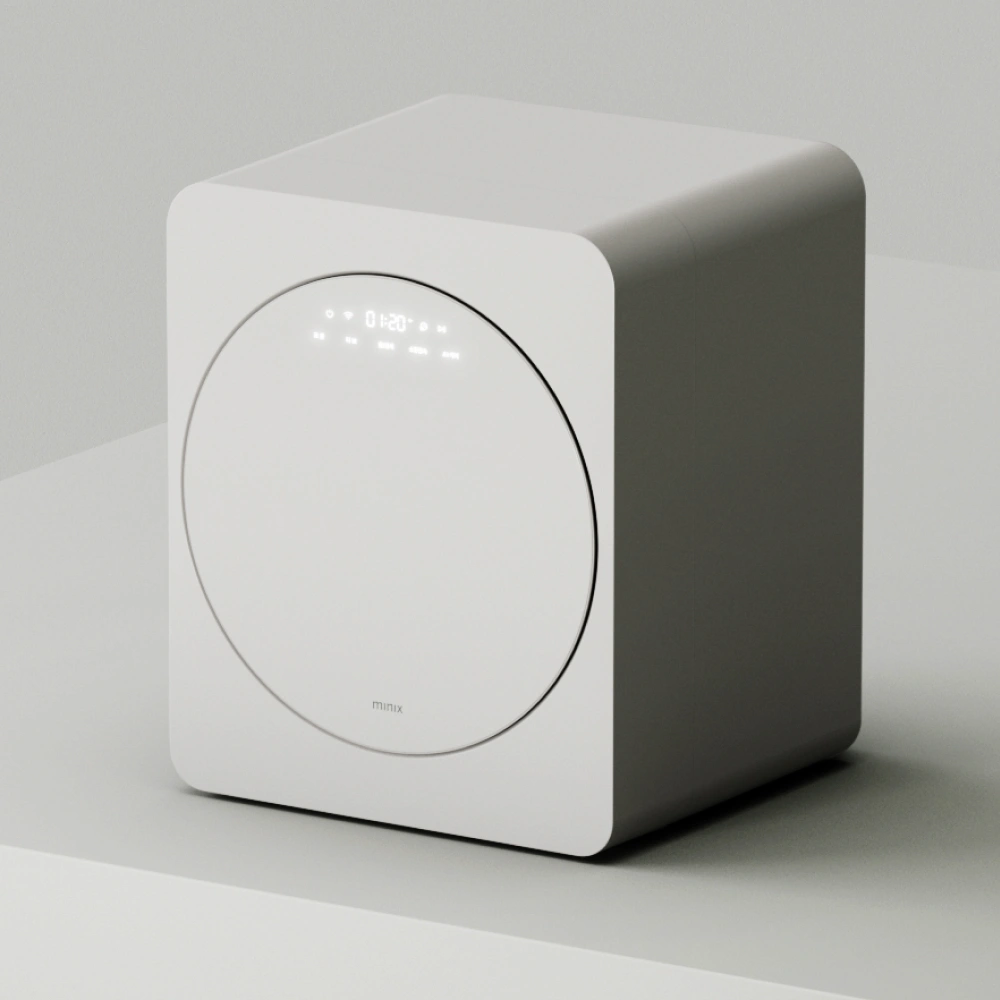
The AirDry MNMD-200G,Greige,max5kg/standard4kg,500×499×605mm; listed by AtHome on29CM. Around40minutes for1kg is a specified-cycle claim and varies with fabric and environment. Korean220V/60Hz; domestic channel unverified.
MNMD-200G / Greige / max5kg-standard4kg / W500×D499×H605mm
KRW 339,000 · Overseas listing reference · 2026-10-20
MINIX · MNMD-200G
Why L2Mstore selected it
Our selection focus: a compact dryer as a way to handle smaller loads separately
Check the exact model, installation clearance and electrical requirements before choosing.