Nineteen Centimeters and Six Hundred Cubes of Ice: How Korea’s Solo Households Pull the “Ice-Water Counter” Out of Family-Machine Width
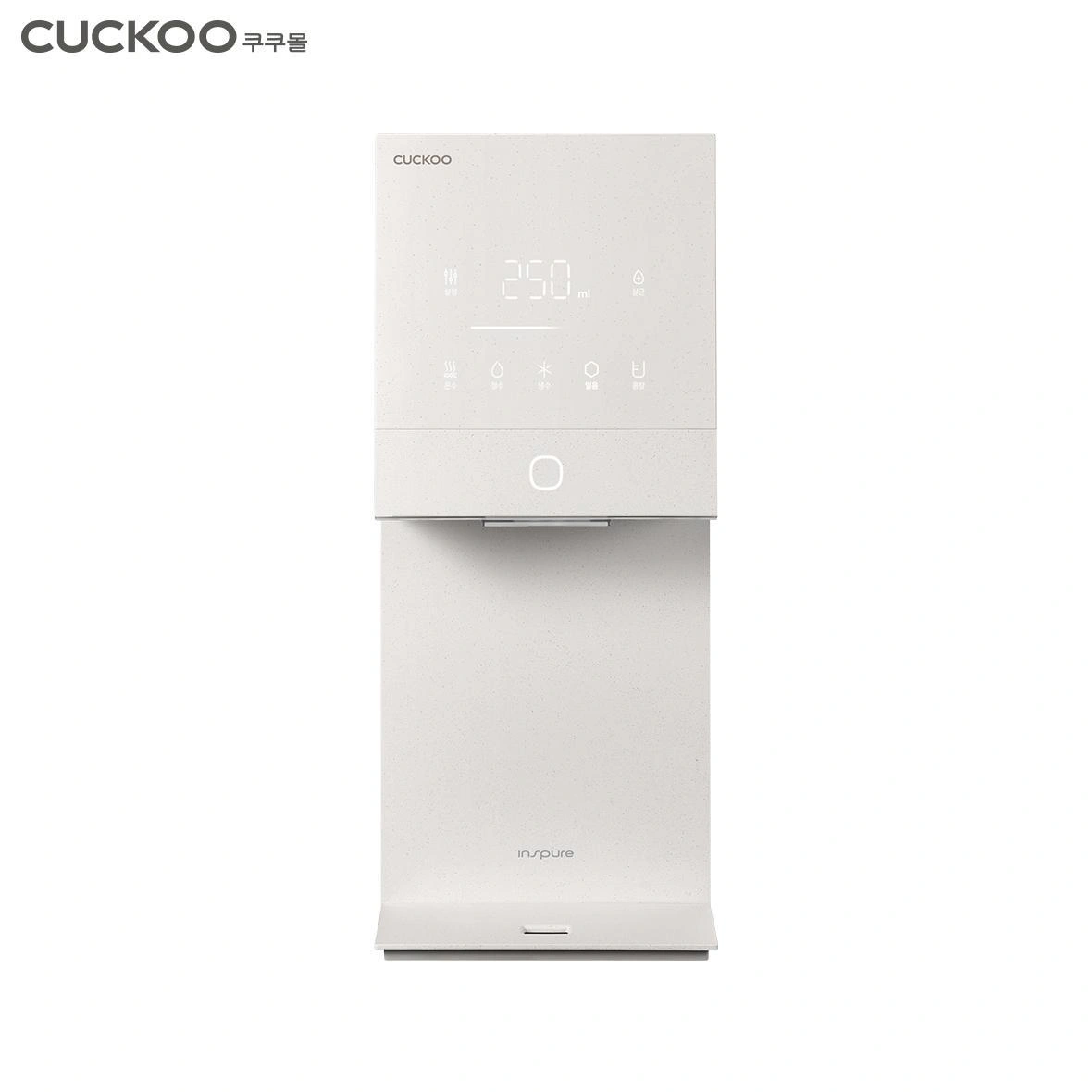
If for more than a decade Korean urban kitchens still wrote ice-making purification as “a large block beside the island”—wide enough to demand a cleared appliance stage, with a feature list stacked for whole-family drinking and parties—then the Zero 100 Mini ice water purifier finally designs the machine by a nineteen-centimeter seam, not by the fantasy that “your kitchen ought to be wide.”
What runs through this piece are two equally unglamorous numbers: body width about nineteen centimeters, and about six hundred ice cubes a day. They do not sound grand, yet they decide whether the machine can retreat into a one-room counter gap, rather than stand in the middle of the circulation path broadcasting “here sits a cabinet that spits ice.”
Solo drinking-water politics is often written as filter-price or rental-contract detail. People who actually live there know a more daily layer: iced americano, cup noodles, the occasional highball—demand is fragmented, frequency high, and the kitchen is often only a few steps from the bed. Family-spec ice purifiers assume “guests should get ice water too”: expensive, wide, install like a move. Solo households then swing between “keep buying bag ice at the convenience store” and “raise something the size of a mini wine fridge.”
From “Full Features” to “Width First”: The Politics of Nineteen Centimeters
Open a Korean search for “ice water purifier” and it almost always ties to rental, visit maintenance, and a large ice room. Industry default: you want ice and hot water “enough for family and guests.” Solo reality flips it—the counter is already sliced by rice cooker, coffee maker, knife block; another body over twenty-three centimeters means clearing a stage.
Width brings two failures. One is forcing a mainstream model: it makes ice and also eats the last breath of an open small unit. The other is giving up: buy bag ice in summer, kettle for noodles, hand “making iced drinks at home” to endurance outside weekends. The absurdity appears: it is not that ice is unwanted, but that “raising a living-room-class purifier for one person” fails the gut check.
Zero 100 Mini rewrites the brief: admit narrow, and still design for it. Cuckoo’s public specs are concrete: width about 19 cm (brand claim of smallest domestic ice-purifier class as of the press date); models such as CP-AQS100EWH (self-care), recorded in third-party spec libraries at about 190×445×435 mm and about 15.55 kg. It does not prove “solo homes deserve commercial ice volume”; it admits that in a studio, footprint and “can I use it every day” are the same ledger.
Color is no longer only “appliance white”: white, beige, gray, black, pink, blue—six colors—so the machine reads more like a counter object than forced infrastructure. For open plans, that almost equals demoting ice purification from “visible living-room giant” to “daily thing in the seam.”
Five Fingers of Ice and Twelve Minutes: Pressing “I Want Ice” into a Scene
If width solves “it fits,” what stays high-frequency is ice itself. Industry loves “big storage, hard freeze”; solo cup volume wants something concrete: do not wait too long for one iced americano, and do not keep stale ice in the bin.
Public reports and brand newsletters describe the same structure: five evaporator fingers, five cubes per cycle; about twelve-minute-class fast ice; brand claim of about six hundred cubes a day—enough for fifty-plus iced drinks; ice storage about 0.45 kg. Old ice can melt out and new ice form—freshness as structure, not slogan. On temperature: mild cold water, 40°C lukewarm, up to 100°C boiled water (also about 80°C for cup noodles) fold morning tooth sensitivity, late noodles, and occasional pour-over into one spout.
These numbers look like a manual, yet match a solo truth: you rarely need party ice stock; you need “short, enough for one cup, done.” If convenience cannot become a scene, it is only a rental ad. Reach the cup, pick temperature, take five cubes—that is the afternoon a nineteen-centimeter body actually serves.
On hygiene, In-and-Out auto sterilization covers interior to spout, lines, tank, and ice tray with electrolyzed water; the ice room gets daily UV—splitting “fear of dirty pipes” from door-to-door anxiety into an automatic loop. Self filter change unhooks the cartridge from mandatory technician visits—the same class of freedom as a no-branch-faucet dishwasher for renters who move often.
An Outdoor Parallel: Portable Ice Makers and “Ice Need Not Live Only in the Kitchen”
Counter width is not alone. Another parallel is outdoors: camping and car camping take “want ice” out of the kitchen but cannot drag a nineteen-centimeter purifier up a hill. In the same summer narrative Cuckoo fields an Inspure full-stainless portable ice maker—top fill, plug in, daily ice on the order of about 18 kg, small/large cubes about every seven to eight minutes—answering another sentence: ice can be pulled out of the family-machine default, and pulled again out of “only installable in the kitchen.”
Placing the two lines side by side is not a pitch to “buy the set.” It shows what industry is doing: break large default drinking gear into sizes that fit seams, short cycles, and one cup; hand extreme scenes to portable. Nineteen centimeters and eighteen kilograms do not sound like one revolution, yet they sit closer to square meters on a lease and a campsite outlet than any “smart kitchen” adjective.
When Korean business reporting puts mini summer appliances on solo-household pages, Zero 100 Mini and the portable ice maker often stand together—the market admits narrow rooms and outdoors are two complete units of use, not leftover corners of a family kitchen.
Independence Is Pulling One Cup of Ice Out of Endurance
One purchase ethic should not be covered by six-color beauty shots: rental versus buyout cost, filter cycle, whether night noise can share a studio sleep, whether install needs water lines—each household checks contract and floor plan; this piece decides for no one. Nineteen centimeters solve footprint; what truly pulls iced drinks out of “go out and buy” is still whether use frequency and maintenance keep up with the rhythm of that one cup.
Korean solo households were long taught “appliances should be one-and-done” and “completeness counts when guests come.” One-and-done costs width; preparing for guests costs capacity unused daily. Whether Zero 100 Mini lasts, whether mild cold water suits the mouth, whether 100°C boil is worth the premium—each household still checks against its own cup count.
At least it puts one judgment on the counter: one cup of ice is also a complete unit of life. Independence is not “I can finally ignore thirst,” but “I need not prove I deserve ice water with family-spec width.” Nineteen centimeters and six hundred cubes simply write that sentence into width and daily yield.
Photograph: CUCKOO official.
https://www.cuckoo.co.kr/rental/productView?categoryCd=135&idx=1176
CUCKOO Zero100 Mini CP-AQS100EWH(S)
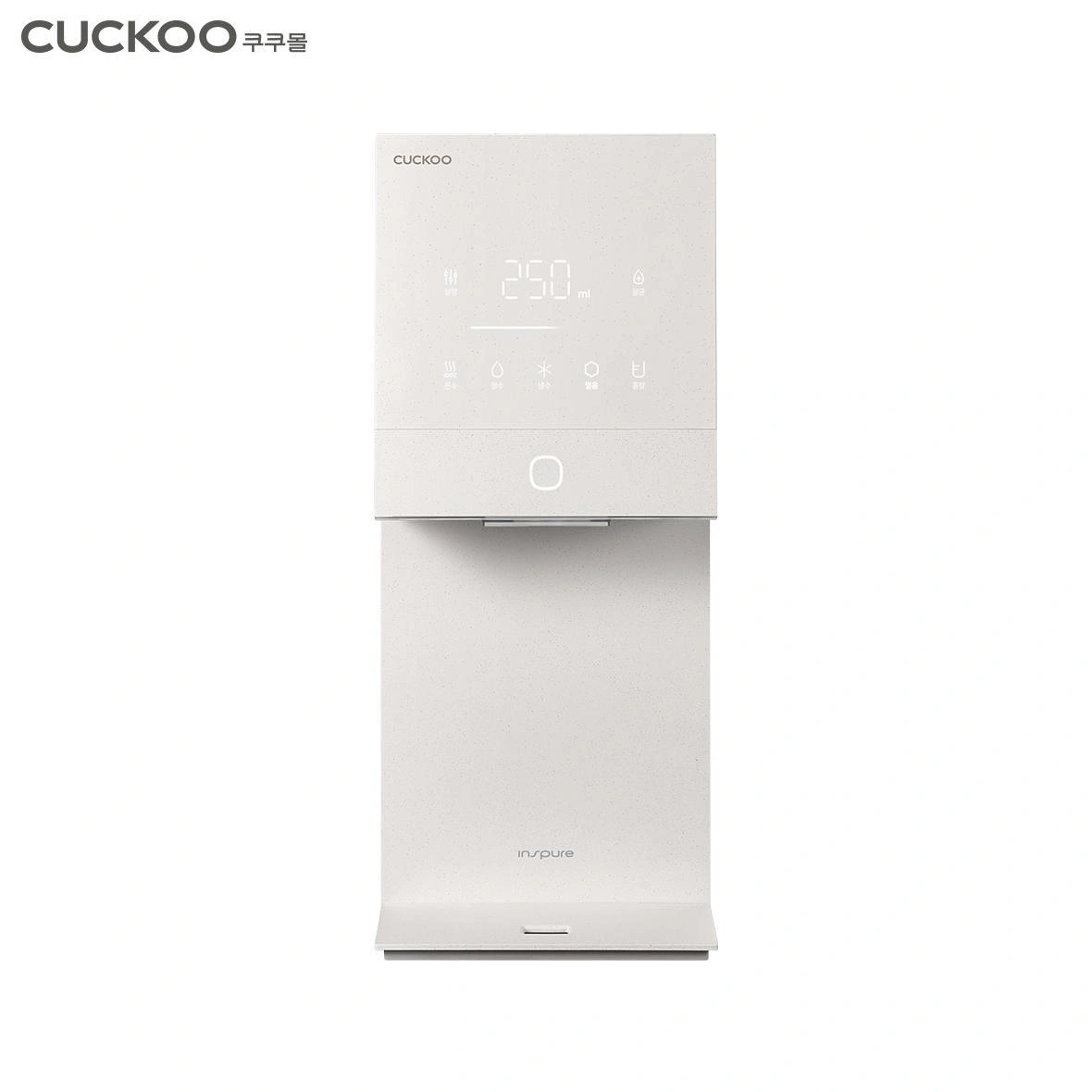
CP-AQS100EWH(S), Earth White,190×445×435mm. Official one-time plan includes36 months of care; this is not a monthly rental price. Check Korean installation, filter and electrical requirements.
CP-AQS100EWH(S) / Earth White / W190×D445×H435mm / 36-month care included
KRW 1,660,400 · Official one-time plan incl.36-month care · 2026-10-19
Cuckoo · CP-AQS100EWH(S)
Why L2Mstore selected it
Our selection focus: width and maintenance for a small-kitchen water appliance
Check installation requirements and the care plan before choosing.