Seventeen Centimeters and One-and-a-Half Liters: How Korea’s Solo Households Pull “a Little Food Waste” Out of the Smell
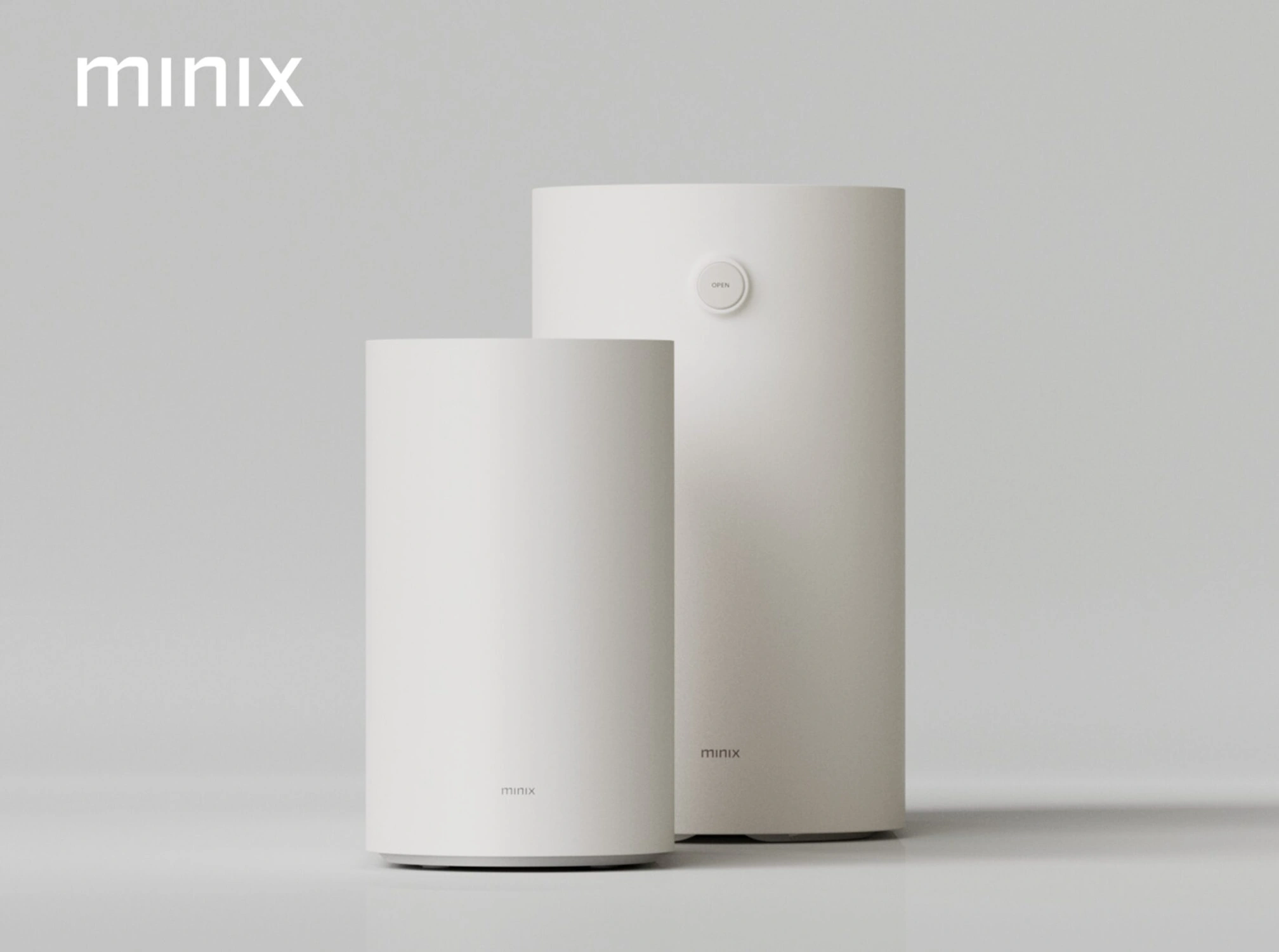
If the past twenty years forced Korea’s urban solo households to handle cooking aroma and garbage smell in the same “kitchen-living room,” the problem was never that there was too little trash—it was that a little residue is harder to handle. Not enough to fill a conventional food-waste bin, yet enough to occupy the whole room overnight.
Two plain numbers run through this essay: a body seventeen centimeters wide, and a capacity of one and a half liters. They do not sound loud. They decide whether a machine can retreat to a counter corner instead of standing in the room’s center and broadcasting what you ate today.
The politics of solo food waste is often written as eco slogans or sorting rules. People who live there know a sharper layer: a spoon of sauce at the bottom of a delivery box, fruit pits, a few leaves—too little to bother going downstairs, large enough for a sealed bag to swell at night. Family-size processors are designed for “a household’s daily volume”: expensive, wide, noisy. Solo renters then swing between “keep enduring the smell” and “buy something the size of a mini appliance cabinet.”
From “Too Little Trash” to “Smell Too Close”: The Arithmetic of a Little Residue
Open Korean search results and “food waste processors” almost always bind to family capacity, filter price, and municipal rules. Industry default: you process “enough waste.” Solo reality flips it—small amounts, high frequency, kitchen only steps from the bed.
Small volume creates two failures. One is conventional disposal: because it is not a full bag, it piles by the sink until it sours. The other is forcing a large machine: two- or three-liter bodies eat a narrow counter; heat and noise in an open studio have nowhere to hide. Absurdity follows: not that you cannot afford it, but that “raising a large appliance for a little residue” fails psychologically.
The Blender mini rewrites the brief: admit that a little also deserves design. Specs from Athome’s Minix brand are concrete: 17 cm wide, about 39% narrower than prior models; 1.5 L capacity; launch promo around the 200,000-won range. It does not argue that solo homes need a large processing center. It admits that in a kitchen-living room, footprint and odor are the same ledger.
Survey numbers are often written as purchase intent—for example, over nine in ten non-users responding positively. Read those as marketing language. The harder fact is rhythm: small, frequent, close to the sofa. If a machine cannot answer “today only about 100 g,” by week two it becomes sculpture that occupies space.
The Concession of Seventeen Centimeters: How Footprint Becomes Odor Management
In narrow flats, counter depth is limited and width is already sliced by rice cookers, coffee makers, and knife blocks. Seventeen centimeters means the machine can stand in a seam against the wall instead of demanding an “appliance showroom” cleared for it. In open layouts, that almost demotes food-waste processing from “object visible from the living room” to “corner infrastructure.”
On performance, reports and brand copy point to the same structure: double protrusions, triple blades, drying grind—claimed to handle seasoned scraps and harder bits. Convenience features match solo tempo: Quick mode for roughly 100 g; Store mode for temporary holding without immediate spoilage; one-touch high-heat cleaning and a ceramic-coated inner pot to lower washing friction; activated-carbon filter plus sealed design to press down process odor.
Written as a manual these features are dull. As scenes they are clear: after a late snack, a few kimchi leaves and sauce—Quick mode; before a trip, day’s scraps into Store mode; weekend wash of the pot. Family machines often assume a “batch processing day.” Solo time is fragmented; fragment volume must be eaten by short cycles.
Market response has checkable figures: reports say an Today’s House launch live sold 1,700+ units in about an hour. Existing 2 L PRO and 3 L MAX still sell—the brand did not cancel large capacity; it finally admitted a narrower line should exist. Pricing: the ~200,000-won launch band is promo language; shelf prices rebound later, as with all launch appliances—buyers must reckon the cost of enduring smell themselves.
A Parallel of Moisture: Mini Dryers and Odor in the Corner
Food waste is not the only source of smell and moisture in a narrow room. Another parallel is laundry: a central drying rack steals circulation; overnight damp mixes with kitchen odor into a whole-apartment humidity. The mini-dryer boom—reports cite Winix inverter compact dryer S cumulative around 190,000 units, and Minix The Air Dry 5 kg in the same context—is the same spatial negotiation: pull moisture from the room’s center into a machine that can stand in a corner.
A rack in the center, a waste bag in the corner—both fight over who deserves floor. Mini dryers answer moisture on fiber; mini food processors answer rot on food. Fix only one and the other still reminds you at night: this room has no corridor as buffer.
Placing the two lines side by side is not a pitch to “buy the full set.” It shows what industry is doing: breaking family-default large devices into sizes that can hug a wall, run short cycles, and answer for a little. Seventeen centimeters and five kilograms do not sound like revolution, yet they sit closer to the square meters on a lease than any “smart living” adjective.
Another purchase ethic should not be covered by live-commerce numbers: whether dried powder is accepted by the local government, filter replacement cost and cycle, whether night noise coexists with sleep. The reported 1,700 units proves demand was named, not that every unit fits every studio. Seventeen centimeters solves footprint; what really pulls smell out of endurance is whether use frequency and maintenance keep up with how that little residue is produced.
Independence Means Pulling a Little Out of Endurance
Korea’s solo households have long been taught to “save trash until it is enough” and to “buy a machine that does everything at once.” Saving enough costs smell; doing everything at once costs space. Whether The Blender mini lasts, how expensive filters are, whether the building allows dried powder—each household must check its own rules. This essay does not purchase for anyone.
It at least puts a judgment on the counter: a little residue is also a complete unit of living. Independence is not “I can finally ignore food waste,” but “I need not prove thrift with family-size endurance.” Seventeen centimeters and one and a half liters are that sentence written into width and capacity.
Product photographs: MINIX/ATHOME official. Full frames converted toWebP.
https://www.athomecorp.com/news_detail_minix/79
https://minix.life/product/미닉스-음식물-처리기-더-플렌더-mini/652/
MINIX 더 플렌더 mini MNFD-300G
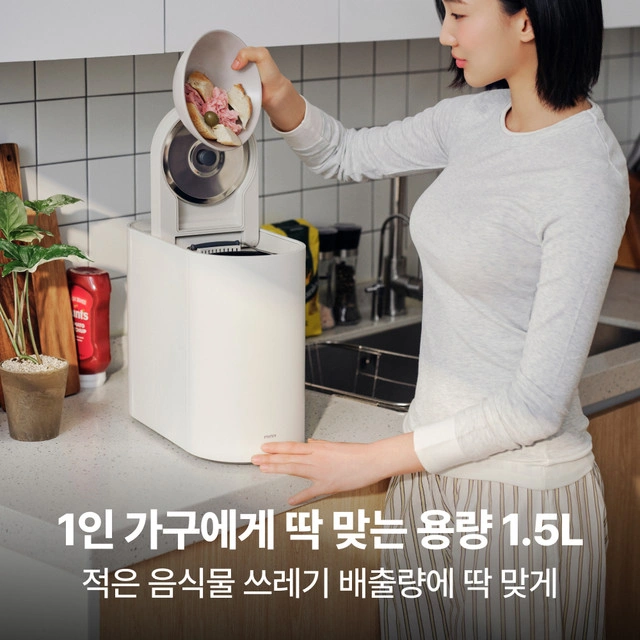
The Flender mini,MNFD-300G,1.5L,17cm wide. Check the manufacturer’s use and maintenance instructions and local rules for disposal of residue.
MNFD-300G / Greige / 1.5L / width170mm
KRW 479,000 · Korea official store reference · 2026-10-19
MINIX · MNFD-300G
Why L2Mstore selected it
Our selection focus: a compact food-waste appliance considered with cleaning and residue disposal
Measure the counter and check maintenance and local disposal rules.