Half-Inch Lift and a Dead Watch Face: How a Mohican 100 DNF Rewrote “Push Through” as “Knowing When to Stop”
Original post: u/Dapper_Pop9544, “DNF’d first 1st attempt at 100M,” r/ultrarunning, ~402 upvotes
URL: https://www.reddit.com/r/ultrarunning/comments/1l1q9ve/dnfd_first_1st_attempt_at_100m/
If, for more than a decade, popular culture still pictured “endurance” as finish-line medals and motivational slogans, the ultrarunning community had already stretched that spectrum to the other pole: a watch that dies, quads that seize, a tank top at an aid station in forty-two-degree night air—and a quieter, harder skill: choosing to stop. The image that runs through this post is not a finish chute’s ribbon, but the moment—just before the orange GPS line on the map goes faint—when an ankle can barely rise half an inch.
From “Miles per Week” to “Vert per Week”: How Trail Reality Breaks the Default Logic
The poster trained about ten months, building weekly mileage toward sixty-two miles; the farthest run before that was a marathon eight years earlier. Nutrition and hydration held up reasonably well—one lap even meant four portapotty stops until a gin-gin settled things. By the default logic of road running and many beginner plans, that already looked like “enough”: mileage up, fueling tested, the storyline already titled “I will finish.”
The Mohican-area trails (the in-post map shows zigzags and climbs around Pleasant Hill Lake, Perrysville, Loudonville) do not honor that ledger. Commenters named it plainly: those paths are “gnarly”; mountain-biking a full loop there is torture. Someone else recalled a Mohican 50 six years ago with almost zero vert prep—and after a few hills, only “what have I signed up for.” The poster was more concrete still: after the second lap (~54.8 miles total) things felt decent; about six miles later the quads truly tightened; around sixty-two miles the foot could barely lift half an inch. The Strava screenshot caption: the watch died around mile sixty-five “along with my quads,” then roughly four more miles—64.86 miles, 9,787 feet of gain, 16h 32m—then the plug was pulled.
Default logic treats endurance as a linear function of “a few more weeks of mileage.” Trails rewrite it, with vertical, eccentric downhill load, and night temperature, into an exam of specificity. One comment put the lesson dryly: when you port a road plan to trail ultras, train proportional vert for the race; specificity beats the myth of “add 10% each week.” This DNF was not a failure to “try hard enough.” The body changed the exam questions first.
Arithmetic at the Aid Station: Tank Top, Four Hours, and an 18–22 Minute Pace
What often makes someone stop is not a single spike of pain, but a string of numbers that still do not add up after you do the math. The poster wrote: leaving an aid station, realizing another ~four hours in the woods at forty-two degrees Fahrenheit in a tank top just to finish the lap—then another 23.3 miles at an 18–22 min/mile pace—and calling it.
That arithmetic has three tangible layers. First, gear and body temperature: hot days, cold nights—the ultra’s common script; a tank top at night is not toughness branding, it is a risk line. Second, the shape of time: not “hang on a little longer,” but “there is still a whole dark work-shift ahead.” Third, pace turning into a hike: when minutes crawl to eighteen, twenty, twenty-two, the finish clock and injury risk press together. Someone in the thread said they would always DNF before risking injury; another admitted fearing the second night more—100K is still manageable; the darkness of the last sixty kilometers is where the mind fails first.
The poster did not aestheticize the DNF, nor rush it into soup-for-the-soul self-forgiveness. The tone was: sad and disappointed; also glad to have passed 100K and reached ~69 miles (watch death plus roughly four estimated miles)—a new boundary eight years on; and clear that next year would come with a fuller training plan. “I’ll be back next year with these learnings” carries weight because it sits on half-inch lifts and aid-station math, not on slogans.
DNF as Community Language: Raccoons, Watch Navigation, and “Special People”
Ultrarunning’s reaction to a DNF is often less cruel than outsiders expect. Someone congratulated a first 100K; someone else shared the absurd pain of a dead watch collapsing night navigation while the legs still felt great; someone joked that raccoons ate all the Tailwind from a drop bag; someone else confessed that beyond 100 miles you need to be a “special person,” and preferred multi-day stage racing—50–60K, sleep, repeat.
Together those asides draw a spectrum: finishing at one end, safety and sustainability at the other; between them, gut, lights, vert, sleep deprivation, and gear failure. The “1st attempt at 100M” map screenshot presses abstractions back into checkable scenes—an orange track folding through green hills and lakeshore until the dial goes dark. It reminds readers that ultra “lifestyle” is not only sunrise ridges and branded vests; it also includes learning to admit, in forty-two-degree night air: today’s distance was already honest enough.
Closing: Redefining “Independence” as Stopping the Watch on Yourself
If road finish culture often treats independence as “grinding alone to the chute,” this post points to another kind—stopping the watch as an act of responsibility to yourself. The half-inch lift is hard data from the body; aid-station arithmetic is the boundary drawn by reason; coming back next year writes an unfinished race into training history, not into a ledger of shame.
A practical note: if you are preparing a first ultra with real climbing, rebuild long runs around race-proportional vert instead of flat weekly miles alone; rehearse night sections with headlamp and/or waist light on real terrain; put hot–cold layers in the drop bag rather than betting on “I’ll warm up slow.” For the original post and the mutual-aid details in the comments: https://www.reddit.com/r/ultrarunning/comments/1l1q9ve/dnfd_first_1st_attempt_at_100m/
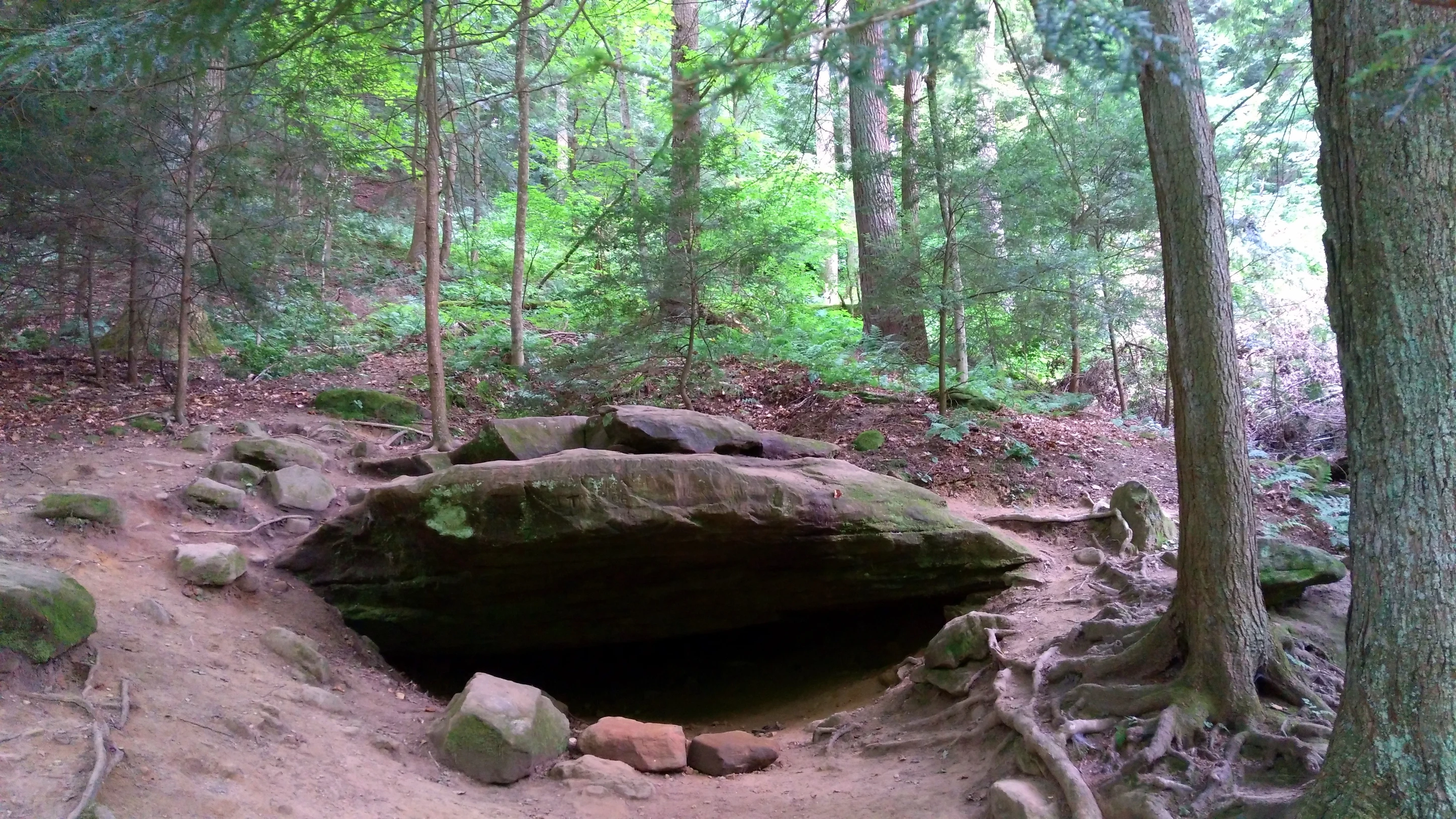
Lyons Falls Trail at Mohican State Park, photograph by Aaron Zhu · CC BY-SA 3.0 · https://creativecommons.org/licenses/by-sa/3.0/
https://commons.wikimedia.org/wiki/File:Lyons_Falls_Trail_at_Mohican_State_Park_-_panoramio.jpg

Full frame retained; resized and converted to WebP.