Beyond the Scan
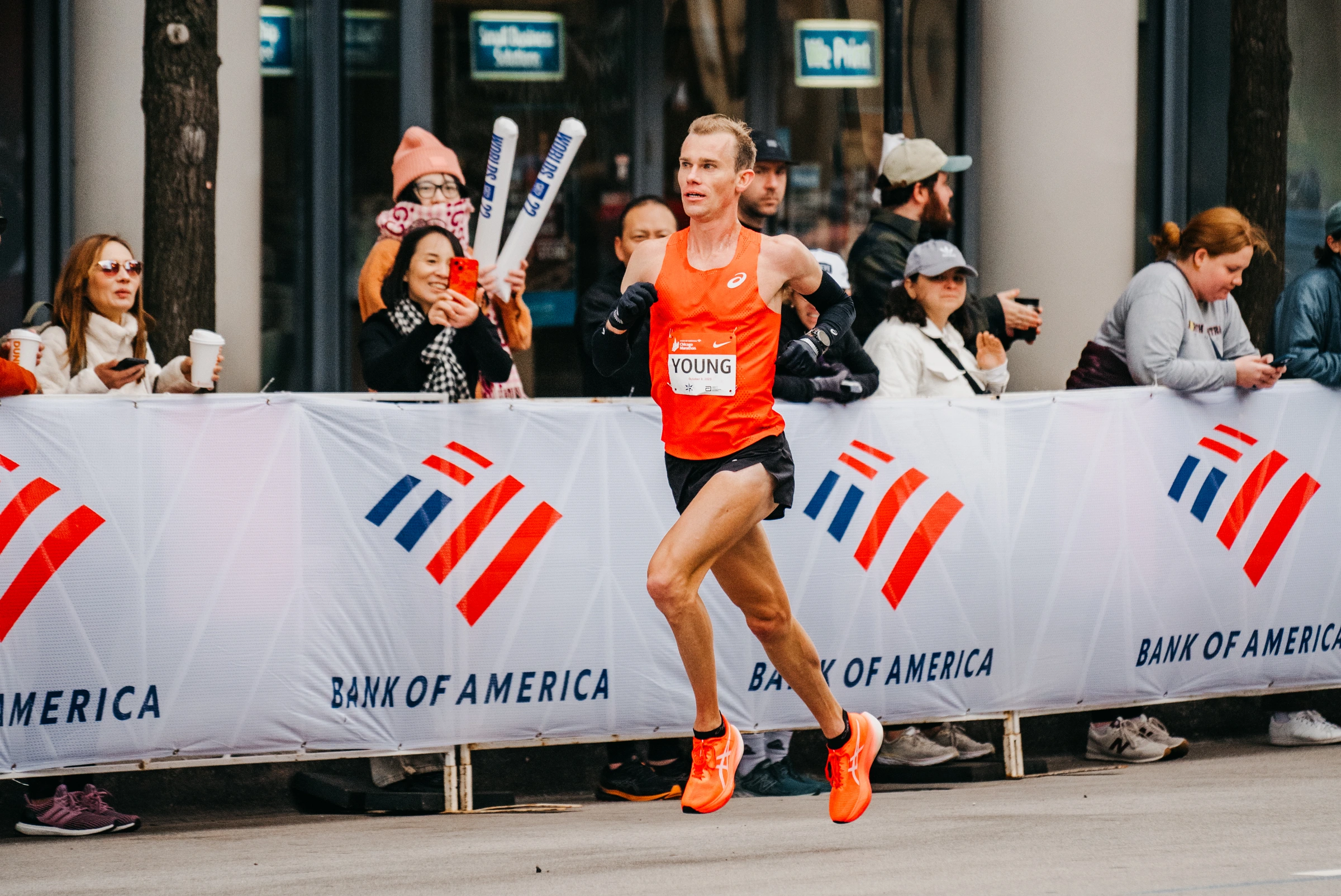
Clayton Young ran 2:05:23 at the 2026 Chicago Marathon, finishing as the top American. When Race Week | Chicago 2026 Marathon Build: Episode 6 appeared, the discussion quickly moved beyond the result. Viewers argued about his hamstring injury, what imaging could establish, and how the documentary presented the build.
The discussion title quoted Young: “I don’t want to be a proponent for people running through injuries… we’ve taken a very methodical approach”. That qualification deserves to be heard alongside the personal best. Reducing the story to a successful act of willpower leaves out the approach he was trying to describe.
This article draws on that public discussion and public biographical entries. It considers how people interpret an athlete’s experience; it does not diagnose Young or offer a plan for racing injured. Nor does it endorse a shoe brand, clinic or documentary channel. Viewers do not have his complete medical record.
The person behind the result
Young’s public biography lists a 1993 birth in Clovis, California, a hometown of American Fork, Utah, and residence in Springville. He is coached by Ed Eyestone. His background includes BYU, a master’s in engineering and work as an engineer at Stryker. He moved from Asics to Brooks in 2026.
His results have their own dates: ninth in the marathon at the 2024 Paris Olympics, ninth at the 2025 World Championships, and a half-marathon best of 1:00:52 in Houston in 2025. Chicago’s 2:05:23 became his marathon personal best in 2026.
A résumé helps place the performance. It cannot certify the wisdom of every injured start. One commenter joked that methodical discipline separates professionals from people who would tape an injury up and pray. The joke catches a real gap in what viewers can see. The finish time is public; the decisions leading to it depend on an individual training history, symptoms and medical follow-up.
What the commenters disagreed about
One argued that a small intra-substance hamstring tear might show on imaging while its severity remained “subclinical”, reasoning that a substantially symptomatic tear would not allow that mileage and those workouts. Another challenged the term immediately: imaging had been ordered because there were symptoms, potentially reproducible in an examination. A further reply distinguished tightness from a second-degree strain or partial tear, mentioning severe pain with contraction.
Those are competing comments, not a settled diagnosis. An imaging description, symptoms and tolerance of training load are different pieces of information. The word “tear” alone does not tell a reader what happened in full, much less how to manage their own training.
Some recalled Young repeatedly saying before the race that running did not hurt and was safe. They thought the documentary made the injury seem more dramatic than he did. Another commenter questioned a recent clinic partnership alongside the story of a “miraculous” 2:05 with a torn hamstring. That suspicion remains an opinion from the thread, not an allegation verified here.
Other comments drew on ordinary running experience. One suggested that many people tweak a hamstring and recover within a month, in time for race day. Another described racing with something that feels wrong but still functions as a gamble: sometimes the result makes it seem worthwhile; sometimes compensation leads to a succession of problems and six months out. A comment about hip discomfort contrasted a harmless taper niggle with a possible femoral shaft stress fracture and urged getting it checked. These views explain the range of concerns. A month or six months should not be read as a general recovery schedule.
The film and the performance
Reactions to the documentary were blunt. Some found the dramaturgy embarrassing: he ran a good marathon, one joked, rather than landing barefoot on the moon. Others disliked some production choices but saw no obligation to watch. Fans said the films made them excited to work harder at their own training.
The result prompted another argument. A commenter who expected another American to beat Young admitted being wrong and praised him after a difficult build. Others doubted an American record was realistic, placing Conner Mantz and other contenders ahead of him. Replies argued that better weather, someone to chase or a different racing situation might have yielded the thirty-odd seconds they were discussing. That remains a counterfactual, not a performance already achieved.
Even his shouted encouragement divided people. Some found it cringe; others accepted it as a motto that worked for him. Enjoying the production and valuing a 2:05:23 marathon need not be the same decision. A viewer can dislike the editing and still recognize the run, or enjoy the film without treating it as an injury-management guide.
Beyond the scan, several questions remain distinct. An injury account needs the context of symptoms and medical assessment. A race has a result. A documentary has a style that some viewers like and others do not. Collapsing them into one verdict makes it easy to turn an individual experience into a training script for everyone.
Young’s reluctance to promote running through injury belongs beside his personal best. Readers can take motivation from the film and still question its presentation. Decisions about their own training or next start require their own circumstances. Someone else’s successful race cannot make that judgment for them.
The ideas expressed in this article are for observation, reflection and personal judgment. It is not an instruction manual; it is simply one part of the world that exists.
Clayton Young at the 2023 Chicago Marathon. Chad Veal, CC BY-SA 4.0; not a 2026 race photograph. https://commons.wikimedia.org/wiki/File:Clayton_Young_2023_Chicago_Marathon.jpg · https://creativecommons.org/licenses/by-sa/4.0/ · WebP, full aspect ratio. Discussion · https://www.reddit.com/r/AdvancedRunning/comments/1xgwkvz/clayton_young_i_dont_want_to_be_a_proponent_for/
