Steady Pulse
At 25.7 kilometres of the Hague Marathon, the runner stopped. The muscles on the outside of both thighs had tightened, he wrote. From ten to twenty kilometres, his heart rate had barely changed and his breathing had felt comfortable.
In his race report, the 33-year-old said he had aimed to finish under three hours. About five weeks earlier, he had run a half marathon in 1:23:22. His watch showed roughly 1:29 at halfway in the marathon.
The final month of training had been difficult. On October 3 he completed a roughly 27-kilometre marathon-pace workout; the next day the inside of his right ankle became irritated. From then until race day his longest run was 19.5 kilometres, and he missed a planned progressive long run.
Around eight kilometres into the race, tightness returned to his right outer thigh. Between kilometres 21 and 24, he noticed his cadence rise and his pace slip. Both legs eventually cramped, and he withdrew at approximately 1:51:51.
He considers the lack of long runs after injury the most likely cause, while also listing pre-race tightness, stopping and restarting at water stations, and the road surface as possibilities. Commenters discussed his mileage and training. The precise cause cannot be determined from the report, and a steady heart rate alone cannot describe the state of the rest of the body.
Original post and comments https://www.reddit.com/r/AdvancedRunning/comments/1xl4xcf/the_hague_marathon_race_report_aiming_sub_3_but/
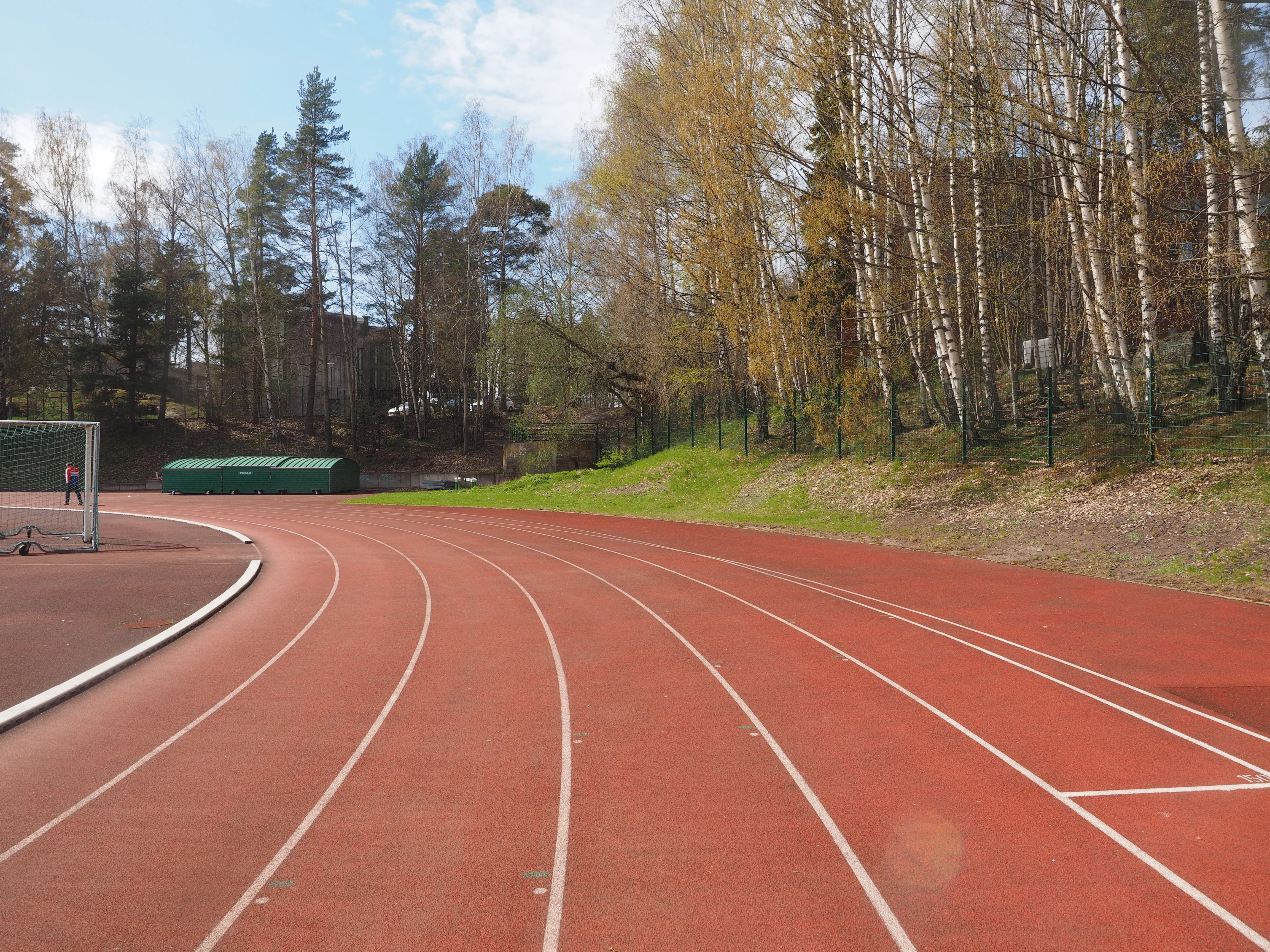
Illustrative photograph of the Otaniemi track in Finland, not the Hague Marathon course. JIP / Wikimedia Commons · CC BY-SA 4.0 · https://commons.wikimedia.org/wiki/File:Running_track_at_Otaniemi_sports_field_almost_empty_of_people_on_an_afternoon_in_April_2025.jpg · https://creativecommons.org/licenses/by-sa/4.0/ · resized and converted to WebP
