The Base
A poster in a biohacking community made a bold claim. Once exercise, diet, sleep and stress are optimized, he argued, science has very little else that produces a substantial improvement. Correcting a major deficit belonged, in his view, to medicine. He also wondered whether getting those everyday habits right deserved the name biohacking at all.
The supplied snapshot recorded about 47 upvotes, 81 comments and an upvote ratio of 0.84 under the flair Longevity & Anti-Aging. What follows is an account of that exchange, including personal claims and experiences. It is not a survey of the community or a set of medical findings and shopping recommendations.
The poster described a sweet spot for exercise frequency and intensity, with risks potentially outweighing benefits on either side. He thought the useful range was more attainable than people assumed, without becoming the world's strongest person or pursuing marathon extremes. Sleep and stress followed a similar logic for him. Many people ate poorly or exercised too little, he acknowledged, but did correcting that need a new name?
He extended his argument to IQ, brain plasticity and cognition. As he understood it, supplements, pills and puzzle training did not produce meaningful, lasting gains in intelligence beyond ordinary education and vocational training. Correcting a substantial deficit still counted as medicine to him. The replies challenged both his definition and his assumptions.
What counts as a hack?
One commenter called the argument a strawman. Deliberately changing a lifestyle through data or self-experimentation was already biohacking in their view, including work on exercise, diet, sleep and stress. Their illustration put the foundations at 80% and the remaining opportunities at 20%. Discussing the latter did not make the former unimportant.
Another described medicine as reactive and wellness as proactive, then criticized biohacking as a label often used to sell shortcuts. The promise was the same return with less time, effort and sacrifice. That was the commenter's distinction between concepts and marketing, rather than a definition everyone accepted.
A sleep example made the disagreement practical. If someone simply stayed up too late, one person argued, going to bed on time barely qualified as a hack. Enough time in bed accompanied by fragmented, inefficient sleep and persistent tiredness raised a different problem. Looking for a less obvious cause or adjustment came closer to their idea of an intervention. Diet and exercise could involve similar distinctions.
Different people want different outcomes
A critic thought half the forum seemed to involve taking large quantities of supplements and vitamins that a balanced diet could already supply, then excreting the excess. Another warned that fat-soluble vitamins could accumulate, and that treating vitamin A like candy presented a different risk from B12. The comments addressed different issues; they did not establish one judgment about every supplement.
Someone else challenged the assumption that everyone was optimizing general health. Athletic performance, endurance, strength, recovery from injury and capacity for activity were also goals. They believed those goals left room for interventions beyond diet, sleep and stress alone, and saw medicine and biohacking as different ways of interpreting an intervention.
One reply invoked intense pleasure during mania, steroids and stimulants to dispute the idea that ordinary or optimized functioning marked an upper limit of experience. It also acknowledged consequences. These examples belonged to the argument, without making a short-term sensation a health benefit or supplying instructions for use.
Other comments revealed different reasons for being there. Some missed earlier, more experimental discussions and disliked the dominance of supplement stacks and marketing. One person had arrived after the forum was mentioned at a psychiatry conference. Another said long-lived communities might never have heard the term and simply ate well, slept and stayed active. Someone questioned how many peptide users were pursuing athletic performance rather than abs and impressive lifts. Peptides are short chains of amino acids; the thread did not provide statistics to answer that question.
Gene testing, including drug-response genes, became another example. A commenter pointed to differences in caffeine metabolism to explain why telling everyone to do the same thing could fall short. Others discussed Silicon Valley, wearables and data, or recounted doctors discouraging excessive attention to sleep scores. These were accounts of particular circumstances, not a shared testing or treatment plan.
What does an experiment establish?
Skeptics called biohacking a fashionable term for healthy living. One sharper criticism concerned placebo effects and confirmation bias, with people chasing immediate results while others sold promises. Expectations can shape reported feelings, and selective attention can favor evidence that supports a prior belief. The commenter's complaint was about how easily those possibilities disappeared from discussion.
Supporters offered brown fat, altitude training and red blood cells, heat shock and HRV, or heart-rate variability, training as examples of deliberate biological intervention. One believed there was relatively strong evidence for lasting physiological changes. Others mentioned sauna, cryotherapy, red light, hormone optimization and implants. These were proposed avenues and participant judgments; the exchange did not establish the evidence, appropriate population and risks for every item.
A participant described fasting with water and electrolytes for up to about 26 days, cold baths lasting minutes followed by shivering and a feeling of greater weather tolerance, and meditation they still found difficult but believed had documented benefits. They also mentioned aggressive martial-arts stretching, knuckle and shin microtrauma conditioning, and military-style movement through the day with frequent sets of roughly 20 pushups. They felt short sets improved repetitions faster with less injury. That safety claim remained part of an individual account, not a demonstrated training plan for others.
Another commenter thought the approaches that worked often took time, intention and discomfort, while people wanted a magic pill or injection. Someone argued that if diet and exercise accounted for 80%, they deserved most of the attention; a new training method or micronutrient interested them more than another supplement or peptide. One broad definition was simply using biology to move toward personal health goals, while recognizing that useful ranges were hard to find and biomarkers differed between people.
Before the next purchase, it helps to separate the desired change, existing habits and the basis for expecting a benefit. A measurement, a personal feeling and someone else's promise are different kinds of information. Other people's experiences can prompt thought without deciding the next intervention for you. Taking everyday habits seriously leaves room for curiosity.
The content of this article is only for viewing, reflection and your own judgment. It is not an instruction manual. It is simply part of what exists in the world.
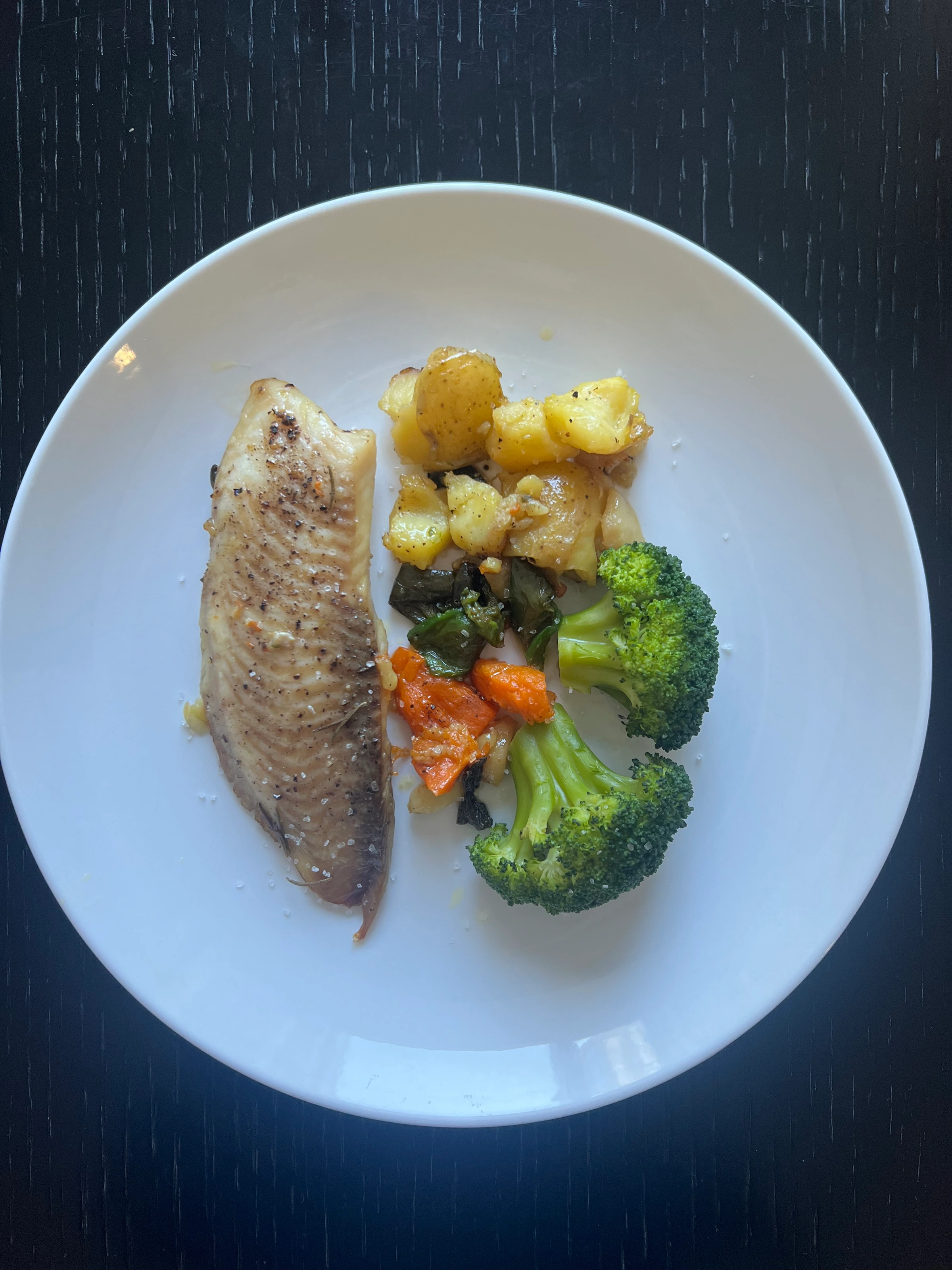
A home-cooked fish and vegetable meal, illustrating everyday diet, not the poster’s meal. Liat Portal / HaJunkiyada / CC-BY-SA-4.0 · https://commons.wikimedia.org/wiki/File:Liat_Portal_for_Foodie_Disorder_-_Home_cooked_healthy_meal.jpg · https://creativecommons.org/licenses/by-sa/4.0/ · resized / WebP
