The Pass
A runner spent 41 days travelling on foot from Dali, Yunnan, to Lhasa, Tibet, following the G214 and G318 national highways. In his r/Garmin account, he reported 1,915 kilometres and more than 26,000 metres of climbing, with a base pack weight of about six kilograms. He travelled alone, resupplying along the way without a support vehicle. Fastpacking, in this account, meant combining walking and running while carrying as little equipment as possible.
The numbers could make a striking finish poster. His account also included days of exhaustion and several occasions when he cried while running alone through high-altitude passes. He kept going step by step, pass after pass, until he reached Lhasa.
He ended with the words, "I'm pretty tired. I think I'll go home now."
In the comments, he called these the happiest 41 days of his life. Both statements belong to the journey. Leaving either one out would make it less honest.
Forty-one days on the highway
Trail and ultra discussions can become absorbed in finishing times and public photographs. Those records matter, but they leave much of a journey outside the frame. This runner described being alone, finding his own supplies and struggling emotionally on the passes. His commitment included moments that would be awkward to fit into a celebratory poster.
He also explained what came before. In 2021, he had cycled about 8,000 kilometres through Tibet and Xinjiang over three months. A growing passion for marathons followed. He felt that life was too short to leave the things that moved him unexplored, and connected that feeling to this trip.
His previous longest single run was 110 kilometres with more than 6,000 metres of ascent in 2024. This was his first continuous multi-day running journey. He brought substantial travel experience while still encountering a new kind of effort.
The supplied snapshot recorded about 541 upvotes and an upvote ratio of roughly 0.996 on r/Garmin. Some readers simply expressed admiration; others suggested submitting the route as an FKT, a fastest known time. A suggestion in the comments does not establish a record. The distance, ascent and equipment details remain the runner's own report.
A light pack still comes with daily work
His equipment list named a Garmin Fenix 7 Pro Solar, a Salomon XA 25L pack and Black Diamond Z-Poles. He reported about 1,050 kilometres in ASICS Novablast 5 shoes and 865 in Superblast shoes, switching on day 23.
When a commenter asked whether the shoes had survived, he gave the date of the switch. The commenter guessed that the first pair had died. That was a guess, not a measured finding about their condition or a replacement interval for everyone else.
Food was familiar and practical. He ate local rice plates with toppings, or gaifan, and Tibetan dishes. In county towns with delivery, he treated himself to roast chicken, burgers and boba milk tea. He reported losing about five kilograms along the way. That describes his experience; it supplies no weight-loss target for another traveller.
Documenting the trip added work. Asked whether filming and evening editing became a burden, he said shooting did not take much time, but editing at the end of each day could easily take an hour. Internet connectivity in mainland China made it harder. The six-kilogram figure describes the pack, not the full demands of a day.
What the watch can say
A commenter joked about an extraordinary achievement accompanied by Garmin reporting a lower VO2max and an unproductive training status. The runner said he was used to it. A foot injury had reduced his running the previous year, when the estimate fell to 45; he later said it was back at 53.
Other commenters pointed to altitude, temperature, poor sleep and insufficient recovery as possible explanations for higher heart rates and lower watch estimates. Those were participants' explanations. VO2max here is the watch's estimate of aerobic capacity, and unproductive is a training-status label. Neither should be treated on its own as a medical diagnosis.
A deeply satisfying trip can also be physically exhausting. The watch records one view of the effort; the traveller describes another. Taking the data seriously means asking what it measures. Taking the experience seriously leaves room for readings that do not fit a triumphant narrative.
Happy, exhausted, ready for home
He credited cyclists, hikers and Tibetan pilgrims with encouragement and support along the way. Travelling without a support vehicle did not remove human connection. Turning self-support into an ideal of needing nobody would erase people he deliberately thanked.
His happiest 41 days included crying on mountain passes and wanting to go home at the end. Happiness did not cancel exhaustion, and exhaustion did not invalidate the pleasure of the journey. There is more to learn from keeping those feelings together than from supplying him with a slogan about never stopping.
The comments become useful when they get specific. Questions about food, shoes, filming and the watch reveal how someone lived through 41 days, beyond the headline distance of 1,915 kilometres.
Readers can admire the journey without turning it into their next itinerary. Another person's route and six-kilogram pack are not a ready-made plan; altitude, sleep and individual circumstances still matter. A finish photograph can mark an achievement. The passes crossed along the way deserve to remain in the story too, including the wish to return home after an exceptionally happy stretch of life.
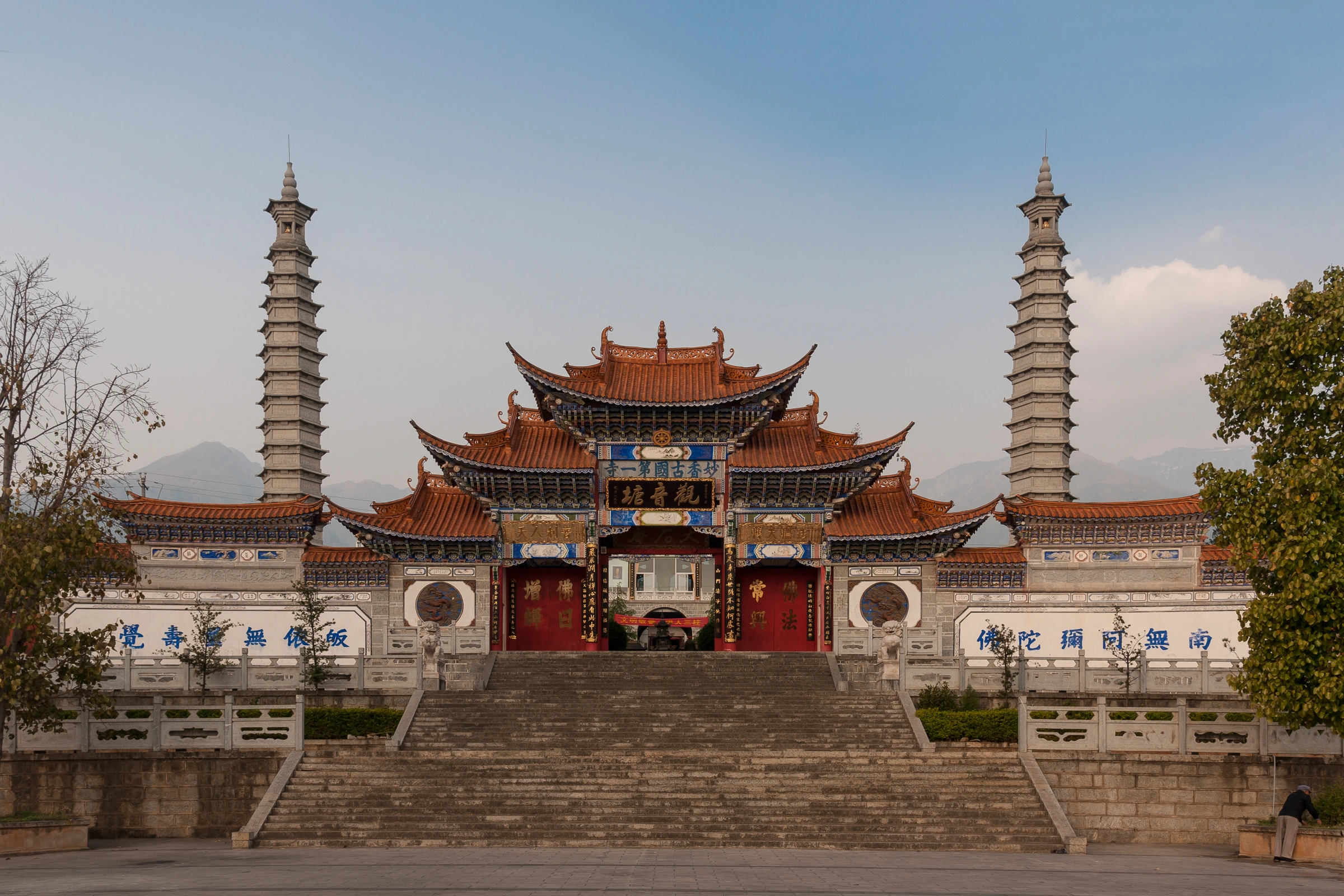
A temple in Dali, photographed in 2012. Historical illustration of the starting city, not the traveller’s trip photograph. Photo by CEphoto, Uwe Aranas / CC-BY-SA-3.0 · https://commons.wikimedia.org/wiki/File:Dali_Yunnan_China_Temple-01.jpg · https://creativecommons.org/licenses/by-sa/3.0/ · resized / WebP
