The Third Pair of Sandals
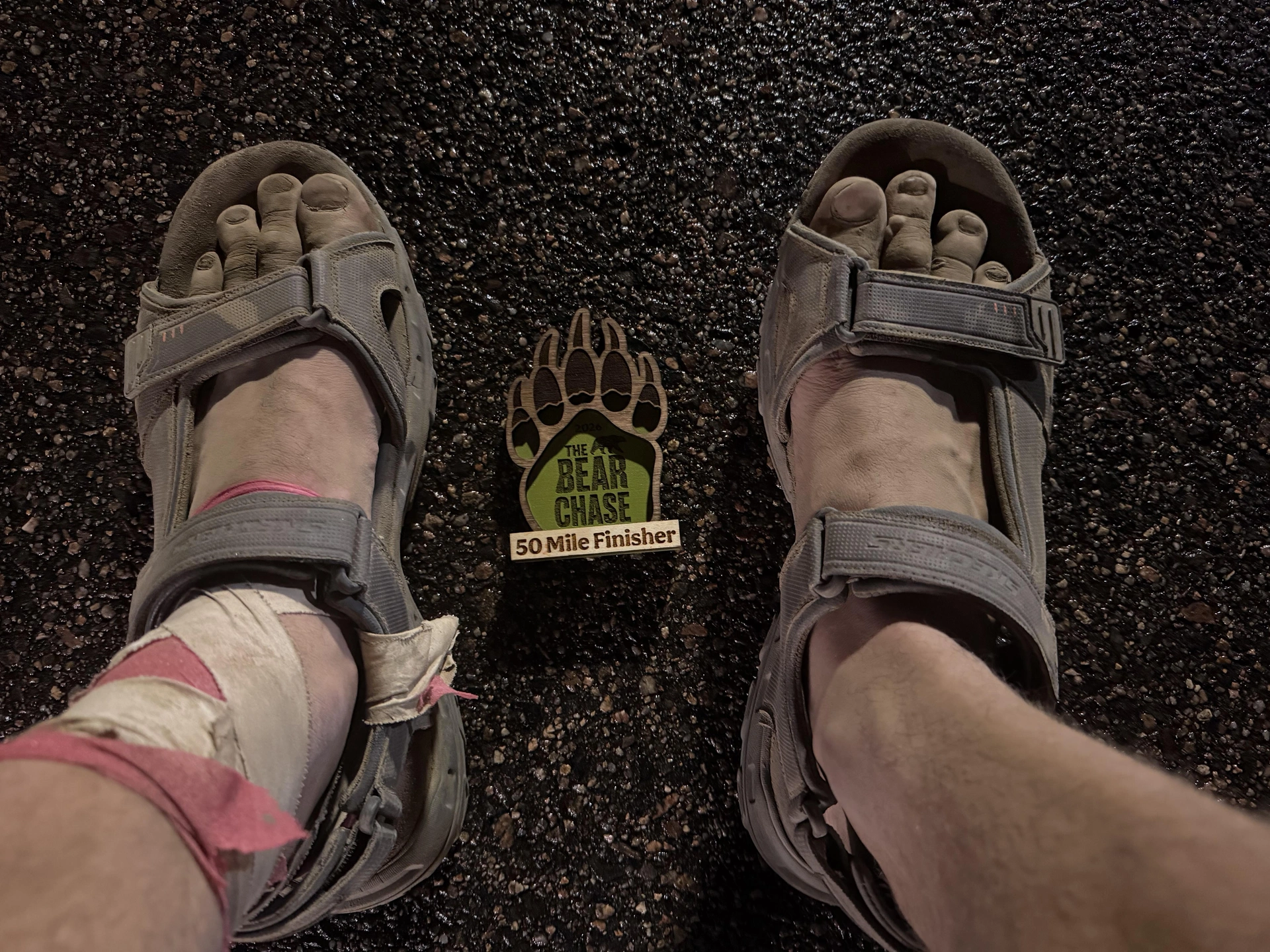
If the past decade-plus still drew the amateur ultramarathon spectrum in ordinary life as a straight line—on the left "buy the right shoes first, then talk about whether you can run fifty miles," on the right "swollen feet, tape, and a finish-line selfie all count as victory"—then after a blogger laid a third nearly identical pair of sandals, a pair of expensive "correct" running shoes that never got worn, and a post-finish foot photo that looked rough side by side on the table, that line had already broken into two segments: one called familiar; one called correct. The image that runs through this discussion is not the next, easier slogan of "barefoot philosophy" or the next brighter "minimalist manifesto," but the third pair of sandals: it proves the body rewrites itself around what you wear every day; it also proves that "correct" sometimes injures you first, then teaches you humility.
The boundary needs to be clear up front: the scenes in this piece come from the blogger's own account and from checkable angles in the comments, not a census of every shoe type or every fifty-mile race. It is useful because it compresses "should you run an ultra in sandals" from a joke into a felt ledger of adaptation; it is limited because it covers one person, one Colorado Front Range route (Bear Chase, named by a commenter), and one finish.
From casual running to "correct": which shoes the body remembered first
The industry default likes to cast the running-shoe story as an upgrade path: sandals are starter toys; proper running shoes plus corrective orthotics are a coming-of-age ritual; ultras must be run in shoes with "enough protection." That default holds in many store windows—until you unfold the blogger's timeline. Years ago, when he started running casually, he wore this kind of sandal; when they wore out he bought the same again; the photo shows the third pair. He never planned to race an ultra in them. What he did not expect was that his whole skeletal-muscular system had already rewritten itself to the sandals' landing pattern: feet and shins felt "super comfy" in them.
Later he got serious, bought expensive running shoes, and bought expensive corrective orthotics. The arch sat in the "precisely correct" spot, so he ran with near textbook pronation (how much the foot rolls inward on landing). Then the problem arrived: switching to "correct" pronation meant rewriting muscle use and rewriting where shock landed on the shin and tendons—and he got injured. On race day for the fifty miles, those expensive shoes were brought to the start and never put on. He chose the most familiar, most comfortable pair: the sandals.
The tension in this section is not "sandals beat running shoes," but the way the upgrade path shows its seams. The default assumes "correct" will automatically overwrite "familiar"; the scene says—for this person, familiar came first, and familiar was already written into the tendons. The blogger put it bluntly: for this specific race, wearing sandals was objectively the right decision; but he does not plan to wear them forever, and in training he will taper off and return to those expensive running shoes. Recommend them to others? He would not.
The third pair of sandals matters precisely because the first two had already settled the accounts. It is not impulse spending; it is a repeat purchase. It is not a philosophical pose; it is a body that quietly finished adapting across years of low-risk running.
What the photo charges: tape, blisters, and "that does not look fine"
If the training story is easy to read as a "barefoot running gospel" ad, the post-finish foot photo tears the ad open. Tape wraps the ankle; toes look wrinkled, dark, crooked; there is a blister on the middle toe. The comment section's first reaction lined up neatly: "That does not look fine at all." Someone said: just looking at all that wrapping suggests things were not so smooth. Someone else said the toes were denying the blogger's optimism.
The blogger unpacked the photo item by item. The middle-toe blister came from toe spacers, removed around mile twenty-five. The ankle wrap had nothing to do with the sandals—in hindsight, a tight left hamstring led him to compensate with an awkward form that overused the extensor tendon; he had hit the same issue while training in the expensive shoes plus corrective orthotics. The wrinkled, dark toes were dirt; a shower at home cleared them. The crooked toes had been that way since childhood, not twisted by fifty miles.
The tension in this section is not "the photo is fake," but how an audience uses one image to deliver a verdict. The default likes to treat a finish-line foot photo as iron proof that the shoe type failed; the scene says—inside the same frame sit at least toe spacers, compensatory form, dust, and congenital toe shape. The tape was real, and the pain was real; they do not necessarily take the stand for "sandals." The blogger's own closing was colder: fine by ordinary standards, or fine by "good enough for an ultra" standards—he would rest a few days, skin would heal before muscle, so he figured it was fine.
The photo is funny precisely because looking bad and finishing can sit side by side. Some people laughed along; some called him stupid; some praised him for finishing fifty miles regardless of shoe type. The blogger wrote: none of that matters much, because finishing this race was his private struggle, and the sandals were only a small, finally not-very-important piece of it.
How the course and the comments rewrite "fine"
If the blogger stamped the story with "right for me," the comment section immediately handed over harder conditional clauses. One commenter named it: Bear Chase is a good race, but the route is extremely non-technical, with almost no technical sections, so you are unlikely to kick a rock and break a metatarsal; if they ran it again, they might even wear road shoes. They also listed risks: most sandal brands are not made for running, so support and friction points blister or injure structure more easily; stream crossings might suit sandals; the biggest worry is debris inside the shoe—glass, sharp rock, nails, even needles that could open a season-ending gash; rattlesnakes are common in that Front Range area, and shoes at least protect from the ankle down.
On the other side, experience testified the other way. Someone said they run all their miles in Luna sandals, finished a hundred miler in them in 2018, and later learned they prefer fifty. Someone said: in a hundred miler, a person in sandals beat them. Someone asked why sandals stacked that thick still count as sandals—the blogger answered: they began as beginner shoes, adaptation happened without noticing, he still wears them casually, and training will switch. Someone saw him at the same race; someone running the 100k lapped him on a roughly 12.5-mile loop—he wrote that many good runners "humbled" him that day. A teacher commenter showed the photo to students: impressed and grossed out at once; congratulations, teenagers think you are cool.
Joke and warning side by side are what this discussion actually measures. The default either writes sandal ultras as "freedom anyone can copy" or as "obviously idiotic at a glance"; the scene says—fine has to be tied to course hardness, debris risk, personal adaptation history, and the self-boundary of "I do not recommend this to others." The blogger even added: more experienced people told him sandal ultras can go to a hundred miles, and so far nearly every brand they named was Luna. He posted his Amazon link and wrote "do not copy me" into the body.
Closing: redefining "the right shoe"—not more expensive, but the tuition this body has already paid
If ultra gear culture often casts independence as "one person buying the most correct orthotics before talking about anything else" or "one person believing ugly feet equal a wrong decision," this discussion is closer to another kind of independence—holding the third pair of sandals and the correct running shoes that never got worn at the same time, and seeing clearly which bill "fine" is naming. The public thread the blogger opened is worth turning into public writing precisely because it puts checkable scenes on the table: years of casual running in the same sandals and the third pair; how expensive shoes and orthotics rewrote pronation and brought injury; the pair brought to race day and never worn; toe spacers removed at mile twenty-five; ankle wrap unrelated to the sandals; dirt and congenital toes; Bear Chase's non-technical nature and the debris-and-snake reminders; Luna and hundred-mile side evidence; eighty-thousand-plus views and the laugh, scold, and praise in the comments; and that line of not recommending it to others, of tapering off sandals in training.
The value of the discussion is that it did not push the topic only toward "everyone should run ultras in sandals" or "ugly feet prove you failed," but spoke the spirit of finishing back into place: first tell "familiar" from "correct," then tell "true for this race" from "replicable for others," and with "the third pair" and "the pair that never got worn" still polish, inside the rising tide of "gear must be correct first," that layer—independence is hard often because of whether you still treat the storefront standard as the only body history, not only because of the next easier "barefoot freedom" or the next brighter "tape hero."
The actionable tip is plain: treat a shoe change as a training variable, not a moral upgrade. If the body has rewritten itself around one pair for years, race-day "correct" may have to yield to "familiar," then transition slowly in training, rather than completing the reform on fifty-mile day. When you read a finish-line foot photo, ask first where the blister, the tape, and the dust each came from, then ask whether the shoe type is guilty. Keep someone else's Luna hundred and your own Skechers fifty in separate ledgers: side evidence is not a license. Write "fine" as "skin heals first, muscle still needs rest"—allow looking bad and arriving to be true at once; allow "true for me" and "I do not recommend it for you" to be true at once; the real danger is mistaking "correct running shoes" for a master key that can ignore adaptation history—not "forever outsourcing to the next easier 'as long as it is minimal enough'" or "forever outsourcing to the next brighter 'look at his feet.'" A storefront can hold that line on the shopping list; the third pair of sandals is still written in whether, before "correct" injured you, you honestly recorded which landing the body already remembered. A person holding two pairs at least knows which lever they are measuring: correct, or familiar.
Post-race photograph from Cyber_Imbiber’s public original post: sandals, ankle wrapping and the Bear Chase50-mile finisher medal.
Skechers Relaxed Fit: Conner / Garver – Louden 64487 BRN
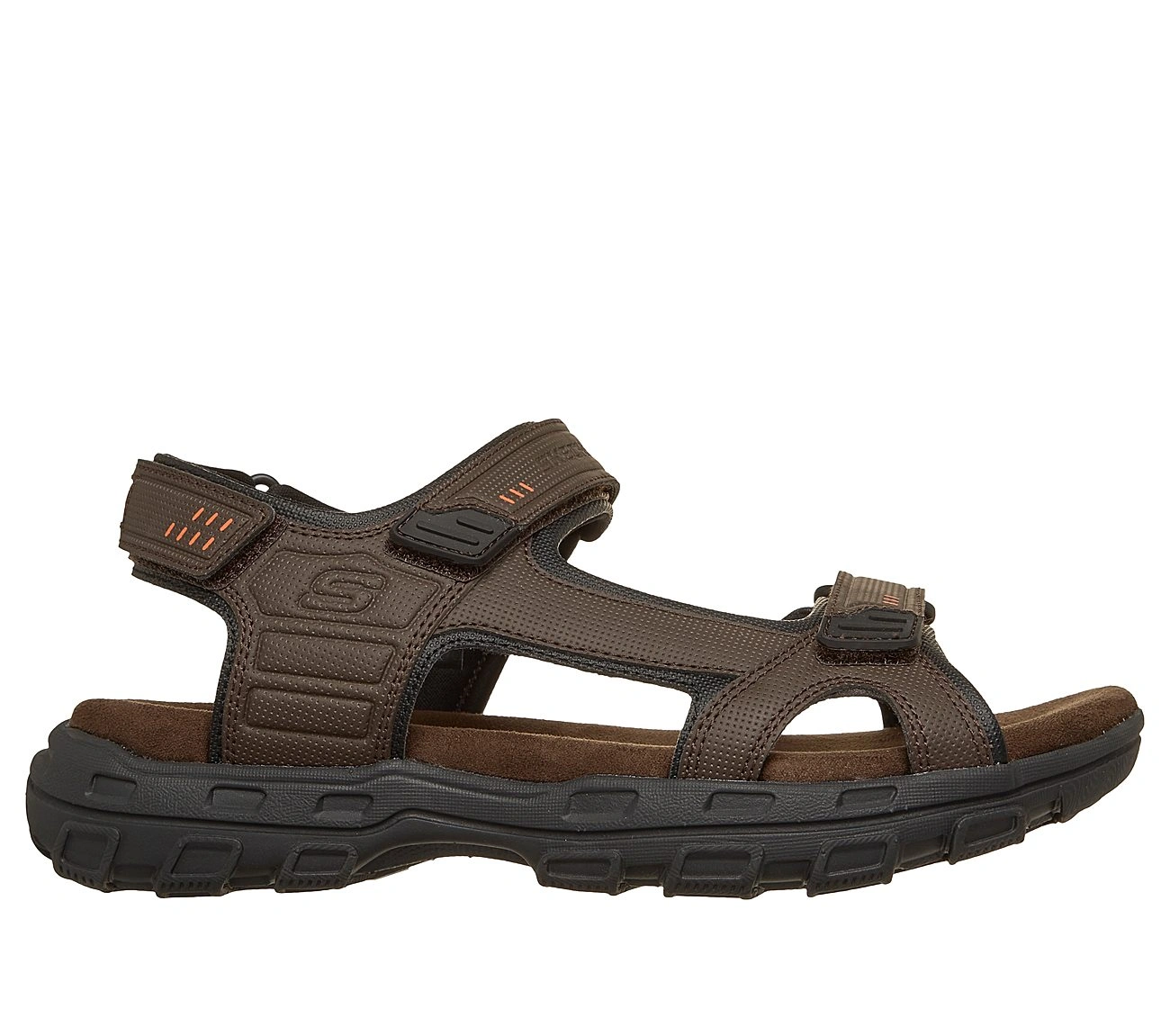
The original post’s Amazon link names Garver–Louden; the current official page says Conner–Louden,style64487,brown BRN. Style is verified; the page’s default size does not establish the poster’s size. Synthetic upper,hook-and-loop straps,Memory Foam footbed,rubber outsole; a casual sandal,not a dedicated ultrarunning shoe. Official Greece reference€69.95,delivery within Greece only; select size on the page. Domestic channel unverified.
64487 BRN / Brown / adult men / select size on retailer page
EUR 69.95 · Overseas listing reference · 2026-10-20
Skechers · Skechers Relaxed Fit: Conner / Garver – Louden 64487 BRN
Why L2Mstore selected it
Our selection focus: straps and a memory-foam footbed for casual wear, not dedicated running
Check the style code, color, size and delivery region before purchasing.