Two Minutes Overhead
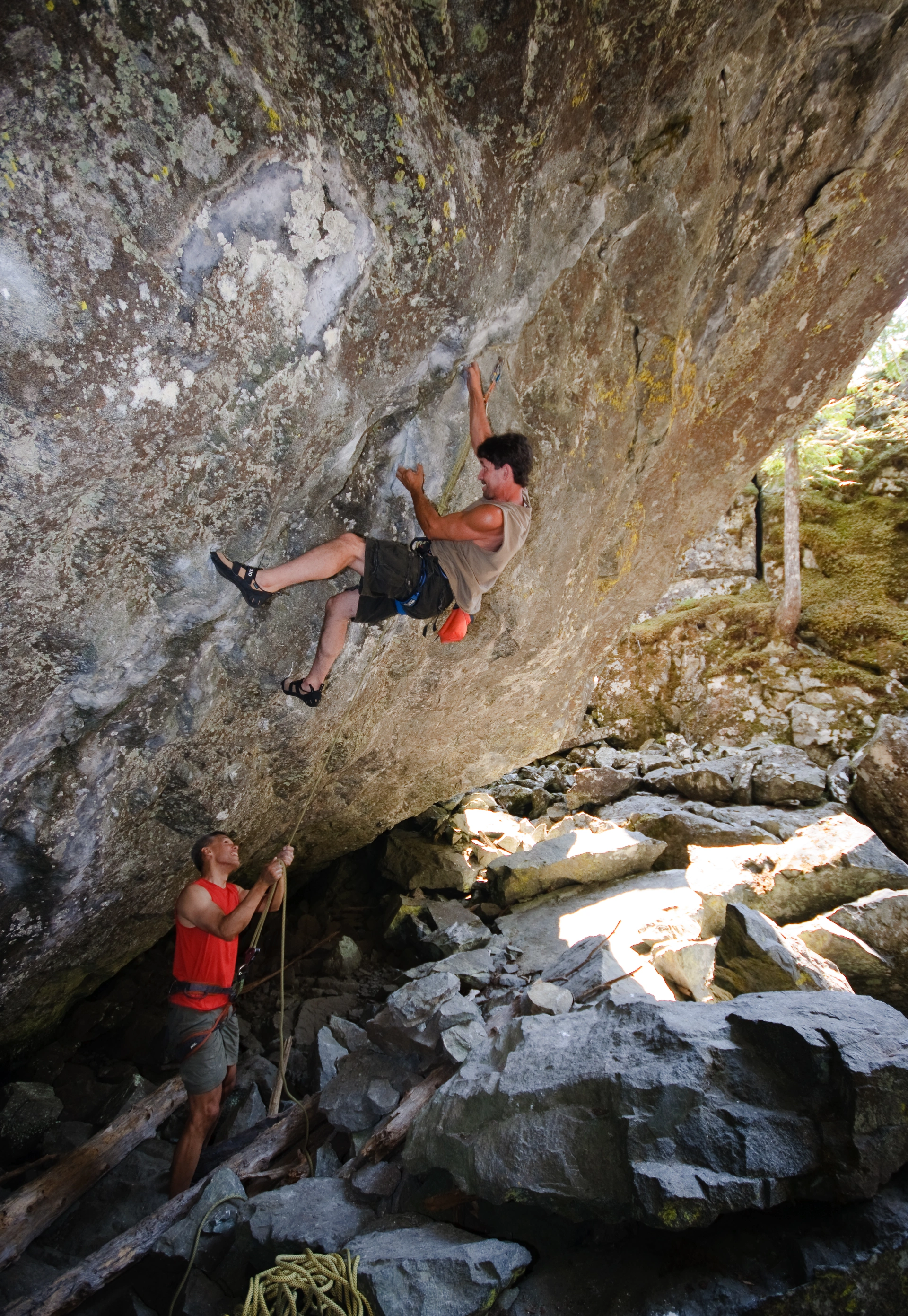
If, for the past twenty-odd years, the default rest posture in ordinary climbing training still looked like one simple picture—arms dangling at the sides, a light shake, waiting for the forearms (the muscles that “fill up” with pump) to drain on their own—then once a poster laid a 2005 comparison note on the table, that default split in two: one still called the dangling shakeout; the other raised the same arm overhead and dropped it again, five seconds each way, alternating. The image that runs through this discussion is not the next easier line—“science has already proved it”—or the next brighter poster—“the ninefold secret.” It is two minutes overhead: in the same rest window, arm height rewrites return flow; the same tidy table of “eighteen percent versus two percent” is also weighed again in the comments. Numbers can look clean; source and sample size are another ledger.
Boundary first: the scenes here come from the poster’s research notes, checkable sides of the comment thread, and publicly cited training literature as retold there—not a census of every recovery method in climbing. It is useful because it presses “just shake it out” into posture and timing you can feel; it is limited because it covers one community argument and one comparison that was repeatedly asked whether it counts as a “really published study.”
The default dangle: how pump gets rewritten as a blood-flow story
Industry default likes to write forearm swell as “lactic acid buildup.” That default sounded fluent for years—until you open the physiology in the poster’s notes: lactate is more an energy substrate than waste you must dump at once; what truly “pumps” you is often muscle crushing the vessels when force runs high. The notes say: above roughly seventy percent of maximal voluntary contraction (MVC—the hardest you can squeeze), vessels are nearly fully occluded—oxygen cannot enter, metabolites cannot leave. Recovery is rewritten as something plain: reopen blood flow, not “flush the acid.”
The scenes are hard. This is not “you feel acidic so you lose”; it nails pump back to mechanical conditions: contraction intensity, occlusion, anaerobic work, then restoration. Default therefore slips: it thought shaking only chased discomfort; the scene says—what you are really waiting for is blood moving again through tissue that was pressed flat. The poster puts this line up front to floor the posture contrast that follows: if recovery equals return flow, then how high the arm rises and how long it moves stop being style questions and become questions of whether veins get help sending blood back to the heart.
Overhead and at the side: how “ninefold” in two minutes reaches the table
If the physiology story is easy to compress into a popular-science sentence, the comparison numbers turn the sentence into a table the room can surround. The poster retells: in 2005, Luke Roberts at University College Chichester placed the traditional dangling shakeout against G-Tox—Eric Hörst’s popularized alternating raise that uses gravity to assist “detox” return—inside the same two-minute rest window. After a hard traverse, grip strength was measured: the dangling group recovered about two percent; the G-Tox group about eighteen percent. Same two minutes, one posture change, recovery amplitude written as roughly a ninefold difference.
The protocol itself is short enough to sound like a joke: raise one arm overhead, shake loosely five seconds; drop it to the side, shake five seconds; switch arms; repeat. The mechanism writing is equally plain—when the arm hangs, blood pools in hand and forearm; when raised, gravity helps venous return; alternating high and low acts like a small pump. The limit is also written down: you need a free arm; locked rests—knee bars, stuck heel hooks—cannot use it.
The tension in this section is not that “ninefold sounds cool,” but that intactness can be named as concrete conditions: a fixed two minutes, two postures, grip before and after, and the alternating how-to. Default likes to write recovery as mystique or talent; the scene says—at least in these notes, the change came from whether the arm passed through overhead. The name G-Tox itself carries a marketing accent (a gravity-toxin nickname), yet the motion is not mysterious: raise, drop, raise again.
Intactness matters precisely because it later cracks in the comments. Without the “eighteen versus two” table, the quarrel would be only taste; with it, the crack looks like turning a page in the ledger—same posture set, same phrase “research says,” beginning another account in the next comments about source, sample, and conflict of interest.
How the comments reweigh “research”: source, six points, and interest
If the poster sealed the story with a tidy contrast, the comments immediately offered another seal. One commenter said flatly: this does not look like a journal paper that passed; it looks more like a lab report that would not—missing clear design, procedure, and data tables; the publicly visible “results” described as two lines of three points each, about six data points in total; the author’s path traced to an Adventure Education degree rather than a long sports-science research track; the promotion chain pointing back to Eric Hörst himself—the person with the most motive to make G-Tox sound effective. Others smelled advertising: the notes were posted in full, the app linked only in a comment; still others called “AI voice.”
The other side was not soft either. A commenter wrote: they had always used Eric’s method and felt a clear difference, useful on longer routes too. Another reminded: elevating a limb to reduce swelling is first-aid common sense—gravity and blood flow are not fiction—but that is prolonged elevation in medical scenes, not proof that two minutes of alternating shakes are nailed down in sports science. Someone else said quietly: they tried it and felt no difference from ordinary shaking; the rule of thumb of “about a minute of rest per limit move” was also called far from enough.
The poster later admitted in comments: the source sits closer to undergraduate-dissertation level, not peer-reviewed verdict; Hörst does have skin in the game; the institutional history of the Chichester college is real, yet that does not save the methodology from the cut. He reframed—personally it seemed to help, could be placebo, or “any active movement beats a dead hang”; choice returned to each body’s own test.
What this section truly measures is not a final verdict on whether ninefold is true or false, but how a community takes a pretty contrast table apart into askable parts: published or not, sample and charts, promoter and conflict, felt effect and placebo. Default likes to write pushback as nitpicking; the scene says—in sports-science talk, reweighing the source is itself part of the training.
Neighboring ledgers: warm-up, work:rest, and “arms feel fine” ≠ power is back
The discussion did not stop at raising the arm. The poster wrote flash pump—going hard before forearms are warm, a disproportionately nasty pump that clears slowly—as warm-up not optional: cold muscle has poorer vasodilation, so even moderate effort can near occlusion early; a pyramidal warm-up (easy → moderate → sub-limit) is written as the difference between two or three quality attempts and five messy ones. Work:rest ratios cite frameworks in the Steve Bechtel / Juliet Hammer line: about 1:8 for sub-limit boulders; up to about 1:20 for limit boulders; about 1:6–1:8 for power endurance; about 1:4 for route endurance—and notes that limit bouldering often needs more relative rest, because it hits the central nervous system (CNS), not only the forearms.
Local fatigue and CNS fatigue sit side by side: pump may ease in five to fifteen minutes with rest and posture; CNS fatigue from limit moves, campus boarding (explosive upward moves on a board without much foot help), and heavy hangs may linger twenty-four to forty-eight hours. The notes say: forearms can feel completely “fine” while power is still down about thirty percent—you feel okay until you are on the wall again. A 2024 observation on elite climbers after competition is retold: forearm swelling took about twelve hours to return to baseline—not twenty minutes, not two hours.
Commenters’ felt rest split the same way: some found longer rests clearly improved redpoint quality and admitted “getting cold and having to relearn try-hard” is a skill; someone near fifty, climbing twice a week, mixing styles toward endurance, felt little difference between about 1:2 and 1:5. The fork does not cancel the framework; it only proves that the same work:rest ratios settle different felt accounts across age, frequency, and style.
Close: redefining “two minutes overhead”—not a ninefold myth, but people willing to lift the arm past the default
If climbing recovery culture often reads independence as “believe the contrast table” or “mock everything unpublished,” this discussion sits closer to another independence—holding both the two minutes overhead and the comments’ reweighing, and seeing which ledger “ninefold” is talking about. The notes the poster opened are worth public discussion precisely because they put checkable scenes on the table: pump and occlusion rather than a lactate myth; eighteen versus two in a two-minute window; the five-up, five-down alternating sheet; the knee-bar limit; flash pump and pyramidal warm-up; longer relative rest for limit boulders; local five-to-fifteen minutes versus CNS a day or two; the twelve-hour swelling baseline; and the side-by-side asking in comments about undergraduate papers, conflict of interest, six data points, felt yes and felt no.
The value of the discussion is that it does not only push “everyone must G-Tox” or “every unpublished posture is a scam,” but speaks recovery back: first tell return flow from feeling comfortable, then tell tidy percentages from thickness of source, and with “raise” and “reweigh” still polish, inside a tide of “one table settles it,” the layer that matters—independence often hides in whether you still treat a marketing-accent name as the only story, not only in the next easier “science proved it” or the next easier “all pseudoscience.”
Executable prompts stay plain: write rest as checkable posture and timing, not as a temperament label. When you try high-low alternating, allow it to be only a candidate for “active movement beats a dead hang,” without first believing ninefold. When you read a contrast table, ask publication, sample, and promotion chain with it. Warm up easy to hard; after limit efforts, stretch rest past “arms don’t hurt.” Write “recovery” as “holding your own two minutes overhead”—knowing which stretch shows posture may change return flow, and which only shows the community still reweighing sources; knowing ninefold can sound loud without canceling the ask about six points; knowing felt yes and felt no can both be true, and the real danger is mistaking either dangling shakeout or the overhead trick for the only correct posture—rather than forever outsourcing to the next easier “research says” or the next brighter “I don’t buy it.” A grip meter can hold one line on one day’s sheet; two minutes overhead still writes whether you honestly logged where the blood went and on which page the account closed. People who hold both posture and source at least know which lever they are measuring: myth, or return flow.
The content of this article is only for viewing, reflection and independent judgment. It is not an instruction manual. It is simply a part of what exists in the world.
Chris / Flickr · CC BY 2.0 · https://creativecommons.org/licenses/by/2.0/
https://commons.wikimedia.org/wiki/File:Overhanging_rock_climbing_1.jpg

Full original frame converted to WebP; aspect ratio retained.