Two Seconds by the Counter
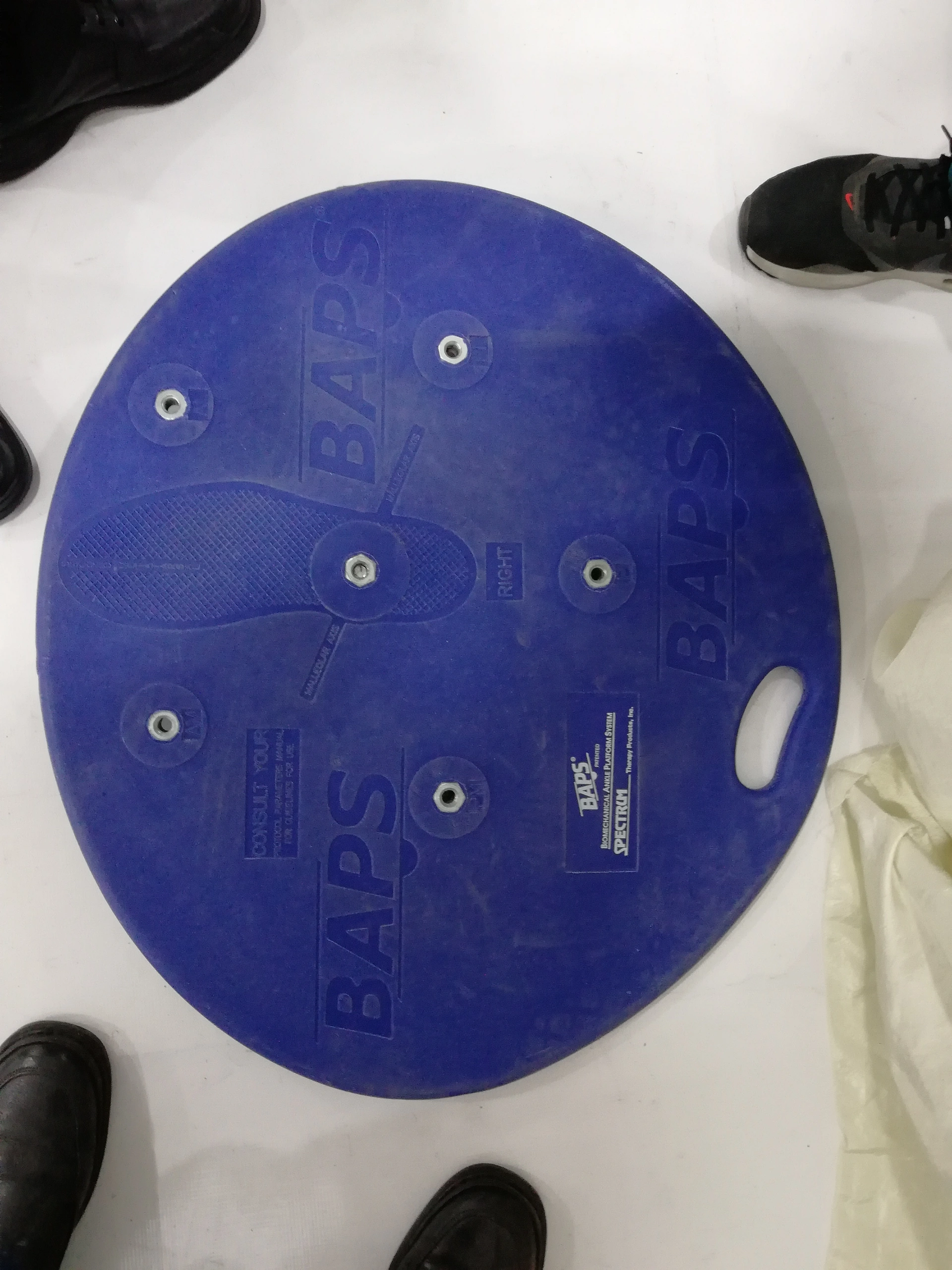
A Reddit poster describes a small morning habit. Barefoot, arms at their sides and eyes forward, they stand near the kitchen counter and check ten seconds on the left foot, then ten on the right. They say their left side has consistently been worse by about two seconds. That difference gives them a personal baseline.
They like turning ordinary activities into small, repeatable experiments. Their notes include which leg they used and roughly how long they held it, whether they touched the counter, whether they wore shoes, and whether they felt dizzy, weak or in pain. They also record any persistent difference between sides. The surface, eyes-open condition, nearby counter and left-to-right order stay roughly the same. A worse result after terrible sleep gets a note; a decline lasting weeks gets more attention.
The poster says their balance has improved and wonders whether their sense of mental balance has improved too. The first is a personal report, and the second a subjective impression. This account and its comment thread describe experiences, rather than establish a medical outcome.
What “84% higher” refers to
The habit began after the poster read a 2022 study of 1,702 adults aged 51 to 75. Researchers assessed whether participants could complete a ten-second unsupported one-leg stance. About 20.4% could not. Over a median follow-up of about seven years, 17.5% of those who could not complete it died, compared with 4.6% of those who could.
After adjustment for age, sex, body-mass index and several health conditions, inability to complete the stance was associated with an adjusted hazard ratio of about 1.84 for death from any cause. That ratio is the source of the often-repeated “84% higher” figure. It describes an observational association in that group of adults. It does not establish that poor balance caused those deaths or provide an individual verdict about survival.
The poster makes that distinction themselves. The number sounds dramatic, but needs context, and a poor balance result may reflect more than leg strength. A standardised research test and a person's morning observations by the counter come with different conditions. One cannot simply be converted into the other.
Closing their eyes meant reaching for the counter
While trying to understand the difference between sides, the poster learned about proprioception, the sense of where the body is and how it is moving without having to look. Finding the nose with the eyes closed relies on the nervous system sensing the position of the arm and fingers.
The first time they tried standing on one leg with their eyes closed, they grabbed the counter almost immediately. Removing vision made them notice information they had been using without thinking about it. Staying upright draws on vision and the inner ears, along with information from the feet, joints and muscles coordinated through the spinal cord and brain. A two-second difference between sides may have more behind it than a weaker left leg.
They consequently stopped calling their routine a Romberg test. A classic examination usually involves standing with both feet together, first with the eyes open and then closed, while a trained examiner observes nearby. A kitchen-counter habit and a formal neurological examination belong in separate categories.
The replies returned to brushing teeth and putting on socks
A highly upvoted commenter wanted fewer posts about GLP-1s and supplements and more grounded observations like this, adding that they planned to try it. Another described poor balance after a brain injury and beginning to put on socks and shoes while standing. It was difficult at first, and they gave up several times; later it felt much easier. That remains their own experience.
Many replies came from people who already brushed their teeth on one foot. One described nudging their partner with the raised foot. Another changed sides across four thirty-second electric-toothbrush intervals, about a minute per side, holding the thigh parallel to the floor and dimming the lights at night. Someone else did air squats while rinsing, then held a one-leg quadriceps stretch. The number of people doing this surprised another commenter. These variations already differ from the poster's effort to keep observations consistent.
One runner said lumbar nerve problems affected the left foot, so running marathons did not enable them to pass this check. Age and neurological history change what the same task means for different people. Some commenters thought ten seconds too short and proposed a minute or even ten. Others stressed that illnesses can impair balance, making performance a marker of underlying health. Someone asked why one-leg standing and hiking could not both fit into life; someone else suspected the post was AI-written.
The replies do not add up to a single training programme. They give the discussion concrete context and return attention to correlation and causation. There are ordinary changes to notice beyond supplement stacks and wearable scores.
Keep the conditions with the two seconds
The poster's interest is whether a change persists under roughly the same conditions. A left side that has long been two seconds worse is a personal reference. An occasional worse result after poor sleep has another piece of context. Recording both makes it harder for one day's ten seconds to become the whole story of a body.
The routine needs no promise of longevity attached to it. The study's hazard ratio belongs with the study's conditions, and these observations belong to this person's daily life. Independent judgment begins with keeping that distinction clear.
The content of this article is only for viewing, reflection and independent judgment. It is not an instruction manual. It is simply a part of what exists in the world.
Ashashyou · CC BY-SA 3.0 · https://creativecommons.org/licenses/by-sa/3.0/
https://commons.wikimedia.org/wiki/File:Balance_training_board.jpg

Full frame resized and converted to WebP; aspect ratio retained. Adapted image licensed CC BY-SA 3.0.