From VO₂ Max on Your Watch to Race Day
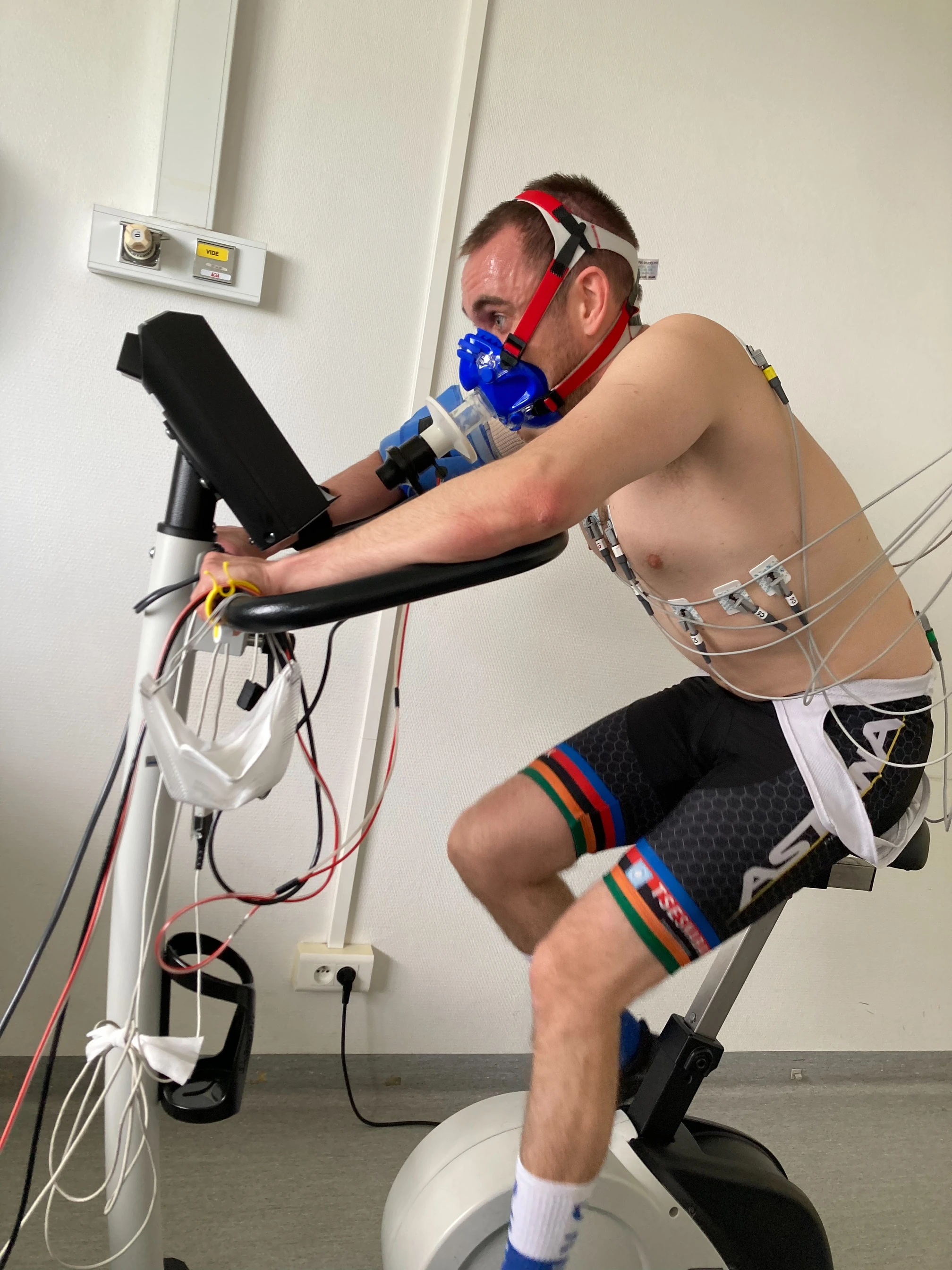
If, over the past decade or more, the spectrum of mass endurance and wearable culture was still drawn as a straight line—on the left “VO2 max number equals running ability,” on the right “beyond the half marathon VO2 does not matter, the ceiling is genetic”—then once someone laid the lab tone of “highly trainable” from a podcast beside the influencer tone of “don’t worship the peak” from social media on the same table, that line had already folded into a pair of scissors: one blade is how dial tides write the peak as holy grail or scrap paper; the other is how economy and threshold pace still cut through number-worship with race-day steel. The image that runs through this essay is not the next brighter watch estimate, but the tide of peak oxygen and the knife-edge of economy: on one side, a wristwatch estimating thirty-seven and forty-three on the same day pretending to be a lab; on the other, commenters almost in chorus reminding us that high VO2 with poor economy can still lose to lower VO2 with better economy.
From “Dial Holy Grail” to “Both Overhyped and Underhyped”: How the Default Was Lifted
What the blogger did was simple: after a podcast that treated Olav Bu’s take—VO2 max as highly trainable—he ran into the opposite claim on social media: for the half marathon and beyond, VO2 max does not matter, and there is a genetic ceiling. He did not pick a side at once. He set two defaults side by side: one that writes the peak as a trainable grail; one that writes it as a side note at the elite edge. His own reading was honest—ceilings may exist, but most people are still far from theirs and can still improve—and he asked whether people confuse “predictive power among elites” with “still important among sub-elites.”
This story is familiar in running circles. Industry default logic likes poles: influencers write VO2 as the master key to longevity and race fitness; the simplified counter-version writes “don’t bother with peak work for long distance.” The post lifts the default not by inventing a third slogan, but by pressing the scene concrete—suppose one person has VO2 60 and another 50; regardless of lactate threshold (LT) and running economy (RE), the former should be faster over most distances; a hundred-mile ultra might be an exception. The hypothesis itself invites a fight: it uses the peak tide to press against “half marathon and up, who cares,” while leaving economy and threshold in parentheses for the comments to cut.
A highly upvoted comment (~105) writes the scissors in full: VO2 max is both overhyped and underhyped. Overhyped—amateurs stare at dial swings; watches are inaccurate, true values need a lab; high VO2 with poor economy can lose to lower VO2 with better economy; most amateurs should train running economy first. Underhyped—marathon and ultra crowds often skip HIIT and speed work; those sessions can also help economy. Genetic plus trainable; train up to your own genetic plateau. Another commenter (~9) adds the naming ebb: thanks to Garmin and the like, VO2Max is already a default performance metric—it is not “underhyped”; it is simply less useful than influencers claim. Norwegian-style threshold and Daniels-type systems do not prioritize “training VO2”; they emphasize threshold and sub-threshold. Long-distance performance correlates more with high mileage and “knowing how to eat” than with whether you do VO2 sessions. Skipping VO2 work hurts short distance—but low mileage hurts too; it is a priority problem.
The dial scene speaks for itself. Someone in the comments wrote of estimating 37 while sitting the same day and 43 after a running test—tide on the wrist, lab under a mask and gas analyzer. Fitbit dropping the VO2max name for Cardio Fitness Score looks like a naming ebb: the peak is still estimated; the grail wording is wiped. So the default shows its seam—it thought a “number” could convert losslessly into “fitness” or “scrap paper”; the post and comments rewrite it with the same checkable clash: the peak is overhyped by dials and underhyped by long-distance culture; the real edge is usually not the next estimate, but economy, threshold, and dose.
60 Versus 50, and vVO2: Why the Peak Tide Cannot Cut the Economy Edge
The in-post hypothesis is sharp enough: 60 versus 50, regardless of LT and RE, the former should be faster. It pushes the peak tide forward—and exposes itself to the knife—because comments promptly pull absolute VO2max out of the race-predictor slot. One commenter (~8) is blunt: absolute VO2max is not even a predictor of running ability at the sub-elite level; vVO2max (speed) is. Billat / Rønnestad-style ultra-short intervals (20–30s) can enlarge the heart and raise the number, but the evidence does not necessarily prove they make you faster than 2–4 minute intervals. Economy at VO2max is more trainable than VO2max itself, and more visible in results. Example: someone lab-tested at VO2max 58 and was still very slow.
That sentence drags the scene from “how high the peak” back to “peak speed and economy”: the tide can raise milliliters; it cannot cut the per-kilometer oxygen cost on race day. PullPush archive notes add—among the general population VO2 predicts performance; in highly / reasonably trained groups the correlation vanishes. From the 1970s through the 2000s VO2 was overemphasized because it was measurable; endurance, economy, and threshold pace matter equally; about 70–90% of recreational runners who care about these topics aim at half / full / ultra, where VO2’s weight falls. These lines do not cancel peak sessions; they refuse to miswrite “trainable peak” as “convertible finish time.”
The blogger also notes Steve Magness questioning whether you can precisely target VO2 max with specific training, while Olav Bu seems to disagree. This essay need not pretend to settle the lab dispute; it only needs to present both: belief in targeted peak blocks on one side, and the reminder that “targeting” itself may be swallowed by economy and overall stimulus structure on the other. For those who already treat the dial as grail, 60 versus 50 is thirst-quenching; for those who already write the half as “peak-irrelevant,” vVO2 and economy’s edge is thirst-quenching. So the through-image falls from “peak tide” to “the knife still in the sheath must still tell speed from economy before another half-inch”: ask milliliters, or the speed those milliliters buy; ask raising the number, or running cheaper at the same peak intensity.
Cycling Blocks, Track History, and Weekly 8×1km: Half-Inches Across Sports and Dose
The blogger also asks: do amateurs obsessed with long distance stall growth by overdoing heavy threshold? VO2 max blocks are common in cycling and other endurance sports, less talked about in running; many elites on threshold-led plans seem to have track racing history, so VO2 may already be laid down. That half-inch question is precise—it drags a cross-sport default into the running calendar: a bike power meter can hold pace steady; running struggles to copy the same edge; when comments discuss 4×8 minutes, float recovery, Billat intervals, the cross-sport contrast is itself a scene.
Dose scenes are concrete too. Classic Daniels-style 8×1km (3–5k pace) hits the legs hard; recovery often needs 4–5 days; forcing it weekly scrambles the whole stimulus structure. Someone’s week looks like: two sessions below VO2 or shorter intervals, plus a tempo slightly under threshold, plus a long run. Another comment says a VO2 block can only hold about six sessions or so before fatigue stacks—treat it as a dose scene, not a hard law. Older or thirtysomething starters: VO2 sessions injure easily; some switch to 10K–HM pace intervals plus strides. The problem of over-focusing VO2 is named in a ~12-upvote comment—this essay need not invent ungiven bullets; it only admits that writing peak work from “occasional edge” into “weekly grail” turns the tide into an injury tide.
Industry default shows its seam again: it thought “Norwegian threshold” and “VO2 blocks” must be either/or; the post and comments spread priorities—short distance without peak stimulus suffers; long distance without mileage and fueling suffers; the track history behind elite threshold plans may already have laid the peak into the base. The knife’s half-inch sits in these cracks: can you move sessions across sports wholesale, will weekly 8×1km eat recovery, will dial tides write “should do peak” as “should raise the number every day.”
Closing: Rewrite “Independence” as “Holding Both Blades of Peak and Economy Yourself”
If mass running culture often reads independence as “one person glued to watch VO2” or “one person memorizing half-and-up doesn’t matter,” this discussion is closer to another independence—holding both the peak tide and the economy edge at once, refusing the false binary. The blogger’s post matters because it laid checkable scenes on the table (the trainable tone from the podcast, the counter-claims online, the 60-versus-50 hypothesis, Magness versus Bu, cycling blocks versus track history); the comments matter because they refused to push him into “peak equals truth” or “peak equals scrap,” and spoke the spirit of the rule back: first tell dial from lab, then absolute VO2 from vVO2; use economy, threshold, mileage, and dose to keep polishing the race-day blade inside the rising tide of number-worship—finish difficulty usually hides in how cheap each kilometer is, how steady the threshold, how the stimulus is scheduled, not only in the next estimate.
The actionable tip is plain: don’t only watch VO2; the same-day 37 and 43 tide reminds you an estimate is not a lab. Look at economy, threshold, and mileage before deciding whether to add a peak block; short and long distance have different priorities—don’t cut with influencer grails or “half doesn’t care.” If you do VO2 sessions, ask dose and recovery—will 8×1km scramble the week, will ~six sessions of stacking become injury; ultra-short intervals raising a number is not the same as trading it for finish time. Write “independence” as “reading both blades of peak and economy yourself,” not “forever outsourced to the next brighter dial” or “forever outsourced to the next easier genetic ceiling.”
The content of this article is only for viewing, reflection and independent judgment. It is not an instruction manual. It is simply a part of what exists in the world.
VO₂ max test at Hôpital Rangueil, Toulouse, photograph by Kallerna · CC BY-SA 4.0 · https://creativecommons.org/licenses/by-sa/4.0/
https://commons.wikimedia.org/wiki/User:Kallerna
https://commons.wikimedia.org/wiki/File:VO2_max_Toulouse.jpg

Full frame retained; converted to WebP.